On a table in the LAB beside the Imabari Towel main shop there is water, a stopwatch and three kinds of towel square. Drop two of them in at the same moment and the difference is plain before you have finished counting: one darkens and starts to go under, the other is still floating. The first would pass the test that every towel carrying the Imabari Towel mark has to pass. The second would not.
That little demonstration is the reason a face towel from a town at the southern end of the Shimanami Kaido costs ¥1,200 (about US$8) or more. It is also the most useful ten minutes you can spend before buying one, because the shelves next door hold the work of dozens of different makers and they do not all feel the same.
If you are riding the route from Onomichi, Imabari is where it ends, and the towel shop is a short bus ride from the station. Towels are light, they squash into a pannier, and they are one of the few souvenirs from the route that you will use every day for years.
The mark itself is small: a red square with a white circle in it above three blue bars, and the words “imabari towel Japan” underneath. It is sewn on as a woven tag, one per towel, and it is the only thing on a towel that tells you it has been through the tests rather than simply made in town.
The difference shows when you use one. You pat your face rather than rub it, and the water goes.
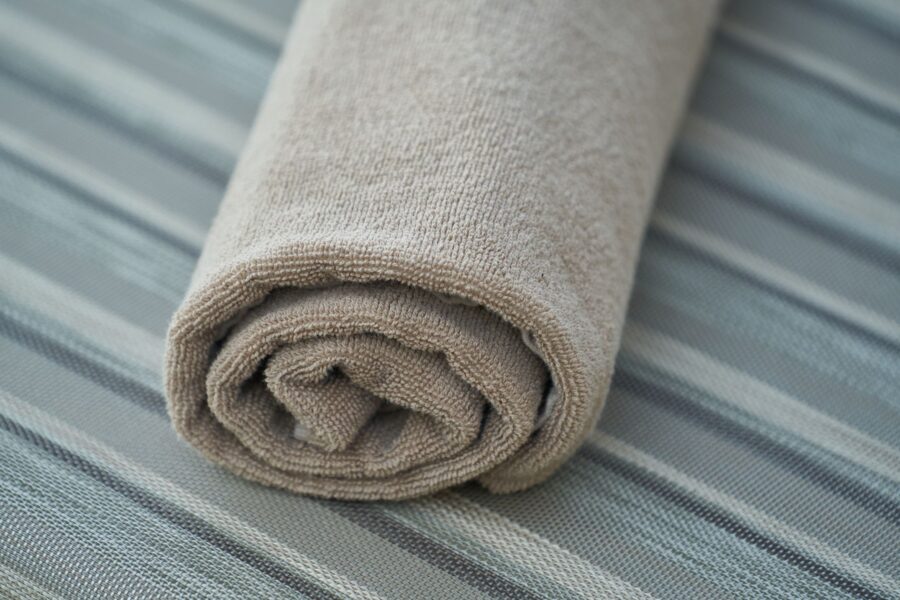
What you feel in the hand
An Imabari towel is not one product. It is a regional brand made by several dozen separate mills, each with its own looms and its own idea of a good towel, so a gauze-faced towel from one and a dense hotel-weight towel from another can sit side by side with the same tag. What they share is a quality floor, and a way of working that the area has kept for generations.
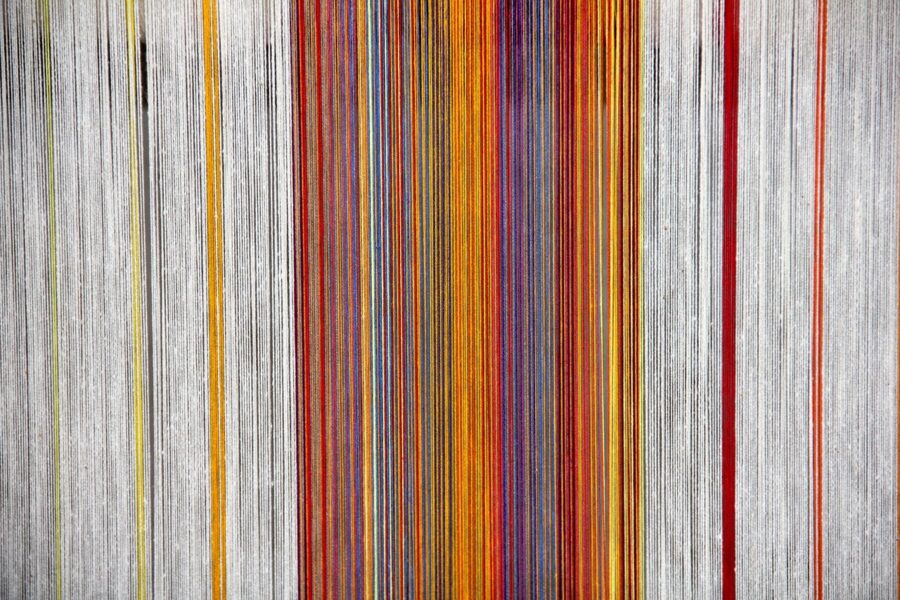
That way of working is called sakizarashi sakizome (先晒し先染め): the yarn is scoured, bleached and dyed before it goes on the loom, rather than the cloth being bleached and dyed after weaving. Scouring the yarn first takes out the natural oils and wax while the fibres are still loose, which matters because a certified towel has to pass its absorbency test straight off the loom, before it has ever been washed. It also lets a mill weave stripes, checks and pictures straight into the cloth with coloured yarn.
Washing yarn takes a great deal of water, and the mills have it on their doorstep. The Soja River (蒼社川) runs down from the mountains behind the city, and the water that flows under its bed is soft, low in the calcium and magnesium that are hard on cotton. The Cabinet Office’s profile of the industry credits that water for the soft feel of the finished towels, and compares the brand’s five-second absorbency rule with the 60 seconds allowed under the general Japanese industrial standard.
How Imabari came to make Japan’s towels
The district was weaving cotton cloth before it wove towels, helped by a climate that suited cotton growing and a sea road to the merchants of Osaka. Towel weaving started in 1894, and by the 1960s Imabari had overtaken Osaka as the largest towel-making area in the country. The association’s own figures show 504 firms weaving in 1976.
The fall came from abroad. Cheap imported towels took the Japanese market through the 1990s; Imabari’s output peaked at 50,456 tonnes in 1991 and kept sliding for well over a decade. By 2006 the mills were closing one after another, and the industry body (then the Shikoku Towel Industrial Association) brought in the art director Kashiwa Sato to rebuild it as a brand.
His plan was simple and strict. Lead with the plain white towel, put one mark on everything that passed, and write quality standards strict enough to make the mark mean something; the five-second rule was one of them. “Imabari Towel” (今治タオル) was registered as a regional collective trademark on 6 July 2007, so only member mills can use the name, and the association renamed itself the Imabari Towel Industrial Association in January 2017.
“Most of Japan’s towels” needs one qualification. In 2025, according to the association’s towel data, Japan wove 11,583 tonnes of towels and Imabari wove 6,535 of them, a 56.4 per cent share. But about four in five towels sold in Japan are imported, so Imabari makes most of the towels that are made in Japan, not most of the towels Japanese people use. The industry is smaller than it was: 68 member firms as of April 2026, 1,131 looms and 1,796 employees.
What the brand mark guarantees
There are two separate things here, and shops do not always make the difference clear. “Imabari Towel” as a name means a member mill made it in the Imabari area. The brand mark means that particular product was sent to an approved testing lab and passed every item on the association’s list; a mill can make towels in Imabari that never get the mark.
The headline test is the one in the LAB. A 1 cm square of the towel is dropped onto water, using the sinking method of the Japanese standard JIS L1907, and it must start to sink within five seconds. It has to do that twice: once straight off the loom, unwashed, and again after three washes and a tumble dry. Microfibre, which is too light to sink properly, is tested by dripping water onto it instead and must absorb a drop within one second.
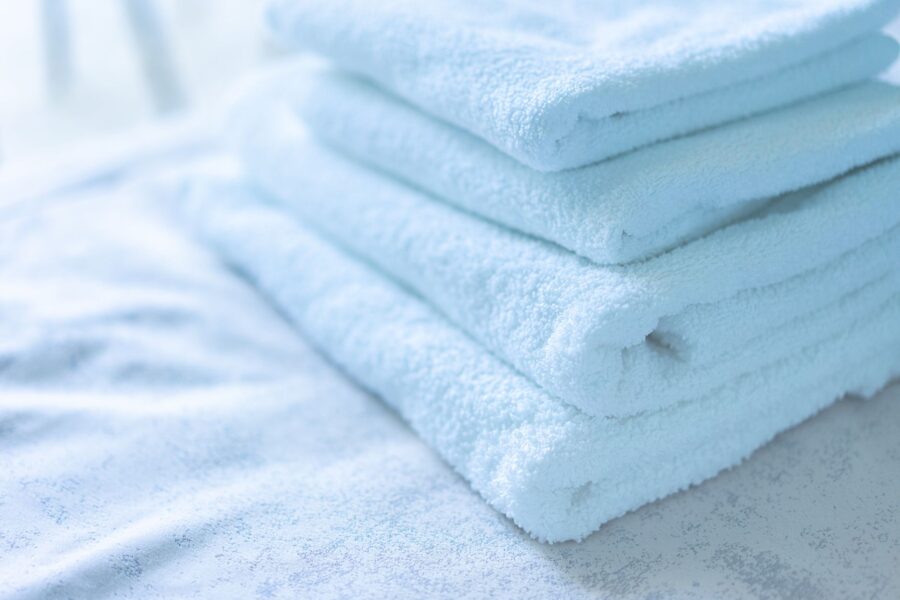
The rest of the list is less famous and, for daily use, just as important. These are the quality standards for brand-certified products as the association publishes them (last updated 15 April 2025):
| Test | What it checks | Pass mark |
|---|---|---|
| Absorbency | A 1 cm square sinking in water, unwashed and after three washes | Starts to sink within 5 seconds, both times |
| Shedding | Fluff lost in washing | 0.2 per cent or less |
| Pile retention | How hard you must pull to drag a loop out | 2.45 cN per loop for bath towels, 2.16 cN for face and wash towels |
| Colourfastness | Fading in light, in the wash, in sweat and from rubbing | Mostly grade 4 or better on the Japanese scale |
| Strength | Pulling the cloth apart, and bursting it | At least 147 N lengthways and 196 N across; 392.3 kPa bursting |
| Shrinkage | Size change in a home washing machine | Within ±7 per cent |
| Hem seams | Whether the overlocked edge pulls apart | At least 20 N lengthways and 30 N across |
| Formaldehyde | Free formaldehyde left from finishing | Absorbance difference 0.03 or less (about 9.6 ppm) |
The tag is a woven label that only the association sells, one per towel even when several towels share a gift box, and it carries the maker’s company number. Every certified product is listed in the association’s brand product search, which held 17,707 entries on 26 November 2026, each with its maker, size and a certification number such as 2026-2644. If an online listing says “Imabari” and shows no mark, that is not proof of a fake, but it is not proof of anything else either.
How to choose one
Ignore the word “luxury” and think about where the towel will be used. The official shop sorts its bath towels by type, and the types are the right way to think about it:
- Thin, gauze-faced and waffle weaves. Light, quick to dry and small when folded. A gauze-and-pile bath towel of about 70 × 130 cm starts at ¥2,200 (about US$14). The pick for a hot summer, a small flat or a towel that has to dry overnight in a hotel room.
- Twistless and soft-twist yarn (無撚糸, 甘撚り). The yarn is barely twisted, so the loops stay open and full of air. These are the softest towels in the shop and the ones people stroke, from ¥3,630 (about US$23) for a bath towel up to ¥12,650 (about US$80) for a twistless towel in top-grade cotton.
- Mid-weight. The everyday towel: not too thick to dry, firm enough to rub with. The long-selling white bath towel is ¥4,180 (about US$26).
- Thick and hotel-weight. Springy, dense, heavy when wet and slow to dry. Lovely in a house with a tumble dryer; the wrong choice for anyone drying towels on a balcony in June.
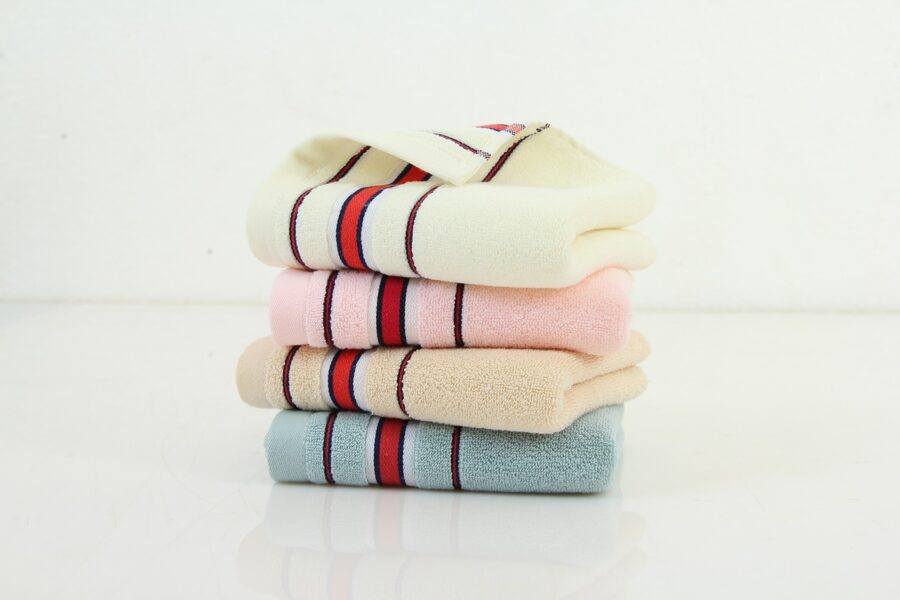
Sizes are fairly standard: the towel handkerchief is a square of about 22 to 25 cm, the face towel about 34 × 85 cm, the “mini bath” around 50 × 100 to 115 cm and the bath towel 60 × 120 to 70 × 140 cm. If you are cycling, buy face towels and handkerchiefs. A full bath towel takes up most of a pannier; two face towels take up a corner.
For a gift, the safe choice is the one the brand was built on: a white towel in a box. The handkerchief is the small present people in Japan actually use, since many public washrooms have no paper towels, and at ¥500 to ¥880 it makes an easy thank-you for a host. The main shop also sells towels you will not find in shops outside Ehime, such as the official-store-only “Fuwari” ranges, one patterned with the azaleas that are Imabari’s city flower.
If you cannot decide, ask. The association has run a towel sommelier exam since September 2007, more than 4,000 people have passed it, and the main shop’s staff include sommeliers whose job is to match a towel to a person. Tell them who it is for and how it will be dried. At home, wash a new towel once before using it and go easy on fabric softener, which coats the loops and slows the very absorbency you paid for.
Where to buy them in Imabari
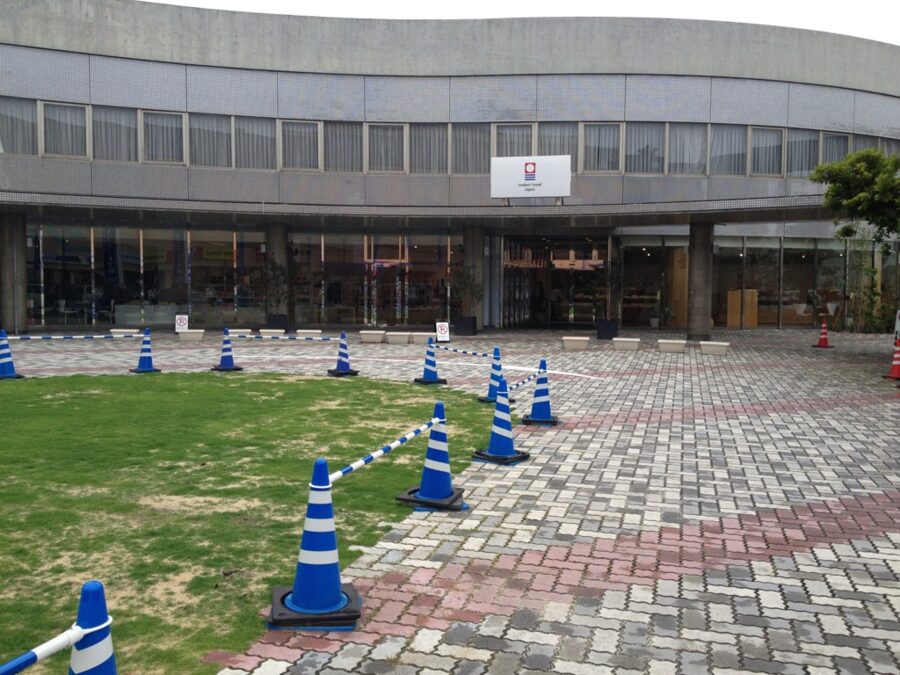
The Imabari Towel main shop and LAB
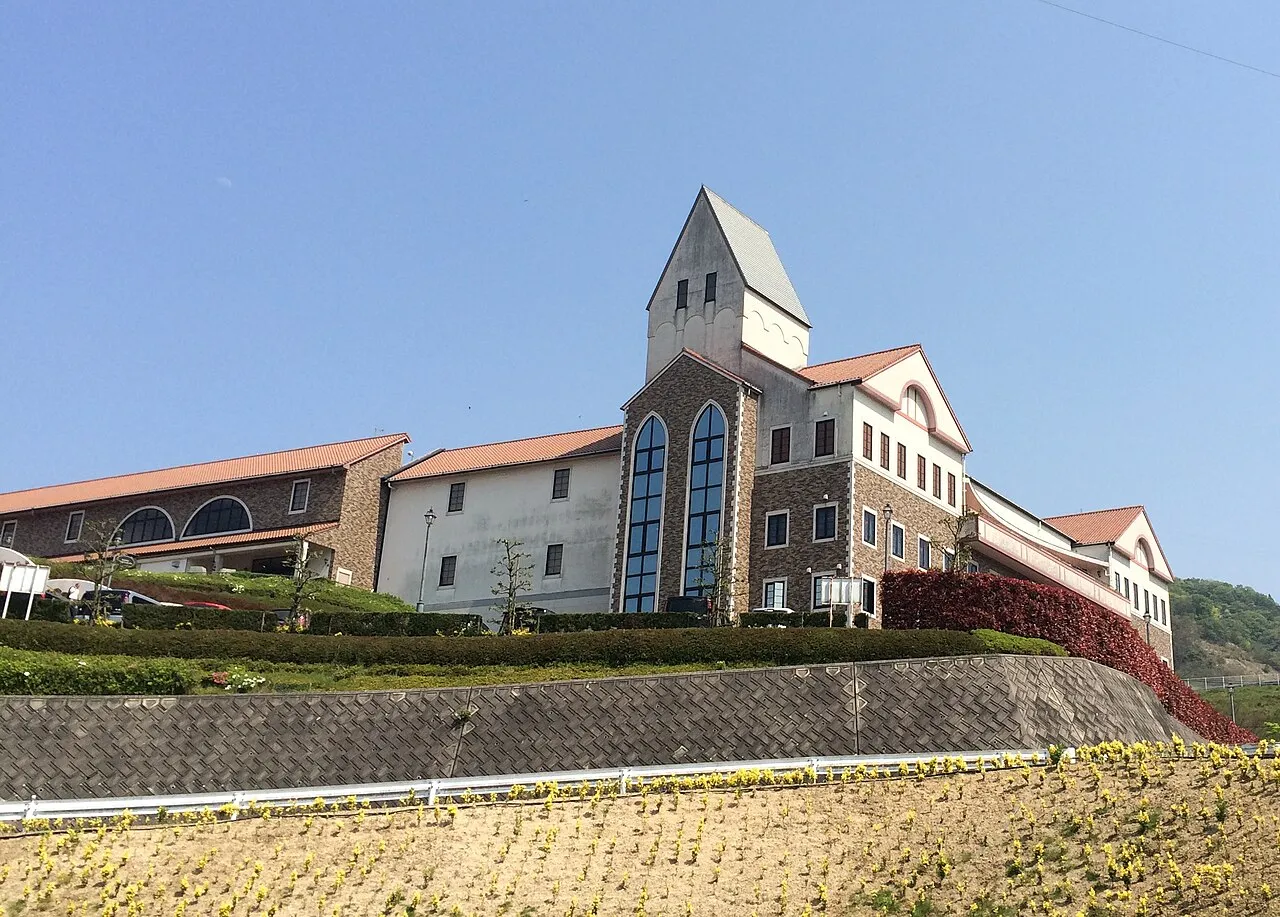
The Imabari Towel main shop (今治タオル 本店) is the place to go if you only go to one. It stocks nothing but brand-certified towels, from dozens of member mills, so you can feel a thick towel and a gauze towel from different makers within a metre of each other.
Next door, the imabari towel LAB is free and worth twenty minutes. Besides the five-second test table, it has a restored Higo loom, the first towel loom built in Japan, a treadle loom you can try with a member of staff, and a short film on how the towels are made; towels woven on the LAB’s looms are sold in the shop. The shop and LAB reopened in this form in spring 2017.
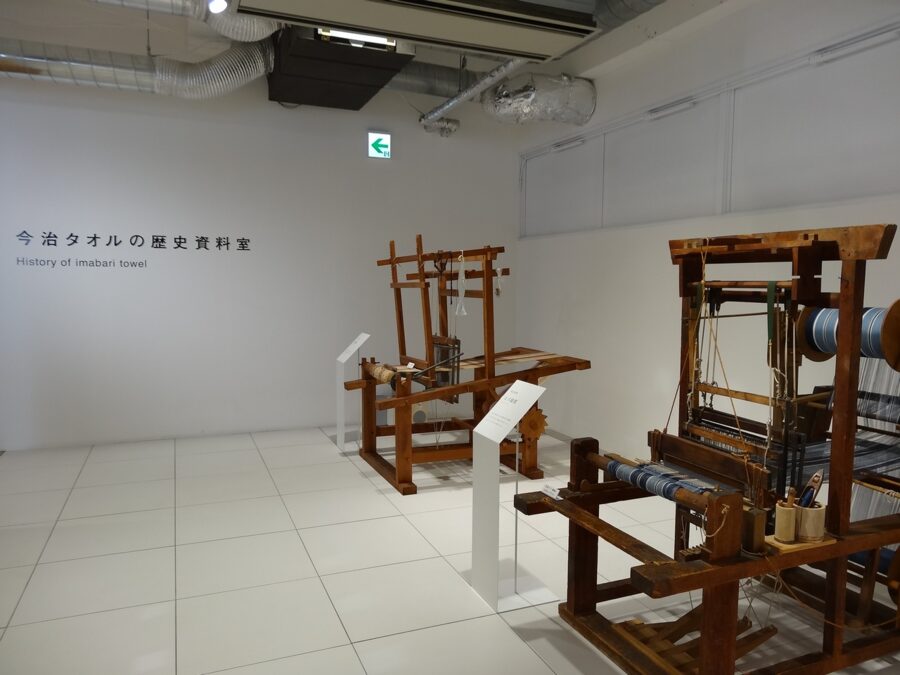
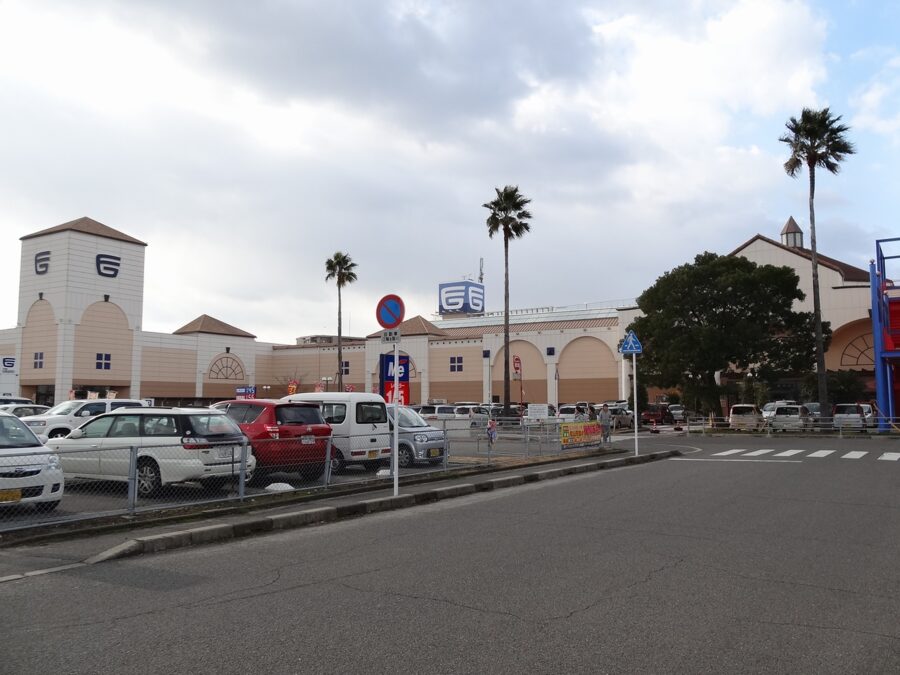
| Texport Imabari (as of November 2026) | |
|---|---|
| Address | 5-14-3 Higashimon-cho, Imabari (東門町5丁目14-3) |
| Main shop | 09:30–18:00 |
| LAB | 09:00–18:00, free |
| imabari towel CAFÉ | 09:30–18:00, last order 17:30 |
| Closed | New Year holidays only |
| Parking | 50 cars, free |
Texport is on the east side of the city, about 2 km (1.2 miles) from JR Imabari Station. Imabari City’s directions are the easiest without a bike: the Setouchi Bus Karakodai loop line (唐子台循環線) from the station takes about 13 minutes to Fuji Grand-mae, and the shop is a minute’s walk from the stop. A taxi from the station takes about ten minutes, and about five from Imabari port.
The Towel Museum in Asakura
The Towel Museum (タオル美術館) is open, and it is a different kind of place: a large private museum, shop and garden in the hills of Asakura, in the south of Imabari City, run by the towel maker Ichihiro. The galleries show art made in towel, currently a Snoopy exhibition alongside permanent Moomin rooms and the quilt artist Cathy Nakajima’s Hawaiian work, and a paid factory section walks you through the machines that turn raw cotton into yarn and yarn into cloth.
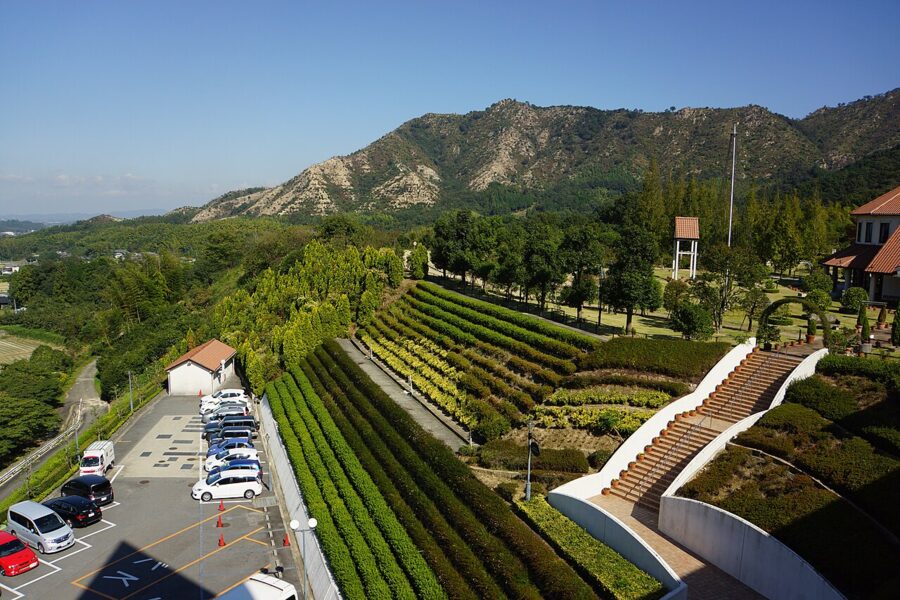
According to the museum’s visitor information, it opens 09:30–18:00 all year, with the galleries closing to new visitors 30 minutes earlier, apart from a few listed closing days (14 and 19 January in 2027). Gallery tickets are ¥1,000 (about US$7) for adults, ¥700 for over-65s, ¥800 for junior and senior high school students and ¥600 for primary school children; younger children go free. You do not need a ticket for the shops, cafés or garden.
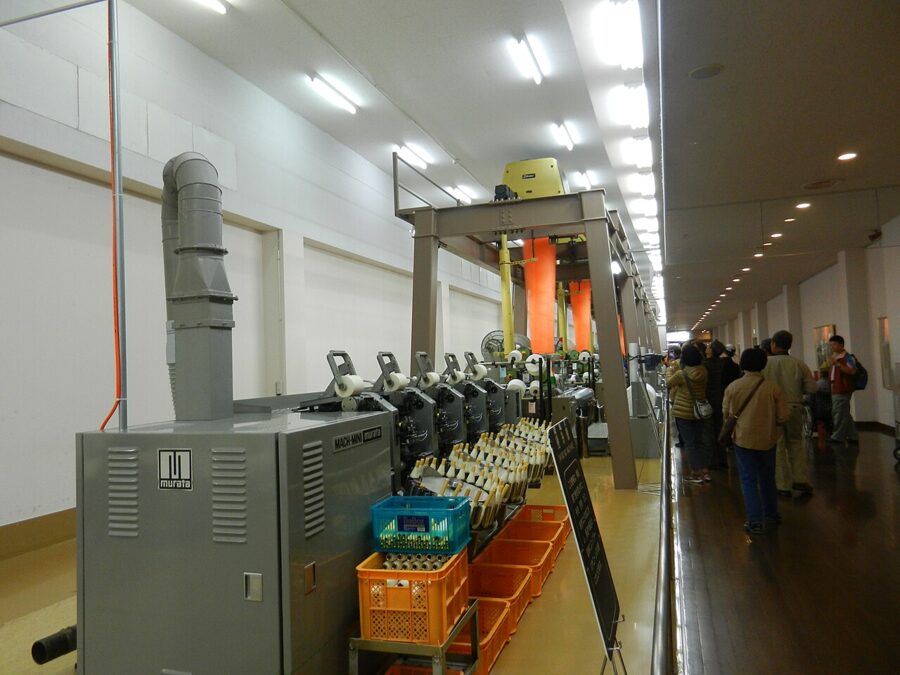
The towel shop on the third floor sells Imabari-made towels and will embroider a name on them, and a separate shop sells Shikoku souvenirs. It is the museum’s own shop, not one of the brand’s; if comparing certified towels from many mills side by side is the point, Texport is built for it.
The catch is distance. The museum is about 13 km (8 miles) by road from Imabari Castle and 19.2 km from the Itoyama cycle terminal at the foot of the Kurushima-Kaikyo Bridge, according to its own route list, and it is inland, away from the cycling route.
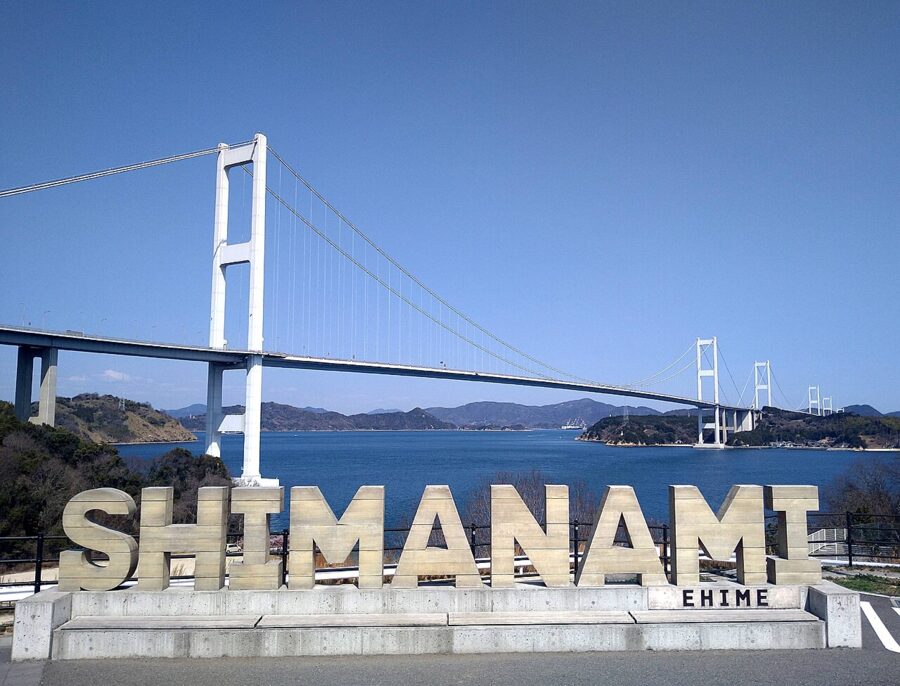
By car it is about 20 minutes from the Imabari interchange and ten from Toyo-Tanbara; without one, the museum suggests a taxi of about 25 minutes from Imabari Station. With a car and a spare afternoon, go. On a riding day, skip it and spend the time at Texport.
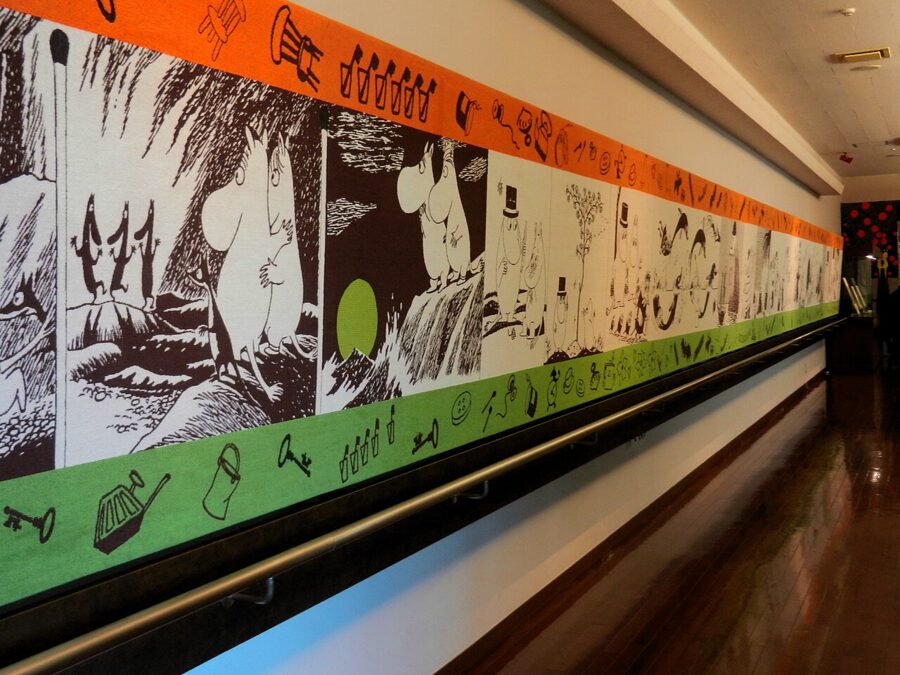
Factory shops
Two mills in town run shops at their own premises, and both are worth the detour if one of their towels is what you are after. You go for the whole of one maker’s range, and for staff who know how it was made.
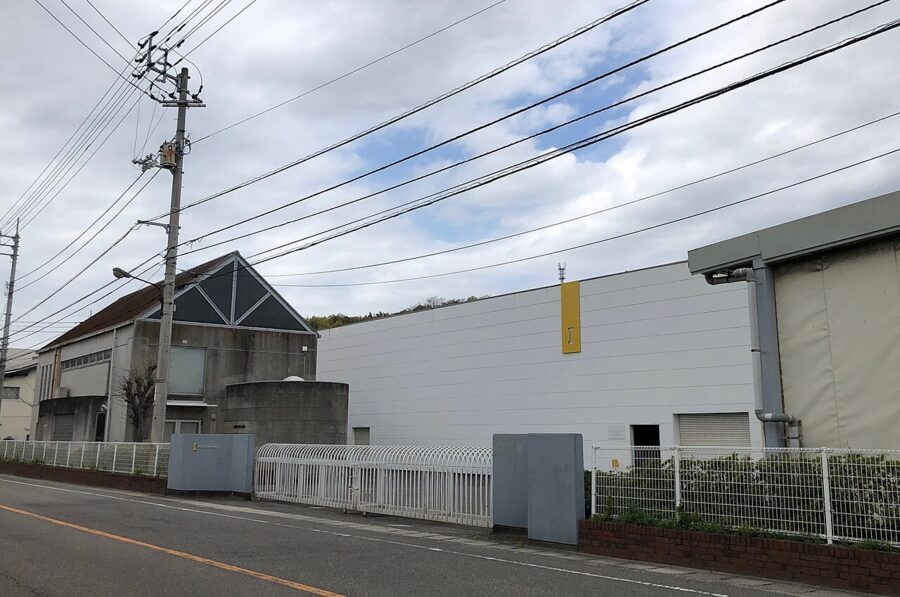
The IKEUCHI ORGANIC factory store at 762 Engi-ko, west of the centre, is in the wooden building the Ikeuchi towel works opened in 1953, and from the shop floor you can watch the looms running in the factory behind it. Everything is organic cotton, staff will let you try towels before you buy, and it is open weekdays only, 09:00–17:00. Check the store’s calendar before a holiday week.
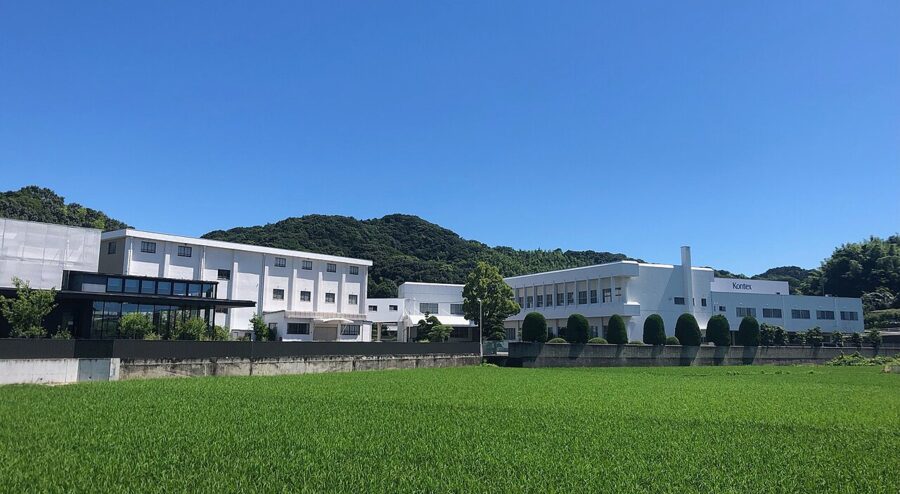
Kontex’s shop, Kontex Towel Garden Imabari, is at 854-1 Takuma-ko, north-west of the station, at the company’s head office. It opens 10:00–17:45 and closes on Mondays (on Tuesday instead when Monday is a public holiday). Kontex also makes towel tenugui and soft gauze, so this is the place for something lighter than terry.
The shop in the Imabari Kokusai Hotel
If you arrive in Imabari late, the brand’s second shop in town is the easy one. Imabari Towel Imabari Kokusai Hotel (今治タオル 今治国際ホテル店) is in the hotel at 2-3-4 Asahi-machi, about ten minutes’ walk from the station. It opens 10:30–19:00, is closed on Wednesdays and over the New Year, and is the only one of the brand’s shops in Imabari open past 18:00.
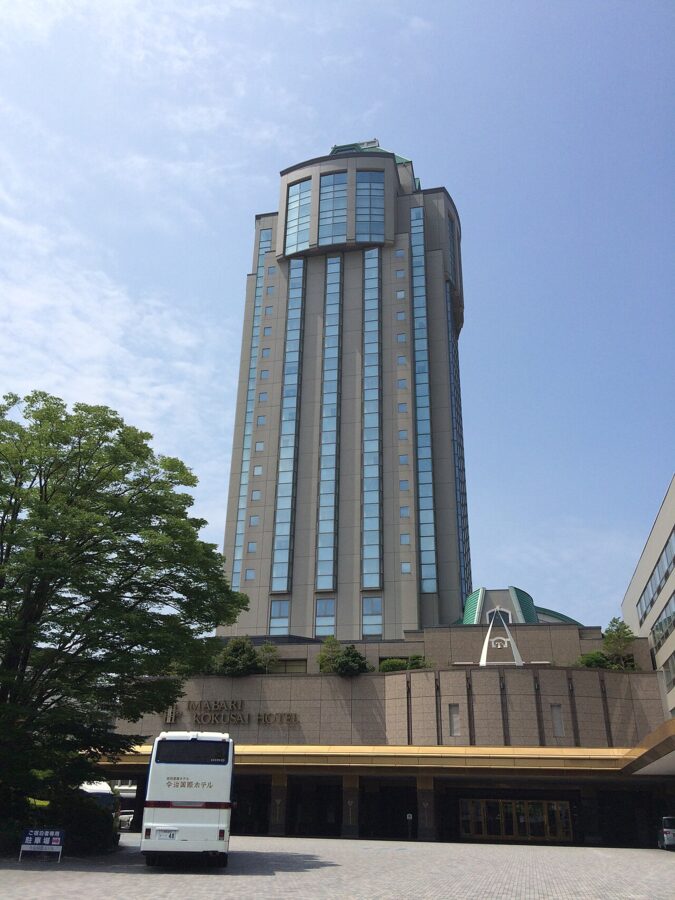
It is the natural shop if you are spending the night in town, the Imabari end of where to stay on the Shimanami Kaido, and it saves the bus out to Texport. To compare many mills side by side, the main shop is still the better trip.
On the route, and at the airport
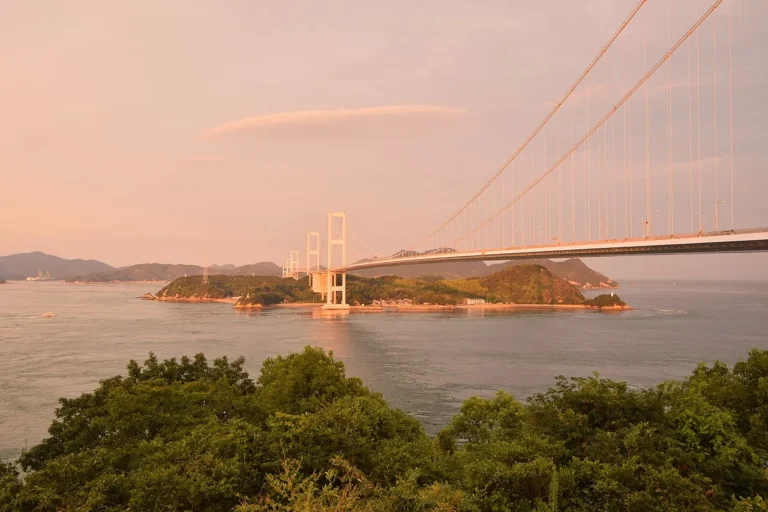
Riding south, you come down off the Kurushima-Kaikyo Bridge into Imabari with the shopping still ahead of you. The brand’s own shop list has no branch on the islands or anywhere along the cycling route: its Ehime shops are in Imabari city and at Matsuyama Airport. Plan the towel shopping for the end of the ride, not the rest stops.
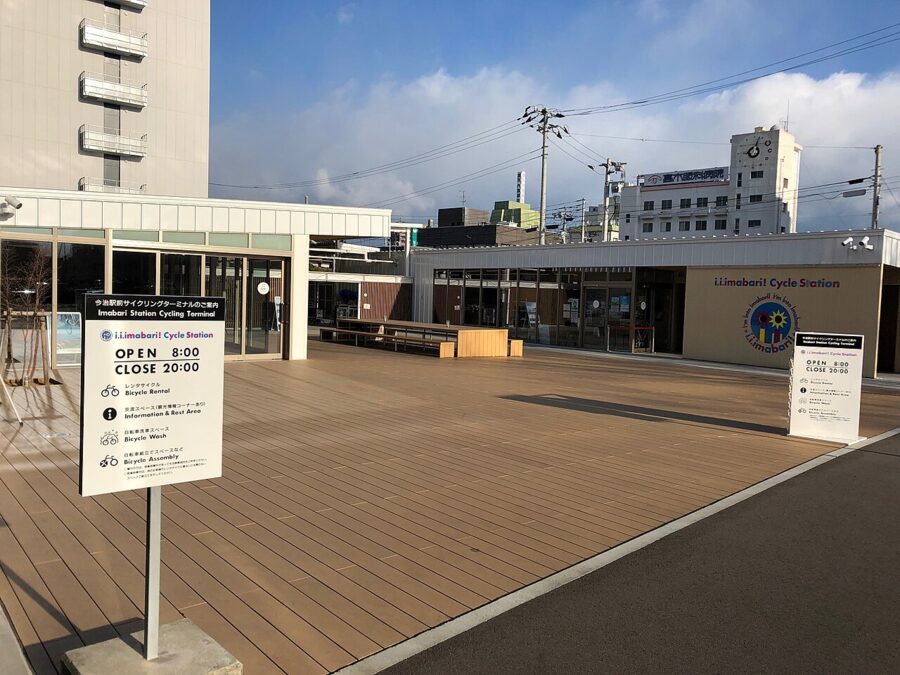
The tidy order is to finish the ride, return the bike at a Shimanami Kaido bike rental terminal, then shop with empty hands. If your bike goes back at the terminal by the station, the Kokusai Hotel shop is a walk away and the Karakodai bus to Texport leaves from the station.
Flying out of Matsuyama gives you a last chance. The Imabari Towel Matsuyama Airport Store is on the ground floor of the terminal and, since 1 November 2026, opens 08:30–18:30 every day. It is the place for a forgotten gift, not for browsing; the airport is also one end of getting to the Shimanami Kaido. In Tokyo, the brand’s Minami-Aoyama shop near Omotesando Station opens 10:30–19:00, closed on the second Tuesday of the month, with extra closures on 1, 15 and 29 December 2026.
Prices, and getting them home
These are prices from the official online store, which sells only certified towels, as of November 2026 and including tax. Certified towels can turn up in sales, but the association asks shops not to use the name or the mark to advertise them, so a towel shouted as a cut-price “Imabari towel” deserves a look at its tag.
| Item | Typical price |
|---|---|
| Towel handkerchief (about 22–25 cm square) | ¥500–¥880 |
| Face towel (about 34 × 85 cm) | ¥1,200–¥2,750 |
| Mini and slim bath towels (about 34–52 × 100–115 cm) | ¥1,650–¥3,080 |
| Bath towel, thin or gauze-faced | ¥2,200–¥4,400 |
| Bath towel, mid-weight or twistless | ¥3,355–¥7,150 |
| Bath towel, top of the range | up to ¥12,650 |
| Boxed gift sets | from about ¥3,080 |
Carrying them is the easy option. Towels weigh little, so a few face towels and handkerchiefs add nothing you will feel on the bike; bath towels are the problem, for bulk rather than weight. If your bags are being sent ahead between hotels, the towels can ride with them, one of the uses of Shimanami Kaido luggage and ferries.
Tax-free shopping changed on 1 November 2026, when Japan moved to a refund system: a tax-free shop now charges visitors the full price including Japan’s 10 per cent consumption tax. You get the tax back only after customs confirms at your departure airport, within 90 days of purchase, that the goods are leaving with you. Anything you post home does not qualify, and if one item on a receipt cannot be shown at customs, nothing on that receipt is refunded. Ask at the till whether the shop is a tax-free shop before you count on it.
Posting them is simple in most cases. Japan Post’s EMS rates for a parcel of up to 2 kg, which is several bath towels, are ¥3,400 (about US$21) to China, Korea and Taiwan, ¥4,550 (about US$29) to the rest of Asia, ¥6,700 (about US$42) to Europe, Canada and Oceania and ¥7,900 (about US$50) to the United States, as of November 2026. Parcels to the US have had extra rules since April 2026: under Japan Post’s current conditions, most goods go only from designated post offices, with US duties paid in advance through an approved app. For the US, carrying them home is usually easier.
If you get home and wish you had bought the bath towel, the official online store ships abroad through the WorldShopping service. It adds a 10 per cent service charge on the goods and Japanese postage, and then bills international shipping on top.
Back at the LAB table, the test takes five seconds and costs nothing. Do it before you shop. Then return the bike at the station, take the Karakodai loop bus to Fuji Grand-mae, and give yourself an hour in the main shop before it closes at 18:00.