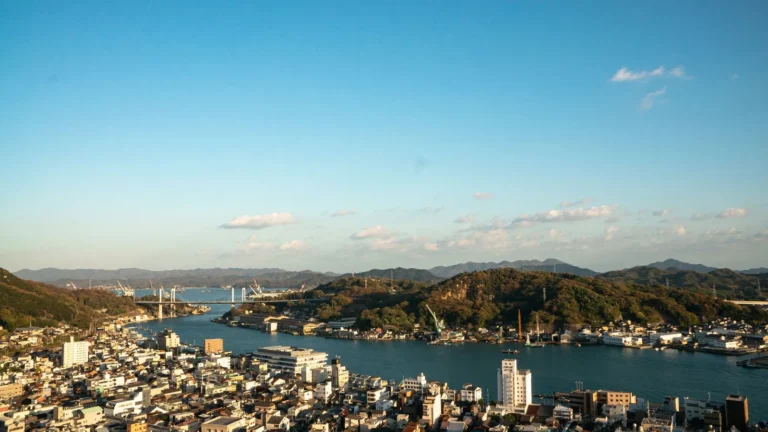
Hassakuya opens at 08:30 at the Innoshima end of the Innoshima Bridge, sells hassaku daifuku until the day’s batch is gone, and stays shut on Mondays and Tuesdays. Ride out of Onomichi on a Tuesday with your heart set on one and you will be standing at a locked door. That is the shape of eating on the Shimanami Kaido: the food is simple and very good, and timing decides almost everything.
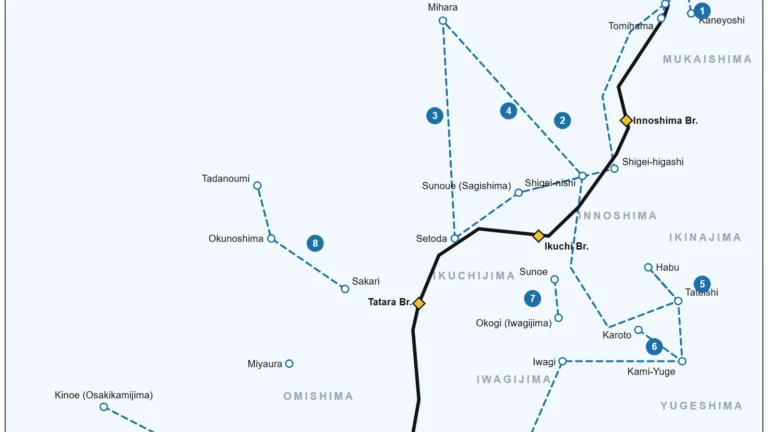
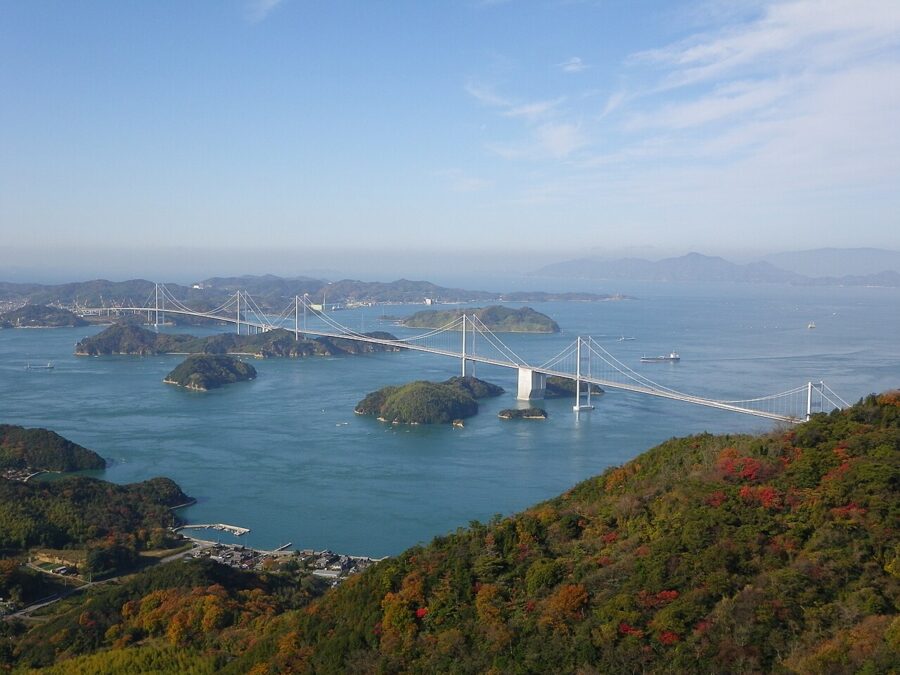
The cycling road from Onomichi to Imabari is about 70 km (43 miles), and each island along it has one thing it grows, catches or cooks better than its neighbours. Onomichi has its soy-dark ramen, Innoshima the hassaku, Ikuchijima the lemons and the octopus of Setoda, Omishima a winter of citrus, Hakatajima its salt, Oshima a charcoal grill by the sea. Imabari ends the ride with two dishes few people outside Ehime have heard of: chicken pressed flat on an iron plate, and roast pork with fried eggs on rice.
Most island kitchens serve lunch, not dinner, and many stop taking orders at 14:00. Weekly closing days fall mostly early in the week. Plan the meals first and the ride around them.
In this guide11
- The route as a meal, island by island
- Onomichi: ramen before the first bridge
- Mukaishima: breakfast across the channel
- Innoshima: where the hassaku began
- Ikuchijima and Setoda: lemons, cake and octopus
- Omishima: citrus, a salt factory and the Tatara roadside station
- Hakatajima: salt ramen at the foot of the bridge
- Oshima: grill your own lunch
- Sea bream and the other fish on every menu
- Imabari: iron-plate yakitori and yakibuta tamago meshi
- Eating on the road
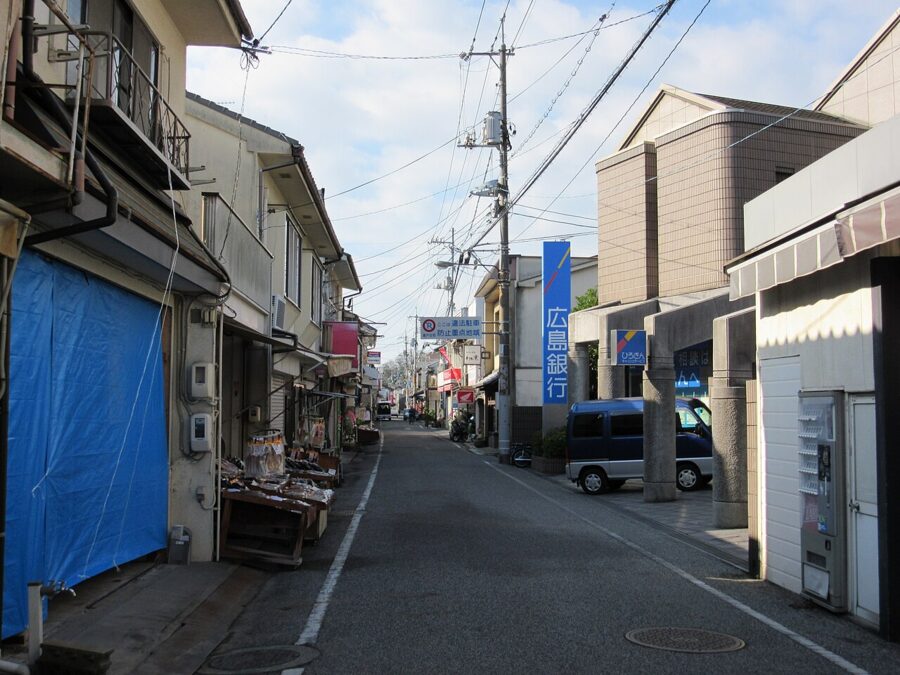
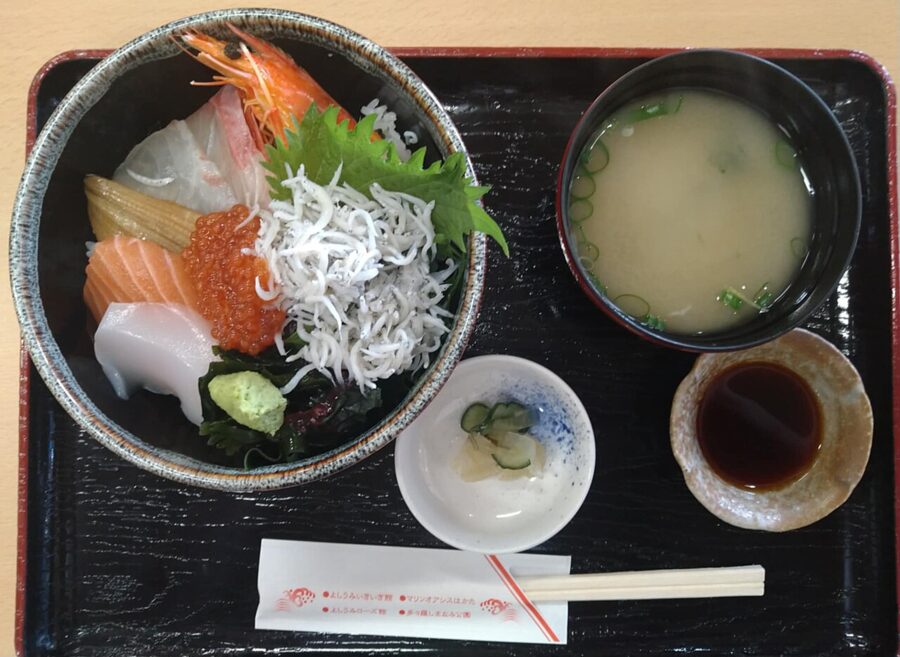
The route as a meal, island by island
Read south from Onomichi as a menu, the route runs like this. The table gives the one thing I would not miss on each island, where to eat it, and the closing day that catches people out. Hours and closing days throughout are as listed in 2026; check before a public holiday.
| Island | Known for | Where | Watch for |
|---|---|---|---|
| Onomichi | Onomichi ramen | Chuka Soba Shu, Maruboshi, Ichibankan | Shu shut Thursdays, Maruboshi Wednesdays, Ichibankan Fridays |
| Mukaishima | Early bread, Inland Sea fish | Sumida Bakery, Kokoya | Kokoya shut Sundays and Mondays |
| Innoshima | Hassaku, hassaku daifuku | Hassakuya, by the Innoshima Bridge | Shut Mondays and Tuesdays; sells out |
| Ikuchijima | Lemons, lemon cake, octopus | Shimagokoro, Shimanami Dolce, Chidori (all Setoda) | Chidori shut Tuesdays |
| Omishima | Citrus, salt soft-serve | Tatara Shimanami Park, Hakata Salt factory | Factory shut most Wednesdays |
| Hakatajima | Hakata salt ramen | Hakata S.C. Park restaurant | Last orders 14:00 |
| Oshima | Seafood on a charcoal grill | Yoshiumi Ikiikikan | Last grill entry 15:00 |
| Imabari | Iron-plate yakitori, yakibuta tamago meshi | Gomidori, Hakurakuten, Shigematsu Hanten | Hakurakuten shut Tuesdays, Shigematsu Mondays |
If you ride the whole way in a day, you will eat two real meals: lunch somewhere between Setoda and Omishima, and dinner at whichever end you sleep. Everything else is a snack taken standing up, such as a daifuku at the bridge, a gelato in Setoda or a salt soft-serve on Omishima. Split the ride over two days, as the two-day itinerary does, and you gain a proper dinner on the islands as well.
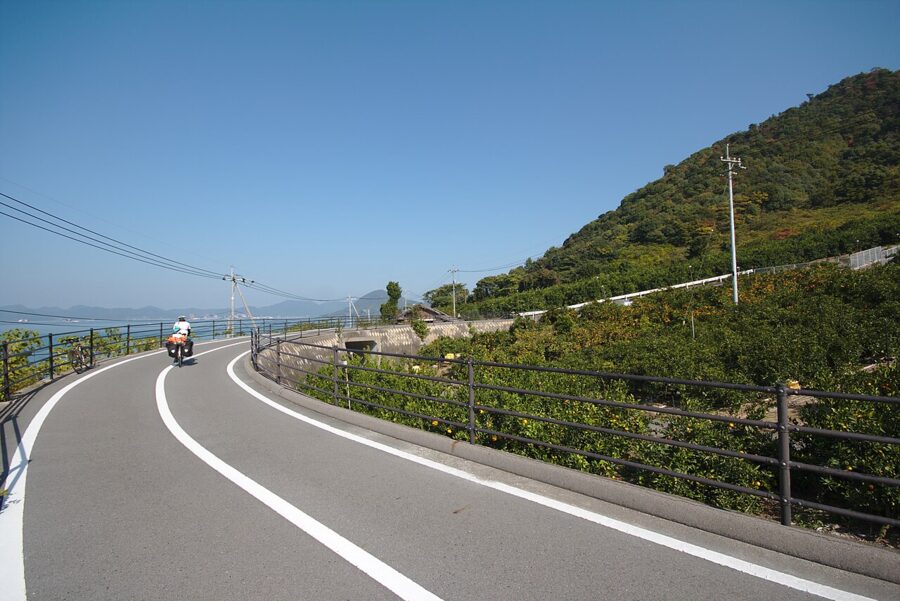
Onomichi: ramen before the first bridge
What Onomichi ramen is
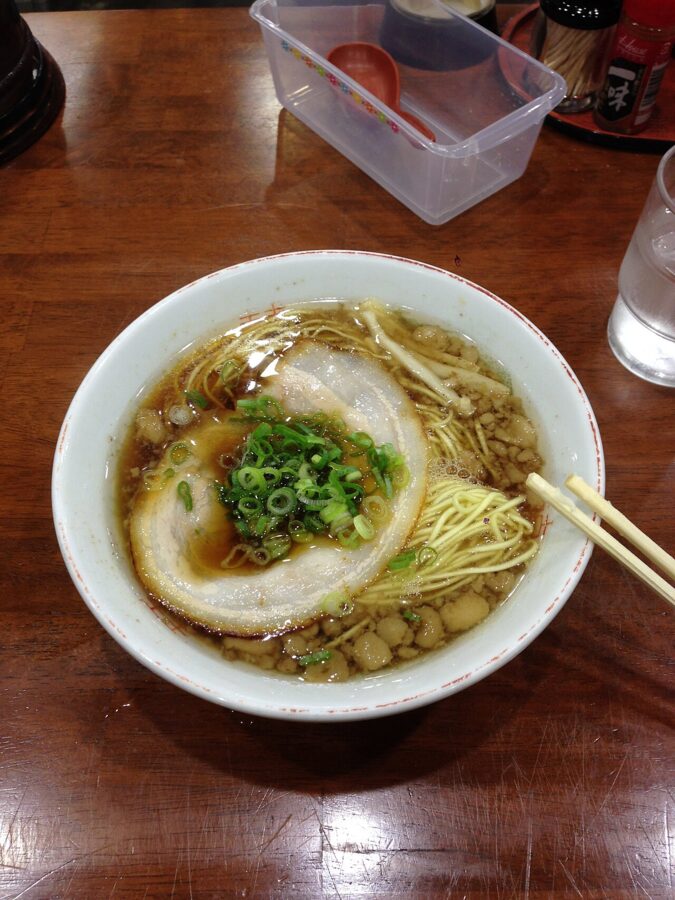
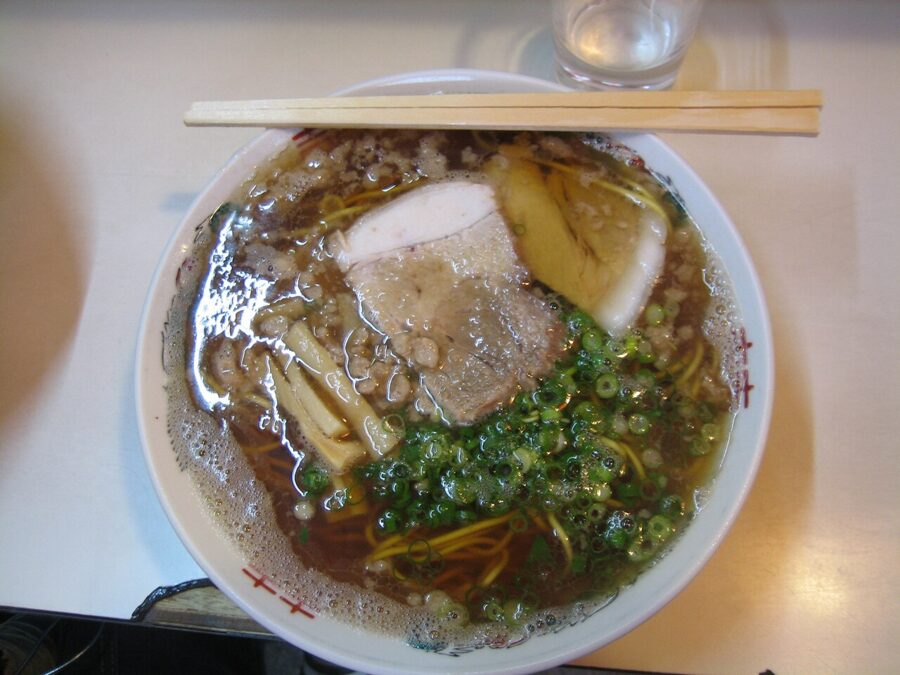
A bowl of Onomichi ramen is soy-dark broth, flat noodles, a few slices of chashu pork, chopped spring onion and, floating on top, soft crumbs of pork back fat (seabura). The fat melts as you eat and keeps the soup hot to the bottom of the bowl. Broths vary more than the menus suggest: some shops build theirs on chicken and pork bones, some lean on small dried Inland Sea fish, and several older places call the dish chuka soba and leave the fat out.
Where it began is disputed. One account starts with a Chinese street vendor in 1928, the other with a stall opened in 1947 by Zhu Ajun, born in Taiwan, which grew into Shukaen (朱華園), the shop most people meant when they said Onomichi ramen. Shukaen closed on 18 June 2019.
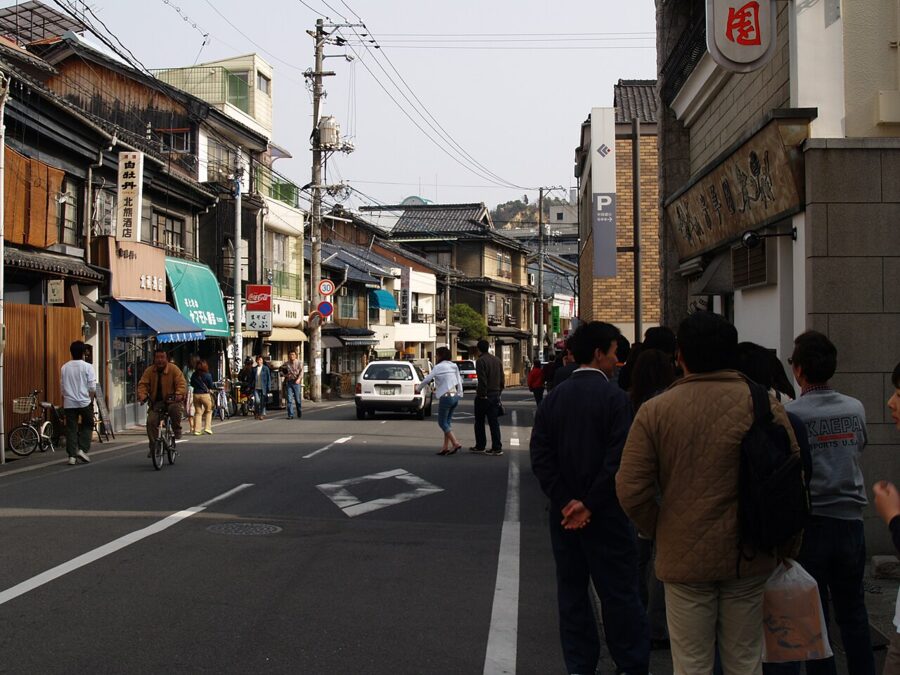
Where to eat it
Three shops cover the style well, and their closing days fall on different weekdays, so at least one is open every day of the week. All three are a 10 to 15 minute walk east of Onomichi Station through the shopping arcades, close enough to eat before collecting a rental bike or after handing one back.
- Chuka Soba Shu (中華そば 朱), Jushinichi-Motomachi, near the city hall. Opened on 16 November 2020 by relatives of Shukaen’s founding family, and the nearest thing to the old bowl. 11:00 to 17:00; closed Thursdays (as of November 2026).
- Onomichi Ramen Maruboshi (尾道ラーメン 丸ぼし), Tsuchido 2-chome, about 11 minutes’ walk from the station. 10:30 to 20:10; closed Wednesdays. The early opening makes it the one to catch before a late-morning start.
- Onomichi Ramen Ichibankan (尾道ラーメン 壱番館), Tsuchido 2-chome, about 13 minutes’ walk from the station. 11:00 to 19:00; closed Fridays.
A bowl costs under ¥1,000 (about US$7) at all three. Expect a queue at Shu at weekend lunchtimes, and go at 11:00 or after 14:00 if you would rather not stand in it. Bring cash to small counters like these.
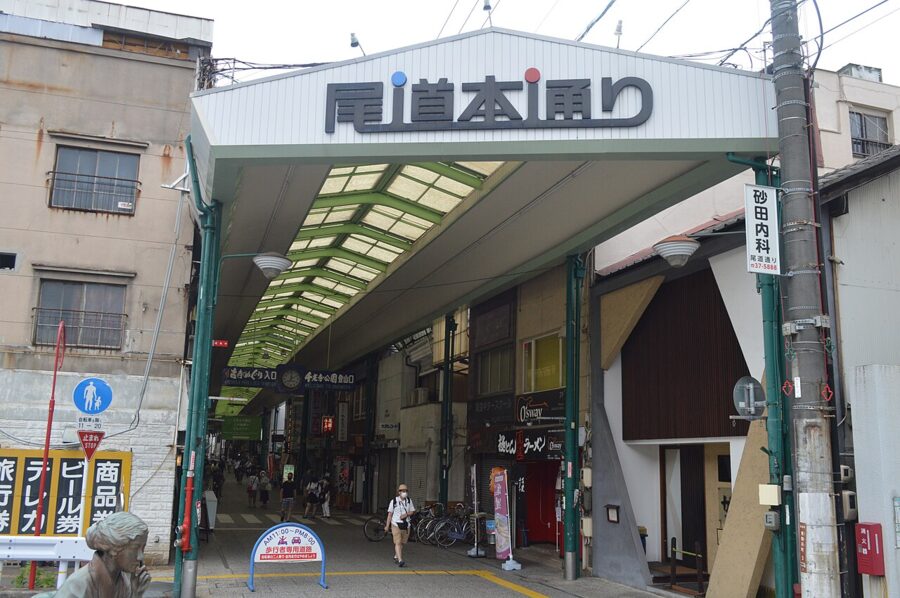
The covered Hondori arcade that leads from the station towards the ramen shops is also where to pick up snacks for the ride, before the ferries across the channel. If you are only passing through, eat ramen at lunch on the way back rather than at breakfast: none of the three opens before 10:30.
Mukaishima: breakfast across the channel
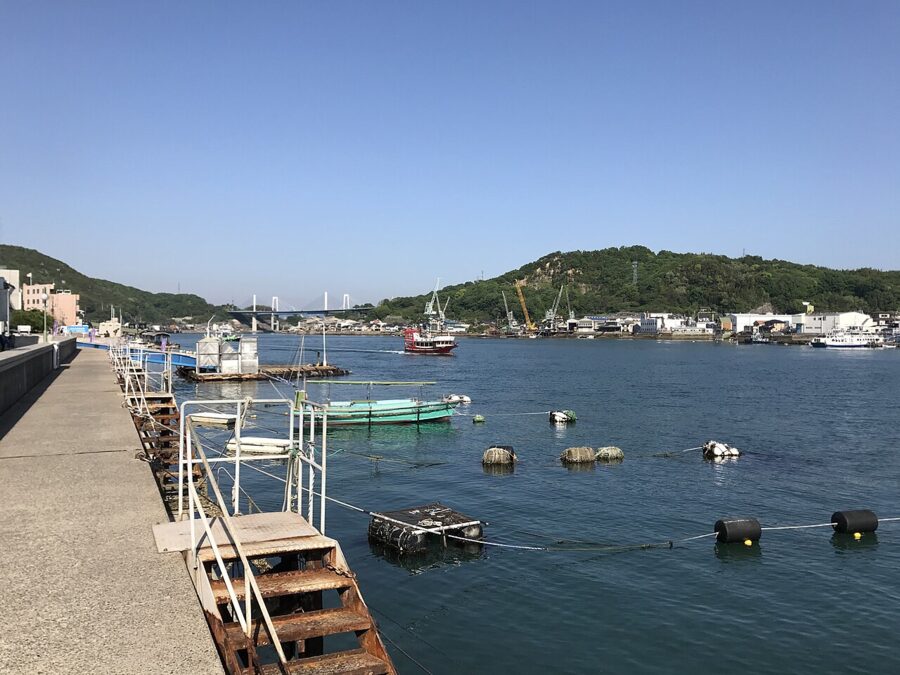
Mukaishima is a few minutes from Onomichi by the small ferries across the channel, and most riders are across it before they are hungry. Two places are worth knowing. Sumida Bakery (住田製パン所) opens at 06:00 and runs to 19:30 every day, which makes it the earliest reliable food on the route for anyone starting at first light.
For lunch, Kokoya (島の旨いもん ここや) serves Inland Sea fish and lemon, and pork cutlets and fried chicken made with the “lemon pork” and lemon chicken of Iwagi, a small island off Ikuchijima in Kamijima town. Lunch is 11:00 to 14:00 (last orders 13:45), and it reopens from 15:00 into the evening; it is closed on Sundays and Mondays. The crossings carry bikes for small change, one of the small comforts of ferries and luggage on this route.
Innoshima: where the hassaku began
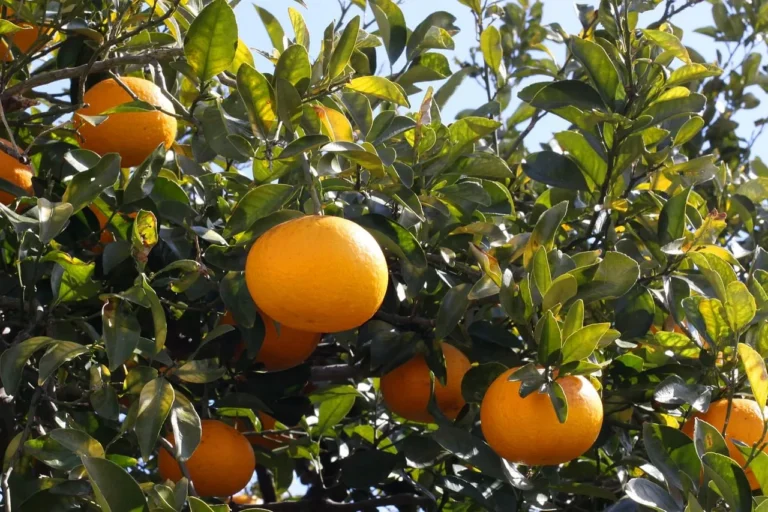
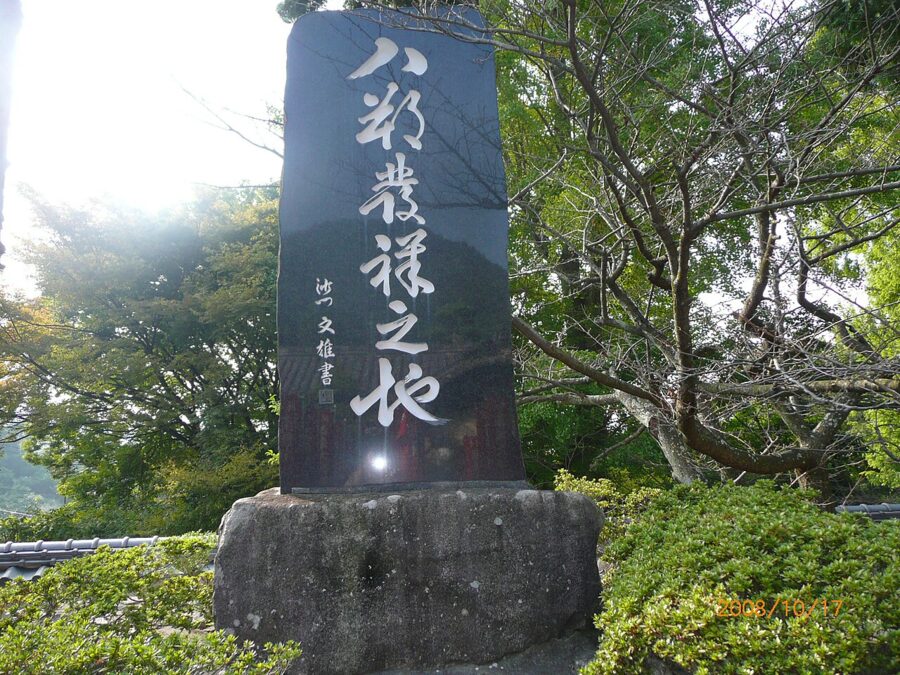
The hassaku, a large, thick-skinned citrus with a bitter edge, began as a chance seedling at Jodoji temple in the Taguma district of Innoshima around 1860, at the end of the Edo period. The priest Ogo Etoku, credited with finding the tree, named it in 1886: hassaku is the first day of the eighth lunar month, the time he said it could be eaten. A stone in the temple grounds marks the spot, and the stump of the original tree is kept there.
Wakayama now grows far more hassaku than Hiroshima, but Innoshima still treats the fruit as its own. You peel off the tough inner membrane as well as the rind, and what is left is firm and juicy, sharp and sweet with a bitter finish. It is a better riding snack than it sounds.
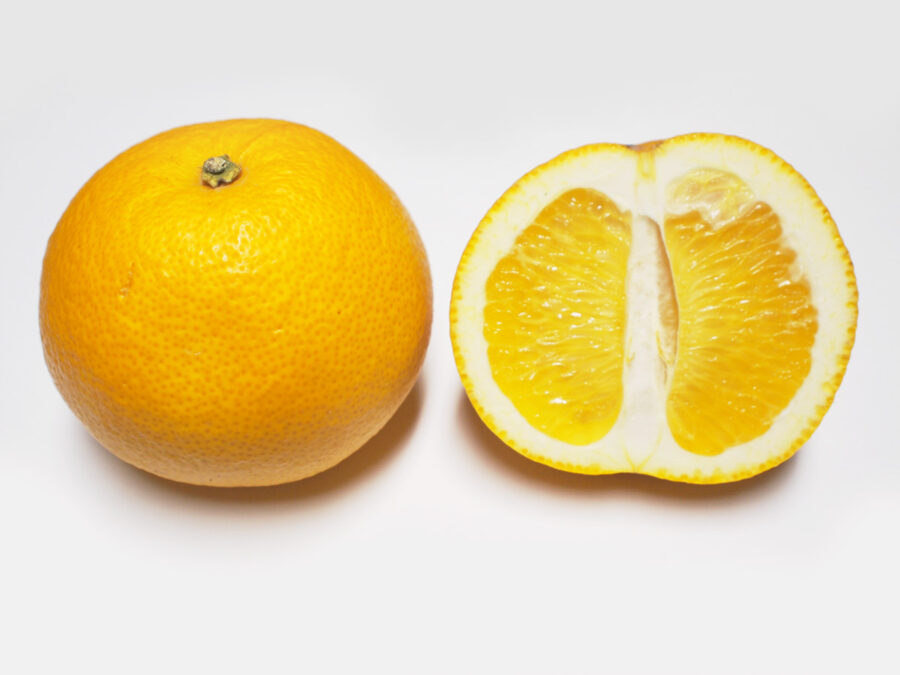
Hassaku daifuku at Hassakuya
Hassaku daifuku wraps segments of the fruit in white bean paste and soft rice-cake (mochi), and the bitterness of the citrus is what stops it being cloying. It is sold all over Hiroshima Prefecture now. On Innoshima the place to eat one is Hassakuya (はっさく屋), in Ohama, near where the cycling route comes down off the Innoshima Bridge.
It opens at 08:30, closes when the day’s batch is sold, and is shut on Mondays and Tuesdays. On a weekend, arrive in the morning. Eat it soon: soft mochi does not travel well in a jersey pocket on a warm day.
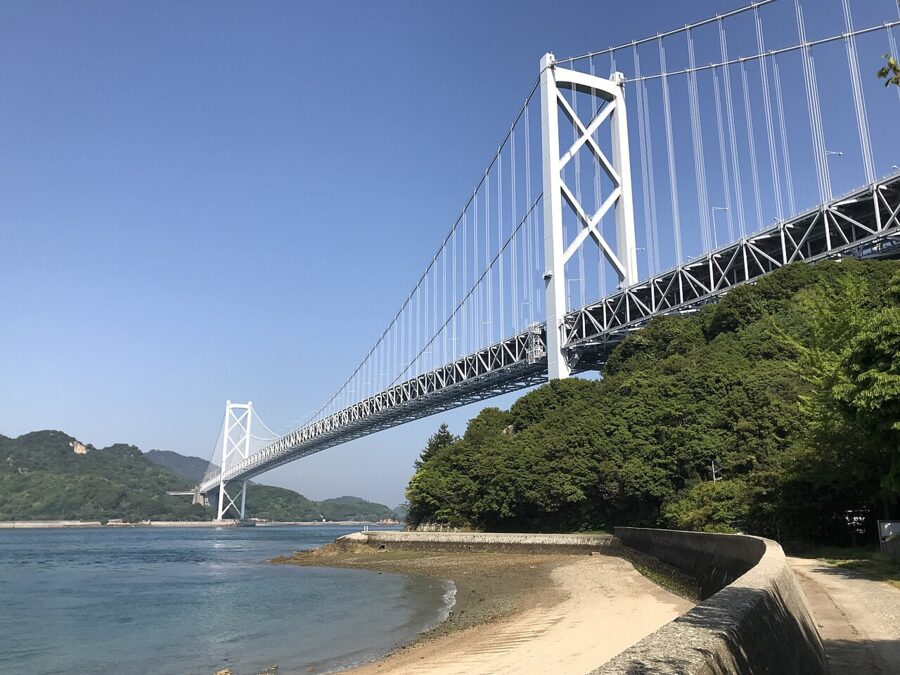
Ikuchijima and Setoda: lemons, cake and octopus
Setoda lemons
Hiroshima Prefecture grows about half of Japan’s home-grown lemons: 4,401 tonnes of 8,660 in the 2021 harvest. Lemons came to the prefecture in 1898 as three stray seedlings in a delivery of navel orange trees, planted at Otsunagi on an island near Kure. Growing spread quickly to Setoda on Ikuchijima, and by 1953 Hiroshima led the country.
On Ikuchijima the groves climb the hillsides above the cycling route, with small monorails to carry the crop down slopes too steep for a vehicle. Setoda growers have cut back on pesticides so that the peel can be eaten, and the fruit is sold as eco lemons. Green lemons are shipped in October and November and yellow ones from around the end of the year into May, which is one reason the best time to ride for food is autumn to spring.
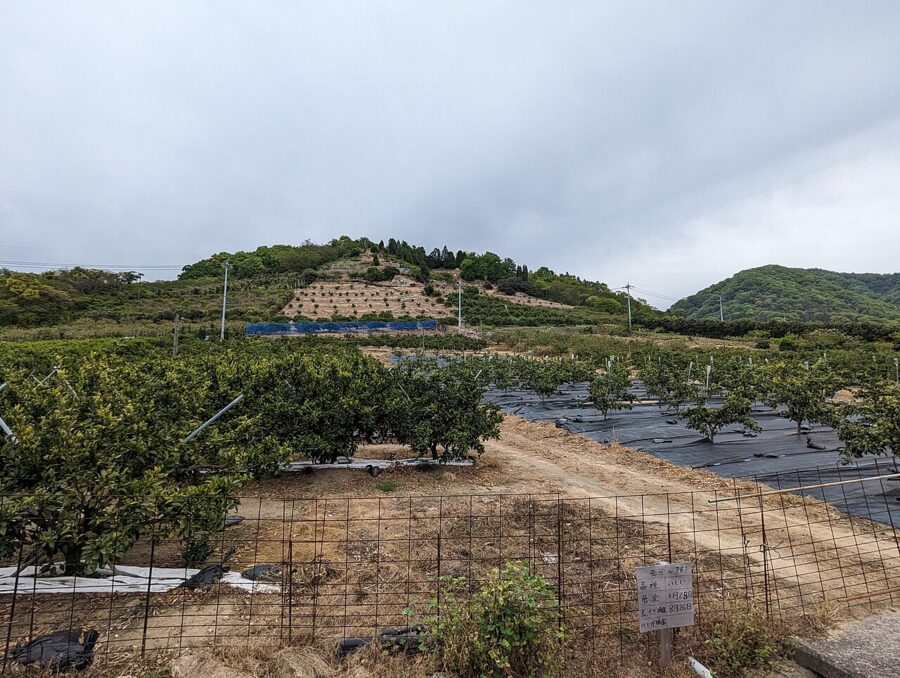
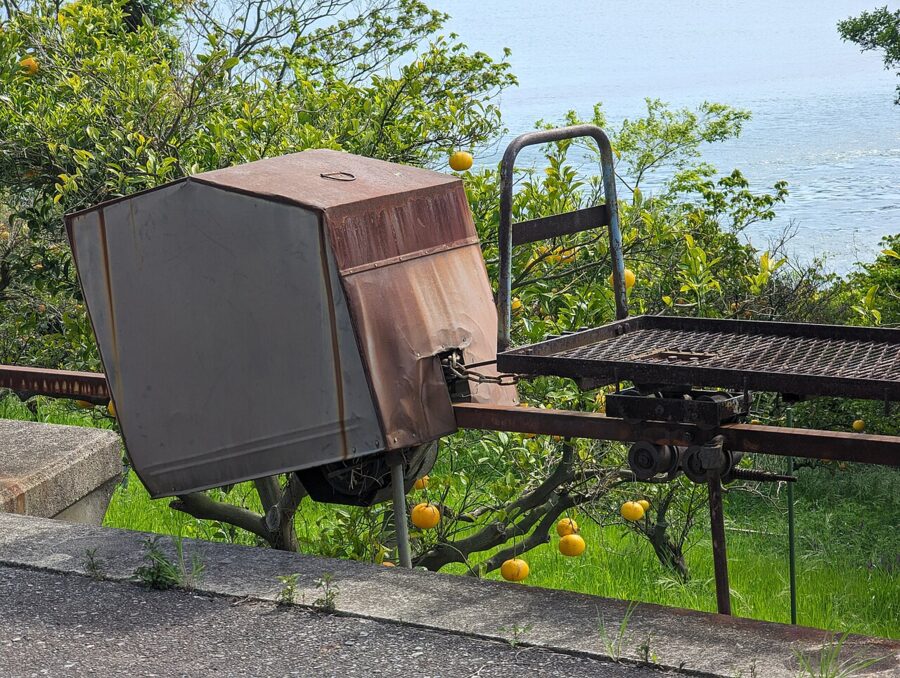
Lemon cake and gelato
Every souvenir counter on the route sells a lemon cake made with Setoda lemons, and the shop most people come to Setoda for is Shimagokoro (島ごころ). Its Setoda main shop in the Sawa district is open 10:00 to 18:00 every day, with occasional closures, and keeps several sweets it sells nowhere else. If you are riding on, buy the cakes as gifts on the way home instead: boxes of them are heavy in a saddlebag.
For something cold, Shimanami Dolce (しまなみドルチェ) makes gelato at its own workshop in Setoda’s Hayashi district, with a terrace over the sea. The Setoda lemon flavour is the obvious order. Its main shop lists 10:00 to 17:00 with no regular closing day.
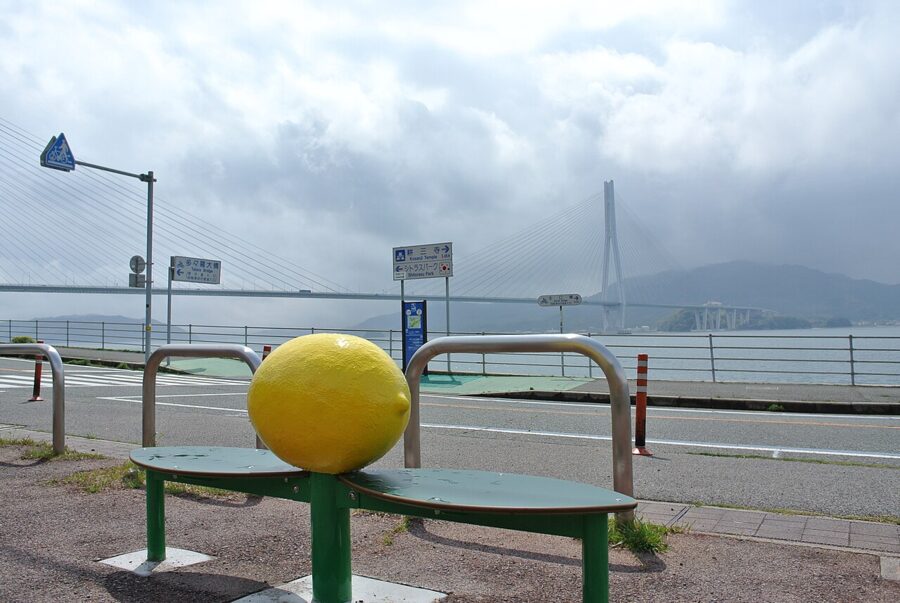
Octopus and anago in Setoda town
Setoda’s other food comes from the sea: octopus, and conger eel (anago), from the waters between the islands. Chidori (御食事処ちどり), in Setoda town, has served octopus rice (tako-meshi) since it opened in 1965. Its most-ordered dish began as a staff meal: octopus tempura on rice, bound with egg. Lemon hotpot (lemon nabe) is cooked for three groups a day and must be booked.
Chidori serves lunch from 11:00 to 15:00 on weekdays and to 16:00 at weekends, and dinner from 18:00 to 21:00; it is closed on Tuesdays. Nearby, Kaneyoshi (かねよし), an anago specialist, closes on Wednesdays, and Waka-ba (わか葉), for anago and octopus, closes on Tuesdays except public holidays. Tuesday is a poor day to arrive in Setoda hungry.
If you stay the night on the island, as I would on a two-day ride, Setoda is where to do it: the places to stay on the route cluster here, and dinner is easier to find in the town than anywhere else between the two ends.
Omishima: citrus, a salt factory and the Tatara roadside station
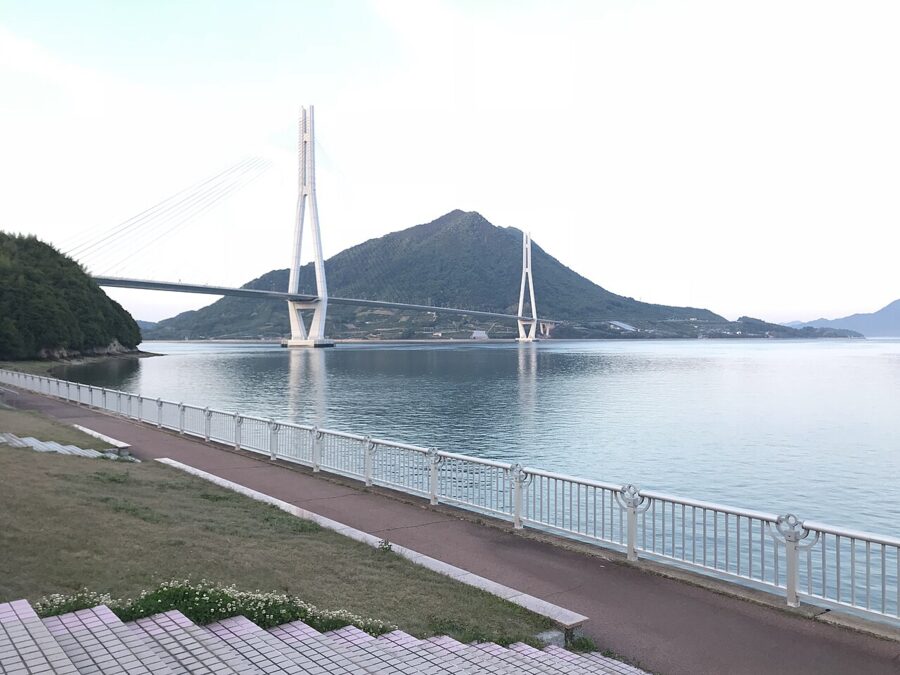
The cycling route comes down off the Tatara Bridge straight into Tatara Shimanami Park (道の駅 多々羅しまなみ公園), the roadside station at the Omishima end of the bridge. Almost everyone stops, and it is the best-stocked place on the Ehime side to eat lunch without a detour. The shop is open 09:00 to 17:00, and the restaurant takes last orders at 15:00 (14:00 on winter weekdays).
The restaurant menu runs from sea bream sushi (¥2,300) and a “pirate” seafood bowl (suigun kaizoku-don, ¥1,980) to an udon set with lemon fish cake and sea bream rice for ¥1,350, and a curry topped with croquettes of wild boar caught on Omishima. Between 12 January and 14 March 2027 the station closes on Thursdays.
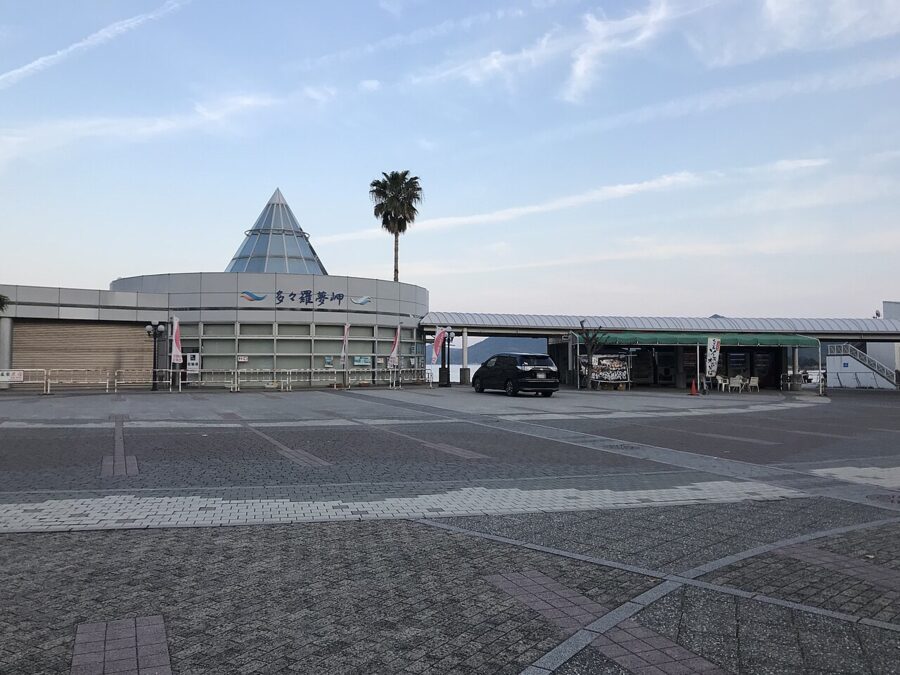
The covered produce stalls (ふれあい屋台市, 09:00 to 16:00) are where Omishima’s citrus is sold by the bag, and the calendar is the point. Beni Madonna and harehime come in December, iyokan, setoka and navels from February to March, shiranui (dekopon) into April; strawberries run from January to May. The list has nothing between May and December, so a summer visit means the shop’s range of pure Ehime citrus juices instead.
The Hakata Salt factory
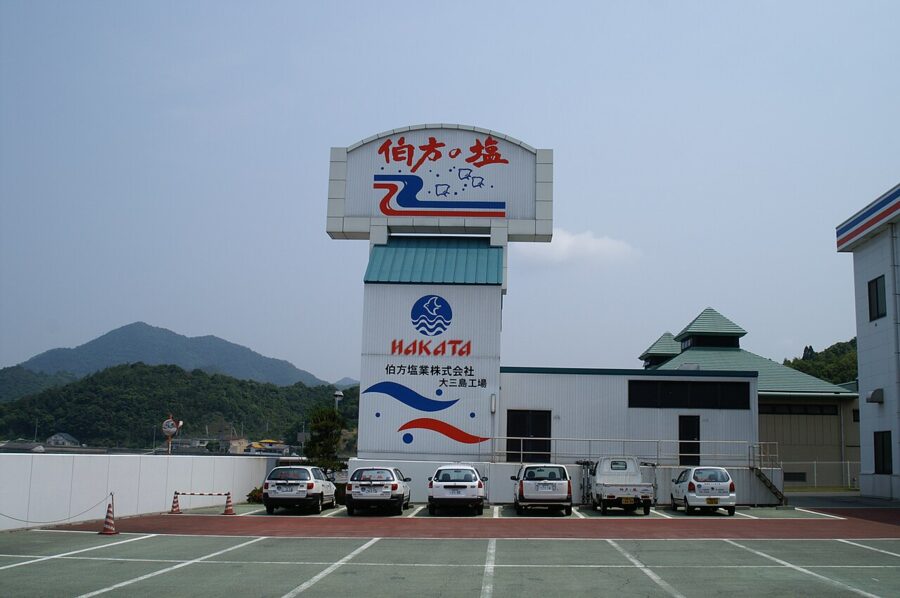
Hakata no Shio, the salt named after the next island south, is made on Omishima, at a factory in the Utena district about 1.5 km (1 mile) from Oyamazumi Shrine, on the island’s west side and off the main cycling route. A viewing corridor runs past the plant, open 09:00 to 16:00 with last entry at 15:30. The machines run only until 15:00, so come earlier to see salt being made.
The factory closes on Wednesdays (except public holidays; it opens on Wednesdays during the summer school holidays and in November), for Obon from 13 to 17 August, for the autumn festival and from 28 December to 7 January. The reason most riders make the detour is the soft-serve: lightly salted ice cream topped with coarse grains of fleur de sel, sold only here.
On the same side of the island, Omishima Brewery, a small brewery run by a couple, makes beer flavoured with the island’s citrus and sells it to take away. Ask about opening days before you ride over: it is a tiny operation.
Hakatajima: salt ramen at the foot of the bridge
Hakatajima made salt in tidal salt fields from the Edo period until the end of 1971, when a national law replaced field salt with salt made by ion-exchange membranes. A consumer campaign failed to save the fields but won permission to make salt again, under conditions. Hakata no Shio, launched in December 1973, had to use sun-dried salt that the state imported, and it still does.
The company dissolves sun-dried salt from Mexico or Australia in Inland Sea water, filters it and boils it down again, which leaves some of the seawater’s bittern minerals in the crystals. So the name remembers Hakatajima’s salt fields rather than saying where the raw salt comes from, and I think that is worth knowing before you buy a bag as a souvenir. It is still good salt.
The easiest bowl of salt ramen on the island is at the restaurant at Hakata S.C. Park (伯方S・Cパーク), the roadside station on the beach at the foot of the Hakata-Oshima Bridge. Hakata salt ramen costs ¥800 (about US$5), with versions topped with chashu (¥900), spring onion (¥850) or grilled sea bream (¥850). Imabari’s yakibuta tamago meshi is on the menu too (¥880), useful if you will reach Imabari after its lunch counters close.
Last orders are at 14:00 all year, and the shop is open 09:00 to 17:00. From 12 January to 14 March 2027 the station closes on Tuesdays. The island’s best-known salt ramen shop, Sanwa (さんわ) in the Kinoura district, is a short detour from the route; its listings disagree about hours and closing days, so treat it as a lunchtime stop and check before you go out of your way.
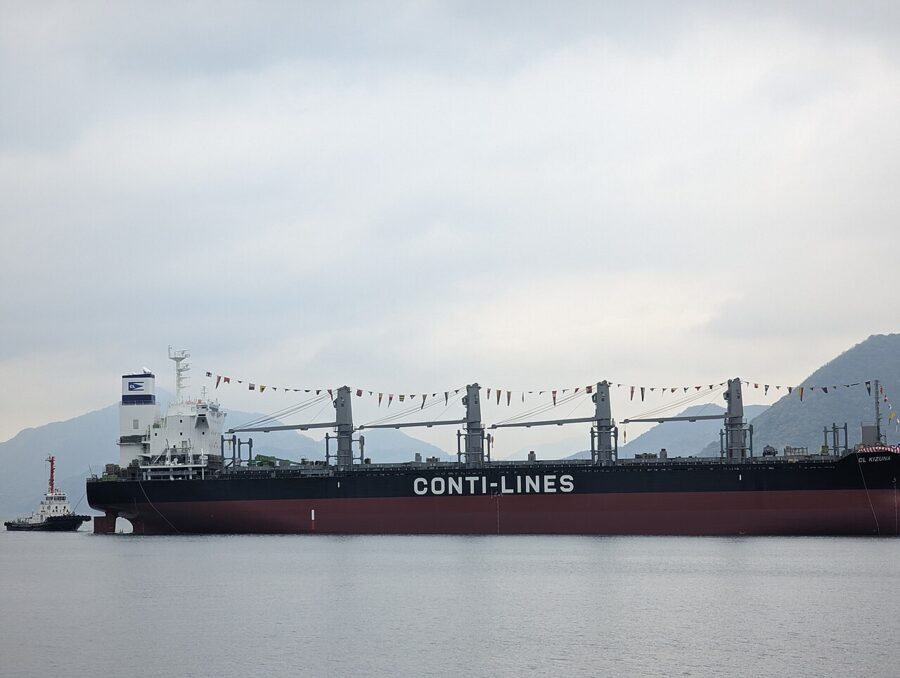
Oshima: grill your own lunch
Yoshiumi Ikiikikan (道の駅 よしうみいきいき館) sits on the water at the Oshima end of the Kurushima-Kaikyo Bridge, the last stop before the long crossing to Imabari. Its draw is the seafood barbecue: you pick shellfish, fish and meat from the counter, pay by the item, and cook it yourself on a clay charcoal grill (shichirin) at tables by the sea.
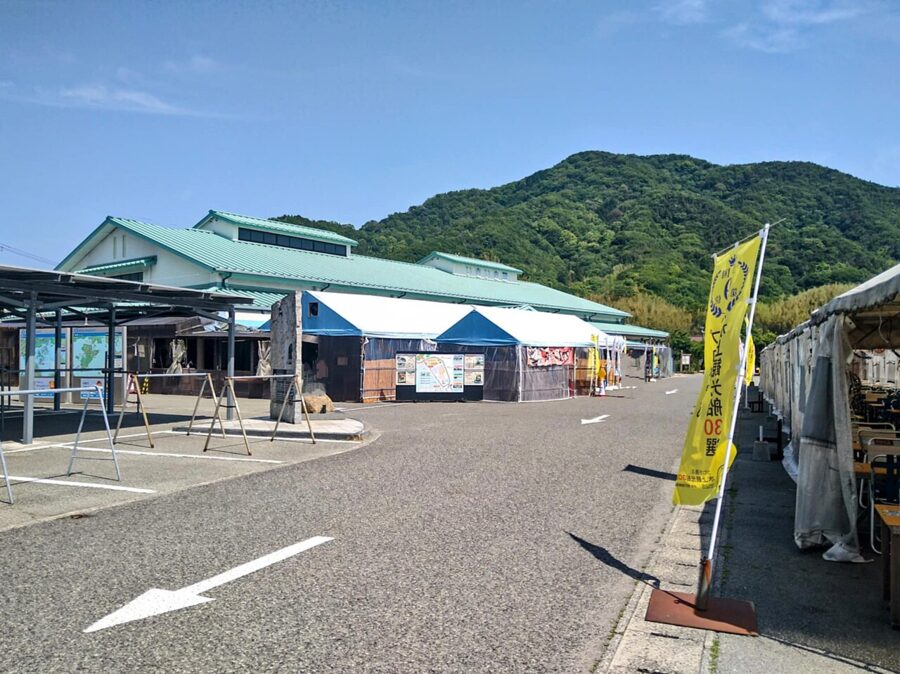
The table charge is ¥500 for anyone of junior-high age or over, with children free; the food is extra. Set courses booked ahead cost from ¥2,500 up to ¥10,000 with spiny lobster, and include the table charge. The grill takes its last entries at 15:00, with last orders at 15:30 and closing at 16:00.
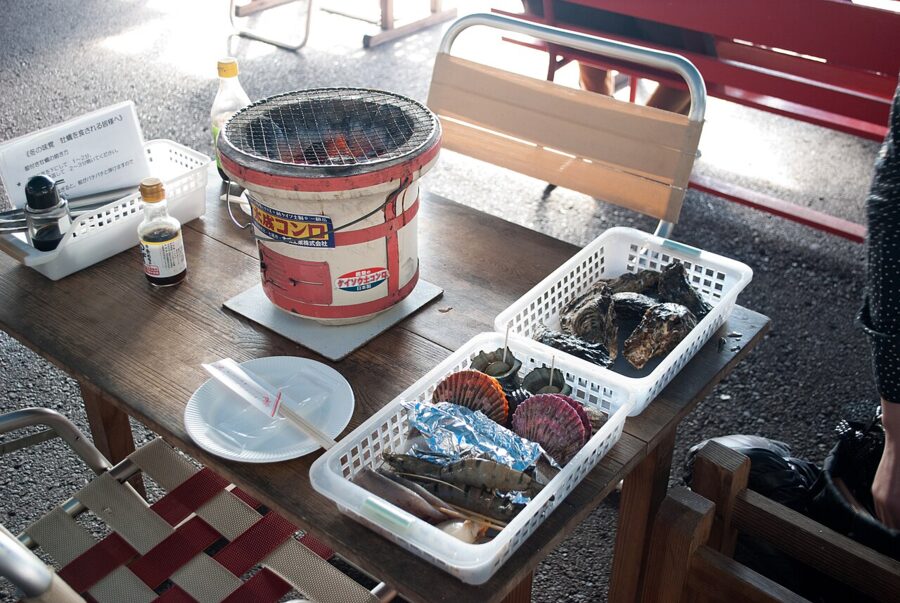
Winter changes the menu. From 1 December 2026 to late March 2027 there is a 70-minute all-you-can-eat grilled oyster sitting at 11:00 and 13:30 (¥4,850 for adults), for two or more and booked at least three days ahead; the oysters may be frozen. In the same period the restaurant runs set meals of oysters and red snow crab, and the whole station closes on Wednesdays between 12 January and 14 March 2027.
If you would rather someone else cooked, the restaurant serves Uwajima-style sea bream on rice for ¥1,900 and a set of senzanki fried chicken for ¥1,200, with last orders at 15:00 (14:00 on winter weekdays).
Sea bream and the other fish on every menu
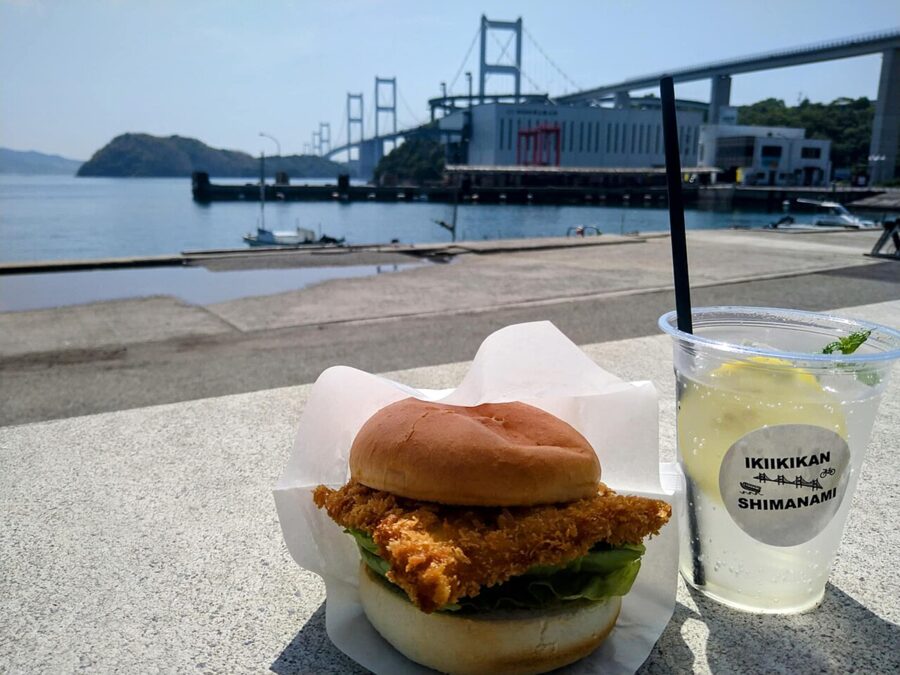
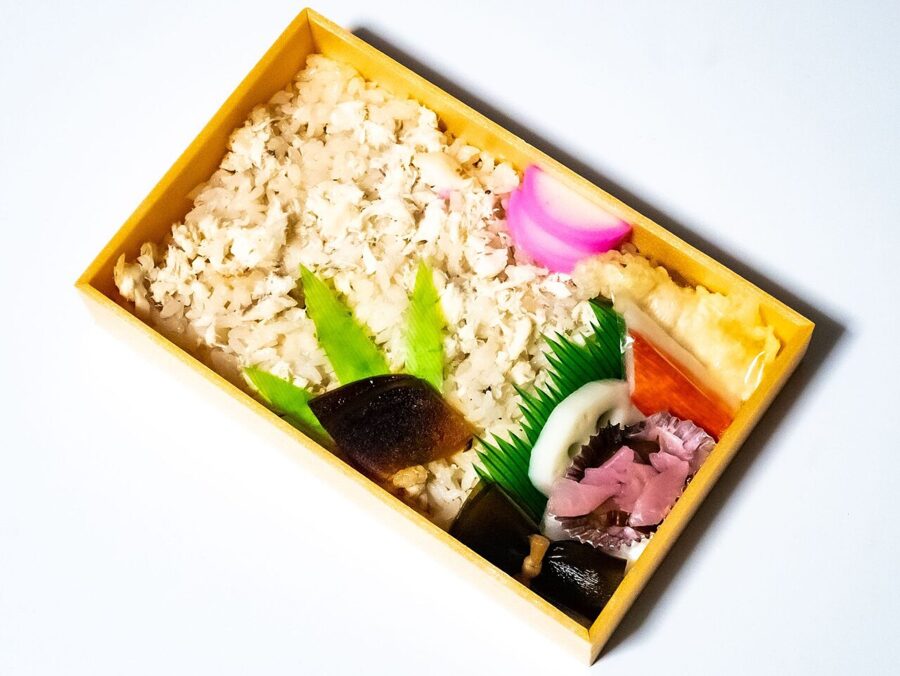
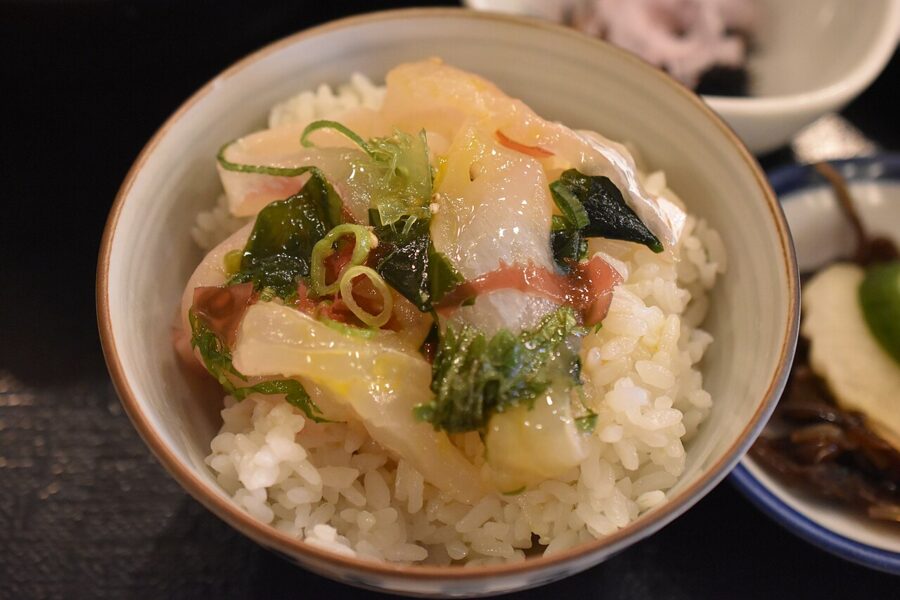
Sea bream (tai) is the fish you meet everywhere on the Ehime side, and it comes in two forms that share a name. Tai meshi in Imabari usually means sea bream cooked with the rice, then flaked and mixed through it, as in the lunchbox sold at Imabari Station. Uwajima-style tai meshi, from Ehime’s southern coast, is raw sea bream sliced over hot rice, with a sauce of soy and raw egg poured on at the table.
The roadside stations serve both, and sea bream shabu-shabu sets (¥3,300, booked ahead). Winter brings other fish: Tatara Shimanami Park’s restaurant runs a season of mahata grouper from 1 December 2026 to 28 February 2027. Octopus and anago belong mainly to the Hiroshima islands, Setoda above all.
Imabari: iron-plate yakitori and yakibuta tamago meshi
Yakitori on the iron plate
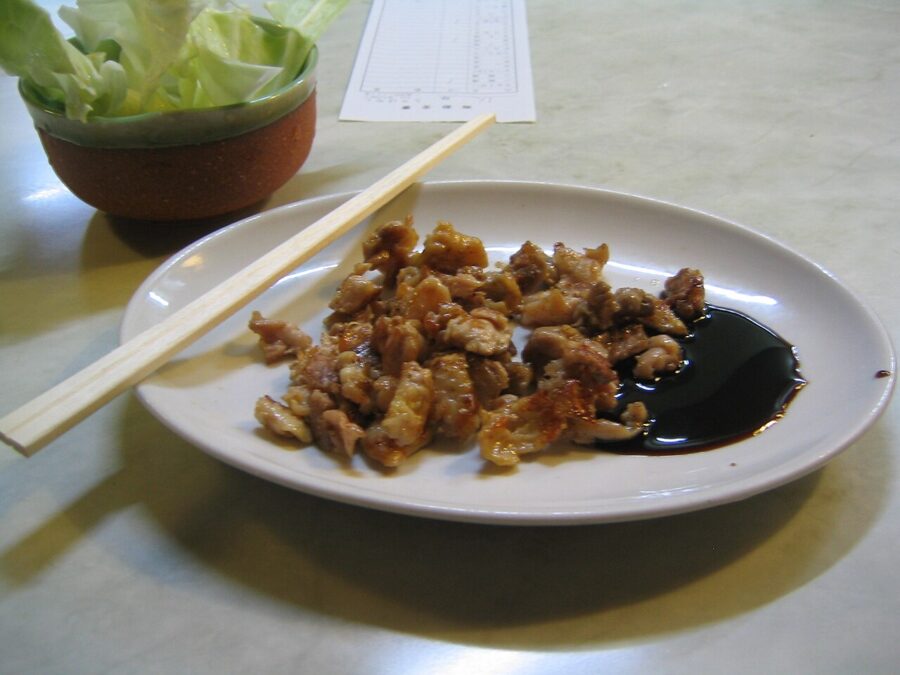
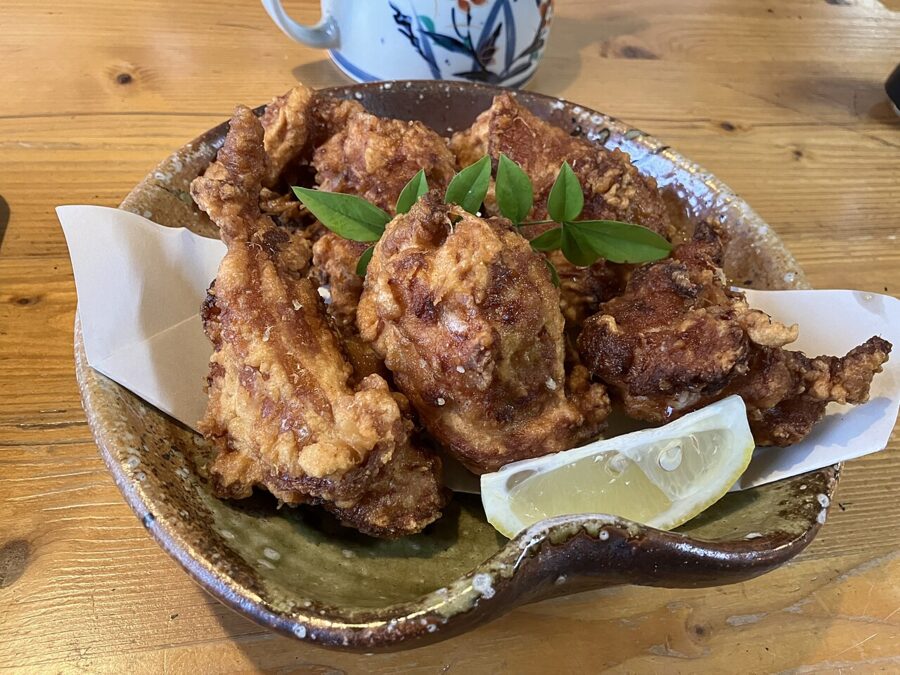
Imabari yakitori is not grilled on skewers. The chicken, above all the skin, goes onto a thick, slightly tilted iron plate and is pressed under an iron weight, so it fries in its own fat and cooks fast while the tilt drains the fat away. The method dates from 1960, when Gomidori (五味鳥) opened in Imabari: its founder, told off by customers for slow service, saw lotus root being cooked on an iron plate in Osaka and tried the same with chicken.
The town took to it quickly, and at one time the area had more than 100 iron-plate yakitori shops. Order the skin (kawa) first, crisp outside and juicy inside, and finish with senzanki, Imabari’s fried chicken. This is evening food served in small bars and restaurants, which is the best argument for sleeping in Imabari rather than taking the bus straight back to Onomichi.
Yakibuta tamago meshi
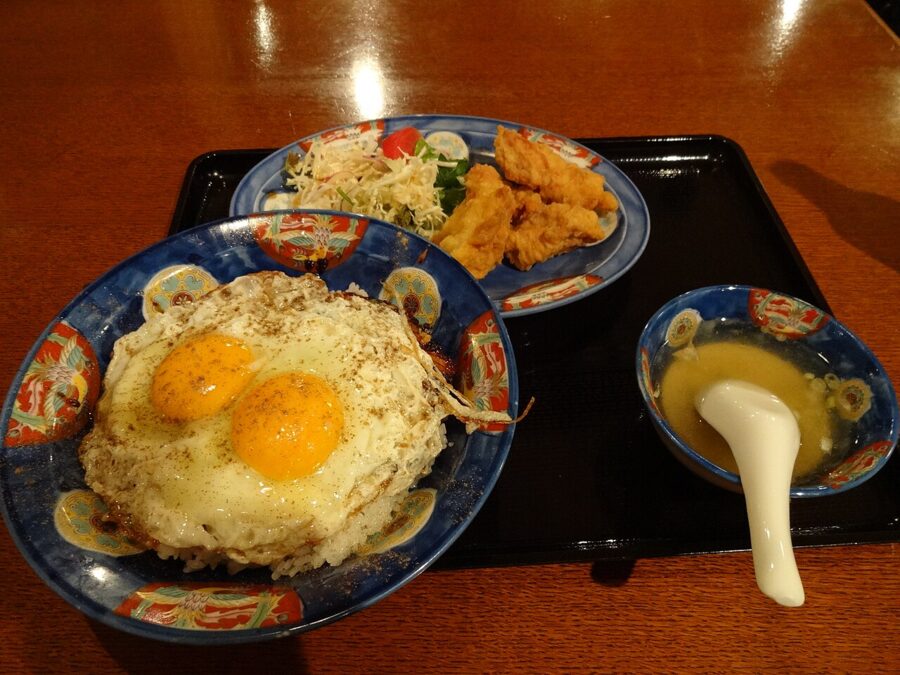
Yakibuta tamago meshi is rice topped with sliced roast pork and, usually, two fried eggs with runny yolks, finished with a sweet soy sauce from the pork; in Imabari you eat it with a ceramic spoon. It started as a staff meal at a Chinese restaurant called Gobankaku. One of its cooks, Seki Masatsugu, put it on the menu when he opened Hakurakuten in 1970, and others who had trained there followed.
Hakurakuten’s Imabari main shop (白楽天 今治本店), in Tokiwa-cho about six minutes’ walk from Imabari Station, is open 11:00 to 14:45 (last orders 14:30) and 17:00 to 21:15 (last orders 21:00). It is closed on Tuesdays and on some other days. Its newer spicy version, karatama, costs ¥1,050.
Shigematsu Hanten (重松飯店), in Taisho-cho about 11 minutes’ walk from the station, is the other bowl to try; it opens for lunch from 11:45 to 14:00 and for dinner from 18:00, and is closed on Mondays. If you have an hour before the train, the city’s other speciality is Imabari towels.
Eating on the road
What closes early, and when
The rule on the islands is lunch, not dinner. Most island restaurants serve from 11:00 and stop between 14:00 and 15:00, and the three Ehime roadside stations take last orders at 14:00 (Hakata) or 15:00 (Tatara and Yoshiumi). At an easy touring pace, a rider leaving Onomichi in mid-morning reaches Ikuchijima around lunchtime, which makes Setoda the natural place to eat, about 30 km along the cycling route.
Closing days cluster early in the week: Monday at Hassakuya and Shigematsu Hanten; Tuesday at Hassakuya, Chidori, Waka-ba and Hakurakuten; Wednesday at Maruboshi, Kaneyoshi and the salt factory. In winter the Ehime roadside stations add a weekly closing day between 12 January and 14 March 2027: Wednesday at Yoshiumi Ikiikikan, Tuesday at Hakata S.C. Park, Thursday at Tatara Shimanami Park. Around public holidays the stations move their closing day, so check their notices before a long weekend.
Breakfast and early starts
Very little on the islands opens before 08:00. Sumida Bakery on Mukaishima, from 06:00 every day, is the earliest. On Innoshima, Nanohana Cafe in Taguma serves breakfast from 08:30 to 10:30 and is closed on Mondays and the first and third Tuesdays. In Setoda, SOIL Setoda‘s MINATOYA serves breakfast from 07:30 to 10:30, and Lemon no Ki, a morning cafe at the NEST inn that opened in October 2025, serves citrus bagel sandwiches and home-made lemonade from 07:30 (closed Thursdays).
Convenience stores, rest stops and cash
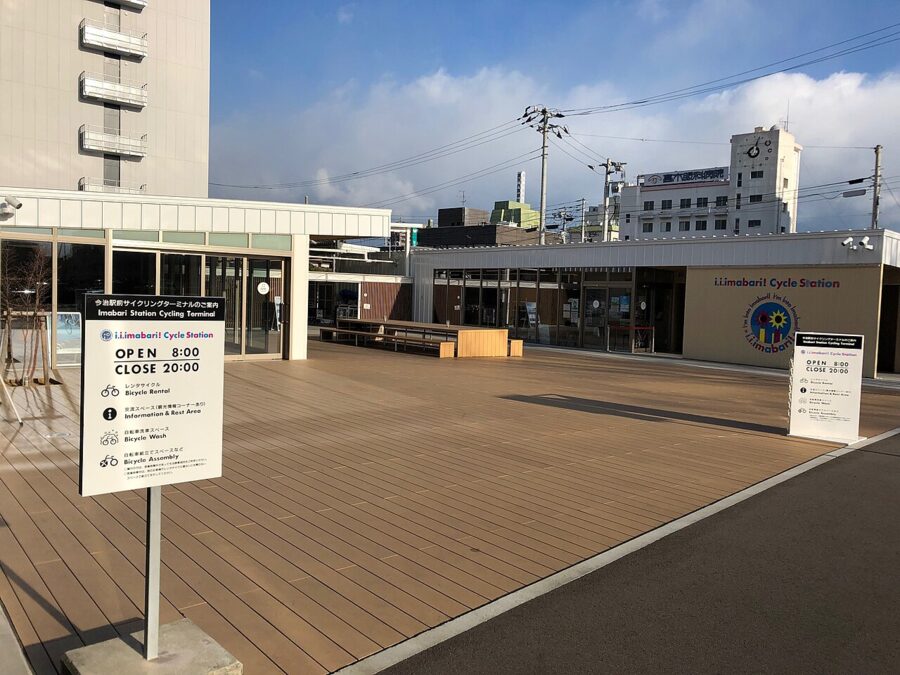
Convenience stores are the backstop, and most of the islands have them in their main towns, but the cycling road often bypasses town centres, so do not count on passing one at the moment you need it. Carry water and something to eat from Onomichi, and top up at the roadside stations. Shops and cafes showing a Cycle Oasis sign are registered rest stops for riders; the scheme provides pumps, tools and bike stands, though not every stop has all three.
Carry cash. Several of the small Setoda restaurants take no cards, and the counters selling daifuku, gelato and fruit by the road are not where you want to find that out. Cash also pays for the buses at either end, part of getting to the Shimanami Kaido, and for the ferries to the smaller islands off the route.
Back to that locked door on Innoshima. If you can choose the day, ride on a Friday: of the places here with a fixed closing day, only Ichibankan is shut, Hassakuya opens at 08:30, Chidori serves until 15:00 and the iron plates in Imabari are hot by evening.