Maruboshi opens at 10:30, and on a weekend the queue is already sitting in the covered garage next door before it opens. By noon the wait is about an hour. Across the road, Goichi serves a bowl in the same style and seats people a great deal faster.
That is the whole game with Onomichi ramen. The bowl itself is cheap, between ¥650 and ¥1,000 (about US$4 to US$7) for a plain one as of November 2026, and small enough that Onomichi’s own tourism association suggests eating at more than one shop. What it costs you is time, and on a day with a rental bike, a ferry and a terminal that closes at 19:00, time is the thing you have least of.
So choose the shop by the clock rather than by the length of its queue. One opens at 10:00, one closes at 16:00, one shuts every Thursday, and a few will still feed you after you hand the bike back in the evening. The bowls differ more than the menus suggest, too, and knowing what is in them makes the choice easier.
What is in a bowl of Onomichi ramen
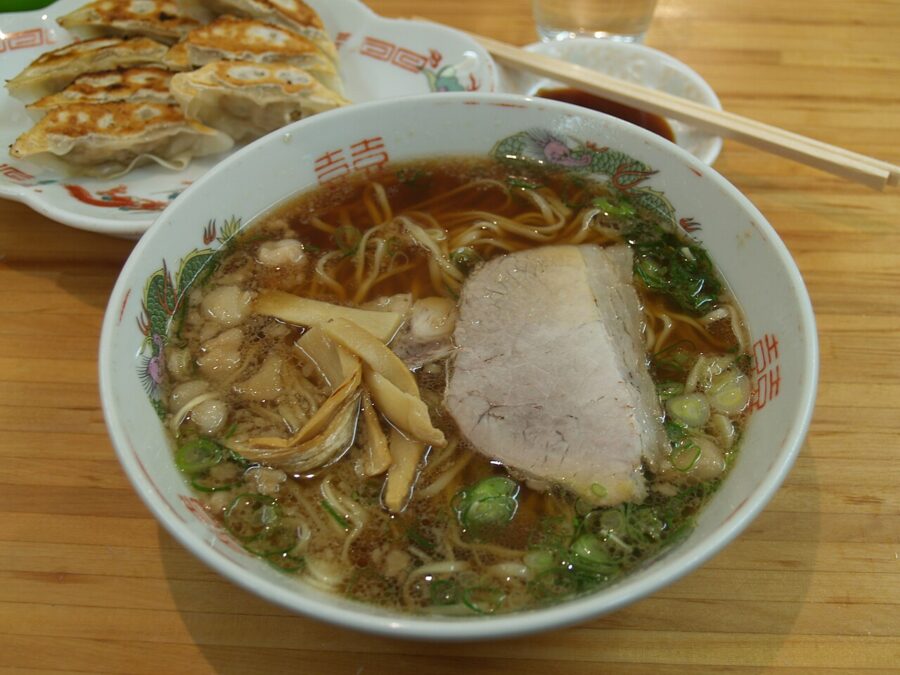
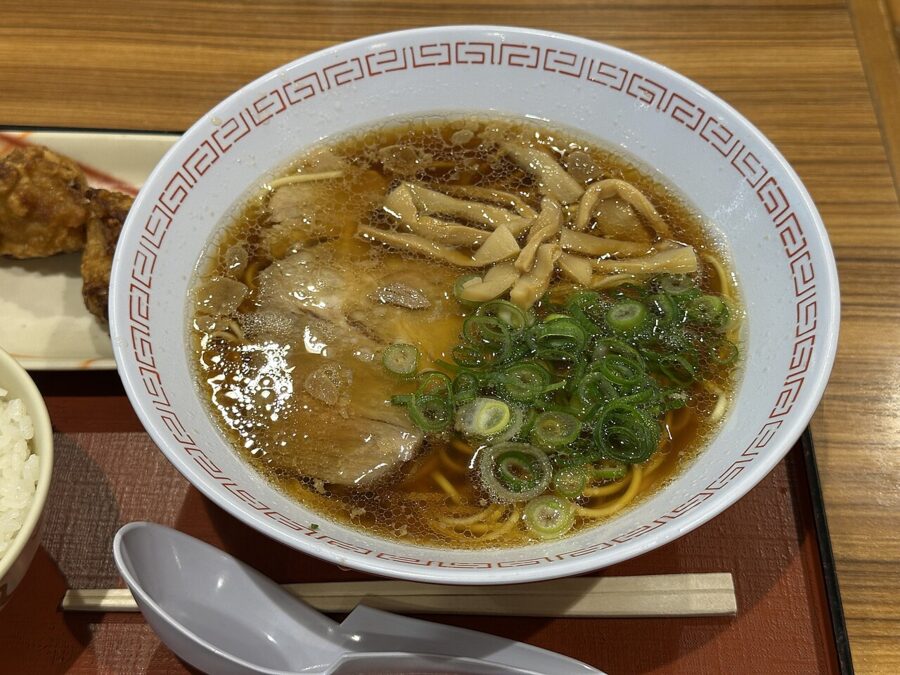
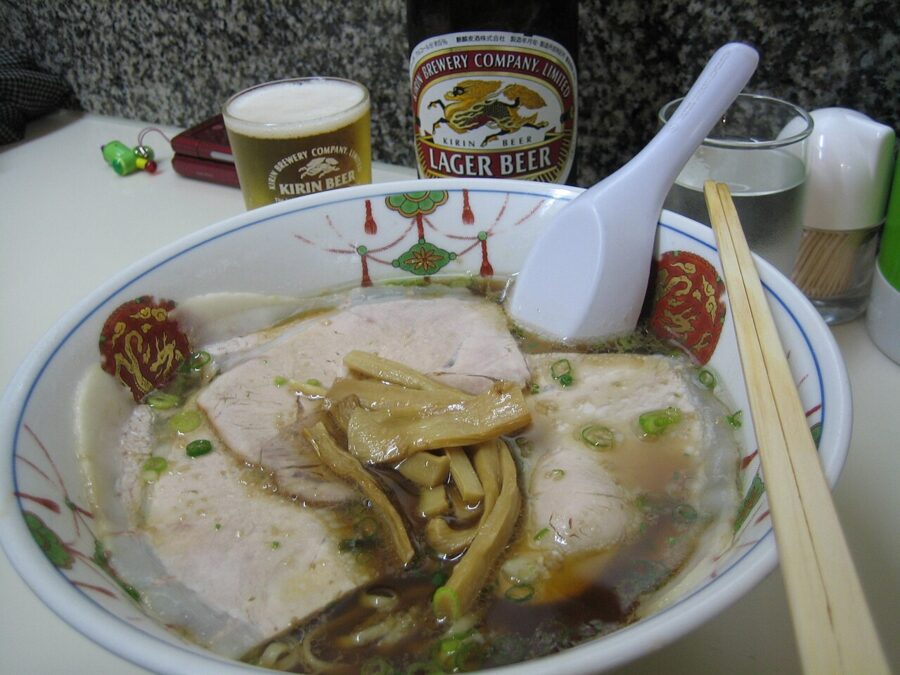
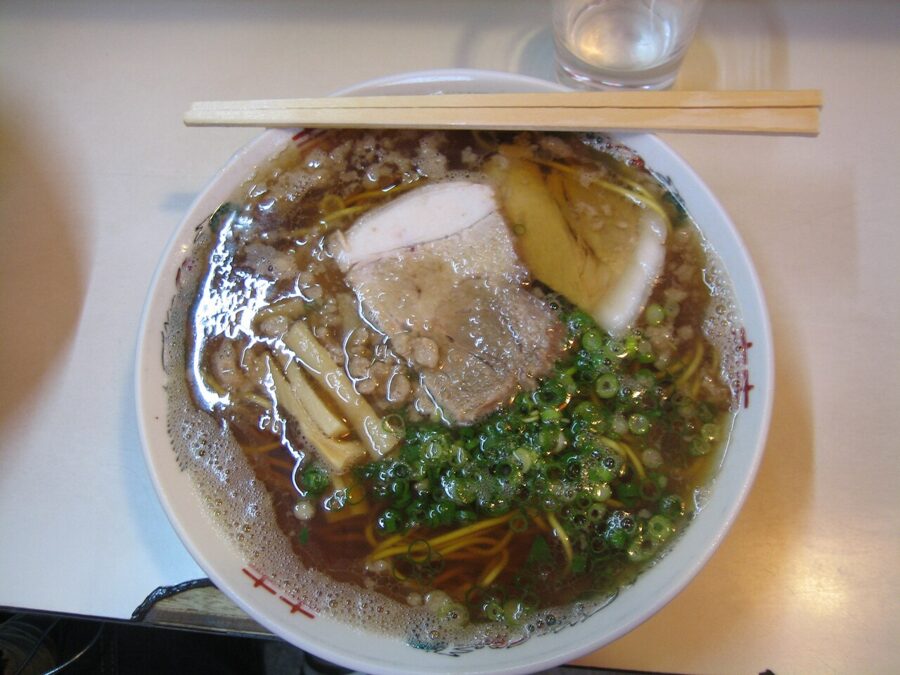
Onomichi ramen (尾道ラーメン) is a soy-sauce ramen with three marks: a clear broth that brings in small fish from the Inland Sea, crumbs of pork back fat floating on top, and flat noodles. Ask the people of Onomichi what it tastes like and the usual answer is that it looks heavy and eats light. The shops agree on the outline and argue about everything inside it.
The broth: soy, chicken, pork and small fish
The base is a stock of chicken bones, often with pork bones, mixed with dashi from small dried fish of the Seto Inland Sea, and seasoned with a dark soy tare. Which fish, and how much, is where shops part company. Ichibankan uses Japanese anchovy and other small inshore fish, with pork, chicken bones, vegetables and a blend of two soy sauces, according to its own description of the bowl. Maruboshi builds its broth on small sea bream, adds other small fish from the Inland Sea and uses Setouchi soy.
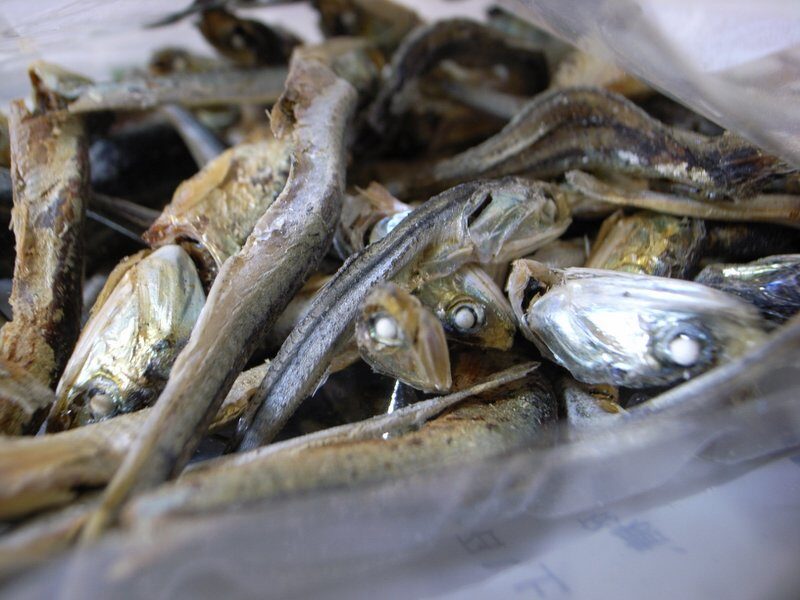
The fish is a background note, not a fishy soup. The real contrast is between shops that let the soy lead, with a sharp, salty first mouthful, and shops that keep it mild and let the fat carry the flavour. Several shops, Shu among them, will adjust the bowl if you ask: koime (濃いめ) for a stronger soup, katame (硬め) for firmer noodles.
The back fat
Seabura (背脂) is pork back fat, simmered until soft and broken into crumbs or small cubes, then scattered over the bowl just before it leaves the counter. It floats, it melts slowly, and it seals the surface so the soup stays hot to the last mouthful; mind your tongue on the first one. The size of the crumbs varies a lot: fine and almost invisible at some counters, fat white pebbles at others.
Flat noodles
The noodles are flat, usually medium-thin, and either straight or lightly wavy. Ichibankan makes its own flat, wavy noodles from a house blend of flour and groundwater from Jogecho, and rests them for several days before cutting. Maruboshi changes the water and egg-white content of its wavy noodles with the seasons. Onomichi’s tourism association says most shops use medium-thin flat noodles, and the wide, flat surface is what carries the fat up out of the bowl.
Toppings and what comes with them
The standard toppings are chashu pork, menma (seasoned bamboo shoots) and chopped spring onion, with a seasoned egg as an extra. Beyond that the shops have their signatures: Ichibankan’s braised pork belly, Tatsumi’s seared chashu, a spring-onion ramen piled green at Maruboshi. Most shops also sell fried rice, and a small fried rice with the bowl is the common order; Shu is the exception and sells neither fried rice nor gyoza.
How it differs from Hiroshima city’s ramen
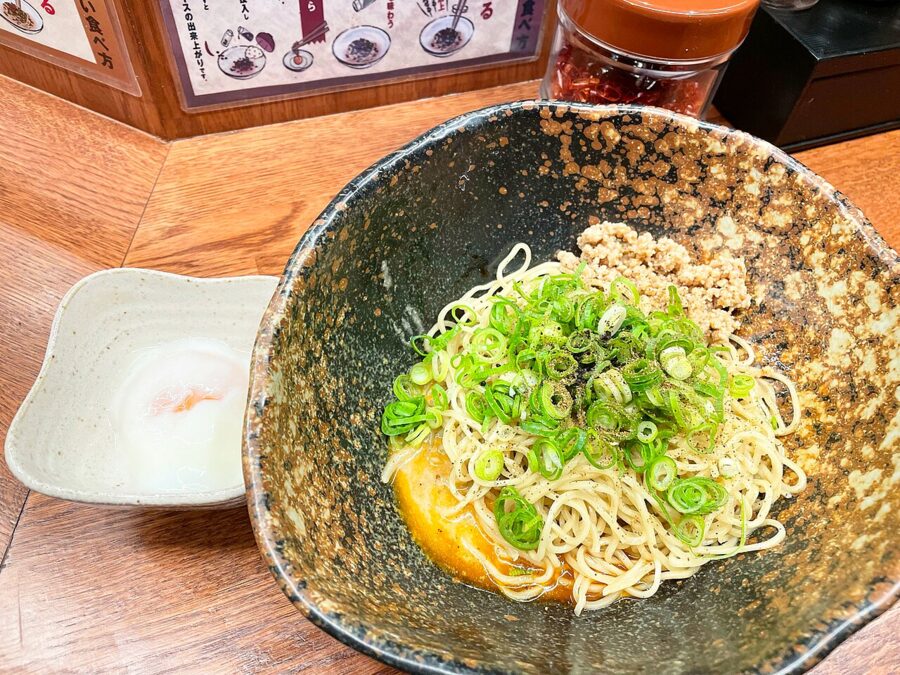
Hiroshima Prefecture has several noodle traditions, and Onomichi’s is the one on the coast. The ramen of Hiroshima city is usually a cloudy broth of pork bones and soy, richer and more opaque, with none of the Inland Sea fish. The city is also the home of soupless tantanmen, a bowl of noodles dressed in sesame, chilli oil and sansho pepper, which has its own followers and nothing in common with Onomichi’s bowl.
Where it came from
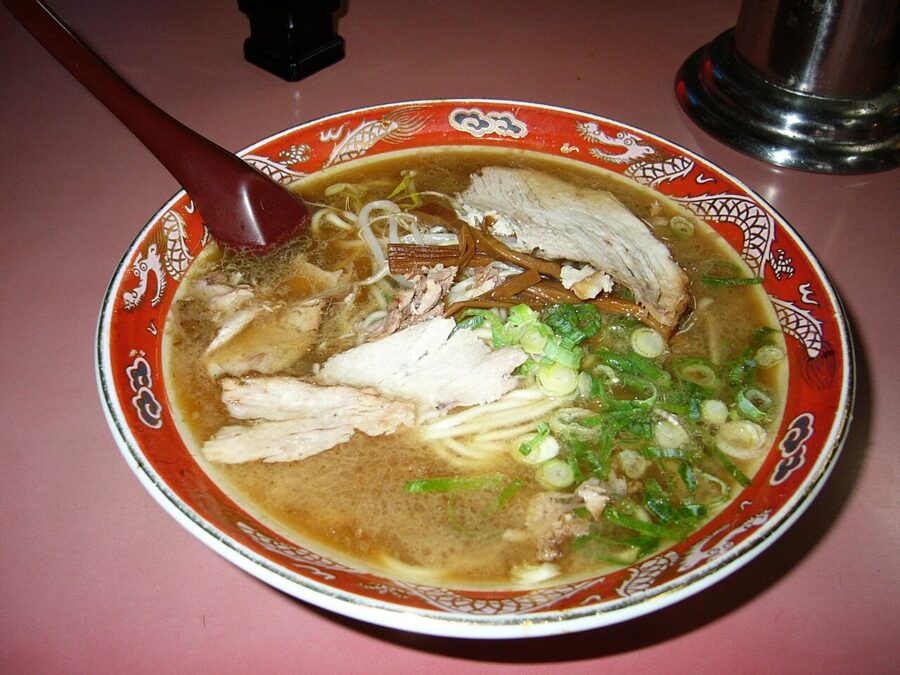
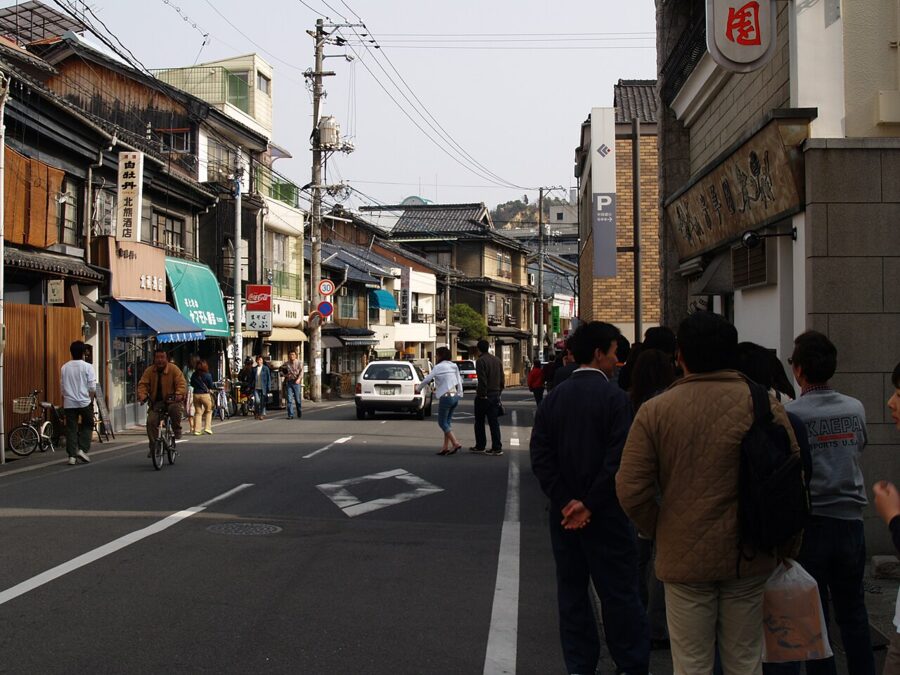
Onomichi has been eating Chinese-style noodles for about 90 years, but not always this bowl. According to the town’s tourism association, the ramen sold in the 1930s was a white, cloudy soup of beef and pork bones. Onomichi was a shipbuilding town, and before and during the war people from mainland China worked in its yards. When shipbuilding fell away after the war, some of them began pulling noodle stalls through the streets.
Two accounts compete for the start. One names a man called Zhang from Fujian, who settled in Onomichi in 1928 and sold noodles from a street stall. The other, the one most people mean, begins in 1947 with a stall run by Zhu Ajun (朱阿俊), born in Taiwan.
Shukaen
Zhu’s stall became a shop under the name Shukaen (朱華園), in Jushinichi-Motomachi, east of the arcade. Locally it was simply “Shu-san’s shop”. Its chuka soba combined a soy broth, back fat fried before it went into the bowl and flat noodles made in the shop, and that combination spread to the town’s other counters until it became what the country now calls Onomichi ramen. Even so, the second-generation owner, Danjo Toshihiro, said in an interview that his father never taught him a thing about making ramen, and that the bowl he served was his own study and reconstruction of the original.
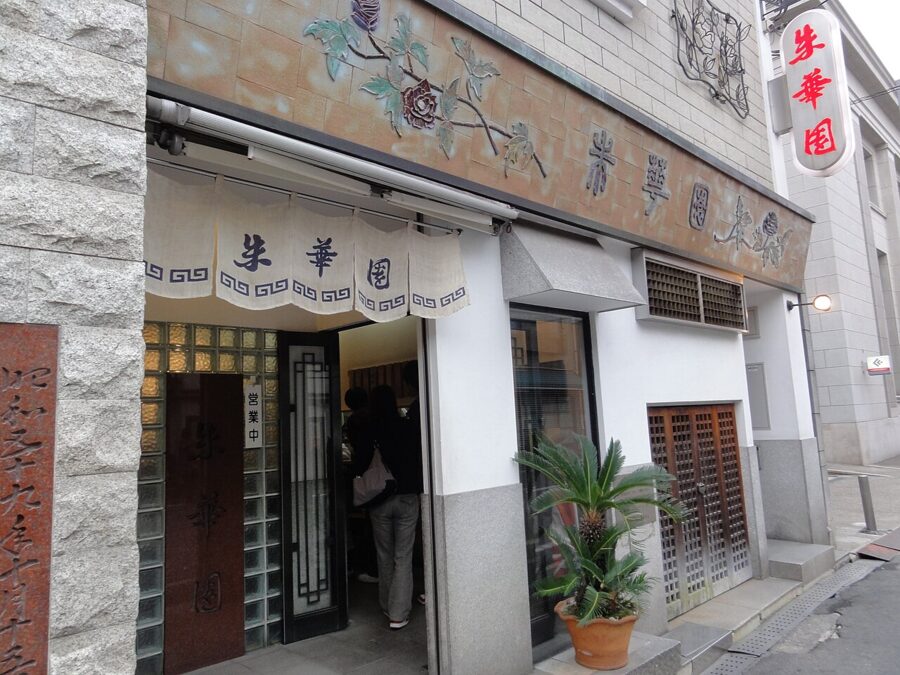
For years the weekend queue outside Shukaen was one of the sights of the town. On 7 June 2019 a notice went up on the door: the main shop would close for a while from 19 June, and the branch at Matsunaga in Fukuyama would close for good on 18 June. The Asahi Shimbun reported a long line forming before the 11:00 opening as regulars came for a last bowl. The shop never reopened.
How the name spread
Shukaen made the bowl; a box of souvenir noodles made the name. In the 1990s a maker of dried seafood snacks in Fukuyama put a take-home Onomichi ramen on sale, a chicken stock with flat sardines (hirako iwashi), and it sold two million servings in a year, by the tourism association’s account to the government’s Highlighting Japan magazine. The maker was Amo Chinmi, from Tomonoura. Shops serving that fish-forward style multiplied, and when people say Onomichi ramen today they usually mean that version rather than Shukaen’s.
So there are really two families: the Shukaen line and the souvenir line. The ramen writer Iwaoka Hiroshi went as far as suggesting the style should be called Onomichi-Fukuyama ramen. The name has not caught on.
The shops worth queuing for
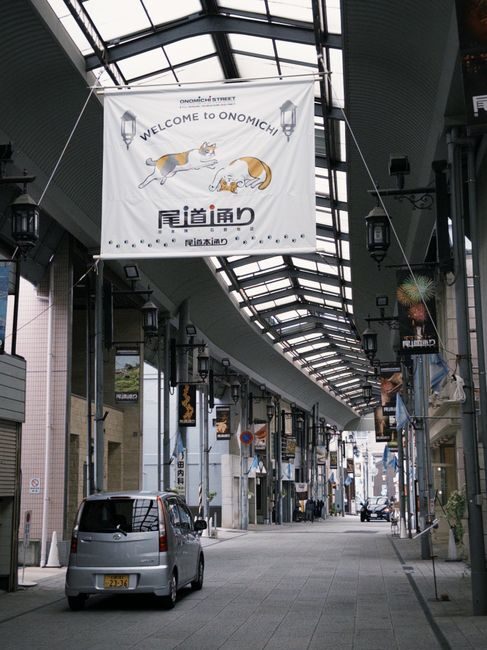
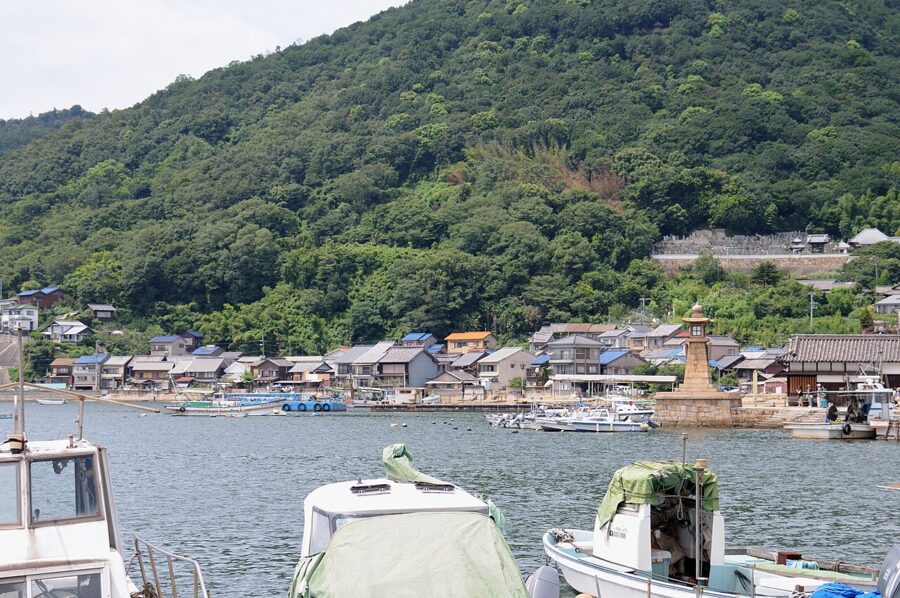
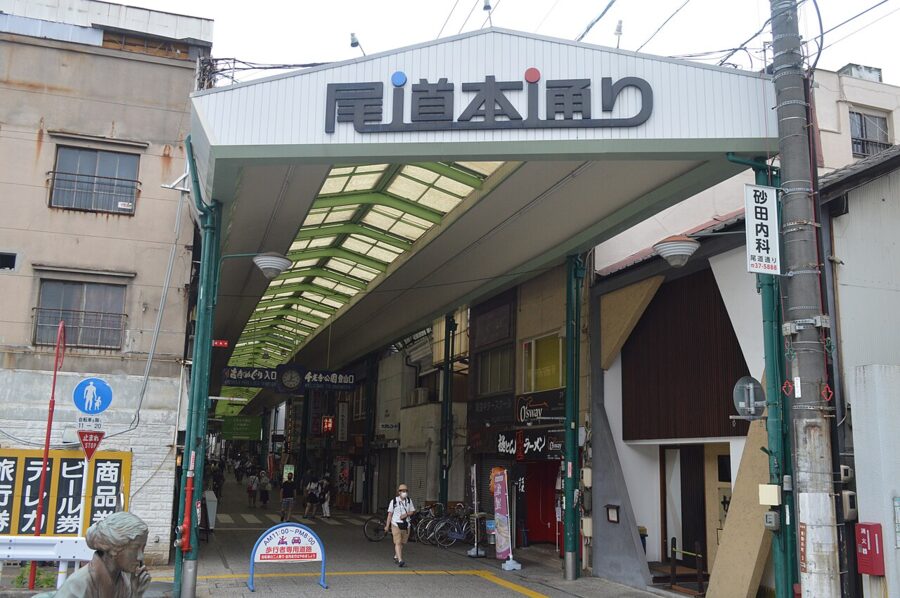
All of these were serving in November 2026, and every one is a walk from JR Onomichi Station’s south exit, heading east along the arcade or the seafront road. Hours, closing days and prices change, so treat the details below as correct as of November 2026. Once you have crossed, the rest of Shimanami Kaido food is lemons, salt and fish.
| Shop | Area, walk from the station | Hours (as of Nov 2026) | Closed | Plain bowl | Order |
|---|---|---|---|---|---|
| Shu (朱) | Jushinichi-Motomachi, about 16 min | 11:00–17:00 | Thursday | ¥700 | Ticket machine |
| Tsutafuji (つたふじ) | Tsuchido, about 15 min | From 11:00 until the soup runs out | Irregular | Large ¥900 | Tell the cook |
| Maruboshi (丸ぼし) | Tsuchido, about 15 min | 10:30 to about 20:00 | Wednesday | ¥850 | Ticket machine, cash |
| Goichi (吾一) | Tsuchido, about 13 min | 11:00–21:00 | Monday | ¥900 | Ticket machine, cash |
| Ichibankan (壱番館) | Tsuchido seafront, about 14 min | 11:00–18:00 | Friday | ¥850 | At the table |
| Shoya (しょうや本店) | Jushinichi-Motomachi, about 17 min | From 10:00 | Open daily | About ¥1,000 | Ticket machine |
| Tatsumi (たつみ) | Tsuchido, about 6 min | Weekends from 10:00, weekdays 11:00 to mid-afternoon | Tue, Thu, Fri | Order the seared chashu | Ticket machine, cash |
| Eijun (永潤) | Jushinichi-Motomachi, about 17 min | 10:30–16:00 | Open daily | ¥750 | Ticket machine |
| Miyachi (みやち) | Tsuchido, about 10 min | 11:00–16:00 | Wed, Thu | ¥650 | At the counter, cash |
Shu: the Shukaen line
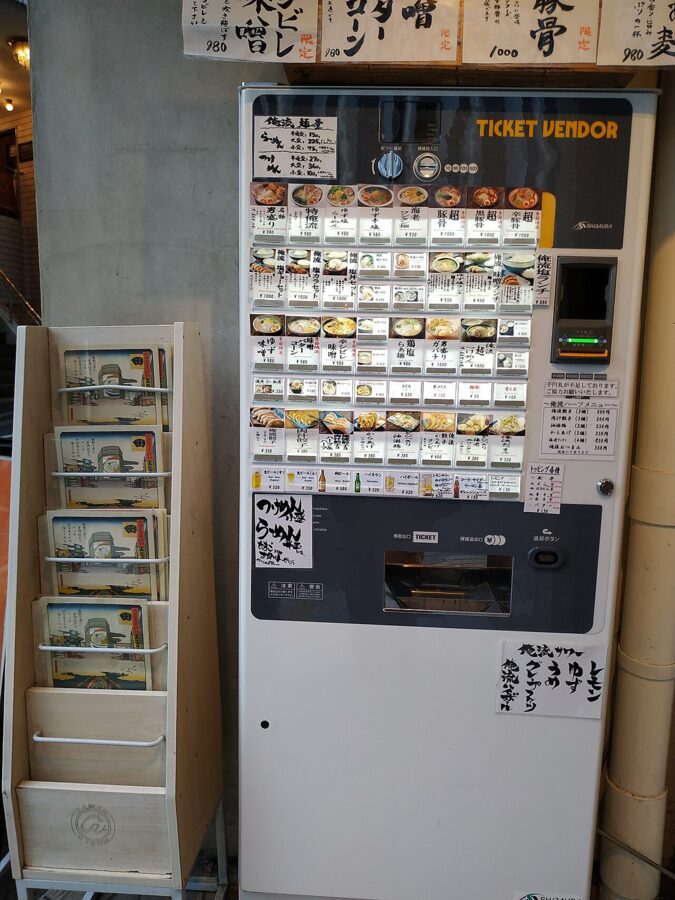
Chuka Soba Shu (中華そば 朱) opened on 16 November 2020 in Jushinichi-Motomachi, a couple of minutes from the old Shukaen, run by members of the Shukaen family. It does not call its bowl Onomichi ramen. It calls it chuka soba, as Shukaen did, and charges ¥700 (about US$5) for it, one of the cheapest plain bowls in town. Buy a ticket from the machine on the right as you go in, sit where you like and fetch your own water.
The broth is gentle, the fat comes in small pieces and the noodles are flat and soft; some old Shukaen regulars find it milder than the original. There are no sets, no fried rice and no gyoza, and the wonton noodles and yakisoba can sell out soon after 13:00 on a Saturday. Turnover is fast and the queue is shorter than at the big names. Hours are 11:00 to 17:00, closed Thursdays (as of November 2026).
Tsutafuji: the old counter
With Shukaen gone, Tsutafuji (つたふじ本店) in Tsuchido is the old guard of the queue shops, in business for more than 70 years. It is a counter of about ten seats with the cook working in front of you, boiling the noodles, laying on thick slices of chashu and menma, and finishing each bowl with a dark, slightly sweet soy broth and a scatter of fat. There is no menu to speak of: you tell them nami (並, regular) or dai (大, large), and that is the order. A large was ¥900 (about US$6) in November 2026, after a price rise.
The house rules are part of it. You may photograph your own bowl but not the shop, and there are no ramen spoons, so the broth is drunk from the bowl. It opens at 11:00, and people start queuing well before; at weekends twenty or more can be waiting by opening time. It shuts when the soup runs out, often early in the afternoon, and has closed at short notice now and then, so keep a second shop in mind.
Maruboshi: the long queue
Onomichi Ramen Maruboshi (尾道ラーメン専門店 丸ぼし), in Tsuchido 2-chome, is the queue most visitors end up in. The broth starts from small sea bream and Inland Sea fish, the noodles are its own and wavy, and the plain Onomichi ramen was ¥850 (about US$6) in November 2026, with the spring-onion version at ¥980. A stronger niboshi ramen is limited to about 15 bowls a day. The ticket machine is just inside the door on the right and takes cash only.
Maruboshi’s own page gives the hours as 10:30 to about 20:00, closing when it sells out, and Wednesday as the closing day. The queue waits in the roofed garage beside the shop. At weekend lunchtimes expect about an hour; mid-afternoon, from about 15:00, the wait drops to a few minutes. Before 11:00 on a weekday you will usually walk straight in.
Goichi: across the road
Onomichi Ramen Goichi (尾道ラーメン 吾一) began as a ramen brand sold to take home and in supermarkets, and opened its own shop in Tsuchido 2-chome, across the road from Maruboshi. It is the answer to Maruboshi’s queue: the room is bigger, the bowls come out fast, and the line moves much more quickly. A regular bowl was ¥900 in autumn 2026, and there is a mini size, useful if you are eating your way along the arcade. Pay at the ticket machine in cash, whatever the stickers on the door say.
The broth is a straightforward soy with a fair amount of fat, the chashu is lean, and a box of thick bonito flakes on the table lets you push the bowl towards the sea. Goichi’s hours are 11:00 to 21:00, closed on Mondays (Tuesdays when Monday is a public holiday), which makes it one of the few good bowls in town after dark.
Ichibankan: braised pork on the seafront
Onomichi Ramen Ichibankan (尾道ラーメン 壱番館) also started as take-home noodles before there was a shop, and its main branch is on the seafront road in Tsuchido, next to the Onomichi Royal Hotel. The plain ramen was ¥850 in September 2026. The bowl people queue for is the kakuni ramen, topped with thick braised pork belly, ¥1,290 (about US$9) in November 2026 and limited, so it can go early. Staff take your order at the table.
It is open 11:00 to 18:00, or until the soup runs out, and closed on Fridays except public holidays. The queue is steady rather than fierce, half an hour or so at a weekend lunchtime and shorter after 14:00, though a holiday weekend can stretch it well beyond that.
Shoya and Shoya Hanten
Onomichi Ramen Shoya (尾道ラーメン しょうや本店) in Jushinichi-Motomachi is a 12-seat counter with a ticket machine at the door and a punchy, salty-edged soy broth with flat noodles and big crumbs of fat. A plain bowl costs about ¥1,000, and the order nearly everyone makes is ramen with a small fried rice topped with egg yolk, about ¥1,250 together (as of November 2026). It opens at 10:00. The machine takes notes no bigger than ¥5,000 and no ¥500 coins, so carry a few ¥1,000 notes and decide what you want before you reach it.
The same people run Shoya Hanten (しょうや飯店), a newer shop in Tsuchido 1-chome about five minutes’ walk from the station. It opens at 10:00 every day and stays open into the evening, sells frozen ramen to take home, and is the obvious bowl if your train is due or you have just handed back a bike. The queue there is longest at lunch and short at opening.
Tatsumi, near the station
Onomichi Ramen Tatsumi (尾道ラーメン たつみ) has been serving for about half a century from Tsuchido 1-chome, about six minutes from the station, and is the closest of the queue shops to the rental terminal. It is a counter of about eleven seats with a window onto the sea at the back. The broth leads with soy, firmer and saltier than most, and the seared chashu, cut thin and fanned like petals, is the thing to order extra. Buy a ticket (cash only) from the machine at the entrance; a notice outside sets out how to queue when it is busy.
Its hours are the awkward part. It closes on Tuesdays, Thursdays and Fridays, opens at 10:00 at weekends and at 11:00 on weekdays, and finishes in the afternoon. A weekend lunch queue of twenty or more is normal; after 15:00 on a Saturday it can be one group.
Eijun, for the ropeway
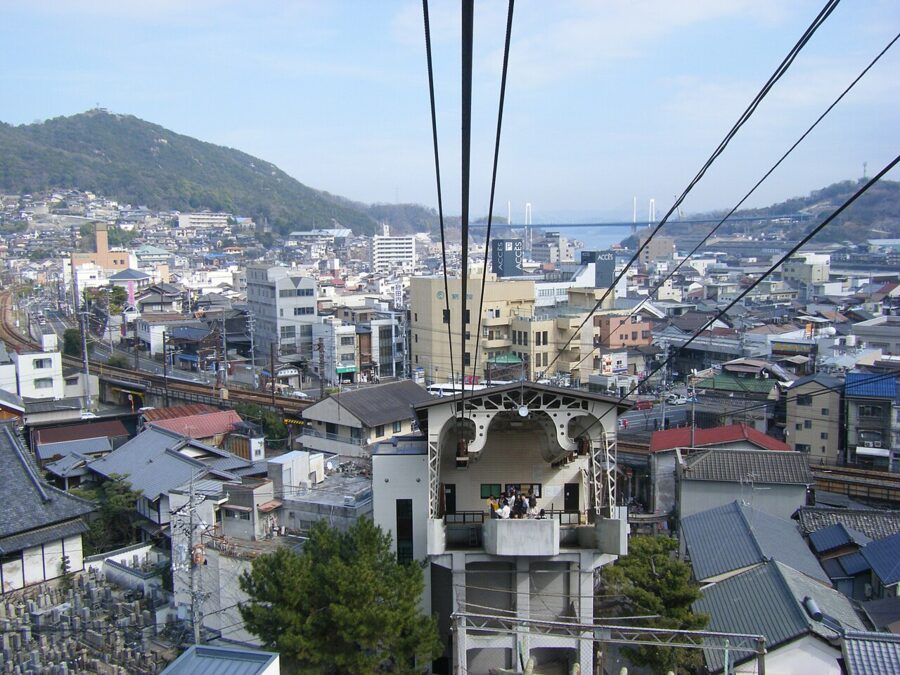
Onomichi Ramen Eijun (尾道ラーメン 永潤 本店) in Jushinichi-Motomachi is the nearest of these shops to the Senkojiyama Ropeway, and that distance from the station is why its queue is short even at weekends. The plain bowl was ¥750 in October 2026: flat, thinnish noodles, chicken and fish in the broth and large crumbs of fat. There is a half-size ramen for anyone eating twice in a day. Pay at the ticket machine.
It opens 10:30 to 16:00, and it keeps serving through the middle of the afternoon when some others have closed, which makes it the right bowl before or after Senkoji and the walk down the hill.
Miyachi: the bowl before Onomichi ramen
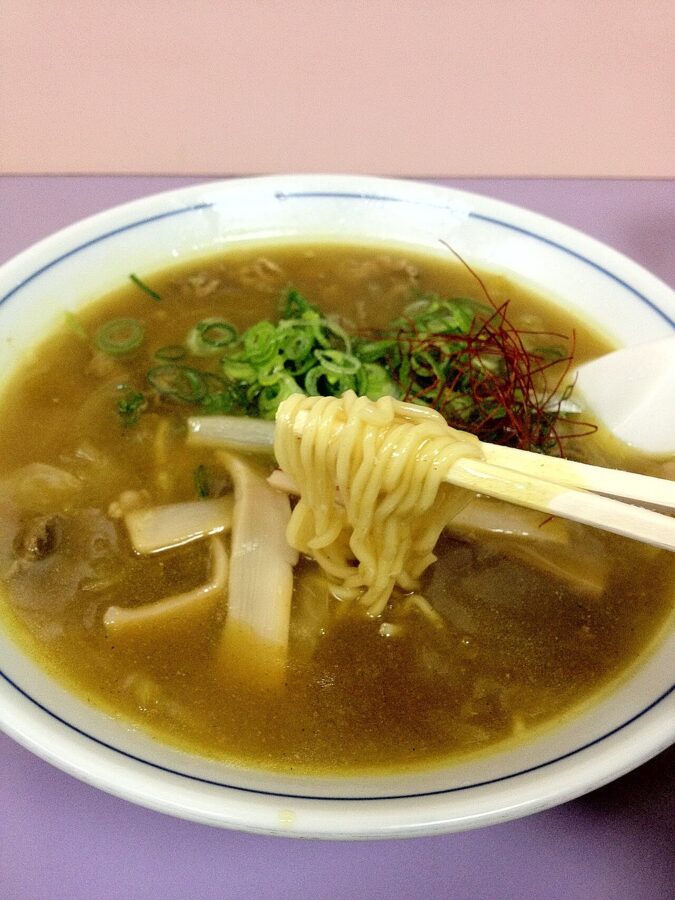
Mendokoro Miyachi (めん処 みやち), down an alley off the arcade in Tsuchido 1-chome, does not sell itself as an Onomichi ramen shop, and that is the reason to go. It serves the older kind of chuka soba, a light soy broth that leans towards Japanese dashi, with thin noodles and a slice of chashu, for ¥650 (about US$4) in 2026. Order it with inari sushi, or try the tempura chuka or the curry chuka.
A couple run it from a counter of about a dozen seats, so the queue moves slowly even when it is short. It opens 11:00 to 16:00, closed Wednesdays and Thursdays, and takes cash only.
Queues, tickets and sizes
Most of these shops sell through a ticket machine just inside the door. You choose the bowl, pay, hand the ticket to the staff and sit where you are told; in Onomichi the machines are mostly cash only, and some refuse ¥10,000 notes. Ichibankan, Tsutafuji and Miyachi take orders by voice instead. Water is usually self-service from a jug or a cooler.
Sizes are named in Japanese. Nami (並) is regular, omori (大盛) or dai (大) is large, and a few shops sell a mini or half bowl (ミニ, 半). Onomichi portions are small by ramen standards, so a regular plus a small fried rice is a full meal, and a mini lets you eat at two shops in one afternoon.
The queues follow the visitors. Weekends, public holidays and the autumn and spring cycling seasons are the busy days, and the peak is 11:30 to 13:30. The two quiet windows are the first half-hour after opening on a weekday and the middle of the afternoon, from about 14:30 to 16:30, at the shops that stay open through it. Nobody takes names: you join the line and wait to be waved in.
Fitting a bowl into a riding day
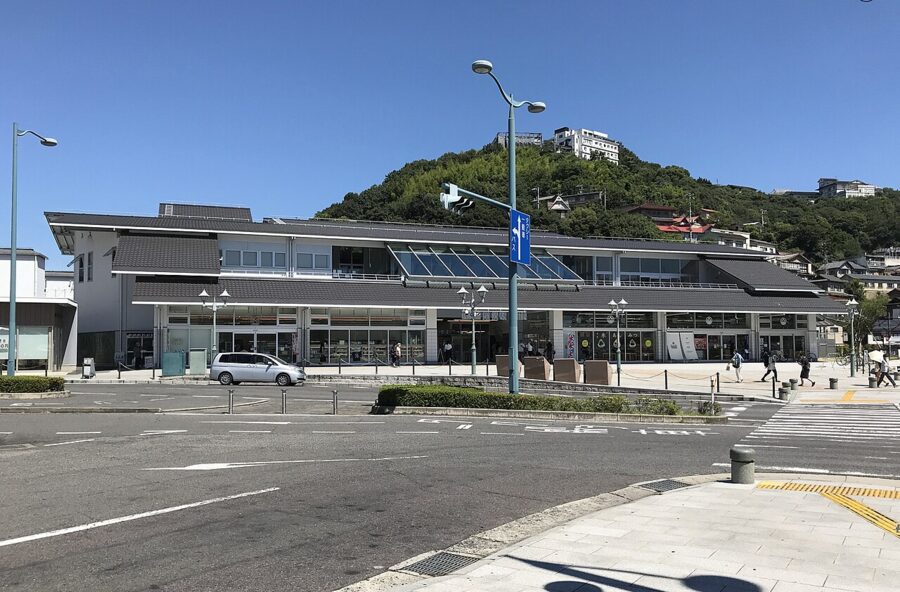
The problem is the clock. Shimanami Japan’s rental terminal by Onomichi Station opens at 08:00 and takes bikes back until 19:00 from March to November (18:00 from December to February), and its island terminals close at 17:00. None of the ramen shops above opens before 10:00. So a ramen breakfast before a full day on the Shimanami Kaido does not work, and you plan the bowl around the ride rather than the other way round.
Riding the whole way to Imabari
If you are riding the full 70 km (43 miles) to Imabari in a day, eat Onomichi ramen the evening before. Goichi serves until 21:00 except on Mondays, Maruboshi until about 20:00 except on Wednesdays, and Shoya Hanten every evening. Collect the bike at 08:00 and take the ferry to Mukaishima; there will be other lunches on the way, and a one-day Shimanami Kaido itinerary has no room for a queue.
Onomichi to Setoda and back by boat
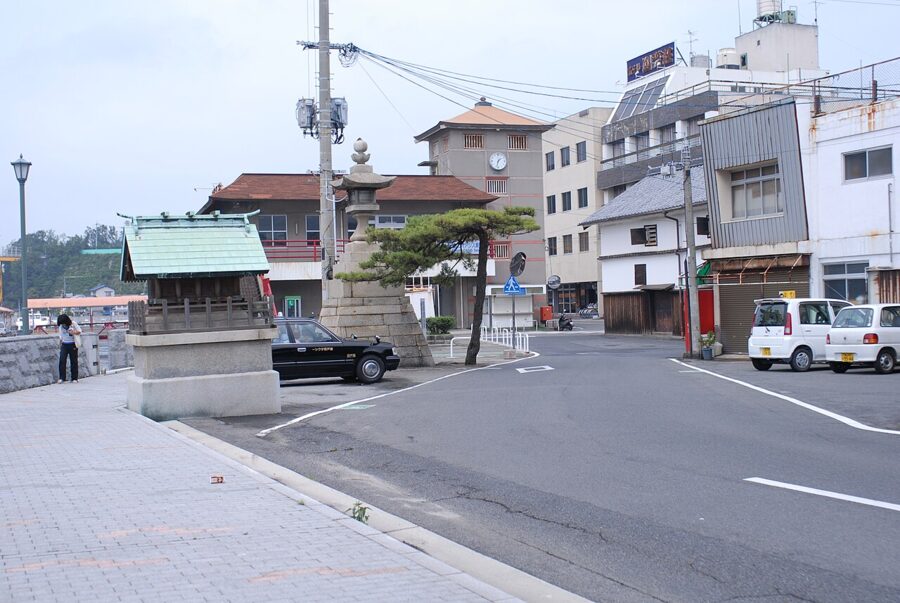
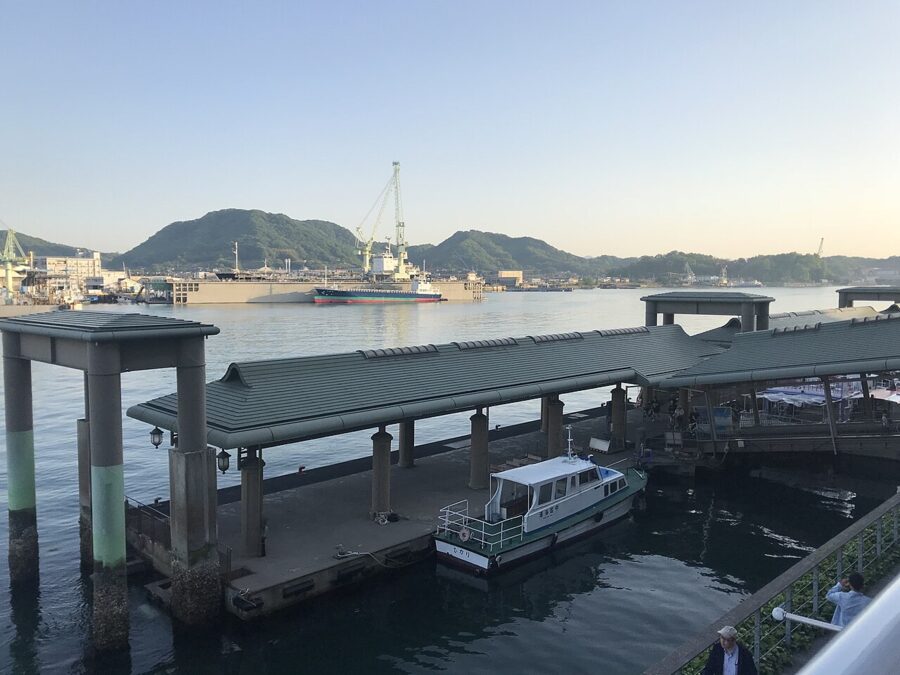
This is the day that suits a ramen lunch best. Ride the 30 km (19 miles) to Setoda on Ikuchijima, which Shimanami Japan reckons at three to four hours with stops, and come back on Setouchi Cruising’s boat, about 45 minutes to the pier in front of Onomichi Station. On the current timetable boats leave Setoda at 13:25, 15:00 and 17:00, among others; the 15:00 lands you in Onomichi when the queues are at their shortest, and Maruboshi, Goichi, Ichibankan and Shu are all still serving.
Take the 17:00 and you are back around 17:45, with Shu and Eijun closed but Goichi, Maruboshi and Shoya Hanten still open. The fare is ¥1,500 (about US$10) plus ¥500 for a bike, as of 2026; wind and fog can cancel it, so check the morning of the day, as with all the Shimanami Kaido luggage and ferries.
A late start from Onomichi
If you are only riding to Setoda, you can eat first. Be at Maruboshi or Shoya Hanten when they open, at 10:30 or 10:00, eat, collect the bike and be on the Mukaishima ferry before noon. That still leaves time to reach Setoda for the 17:00 boat, or to hand the bike in at a Setoda terminal before it closes at 17:00. Book the bike ahead through Shimanami Kaido bike rental if you start this late on a weekend.
Riding in from Imabari
Riding north the other way, the Onomichi terminal is your finish line and takes bikes until 19:00 in season. Hand it in first and walk: Shoya Hanten is five minutes away, Goichi and Maruboshi about a quarter of an hour east along the arcade. It is the best-earned bowl of the trip.
Taking it home
The take-home packs came first in Onomichi, and they are still everywhere. Boxed sets of fresh flat noodles with sachets of concentrated soup are sold in the souvenir shops of Onomichi and Fukuyama, and several of the restaurants sell their own: Ichibankan’s fresh noodles began as exactly that, Goichi was a supermarket brand before it had a counter, and Shoya Hanten sells frozen bowls. They keep without a fridge, except the frozen ones, and survive a day in a pannier.
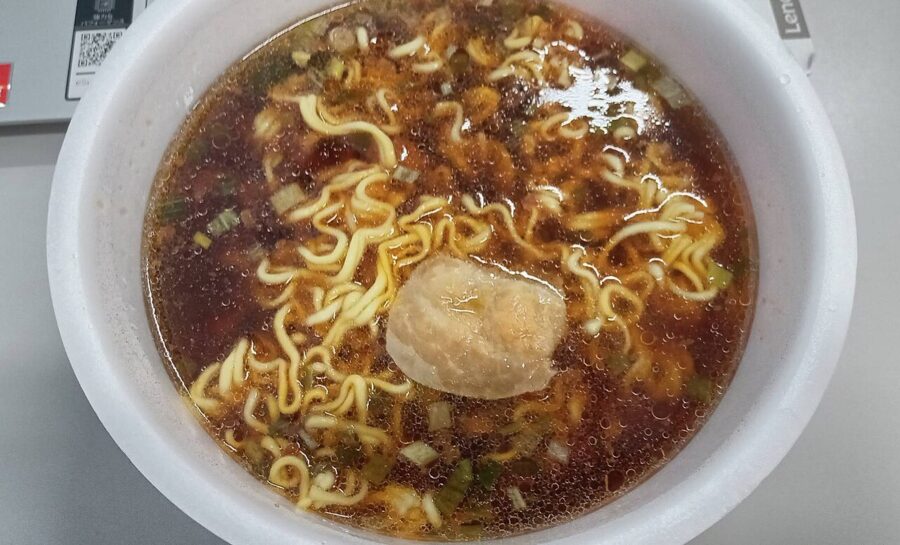
Instant cups labelled Onomichi ramen come and go from the big noodle companies, some with powdered iriko or back fat in the sachets. Buy them for fun; for something closer, take home a restaurant’s own pack and add chashu and spring onion.
Back to the garage beside Maruboshi, then. If it is noon on a Saturday, cross the road to Goichi, or come back on the 15:00 boat from Setoda and walk straight in.