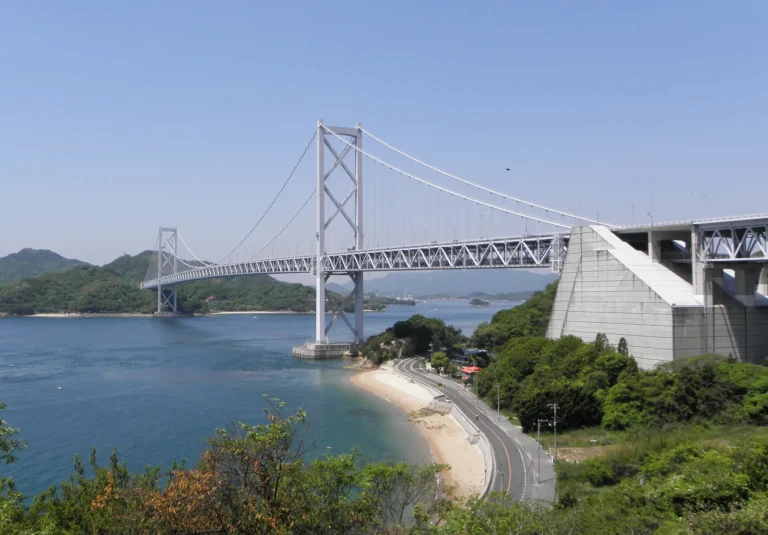
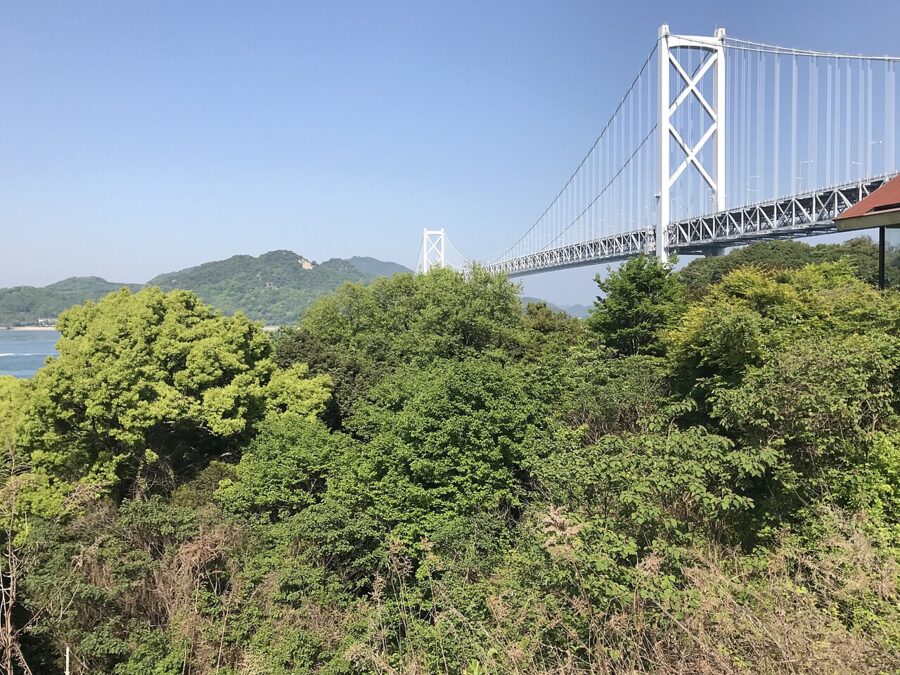
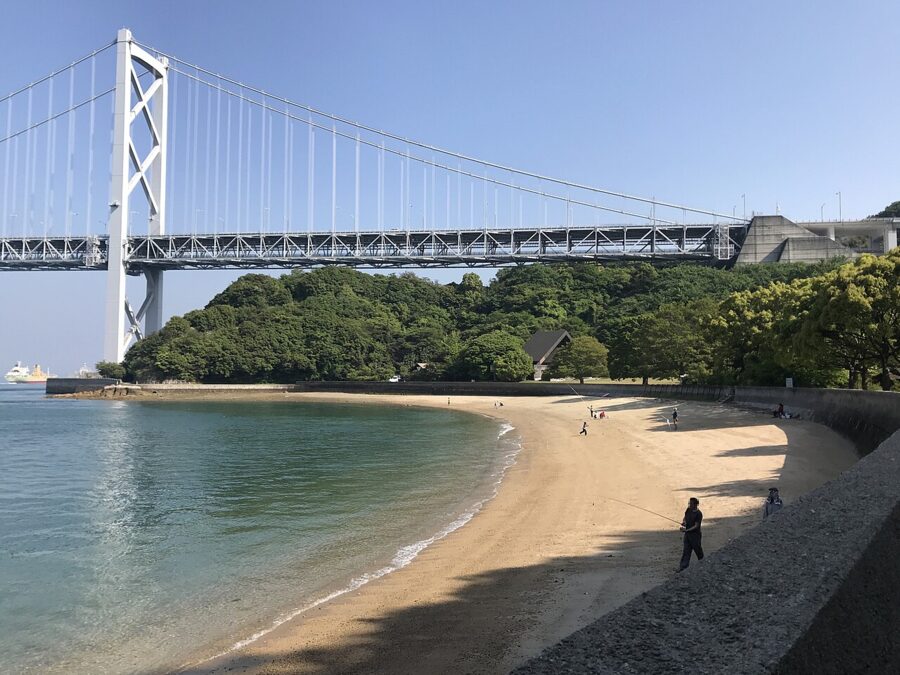
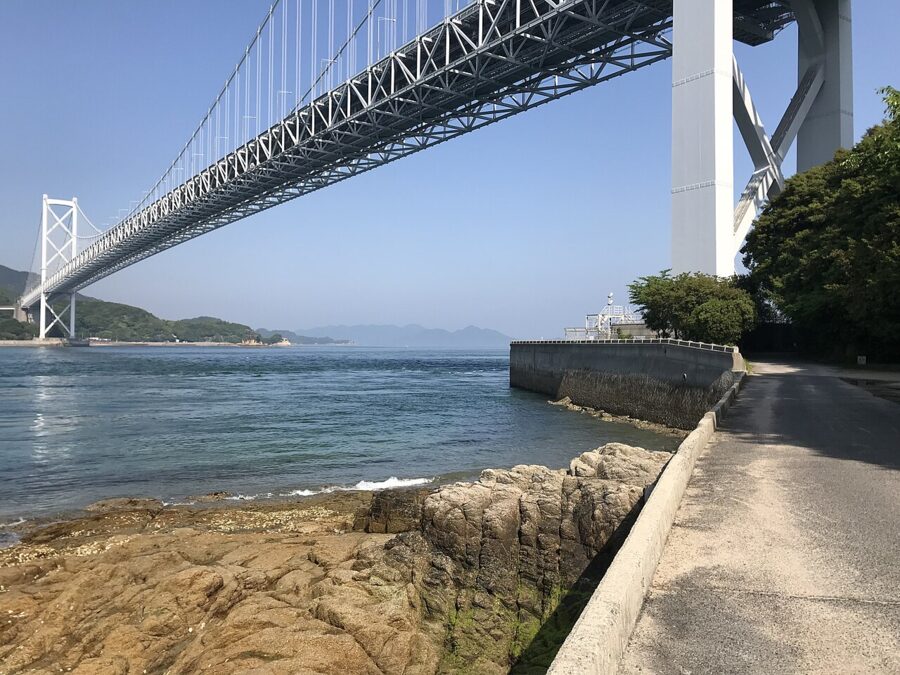
The first hassaku most riders meet on the Shimanami Kaido comes wrapped in rice cake. At 08:30 the counter at Hassakuya (はっさく屋), in the park at the Innoshima end of the Innoshima Bridge, starts selling daifuku with two or three hand-peeled segments of the fruit inside, and the shop shuts when the day’s batch has gone. You eat it at a window over the strait, with the bridge you have just crossed filling the glass.
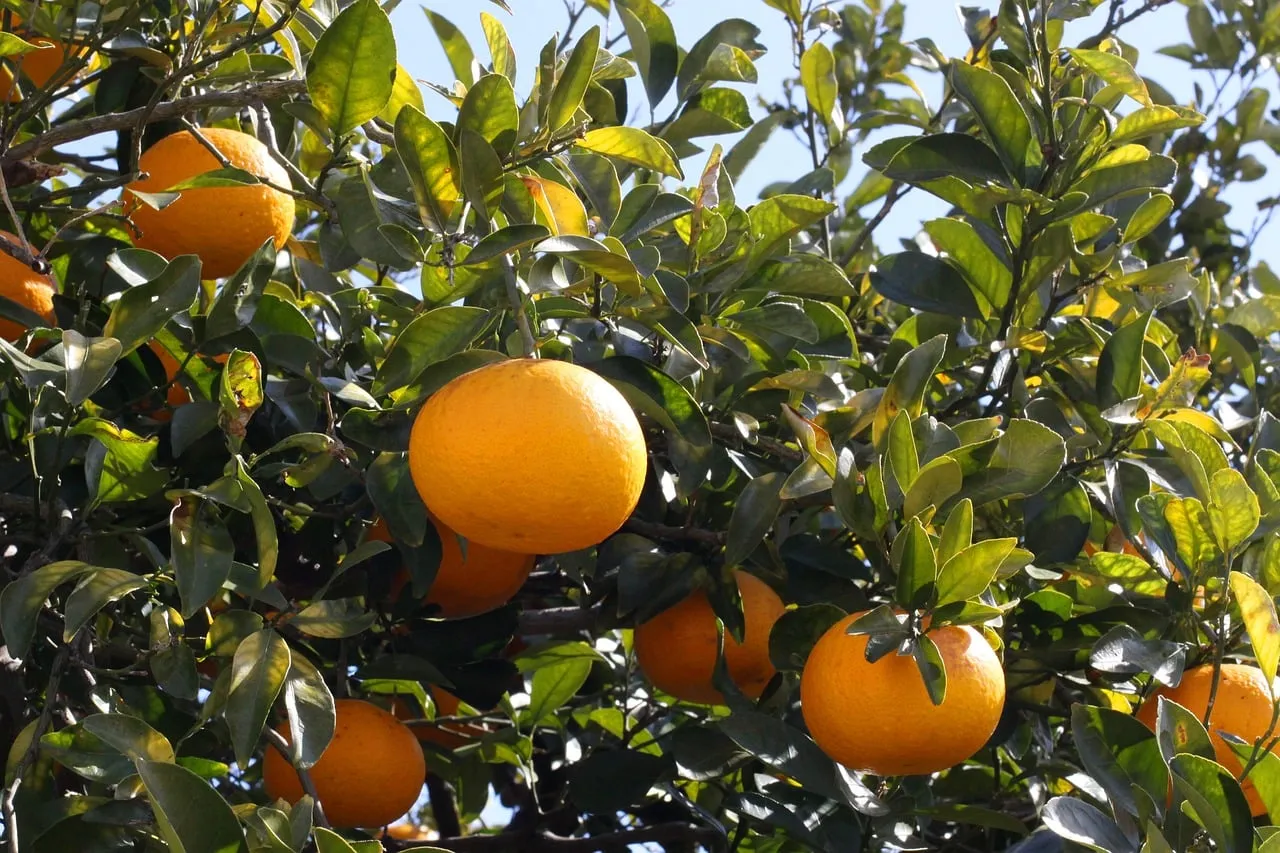
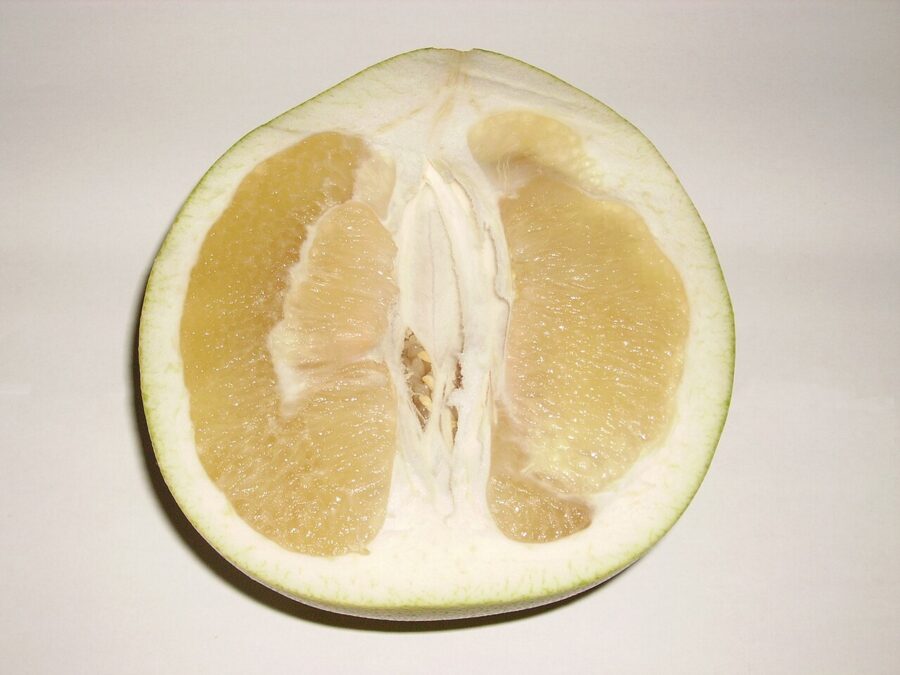
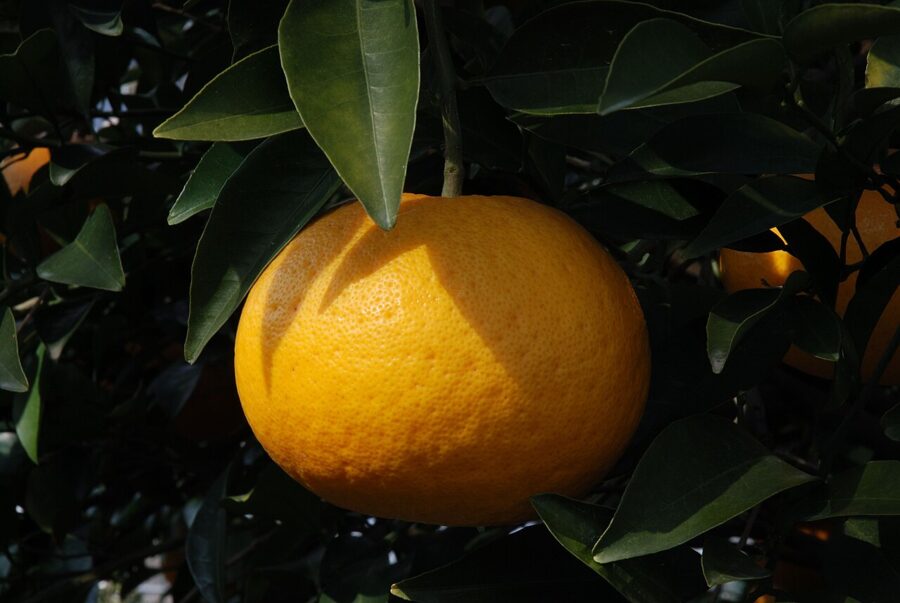
The fruit itself asks a little more of you. A hassaku is about the size of a grapefruit and weighs around 400 grams, with a thick, grainy rind and a skin round each segment too tough to eat. Get through both and the flesh is firm, sweet-sour and faintly bitter, with juice sacs that break separately in the mouth instead of running down your wrist.
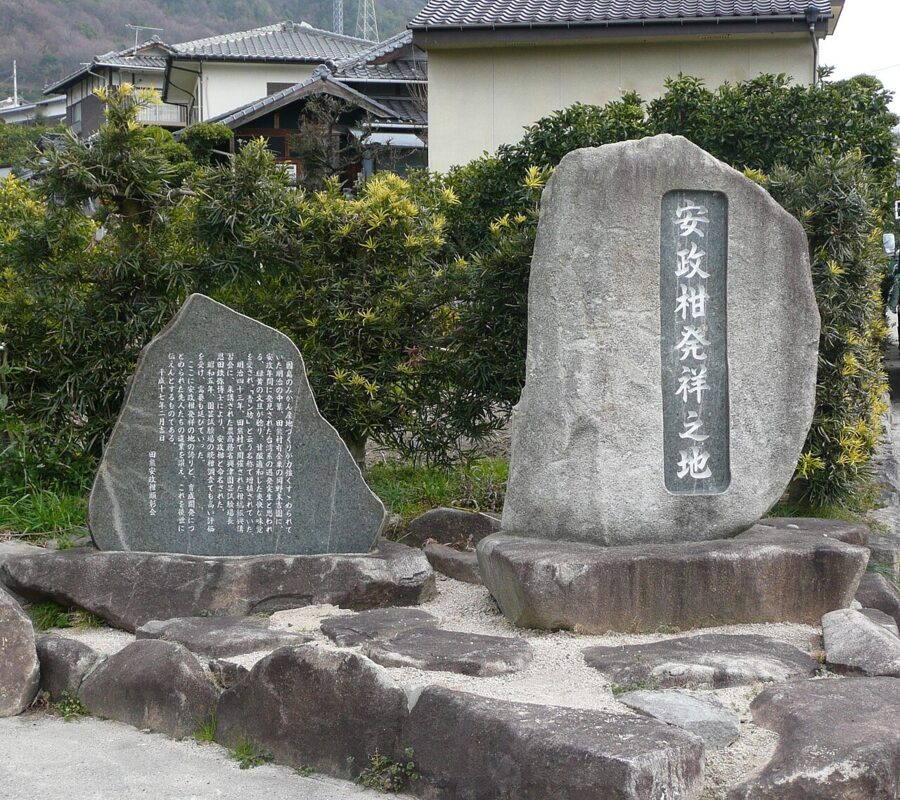
Innoshima has a particular claim on it. The first tree grew on this island around 1860, in Taguma, a few minutes’ ride from the Ikuchi Bridge, and the hassaku grown across Japan today descends from it. If you have time for one hassaku stop, make it the daifuku counter at 08:30; if you have an extra hour, ride the length of the island to the temple where that first tree stood.
What a hassaku tastes like
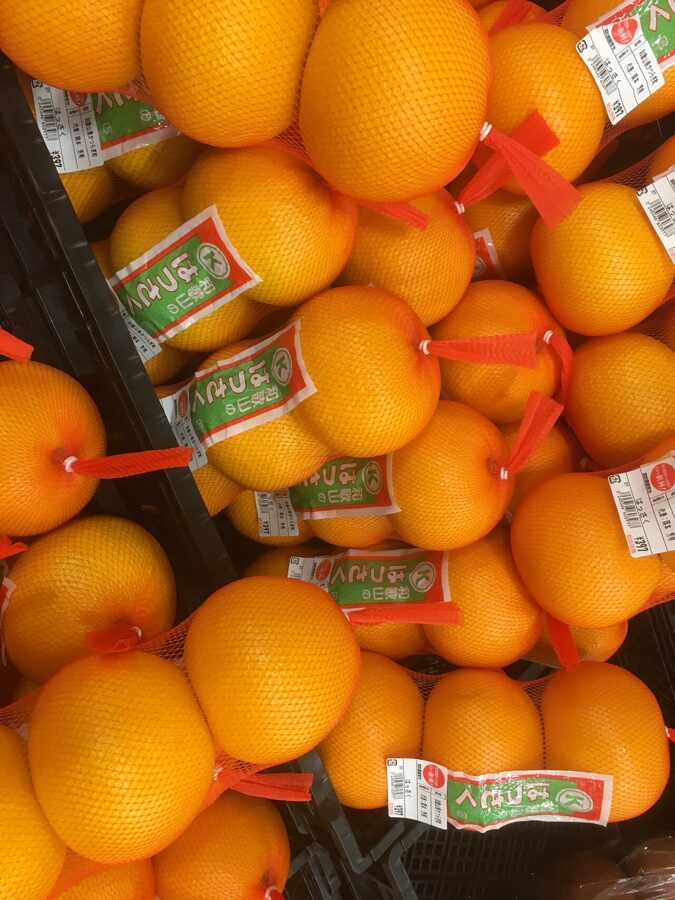
Hassaku (八朔) is a large, slightly flattened citrus, usually 9 to 10 cm across, with an orange-yellow rind. The flesh is pale yellow and not very juicy, and its pleasure is texture: the sacs are firm and crisp, so a segment snaps rather than squashes. The taste is sweet and sharp at once, with a bitterness at the end that people either come back for or never quite forgive.
That bitterness comes from naringin, limonin and nomilin, the same family of compounds that makes grapefruit bitter, and heat makes it stronger. This is why almost all hassaku is eaten fresh and why for a long time there was no hassaku juice: the bitterness came through in processing, until a way of taking it out with ion-exchange resins was worked out in the 1980s. A single fruit of about 300 grams also carries roughly a day’s vitamin C.
Botanically it is a chance hybrid. A 2016 DNA study of Japanese citrus varieties put its parents as a pomelo and the kunenbo, an old mandarin, which fits what you see: the pomelo’s thick pith and firm flesh, a mandarin’s colour. It has since become a parent itself, of varieties such as Summer Fresh.
Hassaku, mikan, yuzu and grapefruit
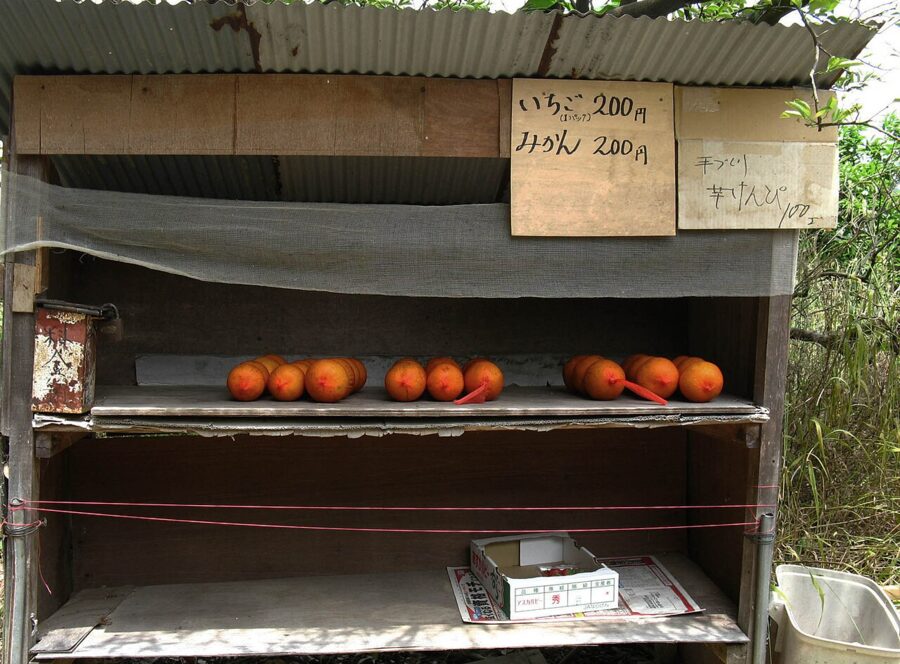
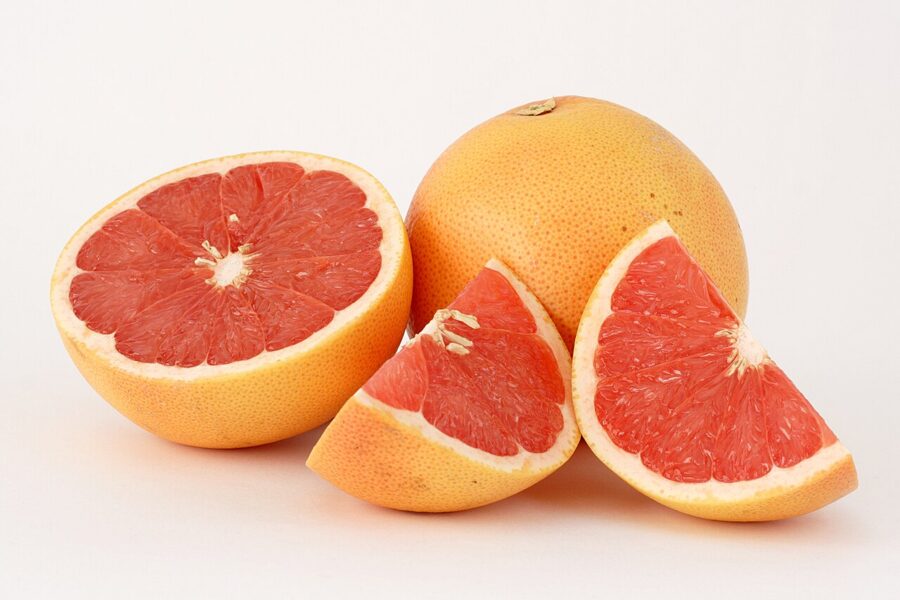
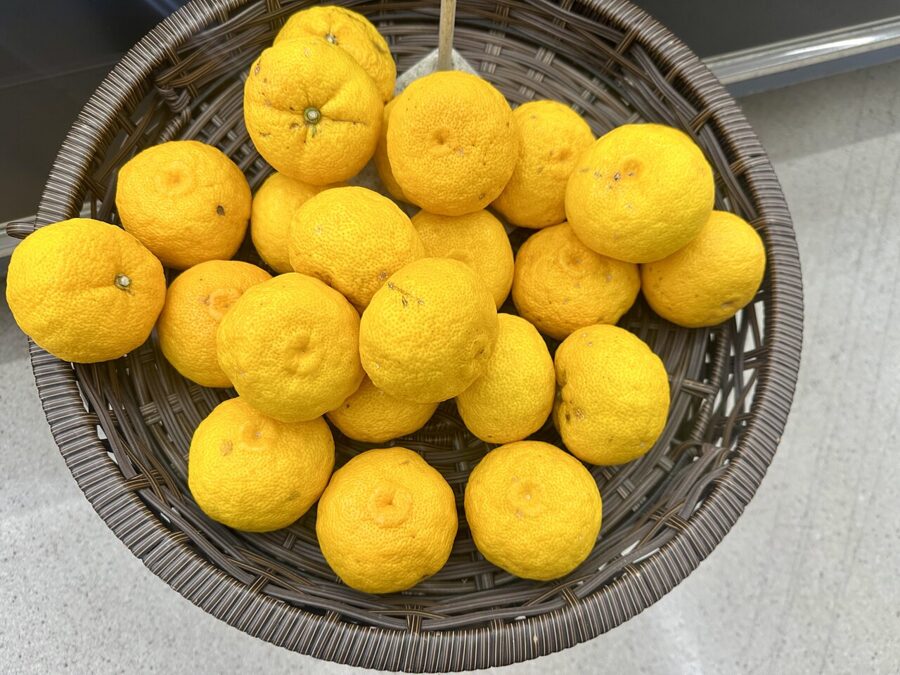
You probably know at least one of the citrus it gets compared with, and the differences are practical ones. Mikan, the small Japanese mandarin, peels with a thumb and is eaten membrane and all. Yuzu is grown for its scent and juice and is hardly ever eaten as fruit. Grapefruit is juicier, and you eat it with a spoon.
| Fruit | Rind | Skin round each segment | How it is eaten | Taste |
|---|---|---|---|---|
| Hassaku | Thick, grainy, peels by hand with effort | Thick and tough: peeled off | Fresh, segment by segment; in daifuku, jelly and marmalade | Sweet-sour, firm and crisp, mildly bitter |
| Mikan | Thin, loose, peels with a thumb | Thin: eaten | Fresh, by the handful | Sweet, juicy, little bitterness |
| Grapefruit | Thick | Thick: usually left behind | Halved and spooned, or juiced | Juicy, sour-sweet, bitter |
| Yuzu | Knobbly, fragrant | Not eaten as fruit | Zest and juice for seasoning, drinks and baths | Very sour, strongly aromatic |
How to peel and eat a hassaku
Hassaku is not eaten like a mandarin, and treating it like one is the usual disappointment. The rind is thick enough that you will want a knife to start it: cut a slice off the top, score the rind from top to bottom four or five times without cutting into the flesh, and pull it off in panels. Then break the fruit into segments.
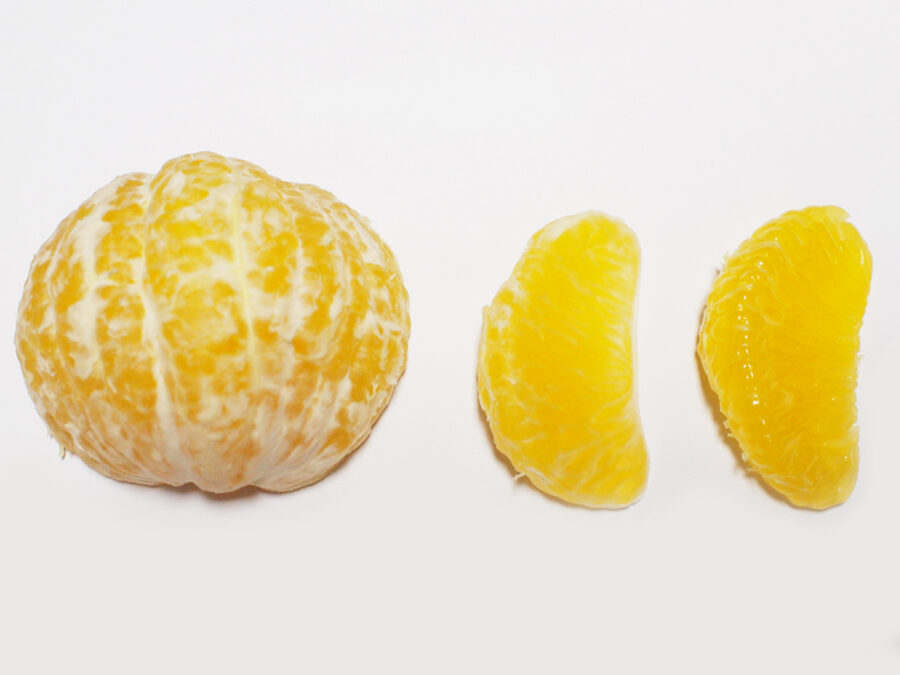
Each segment sits in a skin (じょうのう, jono) that is too thick and bitter to enjoy. Nick it along the inner, straight edge with a thumbnail or the knife tip and peel it back, and the whole wedge of flesh comes out in one piece. Work over a bowl; there is not much juice, but what there is will find your sleeve.
If a fruit has gone soft and the skins tear, cut it across the middle like a grapefruit and lift the flesh out with a small knife instead. The peeled segments keep a few hours in the fridge, go well in a salad with something creamy or salty against the bitterness, and need no sugar. JA Onomichi, the farmers’ co-operative that covers Innoshima, publishes a hassaku marinade recipe on its page of local produce and products.
The season: picked in December, eaten from February
The name is misleading. Hassaku means the first day of the eighth month of the old lunar calendar, which falls in late summer or early autumn, and the story is that the fruit could be eaten from then. In fact a hassaku at that time of year is still small and not fit to eat.
The real year runs like this. Picking starts in December and peaks in January, according to the prefecture’s fruit-growers’ federation. The fruit then goes into storage for one to two months so that the acid falls, and it reaches shops and stalls from about February. On the route it is at its best from February to April; Webshop Innoshima, an island online shop, put its first boxes of Innoshima fruit on sale on 19 February in 2026.
The flowers come in April and May, when their scent hangs over the island. The daifuku season is longer than the fresh-fruit one: Hassakuya makes hassaku daifuku from October until about June, and switches to a hassaku and amanatsu version from early summer.
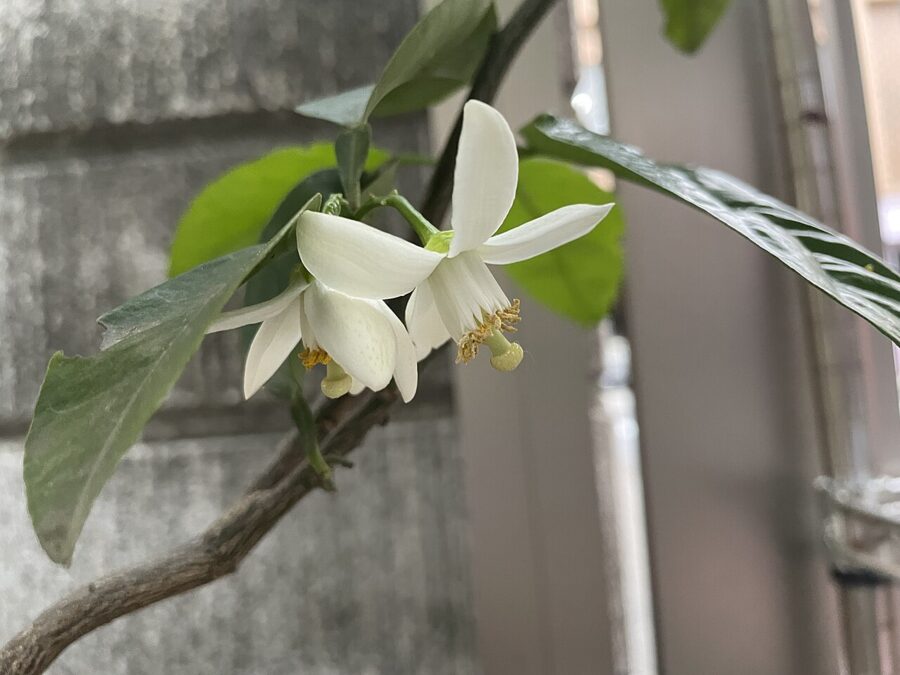
The island also gives the fruit a day out. The Innoshima Hassaku Festival (因島はっさく祭り) has been held in March in recent years; the sixth, on 29 March 2026, ran from 10:00 to 14:00 on the ground floor of Portopia Habu, the municipal car park in Habu, with stalls selling hassaku daifuku from three island makers and a team game, the “Hassaku World Championship in Innoshima”, of quiz questions, guessing weights of fruit and a hassaku relay.
Where it began: Jodoji in Taguma
The story is told slightly differently by the island and by the temple at its centre. According to the Innoshima tourism association’s account, around 1860, in the Man’en era, two trees came up from seeds that a neighbour had thrown away after eating some citrus, in a field belonging to the family home of Ogo Etoku (小江恵徳), head priest of Jodoji in Taguma. The family let them grow, the fruit turned out to be good, and people kept eating it. The name hassaku came in 1886.
The temple’s own version, on its page on the birthplace of the hassaku, puts the find in the temple’s lands in 1860 and has Etoku naming the fruit himself and spreading it by grafting. Both agree on the place, the date and the priest. A short poem attributed to him wishes the fruit of this village long life for its taste and fragrance.
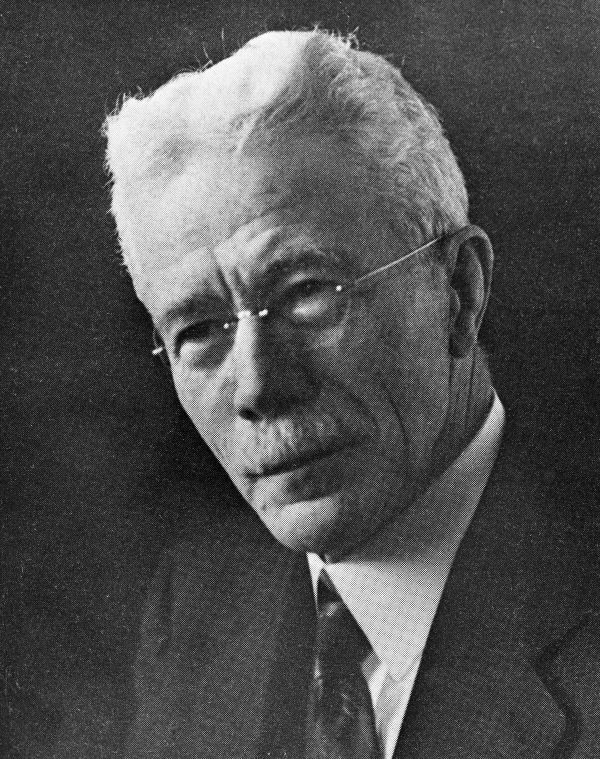
Taguma was already full of citrus. The temple notes that more than sixty kinds of unnamed mixed citrus grew wild on the sunny, south-facing slopes below Aokage-yama, and it believes some were brought home from voyages by the Murakami pirates, whose castle stood on the hill behind the temple. In 1910 the American citrus scientist Walter Swingle and the Japanese taxonomist Tanaka Chozaburo came to Innoshima to check whether citrus canker had originated in Japan. They found no canker among the island’s citrus, but they did notice how good the hassaku was, and planting picked up.
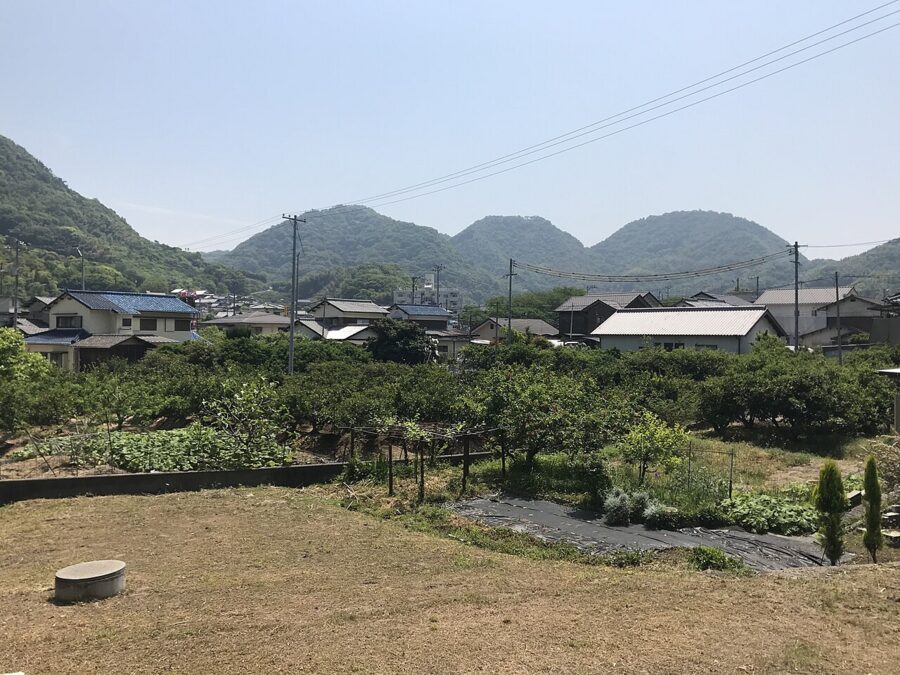
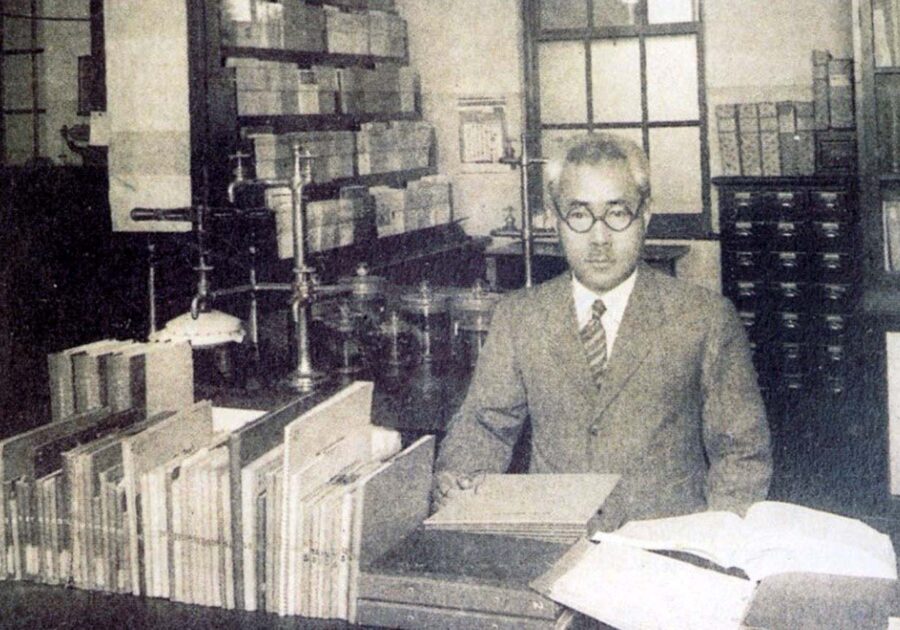
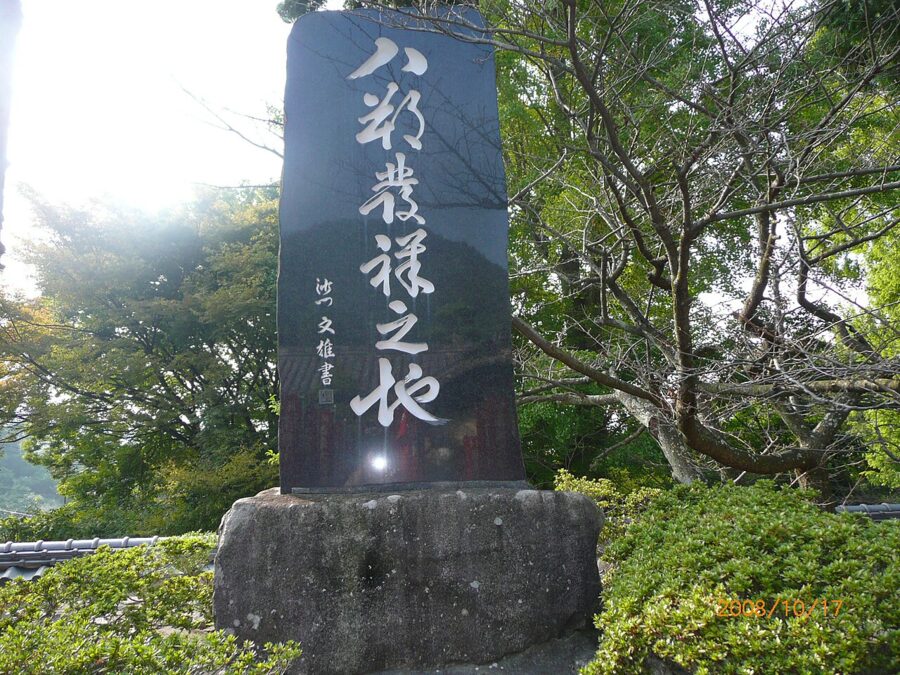
Commercial growing took off later. In the autumn of 1925 a shipping co-operative was set up in Taguma, and Tanaka Seibei, a Taguma man trained at what is now the prefectural agricultural high school in Saijo, guided it and pushed the fruit to markets across Japan. A bronze statue of him stands near the monument. In the Showa years the trees spread to Mukaishima and Setoda, and after the war Wakayama, Ehime and Tokushima built large growing areas of their own.
Visiting Jodoji
This Jodoji (密厳浄土寺, Mitsugon Jodoji) is a Shingon temple of the Daigo school at 1444 Taguma, not the better-known Jodoji in Onomichi. It traces its founding to 1556 and its links with the Innoshima branch of the Murakami family are still in its graveyard. The temple says anyone is welcome to visit, and the tourism association lists parking.
It sits on the slope above Taguma, about 1.5 km (1 mile) east of the Ikuchi Bridge in a straight line and roughly 3 km (2 miles) by road from the bridge approach. That makes it a short detour before the climb onto the bridge if you follow the cycling route down the island’s west side. Since 2023 a group of growers and food businesses has held a service there at the start of February, giving thanks for the crop and for the people who spread it.
Growing it today
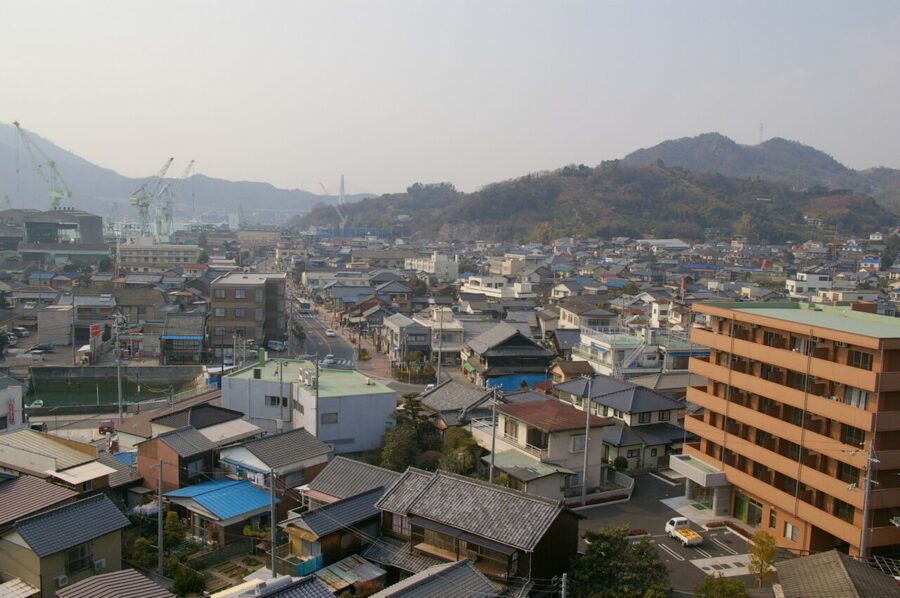
Hiroshima is no longer the main grower. Wakayama took the lead after the war and now produces most of Japan’s hassaku, but the Hiroshima fruit has its own regional trademark, Hiroshima Hassaku, registered in 2007 by the prefecture’s fruit-growers’ federation. On Innoshima it is still the crop the island is known for, and the one its sweet-makers build on.
Some figures from the growers give a sense of scale. A technician at the Hiroshima fruit-growers’ federation gave a crop-protection company’s newsletter the figures for 2017: about 60 hectares of ordinary hassaku and 45 of beni hassaku on Innoshima, with a crop of around 2,000 tonnes. The average grower was 73, holdings were small, about 30 ares each, and the troubles that worried them most were melanose, anthracnose and thrips.
Beni hassaku (紅八朔) is the red-skinned sport that has overtaken the original in popularity: juicier and deeper in colour, though some farmers still say the ordinary fruit tastes better. Its story is tied to a near-disaster. A virus spread through Hiroshima’s hassaku from about 1950, and a tree at the prefecture’s research station in Mihara, Hassaku No. 55, turned out to be immune; grafted onto beni hassaku, it became the parent of much of the prefecture’s stock, and in 2021 the prefecture moved the two parent trees from Mihara to its agricultural technology centre in Higashi-Hiroshima to keep them safe.
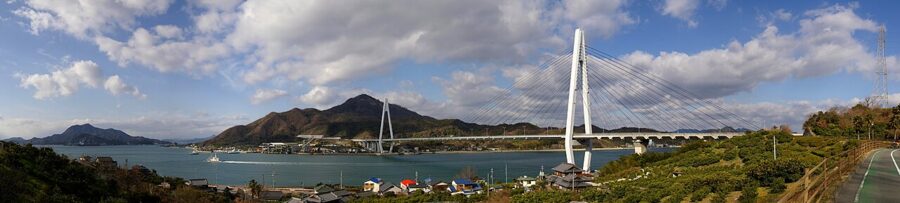
Hassaku grows on the neighbouring islands too. Ikuchijima, better known for Setoda’s lemons, grows it alongside navel oranges and mikan, and Innoshima’s crop is graded at the JA Onomichi citrus packing house at Nishiura in Nakanosho. If you want to see the fruit on the trees rather than in a box, ride between the two bridges in December or January, when the picking is under way.
Hassaku daifuku
Daifuku are rounds of soft rice cake around a sweet filling, usually red bean. The hassaku version puts fresh segments of the fruit inside white bean paste, and the bitterness and sharpness of the citrus keep the whole thing from tasting only of sugar. It is a fresh sweet: the fruit inside is raw, so it keeps two or three days at most.
It has an Innoshima origin story of its own. According to the maker’s entry on Hiroshima City’s list of certified local products, Kashihara Shin’ichi, whose shop on Innoshima had long made mikan mochi, came up with a set of fruit daifuku when the Innoshima Bridge was completed in 1983, and hassaku daifuku was one of them. The shop, Kashihara (かしはら), moved to Hiroshima city in 2013 and sells what it calls the original there, in boxes of six for ¥1,296 (about US$8) as of 2025, mainly at Hiroshima Station and other big shops. On the islands, the daifuku come from other makers.
Hassakuya, Ohama
Hassakuya is the shop riders mean. It opened in Taguma in 2005 and moved in 2010 to its present cottage in Innoshima Bridge Memorial Park, at 246-1 Ohama, on the hillside over the Mekari Strait. By bike it is about five minutes from where the Innoshima Bridge cycle path comes down; by car, ten minutes from the Innoshima-kita interchange, with a large car park in the park. If you are on the expressway heading towards Onomichi, the shop says you can leave the car at the Ohama Parking Area and walk down in about 15 minutes.
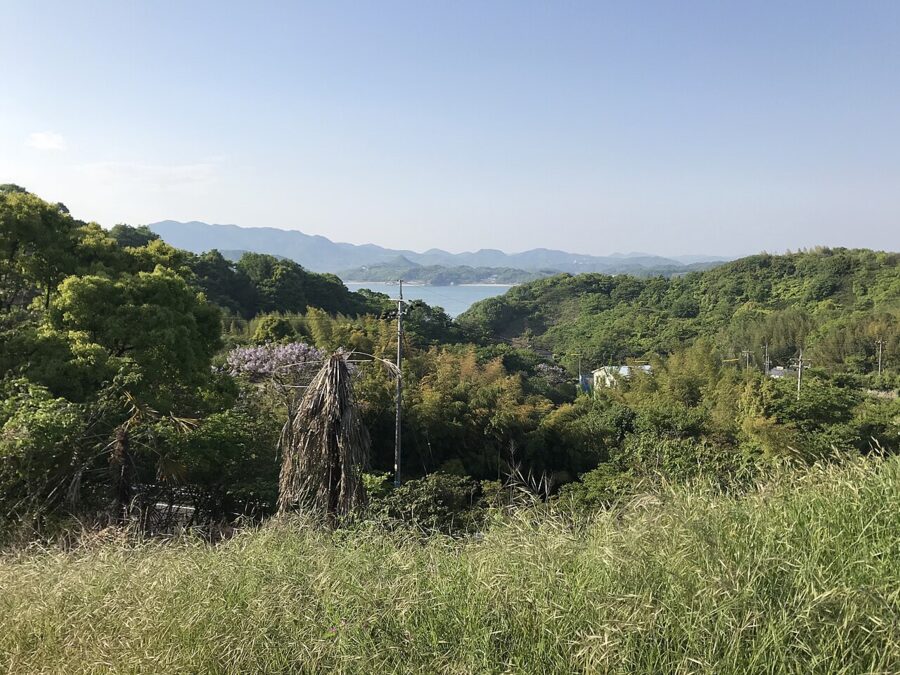
It opens at 08:30 and closes when the day’s daifuku have sold out, and it is closed on Mondays and Tuesdays. Inside there are about ten seats at a counter facing the bridge, free self-service coffee, free water for filling bottles, and a bicycle stand inside the building by the door. Arrive early on spring weekends.
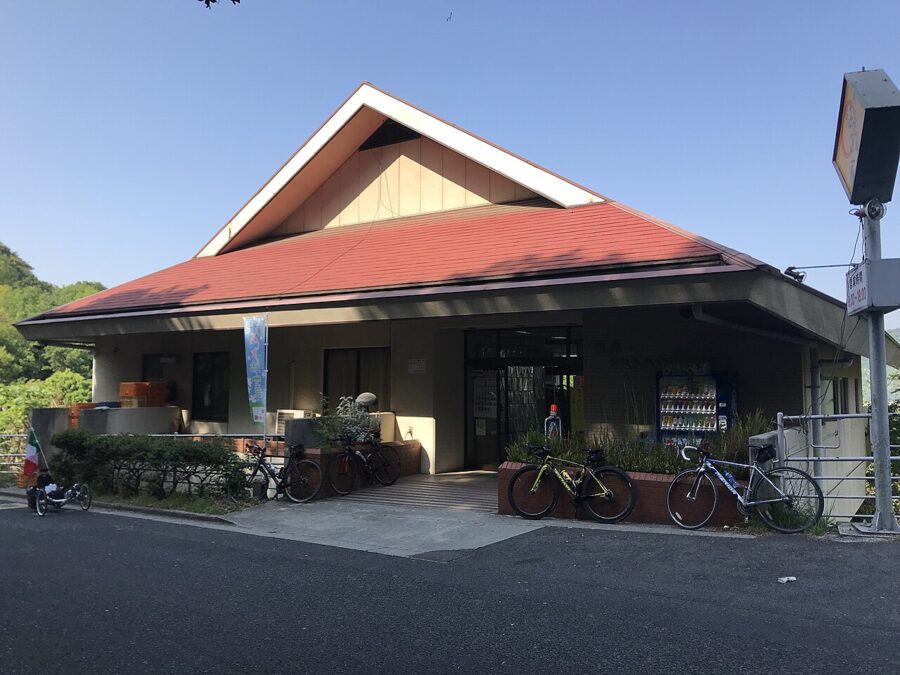
The hassaku daifuku costs ¥250 (about US$2) each, tax included, as of 2026. Each one holds two or three segments that staff peel by hand, wrapped in white bean paste and then in “mikan mochi”: rice steamed with mikan peel and pounded in a stone mortar, which gives the outside a faint orange scent. The shop asks you to keep them chilled, let them soften to taste, and eat them within three days, counting the day they were made.
The counter also carries strawberry, whole-mikan and bean daifuku in their seasons, hassaku soft-serve ice cream at ¥400 (about US$3), sold at the shop only, and the island’s packaged hassaku products. It sends boxes of six, eight or ten daifuku anywhere in Japan, ordered by fax or phone and paid in cash on delivery.

Shoaido and the other island makers
Shoaido (松愛堂), a confectioner founded in 1921 and based in Nakanosho, has several shops on Innoshima, including Nakanosho and Habu, and two in Onomichi. Its Innoshima hassaku daifuku wraps a whole segment of fresh island fruit in pounded rice cake and home-made white bean paste, at ¥280 (about US$2) each as of November 2026. It is sold in its shops only, not by post, and should be kept chilled and eaten within two days. The same shops sell hassaku dorayaki and hassaku mochi.
Hassaku Kobo Matsuura (はっさく工房まつうら), a maker in Taguma, sold its daifuku at the 2026 festival alongside Shoaido and Hassakuya. Webshop Innoshima, meanwhile, sells the hassaku daifuku of a confectioner called Nakajima by post, ten for ¥2,850 (about US$18), from November; it does not ship to Hokkaido or Okinawa.
Jelly, sherbet and the rest
The everyday souvenir is not the daifuku but the jelly. JA Onomichi’s Innoshima hassaku jelly (因島のはっさくゼリー) sets whole segments of fruit in a clear jelly in a 78-gram cup with the cartoon Hassaku Boy on the label, and it keeps for months at room temperature, which is its great advantage over anything made with rice cake. Its sister, the hassaku sherbet, is meant to be frozen; JA Onomichi has given the children in the city’s primary and junior high schools one each every year since 2020, and in 2026 that came to 8,760 cups.
As of 2026 the co-operative lists them at ¥185 (about US$1) a cup each. The same range takes in a low-sugar hassaku marmalade at ¥470 (about US$3), hassaku segments in syrup at ¥600 (about US$4), and Onomichi gelato in four flavours made from the co-operative’s own fruit, hassaku among them, at ¥350 (about US$2) a cup.
Where to buy them along the route: Hassakuya stocks the JA jelly, sherbet and marmalade, Teraokaya’s hassaku ponzu, and goods featuring Hassakun, the island’s hassaku mascot. Shoaido sells its own hassaku jelly and baked sweets in its shops. Off the route, the co-operative’s farm shop Eejan Onomichi, in Higashi-Onomichi east of the station, opens 09:00 to 18:00 every day except over the New Year.
Buying, carrying and sending it home
Fresh fruit is a February-to-April buy. Look for it in island shops in season, or order a box from Webshop Innoshima, which also sells the JA jelly at ¥1,260 (about US$8) for five and posts within Japan.
Think about weight before you buy on a bike. Five hassaku are about 2 kg, and from Innoshima a box of ten is a lot to carry over the five bridges still ahead. If you are riding the whole route, buy the fruit at the end, have it posted, or let a bag service carry it: the luggage and ferry options between Onomichi and Imabari take the weight off the bike.
At home, keep whole hassaku somewhere cool and dark, wrapped in newspaper, or in the fridge if they have to last; they do not freeze well. Daifuku are different. They are made with raw fruit and need the fridge and eating within two or three days, so buy them for the day or the next morning, not for a long journey.
Taking fresh fruit out of Japan is a matter for the country you are going to, not the shop. Fresh citrus is a plant product, and many countries restrict or ban it in passenger baggage. Japan’s Plant Protection Station explains the inspections for travellers’ baggage and post; check your own country’s rules before you pack a hassaku. Sealed jelly is the easier souvenir.
Other citrus of the islands
The hassaku is not Taguma’s only citrus. Anseikan (安政柑), a big pomelo-type fruit, came up as a seedling near Jodoji in the Ansei era of the 1850s, according to the temple’s history, and it is still grown and celebrated in Taguma, where Hassaku Kobo Matsuura has made an anseikan daifuku.
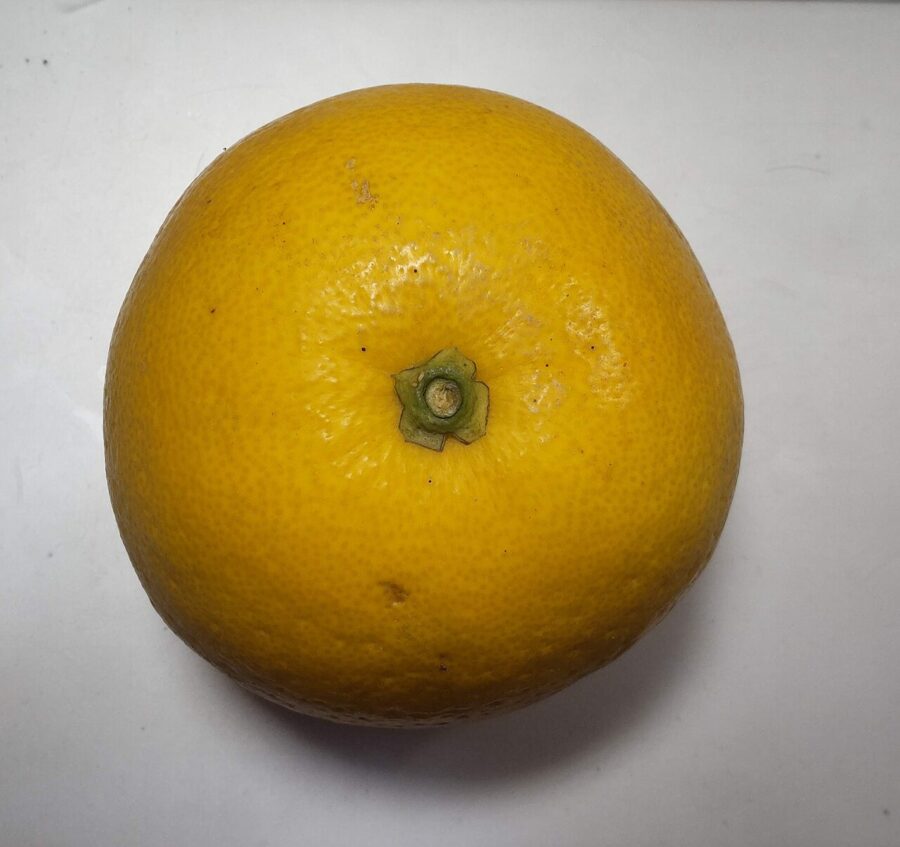
Taguma also gave Japan a small sour citrus, Taguma sudachi, better known as naoshichi, which is now grown mainly in Sukumo in Kochi rather than in Hiroshima. In October 2026 the island paper reported two naoshichi trees fruiting in Taguma, grown from grafted saplings that a local man brought back from Kochi in 2024.
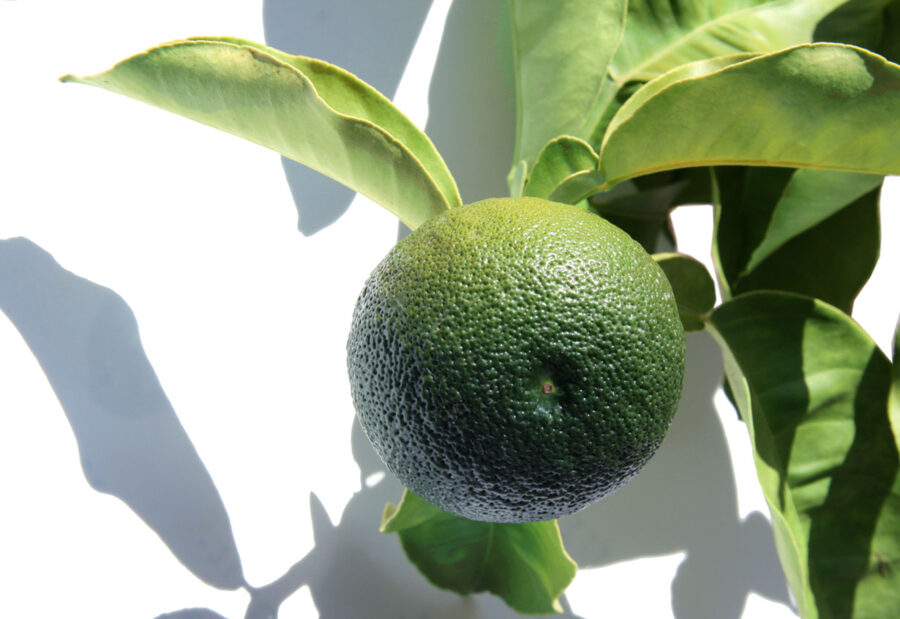
Across the Ikuchi Bridge, Setoda’s lemons are the route’s best-known citrus, and the route’s food runs from Onomichi ramen to the iron-plate yakitori of Imabari. The best time to visit the Shimanami Kaido depends partly on which citrus you want in season when you ride.
For a hassaku day, then: be at Hassakuya for 08:30 on any day but Monday or Tuesday, eat the first daifuku at the window, ride the island’s west side through Nakanosho, stop at Jodoji in Taguma to see the stump of the first tree, and buy the fruit itself at the end of the ride, when you no longer have to carry it over a bridge.