The cycling route gives Hakatajima (伯方島) about 3 km (2 miles). You roll down the ramp off the Omishima Bridge, follow the island’s west shore over a low hill and past the cranes of a shipyard, and the next ramp lifts you onto the Hakata-Oshima Bridge before your legs have noticed the change of island.
Most riders leave it at that, and on a long day to Imabari it is a fair call. But this is the island named in the “ha-ka-ta no shio” jingle that has run on Japanese television since 1987, the island whose salt fields closed in December 1971 and whose name a consumer campaign put on a packet a little over two years later. The roadside station at the foot of the second ramp serves that salt in a bowl of ramen for ¥800 (about US$5).
So stop. Give Hakatajima an hour if you are riding through and an afternoon if you are sleeping nearby: climb Hirakiyama for the view of three bridges, eat the salt ramen, and watch the ships, because this is a working island first and a sightseeing one a long way second.
In this guide9
- Off the Omishima Bridge
- Getting to Hakatajima and getting round it
- Hakata salt: the name, the fields and the factory
- Salt ramen and salt soft-serve on the island
- Hirakiyama and the view of three bridges
- Shipyards, salt pans and the Funaori Strait
- Hakata Beach, the dolphins and Okiura
- Onto the Hakata-Oshima Bridge
- Where to stay and eat on Hakatajima
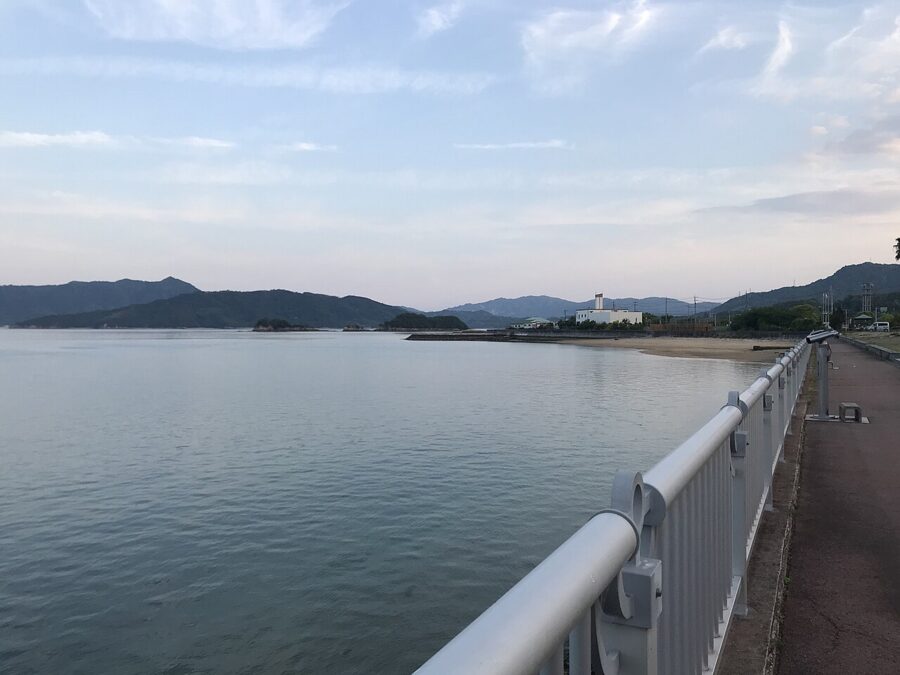
Hakatajima is the fifth island from Onomichi and the second from Imabari, between Omishima to the north-west and Oshima (大島, Imabari) to the south. It was the town of Hakata until 16 January 2005, when it merged into Imabari City.
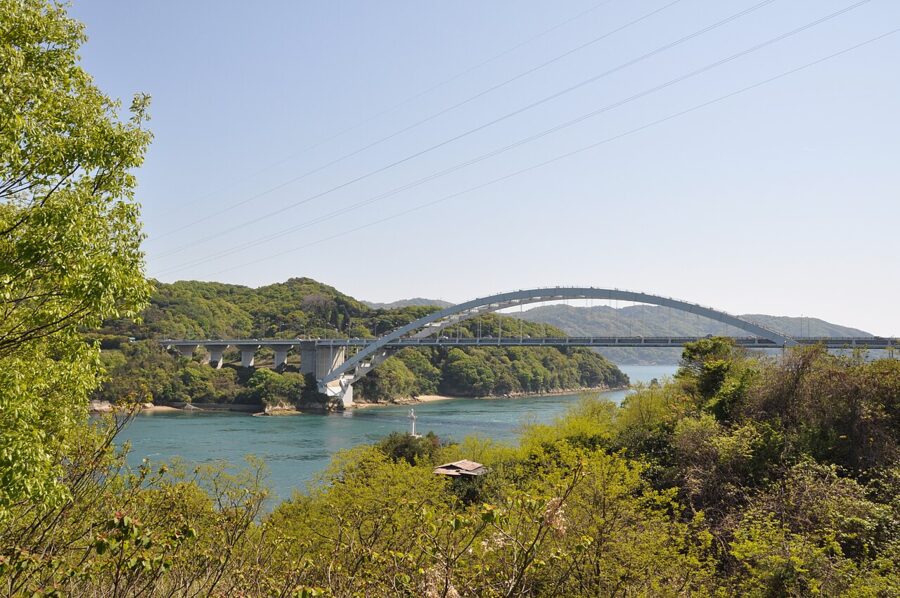
Off the Omishima Bridge
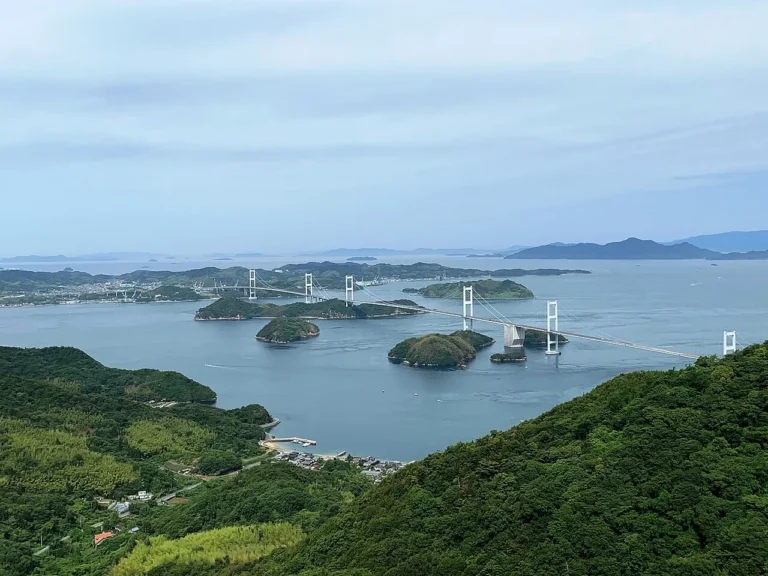
The Omishima Bridge (大三島橋) was the first of the long Honshu-Shikoku bridges to be started. Work began in 1975 and it opened in May 1979, a 328 m steel arch whose 297 m span was the longest arch in Japan when it was finished. It is still the only arch among the bridges that cross the straits between Honshu and Shikoku, and its light grey paint and building methods served as the pilot for the bridges that followed.
Below the deck runs the Hanaguri Strait (鼻栗瀬戸), a narrow channel with a fast tide, and the road sits about 41 m above the water. On a windy day remember that the bridge operator, JB Honshi, can close the bridges to two-wheelers while cars keep running, so check before you set out.
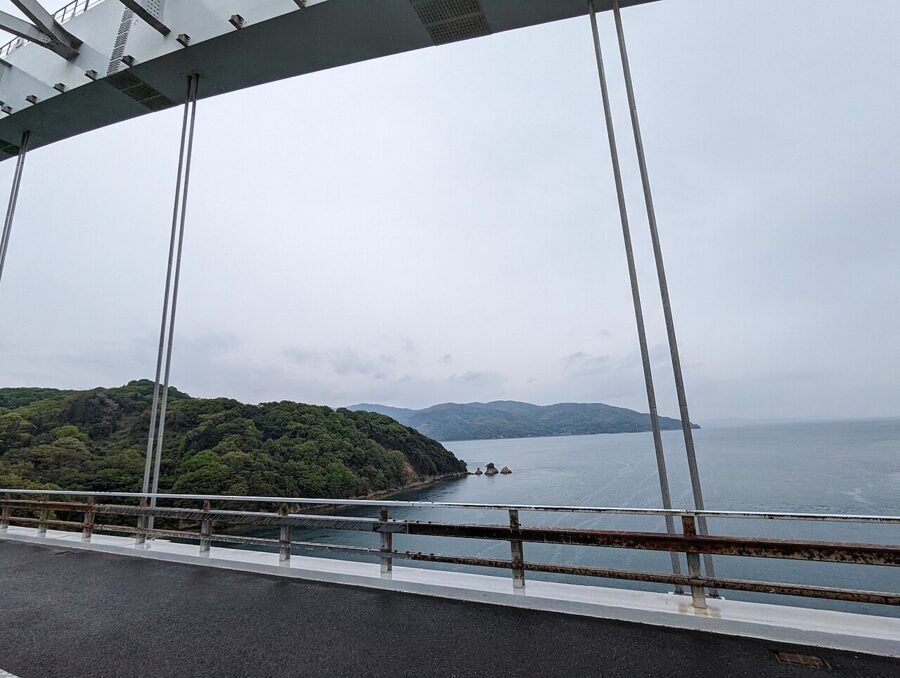
Bicycles cross free. The bridge company runs its “Shimanami Cycling Free” scheme with Hiroshima and Ehime, and the waiver on bicycle tolls now runs until 31 March 2028. There is nothing to show or sign; mopeds are not covered.
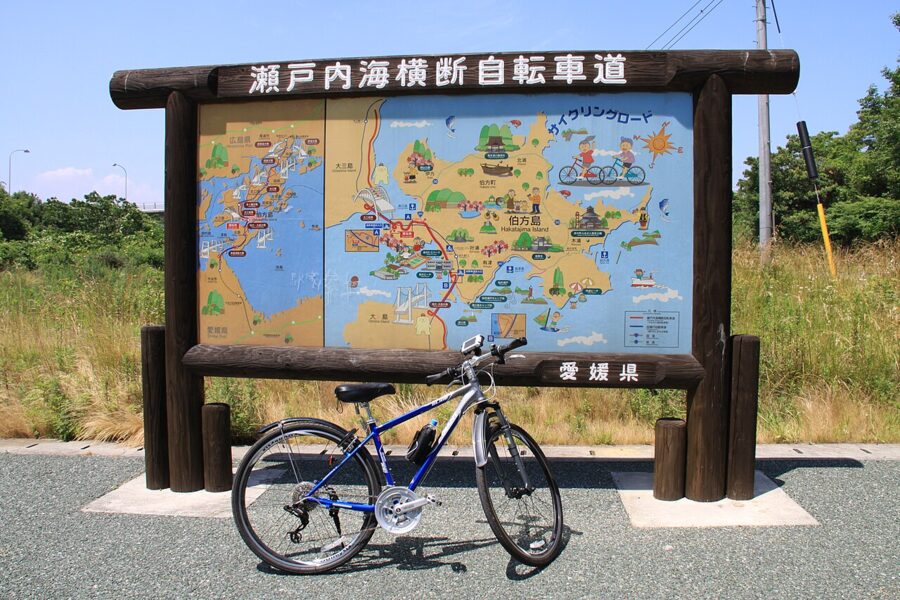
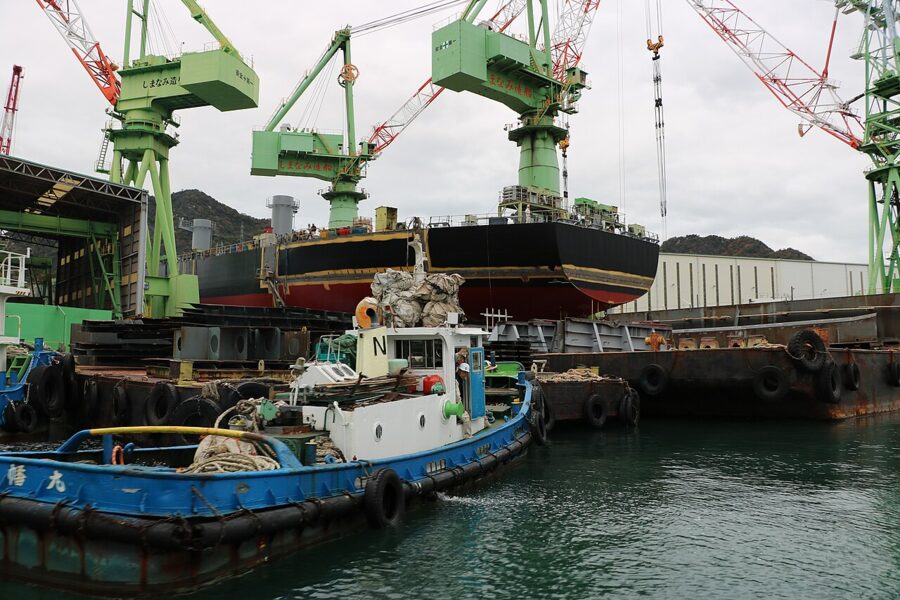
From the bottom of the ramp the blue line keeps to the west side of the island for roughly 3 km. It goes over one short hill, passes Shimanami Shipyard at Ikata (伊方), where green gantry cranes stand over half-built hulls, and drops to the Hakata S.C. Park roadside station at Kanoura (叶浦), right under the next bridge. That is the whole of Hakatajima for most riders, and it is a pleasant ten minutes.
Getting to Hakatajima and getting round it
By bike
The island has its own rental terminal, number 7 of the ten run by Shimanami Japan, inside the Hakata S.C. Park roadside station and open 09:00–17:00 (terminal list). As of November 2026 a cross bike or city bike costs ¥3,000 (about US$20) a day, and an individual can return it at any of the ten terminals at no extra charge. Electric-assist bikes (¥4,000, about US$27) are not kept at Hakatajima, only at Onomichi, the two Setoda terminals, Omishima and the two in Imabari, so pick one up at one of those.
The rental rules also say e-bikes (¥8,000, about US$53) and tandems must come back the same day, and a helmet comes free with any rental. Private shops in Onomichi and Imabari fill the gaps in Shimanami Kaido bike rental, and Hakatajima is only 3 km of the Shimanami Kaido cycling route.
By bus
Buses stop at Hakatajima BS, a few minutes’ walk from the roadside station. From Imabari Station the Setouchi Bus express towards Omishima takes about 37 minutes, and since 1 October 2026 the fare to Hakatajima is ¥960 (about US$6) on the revised fare table. Do not try to ride the Shimanami Liner from Imabari to Hakatajima: between Imabari and Omishima it only picks up northbound.
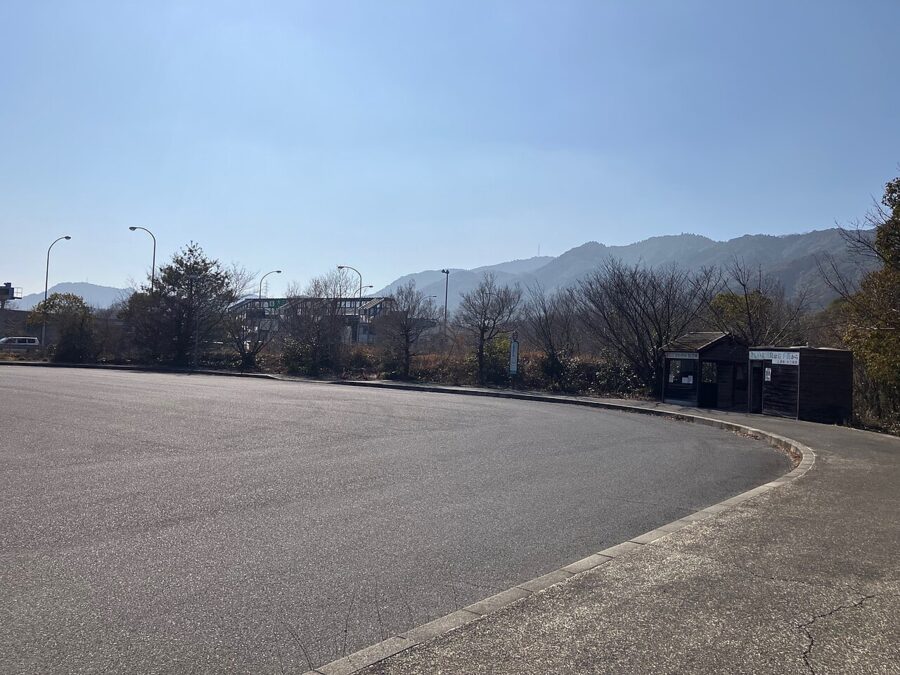
From the Honshu side it is the other way round. The Shimanami Liner from Fukuyama sets down at Hakatajima (the first bus leaves Fukuyama at 07:00 and reaches Hakatajima at 08:00), but going back towards Fukuyama you can only board here. Since October 2026 every Liner can be booked in advance, and you can still get on without a booking if there are seats. The Liner from Fukuyama is one of the easiest ways of getting to the Shimanami Kaido from the Shinkansen.
By ferry
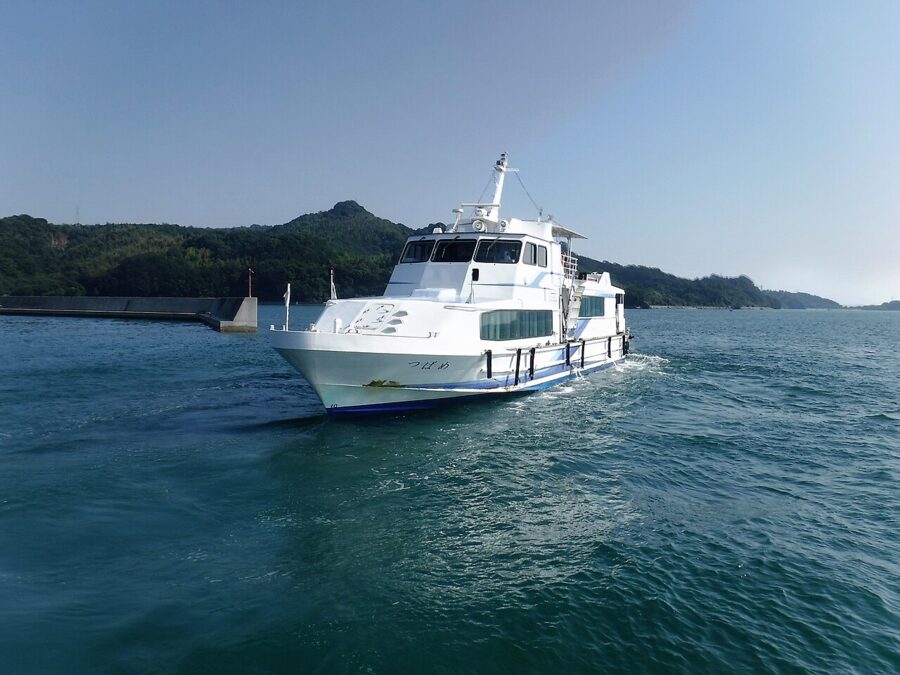
Kinoura (木浦) on the east coast is the island’s main town and its port. Geiyo Kisen’s fast boats call there four times a day each way on the run from Imabari to Habu on Innoshima, by way of Tomoura on Oshima; Imabari to Kinoura takes 35–40 minutes and costs ¥1,050 (about US$7) one way. Some sailings take no bicycles and others only a few, so check the timetable notes before you plan around a boat.
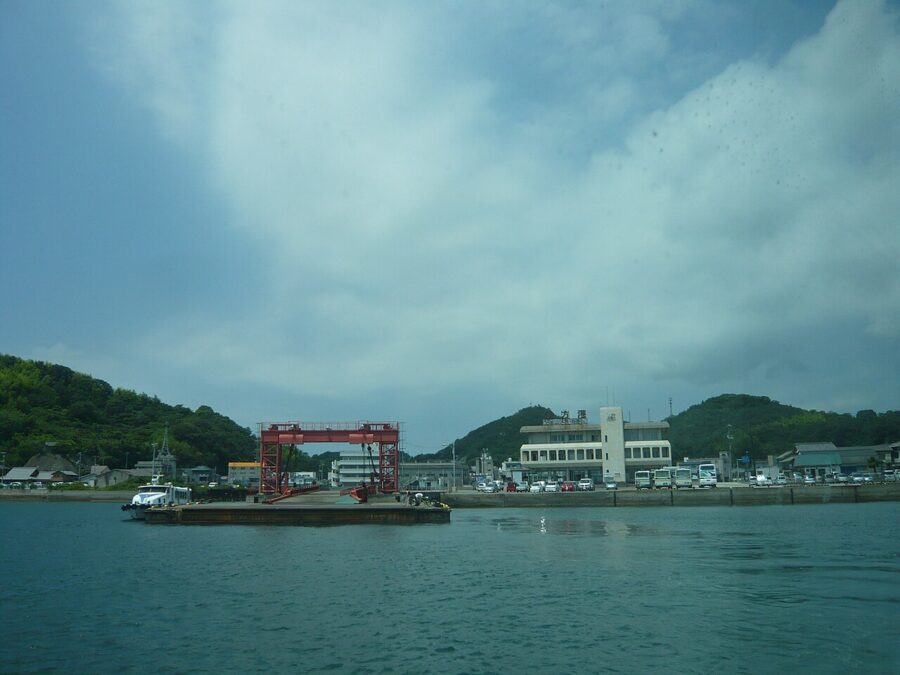
Boats also link the smaller islands east of Hakatajima, and not every one carries bikes; the island boats are the oddest corner of Shimanami Kaido luggage and ferries. By car, the Hakatajima interchange is at Kanoura, a minute from the roadside station, which has 300 free spaces.
Round the island
The coast road goes all the way round, and Shimanami Japan puts the loop at about 20 km (12 miles), mostly flat. Allow two hours with stops on a hired bike from the roadside station; it is the only way to see the shipyards, the old salt-pan shore and the Funaori Strait. I would ride it anticlockwise, so the strait comes first and the Hirakiyama climb comes at the end, when you can decide whether you still want it.
Hakata salt: the name, the fields and the factory
Where the name comes from
Salt was made on Hakatajima long before the brand, from seawater worked in salt fields along the shore. In 1971 a new law ended field salt across Japan in favour of salt made with ion-exchange membranes, more than 99 per cent sodium chloride, and in December that year the last salt fields on Hakatajima were closed.
The company’s own account tells what happened next. A consumer movement led by Fujiko Sugamoto gathered 50,000 signatures between June and October 1971 asking to keep natural salt, failed to save the fields, and won permission to make salt under tight conditions instead. Hakata Salt (伯方塩業) was founded on Hakatajima in August 1973, with help from people who had worked the island’s salt fields, and Hakata no Shio (伯方の塩) went on sale in January 1974.
The name was the point. It carried the wish to bring back Hakatajima’s salt fields, and it is why a packet of salt anywhere in Japan says Hakata. The company now has its main office in Matsuyama and its visitors’ factory on Omishima, but it still lists a head office and a factory at Kinoura.
How Hakata no Shio is made now
Hakata no Shio is not made from Hakatajima seawater boiled down on the beach. The raw material is sun-dried salt from vast salt fields at Guerrero Negro in Mexico or Shark Bay in Australia, which is dissolved completely in Seto Inland Sea water, filtered, boiled in pans for several hours and then left to dry slowly indoors for several days, so some bittern (nigari) stays in.
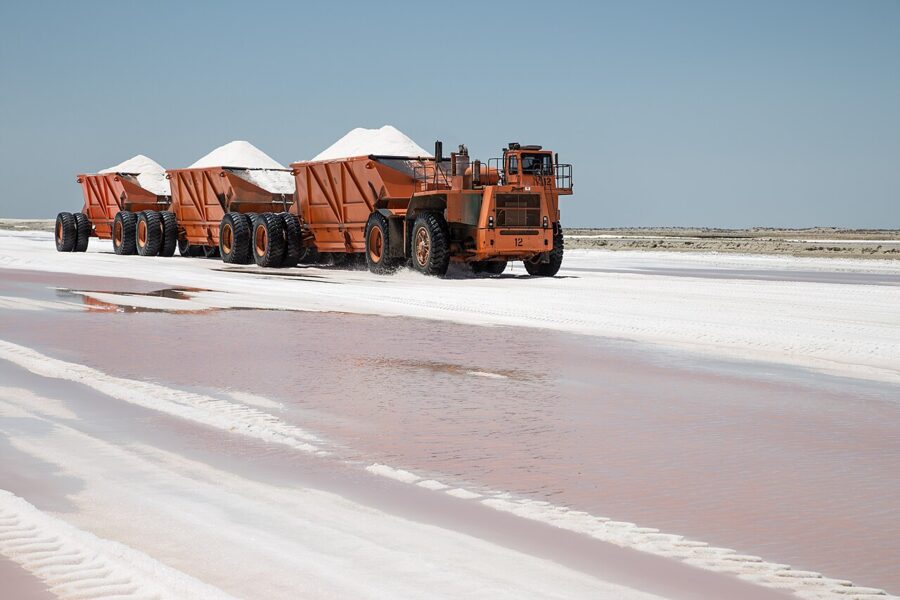
The packet says so in a line of small print: imported sun-dried salt and Japanese seawater. I like the salt more for knowing it. It began as a workaround in 1973, when the conditions of the licence forbade making salt straight from seawater, and the company kept the method.
Visiting the factory, on Omishima
Here is the catch for anyone riding the route: the factory you can tour is not on Hakatajima. Hakata Salt’s Omishima factory is at Utena (台) on the western side of Omishima, about 1.5 km (1 mile) from Oyamazumi Shrine and well off the cycling route between the two bridges. It is free, and groups of fewer than ten need no booking.
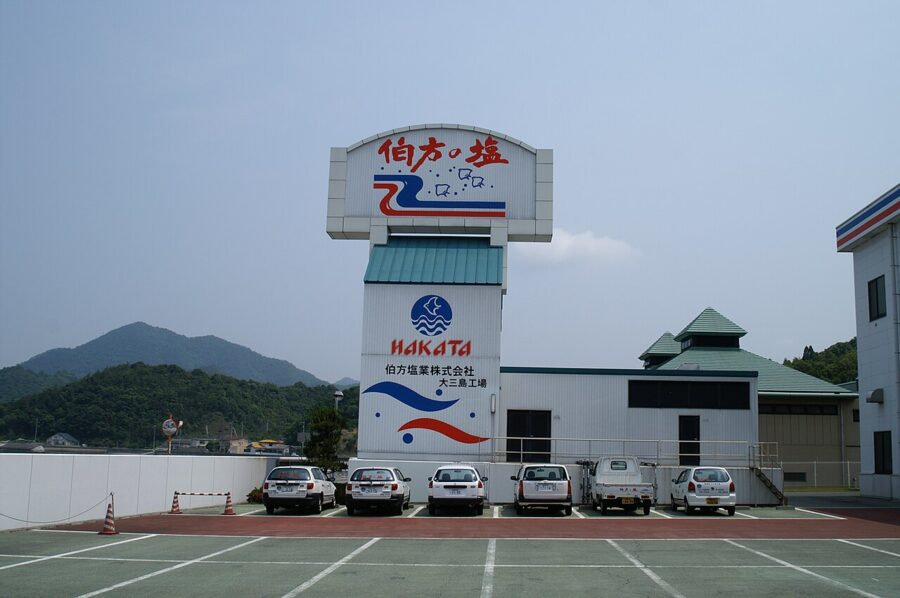
| Omishima factory (as of November 2026) | |
|---|---|
| Visiting hours | 09:00–16:00, last entry 15:30; the line itself runs 09:00–15:00 and may be stopped on some days |
| Closed | Wednesdays (except public holidays), 13–17 August, the autumn festival, 28 December–7 January; open on Wednesdays during the summer holidays and in November |
| Price | Free; groups of ten or more book a week ahead |
| Salt-making session | Free, book a week ahead, up to 16 people each time |
| Language | Guidance in Japanese, with some English signs |
| Bus | From Imabari Station to Miyaura Port, then about 18 minutes’ walk |
You watch the dissolving, boiling and drying through viewing windows, past white heaps of salt more than 2 m high, and photographs are not allowed in the corridor. Outside stands a full-size reconstruction of the drip-type salt field used on this coast from 1953 to 1971, rebuilt by the staff in 2010. The shop sells salts sold only at this factory, and a soft-serve with a pale salty taste, topped with crunchy large grains of the company’s fleur de sel.
Weekends are open too, but maintenance days can close the factory, so look at the visiting calendar on its site first.
Salt ramen and salt soft-serve on the island
You do not need to leave Hakatajima for the salt. Marine Oasis Hakata (マリンオアシスはかた), the building at the centre of the Hakata S.C. Park roadside station, has a shop full of Hakata no Shio in every grain size, a food court with sea views selling Hakata salt soft-serve, and a ramen restaurant.
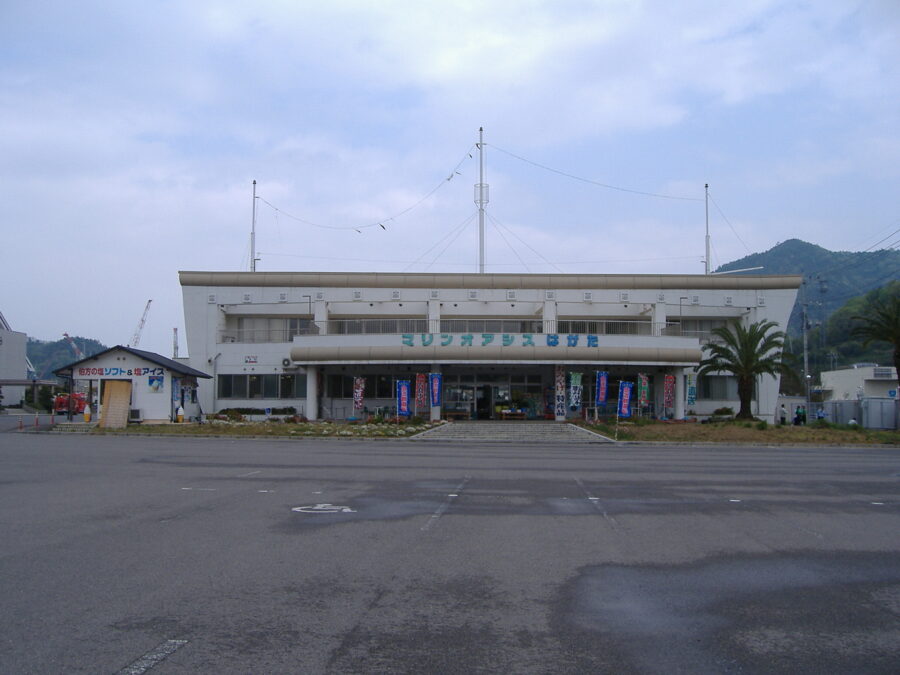
The restaurant menu (prices as of November 2026, tax included) starts with the plain salt ramen made with Hakata salt at ¥800. Then come a negi salt ramen, a sea bream salt ramen and a salt ramen topped with Oshima lemon and jakoten, Imabari’s fried fish cake, at ¥850 each, and Imabari’s own yakibuta tamago meshi (roast pork and fried egg on rice) at ¥880 (about US$6).
| Marine Oasis Hakata (as of November 2026) | Normal days | Winter |
|---|---|---|
| Shop | 09:00–17:00 | 10:00–16:00 |
| Restaurant | 11:00–14:00 last order | 11:00–14:00 last order |
| Food court | Weekdays 10:00–16:00; weekends, holidays and peak weeks 09:00–17:00 | 10:00–16:00 |
Winter here means 12 January to 14 March 2027, and the roadside station’s own page lists the closures: New Year’s Day, and every Tuesday in that winter spell (Tuesday 23 February is open, with Wednesday 24 February closed instead). The restaurant’s last order at 14:00 is the one to watch; ride late and you are down to the food court.
The other bowl is in Kinoura. Hakata no Shio Ramen Sanwa (さんわ), in business since 1971, created its salt ramen in the autumn of 1998, and the owner grew up on the island’s salt fields. The shop describes it as light but full of flavour, with the scent of rock laver in the broth. The Hakatajima shop opens 11:00–19:00 (17:00 on Wednesdays) and has been closed on Sundays since October 2020; it posts changed hours on its site, as it did for the September 2026 holidays.
Hirakiyama and the view of three bridges
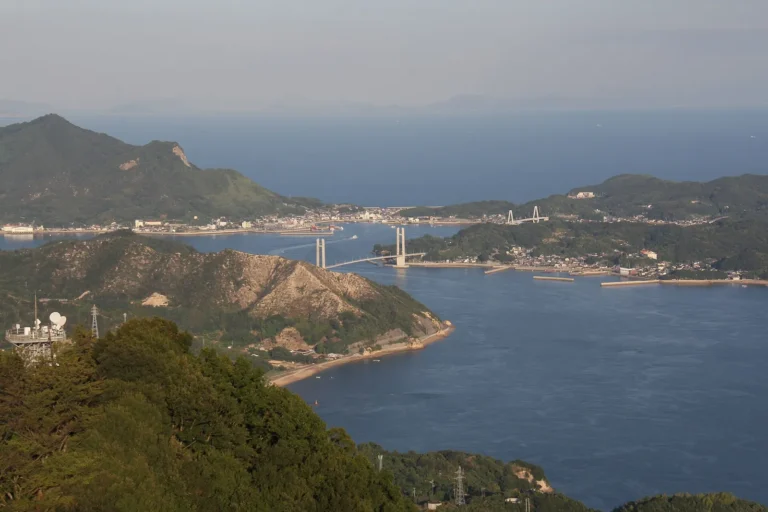
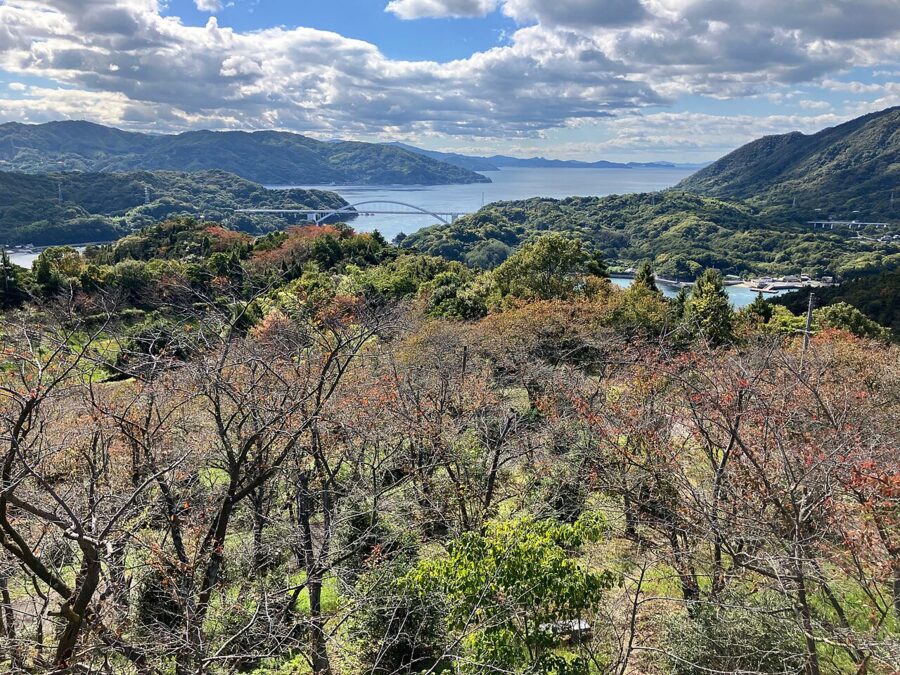
The hill is Hirakiyama (開山), and the park on its 149 m summit is the best view on the island. From the lookout you see the Shimanami Kaido bridges three at a time: the Hakata-Oshima Bridge, the Omishima Bridge and, beyond Omishima, the Tatara Bridge, with the Chugoku and Shikoku mountains behind on a clear day.
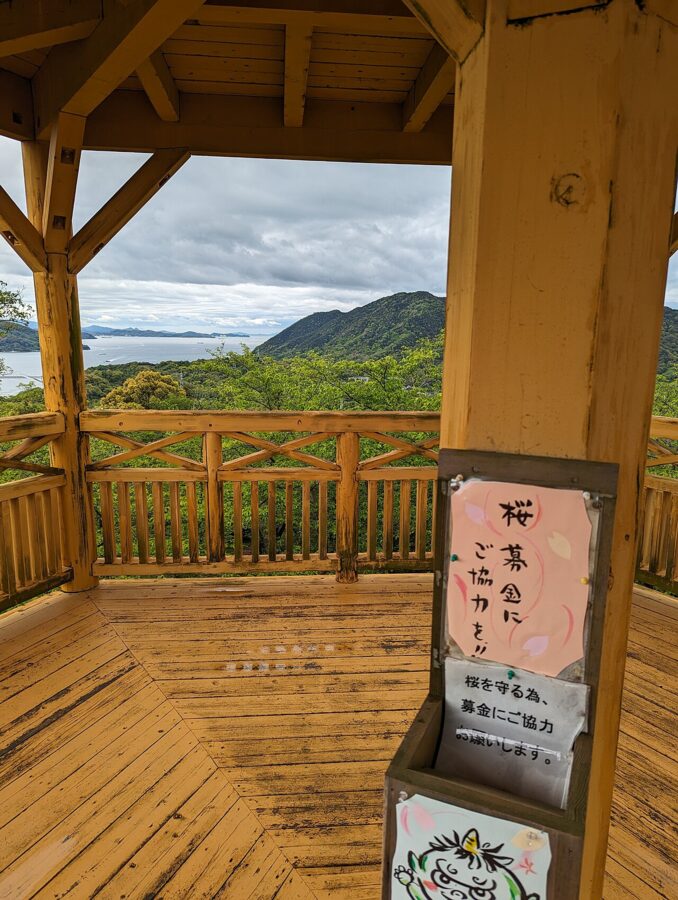
Hirakiyama is above the Ikata district in the island’s north-west, the same corner as the Omishima Bridge. In spring around 1,000 cherry trees flower in the park, lanterns go up for night viewing and oden stalls set up, and there are azaleas too. The rest of the year it is a quiet park with a 36 m slide and a free car park for 150; the park itself is free and always open (Imabari City’s page).
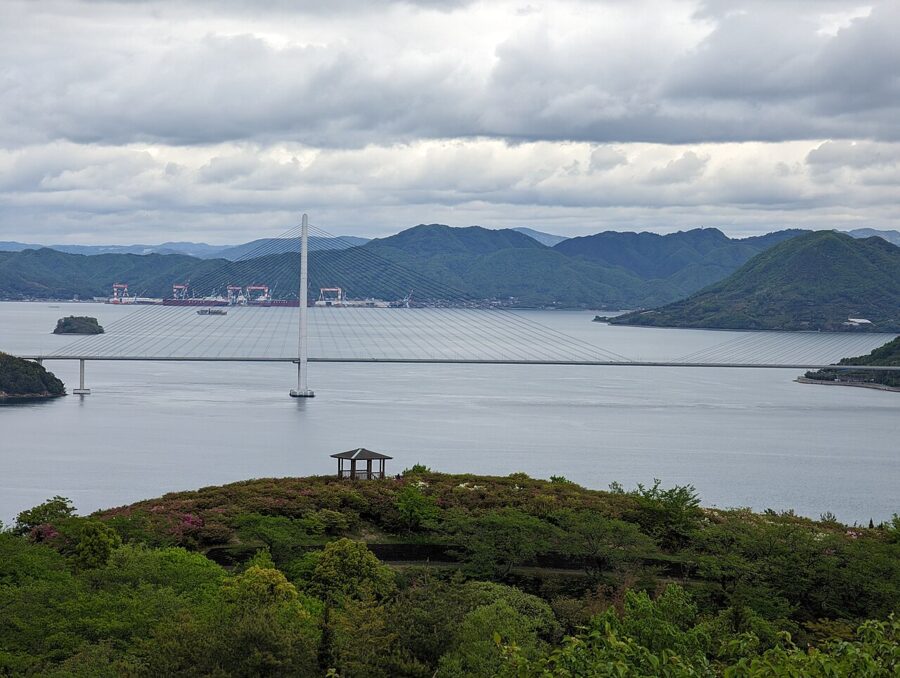
Getting up means about 2 km (1.2 miles) of climbing road from the coast. If you start near sea level that is 149 m of height in 2 km, an average of roughly 7 per cent: a low gear on a cross bike, and nothing on an e-bike. Without a bike, the island circular bus (the loop that runs via Kitaura) goes from Hakatajima BS to the Kumaguchi stop in about five minutes, and from there it is about 20 minutes on foot.
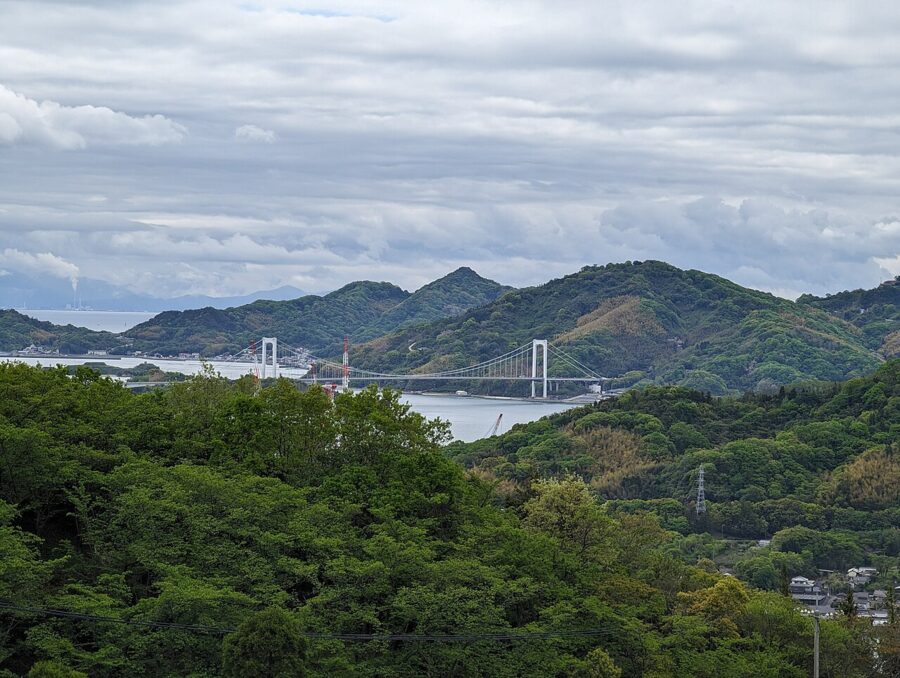
Is it worth it? If you have only an hour on the island, take Hirakiyama over the loop. If the cloud is down on the hills, skip it and eat ramen instead; the whole point is how far you can see.
Shipyards, salt pans and the Funaori Strait
Hakatajima builds ships. Imabari City, with about 500 maritime companies, calls itself Japan’s largest maritime city, and this island is one of its working parts. Ride the loop and the cranes are hardly ever out of sight.
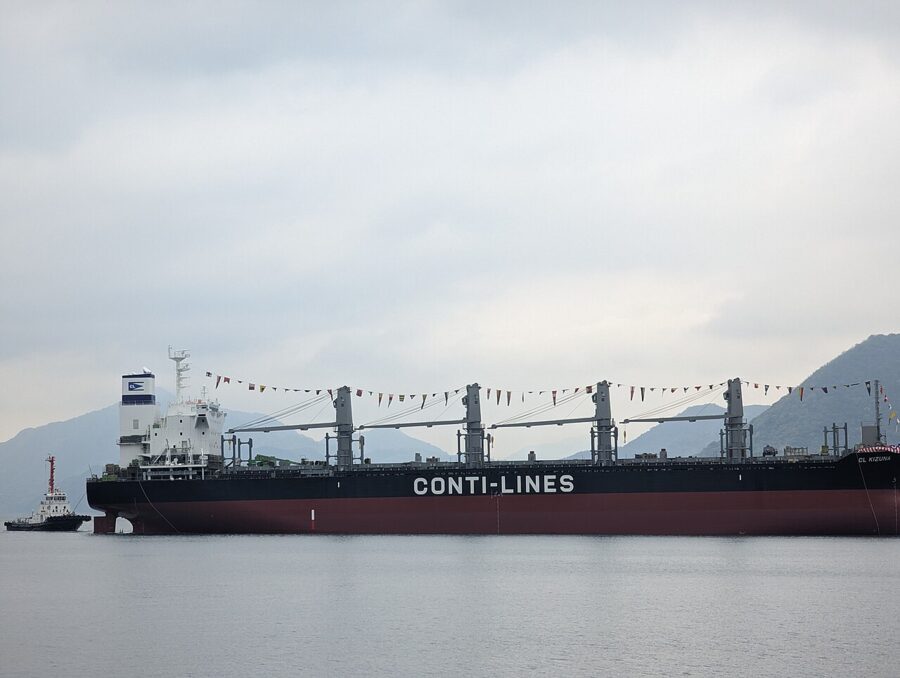
The yard you pass on the cycling route is Shimanami Shipyard (しまなみ造船) at Ikata, founded in 2005, with a slipway that takes ships of up to 60,000 tonnes deadweight and about 650 people working there with subcontractors. It still launches from the slipway in the old way: the rope is cut with an axe, the champagne breaks and the hull slides into the sea. The yard sets up viewing space on launch days and posts the dates on its news page; the ceremony itself takes about 15 to 20 minutes, depending on the tide.
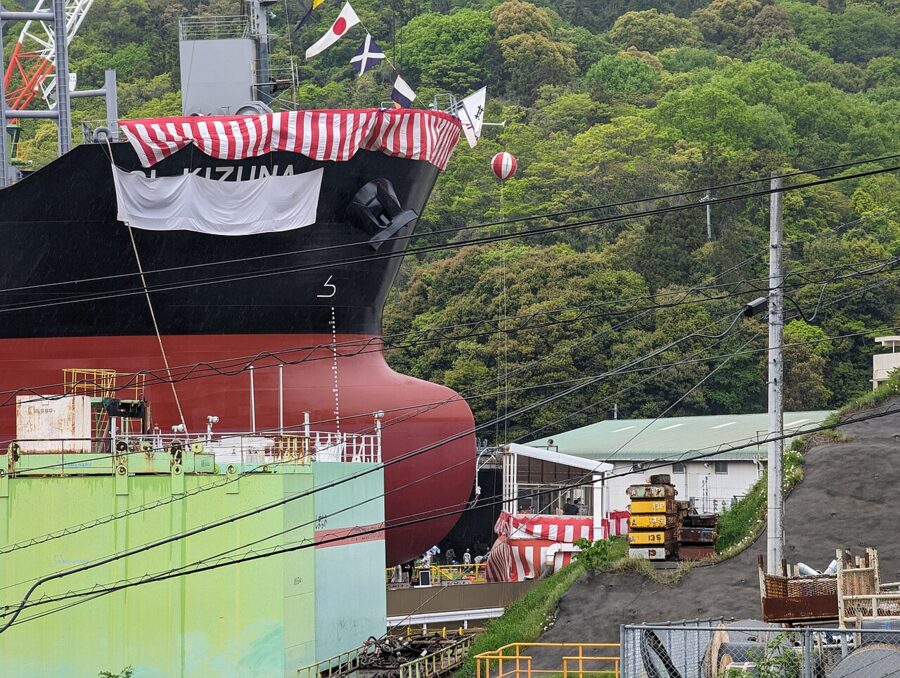
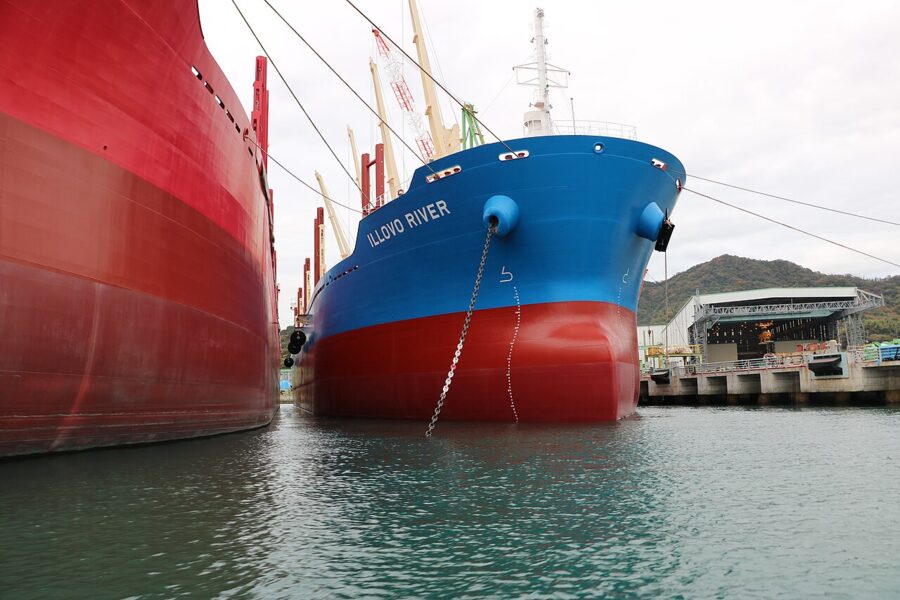
Going anticlockwise from the Hakata-Oshima Bridge, the loop first runs along the south shore to the Funaori Strait (船折瀬戸), the gap between Hakatajima and the small island of Ushima (鵜島). Its name means “ship-breaking”, and the city’s description is of a tide that runs through it like a river, past a red lighthouse on the rocks. There is room to park at the Michishita open space, and the strait is a 10-minute walk from the Michishita bus stop.
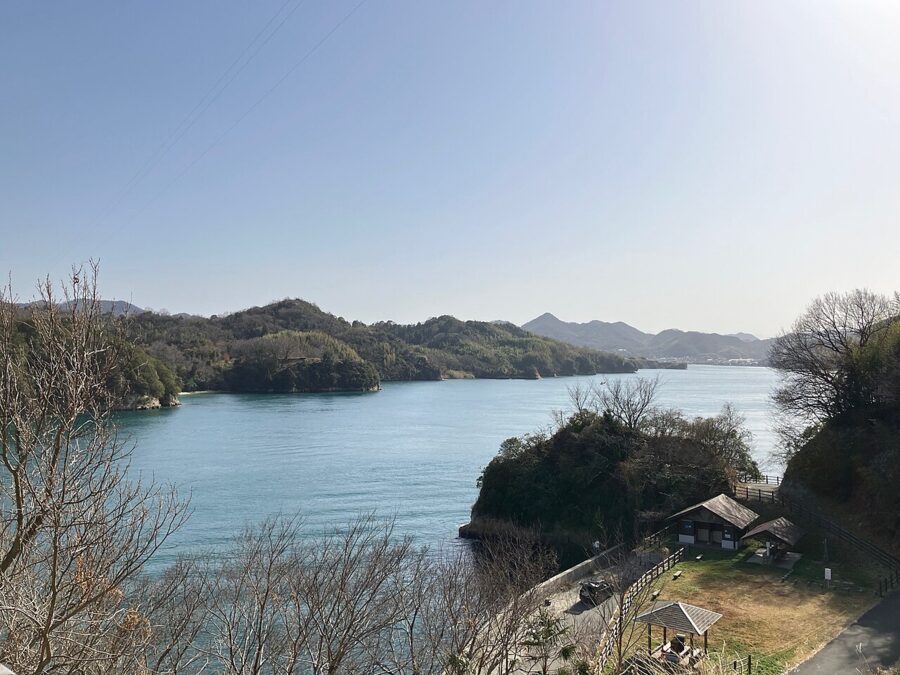
The Murakami pirates, the sea lords of these straits, left their marks on this side of the island. Zenkoji (禅興寺) in Kinoura was the family temple of the Noshima Murakami, founded by them in the Muromachi period, and under a big camphor tree nearby is the grave of Murakami Masafusa and his wife. Kitaura Hachiman Shrine on the north shore, the oldest on the island, keeps a model of a bahan-sen, the kind of ship the sea raiders sailed, presented in 1829.
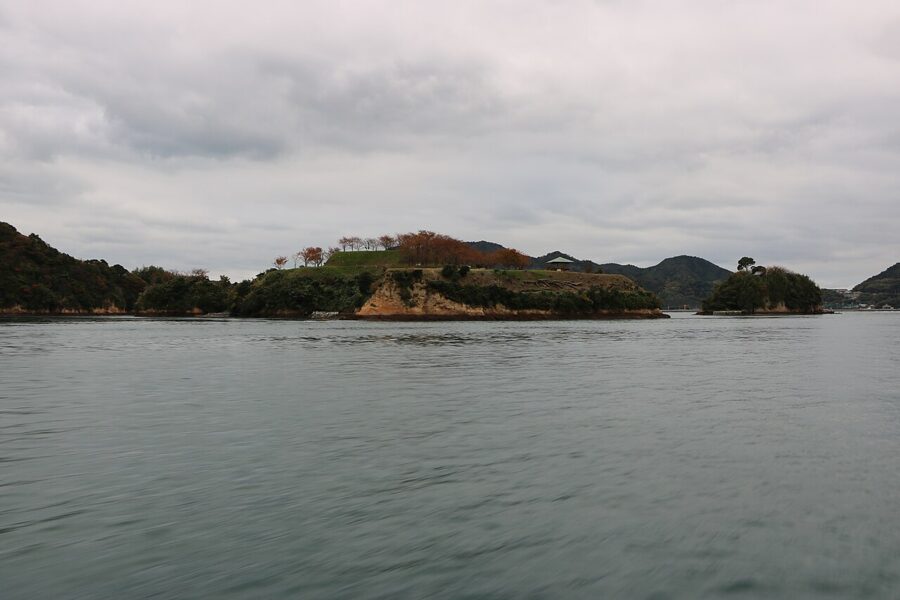
Past Kinoura the road climbs to a hilltop park looking down on the harbour and its yards, then drops to the north coast, which Shimanami Japan describes as lined with mostly former salt-making ponds. These are what the 1971 law ended. Then the road carries on round to Hirakiyama and back down to the Omishima Bridge end.
Hakata Beach, the dolphins and Okiura
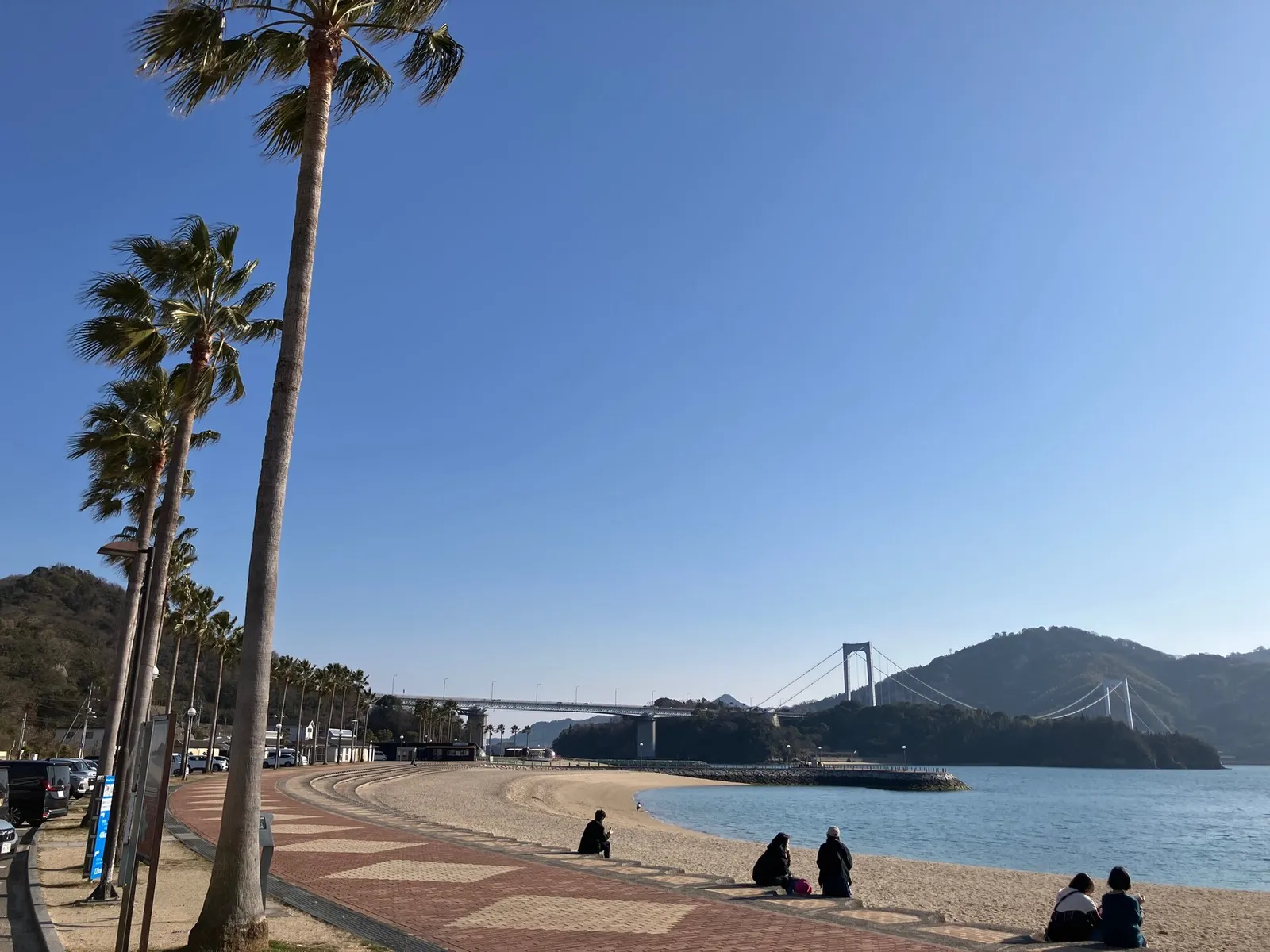
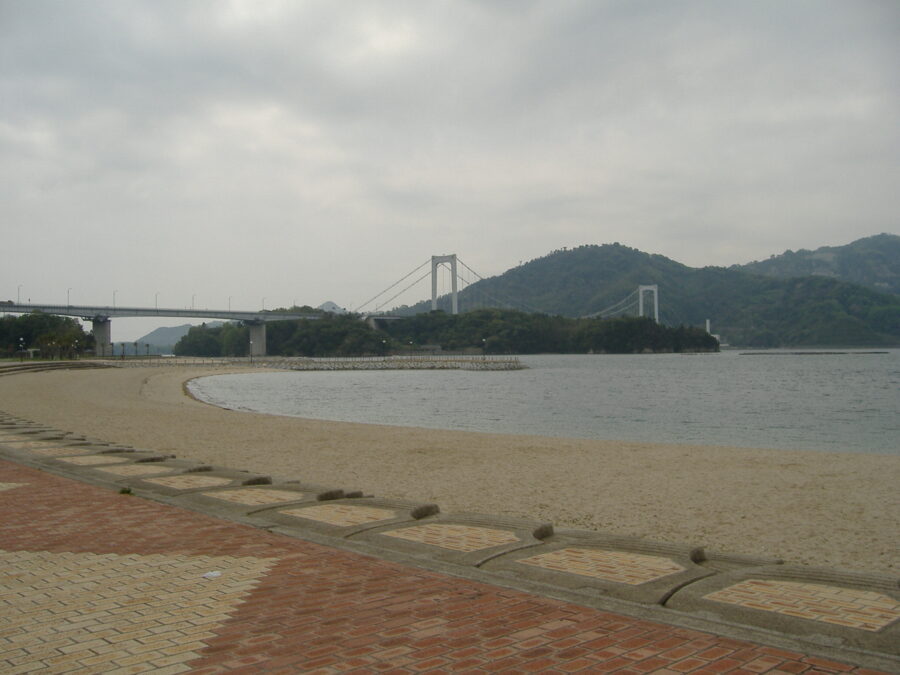
Hakata Beach (伯方ビーチ) opened in 1999 inside the Hakata S.C. Park, right under the Hakata-Oshima Bridge. The swimming season runs from early July to late August; entry is free, and there are showers, changing rooms and toilets.
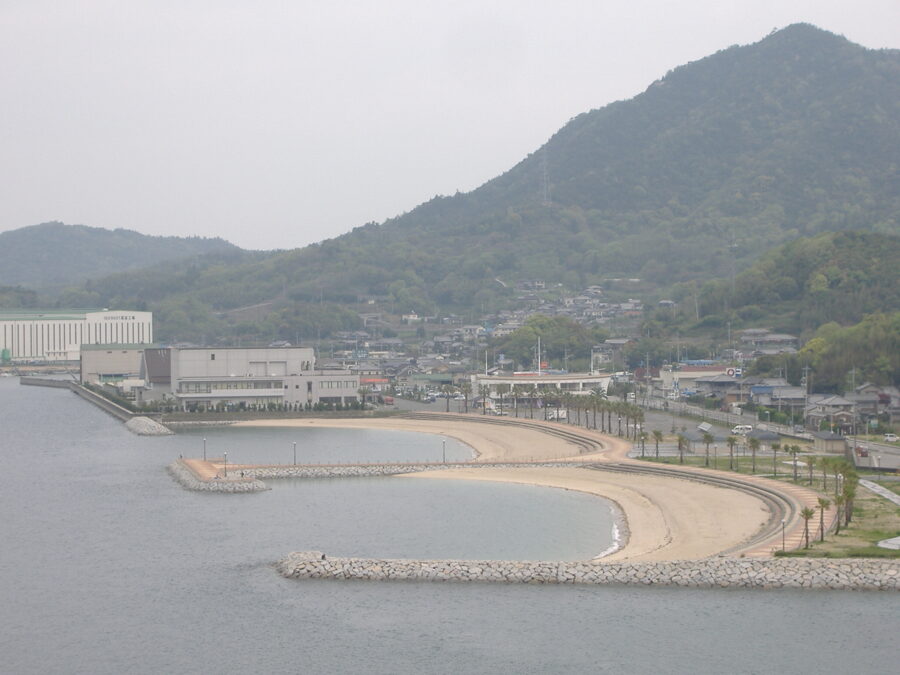
On the beach is Dolphin Farm Shimanami, a dolphin enclosure and programme centre open 09:00–17:00 and closed in bad weather. Its programme prices (tax included, as of November 2026) are ¥600 (about US$4) just to walk out onto the jetty, ¥2,000 (about US$13) to feed the dolphins, ¥6,600 (about US$44) for a 30-minute touch session in waders, and ¥11,000 (about US$73) for an hour’s swim holding a dorsal fin, changing included. Programmes are booked ahead and Golden Week and summer fill up; whether you want to is your call.
For a quieter beach, Okiura Beach (沖浦ビーチ) on the south coast has about 1 km (0.6 miles) of sand, a kiosk and rest area in season and parking for 40. It is about 15 minutes by car from the interchange and makes the natural swim stop on the loop. July and August are the swimming months, though not the best time to visit the Shimanami Kaido for riding.
Onto the Hakata-Oshima Bridge
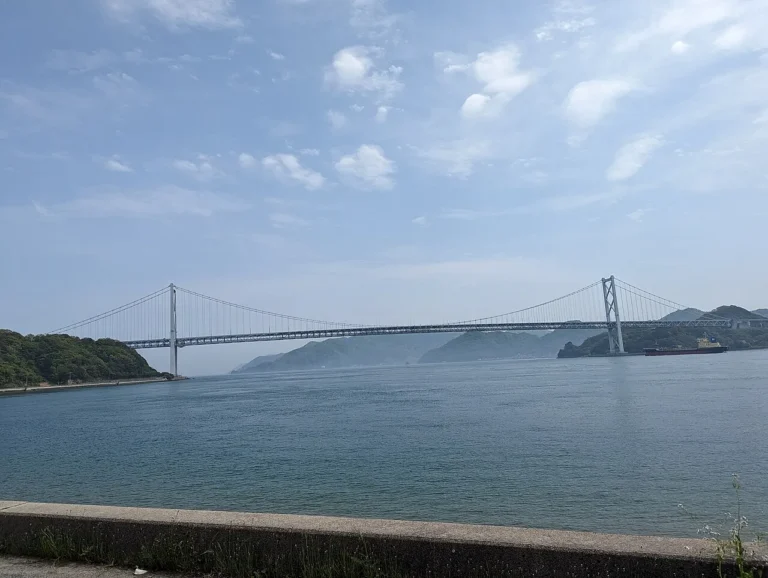
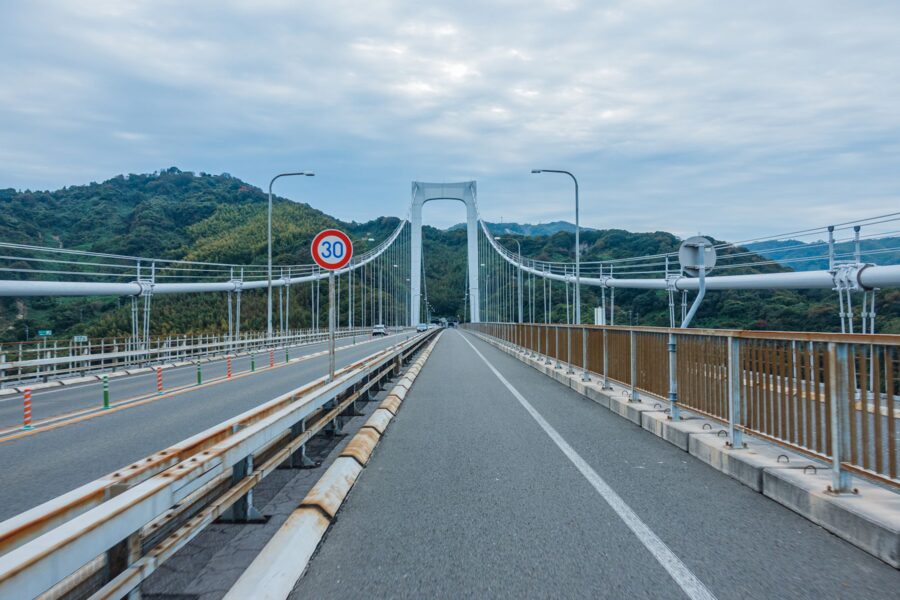
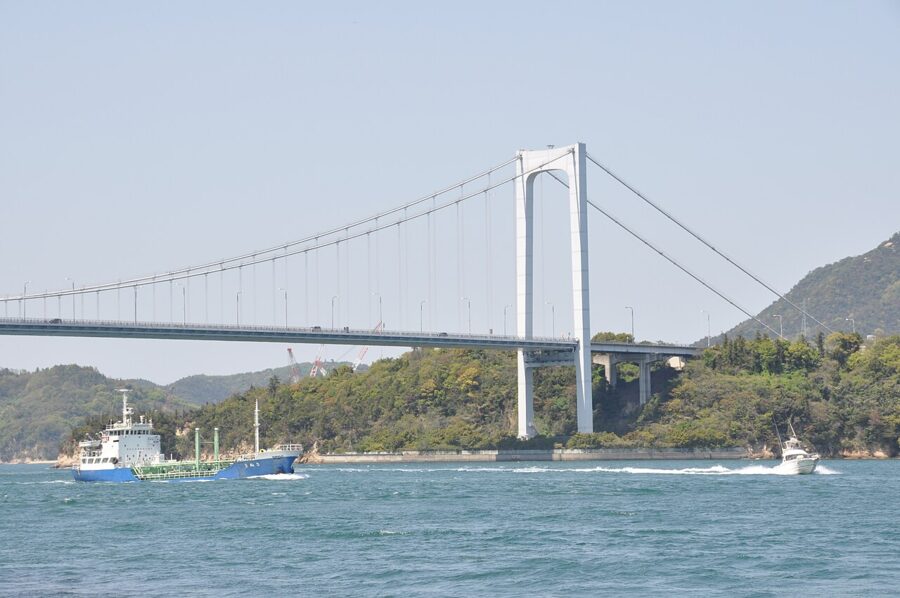
The Hakata-Oshima Bridge (伯方・大島大橋), opened in January 1988, is two bridges joined on a small island. The Hakata Bridge, a 325 m three-span steel box girder, runs from Hakatajima to Mijikajima; the Oshima Bridge, an 840 m suspension bridge with a 560 m main span and towers 97 m tall, carries on to Oshima.
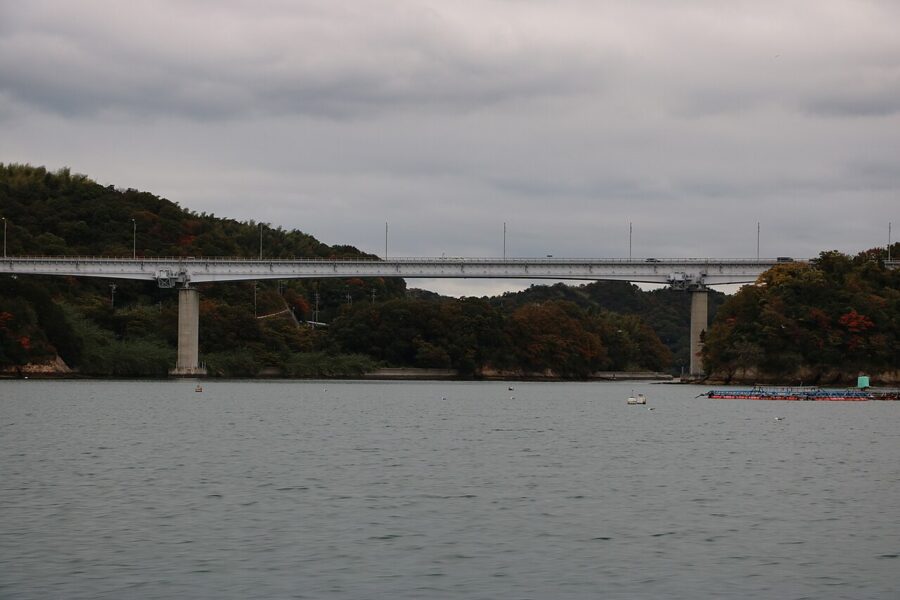
From the roadside station it is a short ride back up to bridge level, so you can eat, fill your bottles and be on the bridge in a few minutes. The Oshima Bridge was the first suspension bridge in Japan with a steel box stiffening girder, a design the engineers then used on the Kurushima-Kaikyo Bridge at the end of the route, and its road is about 39 m above the water.
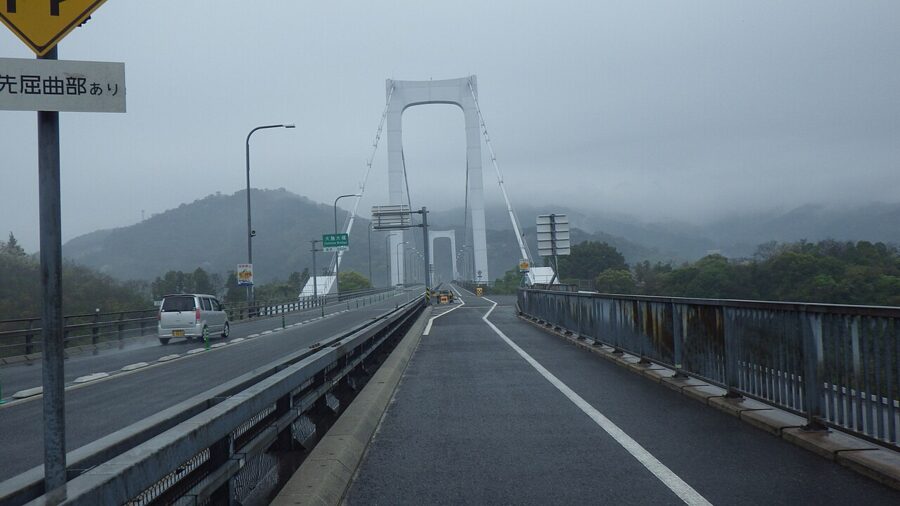
Mijikajima, the island in the middle
Between the two spans a ramp drops off the bridge to Mijikajima (見近島), an uninhabited island once used as an outpost by the Noshima Murakami. Only bicycles, mopeds and people on foot can get there, which keeps it quiet. It belongs to Miyakubo on Oshima, not to Hakatajima.
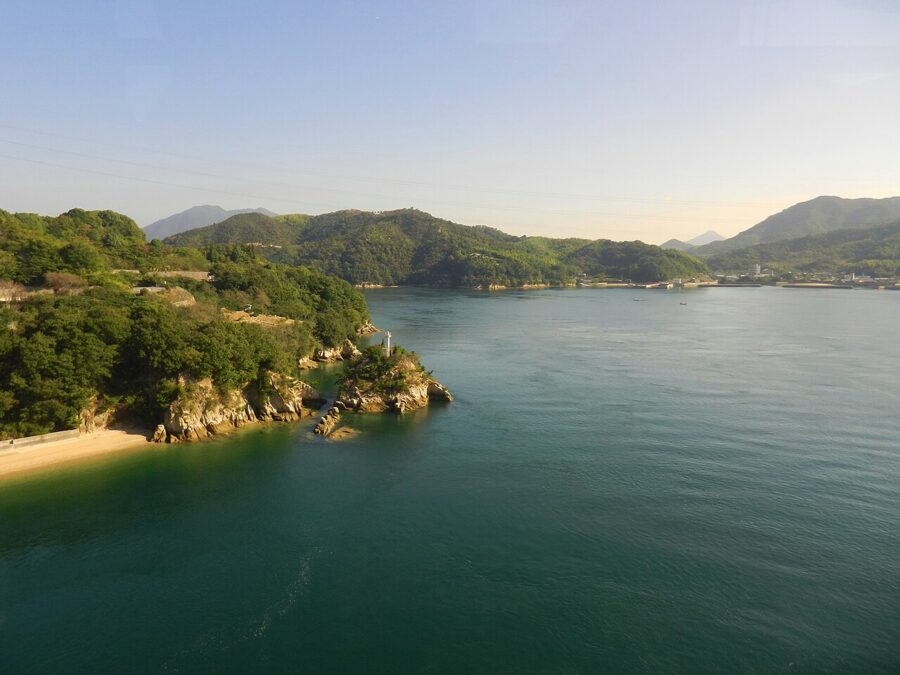
The island is a free campsite with no booking. It has toilets and a cooking shelter but no showers and no power, fires on the ground or on fire mats are not allowed, and the city asks campers to keep any fire to a minimum, as an emergency vehicle could not get there quickly. Even as a day stop it is worth the detour down the ramp, for the view of the islands and the bridge from the shore.
Off the far end you are on Oshima, where the route goes on through Yoshiumi to the Kurushima-Kaikyo Bridge and Imabari.
Where to stay and eat on Hakatajima
Hakatajima has no big hotel, which suits it. Stay here if you want to split the route into two easy days, with the salt ramen at lunch and the beach at sunset, or if you want an early start on the bridges before the day riders reach them. Setoda and Omishima have more beds in where to stay on the Shimanami Kaido, but none closer to a beach.
- Hakata plus+, facing Hakata Beach: two private rooms in a building finished in February 2023, each with a small kitchen and bathroom, Imabari towels and covered parking for bikes. Check-in is 15:00–18:00.
- Terra -Shimanami- in Kitaura: a whole old house let to one group a night, sleeping up to eight. The tourism association lists it from ¥12,000 (about US$80) a night for two and ¥5,000 (about US$33) for each extra person, with bikes kept out of the rain; you check in at the shop next door.
- Dolphin Farm Shimanami’s campsite, beside Hakata Beach: cottages, glamping and tent pitches, with check-in 15:00–17:00 for the cottages.
- Mijikajima: free camping under the bridge, for riders carrying their own tent.
The Imabari tourism association and Shimanami Japan also list a handful of older family-run ryokan and minshuku on the island, around Kinoura, Arizu, Kitaura and Ikata. None of them posts a 2026 opening, so they are not named here; ring before you ride.
For food, plan around two kitchens with short hours: Marine Oasis Hakata’s restaurant (last order 14:00) and Sanwa in Kinoura (until 19:00, closed on Sundays). Evenings are quiet, so if you are self-catering, shop before you settle in. Salt ramen is Hakatajima’s contribution to Shimanami Kaido food.
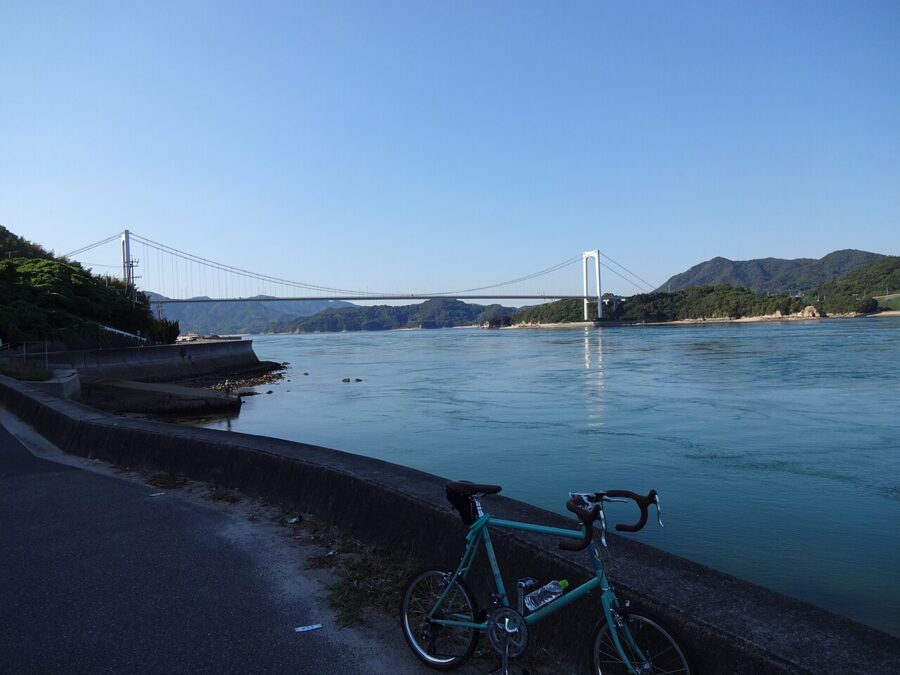
Three kilometres of route, then, and an island that repays anyone who leaves it. Come down off the Omishima Bridge, follow the cranes to the roadside station, and order the ¥800 salt ramen before the 14:00 last order; climb Hirakiyama if the sky is clear, and take the bridge to Oshima after that.