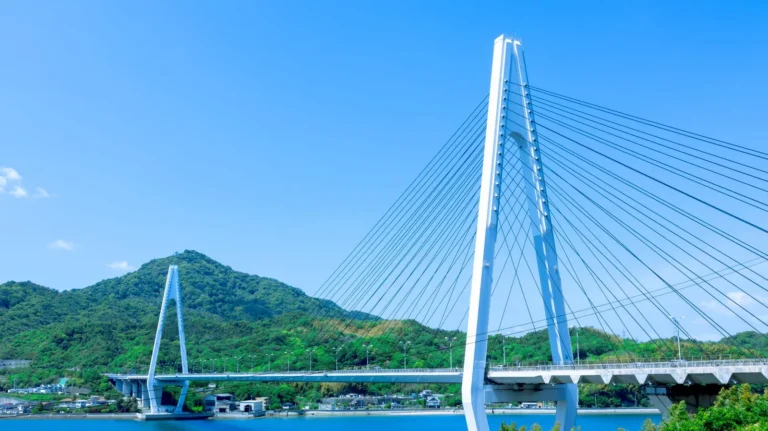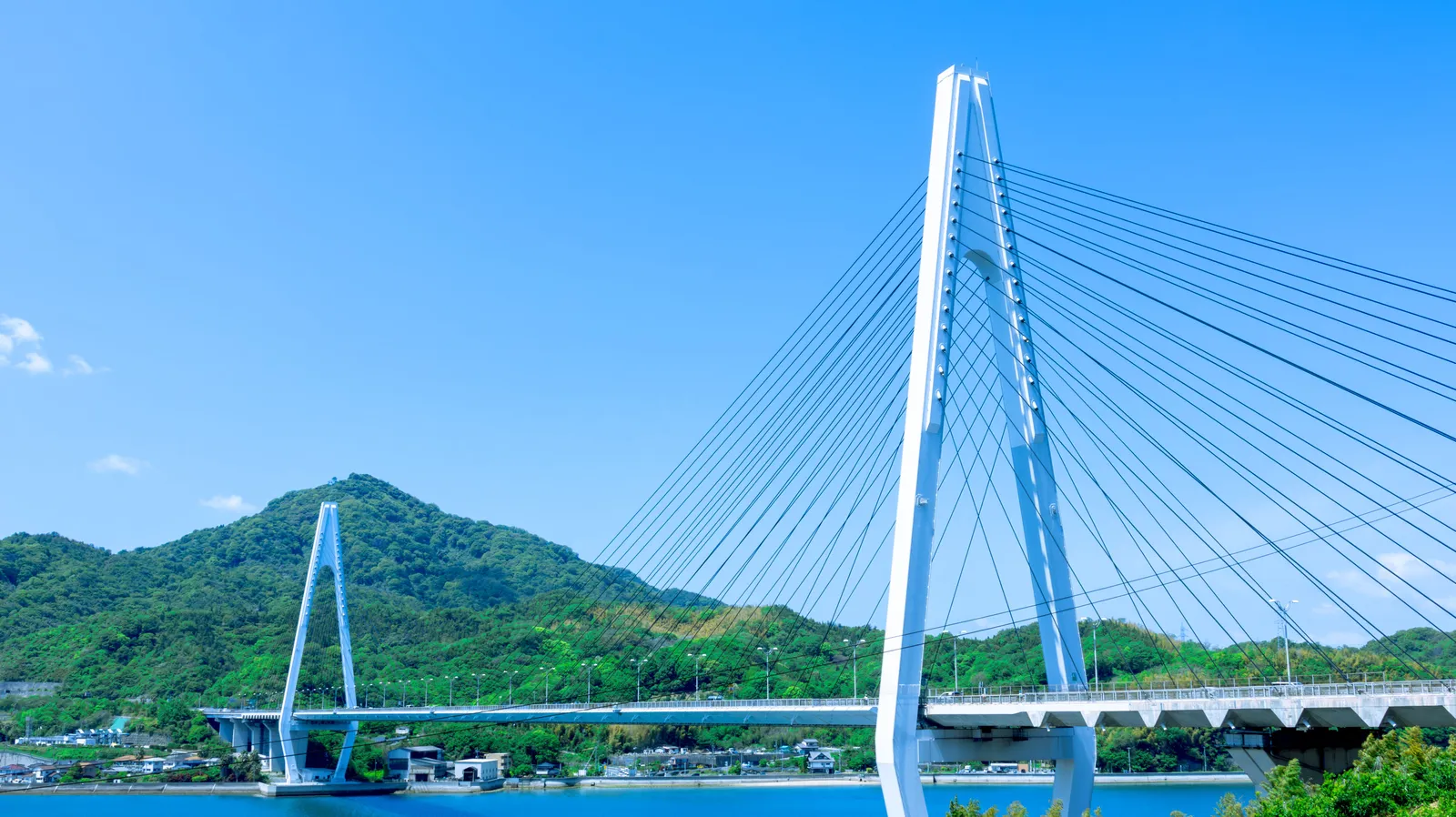
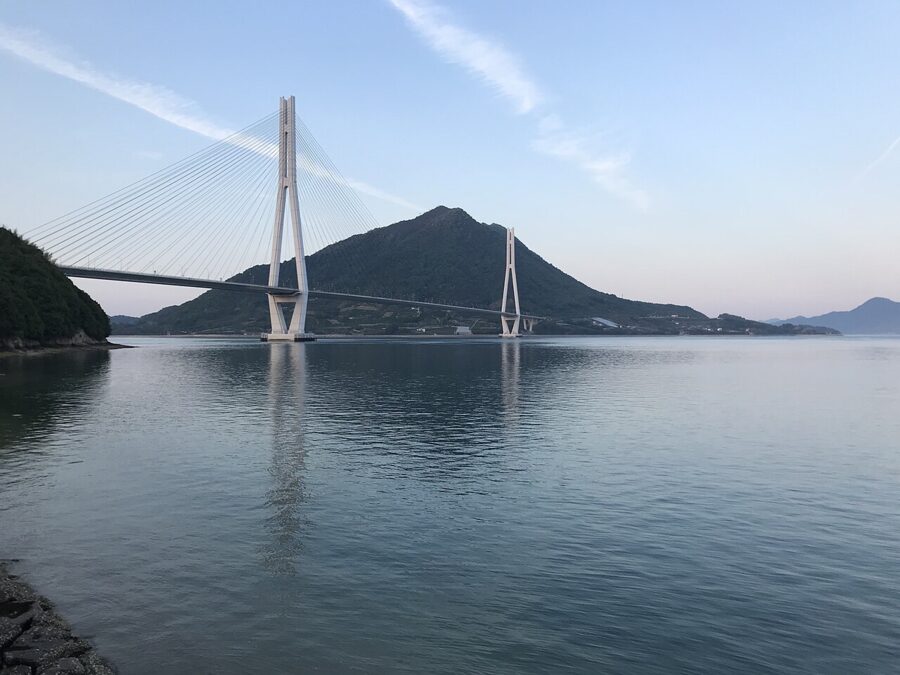
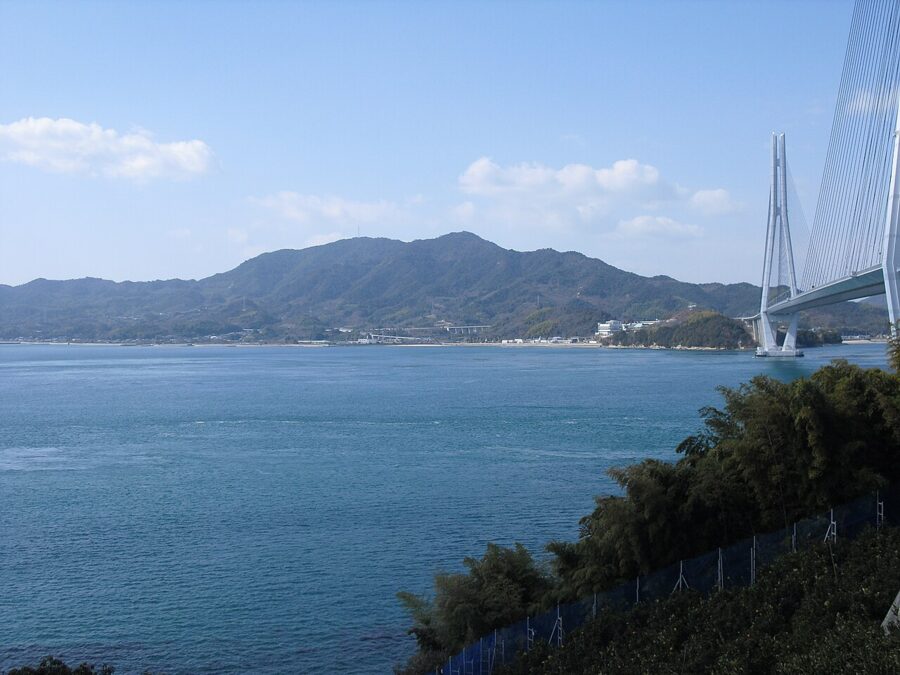
The cycle path comes down off the Tatara Bridge to a car park with a stone monument, a bike rental counter and a view straight back up at the towers you have just ridden between. This is Omishima (大三島), and most riders treat it as a corridor: five kilometres (3 miles) down the east coast to the next bridge, a photograph at the monument, gone.
That is a fair choice if Imabari is the day’s target. But the island behind those orchards is the one the whole Seto Inland Sea once sailed to. On its far side, at Miyaura, stands Oyamazumi Shrine, the first shrine of old Iyo province, with a camphor said to be 2,600 years old and a treasure hall that holds, by the shrine’s own count, about eight in ten of the pieces of armour and weaponry Japan has listed as National Treasures or Important Cultural Properties.
So the decision at the bottom of the ramp is simple. Head south for the Omishima Bridge and Hakatajima, or head west, climb over the low spine of the island and give the island of the gods a few hours. I would give it the hours.
In this guide9
- Where Omishima sits on the route
- Off the Tatara Bridge: Tatara Shimanami Park
- The detour to Miyaura and Oyamazumi Shrine
- The museums: Tokoro, Toyo Ito and Iwata Ken
- The quieter north and west
- Citrus, beer and wine
- Across to the Omishima Bridge and Hakatajima
- Where to stay, and why riders stop here
- A sensible half day on Omishima
Where Omishima sits on the route
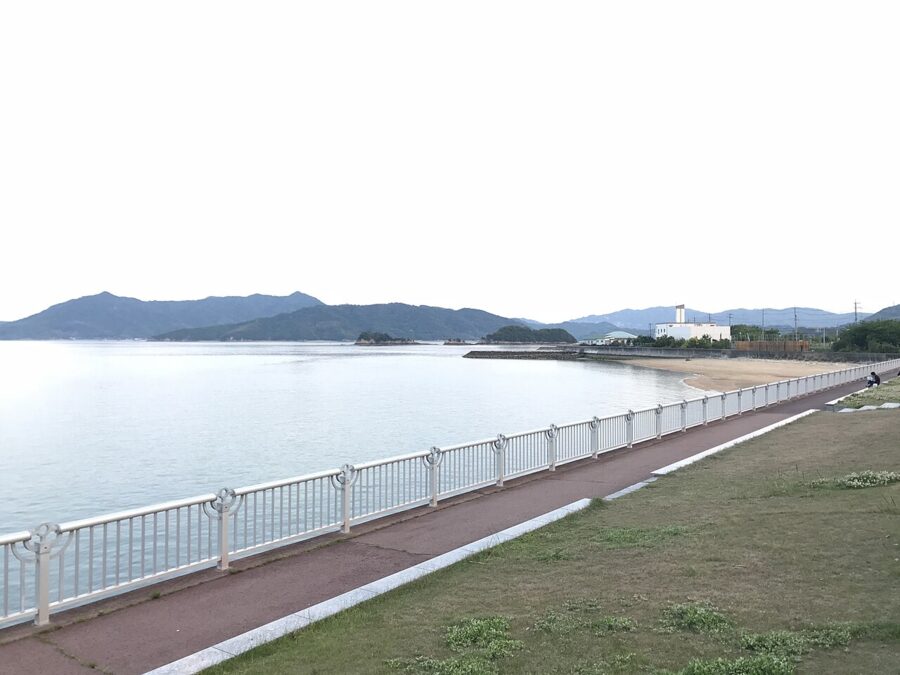
Omishima is the largest island on the Shimanami Kaido, 64.5 square kilometres of citrus slopes and small harbours about halfway along the 70 km (43 mile) route. It belongs to Imabari City in Ehime and still splits into its two old towns: Kamiura (上浦) on the east, where the bridges land, and Omishima-cho on the west, with the shrine, the museums and most of the villages. Mount Washigatou (鷲ヶ頭山), 436 metres, is the highest point.
You arrive from Ikuchijima over the Tatara Bridge in the north-east and leave for Hakatajima over the Omishima Bridge in the south-east. The two bridges are only about 5 km apart along the coast, which is why the island is so easy to skip. Miyaura and the shrine are about 7 km (4 miles) west of the Tatara end, over a ridge.
Without a bike, the shrine is still easy to reach. The express buses of Setouchi Bus and Setonaikai Kotsu run from Imabari Station to the Oyamazumi Jinja-mae stop in about 65 minutes; from Fukuyama, the Shimanami Liner stops at Omishima BS by the interchange, and an island bus covers the last 12 minutes. The shrine’s access page sets out both; Imabari and Fukuyama are the rail ends for getting to the Shimanami Kaido.
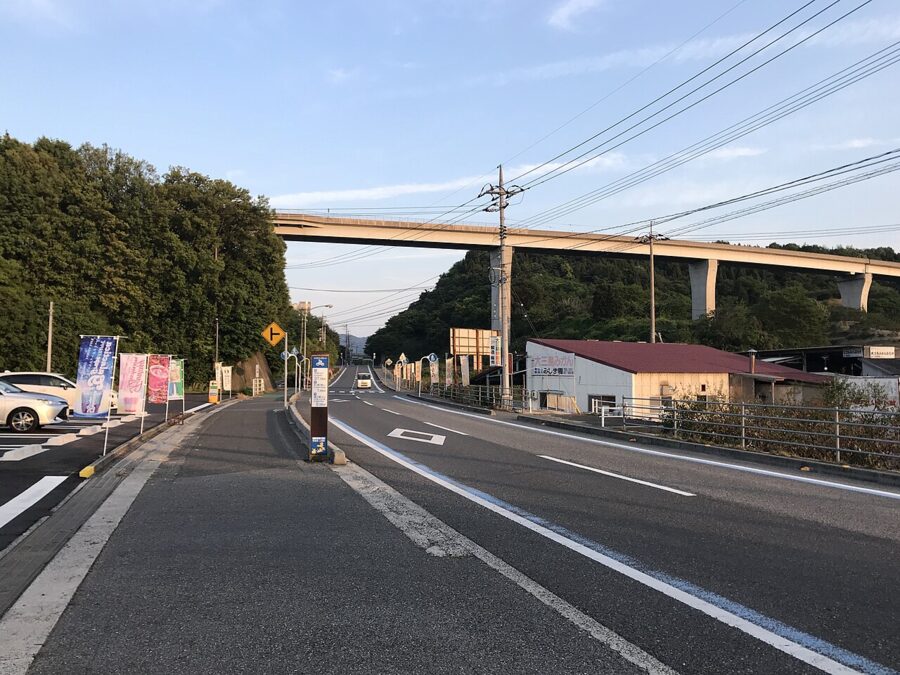
Bridge tolls are not a cost. Bicycles use the Shimanami Kaido’s cycle paths free of charge under a scheme that JB Honshi has extended to 31 March 2028, with nothing to pay and no ticket to collect. Mopeds are not included.
Off the Tatara Bridge: Tatara Shimanami Park
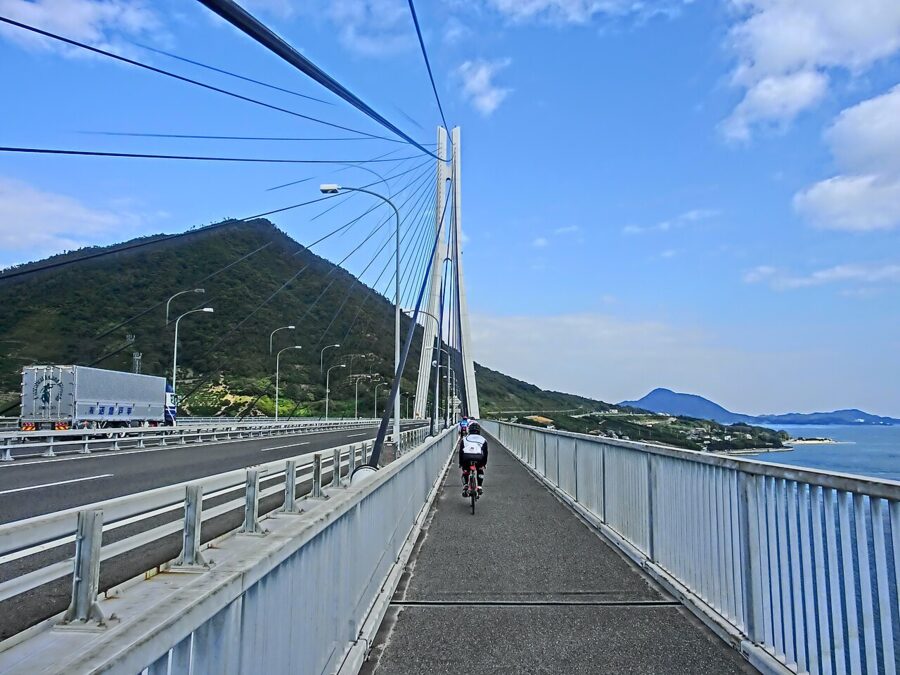
The Tatara Bridge is 1,480 metres long with an 890 metre main span, and when it opened in May 1999 it was the longest cable-stayed bridge in the world. Its towers stand 226 metres high. Because the deck hangs from straight cables rather than a curve, the road across is level once you are on it, and the climbing is all in the approach ramps.
Stop at the foot of a tower on the cycle path. Wooden clappers are provided there, and if you strike them the sound rises up inside the tower and comes back as a long, rolling echo, the “Tatara singing dragon” (多々羅鳴き龍). You can only hear it from the cycle and pedestrian path, never from a car.
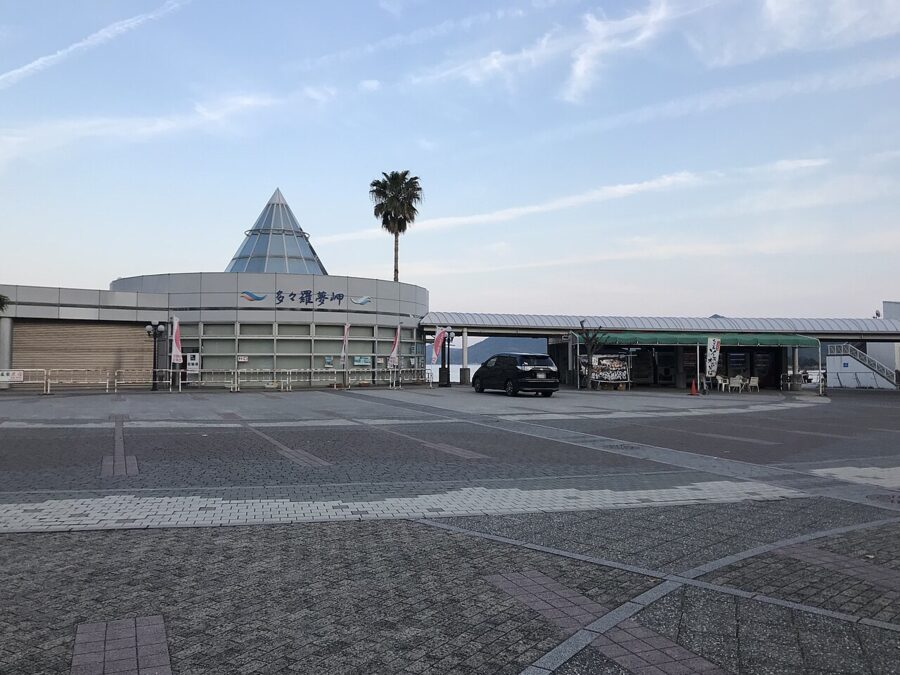
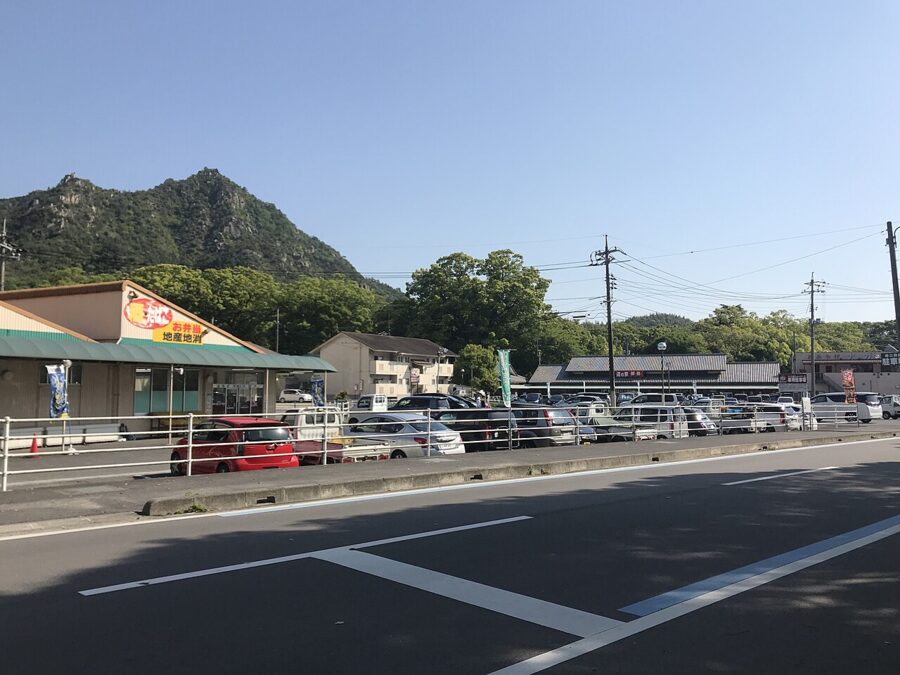
At the bottom of the ramp is the roadside station Tatara Shimanami Park (道の駅 多々羅しまなみ公園) at Inokuchi in Kamiura, the largest of the roadside stations on the route. It is where riders find the “Cyclists’ Sanctuary” monument, and it is the most useful stop on the island for practical reasons:
- Bikes. Shimanami Japan’s Omishima rental terminal (No. 6) is here, open 09:00–17:00. It is one of only three Shimanami Japan terminals where you can swap a flat e-bike battery, the other two being at Setoda.
- Food. The restaurant serves Ehime seafood and takes last orders at 15:00 (14:00 on winter weekdays); the food court and shop open 09:00–17:00, and 10:00–16:00 in winter.
- Citrus. The farmers’ stall, Fureai Yatai-ichi (ふれあい屋台市), sells island fruit and vegetables from 09:00 to 16:00.
- Winter. From 12 January to 14 March 2027 the station closes on Thursdays (except the 11 February holiday), and it is shut on 5 January 2027.
Rental rates are set route-wide by Shimanami Japan’s rental terms: ¥3,000 (about US$20) a day for a cross bike or city bike and ¥4,000 (about US$27) for an electric-assist bike, as of 2026, and an individual can hand a standard bike back at any of the ten terminals at no extra charge; e-bikes and tandems are the exceptions in Shimanami Kaido bike rental. The thing to know here is that the counter closes at 17:00, and a bike due back at Omishima must arrive by then.
Beside the car park, the Murakami Santo Memorial Museum, which doubles as Kamiura’s local history museum, shows the work of the calligrapher Murakami Santo; its city page gives ¥520 (about US$3) entry, 09:00–17:00, closed Mondays.
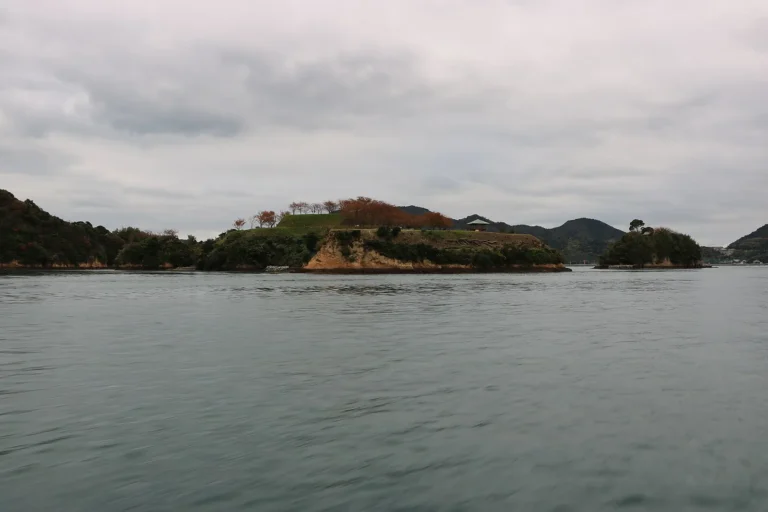
About a kilometre south of the park, off the village of Amazaki and some 160 metres from the shore, is Amazaki Castle (甘崎城), a sea fortress of the Murakami pirates held by Murakami Yoshitsugu of the Kurushima branch and abandoned in 1608. Its stone walls run down into the water; Engelbert Kaempfer, sailing past in 1691, described a fortification rising out of the sea. Only a few very low tides a year expose a sandbar out to it.
The detour to Miyaura and Oyamazumi Shrine
From the park, the way to the shrine is the island’s own cycle road, the Imabari Omishima cycleway (今治大三島自転車道), which leaves the coast at Inokuchi and crosses the middle of the island to Miyaura, about 7 km. It rises steadily to a little over 70 metres before running down through orchards to the west coast; I would allow 30 to 40 minutes on a standard bike, less on an e-bike.
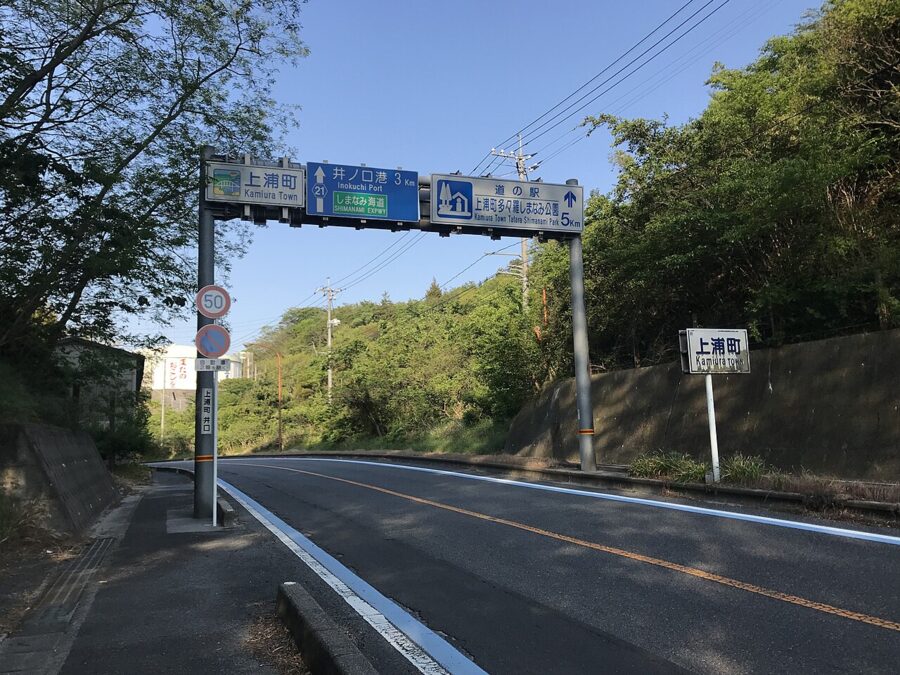
Coming back is the same climb. If you are heading on south instead, the inland road from Miyaura to the Omishima Bridge is about 12 km, so Tatara, the shrine and the bridge add up to about 19 km against 5 km on the direct route. That extra 14 km is the real cost of the detour, and on a one-day ride from Onomichi to Imabari it is the reason to book an e-bike.
Oyamazumi Shrine (大山祇神社)
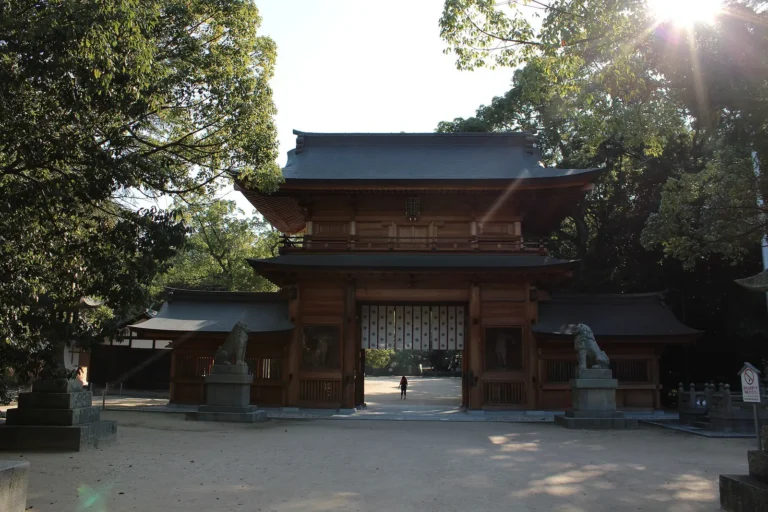
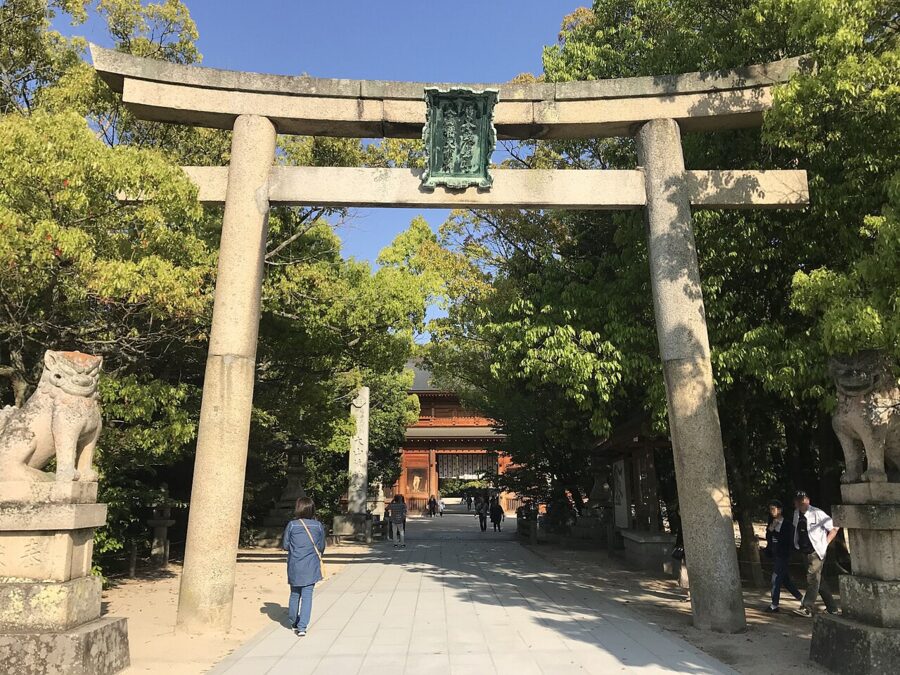
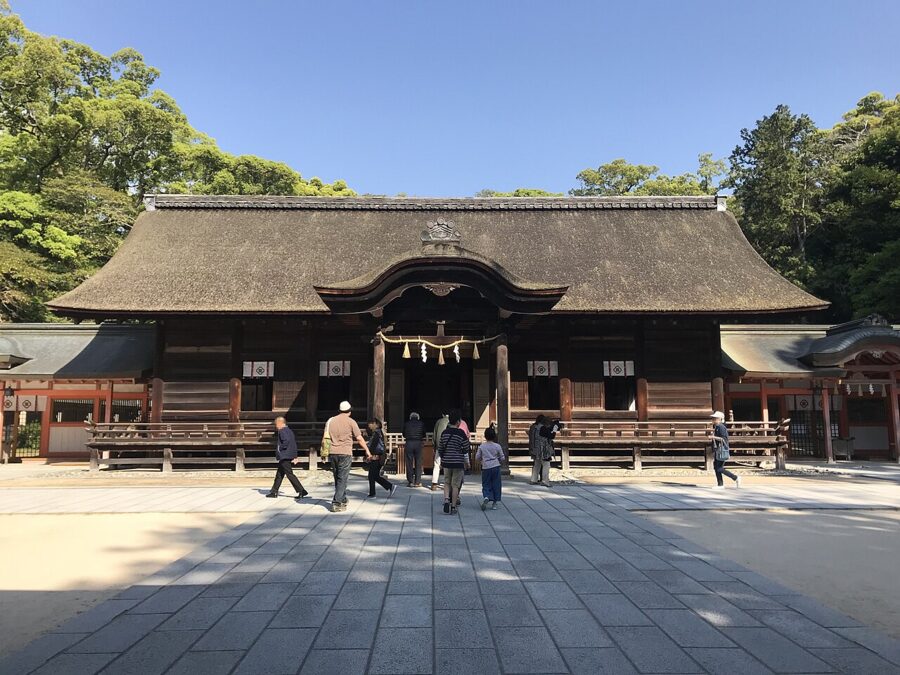
Oyamazumi Shrine is the head shrine of all the shrines in Japan dedicated to Oyamatsumi, a god of mountains who is also, the shrine explains, a god of the sea and of crossings. That double role is the key to the place. For centuries the captains and warlords who needed the Inland Sea on their side came here to pray, and many left armour and swords as offerings.
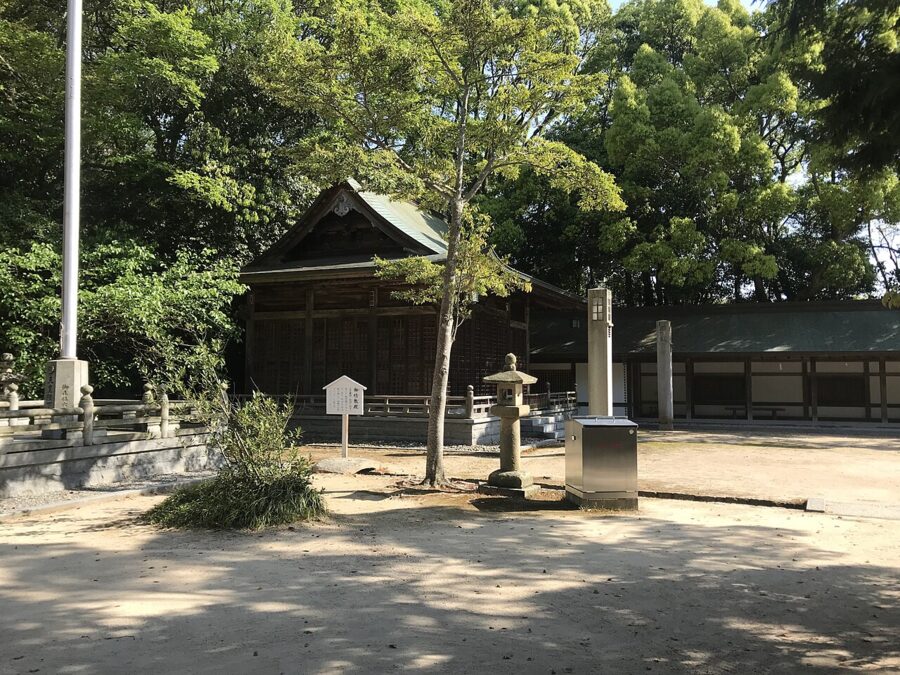
The shrine was moved to its present site at Miyaura in 719, according to its own history; before that it stood at Seto, in the south-east of the island in what is now Kamiura. The main hall (honden) and the worship hall (haiden) were rebuilt in the early Muromachi period, are roofed in cypress bark and are both Important Cultural Properties. The grounds are open from about sunrise to 17:00, and walking them costs nothing.
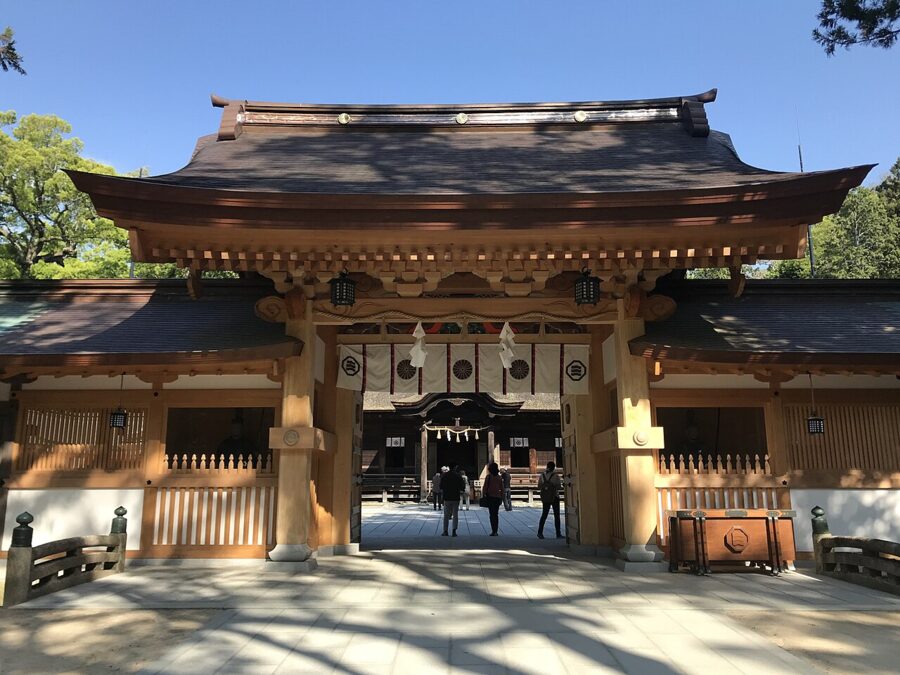
The hours that matter, as the shrine publishes them:
| What | Hours | Notes |
|---|---|---|
| Shrine gates | From about sunrise to 17:00 | Grounds free |
| Amulet and goshuin counter | 09:00–17:00 | Prayer requests 09:30–16:00 |
| Treasure hall | 09:00–16:30 | Last entry 16:00 |
The times are on the shrine’s worship page. Drivers should note that parking by the torii takes only 13 cars.
The camphor trees
The great tree in front of the main hall is the one to stand under. The shrine calls it the camphor planted by Ochi no Mikoto (乎知命御手植の楠), after the descendant of the god who is said to have founded the shrine, and puts its age at about 2,600 years. It is the centrepiece of the Oyamazumi Shrine camphor grove, a national Natural Monument.
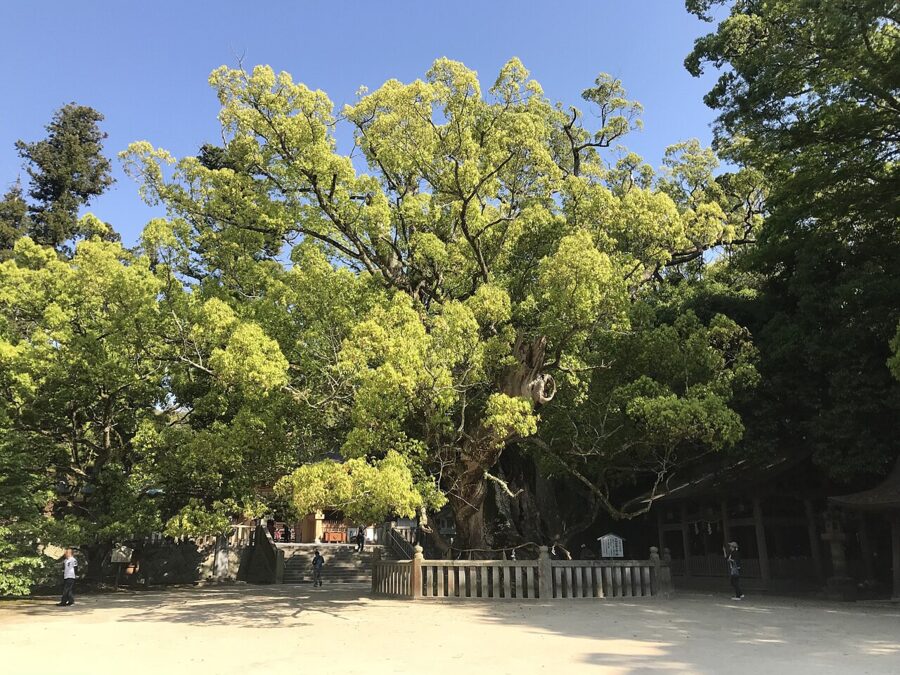
Two old stumps in the grove have stories of their own. At one, the Heian poet-monk Noin is said to have prayed for rain; on the other, Kono Michiari, the Iyo commander who fought the Mongol invasions of the 1270s and 1280s, is said to have hung his helmet. His armour is in the treasure hall.
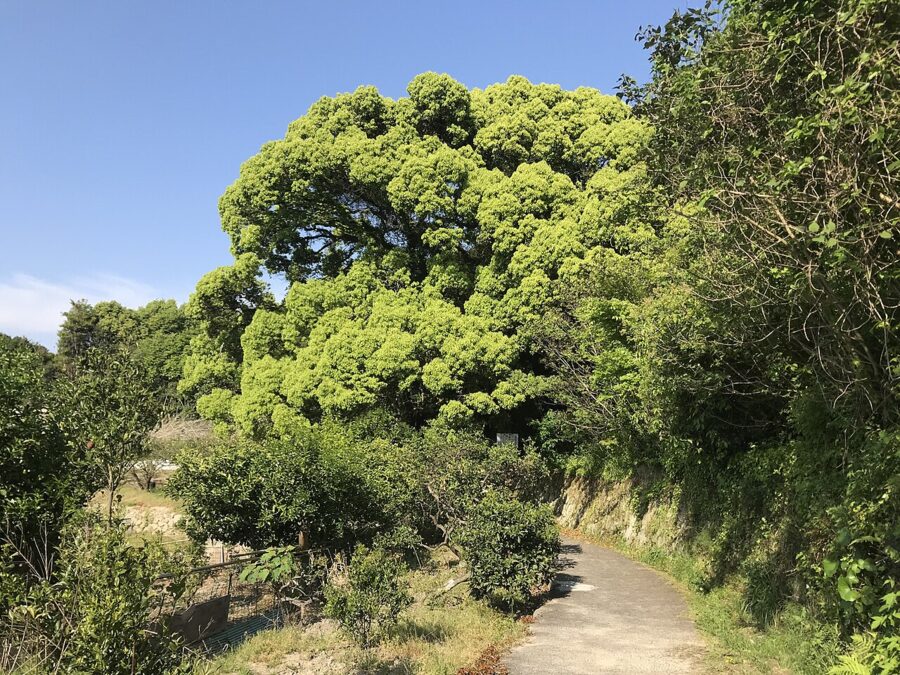
The tree most people photograph is outside the grounds. Ikiki no Gomon (生樹の御門), “the gate of the living tree”, is a camphor a few hundred metres east of the shrine on the lane to the old inner temple, the Okunoin. Its trunk is hollow and forms a gateway on the path, and walking through it is said to bring a long life.
The treasure hall: armour and swords
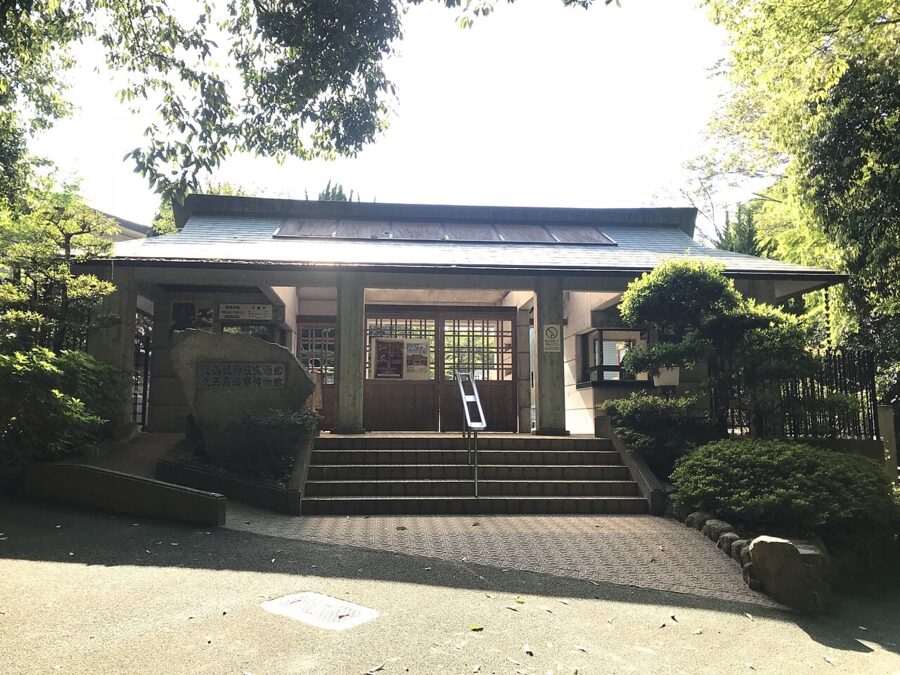
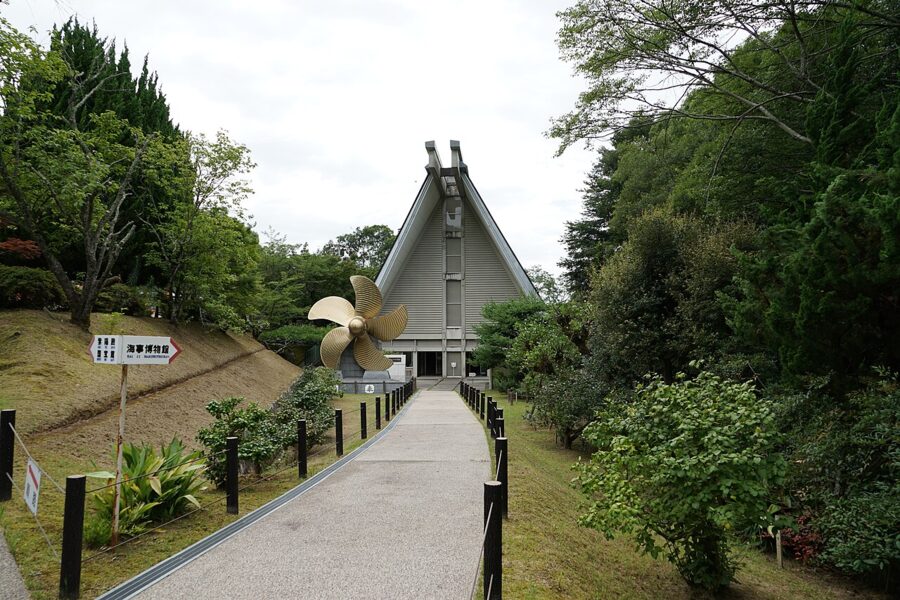
The treasure hall (宝物館) is really three buildings, reached across a small bridge on the south side of the grounds: the Shiyoden (紫陽殿) and the Kokuhokan (国宝館), which hold the armour and swords, and the Omishima Maritime Museum. The shrine says the oldest armour in Japan, from the mid-Heian period, is here, with leading pieces from every age from the Kamakura period to the era of the warring states. It is why Omishima is also called the island of national treasures.
Three pieces explain why people make the trip. The armour of Kono Michiari, laced in green twill that is now badly worn, is from the late Kamakura period and is an Important Cultural Property. A National Treasure great sword (odachi) attributed to Tomoyuki of Bungo was carried by the warrior Omori Hikoshichi, and the shrine notes that more than 40 cm of its original edge survives untouched.
The third is the one islanders talk about. A dark-blue laced cuirass, very wide at the chest and pulled in tight at the waist, is said in the shrine’s tradition to have been worn by Tsuruhime (鶴姫), daughter of the chief priest Ohori Yasumochi, when she fought in the battle of Omishima in 1541. The shrine points out that it is built quite unlike an ordinary cuirass of its type.
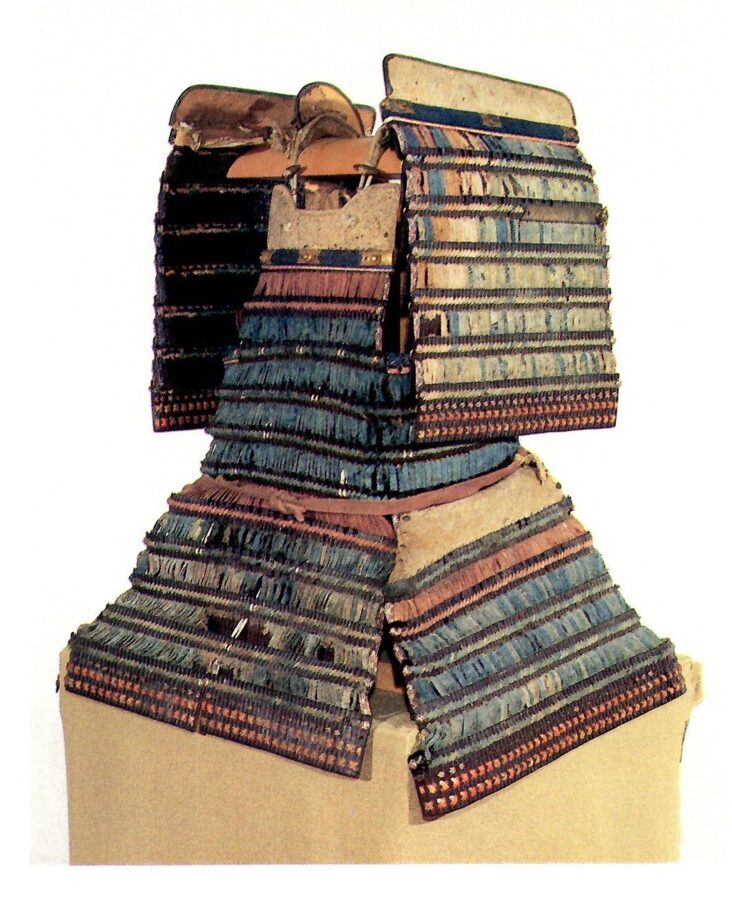
Shimanami Japan lists entry at ¥1,000 for adults, ¥800 for high school and university students and ¥400 for younger pupils (as of 2026) on its Oyamazumi Shrine page. That page gives earlier hours than the shrine; go by the shrine’s own notice, which sets last entry at 16:00.
Allow an hour if you read about armour for pleasure and 40 minutes if you do not. The maritime museum, with the Hayama-maru, the boat Emperor Showa used for his marine biology, and cases of Inland Sea specimens, is quick and can be skipped if the light outside is good.
The shrine’s oddest ritual is the hitori-zumo (一人角力), a sumo bout against the invisible spirit of the rice, held at planting on the fifth day of the fifth lunar month and at harvest on the ninth of the ninth, so the dates move each year. The wrestler loses two falls out of three, every time.
Around Miyaura
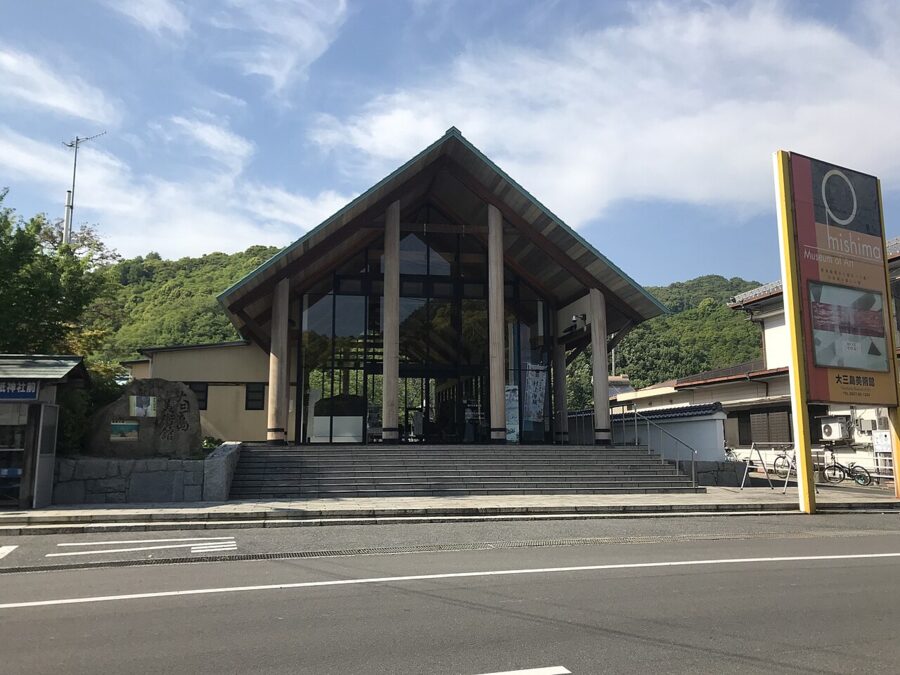
The Omishima Art Museum (大三島美術館), next to the shrine, collects modern Japanese-style painting (nihonga), mostly by artists born after 1940, and marks its fortieth year in 2026. Entry is ¥520, 09:00–17:00, closed Mondays. It has posted a closure for an exhibition change into early December 2026.
Just north of the shrine, the roadside station Shimanami no Eki Mishima (しまなみの駅 御島) opens 08:30–17:00 every day and sells island citrus, vegetables and seafood. It also has showers and coin lockers, which is the useful part if you are riding on, and it takes bookings for the volunteer guides who walk visitors round the shrine.
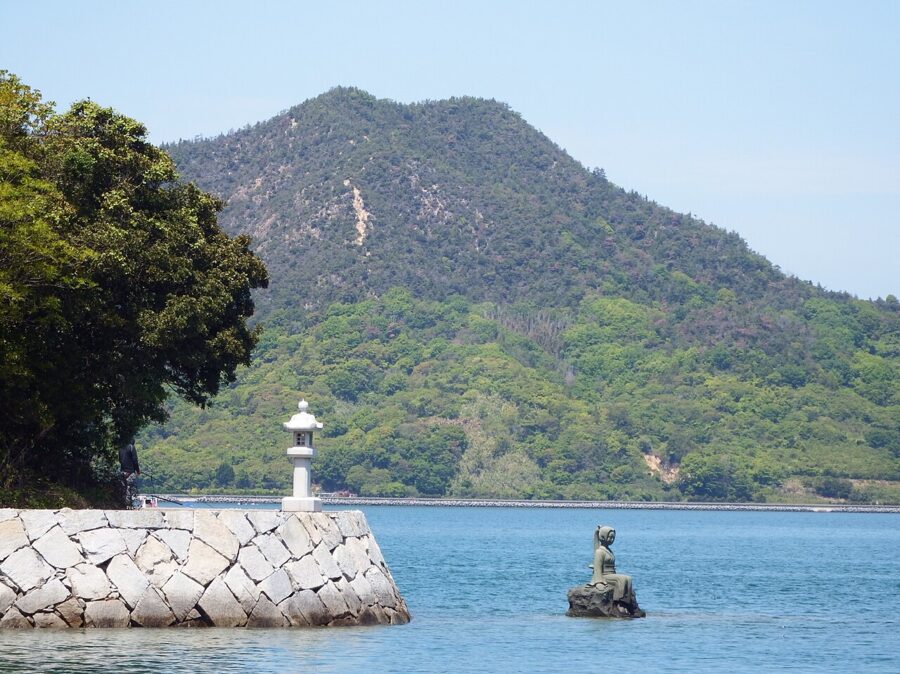
At Miyaura port, about a kilometre away, one of the island’s five bronze statues of Tsuruhime stands in the water facing out to sea. It is the place in Miyaura to watch the evening light.
The museums: Tokoro, Toyo Ito and Iwata Ken
South of Miyaura, the west coast road reaches three small museums run by Imabari City. The Tokoro Museum and the Toyo Ito Museum of Architecture stand side by side on the hillside at Urado, about 8 km from the shrine, and the Iwata Ken museum is about 3 km further south at Munakata. On a bike, budget 35 minutes from the shrine to Urado, with two short climbs.
| Museum | Where | Adult entry (2026) | Hours | Closed |
|---|---|---|---|---|
| Tokoro Museum Omishima | Urado | ¥310 | 09:00–17:00 | Mondays (the Tuesday when Monday is a holiday); 27–31 December |
| Toyo Ito Museum of Architecture | Urado | ¥840 | 09:00–17:00 | Mondays (the Tuesday when Monday is a holiday); 27–31 December |
| Ken Iwata Mother and Child Museum | Munakata | ¥310 | 09:00–17:00 | Mondays (the Tuesday when Monday is a holiday); 27–31 December |
Imabari’s city museums are free for anyone under 18, and each of these sells the “Omishima Art Meguri” ticket: ¥1,000 for the three instead of ¥1,460, or ¥1,500 (about US$10) for five, adding the Omishima Art Museum and the Murakami Santo museum. Do not plan any of it for a Monday.
Toyo Ito Museum of Architecture
The Toyo Ito Museum of Architecture (今治市伊東豊雄建築ミュージアム), opened in 2011, is two buildings by the Pritzker Prize winner on a mandarin slope above the sea. The angular Steel Hut holds the exhibitions; the Silver Hut beside it, a rebuild of Ito’s prize-winning 1984 house from Nakano in Tokyo, is used for workshops.
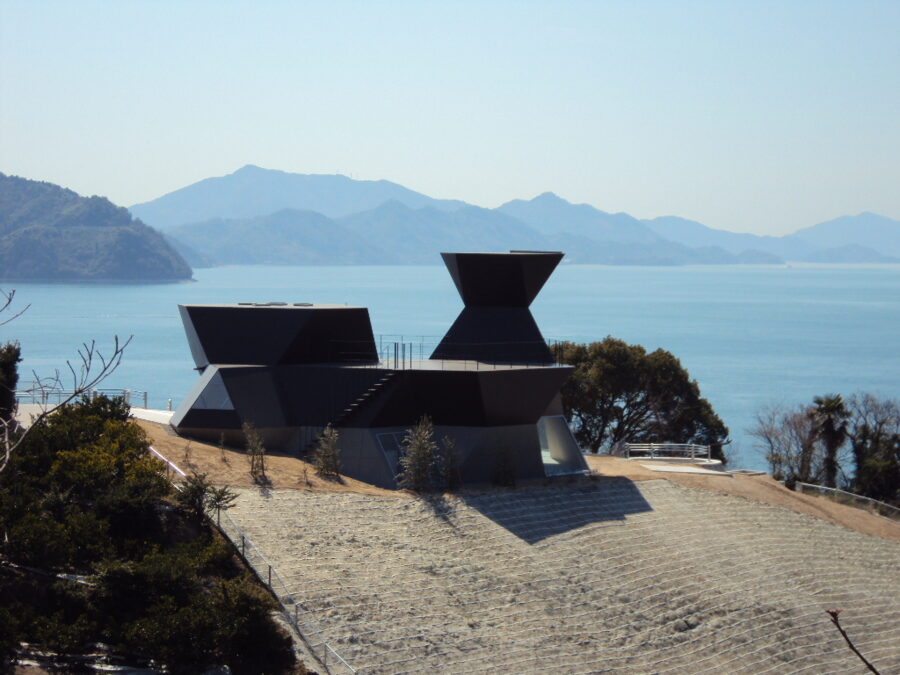
Ito has written that finding room for a building on an orchard slope with almost no flat ground was far from easy. Entry is ¥840 (about US$6), ¥420 for students. The nearest bus stop is Tokoro Museum, three minutes’ walk away, reached by changing at Miyaura port to the island bus.
Tokoro Museum Omishima
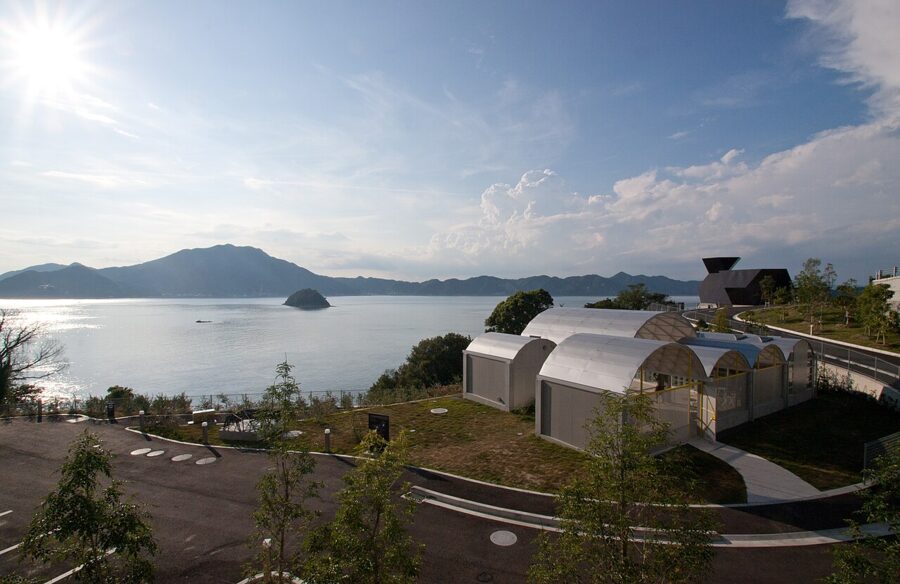
The Tokoro Museum (ところミュージアム大三島) opened in spring 2004, given to the island by the collector Atsuo Tokoro, and shows about 30 pieces of contemporary sculpture by Noe Katz, Marisol, Tom Wesselmann, Giacomo Manzù and the Japanese artists Hayashi Norichika and Fukai Takashi. It is small enough to see in 30 minutes.
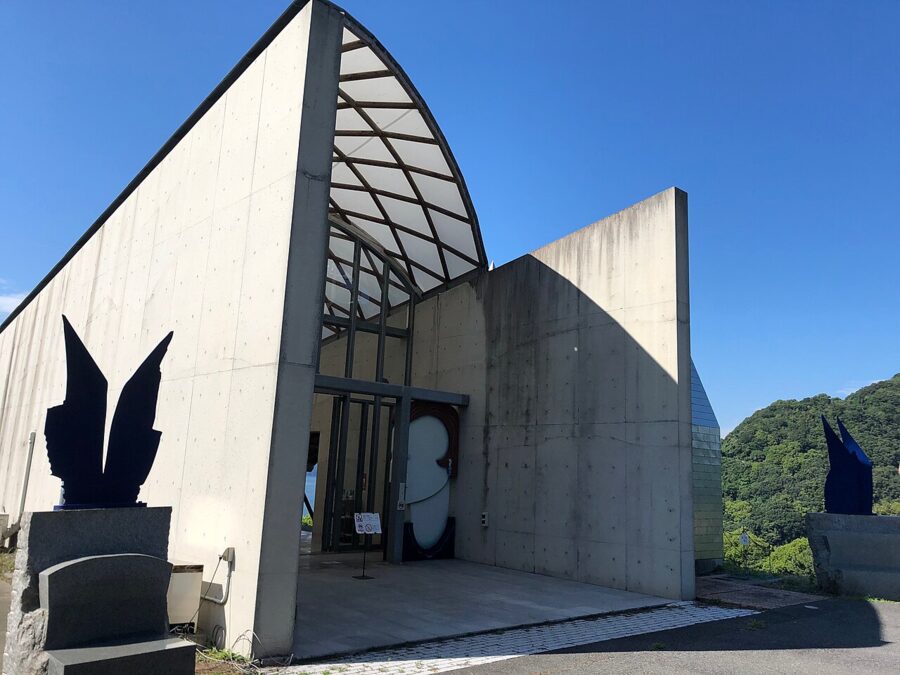
The building matters as much as the art: you move between rooms by stepping out onto a terrace above the sea, so sculpture and islands are seen together. For ¥310 (about US$2) it is the best-value stop on the west coast.
Ken Iwata Mother and Child Museum
Further south at Munakata, the Ken Iwata Mother and Child Museum (岩田健 母と子のミュージアム) opened in summer 2011 beside the old Munakata primary school. Mothers and children were Iwata Ken’s main subject, and his sculptures sit in a semi-open court designed by Toyo Ito, with benches open to the sea air.
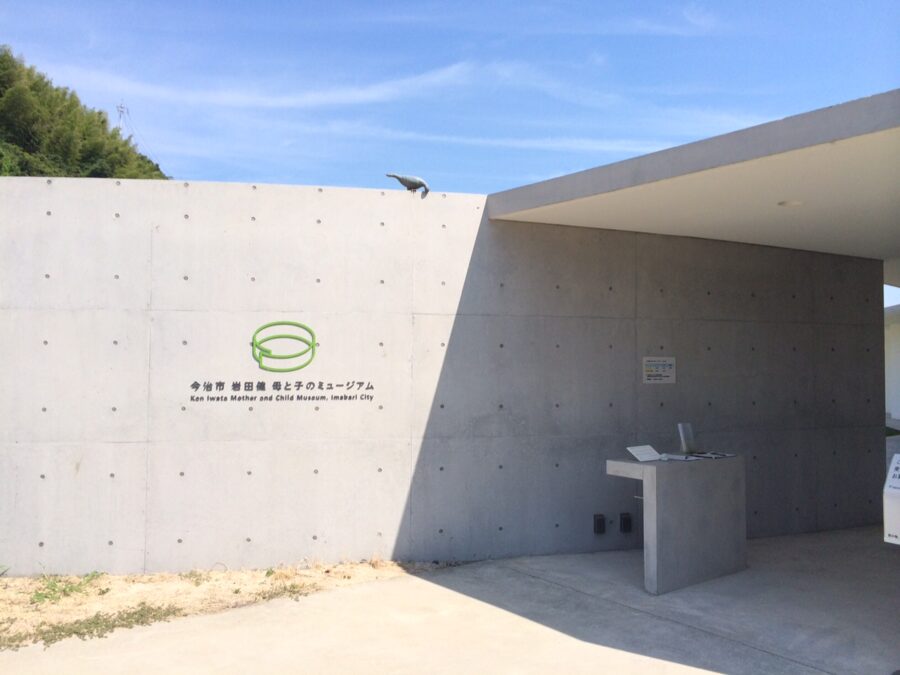
The chime, “Toki no Tobira”, was given by two of Iwata’s former pupils: the composer Sen’ju Akira wrote it and his sister, the violinist Sen’ju Mariko, plays it. The Munakata bus stop is about ten minutes’ walk away, the ferry pier about 15.
The quieter north and west
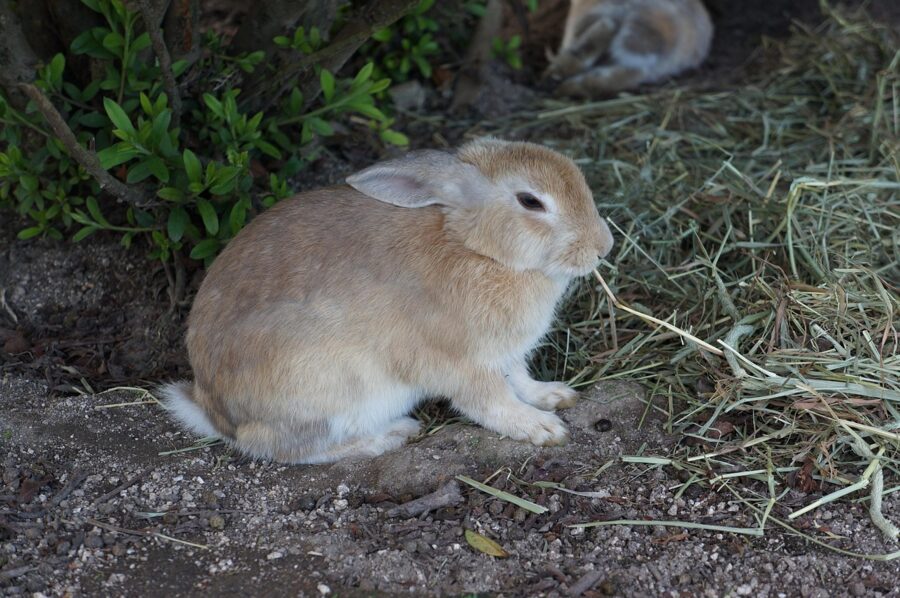
The north of the island is Kamiura’s harbour at Sakari (盛). From here the Omishima Ferry runs to Tadanoumi in Takehara on the Hiroshima mainland, calling at Okunoshima, the island of rabbits. There are ten sailings a day each way, the first from Sakari at 07:00 and the last at 18:40, and the crossing takes 20 to 30 minutes, the longer sailings being the ones that call at Okunoshima.
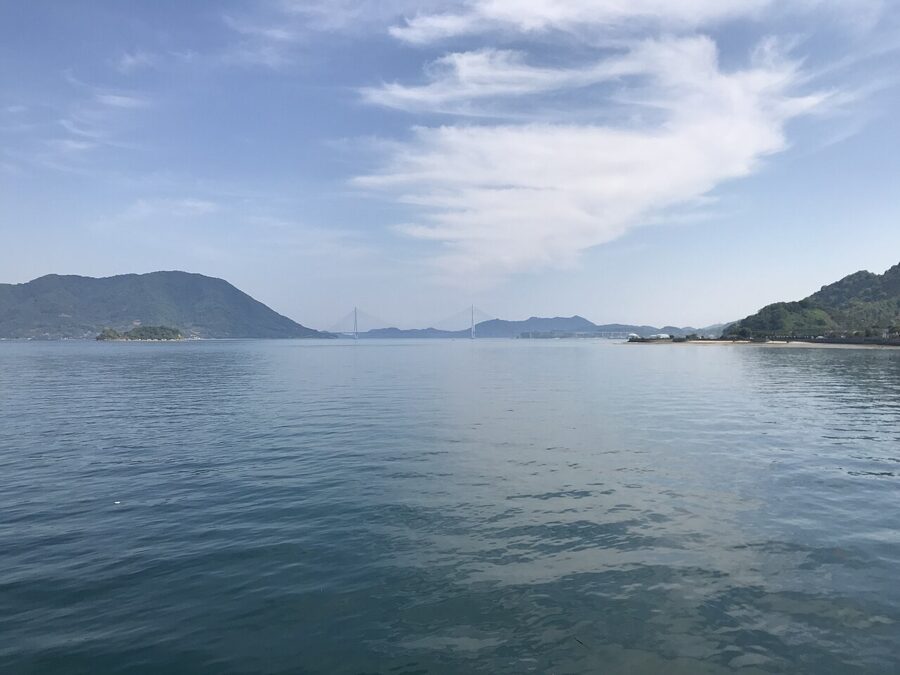
The fare is ¥370 (about US$2) for an adult, plus ¥120 for a bicycle, as of 2026; the 17:00 sailing from Sakari calls at Okunoshima only from February to October. Sakari is about 6 km north of Tatara Shimanami Park, so a rider coming from Takehara can join the route here and skip the Onomichi end.
On the west side, Munakata’s pier is the island’s link to Imabari by sea. The Omishima Blue Line car ferry Mishima runs between Imabari, Munakata and Kinoe on Osakikamijima, and a second route crosses to Okamura, the Ehime end of the Tobishima Kaido.
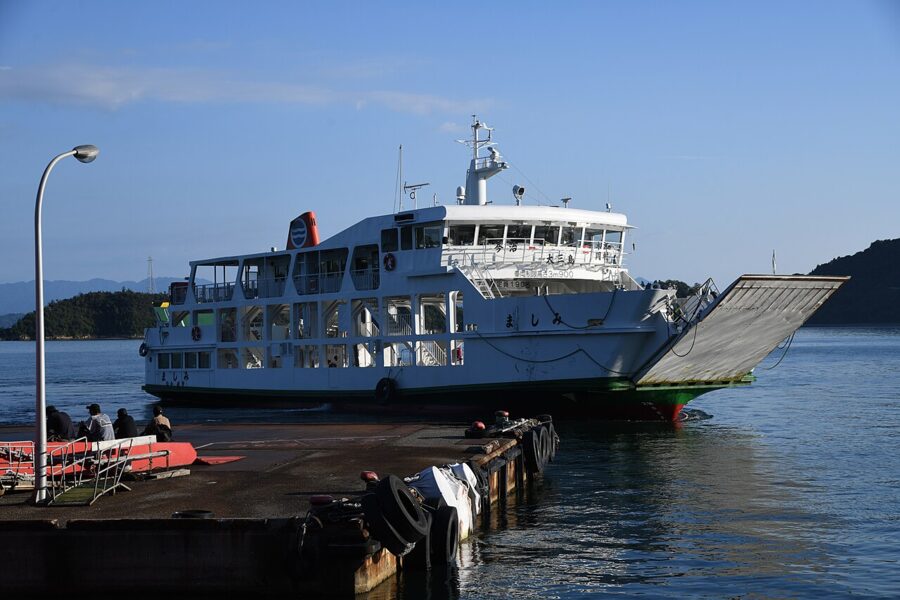
Direct sailings to Imabari are few: the posted timetable has two from Munakata, at 11:05 and 19:00, taking 55 minutes, and two from Imabari, at 06:30 and 13:05. Fares are ¥760 (about US$5) to Imabari and ¥420 to Okamura, plus ¥250 for a bike, as of 2026. It is a useful way back if you have ridden down to the museums and would rather not climb back over the island.
Between Miyaura and Urado lies Utena (台), with a sand beach at the river mouth. The Hakata Salt Omishima factory here, about 1.5 km from the shrine, has a viewing corridor onto the salt works, open 09:00–16:00 (last entry 15:30) and closed on Wednesdays other than holidays, except in November and the summer holidays. Groups of fewer than ten need no booking, and the shop does a salt soft-serve.
Nearby, Mare Grazia Omishima is a public seawater bath with an outdoor tub facing the sunset. It opens 10:00–20:00 (last entry 19:30), closes on Wednesdays and three days in early February, and has charged ¥700 (about US$5) for adults since October 2025.
Citrus, beer and wine
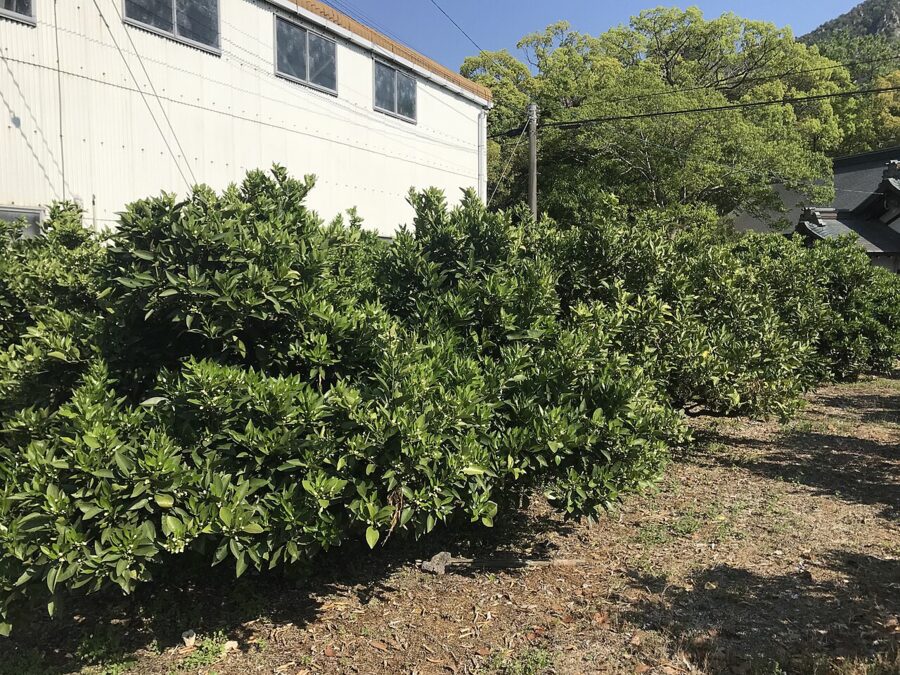
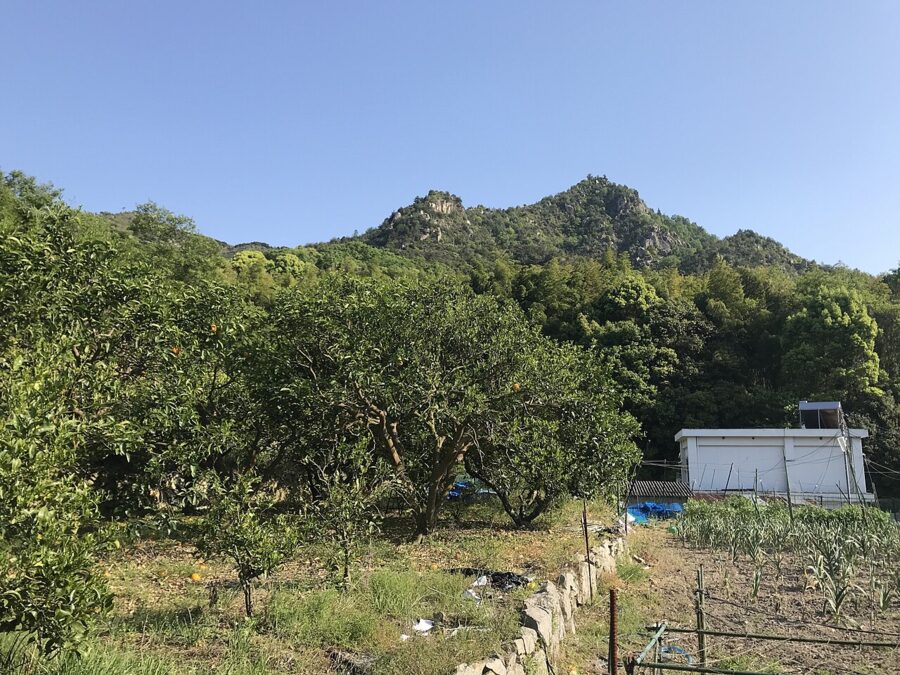
Omishima is a citrus island first. The slopes around the shrine and above every harbour are orchards, and the farmers’ stall at Tatara says something different is in season almost all year. It and Shimanami no Eki Mishima at Miyaura are the places to buy whatever is ripe.
In Miyaura, Omishima Brewery is a small brewery run by a married couple, with a blonde, a pale ale, an IPA, a Belgian ale and a white ale made with island citrus. It opens 12:00–20:00 (last orders 19:30), closes on Tuesdays and Wednesdays plus extra days posted monthly, and charges ¥1,100 (about US$7) a US pint. There is no online shop; take-away bottles are the way to carry it on.
The island also makes wine. Omishima Minna no Winery (大三島みんなのワイナリー) began in 2015, when a group led by Toyo Ito replanted abandoned mikan orchards with Chardonnay and other grapes; the first wine came in 2018 and its winery at Munakata opened in 2019. The shop, Omishima Minna no Ie on the shrine approach, opens 10:00–16:00 and closes on Mondays.
Near the bridge end, two places in Inokuchi serve anyone. The cafe-restaurant at I-LINK Hostel & Cafe Shimanami, about a minute’s drive from Tatara Shimanami Park, cooks Ehime dishes and asks for a booking at busy times. WAKKA, the cycling base looking out at the Tatara Bridge, has a cafe open from 11:00 to 15:00 or 16:00 by season, closed on Mondays and Tuesdays in 2026.
Across to the Omishima Bridge and Hakatajima
From Tatara Shimanami Park the cycling route runs south along the Kamiura coast for about 5 km, past small harbours with the sea on your left. At Seto, the village where the shrine first stood, a ramp climbs to the cycle path of the Omishima Bridge.
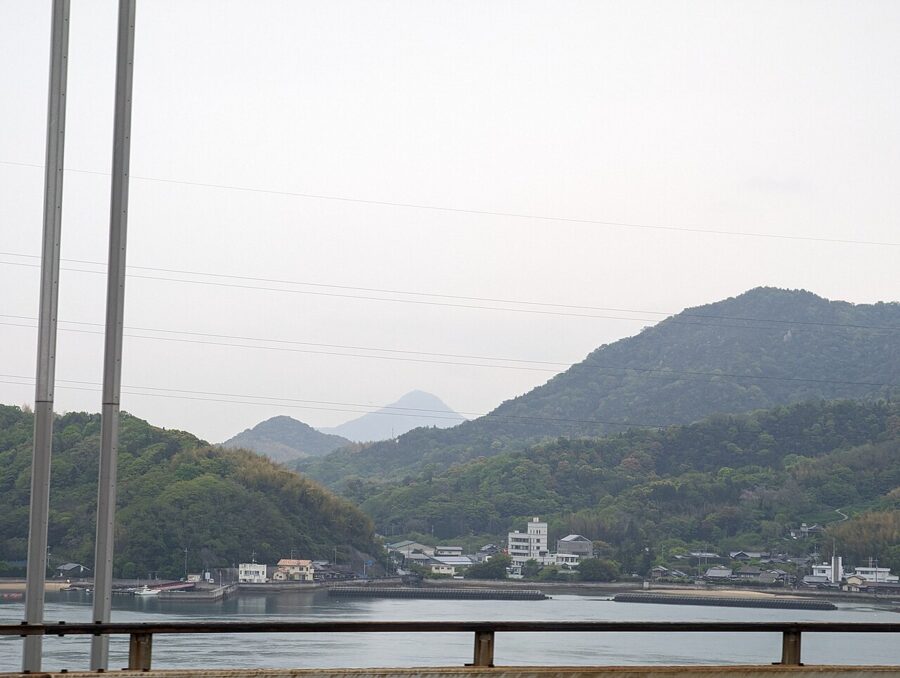
The Omishima Bridge opened in May 1979, the first of the long Honshu-Shikoku bridges to be finished. It is 328 metres long, and its 297 metre arch was Japan’s longest when built; it is still the only arch among the strait crossings. The ride across is over in a minute or two.
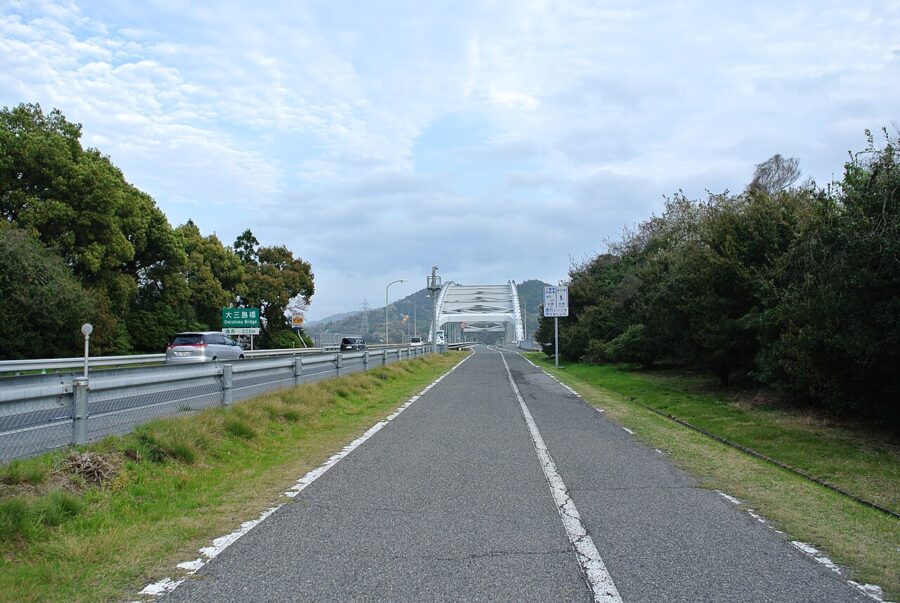
Below runs the Hanakuri Seto (鼻栗瀬戸), the narrow channel between Omishima and Hakatajima that shipping uses as the shortest way through the islands. On the far side, Hakatajima has its own roadside station at the Hakata S.C. Park, and the Hakata-Oshima Bridge takes the route on towards Oshima and Imabari.
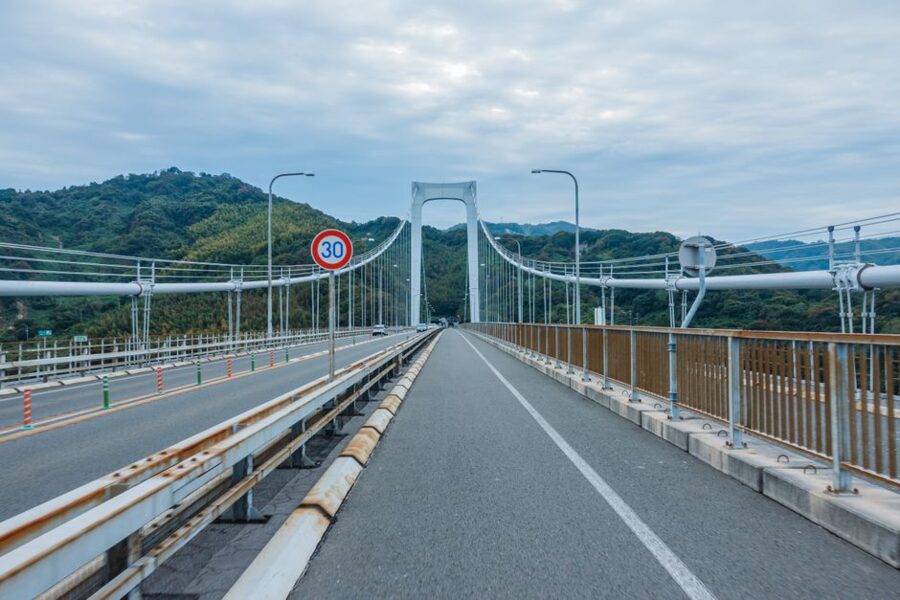
If you are riding the whole route in a day, Omishima is about where the morning ends. The rest of the cycling route south is two more bridges and the long climb on Oshima.
Where to stay, and why riders stop here
Stopping on Omishima splits the route into two easy halves and puts you at the shrine when the treasure hall opens. Shimanami Japan’s accommodation list is the fullest current register of places on the island. These are the ones I would choose from.
Kamiura, by the Tatara Bridge. WAKKA, at Inokuchi, has sea-view cottages, dome tents and bunk rooms from ¥9,000 (about US$60) a night for one, breakfast included, with repairs, a self-service workshop and same-day luggage delivery. I-LINK Hostel & Cafe Shimanami, also at Inokuchi, has singles, twins and a dormitory but no breakfast.
B&B Tenzo nearby serves breakfast only. All three are an easy ride from the rental terminal.
Miyaura, by the shrine. Ryokan Sawaki lets you wheel your bike through the front door into a storage room, with a track pump and tools. Ryori Ryokan Chaume (料理旅館 茶梅) is an inn known for its cooking.
Minshuku Kontama and two guesthouses, OHANA in Mishima and the Tomarigi, cover the budget end. Staying here means the shrine at opening, a beer at the brewery and the harbour at dusk.
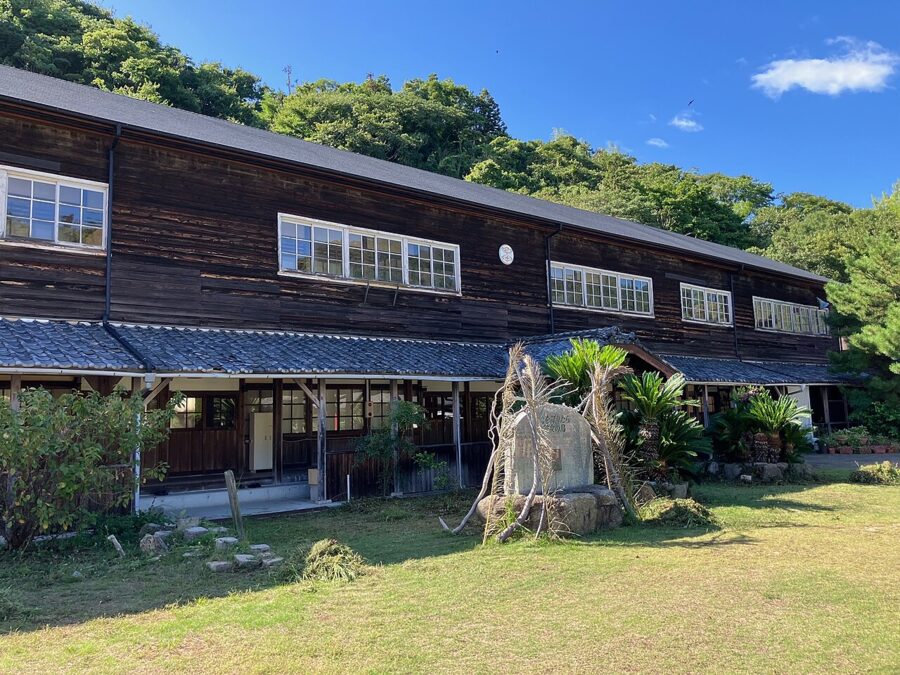
Munakata and the west coast. Omishima Ikoi no Ie (大三島 憩の家) is the old Munakata primary school, lodgings since 1988 and renovated in 2018 with a bath looking out to sea; the Iwata Ken museum and the winery are next door. Auberge Yugashira, an old house run by a French owner for one party at a time, and Umiyado OHANA at Utena are quieter still.
Campers can use the campsite at Tatara Shimanami Park, booked at the roadside station shop.
A sensible half day on Omishima
This assumes you come over the Tatara Bridge from Setoda on Ikuchijima, about 9 km, and go on to Hakatajima the same day. It suits an early start from Onomichi, or a first night on Ikuchijima.
- 10:00, Tatara Shimanami Park. Clappers on the bridge, a battery swap if needed, fruit from the stall.
- 10:15, over the island. The cycleway over to Miyaura, about 7 km and one steady climb.
- 11:00, Oyamazumi Shrine. The great camphor first, then the treasure hall (allow an hour), then Ikiki no Gomon.
- 12:45, lunch in Miyaura. Shimanami no Eki Mishima for supplies; the brewery opens at 12:00 except on Tuesdays and Wednesdays.
- 13:45, south to the Omishima Bridge. About 12 km by the inland road, with one more climb.
- 15:00, onto Hakatajima. Well clear of the 17:00 closing at the Tatara counter.
Swap the treasure hall for the Tokoro and Toyo Ito museums if architecture interests you more than armour, then ride back over the island or catch the 19:00 Imabari ferry at Munakata, and keep it off a Monday. On a two- or three-day Shimanami Kaido itinerary, this half day fits best as the middle of the ride.
Most riders will still take the photograph at the monument and head straight for the next bridge. Take the cycleway west instead: seven kilometres, one climb, and a 2,600-year-old camphor at the end of it.