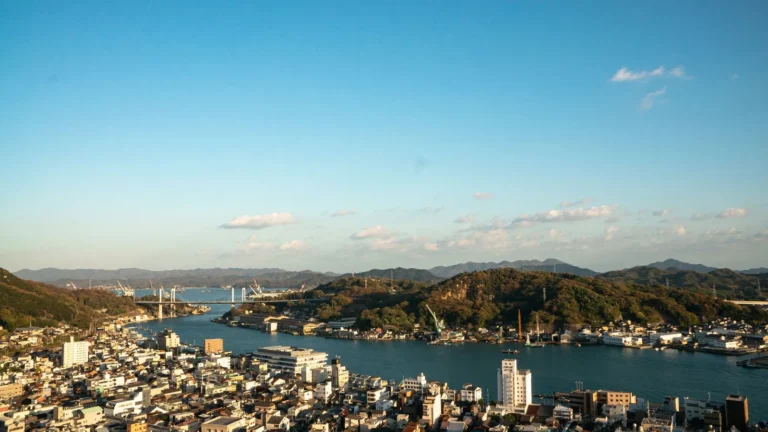
For more than a thousand years, ships crossing the Seto Inland Sea stopped at Tomo and waited. On the flood the sea pours in from both ends of the Inland Sea, through the Bungo Channel in the west and the Kii Channel in the east, and the two streams meet off this harbour. On the ebb they part here. A boat working along the coast could ride one tide as far as Tomo and no further, so it tied up at the stone steps and waited for the turn.
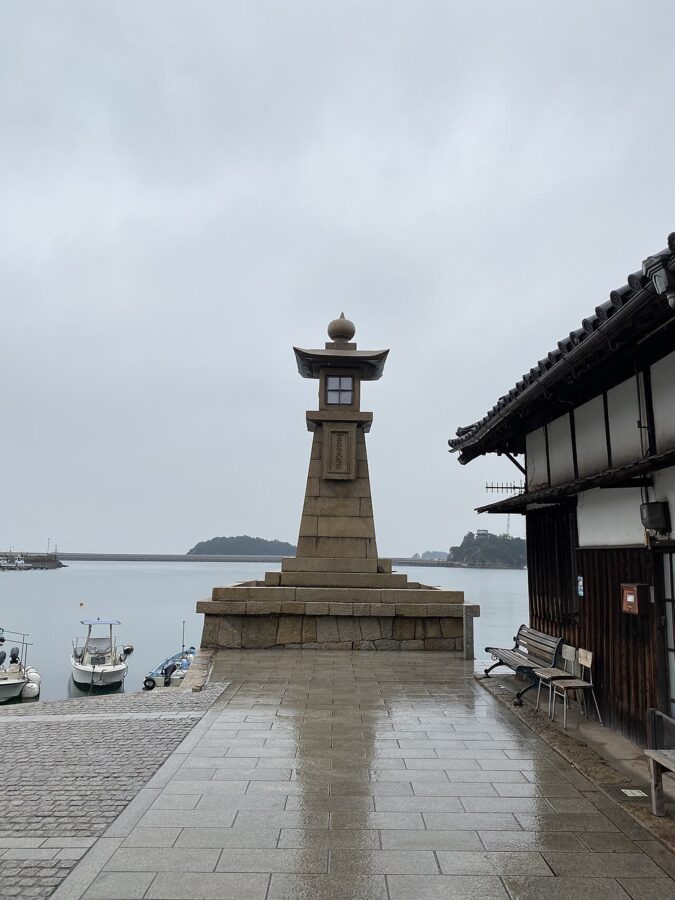
Tomonoura (鞆の浦) means “the bay at Tomo”, and Japanese guidebooks still call it the tide-waiting port. The waiting left a harbour with its Edo-period lantern, landing steps, breakwater, guard post and repair beach still in place, merchant houses that grew rich on the traffic, and a temple guest room whose view a Korean envoy called the finest east of his own country.
Tomonoura is not on the Shimanami Kaido. It sits at the southern tip of the Numakuma Peninsula in Fukuyama, about 14 km (9 miles) south of Fukuyama Station and 30 km (19 miles) by road east of Onomichi. The bus takes half an hour. I would give it a day, before the ride if you arrive at Fukuyama on the Shinkansen, or after it if you finish there.
In this guide11
- Is Tomonoura worth the detour?
- Getting to Tomonoura
- The harbour: the Joyato, the gangi and the tide
- Fukuzenji and the view from Taichoro
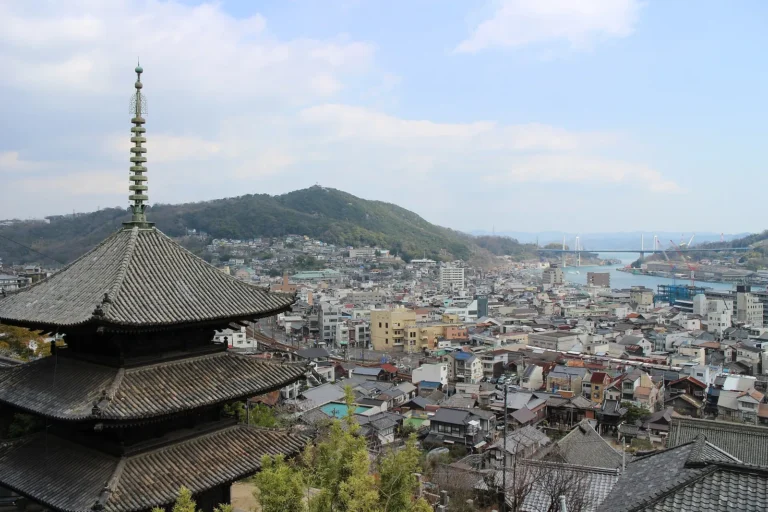
- Other temples and shrines worth the time
- The merchant town: homeishu and the Ota House
- Sensuijima: the island five minutes away
- Ponyo, Wolverine and the films, told plainly
- Abuto Kannon, the cliff temple on the way
- Fitting Tomonoura into a Shimanami Kaido trip
- When to go, and the days to avoid
Is Tomonoura worth the detour?
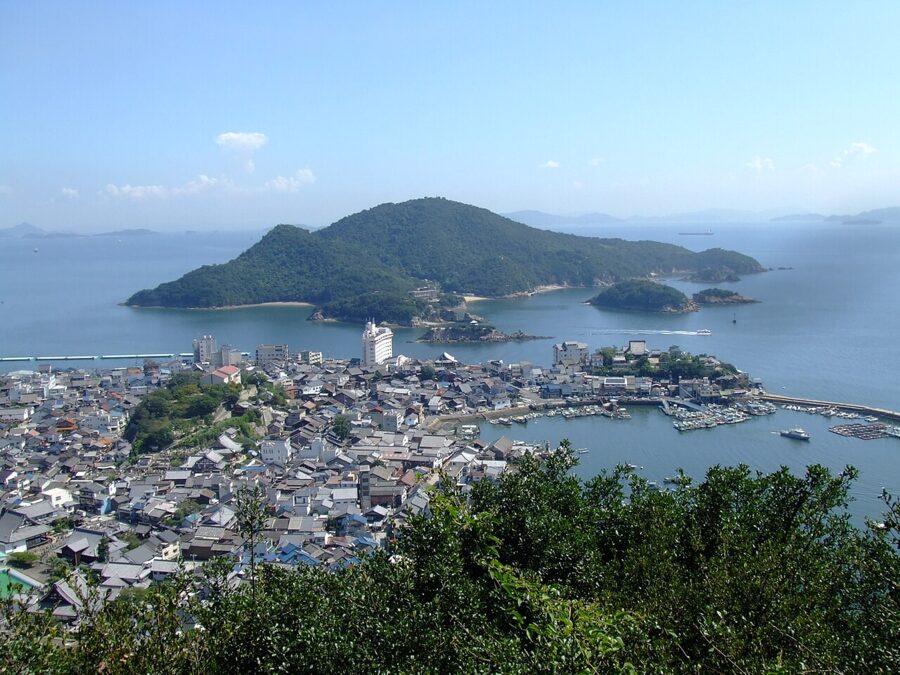
Yes, if you like old towns more than famous sights. Almost everything worth seeing lies within a 15-minute walk of the harbour, and most of it is free or costs a few hundred yen. What sets Tomo apart is completeness: it is the only port in Japan where all five of its Edo-period harbour works survive. The town became a protected preservation district in 2017 and joined the Japan Heritage list in 2018.
The history is out of proportion to the size. Otomo no Tabito wrote about a juniper on Tomo’s shore in the Man’yoshu, the eighth-century anthology. In 1576 Ashikaga Yoshiaki, the last Ashikaga shogun, set up a government in exile here after Oda Nobunaga drove him out of Kyoto. Korean missions lodged here on the way to Edo, and in 1867 Sakamoto Ryoma came ashore after his steamship sank.
If you only care about cycling, skip it: Tomo is on no island and no bridge. If you are passing through Fukuyama anyway, as most Shinkansen arrivals do, it is the best half day in the area, and a full day with Sensuijima.
Getting to Tomonoura
Fukuyama is the Shinkansen gateway for the region, and the usual first stop for getting to the Shimanami Kaido. From Fukuyama Station the way to Tomo is the bus. From Onomichi there is also a seasonal boat.
The bus from Fukuyama Station
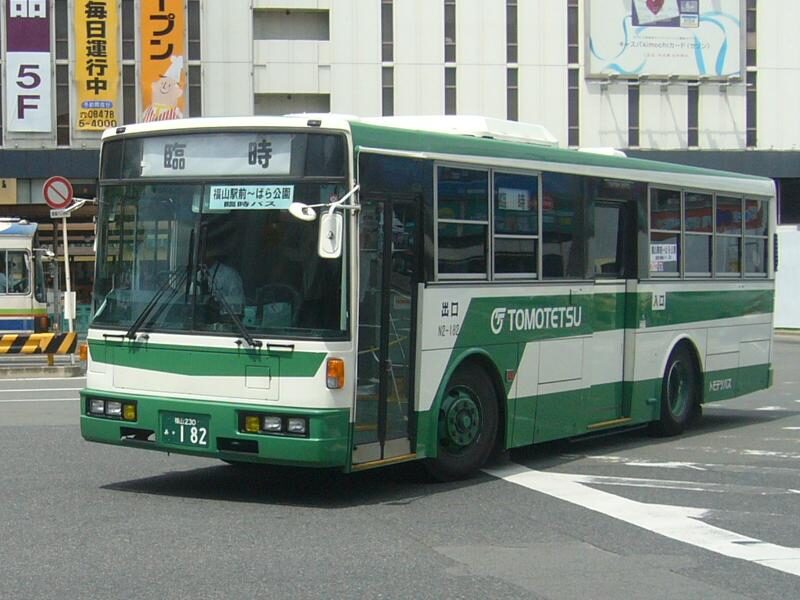
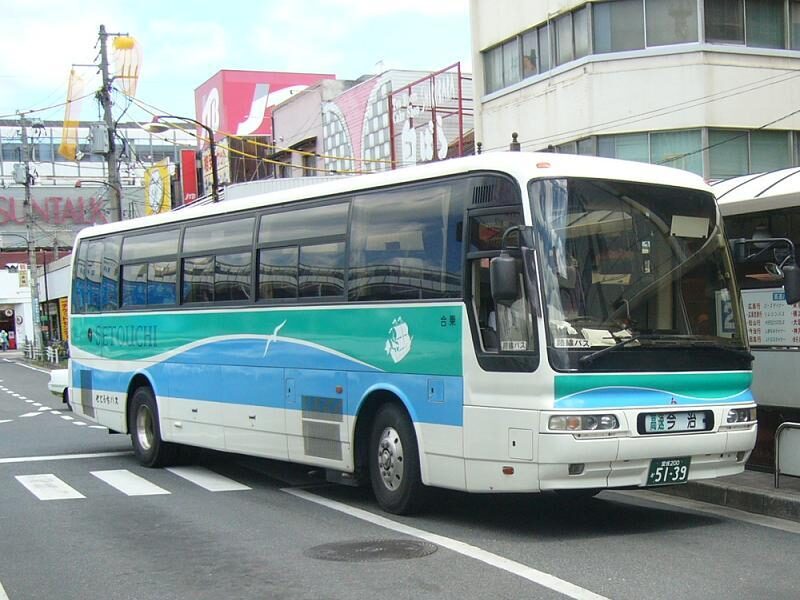
Tomotetsu buses leave from stop 5 outside the south exit of Fukuyama Station, marked for Tomonoura (鞆の浦) and Tomoko (鞆港). The ride takes about 30 minutes to the Tomonoura stop and two minutes more to Tomoko, the terminus by the harbour. The adult fare is ¥580 (about US$4) to Tomonoura and ¥620 to Tomoko, as of 2026.
Board at the rear door and take a numbered ticket, or touch an IC card such as ICOCA. You pay by the driver as you leave, and the change machine takes ¥1,000 notes only. The Tomo line timetable revised on 1 October 2026 gives these times:
| Weekdays | Weekends and holidays | |
|---|---|---|
| First bus from Fukuyama Station | 06:40 | 07:30 |
| Last bus from Fukuyama Station | 22:00 | 21:10 |
| Last bus from Tomoko back to Fukuyama | 21:18 | 20:28 |
| Frequency | roughly every 20 to 30 minutes in the daytime, less often in the evening | |
A few buses take a longer route via the city gymnasium or Myooin temple; if you are in a hurry, wait for a direct one. Get off at Tomonoura for the tourist information centre in the Tomotetsu Bus Center (09:00 to 18:00), or ride on to Tomoko for the harbour. Pick up the walking map at the centre: the lanes are narrow and poorly signed.
From Onomichi: train and bus, or the boat in season
The quickest way from Onomichi is the local Sanyo Line to Fukuyama, 19 minutes, then the bus; allow about an hour in all.
The better way, when it runs, is by sea. Setouchi Cruising’s Onomichi to Tomonoura boat sails on weekends and public holidays from mid-March to mid-November (14 March to 15 November in 2026). It leaves the pier in front of Onomichi Station at 10:00 and 13:00, reaching Tomo at 10:55 and 13:55, and returns from Tomo at 11:00 and 14:00.
The one-way adult fare is ¥3,000 (about US$19), as of 2026, paid by cash, card or IC card. Since 5 September 2026 it also calls at Abuto.
By bike
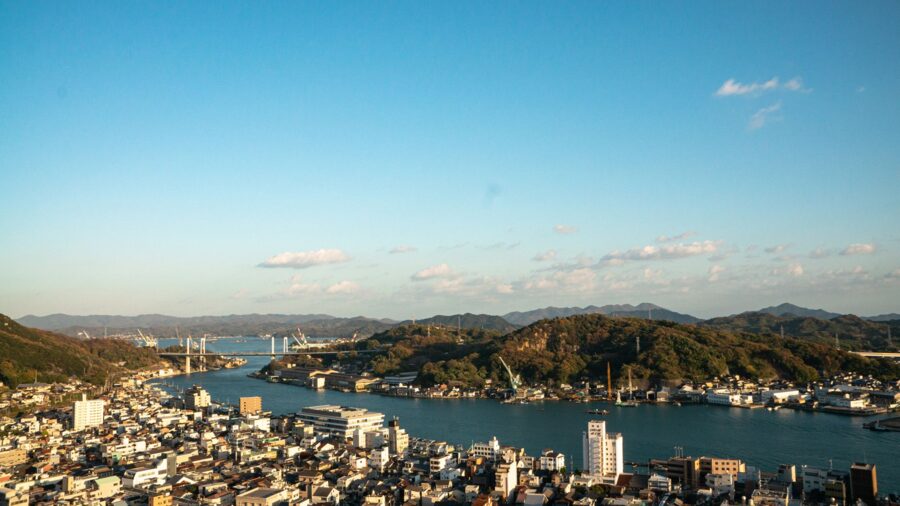
Fukuyama has marked its own cycling road, the Tomonoura Shiomachi Kaido. Its main route runs from Fukuyama Station down the Ashida River, through Tomo and round the peninsula to Sakaigahama on the Onomichi city boundary. From Onomichi it is about 30 km by road, the last stretch on prefectural road 47.
None of the Shimanami Japan rental terminals is in Fukuyama or Tomo, so a rental bike from the route has to be ridden back. And lock up at the edge of the old town: its lanes are for walking.
By car, and where to park
Fukuyama City puts Tomo about 45 minutes from either the Fukuyama-Higashi or Fukuyama-Nishi interchange on the Sanyo Expressway. Since the Tomo Mirai Tunnel opened on 30 March 2025, through traffic skirts the old town; the prefecture counted weekday traffic in the Nishimachi streets falling from 2,700 vehicles to 1,000. Use the paid car parks at the edge of town, such as the one at the history museum: 25 spaces, ¥100 (about US$0.60) per 30 minutes.
The harbour: the Joyato, the gangi and the tide
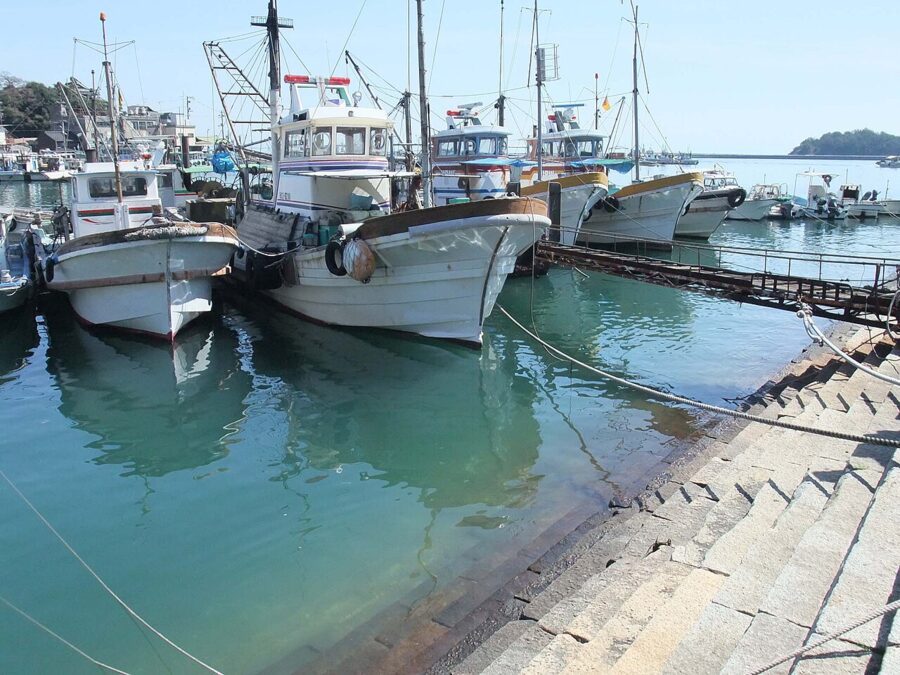
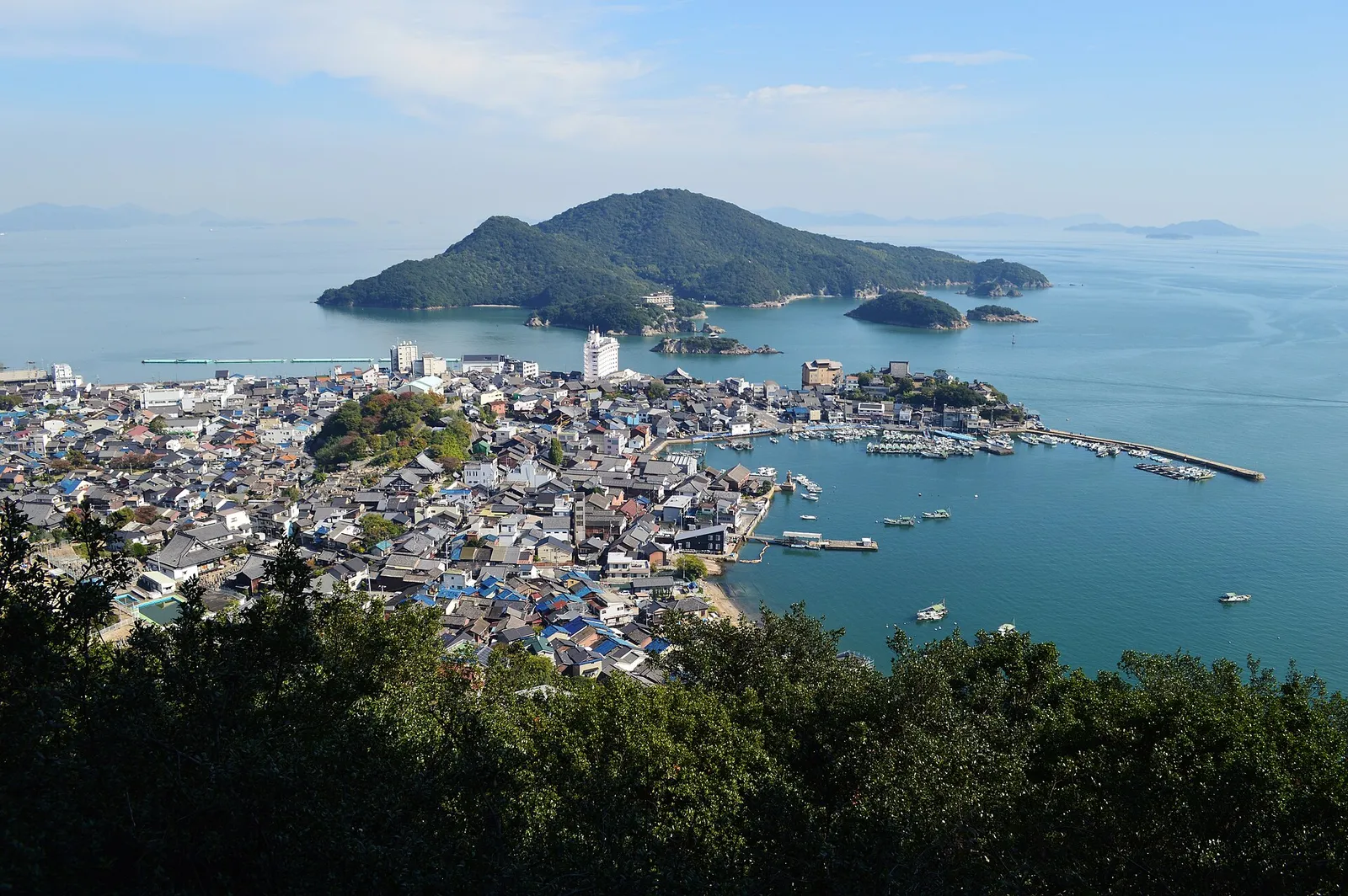
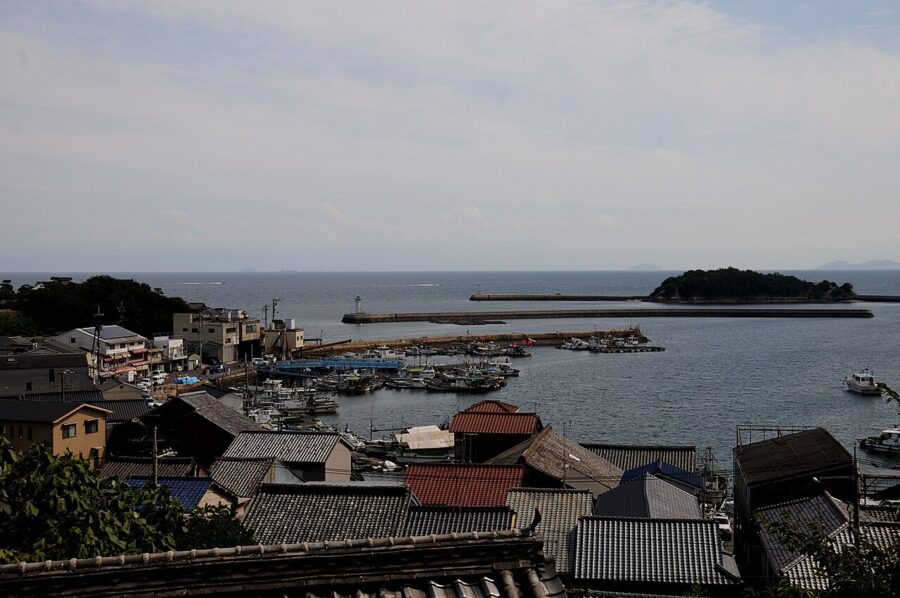
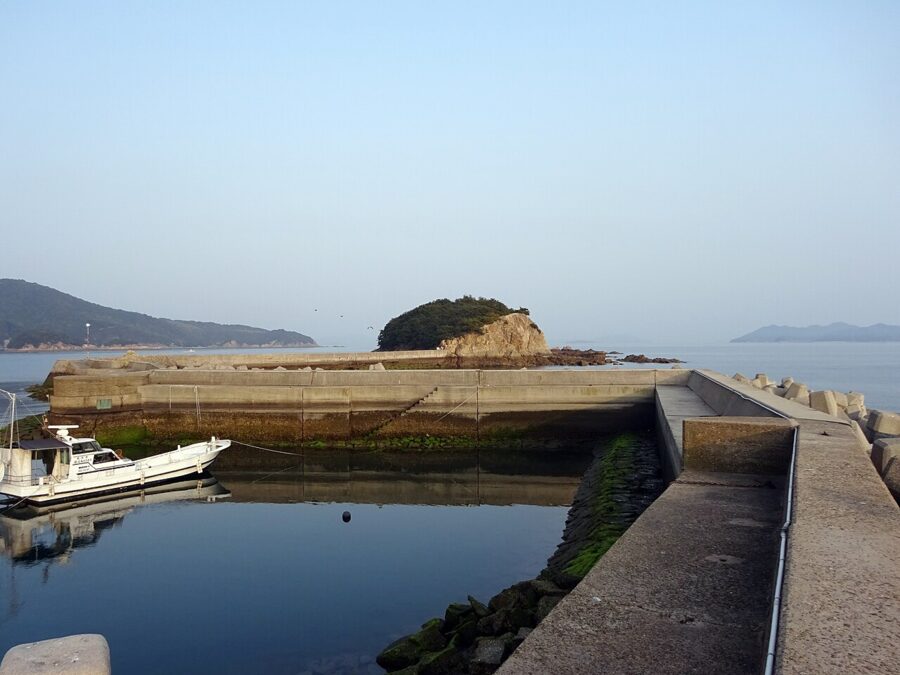
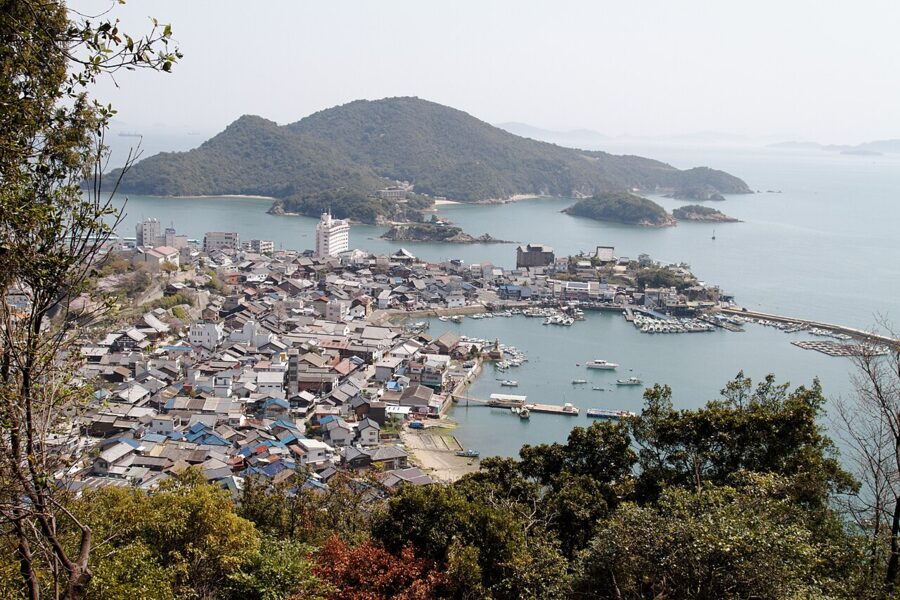
Start at the harbour; the rest of Tomo makes more sense afterwards. The port is a near-circle of water closed off by breakwaters, and five pieces of Edo-period engineering survive around it:
- The Joyato (常夜燈), the stone lantern that is Tomo’s emblem, known locally as the torodo.
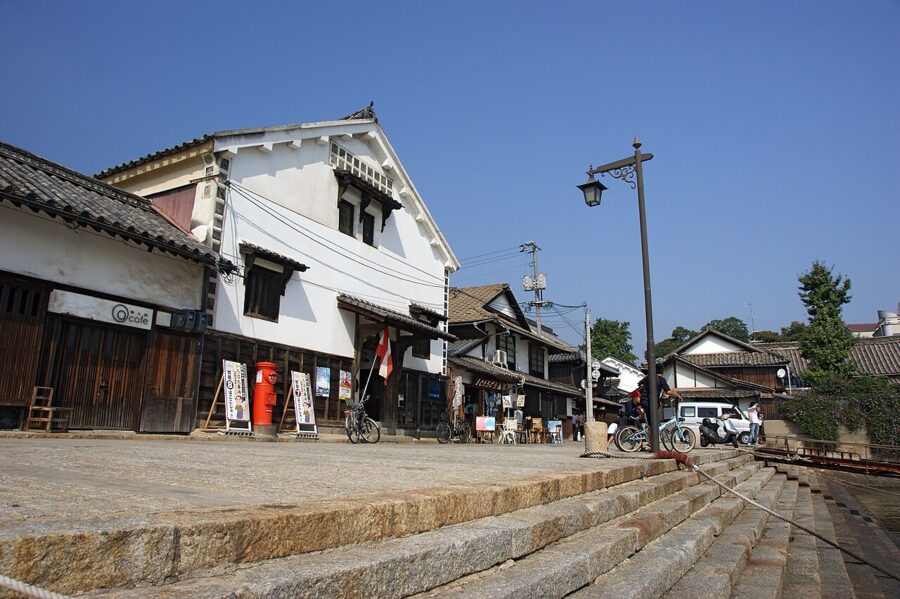
- The gangi (雁木), stepped stone landings that work at any tide.
- The hato (波止), the stone breakwaters.
- The funabansho (船番所), the guard post that watched ships in and out.
- The tadeba (焚場), the beach where hulls were hauled out, scorched and repaired.
The Joyato stands at the head of the big gangi on the west side of the harbour. Measured from its stone base it is more than 10 m tall, among the tallest Edo-period harbour lanterns in Japan. Its plaques name Konpira Daigongen, protector of sailors, on the south face and the town’s Gion shrine on the north.
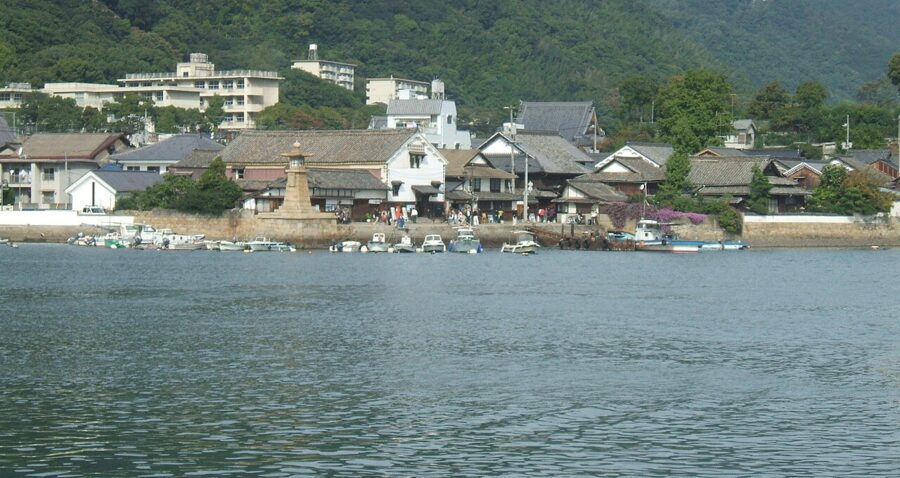
The gangi below it is among the largest stone landings in Japan, about 150 m long with up to 24 steps. The guard post stood on the tip of Daikashima, once an island on the east side of the harbour, and the tall cut-stone wall built for it by the magistrate Ogino Shigetomi is still there. All of it is free to see at any hour.
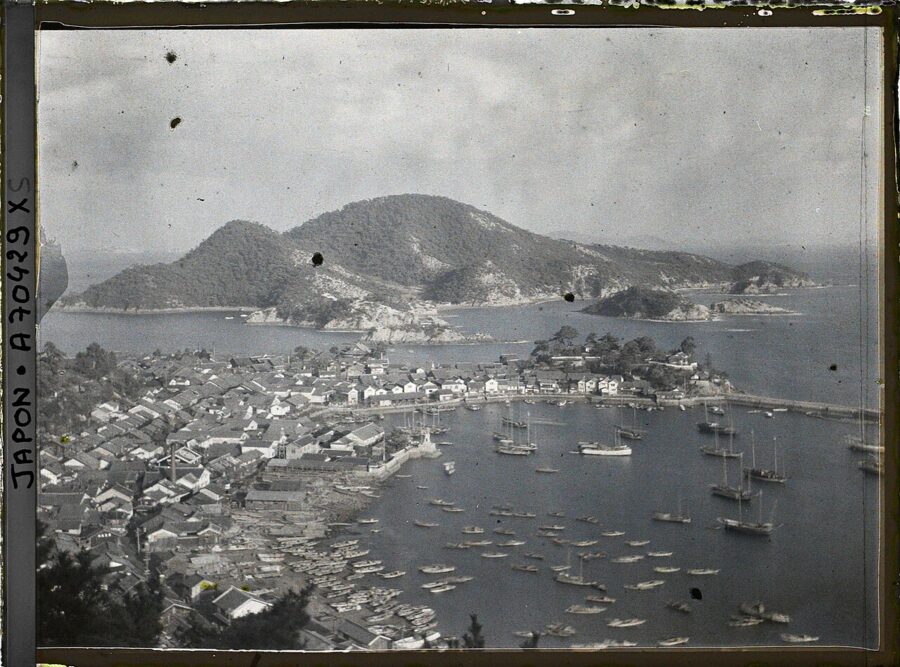
Why here? Before engines, ships in the Inland Sea mostly hugged the coast, steering by landmarks. A ship reaching Tomo on one tide found the next stretch running against it, so it waited, took on supplies and had its hull seen to. When steamships began crossing open water in the Meiji period, the trade moved to Onomichi and the railway, and Tomo was left almost as it was.
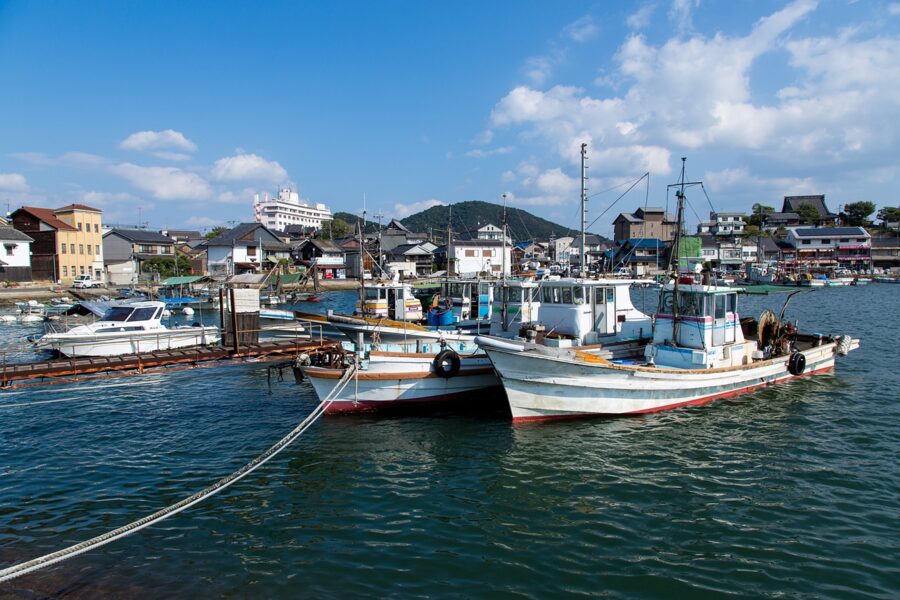
The same currents made the sea lanes further west dangerous and profitable; among the Shimanami islands, the Murakami pirates lived off them. Off Tomo, small islands did the work of breakwaters before anyone built one.
The Iroha-maru Museum and Ryoma’s hiding place
On 23 April 1867 (by the old calendar) the Iroha-maru, a steamer chartered by Sakamoto Ryoma’s Kaientai company, collided with a Kishu domain warship near Rokushima, an island now in Okayama Prefecture. The warship towed her towards Tomo, but she sank on the way. Both crews spent four days in Tomo arguing over compensation, Ryoma under the false name Saitani Umetaro.
The Iroha-maru Museum shows objects raised from the wreck, a model of how she lies and a reconstruction of Ryoma’s hiding room. It opens Friday to Sunday only, 10:00 to 16:30, and entry is ¥300 (about US$2) from primary school age, as of 2026.
The talks were held at the house of the town official Uoya Manzo and at Fukuzenji. Ryoma’s side eventually won a large settlement, though the final terms were agreed in Nagasaki.
Fukuzenji and the view from Taichoro
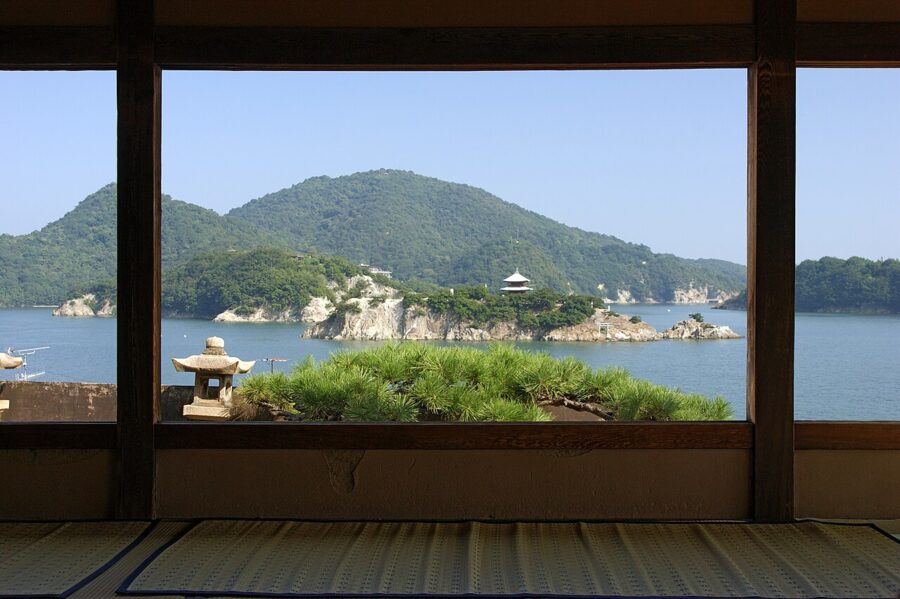
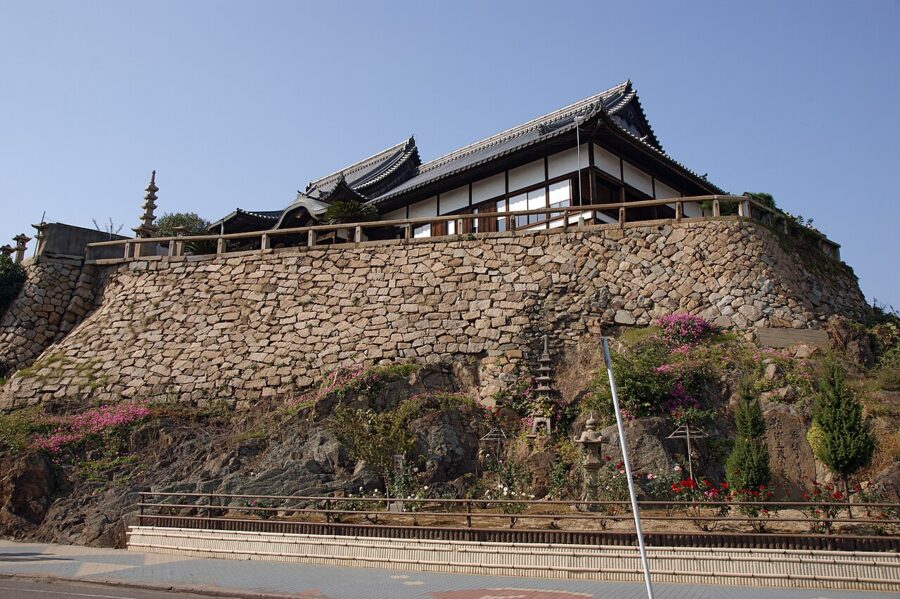
If you see one thing in Tomo, make it this room. Fukuzenji stands on a high stone wall at the east edge of the harbour, five minutes’ walk from the Tomoko stop, and tradition dates it to the 10th century. Around 1690 it gained a guest hall on top of the sea wall, which served through the Edo period as the official guest house for the Korean missions sent to Edo whenever a new shogun took office.
In 1711 Yi Bang-eon, one of the senior envoys of the eighth mission, sat here and wrote four characters: 日東第一形勝, roughly “the finest view east of Korea”. In 1748 a later chief envoy named the hall Taichoro, “the pavilion facing the tide”. Both boards still hang inside, and in 2017 six of the temple’s mission documents joined UNESCO’s Memory of the World register with records from other stops on the envoys’ route.
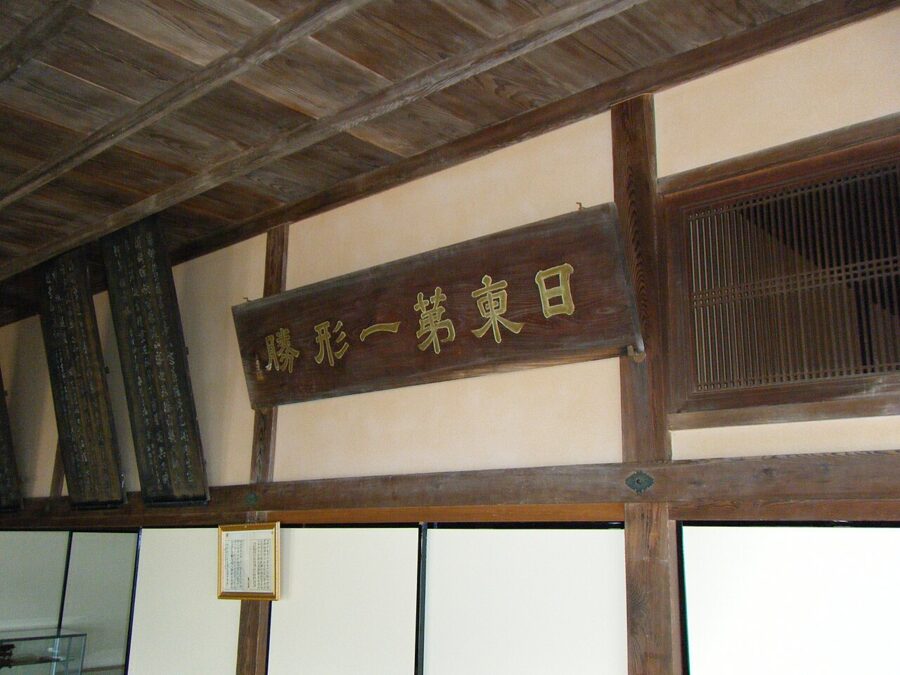
Taichoro opens 09:00 to 17:00 on weekdays and 08:00 to 17:00 at weekends and on holidays, as of 2026. Entry is ¥300 for adults, ¥150 for junior and senior high school students and ¥100 for primary school children. Photography is allowed in Taichoro but not in the main hall. Go early, before anyone is standing in the frame.
Other temples and shrines worth the time
At its height Tomo packed nineteen temples and dozens of shrines into a small town. You do not need all of them; these are the ones I would climb for.
Ioji and Taishiden: the view from above
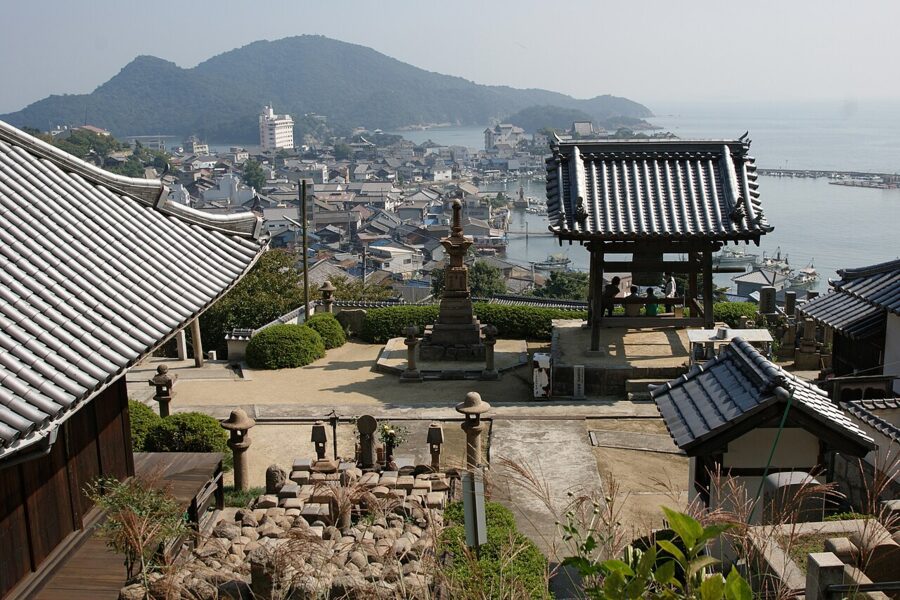
Ioji sits on the hillside about 15 minutes’ walk from the Tomonoura stop, always open and free. Behind it, stone steps climb steeply through the trees to Taishiden, a small hall from the early 1700s. From the top you look straight down on the round harbour with Sensuijima filling the horizon. Siebold, the German doctor of the Dutch trading post at Nagasaki, climbed up here and praised the view.
Nunakuma Shrine and its portable noh stage
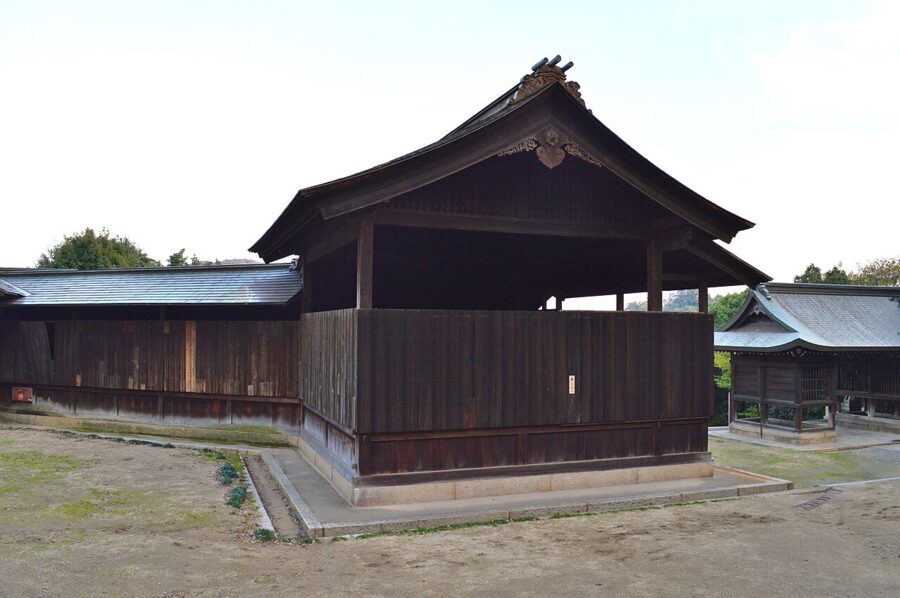
Nunakuma Shrine, ten minutes’ walk from the Tomonoura stop, is the town’s main shrine, still called Gion-san locally. Tradition says Toyotomi Hideyoshi had its noh stage made for Fushimi Castle and that it came to Fukuyama’s first lord, Mizuno Katsunari, whose grandson gave it to the shrine. It is a national Important Cultural Property. The grounds are free, and the shrine office keeps hours of 09:00 to 16:00.
Enpukuji and Ankokuji
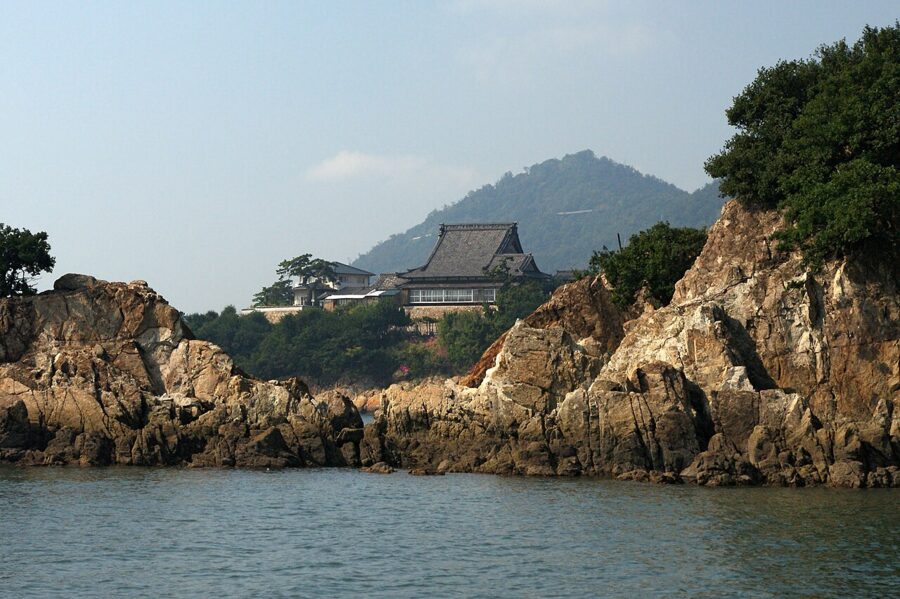
Enpukuji, on the headland just past Fukuzenji, housed the Kishu side during the Iroha-maru talks and has a stone carved with a haiku by Basho. Its view south over the islands is a good second to Taichoro.
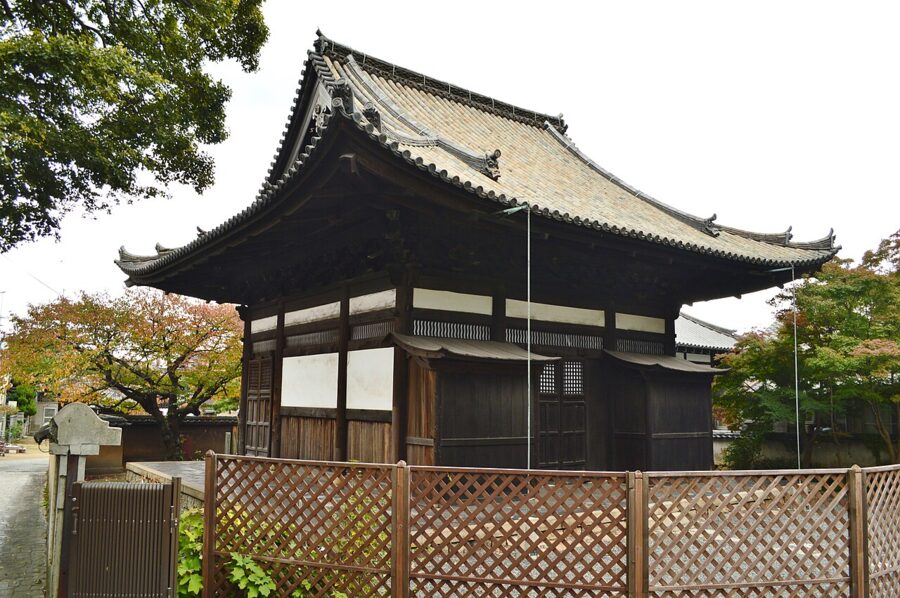
Ankokuji, at the north end of the old town, began in 1273 as Kinpoji and became one of the Ankokuji temples Ashikaga Takauji ordered across Japan in 1339. Its Shaka-do keeps the form of a Kamakura-period Buddha hall and is a national Important Cultural Property, and its dry garden dates from the Muromachi period.
The merchant town: homeishu and the Ota House
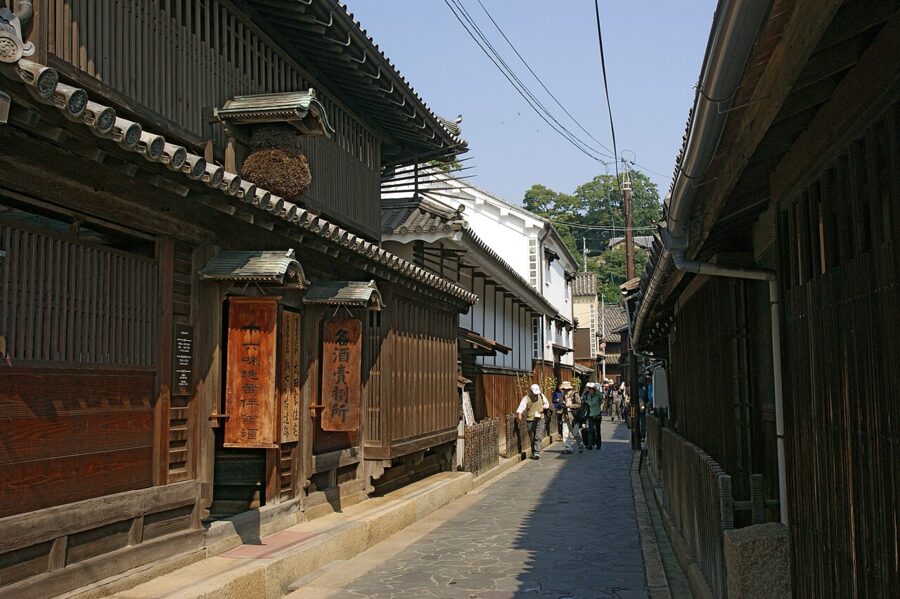
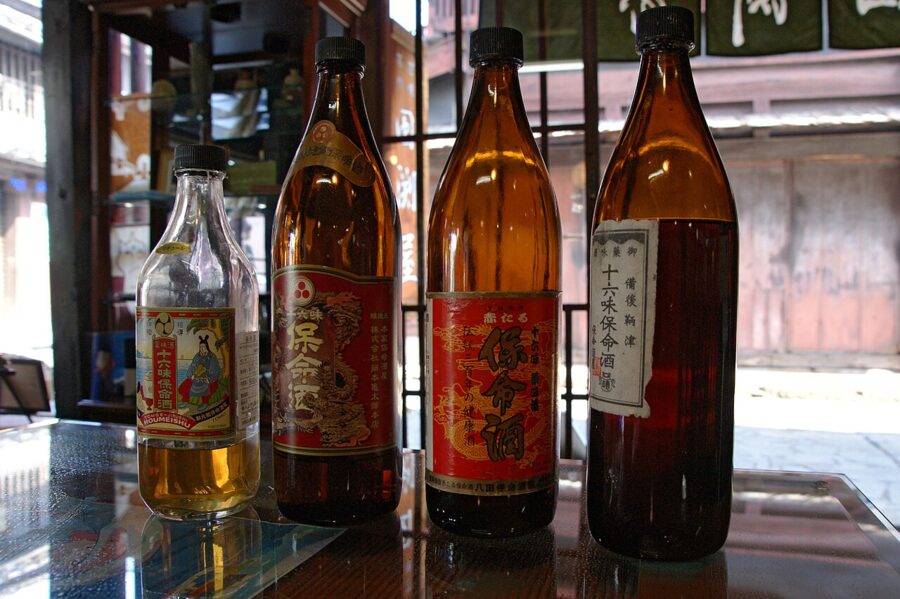
Much of Tomo’s money came from homeishu (保命酒), a sweet medicinal liqueur that an Osaka doctor, Nakamura Kichibei, began making here in 1659. It is a mirin-like brew of glutinous rice, koji and shochu steeped with thirteen herbs, and under the Fukuyama domain the Nakamura family held the sole right to make it. When Commodore Perry’s squadron returned in 1854, the senior councillor dealing with him was the lord of Fukuyama, Abe Masahiro, and homeishu was served to the Americans.
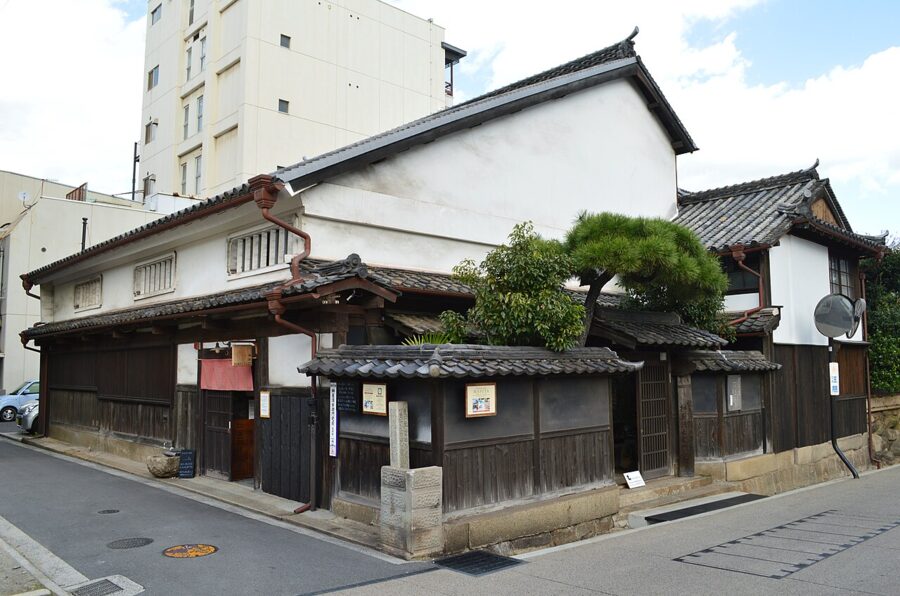
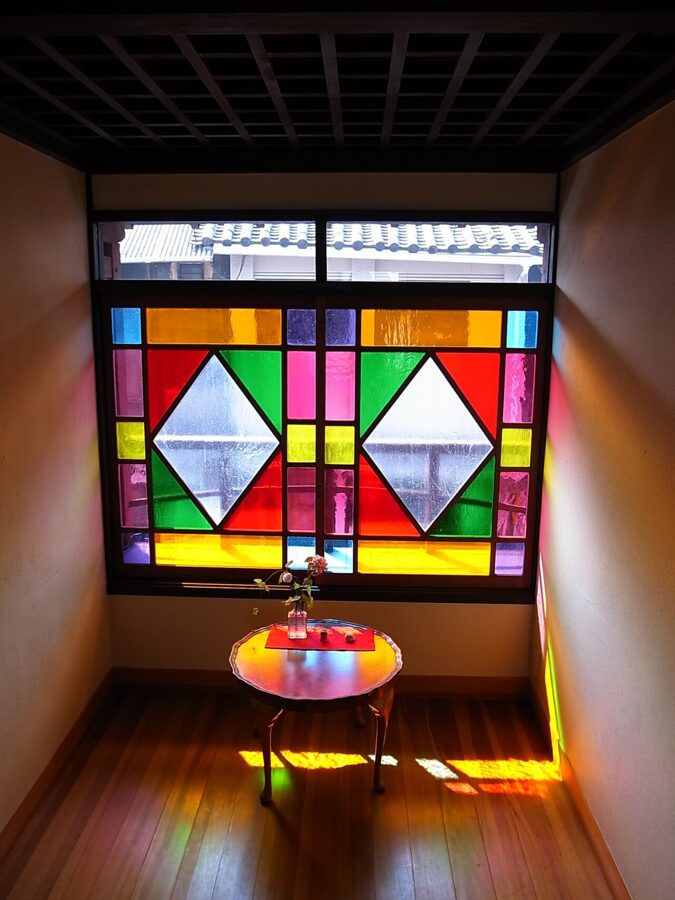
The Ota House is the Nakamura brewery itself: a mid-18th-century main house and storehouses built between 1788 and the early 19th century, a national Important Cultural Property since 1991. Look for the chequered earth floor in the main house and the storehouse walls tiled like the spots on dice. In 1863 and 1864 Sanjo Sanetomi and six other nobles expelled from Kyoto stopped here on their way to and from Choshu.
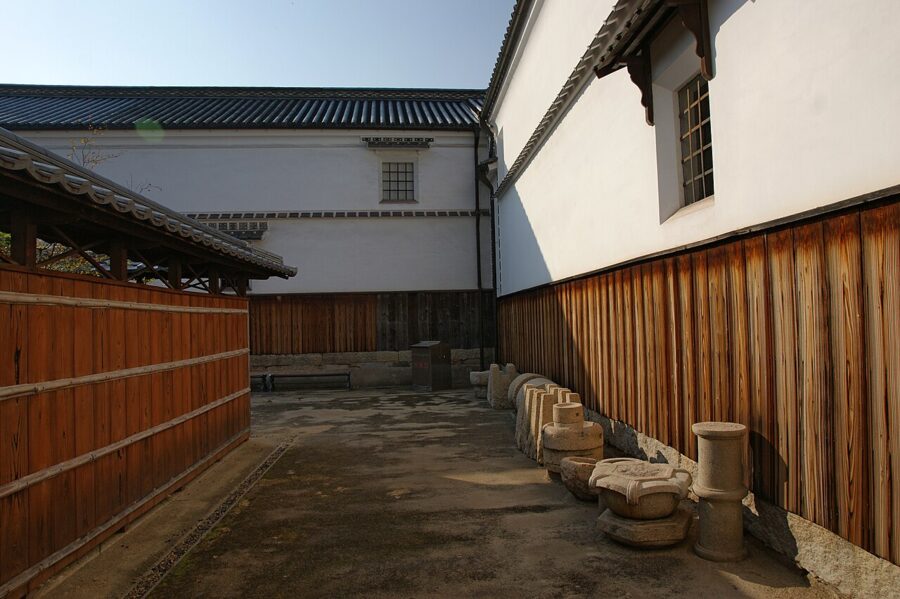
In its latest official listing the Ota House opens 10:00 to 17:00, closed on Tuesdays (the next day after a Tuesday holiday) and over New Year. Entry is ¥500 (about US$3) from junior high school age and ¥200 for primary school children.
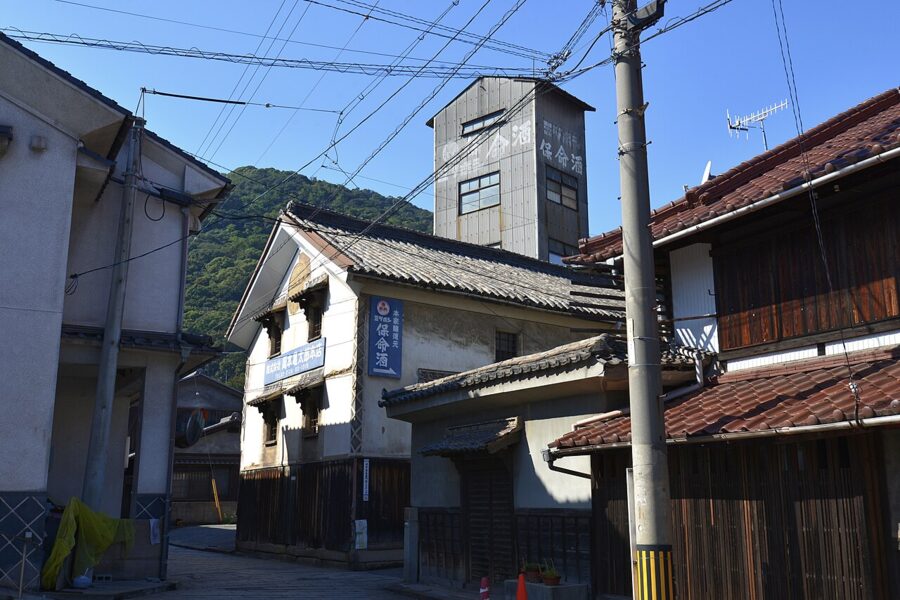
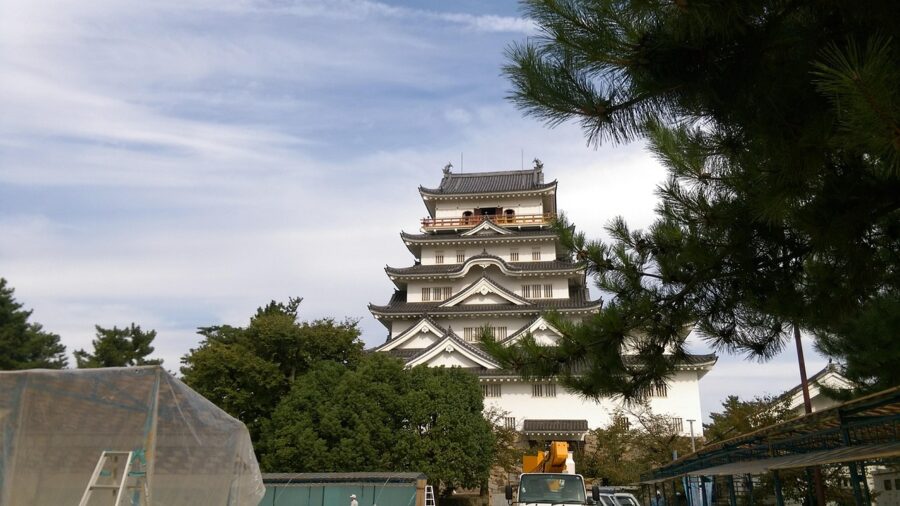
Four makers still produce homeishu, all in Tomo: Irie Toyosaburo Honten, Okamoto Kametaro Honten, Hatta Homeishu-ho and Tomo Shuzo. Okamoto Kametaro began as a sake brewer in 1855 and turned to homeishu once the Nakamura monopoly ended. Its shop gate is a gatehouse bought from Fukuyama Castle in 1873, now a city cultural property.
The lanes, and the museums that explain them
Give the lanes an hour with no plan. Every one ends at the sea or a temple, so you cannot stay lost for long. Many small shops keep short hours, so browse earlier in the day rather than at dusk.
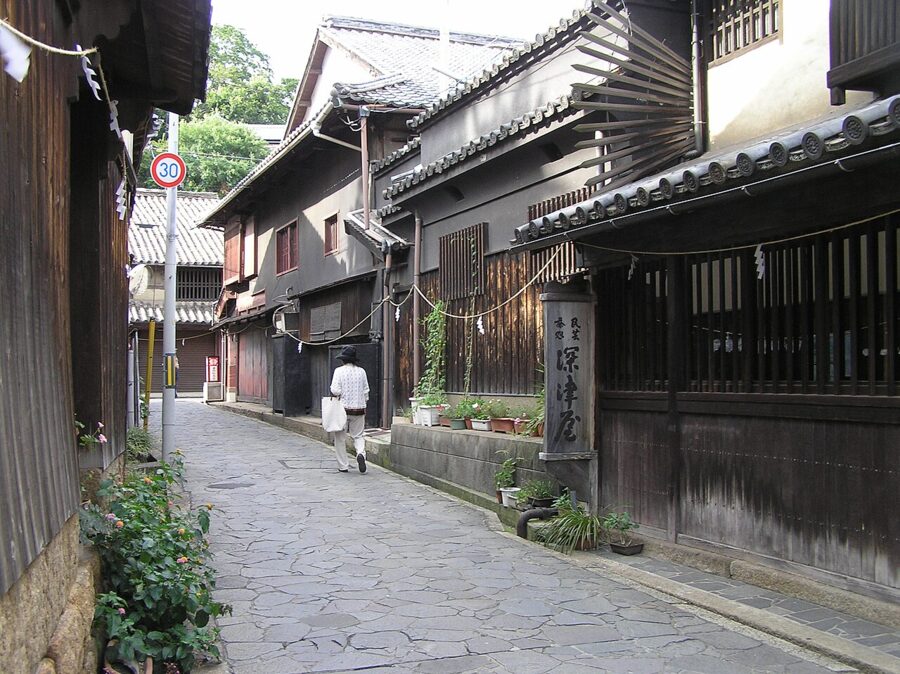
Tomo Terasu, a restored Meiji-era town house two minutes from the Tomoko stop, has free displays on the preservation district, the port works and the festivals. It opens 09:00 to 17:00, closed on Tuesdays.
On the site of Tomo Castle, the Tomonoura Museum of History and Folklore covers the town from ancient times to the Edo period. Entry is ¥150 (about US$1), free for high school students and younger; it opens 09:00 to 17:00, closed on Mondays. It remembers the koto master Miyagi Michio, who spent his early childhood in Tomo and wrote “Haru no Umi” (“The Sea in Spring”) with this sea in mind. The castle hill has one of the best free views in town.
Sensuijima: the island five minutes away
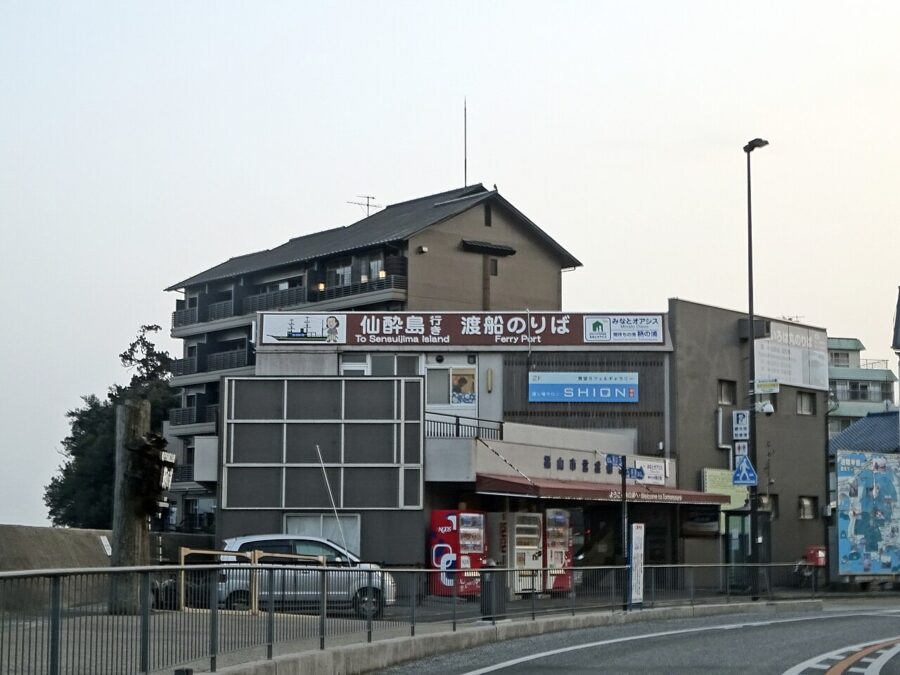
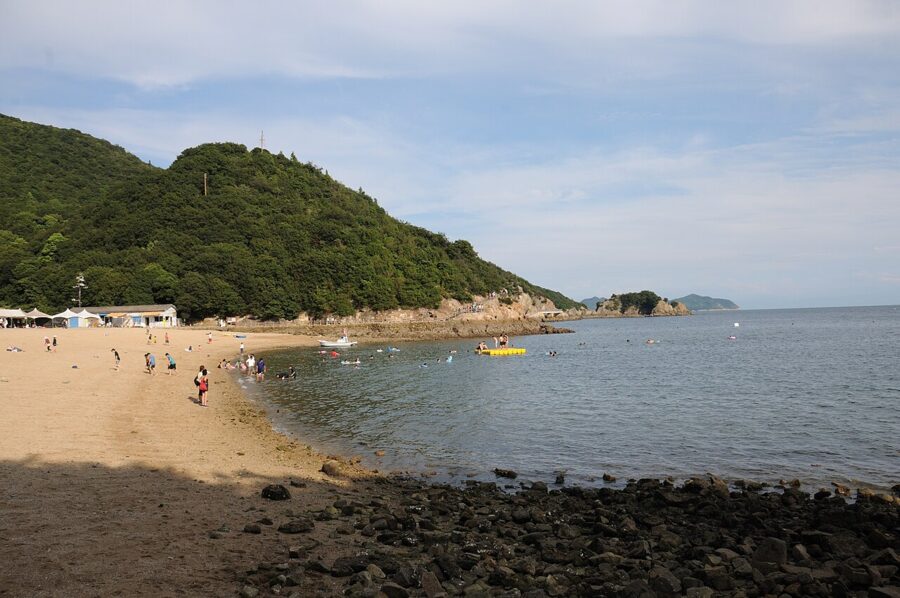
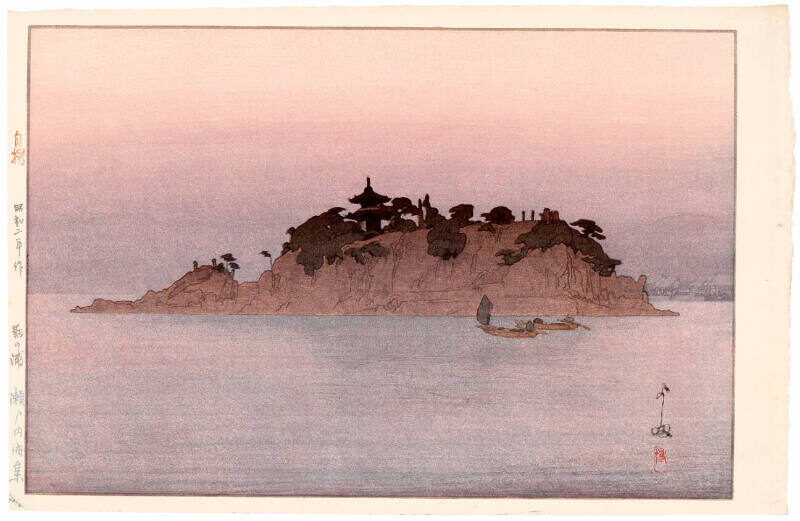
Sensuijima is the wooded island across the water, about 6 km (4 miles) round, with no permanent residents. The name is read as “the island so beautiful even hermits get drunk on it”. Tomo and Sensuijima were part of the first area designated when Japan created its first national parks in 1934, and the scholar Rai San’yo is said to have coined the phrase sanshi suimei, “purple hills and clear water”, looking at this island from Tomo in 1814.
The ferry
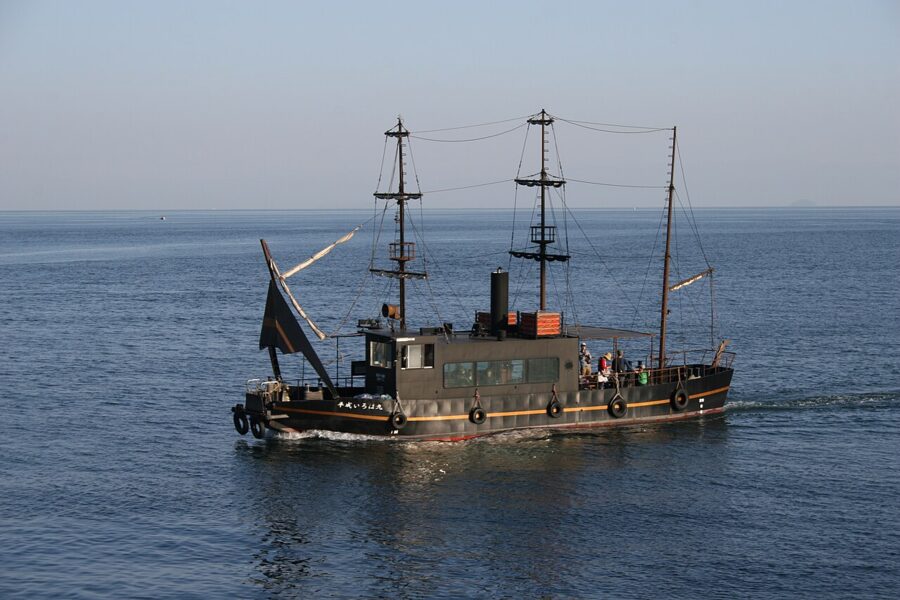
The Fukuyama city ferry takes about five minutes. You pay once, at Tomo, for the round trip: ¥240 (about US$1.50) for adults and ¥120 for children, as of 2026.
- From Tomo: first boat 07:30, then every 20 minutes (10, 30 and 50 past the hour) until 18:50, then 19:30 and a last boat at 20:00. There is no 12:10 boat. The timetable is the same every day.
- Weather: the city stops the boats when the wind at Tomo reaches 10 m per second or the waves 0.8 m, so a windy winter day can close the island.
The walk
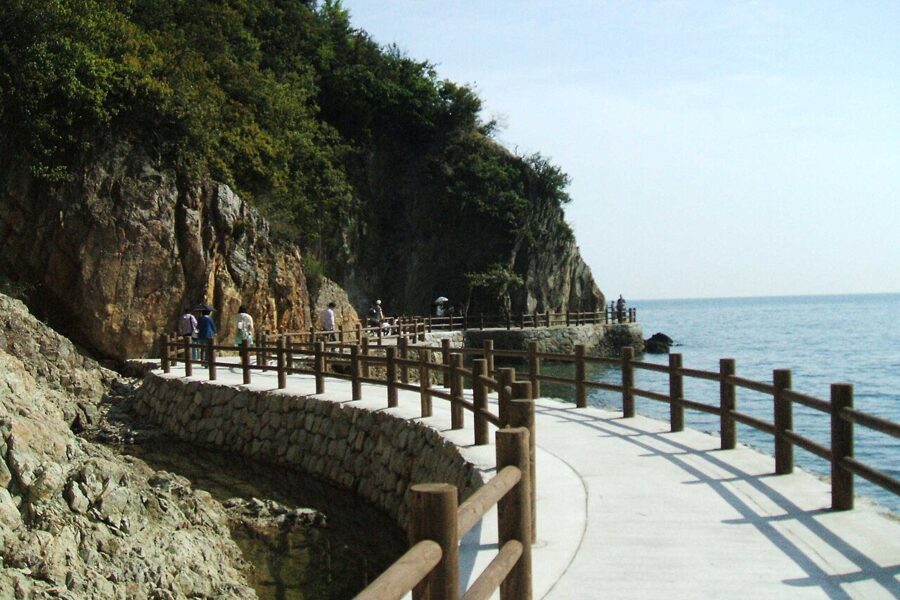
The boat lands on the side facing Tomo, by the beach. Sensuijima has two marked hiking courses, a beach and a campsite. Don’t miss Goshikiiwa, the five-coloured rocks: more than 200 m of the south shore where blue, red, yellow, white and black rock lies in bands, welded tuff from volcanic activity about 90 million years ago.
A walkway follows the south shore past the rocks, and the higher course crosses the top of the island for views over the Inland Sea. Wear proper shoes and take water; with the inn closed there is little to buy. Two or three hours covers the shore and one climb.
Staying on the island
Right now, you can’t. The old national lodging house closed in spring 2021, and the other inn, Kokokara, with its cave steam bath, closed for maintenance on 4 September 2026 with no reopening date. In January 2025 Fukuyama City and Hiroshima Prefecture signed an agreement with Hoshino Resorts to build a hotel on the old lodging-house site. Until then Sensuijima is a day visit.
Ponyo, Wolverine and the films, told plainly
Most people abroad know the name because of Studio Ghibli’s “Ponyo” (崖の上のポニョ, 2008). The documented part: Hayao Miyazaki first came to Tomo on a staff trip in November 2004, spent two months in a rented house here in spring 2005 and returned in summer 2006. He worked out the film here, and its cliff-top house, harbour and sea draw on what he saw.
The town in the film is never named, and Tomo is not a theme park, though you will see Ponyo goods in the souvenir shops. If you know the film you will recognise the feel of the place rather than any one scene. That is reason enough to come, and the only film reason I would come for.
“The Wolverine” (2013) filmed here for a week in September 2012, with Tomo standing in for Nagasaki. Japanese film crews have used the lanes and the gangi since the 1950s, because they look like the past with little dressing.
Abuto Kannon, the cliff temple on the way
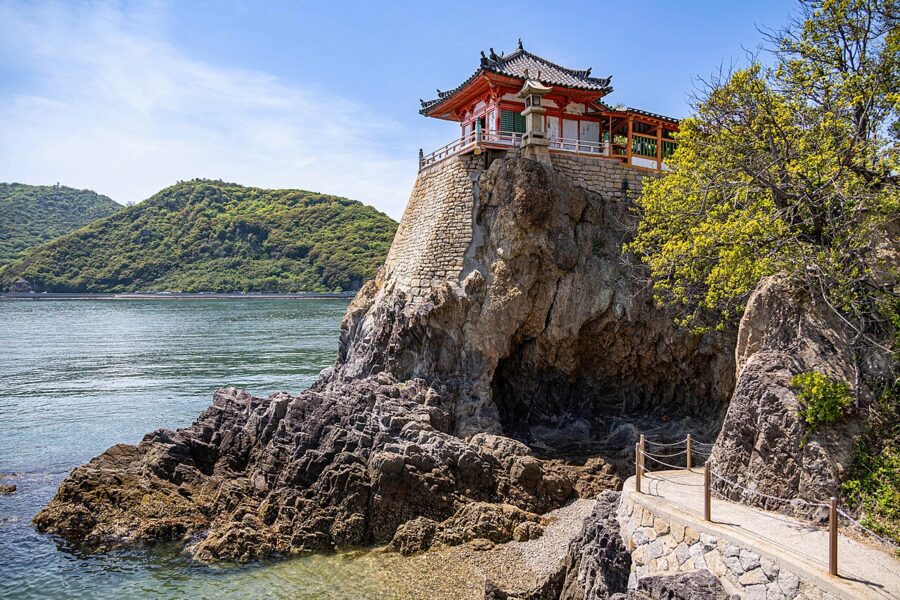
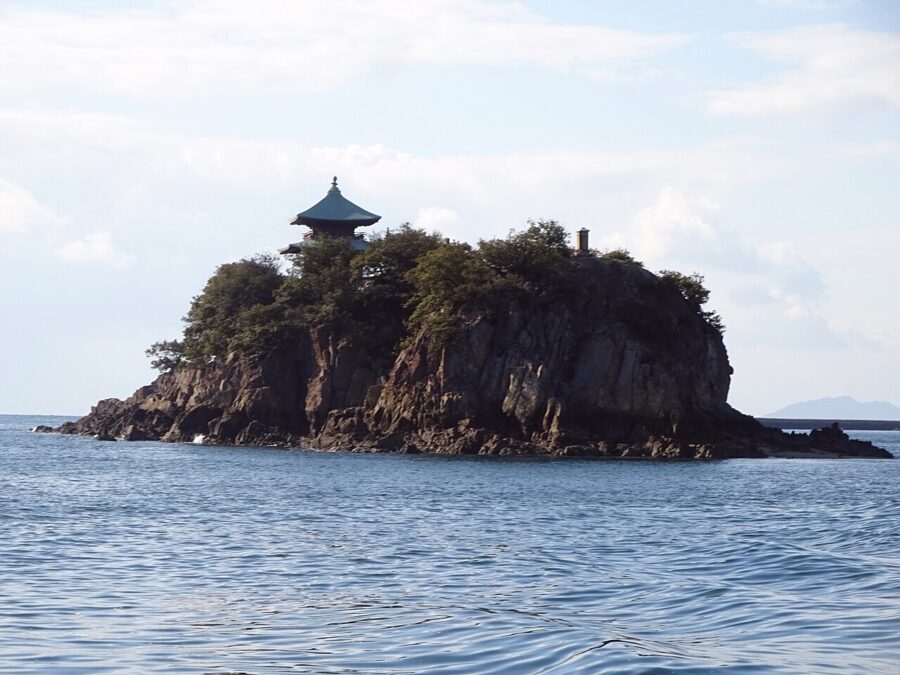
If you are driving, riding or on the weekend boat, stop at Abuto Kannon, the Kannon hall of Bandaiji temple on the cape a few kilometres west of Tomo. Mori Terumoto built it in the early 1570s, and it is a national Important Cultural Property. It opens 09:00 to 16:00, entry ¥300 from junior high school age. By bus it is awkward: the Shinkawa line from stop 6 at Fukuyama Station to Abuto Kannon Iriguchi, then a 15-minute walk.
Fitting Tomonoura into a Shimanami Kaido trip
Tomo works best as the day you add at one end of the ride, the extra day either side of a two- or three-day Shimanami Kaido itinerary.
Before the ride. Get off the Shinkansen at Fukuyama, take a morning bus to Tomo and stay until mid-afternoon. The Sanyo Line then gets you to Onomichi in 19 minutes, to sleep near the start of the route. This is the plan I would choose: no extra travel, and you start the ride fresh.
After the ride. Finish at Imabari, take the Shimanami Liner bus back to Fukuyama and sleep there. Do Tomo the next morning and catch an afternoon Shinkansen.
From Onomichi at the weekend. In season, take the 10:00 boat to Tomo and the 14:00 back. Three hours covers the harbour, Taichoro and the Ota House, but not Sensuijima as well.
Where to sleep
Staying in Tomo means having the harbour to yourself after the day-trippers leave. Two seaside ryokan with hot-spring baths, Ofutei and Migiwatei Ochikochi, were taking bookings for 2026; Migiwatei renovated part of the building in 2024, and all 17 of its rooms have outdoor baths. Since 1 April 2026 Hiroshima Prefecture has charged an accommodation tax of ¥200 (about US$1.30) per person per night, paid at the inn.
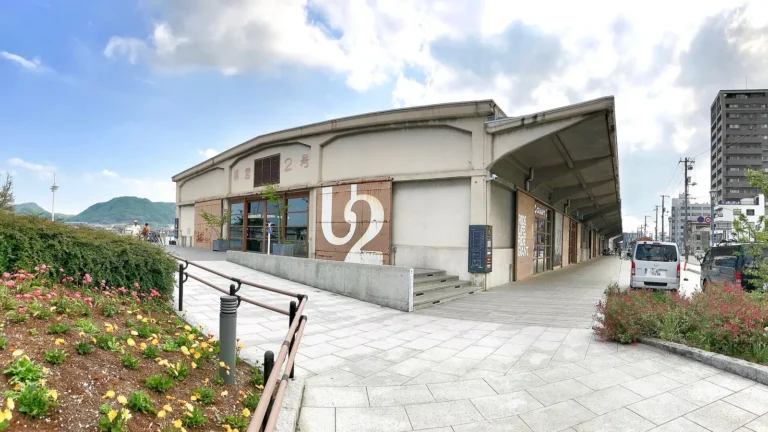
Otherwise, sleep in Fukuyama, or in Onomichi at the start of the route. Onomichi is the better evening: Onomichi ramen near the station (the boxed version that made the style famous came from a Tomo seafood maker), the temple walk to Senkoji, and ONOMICHI U2, the warehouse turned cycling hotel. Onomichi also has more beds at the start than anywhere else in where to stay on the Shimanami Kaido.
When to go, and the days to avoid
Plan around the closing days. The history museum shuts on Mondays, the Ota House and Tomo Terasu on Tuesdays, and the Iroha-maru Museum from Monday to Thursday. Friday is the one weekday when everything is open, and it is quieter than the weekend. Taichoro opens every day.
Two events are worth timing a visit for. The Tomonoura tai-ami, a sea bream netting tradition of more than 380 years, ran on seven days in late April and early May 2026, at 11:00 for about an hour and a quarter, from the Sensuijima pier; adult tickets were ¥3,000 in advance or ¥3,300 (about US$21) on the day. In late winter, for the girls’ festival, houses across town put their hina dolls on show.
Otherwise Tomo suits spring and autumn, which are also the best time to visit the Shimanami Kaido for riding. In summer, do the hill climbs early. In winter the wind can stop the Sensuijima ferry, but the town is at its quietest.
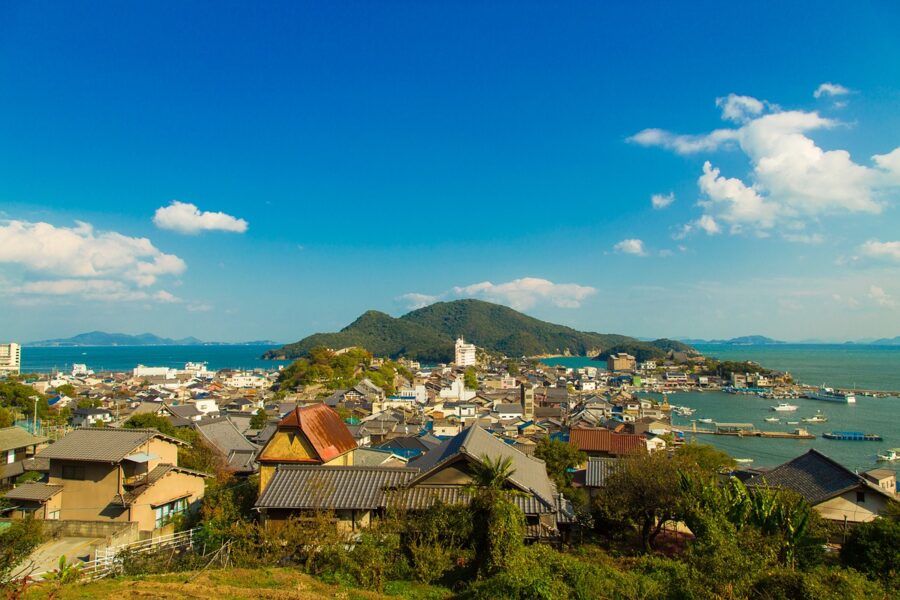
The ships no longer wait for the tide, but a timetable still runs the day here. Catch the 09:00 bus from stop 5, sit in Taichoro before the room fills, cross to Sensuijima at midday, and be back at the Tomoko stop when the evening light turns on the harbour.