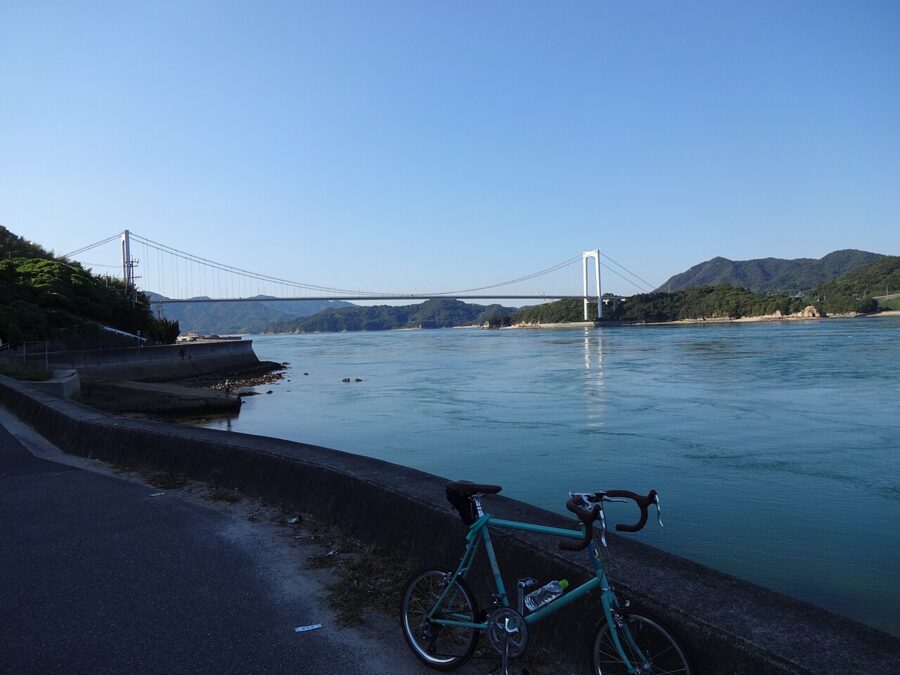
The cycle path off the Oshima Bridge drops you onto the island road at the northern tip of Oshima, with the water in the strait below running sideways past the rocks like a river. A rider in a hurry heads south from here and is on the Kurushima-Kaikyo Bridge within the hour. Imabari is close, the day is long, and Oshima looks like the last bit of road before the finish.
Keep to the coast road towards Miyakubo instead and in about 3 km (2 miles) you are at the door of the Murakami Kaizoku Museum, looking out at the island that was the pirates’ castle. An hour later you can be in a boat in the same current, then across the island past a rose garden and up a 300-metre hill to the best view on the whole Shimanami Kaido. None of it is far, and all of it is missed by anyone who treats Oshima as a corridor.
So the decision at the foot of the bridge shapes your day: ride straight through, or give the last island a morning or a night. I would give it the night. Here is what it holds, in the order you meet it from Onomichi, with the hours, prices and closing days that decide whether it works.
Where Oshima sits on the route
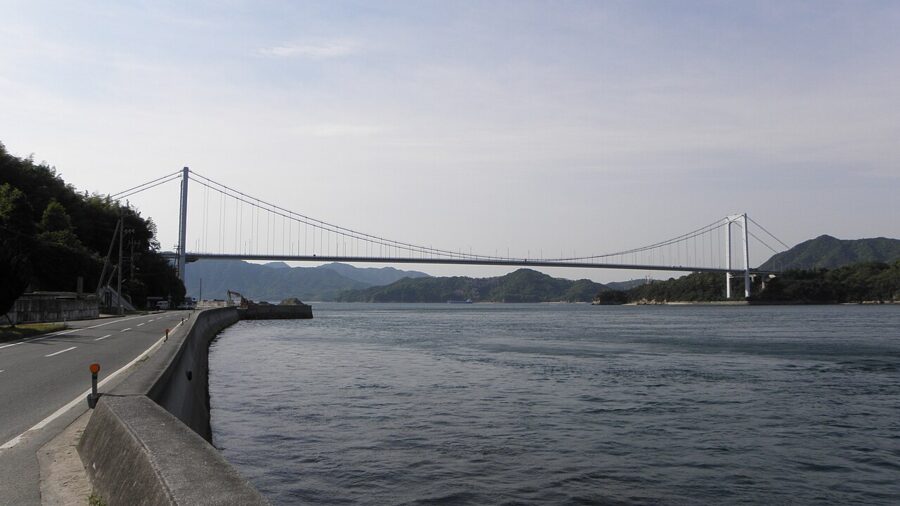
Oshima (大島, Imabari) is the sixth and last island of the Shimanami Kaido coming from Onomichi, and the last before the bridge to Shikoku. It belongs to Imabari City and splits into two old towns: Miyakubo (宮窪) in the north and east, where the pirates lived, and Yoshiumi (吉海) in the south and west, facing the Kurushima Strait. The Hakata-Oshima Bridge brings you in at the northern tip from Hakatajima. The Kurushima-Kaikyo Bridge takes you out from Shitadami at the southern tip.
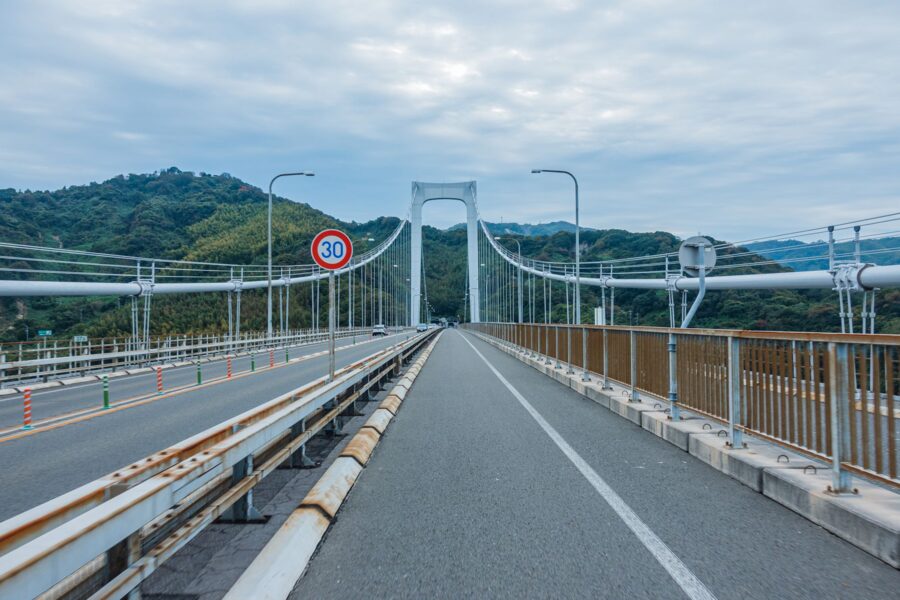
The way in is two bridges, according to JB Honshi’s bridge notes: the Hakata Bridge (325 m) reaches Mijikajima, and the Oshima Bridge (840 m, a suspension bridge) carries on to Oshima. Bicycles cross every bridge on the route free under the Shimanami Cycling Free toll waiver, which runs until 31 March 2028 with no ticket or form.
By the most direct roads it is about 11 km (7 miles) from the foot of the Oshima Bridge to Yoshiumi Ikiiki-kan at the foot of the Kurushima-Kaikyo Bridge, by my measurement on the map: 40 to 50 minutes on a rental bike. Going via the museum adds only 2 or 3 km, and the rose garden is on the way. The full cycling route from Onomichi is about 70 km (43 miles), and Oshima carries the last 18 km or so of it, to Sunrise Itoyama on the Imabari shore.
Bikes, buses and the car
The island’s one rental terminal is at Ikiiki-kan, open 09:00 to 17:00. Shimanami Japan’s rental price list puts a cross bike or city bike at ¥3,000 (about US$20) a day as of 2026, returnable at any of the ten terminals. Electric-assist bikes (¥4,000, about US$27) are stocked at Onomichi, Setoda, Omishima, Itoyama and Imabari Station but not on Oshima, so pick one up before you arrive if you want help on Kirosan. Tandems and the top-end e-bikes have their own return rules under Shimanami Kaido bike rental.
Drivers should note one quirk from the museum’s access page: Oshima-kita and Oshima-minami are half interchanges. Coming from Onomichi you can leave only at Oshima-kita; from Imabari, only at Oshima-minami. Express buses from Imabari Station reach the Kameyama stop in Yoshiumi in about 23 minutes, and the Shimanami Liner highway buses stop at the Oshima stop on the expressway, the same buses used for getting to the Shimanami Kaido from Fukuyama.
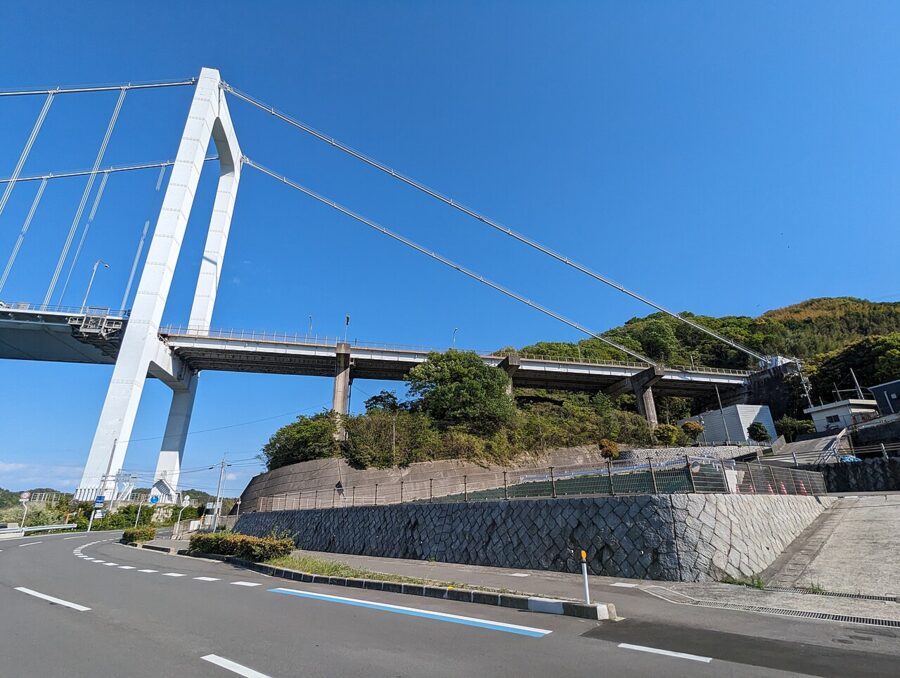
Mijikajima, the island under the bridge
Between the two bridges a side path drops to Mijikajima, an uninhabited island the Noshima Murakami once used as a garrison. It is now a free campsite that you can reach only by bicycle, moped or on foot. The city’s Mijikajima page lists toilets and a cooking shelter but no showers or power, bans fires on the ground and asks campers to keep any fire to a minimum, since emergency vehicles cannot get there quickly.
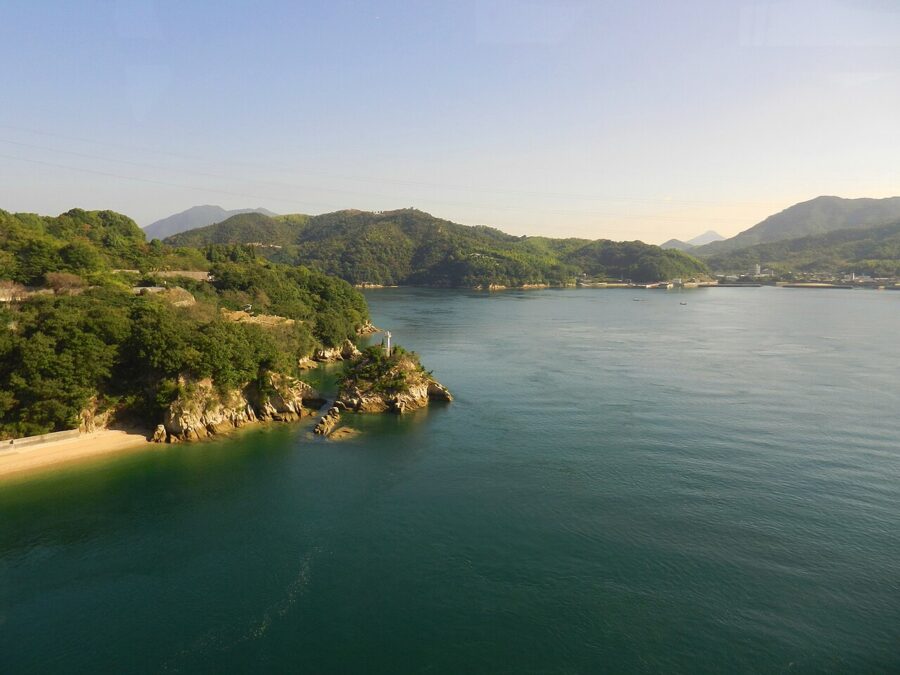
Miyakubo and the Murakami Kaizoku Museum
The Murakami Kaizoku Museum (村上海賊ミュージアム) opened in October 2004, and its older name, the Murakami Suigun Museum, is still carved on the gate stone and used for the bus stop. “Suigun” (navy) is a later word, from a time when historians liked to see the clan as an early naval force. The documents of their own day call them “kaizoku”, pirates, and the museum’s own introduction explains why it went back to that word.
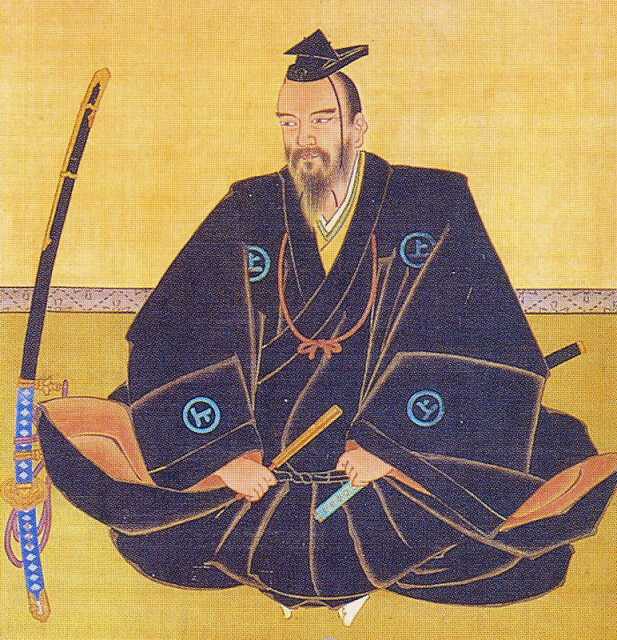
They were not raiders. Three branches of the Murakami held these islands from the fourteenth century, at Noshima, Kurushima and Innoshima, and the Noshima branch based here was the most independent. Under Murakami Takeyoshi they controlled shipping from northern Kyushu to the Shiwaku Islands, piloting and escorting ships through the tides and charging for safe passage; the missionary Luis Frois called them the greatest pirates in Japan. Their story is recognised as Japan Heritage and set out on the Murakami Kaizoku heritage site.
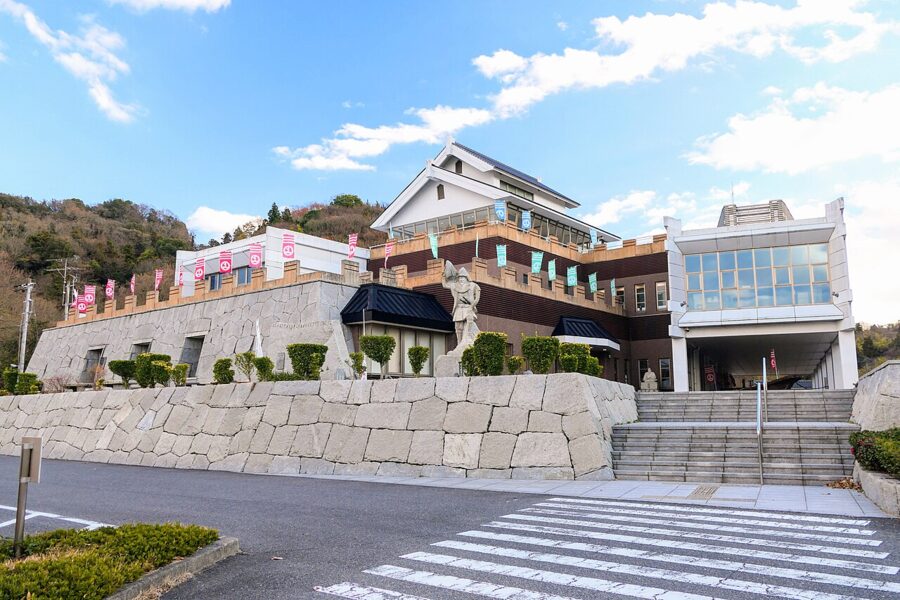
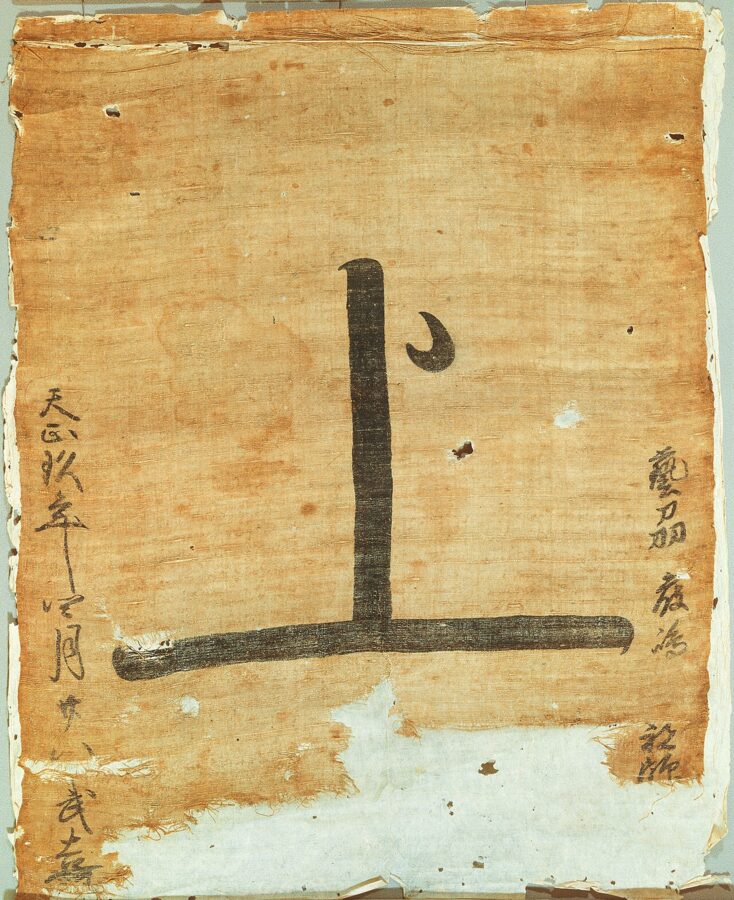
Inside, the galleries tell the story through pieces handed down in the Noshima Murakami family, from armour and a battle surcoat to letters and portraits, with the small fast boats and gunpowder fire-pots (horoku hiya) they fought with. Give it 40 minutes to an hour. On the second floor a six-minute VR trip into the pirates’ world costs ¥500 (about US$3) for ages 13 and up, and trying on armour or a kosode robe is free, first come first served.
| Murakami Kaizoku Museum | As of November 2026 |
|---|---|
| Hours | 09:00–17:00, last entry 16:30 |
| Closed | Mondays (the next weekday when Monday is a holiday); 29 December–3 January |
| Admission | ¥310 (about US$2); 65 and over ¥250; students ¥160; under 18 free |
| Where | 1285 Miyakubo, Miyakubo-cho; about 3 km from Oshima-kita IC |
| Parking | Free: 50 cars, plus racks for about 10 bikes |
Special exhibitions cost extra; the museum’s visitor information page has the full fee list.
Noshima from the shore, and from the water
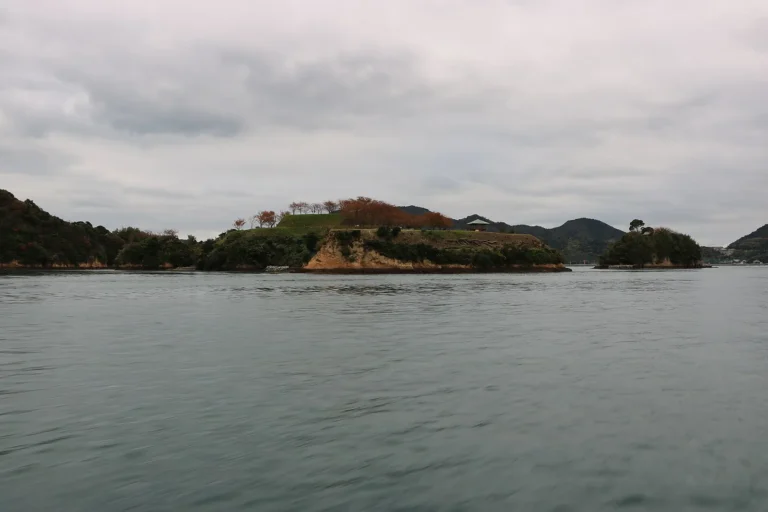
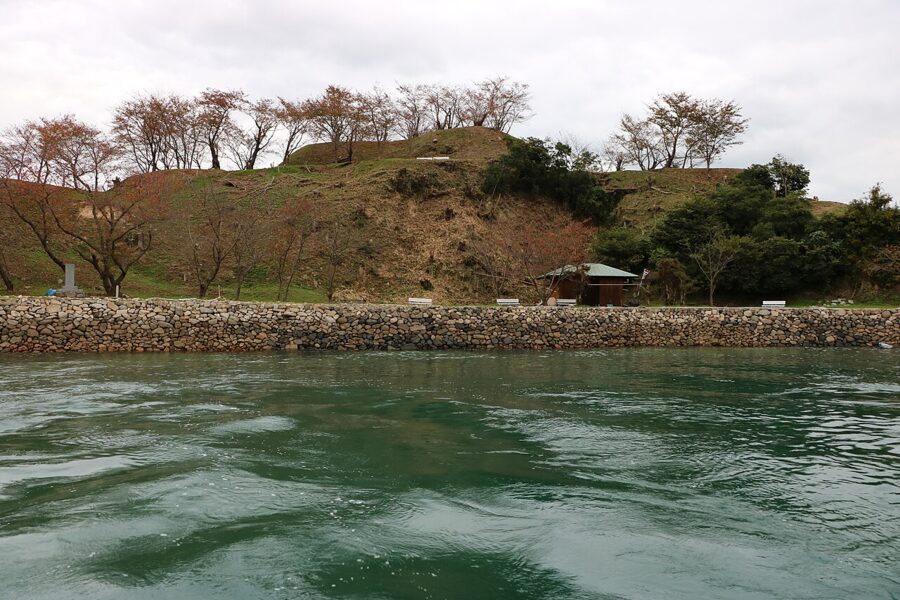
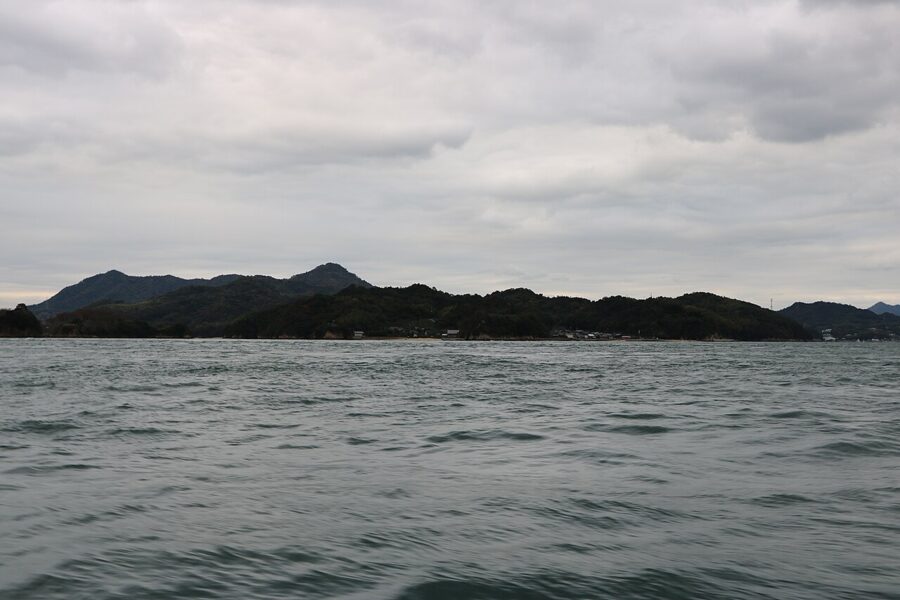
Noshima (能島) is the small uninhabited island just off the museum, about 1.5 hectares; the city gives its circumference as about 850 m and the island’s tourism company as 720 m. It was the Noshima Murakami’s sea castle, and the museum describes it as the only sea fort in Japan with national historic site status. What survives are post holes cut in the rock, where the family moored and hid its boats, and the terraces on top.
You can see it perfectly well from the shore. Landing is another matter: there is no regular boat, and the city’s Noshima page says the only way on is a booked landing tour run by Setouchi Shimanami Leading, leaving from in front of the Noshima Suigun restaurant. Its dates and fare are not posted for 2026, so ask before planning around it.
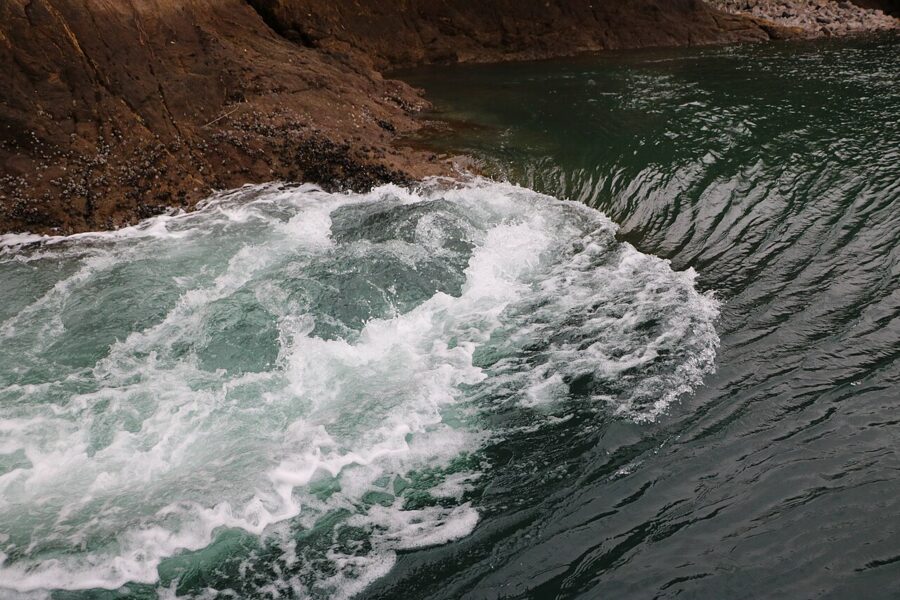
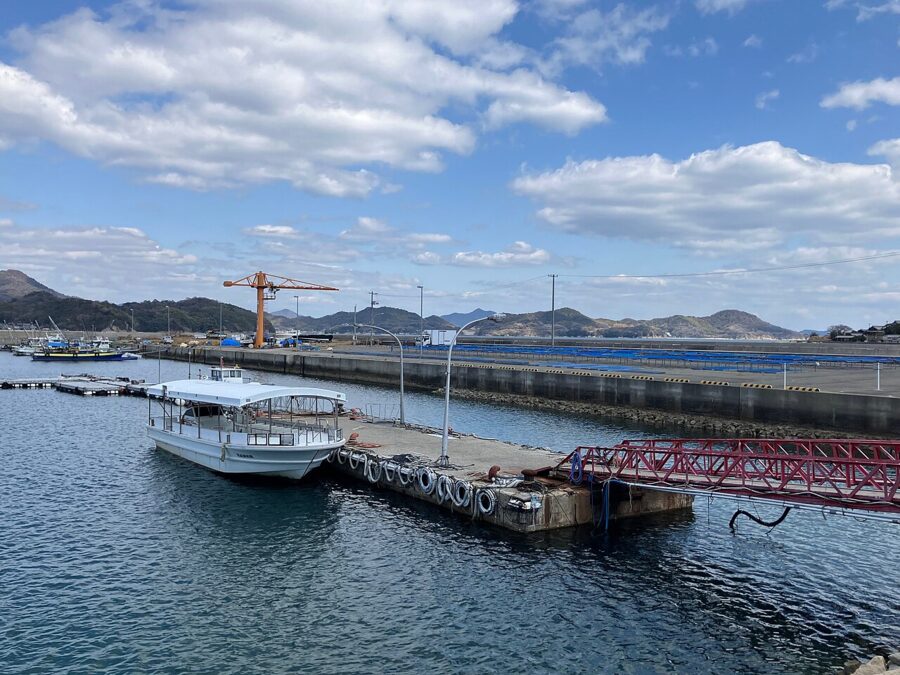
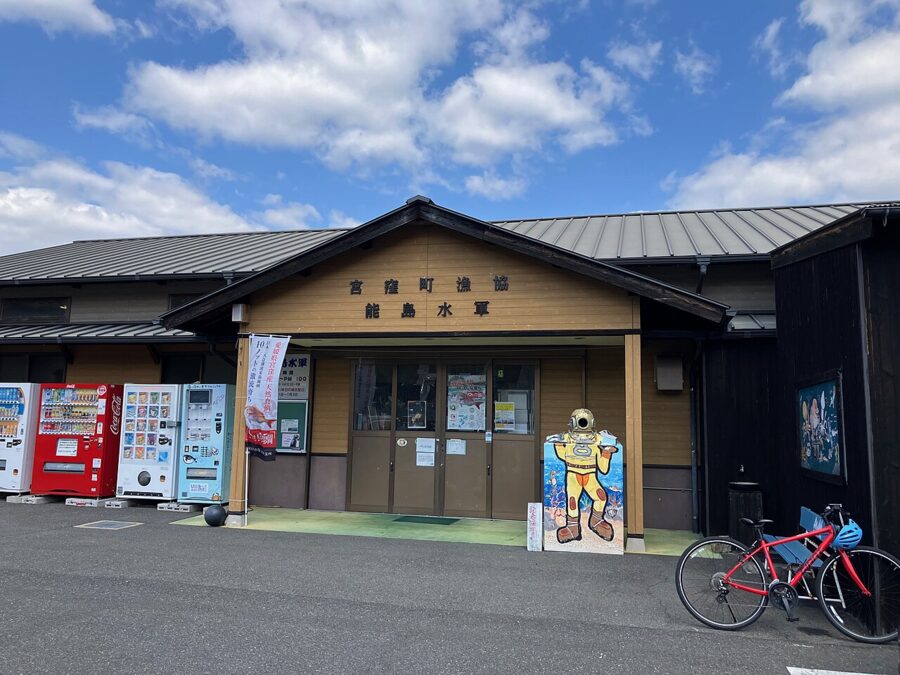
The tide boat is the better use of an hour anyway. Noshima Suigun (能島水軍), the fishing co-op’s restaurant and boat office in front of the museum, runs a 40-minute trip past Noshima and the islets towards Hakatajima, with a view up at the Hakata-Oshima Bridge from below. The current here reaches 10 knots, about 18 km an hour, and the boat pushes through the whirls it throws up while the skipper talks over the noise.
Boats leave on the hour from 09:00 until the 15:00 sailing, with a 16:00 boat at some times of year, according to the operator’s tide-boat page. Fares are ¥1,800 (about US$12) from junior high age up and ¥1,000 (about US$7) for primary school children; younger children ride free, and so do dogs on a lead. Buy tickets at the desk inside the restaurant and wait at the barbecue tables five minutes before sailing.
The same page posts a weekly chart of the current: pick an hour coloured for 4 knots or more and you are far more likely to see whirlpools than at slack water. Bad weather cancels sailings, even at the last minute, with the fare refunded. As of November 2026 Noshima Suigun closes on Mondays and Tuesdays (the next day after a holiday), not only Mondays as older listings say, and the museum closes on Mondays. Wednesday to Sunday is when you get both.
Lunch is in the same building, from 11:00 with last orders at 15:00: Miyakubo fish, including the co-op’s own sea bream, branded 10kt after the current. The charcoal seafood grill is ¥2,800 (about US$19) a person for two or more, with shellfish, a squid skewer and prawns. It takes 90 minutes to two hours, so do the boat first. On the first Sunday of every month Miyakubo fishermen sell their catch direct near the Miyakubo information office.
Kareiyama, the view over the pirates’ strait
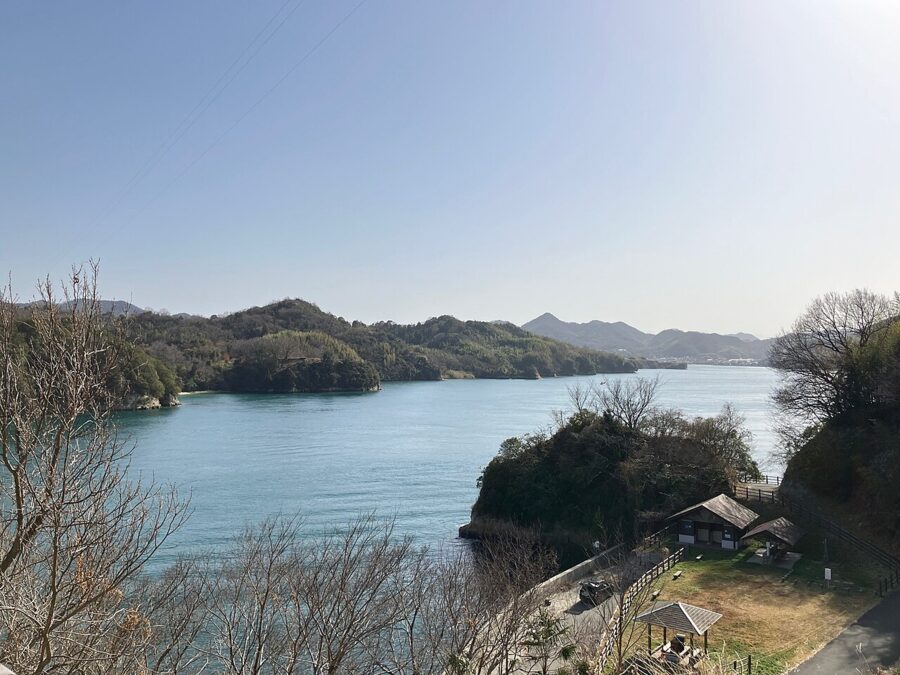
With a car, or legs for another climb, Kareiyama Observatory Park sits at 232 m on the northern tip of the island, about ten minutes’ drive from Oshima-kita IC. From the top you see the Hakata-Oshima Bridge, Noshima and the Funaori Seto narrows together, the pirates’ world in one frame. Entry and parking are free, and the city’s Kareiyama page lists a small campsite at ¥310 per adult per night, tent fees extra.
Oshima stone and the quieter corners
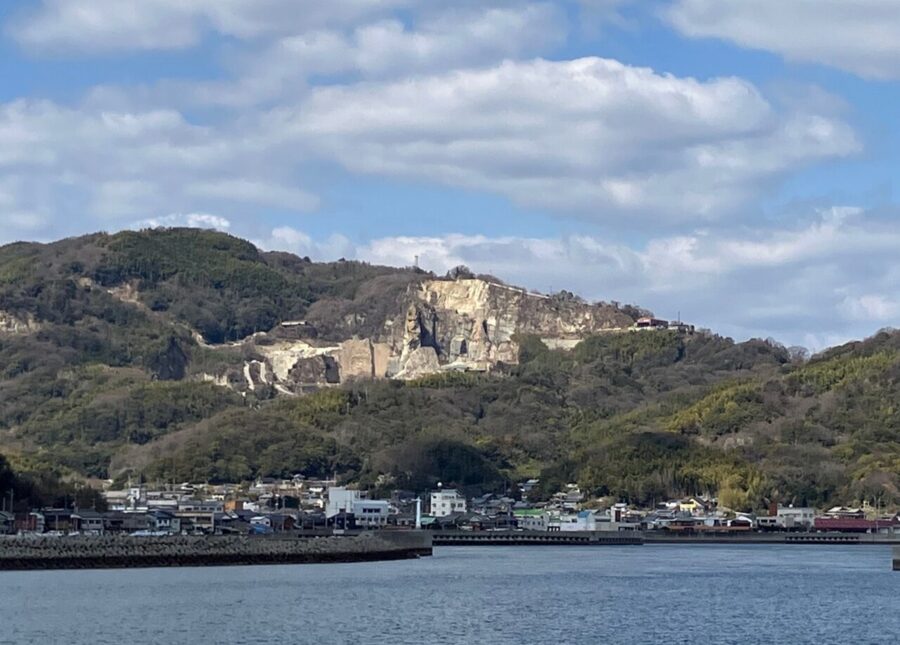
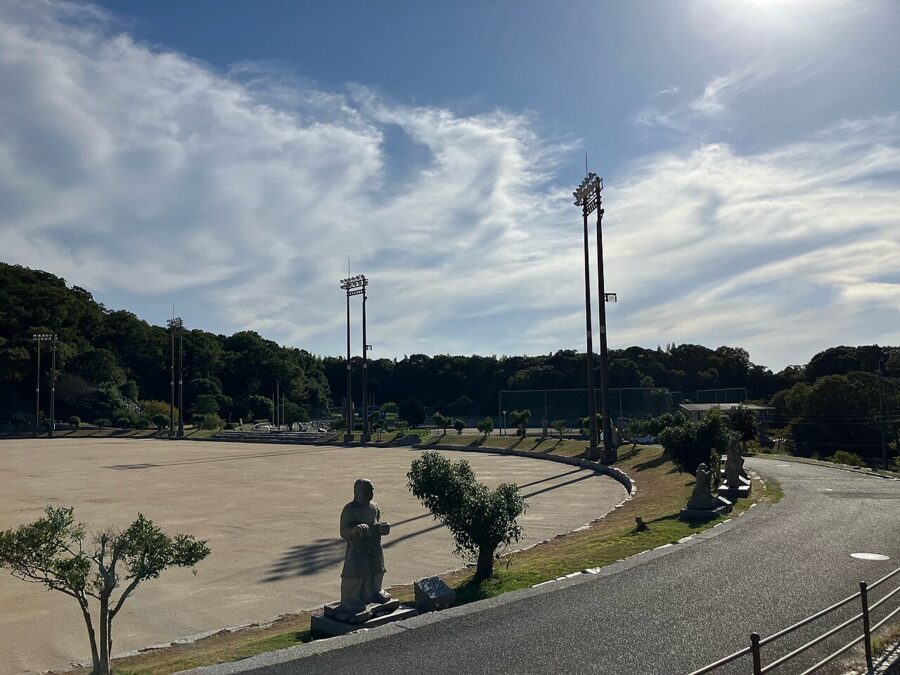
The pale scars on Oshima’s hills are granite quarries, and Oshima stone (大島石) is the island’s other industry. The Ishibunka Undo Koen sports park near Oshima-kita IC is laid out in it, with stone monuments around the ground. On Saturdays, Sundays and holidays the NPO Noshima no Sato runs a quarry tour with stone splitting and a visit to the stone heritage hall.
The city’s stone tour page lists tours at 10:00 and 14:00, about 90 minutes from Kareiyama Observatory Park, with a guide fee from ¥1,500 (about US$10) and booking required. Its high point, a cliff top about 260 m up that the tour calls the Shimanami Art Canyon, takes four people at a time.
Two more corners for anyone staying the night. Ushima (鵜島), the small island off Miyakubo, is about five minutes by ferry from Miyakubo port, and the Ushima Thirty-Three Kannon, stone figures modelled on the Saigoku pilgrimage, line its ridge. In Yoshiumi, Koryuji temple, five minutes’ walk from the Kameyama bus stop, is the family temple of the pirate commander Murakami Yoshihiro and the 33rd stop on Oshima’s own Shima-Shikoku island pilgrimage.
Yoshiumi Rose Park
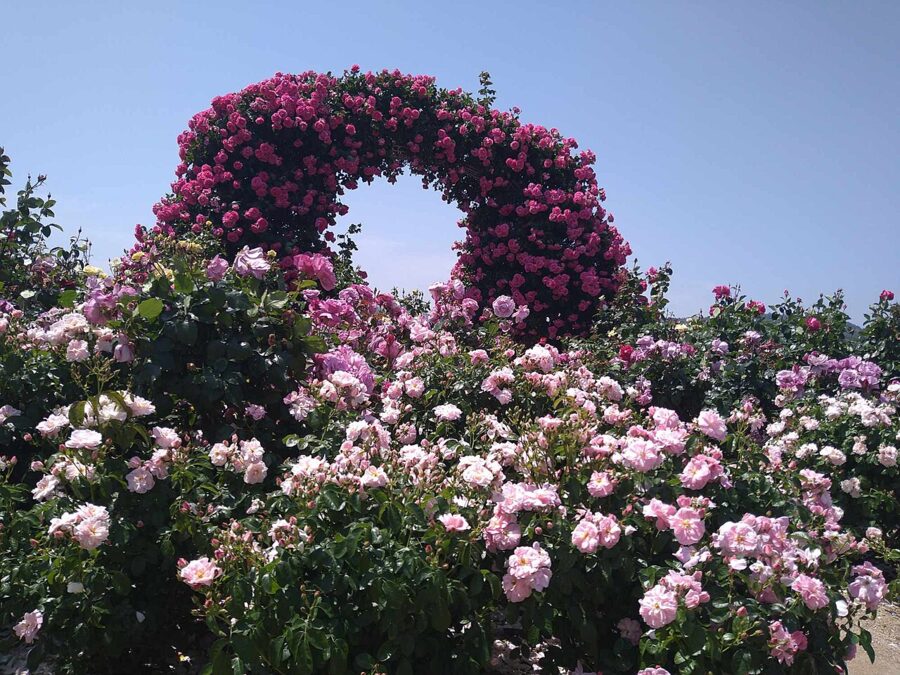
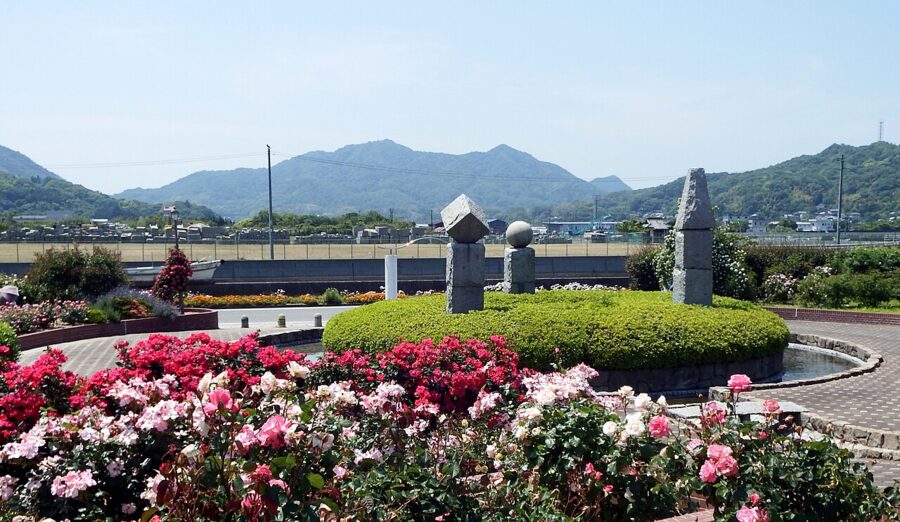
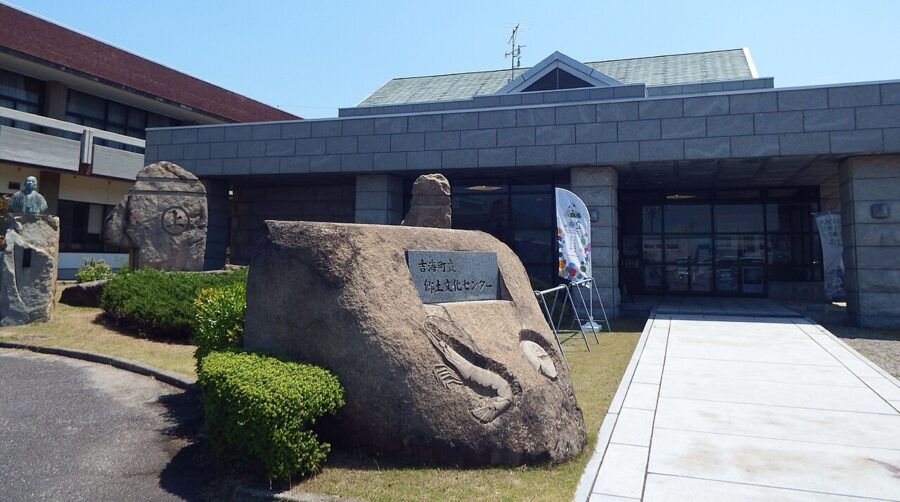
The road from Miyakubo to Yoshiumi passes Yoshiumi Rose Park (よしうみバラ公園) in Fukuda, so stopping costs almost nothing. The city’s rose park page gives about 2.8 hectares and 3,500 bushes of 400 varieties. About 100 are old roses of the Empress Josephine collection, brought from the rose garden at L’Haÿ-les-Roses in France in May 1999 to mark the opening of the Shimanami Kaido.
Something flowers from mid-May to the end of December, with peaks from mid-May to early June and again in mid-October and early November. Entry is free at any hour, with parking for 100 cars. Give it 40 minutes in season and five out of it.
Next door, Yoshiumi Rose-kan sells rose goods and local produce from 11:00 to 14:00, with its restaurant closed for now. Outside the spring season it opens only at weekends, and it shuts from 28 December 2026 to 8 January 2027, per the operator’s Rose-kan page. The Yoshiumi local culture centre next door houses the Noma Hitone Rose Museum, for the Yoshiumi-born painter: 09:00 to 17:00, ¥310, closed on Mondays and on 1 December 2026.
Kirosan Observatory Park: the climb and the view
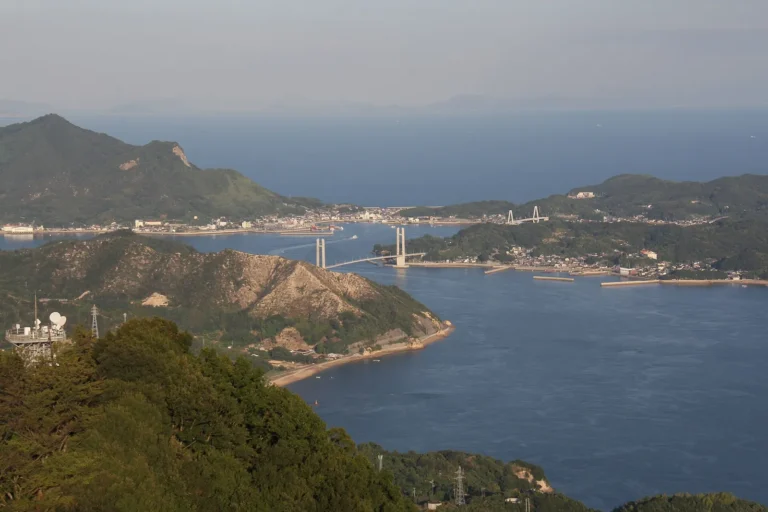
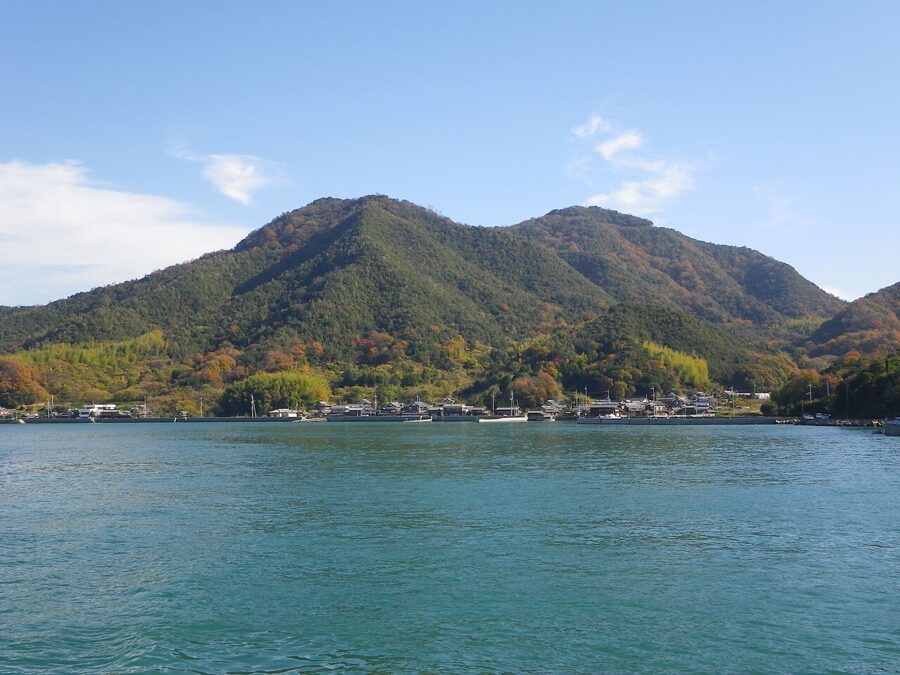
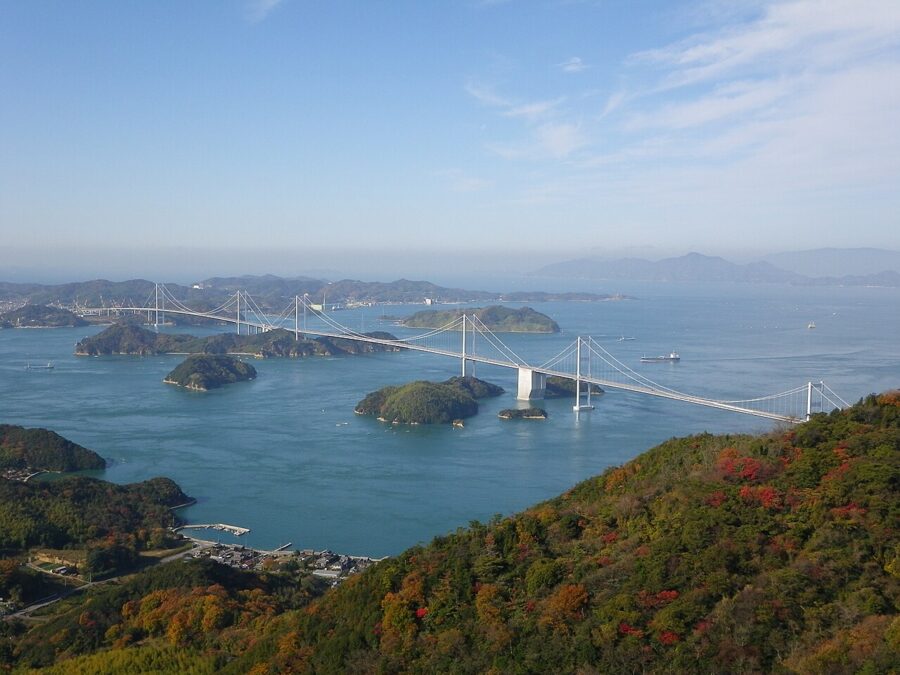
Kirosan (亀老山, Mount Kiro) is the 307.8 m hill at the southern end of Oshima, and its summit park looks straight down on the Kurushima-Kaikyo Bridge. On a clear day you see Imabari, the islands of the strait and, beyond the city, Mount Ishizuchi, the highest peak in western Japan. In 2017 the view of the Kurushima Strait from the summit was named one of Shikoku’s 88 scenic spots. If you see one view on the Shimanami Kaido, I would make it this one.
Getting up there
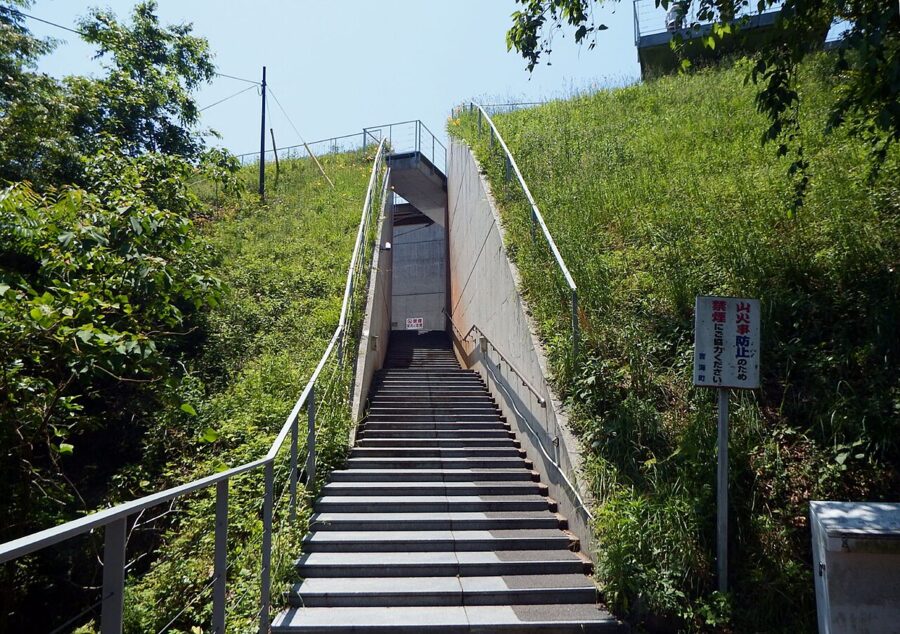
By bike, the climb is real. The road up leaves the lowland near Koryuji in the Kameyama area, about 2 km from Ikiiki-kan, and gains roughly 280 m in about 3.5 km (2 miles), by my reading of the Geospatial Information Authority’s elevation data. That averages close to 8 per cent, with stretches above 10 per cent near the top. On a city bike, expect to walk parts of it; on an e-bike it is steady work rather than a struggle.
Allow an hour and a half from Ikiiki-kan and back, including the top, and come down slowly, since it is just as steep going down. By car it is about ten minutes from Oshima-minami IC. There is no bus up; the city’s Kirosan page gives about two hours on foot from the Kameyama stop, which I would not do in summer.
Until 10 January 2027 (planned), works close part of the parking. The city’s parking notice says the first car park is shut, the second takes cars and the third takes bicycles. The toilets are out of use during the works, with a temporary one at the third car park, so bring water up from Yoshiumi and do not count on buying anything at the top.
The observatory and the view
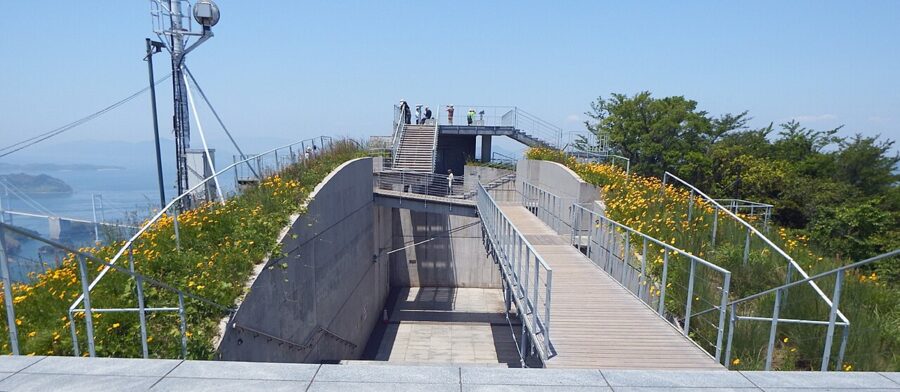
The observatory is by Kengo Kuma, from long before his national stadium in Tokyo. Instead of putting a tower on the summit, he cut a slot into it and threaded decks, stairs and a bridge through the gap. It is open 24 hours a day, every day, and free.
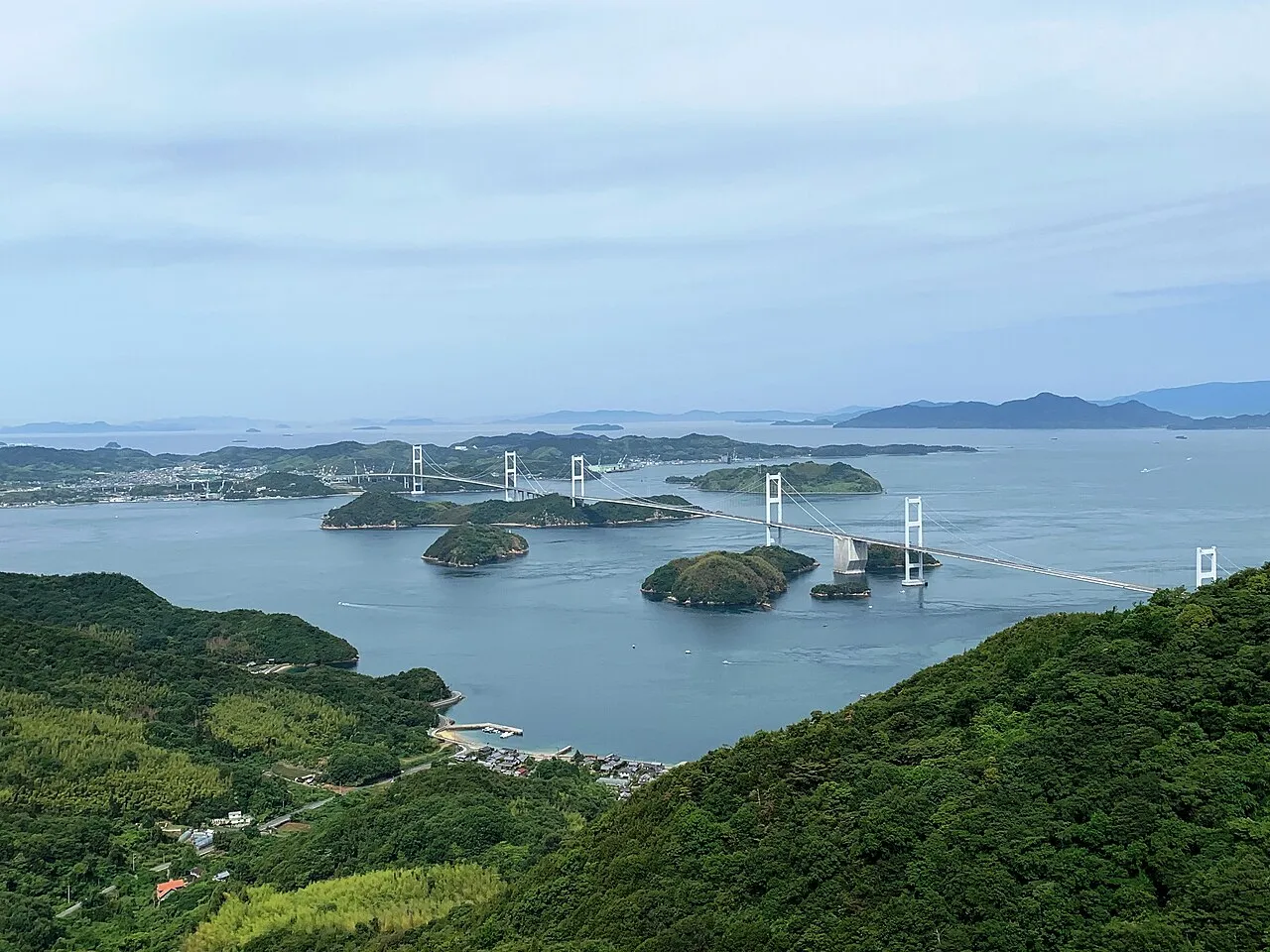
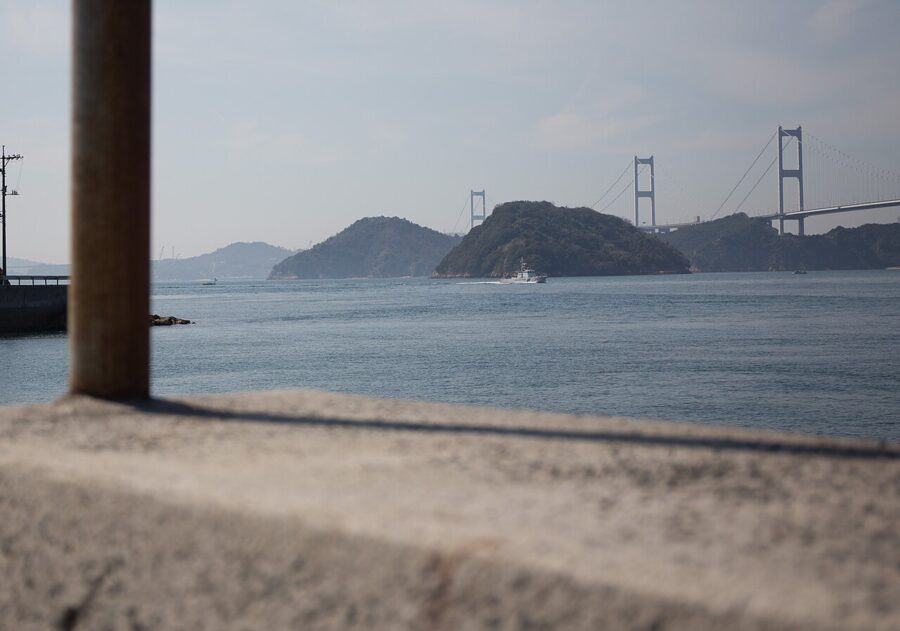
Below you is the Kurushima Strait, one of the three great tidal races of Japan, with the three spans of the Kurushima-Kaikyo Bridge stepping across by way of Takeshijima and Umashima. Imabari bills itself as Japan’s leading maritime city, and its shipyards line the bay on the far shore. From up here you can often pick out the current as lines and swirls around the islands.
Kirosan at sunset and after dark
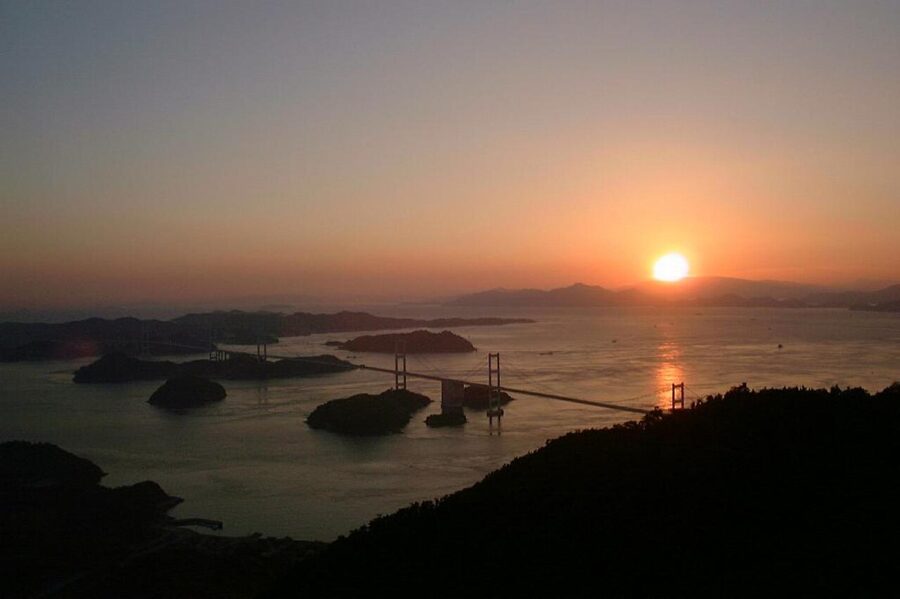
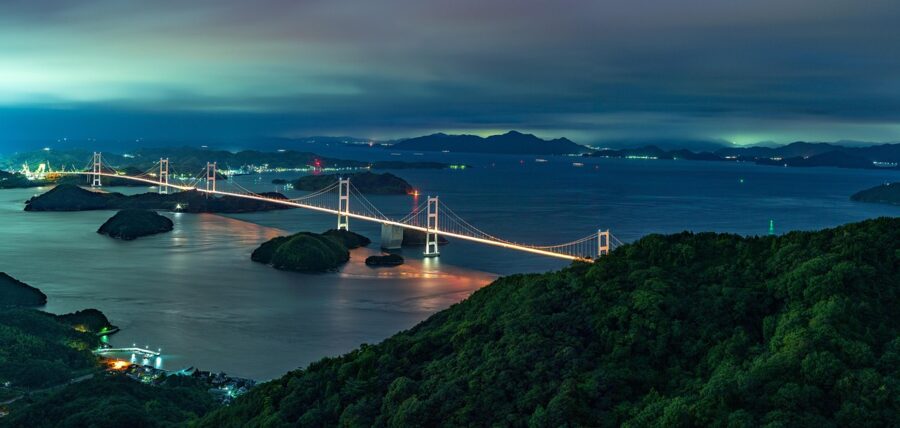
In autumn the sun goes down behind the bridge, and the summit is at its busiest. Since 25 March 2026 the observatory has been lit every night from sunset to 22:00 (planned to 23:00 in summer) as the Kirosan Night Sky Walk, says the city’s lighting notice. JB Honshi also lights the bridge on the nights marked in its Kurushima light-up calendar.
The catch for riders: night riding is banned on Shimanami Japan rental bikes, and the Ikiiki-kan terminal closes at 17:00. A Kirosan sunset on a rental bike means a bed on Oshima or a bike already returned. For the lights after dark, you need a car or a room on the island.
Yoshiumi Ikiiki-kan and the Kurushima-Kaikyo Bridge
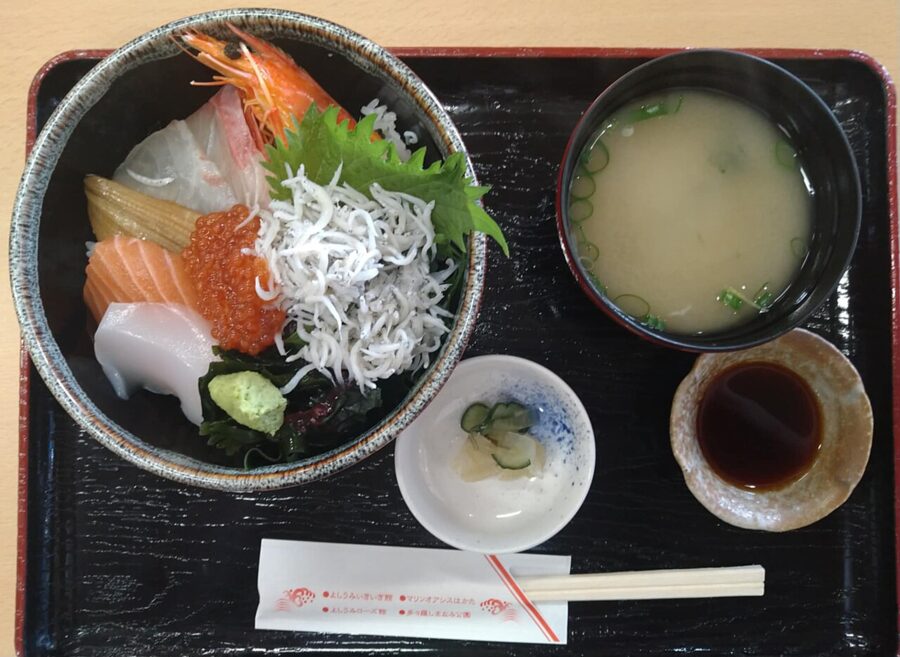
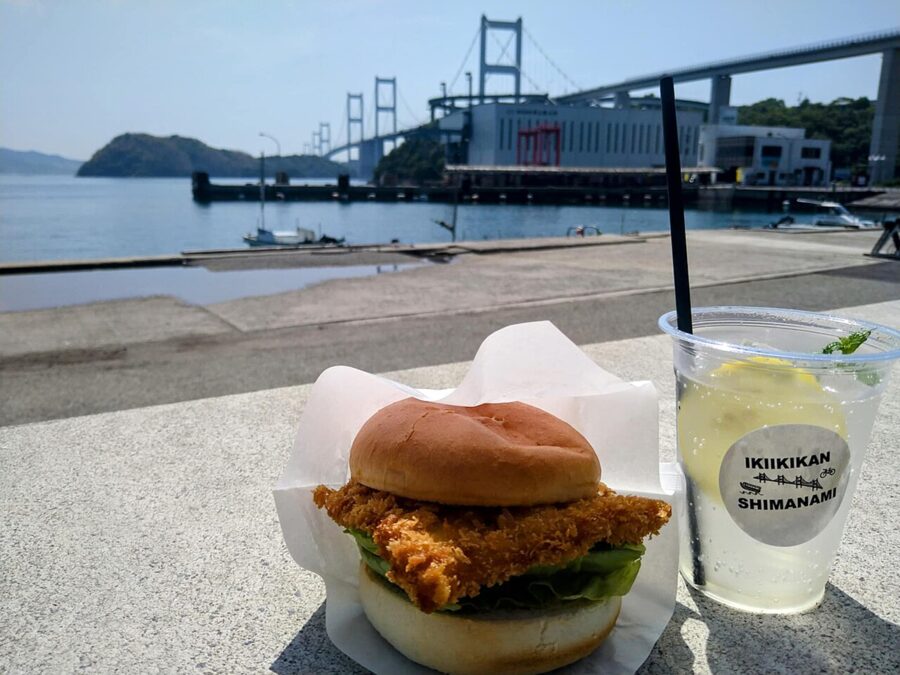
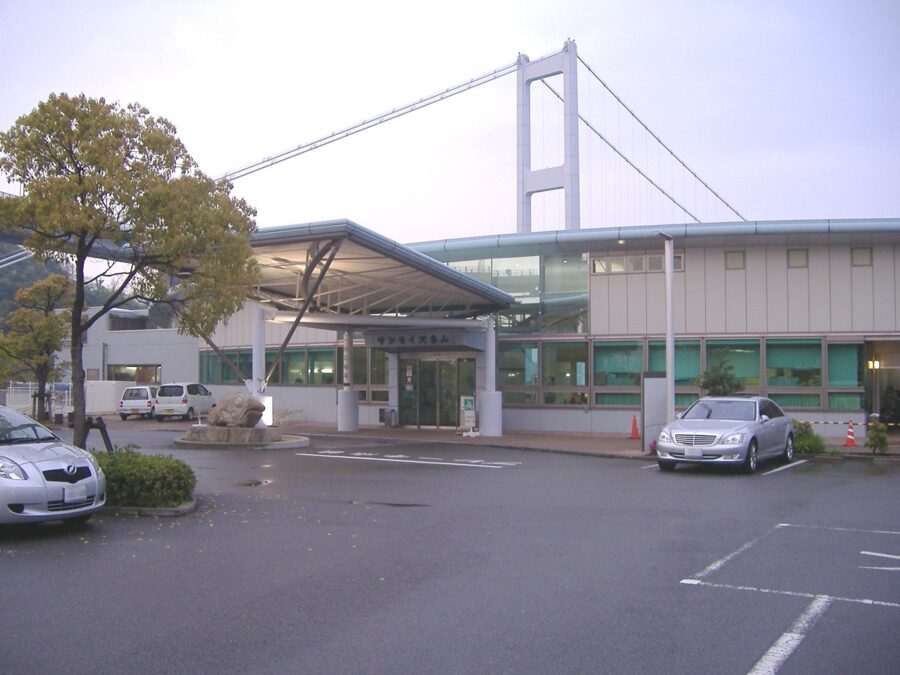
The southern end of the island gathers around Yoshiumi Ikiiki-kan (よしうみいきいき館), the roadside station at Shitadami beside the Oshima end of the bridge. It is the rental terminal, the cruise office, a shop full of local fish and produce, and the island’s best-known lunch. The shop opens 09:00 to 17:00, the restaurant 11:00 to 14:00 (last orders) and the food court 10:00 to 17:00. It closes on New Year’s Day and on Wednesdays from 12 January to 14 March 2027, per the operator’s Ikiiki-kan page.
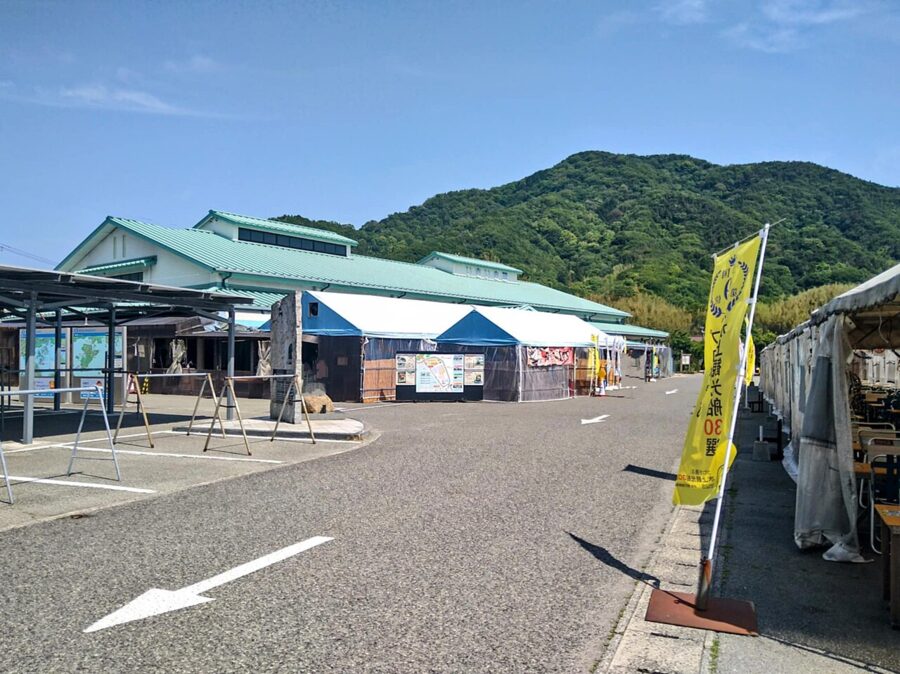
The famous meal is the seafood barbecue. You pay ¥500 (about US$3) per adult for the table, charcoal and grill, then pick shellfish, fish and meat at the counter and cook them yourself on a shichirin. Set menus from ¥2,500 (about US$17) a head need booking four days ahead, for two or more, says the barbecue page. From 1 December 2026 to late March 2027 there is also a 70-minute all-you-can-eat oyster grill for ¥4,850 (about US$32), booked three days ahead.
On the water and on top of the bridge
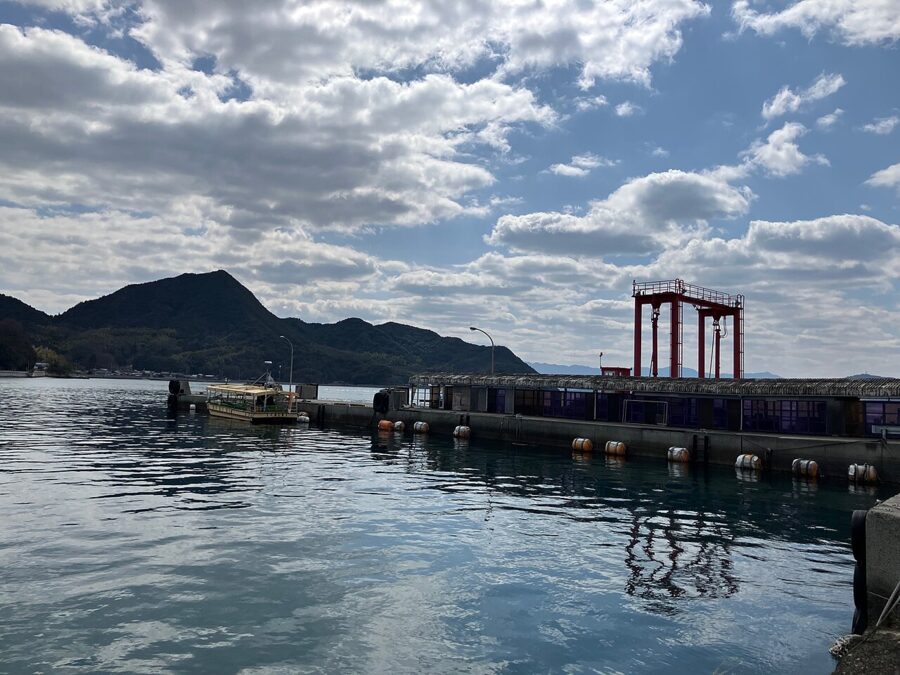
Ikiiki-kan also sells tickets for the Kurushima Strait cruise from Shitadami port, about 200 m away. The 50-minute trip runs around Takeshijima, Nakatoshima, Umashima and Kurushima, the island that gave the Kurushima Murakami their name, then under the bridge and into Hashihama Bay among the shipyards. The operator’s cruise page gives fares of ¥2,000 (about US$13) for adults, ¥1,800 for secondary school students and ¥1,000 for primary school children. Boats sail every 60 to 75 minutes while the station is open; check in at its ticket machine 30 minutes before.
On a few weekends each autumn the same company adds a climb to the top of one of the bridge’s main towers, about 184 m up, with the cruise. It costs ¥8,250 (about US$55), takes about two and a half hours, is for ages 12 and up and closes for booking a week ahead. The last 2026 dates on the tower tour page are 5, 6, 12 and 13 December.
The ramp and the ride to Imabari
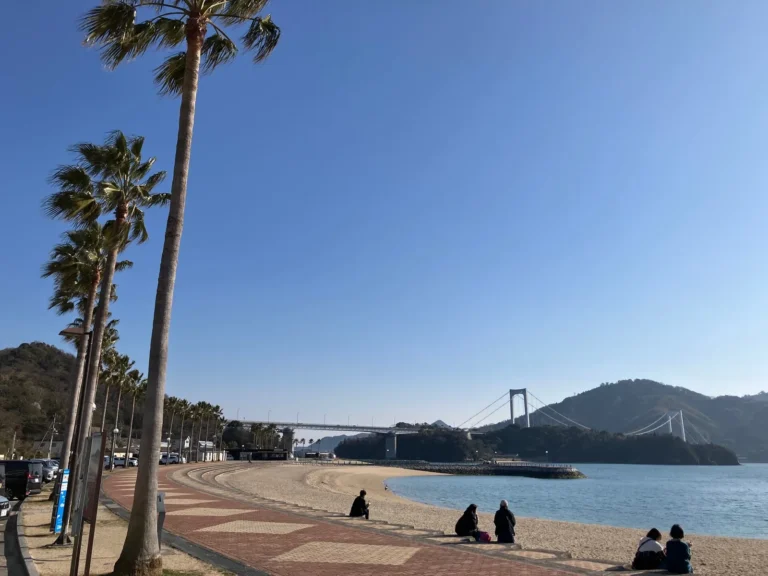
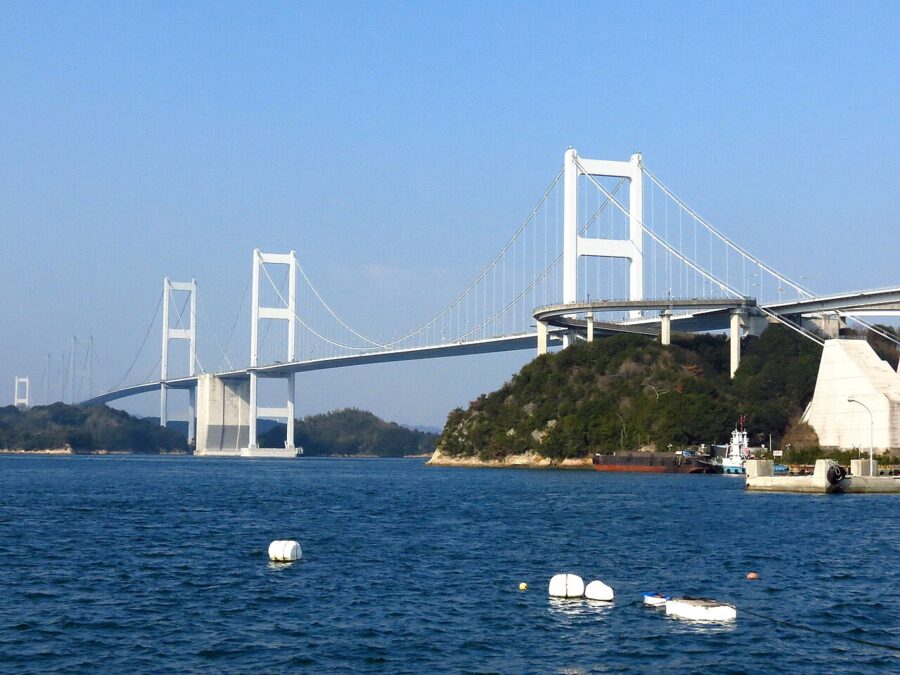
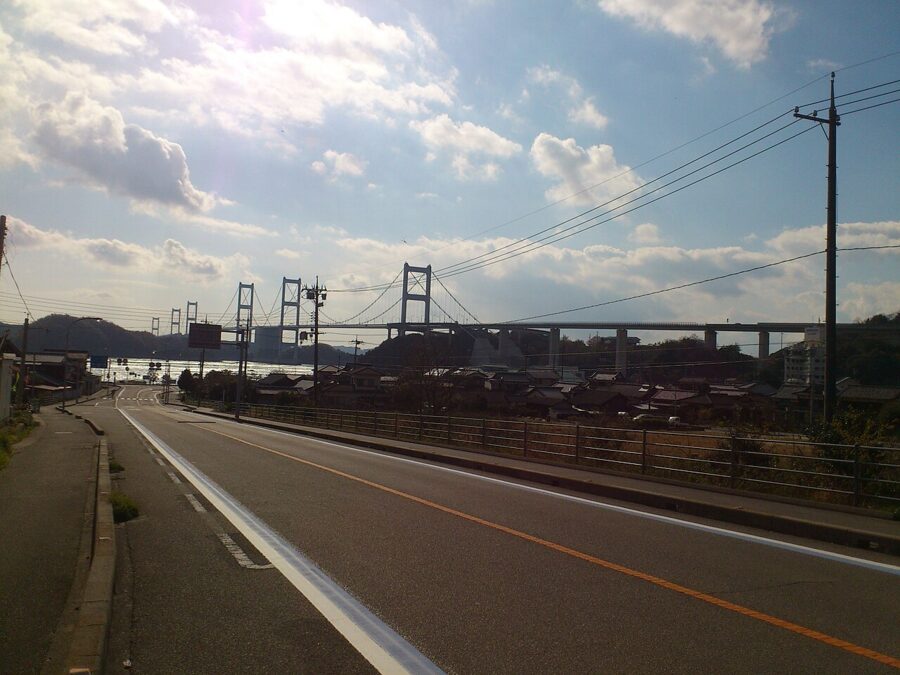
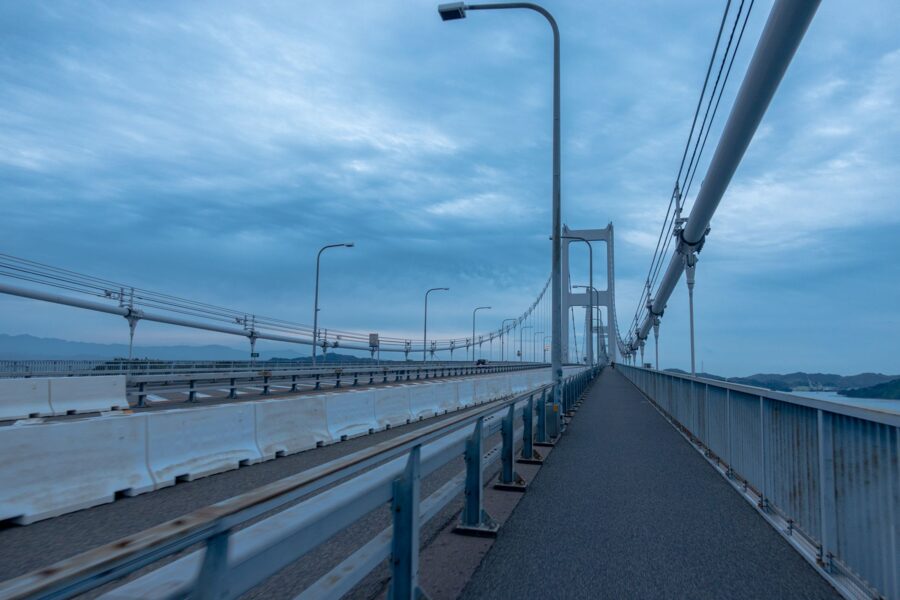
From Ikiiki-kan the cycle path climbs to the bridge deck, the last climb of the Shimanami Kaido. It is about 7 km (4 miles) from Ikiiki-kan to the Itoyama terminal at the Imabari end. The bridge is about 4.1 km long, three suspension bridges in a row and the first of their kind in the world, with spans of 960 m, 1,515 m and 1,570 m. The second and third carry the road 78 m above the sea.
That height is the thing to plan for. The path is separated from the motor traffic, with two rest bays that jut out so you can look back at the bridge, but on a windy day the gusts push hard on the high spans. Walk the bike if they move you about. A lift at Umashima lets you step off halfway; of all the Shimanami Kaido bridges, this is the one where the wind matters most.
To walk instead, the Oshima Nature Trail follows 1.8 km of the southern shore between Shomi and Nagoma, with close views of the bridge. It is free, always open and listed on the city’s nature trail page as one of Ehime’s 100 natural sights.
Where to stay and eat on Oshima
Oshima is quiet at night, and that is the reason to sleep here: the bridge lights, the dark sea and the ships moving through the strait. More than a dozen small guesthouses, minshuku and holiday lets are spread around the island, and three stand out for riders.
Sennenmatsu (海宿 千年松), at Nagoma in Yoshiumi, is a single inn on an inlet facing the Kurushima Strait, whose dinners depend on what local fishermen bring in that day; the inn’s own site also lists vegan and vegetarian kaiseki plans. Funayado Hina (舟宿ひな) is a whole-house guesthouse for one group a night on Ushima, looking over the tidal channel; Funayado Hina’s page handles booking.
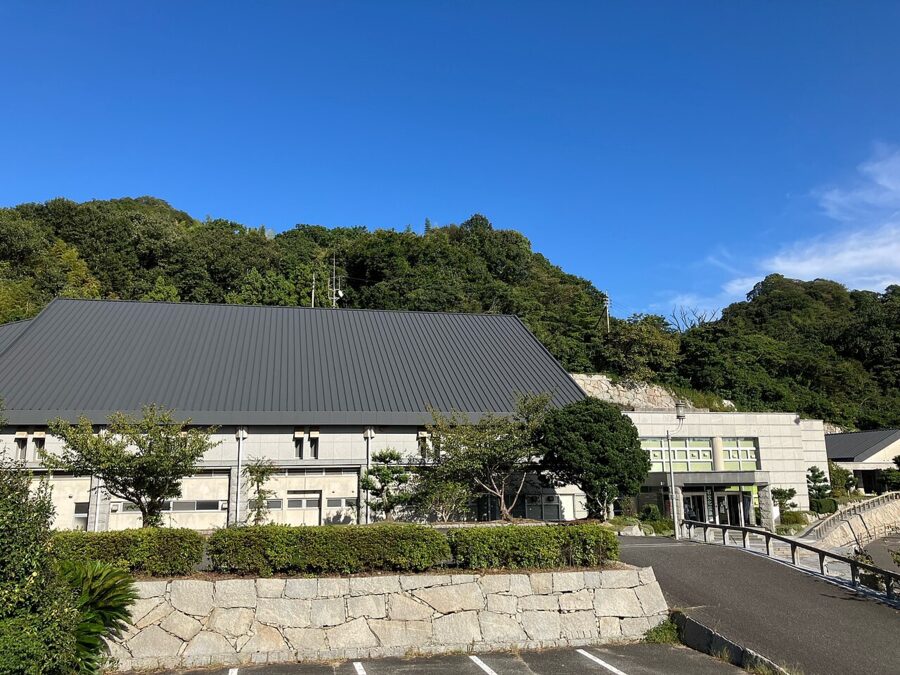
On a budget, the Miyakubo Ishibunka Koryukan (みやくぼ石文化交流館) is a public lodge above the stone park, a couple of minutes’ drive from Oshima-kita IC. The Imabari tourism association’s lodge listing gives ¥4,610 (about US$31) a night without meals, and its office answers on weekdays only. Campers have Mijikajima and Kareiyama. Against the other islands in where to stay on the Shimanami Kaido, Oshima is the quiet choice.
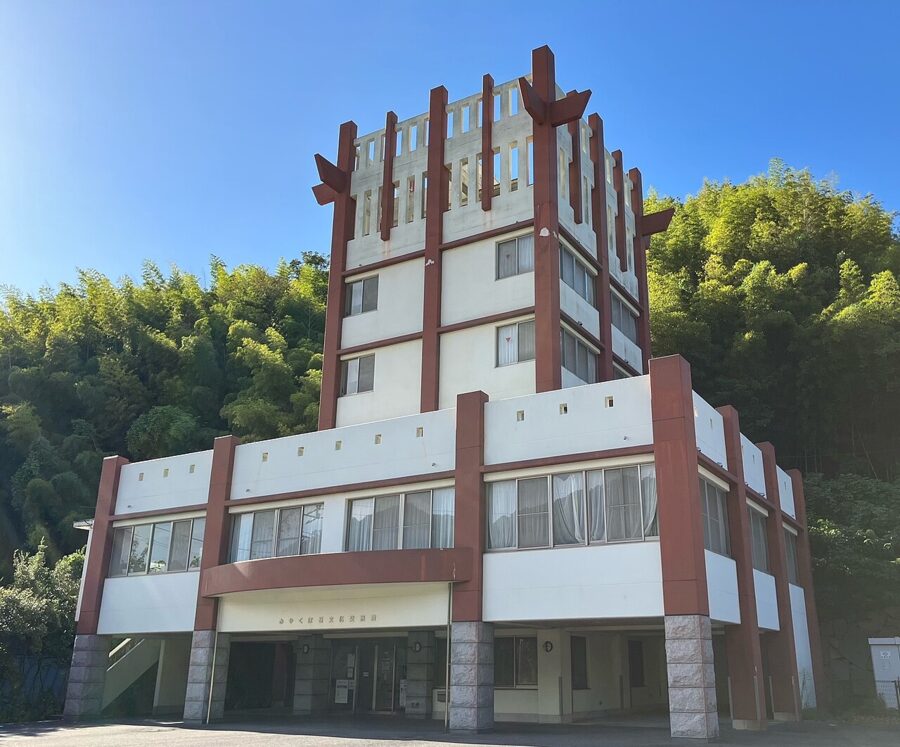
For food, the two places that matter are Noshima Suigun in Miyakubo for the fish of the strait and Ikiiki-kan in Yoshiumi for the barbecue. Both stop serving in the mid-afternoon, so in the evening you mostly eat where you sleep: book dinner with the room. Grilled shellfish and Miyakubo sea bream are Oshima’s share of Shimanami Kaido food.
An Oshima day that works
Here is how I would ride it from Hakatajima, Wednesday to Sunday. Cross the Hakata-Oshima Bridge by about 10:00 and head for the museum, then take the 11:00 or 12:00 tide boat, whichever has the stronger current on the weekly chart, and eat at Noshima Suigun. Ride across the island past the rose garden to Yoshiumi and, on an e-bike, climb Kirosan in the early afternoon. Be on the Kurushima-Kaikyo Bridge by 16:00 so the bike is back before the terminals close, and spend the evening in Imabari.
With a night on the island it gets better: museum and boat in the morning, Kirosan at sunset, and the bridge the next morning with the light behind you. On a three-day Shimanami Kaido itinerary, that is the second night. Either way, the decision is the one you face at the bottom of the Oshima Bridge ramp. Turn for Miyakubo and the pirates; the bridge to Imabari will still be there at four o’clock.