The ground-floor rooms at yubune are at street level, and they have no step at the door. The entrance is a doma, the hard floor that old Japanese houses kept for boots, barrows and work, so you can wheel a loaded bike into the room, lean it against the wall and only then take your shoes off. After 30 km (19 miles) of the cycling route from Onomichi, that one detail decides the booking for a lot of riders.
The other reason is the bath. yubune is a public bathhouse first and an inn second: a tiled bath hall with a sauna and a cold plunge, open to anyone who walks in off the street, with fourteen rooms attached. Guests bathe free and as often as they like. Day bathers pay ¥900 (about US$6) on a weekday, as of November 2026.
What it does not have is a restaurant, on purpose. You eat in town, in a port where most kitchens close by 21:00, and on a Tuesday or a Wednesday that takes a little planning. If you can live with that, it is the best-value bed in Setoda (瀬戸田) for anyone who cares about a hot bath after a day in the saddle.
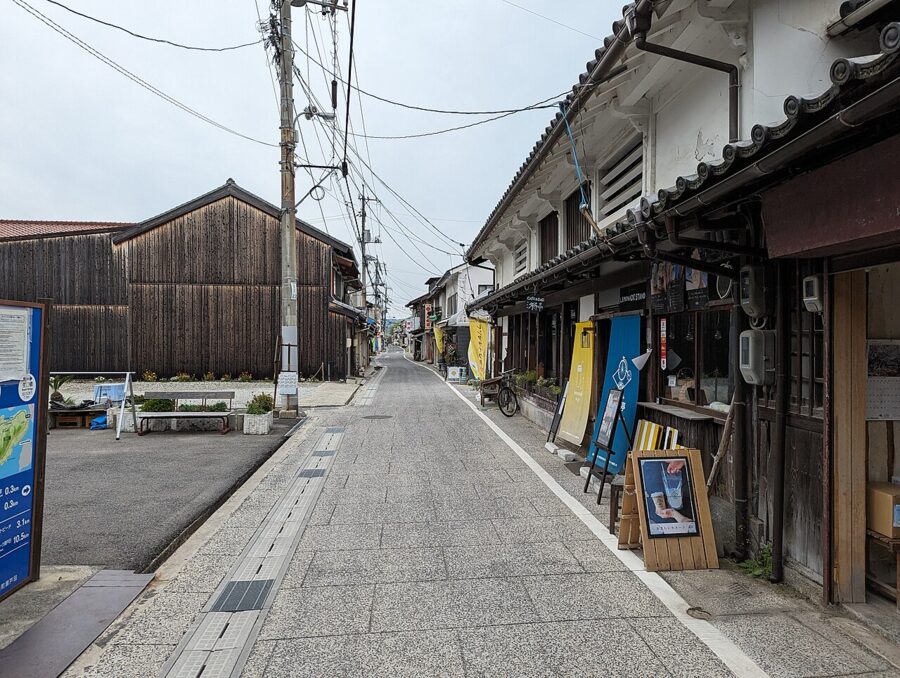
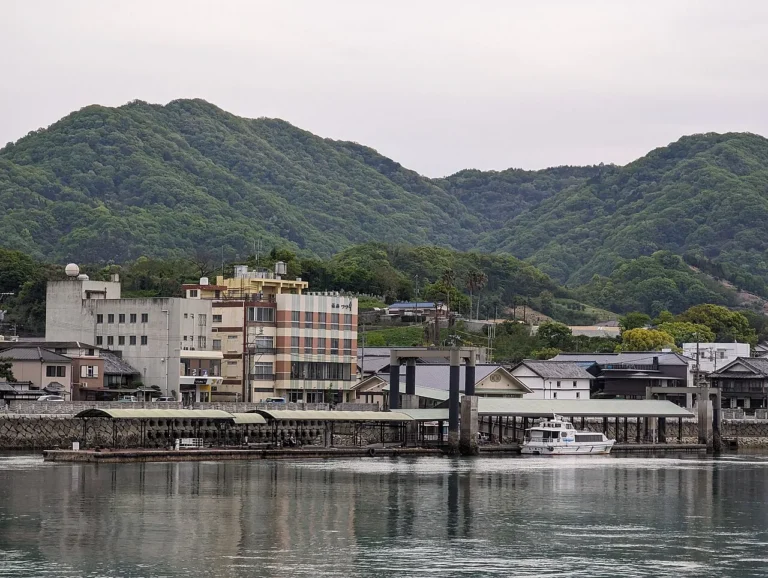
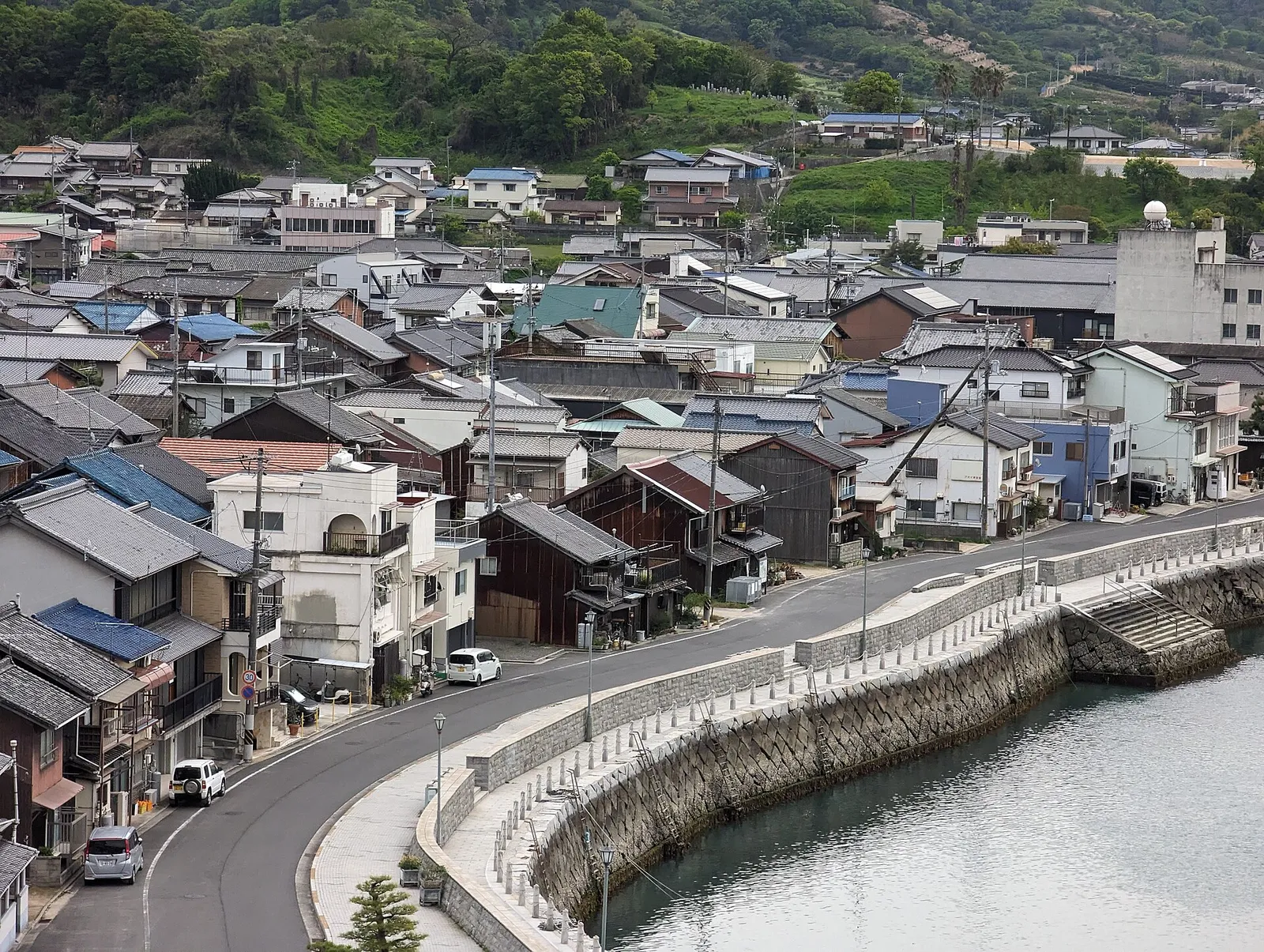
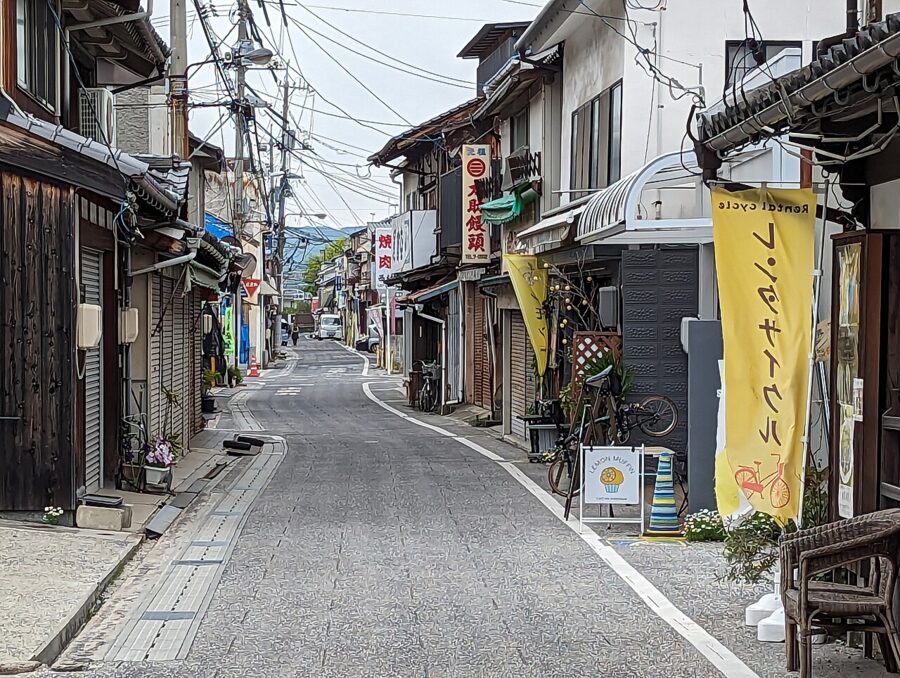
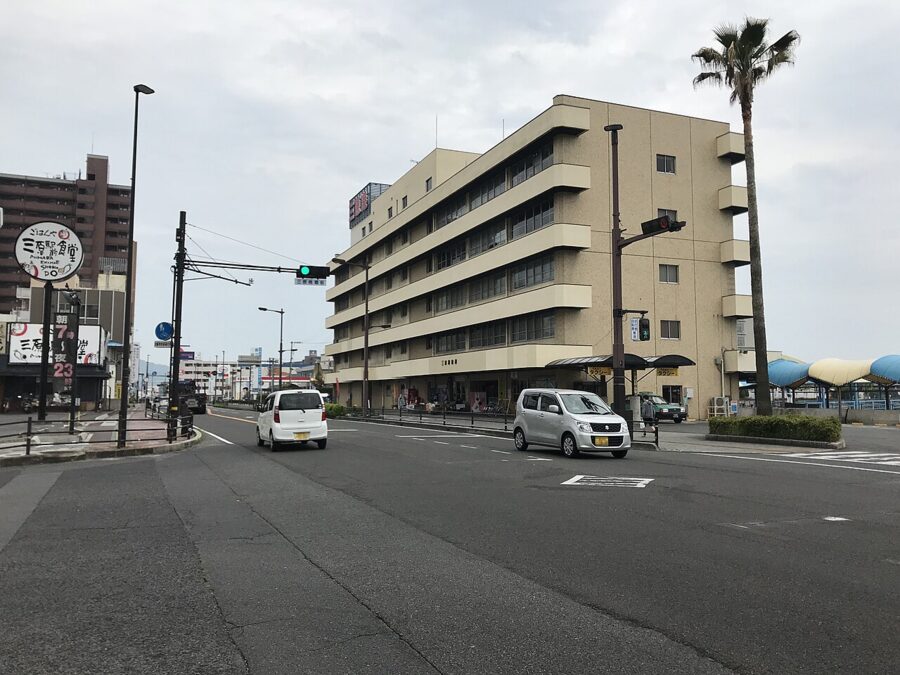
The building stands on Shiomachi shopping street (しおまち商店街) in Setoda, the port town on Ikuchijima, roughly halfway along the Shimanami Kaido. Its sister, the ryokan Azumi Setoda, is directly across the lane in the old Horiuchi merchant house, and the two share an address and a booking system.
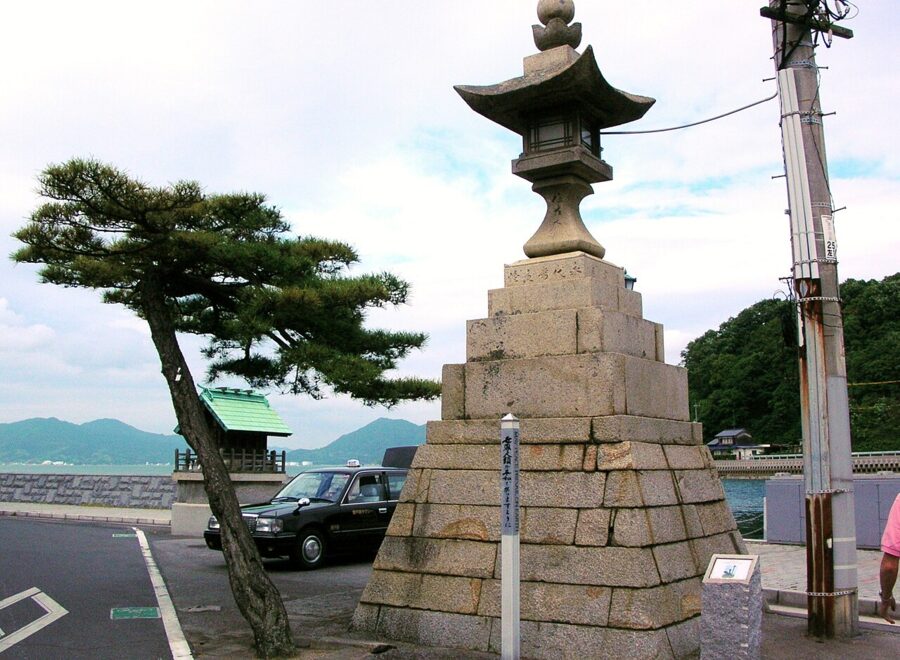
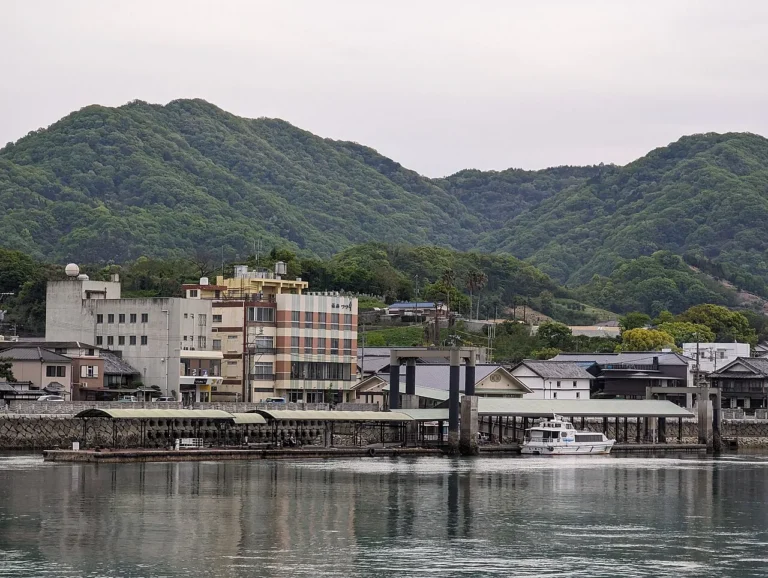
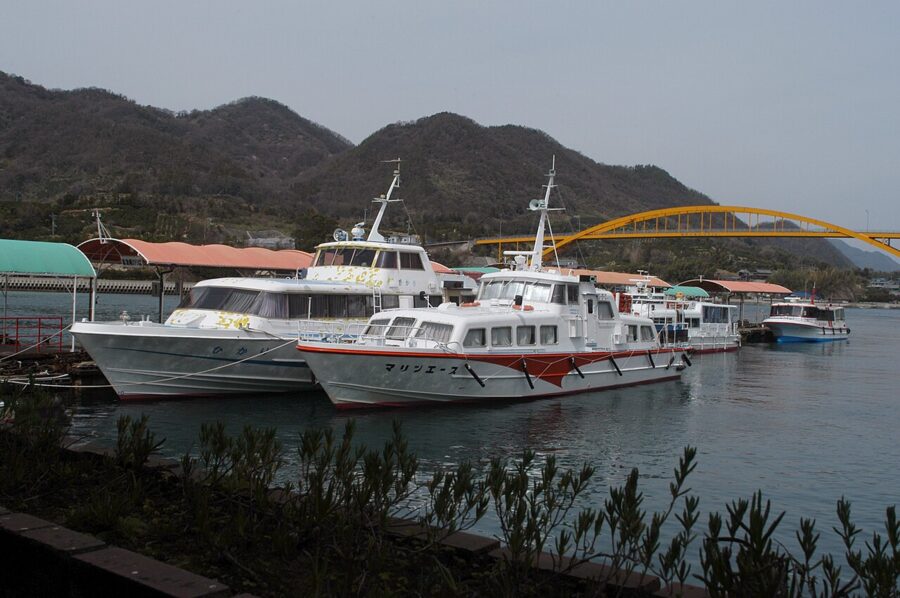
The pier is a minute’s walk away. Boats to Onomichi and Mihara leave from that waterfront, the Shimanami Japan rental terminal is about ten minutes up the street, and the blue line of the cycling route runs along the front.
A bathhouse for a town that had none
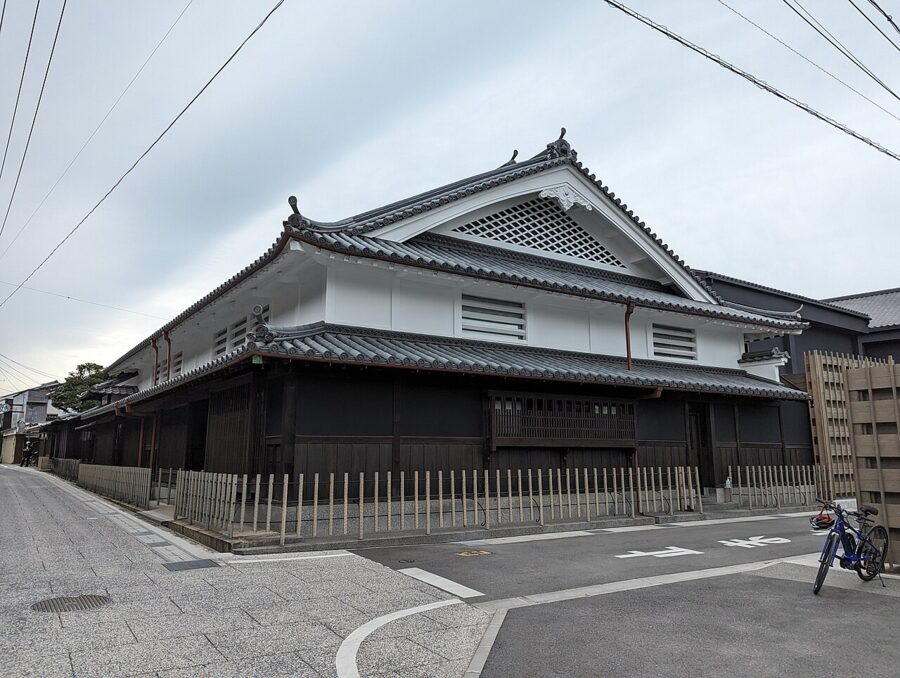
yubune opened in March 2021, the same month as Azumi Setoda, both the work of Naru Developments and the hotelier Adrian Zecha, who founded Aman. The ryokan took over the 1876 house of the Horiuchi family, who made their money in salt and shipping. The bathhouse was built new across the lane, because Setoda had no sento (銭湯, a neighbourhood public bath) of its own, and the developer wanted a place where people passing through and people who live there would meet, which a luxury ryokan on its own would never be.
It is still the island’s only sento. The same bath serves the town, riders off the boats and the guests of both hotels, who cross the lane with a basket and a towel. The Kyoto architect Shiro Miura designed both buildings, and the rooms are finished in Japanese cypress and tatami.
The murals
Old Tokyo bathhouses paint Mount Fuji on the wall above the tub. yubune answers that tradition with tile pictures of the Inland Sea by the artist Mai Miyake, one bath showing the sea by day and the other by night. The motifs come from Setoda itself: pine on the shore, sea bream and octopus in the water.
The two baths have names. Hinagi, the daytime one, is blue; tsukinagi, the moonlit one, is white. They swap between the men’s and women’s sides on odd and even days, so a two-night stay gets you both.
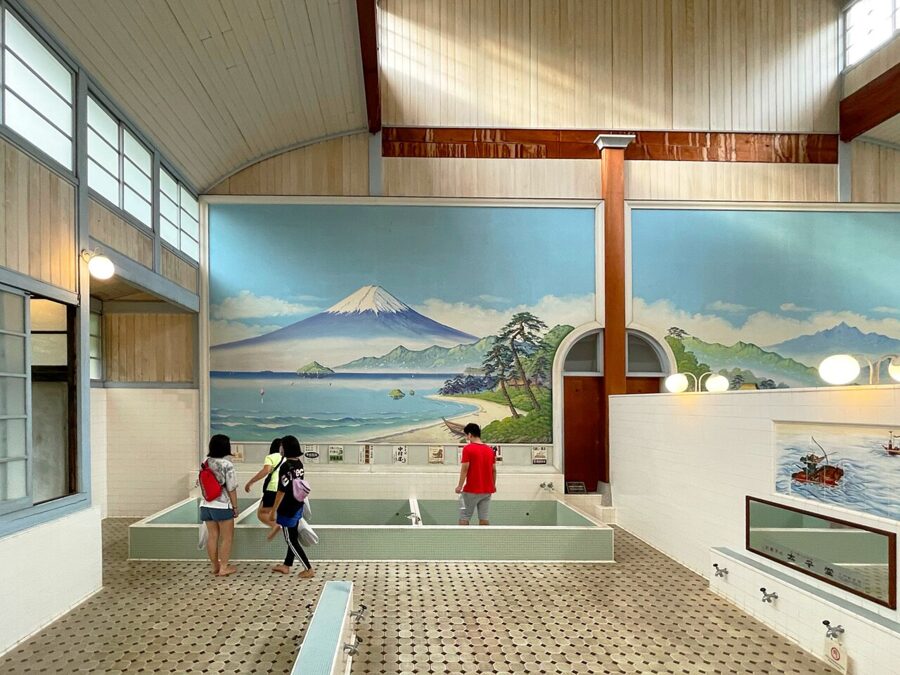
The bath for day visitors
Anyone can use the bath. You pay on the way in and go through to the changing rooms; the men’s and women’s sides are separate, each with its own bath hall and sauna. The water is heated, not a natural hot spring, which after a day on the bike makes no difference at all.
Hours and prices, as of November 2026
| Day | Day visitors | Hotel guests |
|---|---|---|
| Wednesday to Monday | 10:00–20:00 (last entry 19:30) | 07:00–22:00 |
| Tuesday | 17:00–20:00 (last entry 19:30) | 07:00–10:00 and 17:00–22:00 |
Tuesday is the maintenance day, so a Tuesday lunchtime soak is not on. The whole building also closes for about a week in winter for maintenance: in 2026 it shut from 12 to 18 January, and it posts the dates on its news page a few weeks ahead.
| Who | Weekdays | Weekends and public holidays |
|---|---|---|
| Adults (13 and over) | ¥900 | ¥1,200 (about US$8) |
| Children (6–12) | ¥450 (about US$3) | ¥600 (about US$4) |
| Small children (3–5) | ¥270 (about US$2) | ¥360 (about US$2) |
| Staying guests (yubune and Azumi Setoda) | Free | |
Prices include tax. In Golden Week, the whole of August and over the New Year the weekend rate applies every day: in 2026 that meant ¥1,200 for adults from 1 to 31 August, and the New Year rate ran from 27 December 2025 to 4 January 2026. Books of tickets are sold at the desk for regulars.
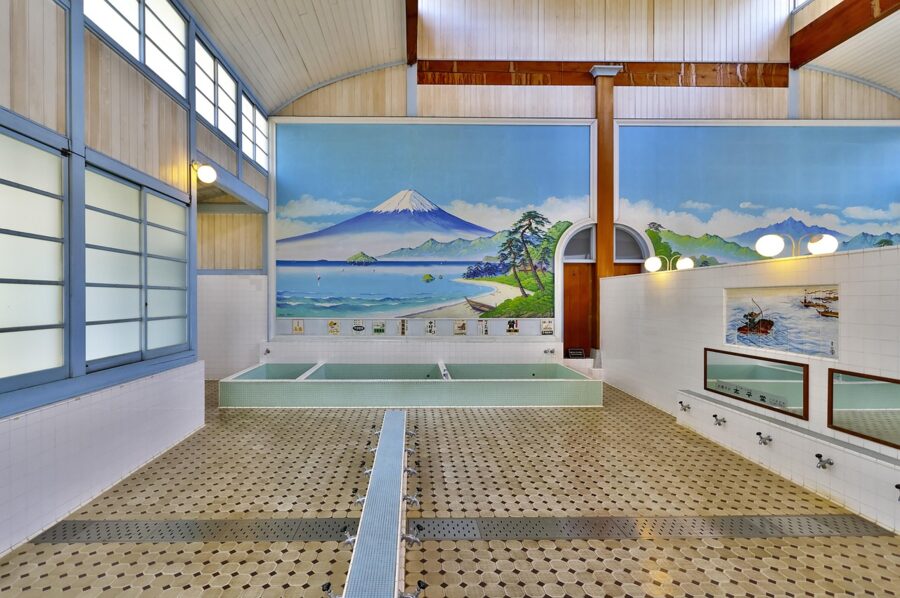
Sauna, cold plunge and the rest of the room
Each side has an indoor bath with jets, a sauna reached across a half-open courtyard, and a cold plunge kept properly cold. A dispenser serves home-made lemon water, which after a day on the bike is worth the entry fee by itself. The usual Japanese sauna round applies: sit until you have had enough, rinse, cold plunge, then rest before the next round.
Body soap, shampoo and conditioner are provided in the bath. A rental towel set costs ¥350 (about US$2), and a set of cleansing oil, toner and moisturiser ¥600 (about US$4); bring your own towel and the bath costs exactly the entry fee. Staying guests have towels in the room.
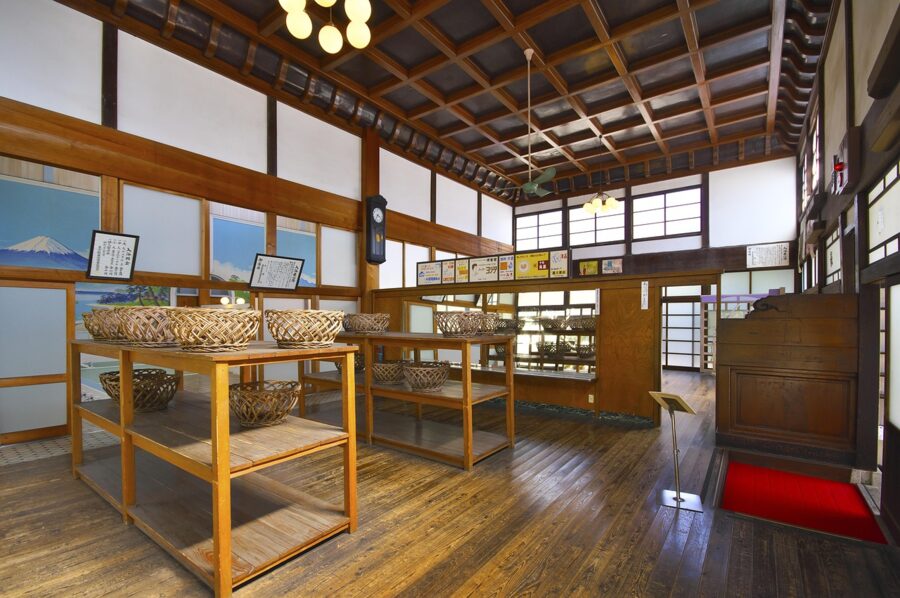
Towels, etiquette and tattoos
The rules are the ones in every Japanese bath. Wash and rinse at the taps, sitting down, before you get into any water. Keep the small towel out of the bath (on your head is the classic place), tie up long hair, and dry off before walking back into the changing room.
Small fashion tattoos, such as a single one-point design, are accepted, according to the group’s own answers on bathing. Anything larger, ask at the desk before you pay. Children who are not yet out of nappies cannot use the bath.
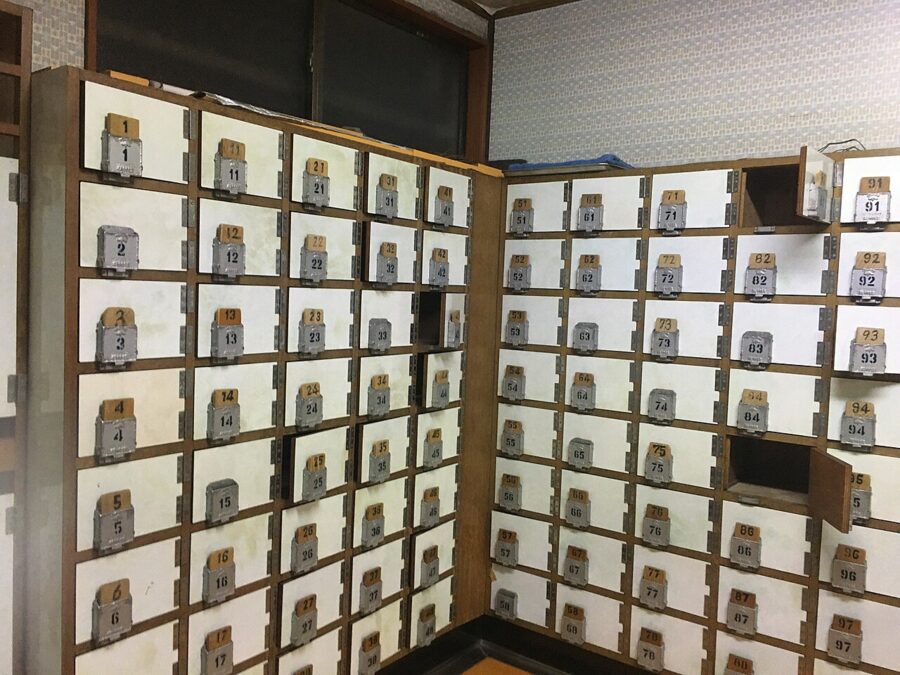
Timing a bath around the boats
For riders the bath is often the last stop of the day, and the timetable decides how long you get. The last boat to Onomichi leaves Setoda at 17:00 and takes about 45 minutes, so a day bather catching it has from 10:00 until about 16:30. The Mihara boats run until 20:10, and since the pier is a minute away, you can go in at 19:00, still be in the bath at 19:30 and make the last one with your hair wet.
Day bathers who come by car use the free municipal car park, not the hotel’s, which is kept for staying guests.
The rooms
There are fourteen rooms, all non-smoking, in three types. Every room has two single beds, a shower room, a washbasin and a toilet, a fridge, a safe, a kettle with tea and coffee, and free Wi-Fi. None has a bathtub: the bath downstairs is the bath. There is no television in the rooms or the lounge, which guests have said they liked.
The minibar is free: mineral water, citrus juice from Setoda and a local craft beer, with anything beyond that charged. Room wear and setta sandals are provided for the walk downstairs, and the front desk keeps hairbrushes, razors and shaving cream.
| Type | Where | Size | Sleeps | From, for two, room only (early booking, as of November 2026) |
|---|---|---|---|---|
| Koma (小間) | Bedroom with desk | 20 m² | 1–2 | ¥25,714 (about US$171) |
| Doma (土間) | Ground floor, bike-in entrance | 30 m² | 1–3 | ¥30,856 (about US$206) |
| Ima (居間) | Upstairs, bedroom and tatami sitting room | 30 m² | 1–3 | ¥35,998 (about US$240) |
Doma: the bike comes in with you
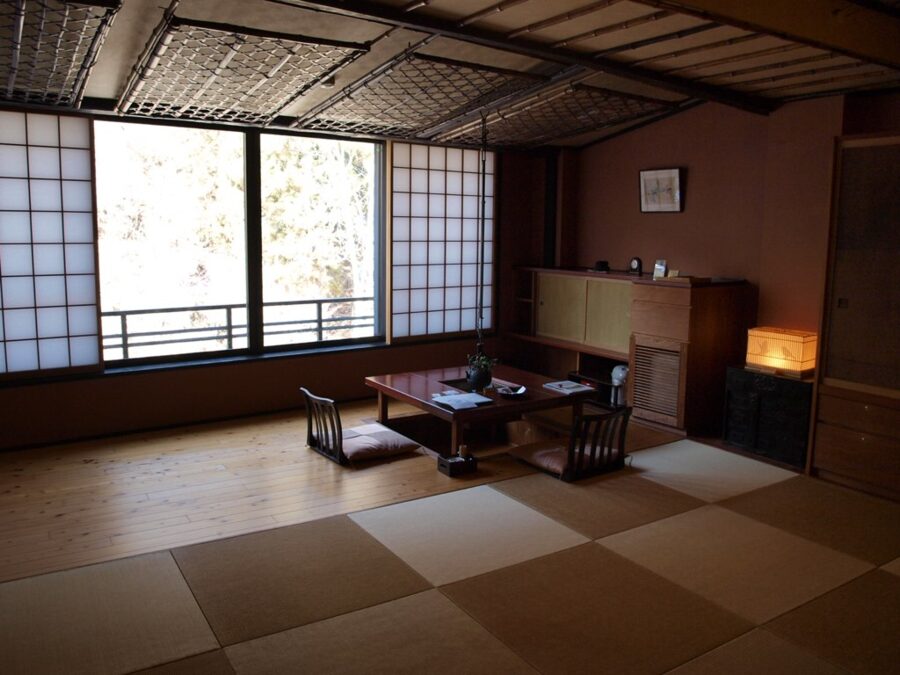
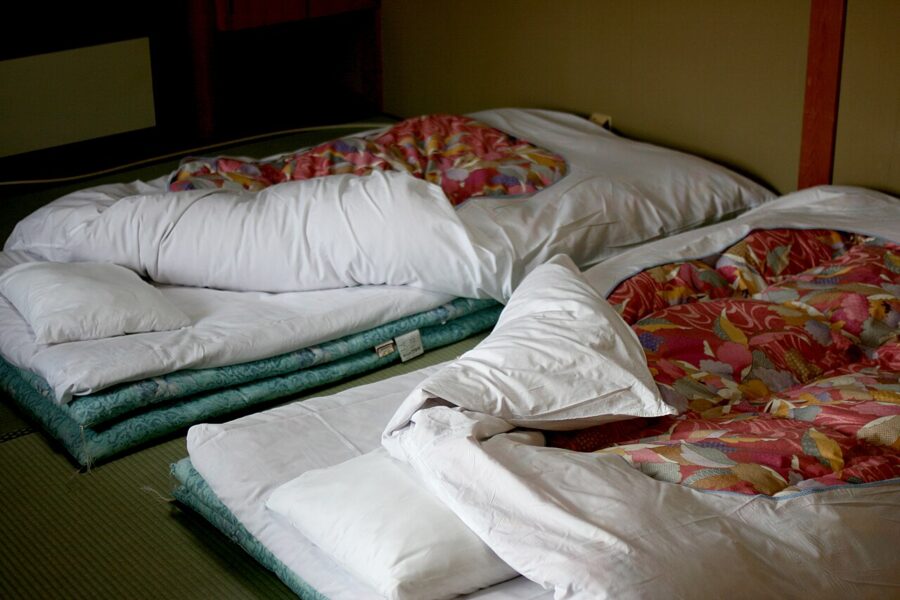
The doma rooms are on the ground floor, and the floor runs level from the room’s entrance, so a bike or a fishing rod comes in without anyone taking their shoes off. Beyond the entrance is a tatami area with a sunken kotatsu table and low chairs, and two beds. A third guest sleeps on a futon on the tatami.
The hotel’s own booking page points cyclists bringing their own bikes to this type, and so would I. A carbon bike that spends the night beside your bed is one less thing to think about, and the doma is also the type the hotel recommends for families with young children, since nobody is underneath.
Koma and ima
Koma rooms are the simple ones: a generous pair of beds and a proper writing desk, 20 m², for one or two. They suit a couple who will spend the evening in the bath and out in town, or someone working on the road.
Ima rooms are upstairs and split in two, a wooden-floored bedroom and a tatami sitting room with a sunken kotatsu, with room for a third person on a futon. The building carries sound downwards, so the hotel asks families with children to take a doma instead. Guests have also mentioned steps between the levels inside the room, worth knowing if anyone in your party is unsteady on their feet.
What the rooms cost
The prices in the table come from the hotel’s own booking site in late November 2026 for an early-booking plan, room only, at up to 15% off for reservations made at least 45 days ahead. They are the lowest it showed for two adults; nearer the date, at weekends and in the busy seasons, expect more. Children aged 6 to 12 pay a reduced rate and count towards the room’s limit, and under-sixes can share a bed.
Bathing is included in every plan, and so is the lounge upstairs, yuagari (“after the bath”), which is for staying guests: drinks, light snacks, a small library about the Inland Sea and a shop of things from the region. In the daytime people use it as an office. You can bring food you bought on the island up to the lounge or your room and eat it there.
No restaurant: eating in Setoda
yubune leaves meals to the town, and says so: the point is that you eat on Shiomachi among the people who live there. It works well at breakfast and lunch. Dinner is the part to plan, because Setoda is small, closes early and has a habit of shutting on the same two days.
Breakfast
The hotel sends guests to MINATOYA, the wood-fired restaurant of SOIL Setoda at the port end of the street, a minute away. It serves breakfast from 07:30 to 10:30, cafe food until 15:30 and dinner from 17:30 to 21:00. Lemon no Ki, the morning cafe at the NEST inn, also opens at 07:30, with citrus bagel sandwiches; it closes on Thursdays.
Lunch
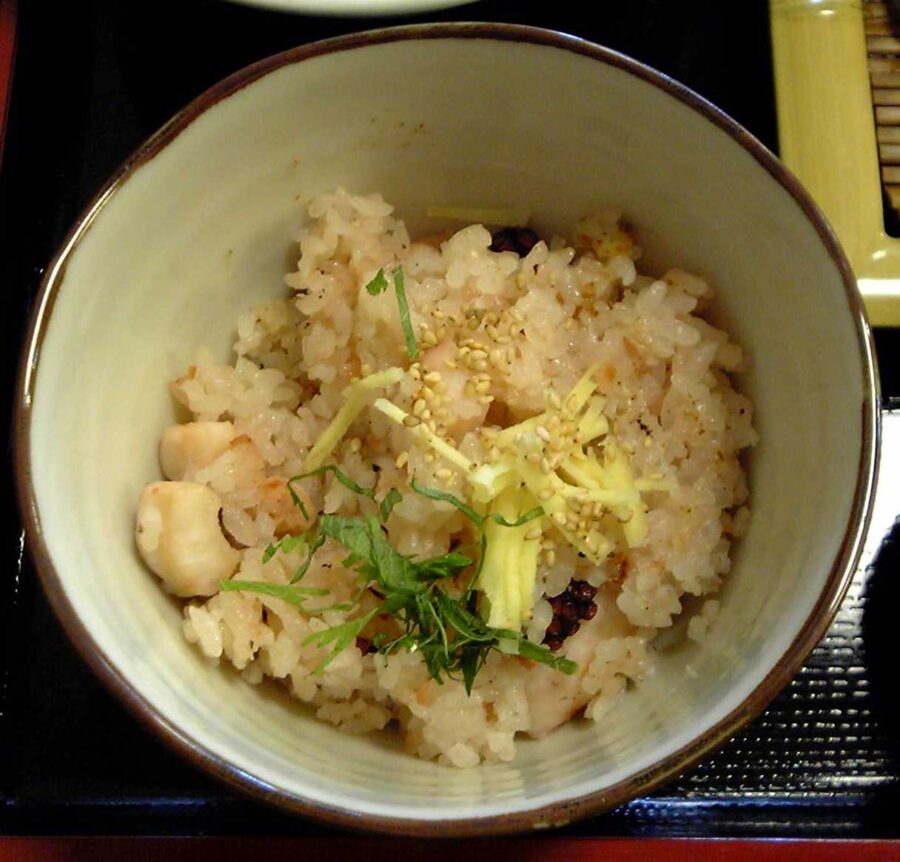
Chidori (ちどり), in front of Kosanji, has served tako-meshi, rice cooked with octopus, since 1965, along with lemon hotpot; lunch runs from 11:00 to 15:00 on weekdays and to 16:00 at weekends, and it closes on Tuesdays. Waka-ba (わか葉) does conger eel and octopus from 11:00, last orders 14:30, also closed on Tuesdays except public holidays. Shokudo Aori (食堂あおり) specialises in aori-ika, the bigfin reef squid, from 11:00 until it sells out, last orders 14:00, with reservations taken until 15:00 the day before; it closes on Tuesdays and Wednesdays, opening on public holidays.
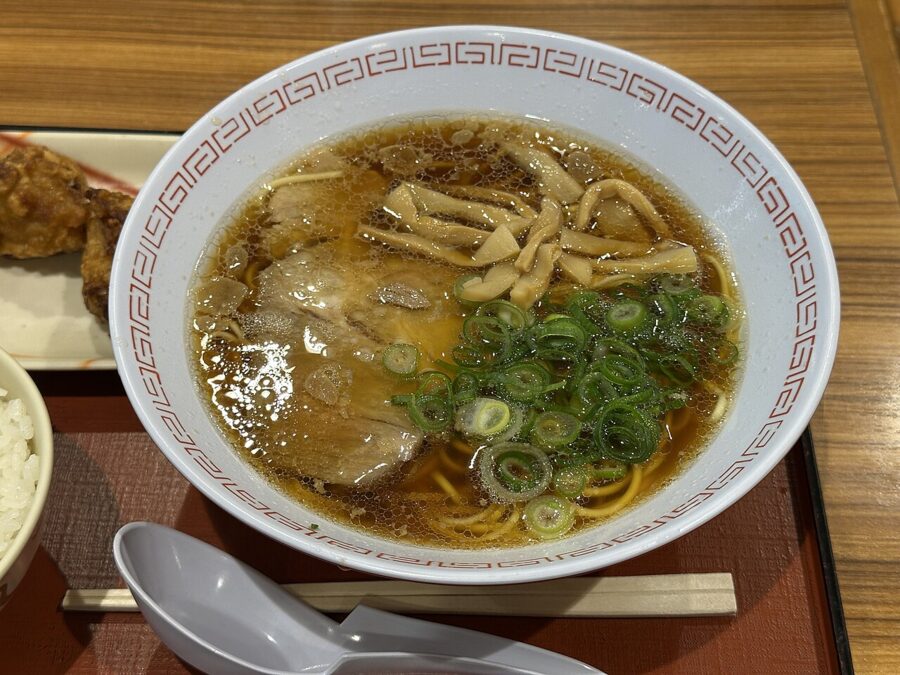
For something quick, BAR&Men AKATOBI at SOIL serves Onomichi ramen, soy broth with back fat, from 10:30 to 15:00 and again from 17:00 to 21:00, closed on Wednesdays. Overview Coffee roasts in SOIL’s Meiji-era storehouse and opens from 13:00 to 17:00, Thursday to Monday.
Dinner, and the Tuesday and Wednesday problem
For a proper dinner the obvious answer is across the lane. Azumi Setoda’s dining room serves a chef’s course built on the season’s Inland Sea vegetables and fish at ¥19,965 (about US$133) a head, as of November 2026, in two sittings between 17:30 and a last seating at 20:00. It is open to yubune guests, but book ahead on its reservation page: seats are few, and it does not serve dinner on Tuesdays or Wednesdays.
That is where the closing days bite. On a Tuesday night Azumi, Chidori and Waka-ba are all shut, leaving MINATOYA and the ramen counter at SOIL. On a Wednesday night Azumi and AKATOBI are shut, which leaves MINATOYA and Chidori, from 18:00 to 21:00, with Waka-ba open in the evening by reservation only. Either way, book or buy something on the street before the shops close and eat it in the lounge.
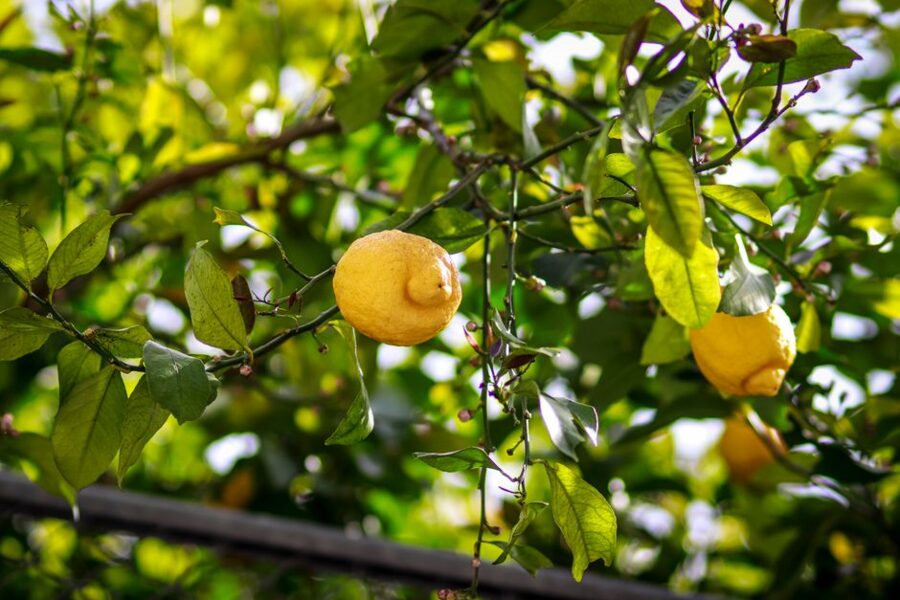
Lemon cake, octopus and citrus are Setoda’s share of Shimanami Kaido food, and most of it is sold within a few minutes’ walk of the bath.
yubune, Azumi or SOIL
Three places to sleep sit within a minute of one another at the port end of Shiomachi, and they suit different trips. Together they make Setoda the strongest stop in where to stay on the Shimanami Kaido.
| yubune | Azumi Setoda | SOIL Setoda | |
|---|---|---|---|
| What it is | Rooms around a public bath | Ryokan in the 1876 Horiuchi house | Rooms, cafe and restaurant around the harbour |
| Lowest direct price shown for two, late November 2026 | ¥25,714, room only | ¥100,430 (about US$670), with breakfast | Varies by room; the cheapest share showers |
| Bath | The sento, free, 07:00–22:00 | Cypress tub in every room, plus the sento free | A yubune bath ticket on direct bookings |
| Your own bike | In the room (doma) | Ask the hotel | Locked store, 10:00–19:00 |
| Check-in / out | From 16:00 / by 12:00 | From 16:00 / by 12:00 | 16:00–20:00 / by 11:00 |
| Dinner on site | No | Yes, except Tuesday and Wednesday | MINATOYA |
Who should book it
Book yubune if you are riding your own bike and want it beside you overnight, if the bath and sauna are the point of stopping, or if you are three friends who would otherwise need two rooms: a doma or ima sleeps three in one room. It also suits anyone who wants the Azumi block, its bath and its dinner, without paying Azumi’s rates for the bedroom.
Book Azumi Setoda for an occasion, a private cypress tub and dinner without stepping outside. Book SOIL if price matters more than space, or you want breakfast on the doorstep at MINATOYA; its direct bookings come with a ticket for yubune’s bath anyway.
Who should not
Skip it if you want dinner where you sleep, a bathtub in the room, or a family room with a toddler still in nappies, who will not be allowed in the bath. Riders carrying on to the south might do better to cross the Tatara Bridge first and stay at WAKKA on Omishima, which leaves less of tomorrow’s ride.
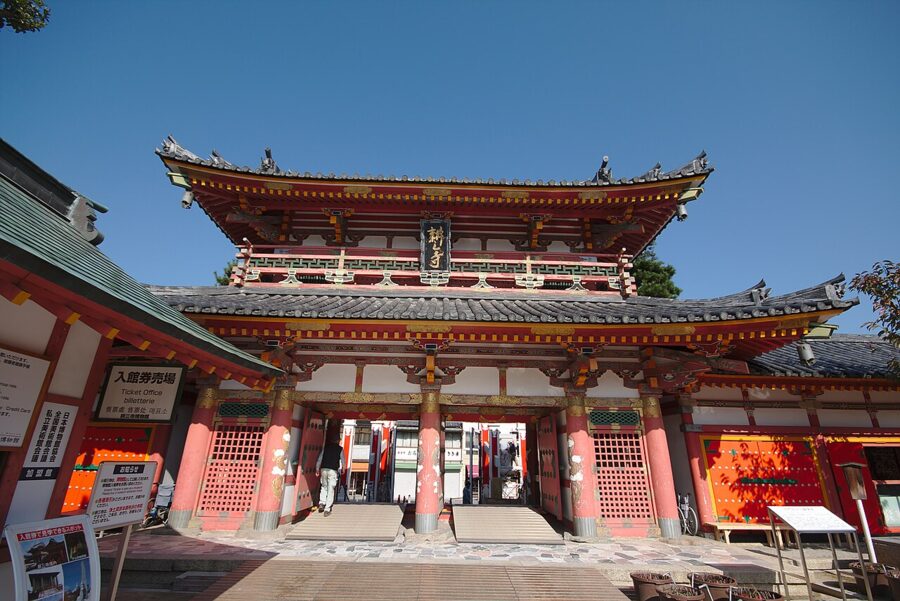
On value it holds up. From about ¥12,900 a head for two in a koma, with a bathhouse thrown in, it costs about a quarter of a night at Azumi, and a doma shared by three brings the price per head down further. Another plan sold only on the hotel’s own site adds tickets for the Kosanji museum and the Hirayama Ikuo Museum of Art, from ¥30,250 (about US$202) for two in a koma. What you pay for is space, quiet and the bath; what you give up is a dining room.
Getting there, checking in and booking
By bike
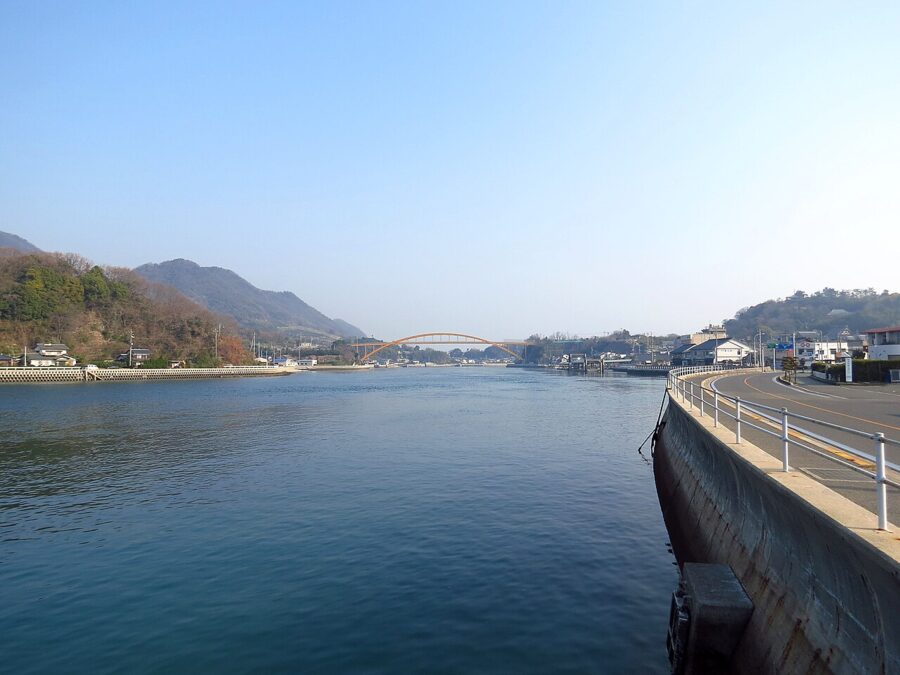
From Onomichi, Setoda is about 30 km by the blue line, across Mukaishima and Innoshima and over the Ikuchi Bridge, then along the island’s north shore into town. From Imabari it is about 40 km (25 miles) over four more bridges and the Tatara Bridge ramp. The blue line runs along the Setoda waterfront; turn inland at the port and yubune is a minute’s walk up Shiomachi.
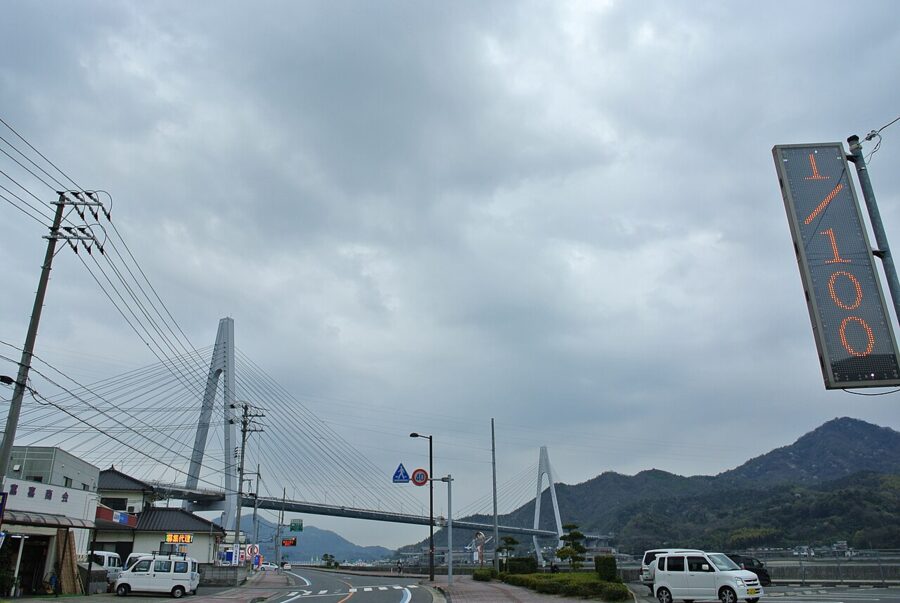
If you rented, you will usually hand the bike back before you check in. The Setoda terminal is at the tourist information office near Kosanji, open 09:00–17:00, and an individual can return a Shimanami Japan bike at any of its ten terminals at no extra charge; that is the main advantage of Shimanami Kaido bike rental from the public network. Rental bikes may not be ridden after dark, so plan to arrive before the light goes.
By boat and by car
Boats from Onomichi take about 45 minutes and from Mihara about half an hour; both land a minute’s walk from the door, and both take bikes. Both are part of the wider web of Shimanami Kaido luggage and ferries, which can also move your bags between hotels. Mihara is the useful one for a late arrival, with boats until 20:10.
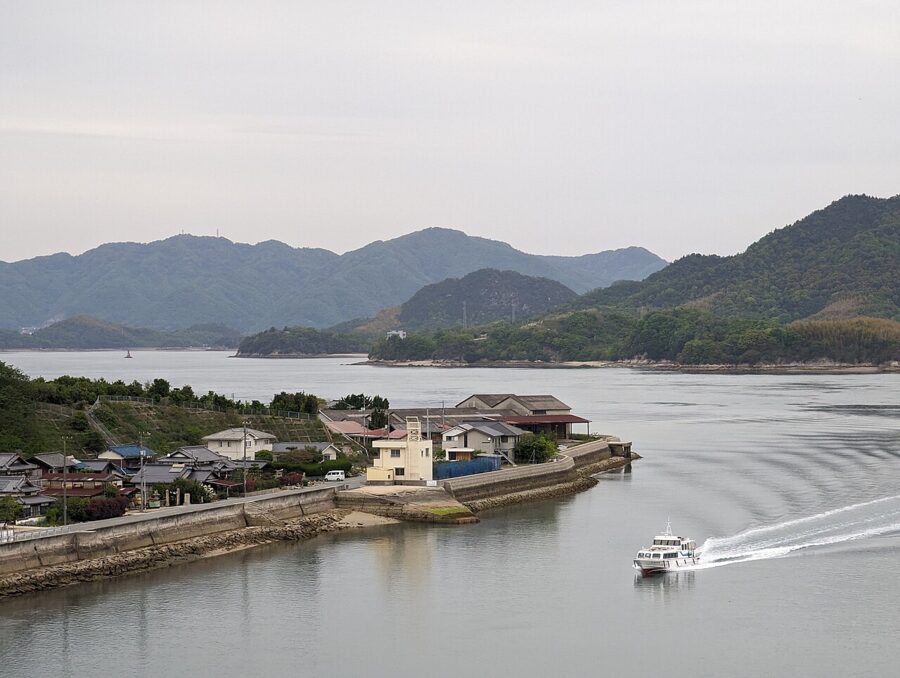
By car, leave the expressway at the Ikuchijima Kita interchange, about 40 minutes from Onomichi. At Setoda port turn in at the pine and the stone lantern; the hotel has its own car park for guests, with a paid charger for electric cars.
Check-in, payment and cancelling
Check-in runs from 16:00 to midnight and check-out is at 12:00, generous by Japanese standards and handy if you want a slow morning bath. On the hotel’s own booking site the card is charged when you book, and from seven days before arrival a cancellation costs the full price. The museum-ticket plan is sold only there.
Two more things before you pay. In September 2026 the hotel warned guests about fake messages, sent through apps such as WhatsApp, asking them to re-enter card details or pay urgently; it never asks for either that way. And on the weekend of the Setoda Lemon Marathon, 20 and 21 February 2027, it takes bookings of two nights or more only.
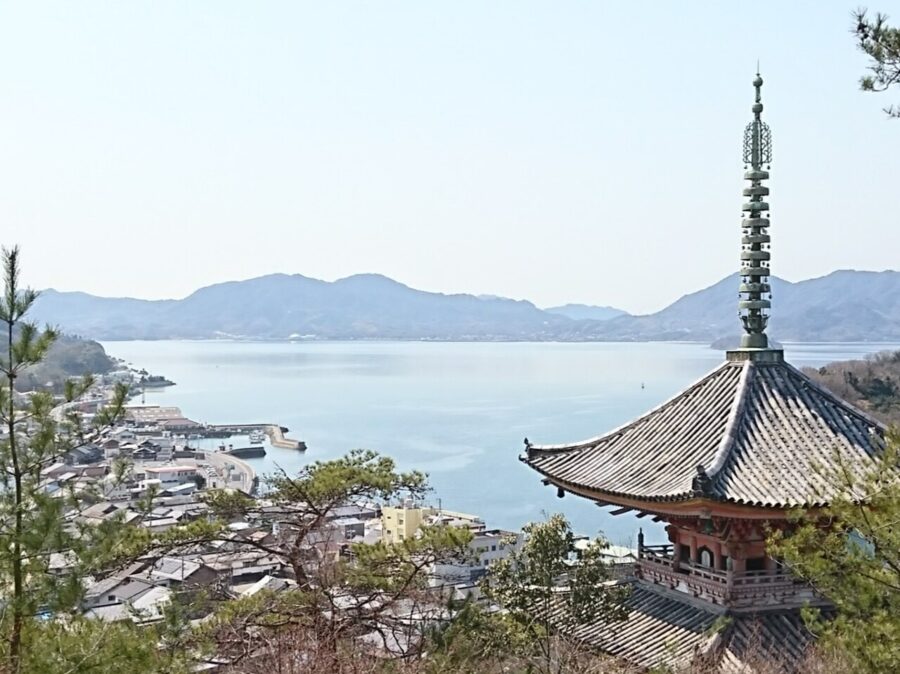
The rest is simple. Ride in or step off the boat, walk a minute up from the pier, wheel the bike through the doma door, and be in the bath before the day bathers’ last entry at 19:30.