At the public rental counter by Onomichi Station, the first thing you are asked is not which bike you want. It is where the bike is coming back. Say Imabari, about 70 km (43 miles) and six bridges away on Shikoku, and the price does not move: a cross bike from the public network costs ¥3,000 (about US$20) for the day whether it comes back to the same rack or to a terminal on the far side of the Kurushima Strait.
That flat price is the most useful fact about renting a bike for the Shimanami Kaido, and plenty of older advice still gets it wrong. Since September 2023 the public network has charged one day rate with no deposit and, for anyone renting as an individual, no drop-off charge, so riding one way is the normal plan rather than the expensive one. The private shops work the other way round: Giant will let you leave a road bike at its other store for ¥3,300 (about US$22), and most smaller shops want the bike back where it started.
So make the decisions in the order the counter does. Settle where you will finish and how many days you want the bike, and the choice of bike and shop mostly makes itself. Prices and hours below are as of November 2026.
In this guide8
- The counter question: which bike, where it goes back, and what it costs
- The public rental network: ten terminals, one price
- Giant Store Onomichi and Giant Store Imabari
- Other shops in Onomichi and on the islands
- E-bikes and battery-assisted bikes
- Children, tandems, child seats and helmets
- What the rental includes, and what to do with a puncture
- A sensible choice for one day, two days, or a family
The counter question: which bike, where it goes back, and what it costs
There are three kinds of rental on the route. The public network, run by Shimanami Japan, has ten terminals from Onomichi to Imabari and the widest choice of where to finish. Giant has a store at each end, with better-specified sports bikes and a paid one-way service for road bikes only. Then there are smaller independent shops, mostly in Onomichi, which are good bikes at fair prices but usually expect you back at their own door.
This is the whole decision on one screen, at day rates as of November 2026.
| Bike and operator | Collect from | Per day | Leave it elsewhere? |
|---|---|---|---|
| Cross bike or city bike, public network | Any of the 10 terminals | ¥3,000 | Yes, any terminal, no charge |
| Battery-assisted bike, public network | 6 terminals | ¥4,000 (about US$27) | Yes, any terminal, no charge |
| E-bike, public network | Onomichi Station, Imabari Itoyama, Imabari Station | ¥8,000 (about US$53) | Yes, any terminal, same day only |
| Tandem, public network | Setoda Sunset Beach, Omishima, Imabari Itoyama | ¥4,000 | No |
| Kids’ bike, public network | 9 terminals (not Imabari Station) | ¥1,000 (about US$7) | Yes, any terminal |
| Cross bike, Giant | Giant Onomichi or Imabari | ¥3,960–5,280 | No |
| Aluminium road bike, Giant | Giant Onomichi or Imabari | ¥4,950–6,600 | Yes, at the other Giant store, ¥3,300 |
| Carbon road bike, Giant | Giant Onomichi or Imabari | ¥6,930–9,240 | Yes, at the other Giant store, ¥3,300 |
| E-bike, Giant | Giant Onomichi or Imabari | ¥9,900–13,200 | No |
| Cross bike, Better Bicycles | Onomichi | ¥3,300 | No |
| Battery-assisted bike, Better Bicycles | Onomichi | ¥4,400 (about US$29) | No |
If you only read one line of that table, read the first. For most people riding Onomichi to Imabari in a day or two, the public cross bike or battery-assisted bike, dropped at the far end, is the sensible default. Pay more for Giant when you want a proper road bike with a fitted size, or for an e-bike when the alternative is not finishing.
The public rental network: ten terminals, one price
Shimanami Japan runs the rental bikes that most people mean when they talk about renting on the route. It has a fleet of about 2,000 bikes, a terminal in each town at the ends and at least one on every island in between, and a booking system in Japanese and English. Its current price table is short enough to learn at the counter.
Prices and bikes, as of November 2026
- Cross bike or city bike: ¥3,000 a day for adults, ¥1,000 for primary-school children and younger. Collect and return at any terminal; multi-day rental allowed. The city bike has a front basket, the cross bike is lighter and faster with more gears.
- Kids’ bike: ¥1,000 a day. Every terminal except Imabari Station; put the child’s height in the remarks box when you book.
- Battery-assisted bike (including child-seat versions): ¥4,000 a day, adults only. Collect at Onomichi Station, Setoda Tourist Information, Setoda Sunset Beach, Omishima, Imabari Itoyama or Imabari Station; return anywhere; multi-day allowed.
- E-bike: ¥8,000 a day, adults only, riders 145 cm or taller. Collect at Onomichi Station, Imabari Itoyama or Imabari Station; return to any terminal, but within that day’s opening hours.
- Tandem: ¥4,000 a day, riders 155 cm or taller. Setoda Sunset Beach, Omishima and Imabari Itoyama only, back to the same terminal the same day.
Helmets are lent free with every rental and you are expected to wear one; the network will not lend a helmet on its own. The day rate is per calendar day, not per 24 hours, and there is no refund if you bring the bike back early. Holders of Japanese disability certificates, and one carer each, pay half price on showing the certificate.
Payment is cashless-friendly: the English page lists transport IC cards such as ICOCA and Suica alongside a long list of e-money and QR apps. Carry some cash anyway for the island stalls.
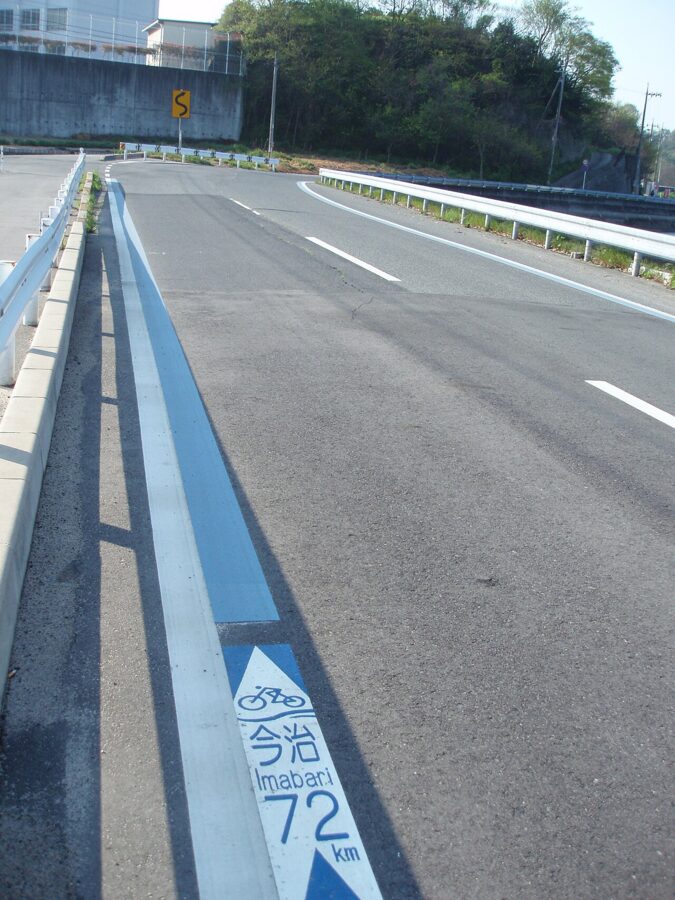
Terminals by island, with opening hours
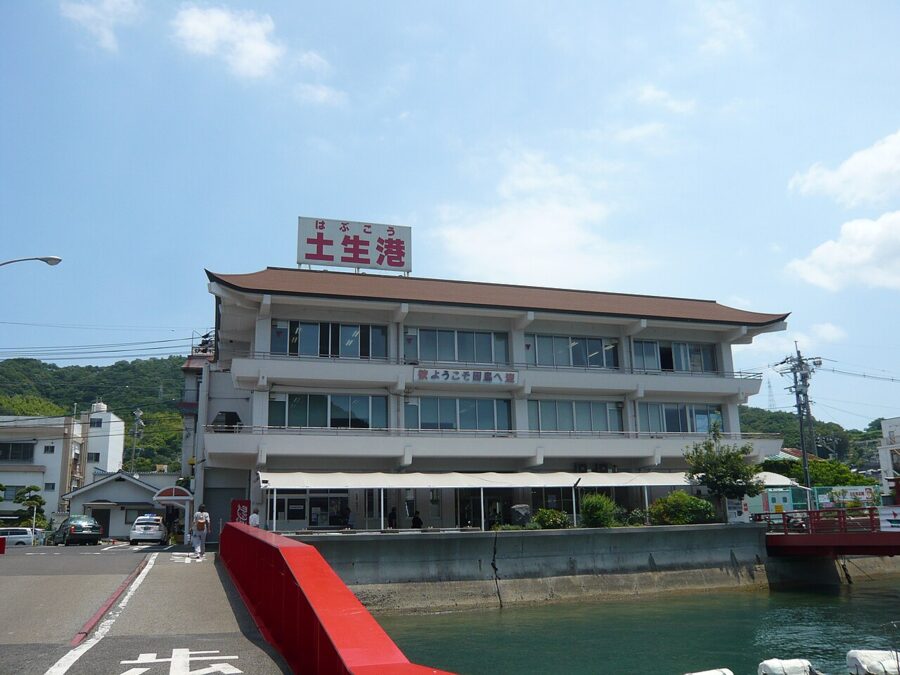
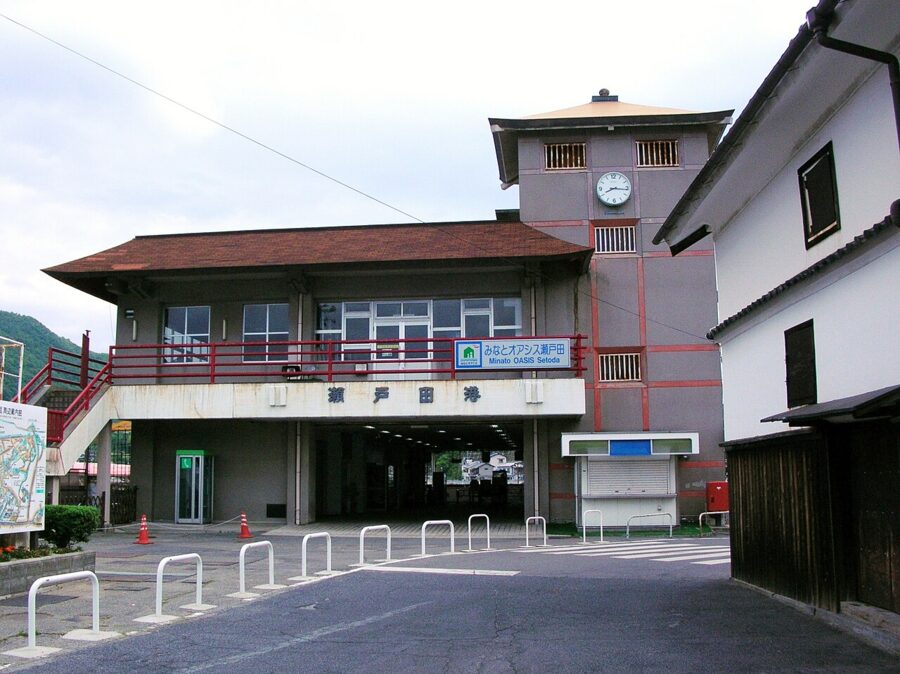
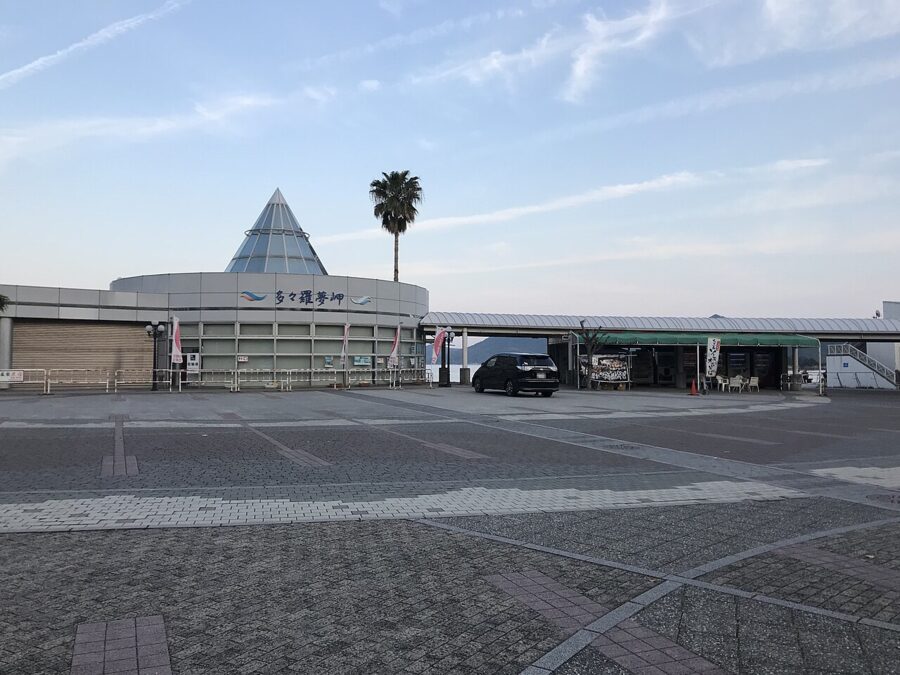
The terminal list runs in the order you meet them riding from Onomichi. The two ends keep longer, seasonal hours; the island terminals open 9:00 to 17:00. The list gives no weekly closing day for any terminal.
| No. | Terminal | Island or town | Hours |
|---|---|---|---|
| 1 | Onomichi Station (尾道駅前) | Onomichi | 08:00–19:00 Mar–Nov; 08:00–18:00 Dec–Feb |
| 2 | Mukaishima (Onomichi Civic Centre Mukaishima) | Mukaishima | 09:00–17:00 |
| 3 | Innoshima (Onomichi municipal central car park, Habu) | Innoshima | 09:00–17:00 |
| 4 | Setoda Tourist Information | Ikuchijima | 09:00–17:00 |
| 5 | Setoda Sunset Beach | Ikuchijima | 09:00–17:00 |
| 6 | Omishima (roadside station Tatara Shimanami Park) | Omishima | 09:00–17:00 |
| 7 | Hakatajima (roadside station Hakata S.C. Park) | Hakatajima | 09:00–17:00 |
| 8 | Oshima (roadside station Yoshiumi Ikiikikan) | Oshima | 09:00–17:00 |
| 9 | Imabari Itoyama (Sunrise Itoyama) | Imabari | 08:00–19:00 Mar–Nov; 08:00–18:00 Dec–Feb |
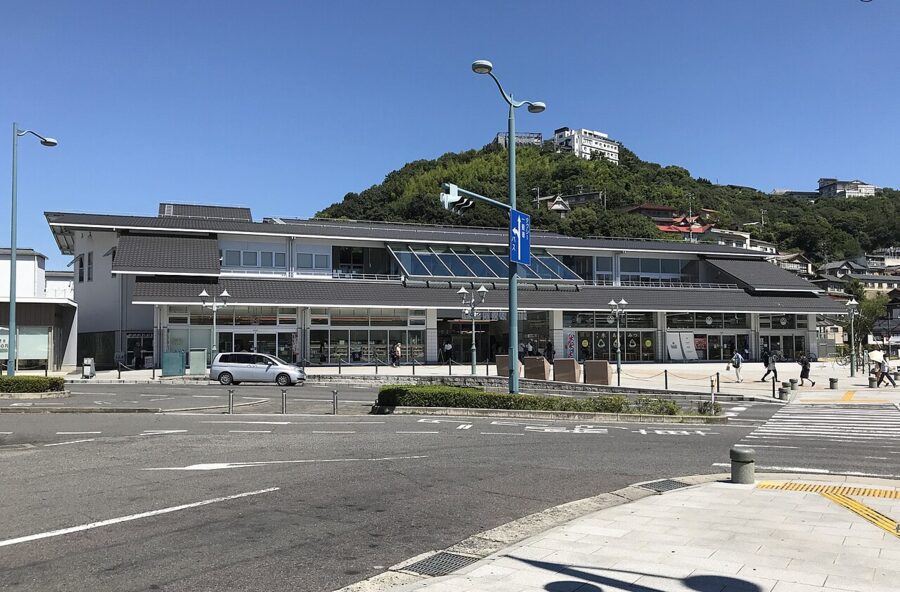
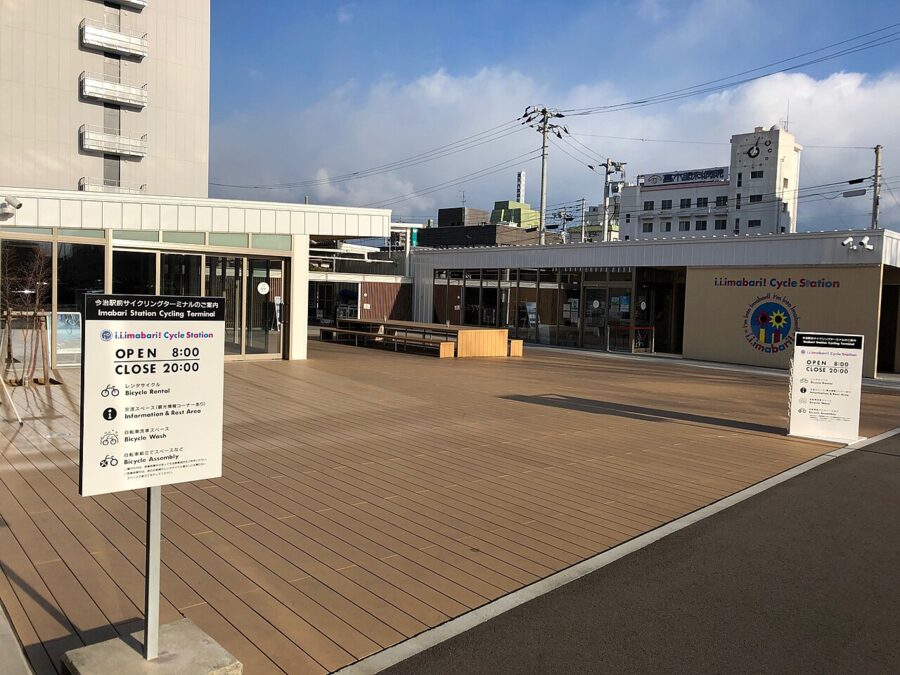
| 10 | Imabari Station (i.i.imabari! Cycle Station) | Imabari | 08:00–19:00 Mar–Nov; 08:00–18:00 Dec–Feb |
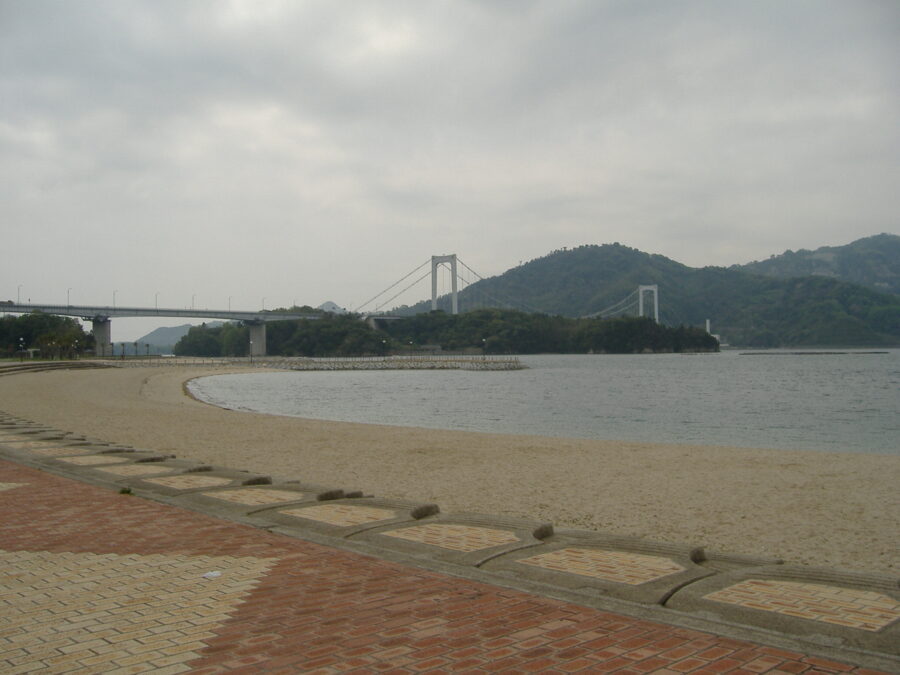
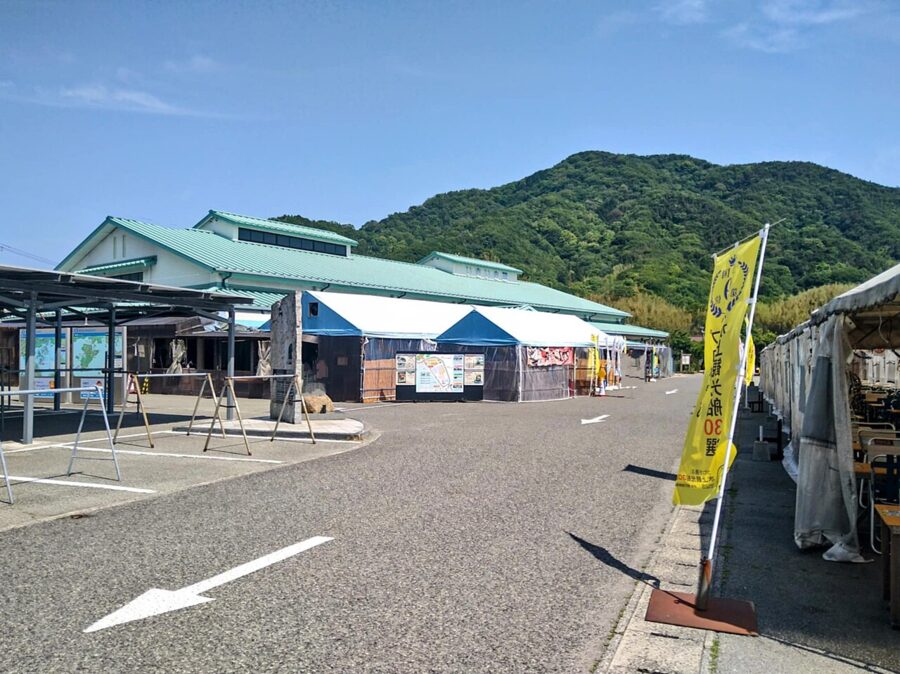
A few practical notes the table cannot carry. Mukaishima‘s terminal is the place to start if you have come by car: it has free parking from 07:30 to 22:00, for rental customers only. On Innoshima the terminal is at Habu Port in the south of the island, and its battery-assisted bikes are booked through the Innoshima rental office rather than the main system. Designated hotels and inns in Imabari also take bikes back from their own guests, return only.
One-way drop-off, late returns and changing your mind
Every bike in the public fleet except the tandem can be returned to any terminal, and the network says plainly that you can change your return terminal mid-ride because of the weather or how your legs feel. For an individual rider there is no extra charge to do so; the only drop-off fee on the table applies to school groups. The old system, still quoted in many guides, took a deposit that you lost if you returned the bike elsewhere. It ended with the September 2023 price rise.
The rule that does bite is time. The bike must be back within the opening hours of the terminal you choose, and returning after hours costs extra. Since the island terminals close at 17:00, a slow day that ends on Omishima or Hakatajima has a hard deadline; Onomichi Station and the two Imabari terminals give you until 19:00 for most of the year. E-bikes must come back the same day, so an E-bike rider who stops overnight is breaking the contract.
You may not put a public rental bike on a train, a bus, in a car or in a taxi, and you may not take it apart. Ferries are a different matter: the network’s own intermediate course rides from Onomichi to Setoda and returns on the ferry to Onomichi Port with the rental bike aboard.
Booking, or turning up
Booking is not compulsory, but it is the only way to be sure of an e-bike, a child seat or a particular size. The network keeps a share of bikes for walk-in customers each day, and how many depends on what came back the evening before. Battery-assisted bikes go first, often early even on weekdays; cross bikes and city bikes usually last. The network’s own answers say the morning between 08:00 and 10:00 is the busiest, and that during Golden Week and Obon the whole fleet can be out by about 10:00.
So for a spring or autumn weekend, book. For a weekday in winter, turning up at Onomichi Station at 08:00 for a cross bike is a reasonable bet. Reservations are made through the network’s booking site, linked from its English rental page; groups of 20 or more book through a separate form, and on some dates online booking is not offered at all.
Giant Store Onomichi and Giant Store Imabari
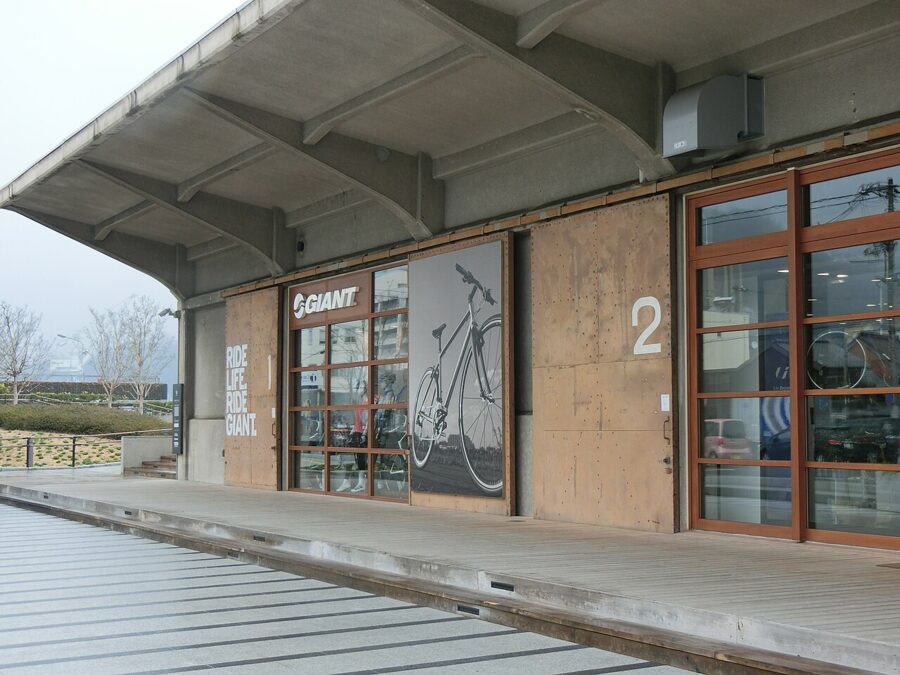
The two Giant stores are where to go for a real road bike, a fitted size and a store that services its own fleet. Giant Store Onomichi is inside ONOMICHI U2, the converted warehouse on the waterfront west of the station. Giant Store Imabari is built into JR Imabari Station, 6 to 7 km (about 4 miles) and 20 to 30 minutes by bike from the start of the first bridge.
Giant rents by the block: five hours, a day, or two days with a further charge for each extra day. Prices include insurance and are given as a range for each category, as shown on Giant’s lineup and price page:
| Category | 5 hours | 1 day | 2 days | One-way |
|---|---|---|---|---|
| Cross bike | ¥2,970–3,960 | ¥3,960–5,280 | ¥6,435–8,580 | Not available |
| Aluminium road | ¥3,465–4,620 | ¥4,950–6,600 | ¥7,920–10,560 | ¥3,300 |
| Carbon road | ¥4,950–6,600 | ¥6,930–9,240 | ¥11,880–15,840 | ¥3,300 |
| Premium carbon road | ¥8,910–11,880 | ¥12,870–17,160 | ¥19,800–26,400 | Not available |
| E-bike | ¥6,930–9,240 | ¥9,900–13,200 | ¥15,840–21,120 | Not available |
| Kids’ bike | ¥1,980–2,640 | ¥2,970–3,960 | ¥4,950–6,600 | Not available |
The one-way service is the thing to understand before you book. It covers road bikes only, Onomichi to Imabari or the reverse, in limited numbers, and must be booked in advance; the ¥3,300 is paid at the counter. You cannot change the return store once you have set off. And because both stores close on Tuesdays, you cannot ride one way from Onomichi to Imabari on a Tuesday at all.
Onomichi has been opening on Tuesdays during the busy months: it stayed open every day from 1 September to 30 November 2026, as it did in spring. Imabari closes for New Year from 25 December 2026 to 3 January 2027, rentals included. The Onomichi store’s hours are 09:00 to 18:00; Imabari’s are 09:00 to 19:00.
Booking opens 60 days ahead online or by phone, and online bookings close at 15:00 two days before you ride. Arrive at least 30 minutes before your slot with photo ID, or you will not get a bike, and wear trainers; sandals can be refused. Day and two-day rentals come back by 18:00, and late returns are charged by the hour. Cancelling is free until closing time two days before, 50% the day before and the full price on the day, except that a forecast of 60% or more chance of rain for the store’s area lets you cancel the day before without charge.
Which bikes are where matters. The current list puts the Escape R E+ e-bike at both stores, with the Escape RX-E+ at Imabari and the women’s Escape R W E+ at Onomichi, and the premium carbon bikes at Onomichi. Kids’ bikes start at about 135 cm of rider height, and a child of 145 cm can ride a cross bike. Giant has no child seats or trailers.
Other shops in Onomichi and on the islands
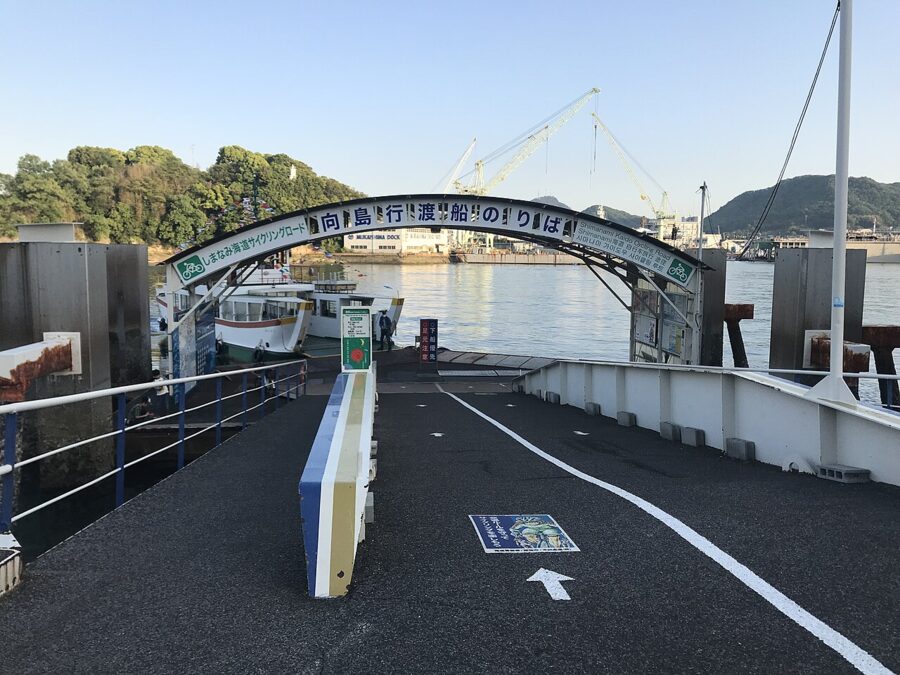
Shimanami Japan keeps a list of other rental operators along the route between Onomichi and Imabari, with their hours and closing days. Three stand out for different reasons.
Better Bicycles is upstairs in the ONOMICHI SHARE building on the Onomichi seafront and is the good-value choice if you are coming back to Onomichi. Its rental page lists cross bikes at ¥3,300 a day, battery-assisted bikes from ¥4,400, steel and aluminium road bikes at ¥5,500, a BRUNO e-bike with a rear rack and optional child seat at ¥6,600, and a FUJI e-bike at ¥8,800, with cheaper rates for a second day. Every bike goes back to the Onomichi shop: there is no drop-off elsewhere. It opens 09:00 to 18:00 and closes on Wednesdays, and on Wednesdays and Thursdays in June and from December to February.
STOKEDCYCLE is a mechanic-run shop on the cycling route‘s first island, Mukaishima, 200 m from the ferry landing, with carbon road bikes, full-suspension mountain bikes and e-bikes. Helmet, lock, repair kit, phone holder and bottle cage come with the bike, and support during the ride is by WhatsApp. Its one-way drop-off is priced in US dollars as a flat fee for the whole group: US$150 to Imabari at the time of writing, more to Kure, Hiroshima or Uno.
WAKKA, a cycling hotel on Omishima, runs a rental-return service for bikes from partner shops: you meet its truck where you finish, and it takes the bike back to the shop. The charge is a transport fee per truckload, which depends on where you finish, plus ¥500 a bike (¥1,000 for an e-bike or a bike with a basket). It closes on Tuesdays and needs booking. It suits a group whose bikes cannot otherwise be left at the far end.
E-bikes and battery-assisted bikes
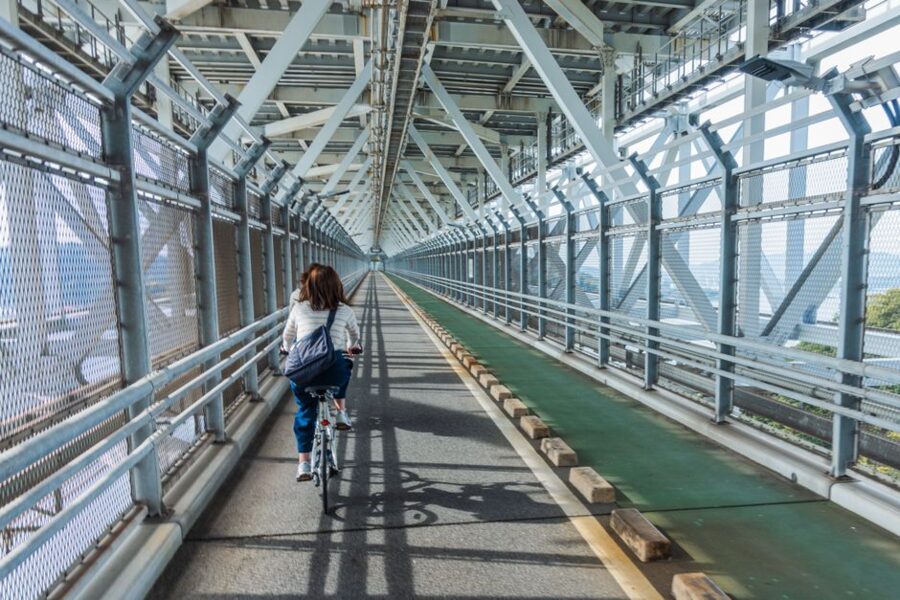
The public network rents two quite different kinds of electric bike, and the names confuse people. The battery-assisted bike (電動アシスト自転車) at ¥4,000 is an upright, comfortable commuter-style bike. The E-bike at ¥8,000 is a sportier, more powerful machine with a longer range, for riders of at least 145 cm.
The manufacturer’s range figures are generous. The network quotes 200 km on Eco mode, 105 km on Auto and 62 km on Power for the battery-assisted bike, and 200 km, 110 km and 80 km for the E-bike. The child-seat version of the battery-assisted bike has a much smaller range: 68 km on Eco, 53 km on Auto and 45 km on Power. The real figure depends on mode, speed, hills, load and the rider, so keep to Eco on the flat and save Power for the bridge ramps.
If the battery-assisted bike’s charge is running low, swap the battery at Setoda Tourist Information, Setoda Sunset Beach or Omishima. Both kinds of electric bike can be dropped at any terminal, but the E-bike is same-day only while the battery-assisted bike can be kept for several days. That one rule decides most two-day plans.
Should you take one? If you ride a bike every week, a cross bike will get you from Onomichi to Imabari in a day; the network’s own estimate is 4 to 5 hours for fast riders, 5 to 6 for fit ones and around 10 for beginners, before stops. If you do not, and you want to see more than the tarmac, take the battery-assisted bike and do not feel bad about it. The E-bike is worth the extra ¥4,000 only if you are riding the whole way in a day, want to climb off the route to a viewpoint, and are returning before the terminal closes.
Giant’s e-bikes cost more and must come back to the store you rented from, which suits a there-and-back day from either end. Better Bicycles’ electric bikes go back to Onomichi too.
Children, tandems, child seats and helmets
Families have more options on the public network than anywhere else. Kids’ bikes are ¥1,000 a day at nine terminals, and a child can ride a cross bike if they are tall enough. For younger children, the battery-assisted bike with a rear child seat costs ¥4,000 and can be collected at Onomichi Station, Omishima or Imabari Itoyama. The seat takes children of five and under, the legal limit in Japan, up to 22 kg, and there are no trailers.
Tandems are the odd one out. They are heavy, slow to turn and hard work for the front rider, and the network has you try one out before you reach the road. They are allowed only on limited parts of the route, rent only at Setoda Sunset Beach, Omishima and Imabari Itoyama, and must come back to the same place on the same day. Treat a tandem as a short ride from one of those three bases, not a way to cross the islands.
Better Bicycles fits a child seat to its BRUNO e-bike for ¥1,100 a day, for children from one year old up to school age, up to 115 cm and 20 kg; it has two. Giant has kids’ bikes but no child seats.
Helmets come free with a bike from every operator mentioned here. Riders in Japan have been expected to wear one since April 2023, and the public network and Giant both make it a condition of the rental, whatever your age.
What the rental includes, and what to do with a puncture
The public rental includes a free helmet and the network’s own accident cover, which is narrow. It pays a fixed hospital allowance, quoted on the English page as ¥4,500 a day, if you are admitted to hospital after an accident while riding; outpatient treatment is not covered. It says nothing about damage you do to someone else, so check that your travel insurance covers third-party liability while cycling. If the bike or its parts are damaged, lost or stolen, you pay.
For a puncture, a dropped chain or anything else that stops the bike, the public network’s breakdown support sends staff with a replacement bike from 09:00 to 17:00, anywhere along the route from Onomichi to Imabari. You can also swap at any terminal along the way, subject to stock. You are not expected to mend anything yourself, which is the main argument for a public bike if you have never changed a tube.
Giant works the other way. Its rental price includes insurance with up to ¥100 million of third-party liability, ¥15 million for death or permanent disability and ¥10,000 a day in hospital; the ¥1,000-a-day outpatient benefit does not apply to bikes rented at Onomichi. Theft and damage to the bike are not covered.
Giant lends a spare tube, tyre levers and a lock, and Onomichi rents a mini pump for ¥550, but the repair is yours: Onomichi charges ¥900 plus tax if you use the tube. If you cannot fix it, Giant points you to the nearest shop in the route’s rescue-point scheme.
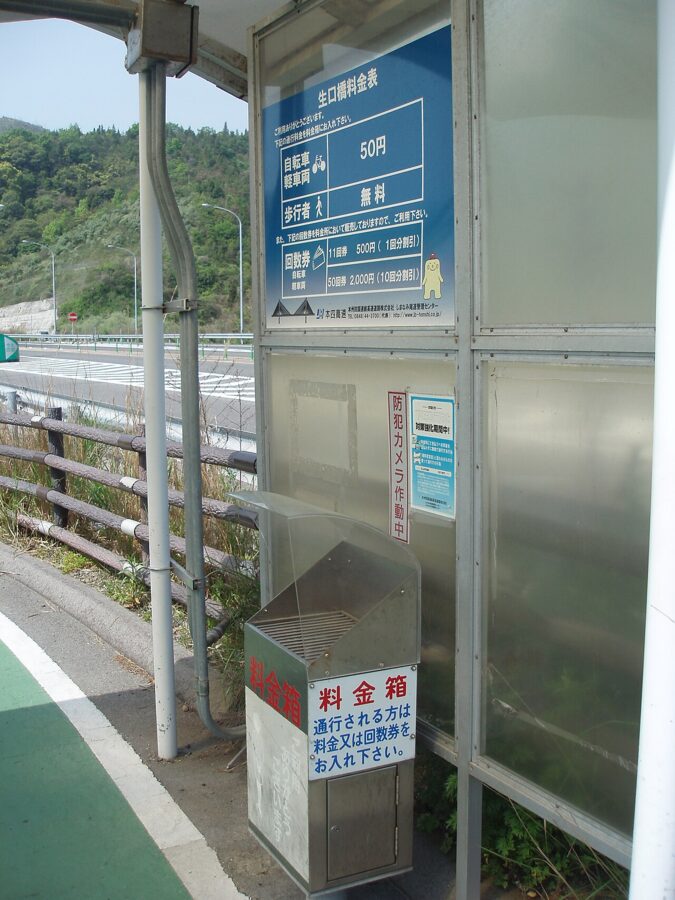
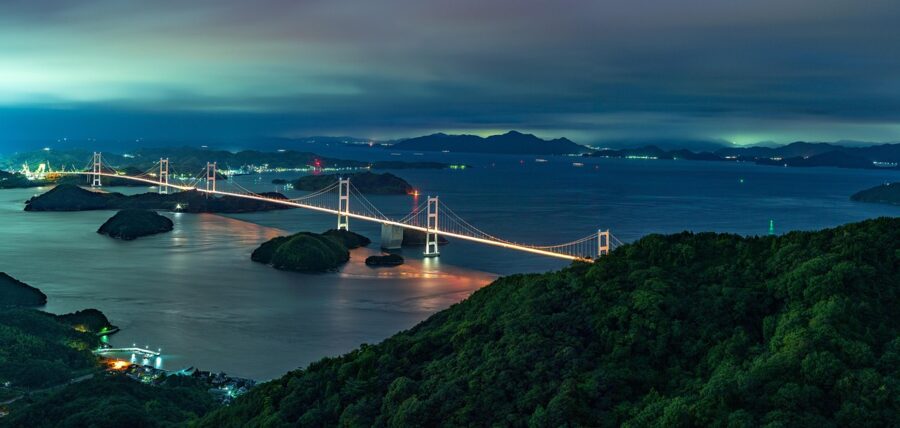
Three rules are worth knowing before you ride. The bridges’ cycle tolls are waived until 31 March 2028, under the Shimanami Cycling Free scheme; mopeds still pay. Since April 2026, riders aged 16 and over can be booked and fined under the blue-ticket system for cyclists, ¥12,000 (about US$80) for holding a phone while riding. And the public rental conditions ban riding after dark.
A sensible choice for one day, two days, or a family
One day, Onomichi to Imabari
Book a public battery-assisted bike or E-bike at Onomichi Station for 08:00, and drop it at Imabari Itoyama or Imabari Station. If you ride regularly, a public cross bike at ¥3,000 does the same job, or a Giant aluminium road bike with the ¥3,300 one-way service if you want drop handlebars and a fitted size. Either way you have until 19:00 at the Imabari end from March to November, enough for a one-day Shimanami Kaido itinerary with long stops.
Two days
Take a public battery-assisted bike or cross bike, both of which can be kept for several days, and spend the night on Ikuchijima or Omishima. Swap the battery at Setoda or Omishima on the second morning. Do not book the E-bike for this: it must be back the same day. On Giant’s prices a two-day road bike costs from ¥7,920, plus ¥3,300 if you finish at the other store.
A family
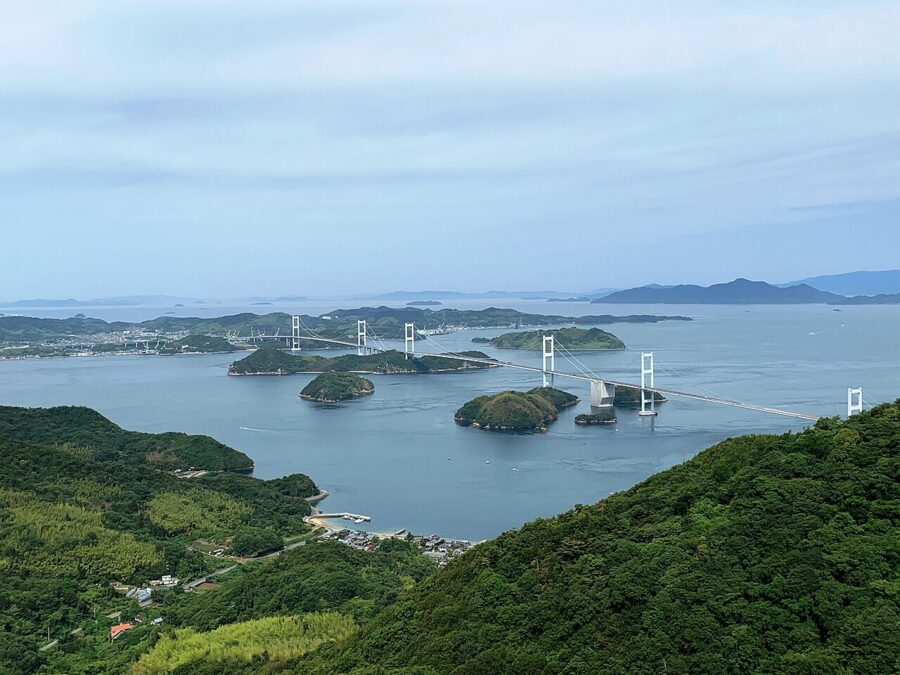
Keep it short and from one base. A parent on a battery-assisted bike with a child seat, an older child on a kids’ bike, and the network’s easy loop from Imabari over the Kurushima-Kaikyo Bridge to Oshima and back, about 13 km (8 miles) and an hour and a half, makes a full day with stops. From Ikuchijima, the 9 km ride from Setoda over the Tatara Bridge to Omishima is the other good choice, and Omishima is one of the three places to try a tandem.
Getting back
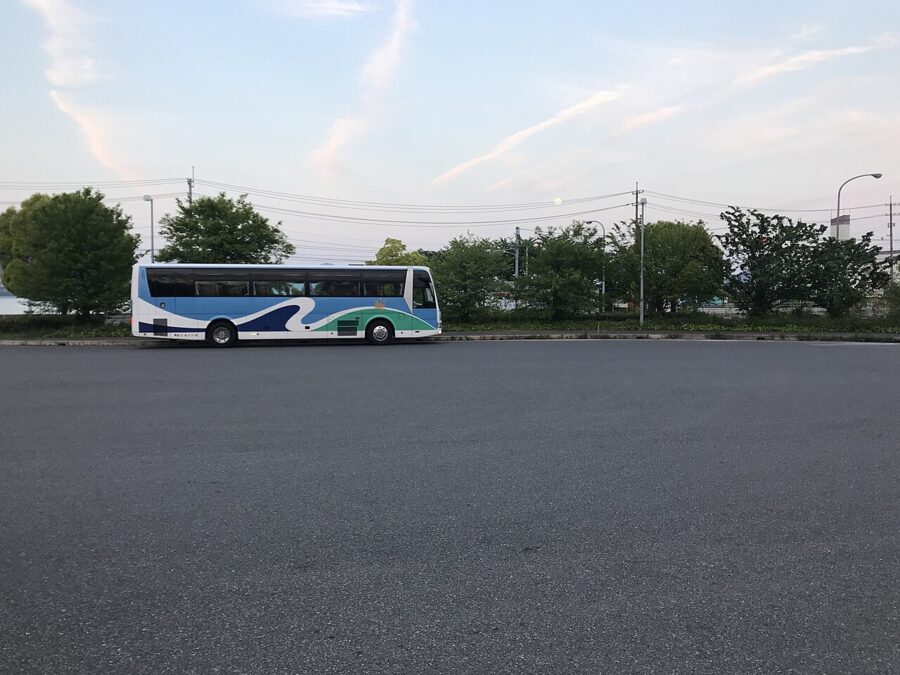
If you ride one way, you still have to get yourself back. From Imabari the Shimanami Liner highway bus runs to Fukuyama, where you change to a train for Onomichi; the network’s English answers suggest getting off at the Innoshima Ohashi stop and changing to a local bus to Onomichi Station instead. Rental bikes cannot go on the bus, which is why the one-way drop is worth so much. The same buses and trains cover getting to the Shimanami Kaido.
So the answer to the counter’s question is usually Imabari. Book the battery-assisted bike, hand it in at Sunrise Itoyama before 19:00, and take the bus home with nothing to carry.