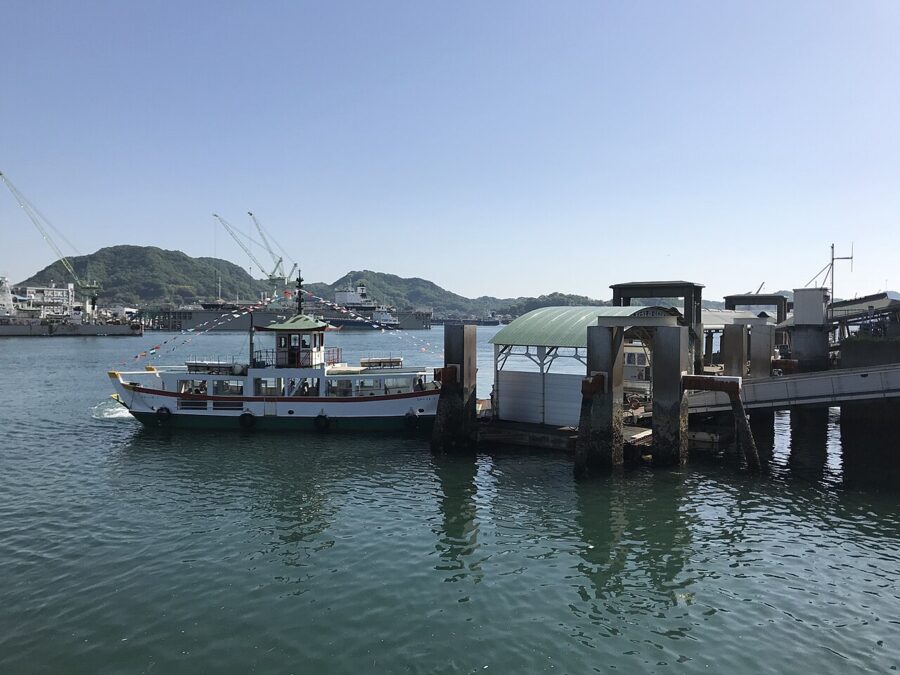
Walk out of Onomichi Station, cross the main road, and the Shimanami Kaido is already in front of you: a strip of water a few hundred metres wide, shipyard cranes on the far bank, and a small ferry nosing in to the pier to carry bicycles across to Mukaishima for ¥110 (about US$0.70).
Most riders do exactly that. They collect a bike beside the station, push it onto the boat and are on the island five minutes later, and Onomichi becomes the town they passed through at the start of a long day.
Behind them, the town climbs a hill so steep that the ropeway to the top passes over a shrine and a temple on the way up. There are temples stacked up the slope, a lane of painted stone cats, a covered arcade more than a kilometre long and a bowl of noodles people queue for. I would give it a day of its own, before or after the ride; the bridges will still be there.
In this guide12
- Where Onomichi sits on the route
- Arriving, and why you should not ride the bridge
- Up Senkoji-yama: the ropeway, PEAK and the park
- Senkoji (千光寺)
- The temple walk down the hill
- The cat alley and the back lanes
- Down to the arcade: Hondori
- Onomichi ramen, and what else to eat
- ONOMICHI U2 and the bike-friendly side of town
- The ferries across to Mukaishima
- Where to stay in Onomichi
- A half day and a full day
Where Onomichi sits on the route
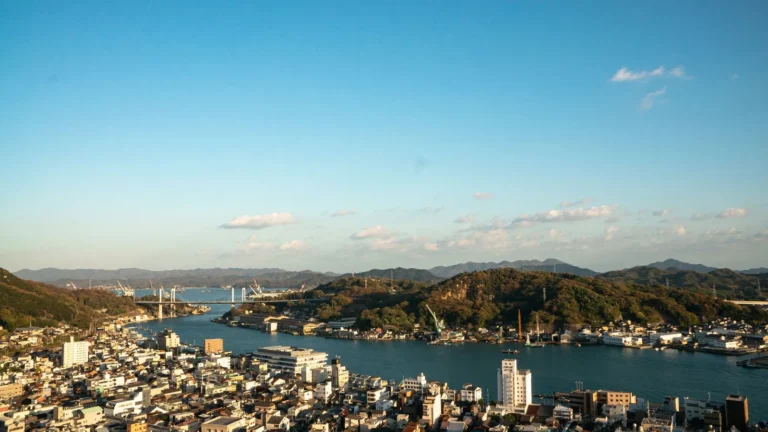
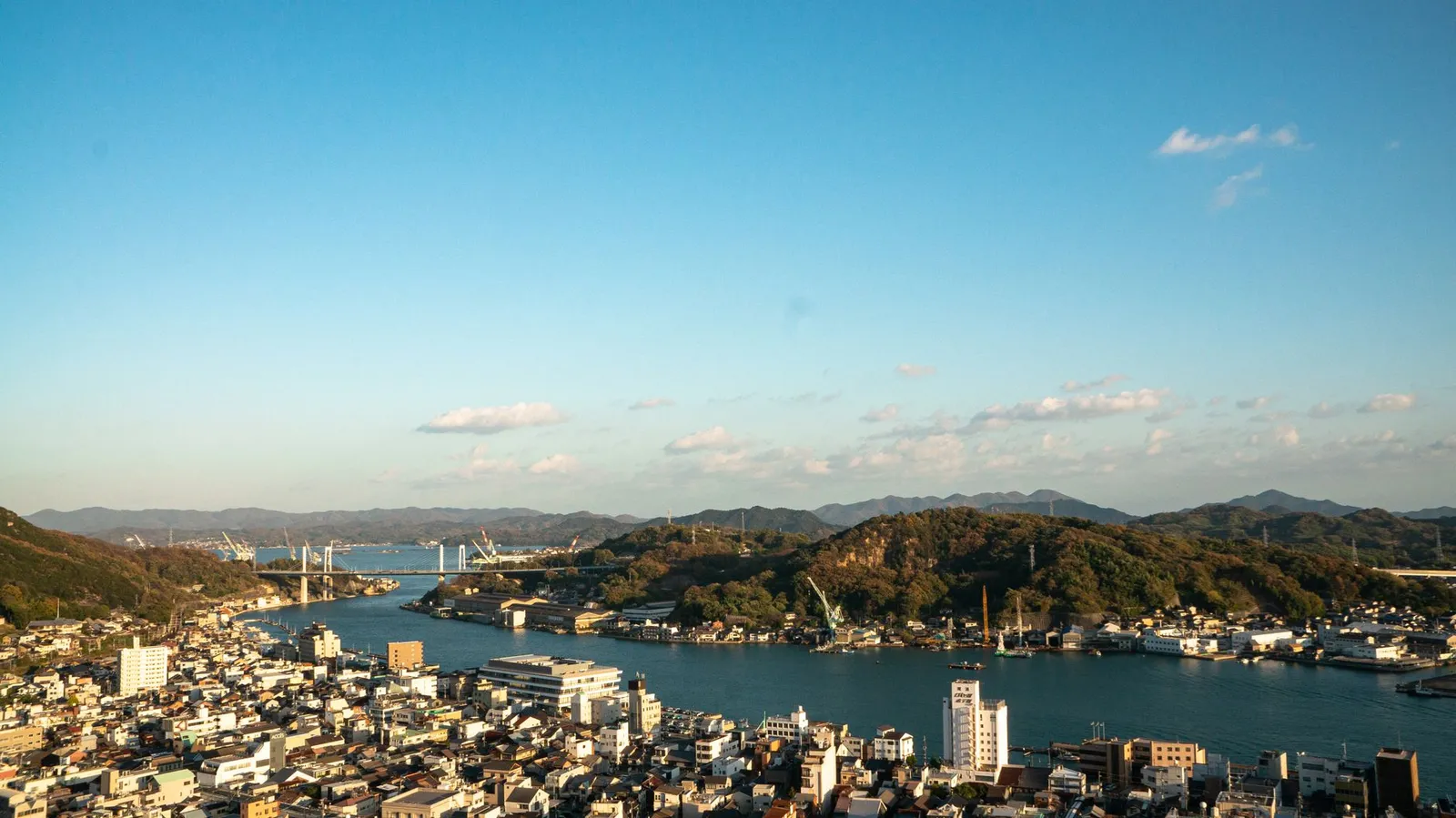
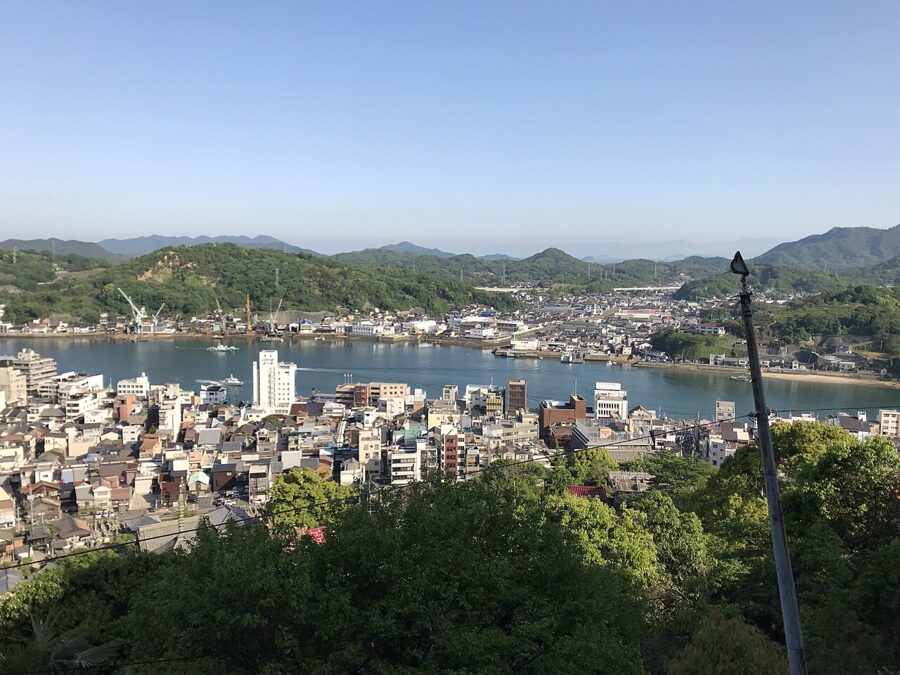
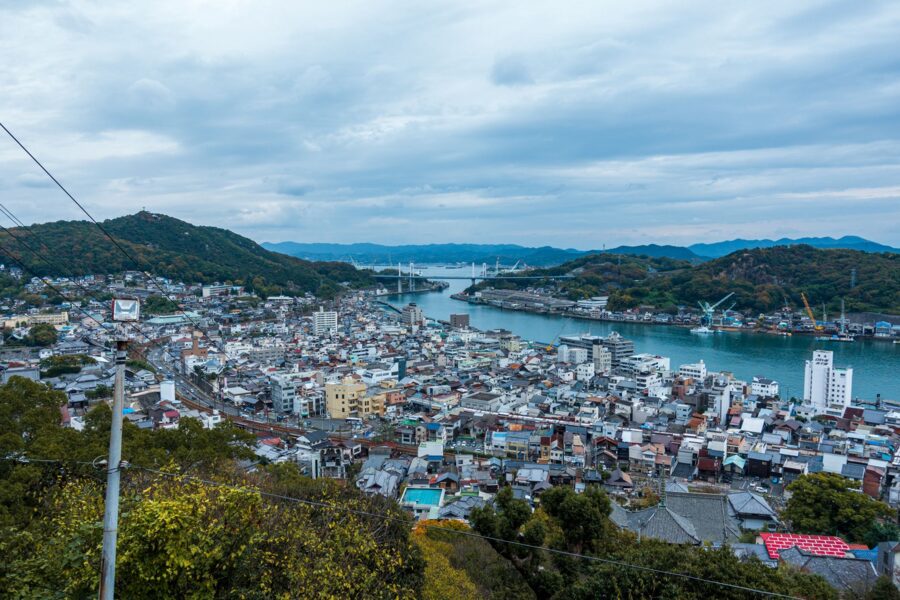
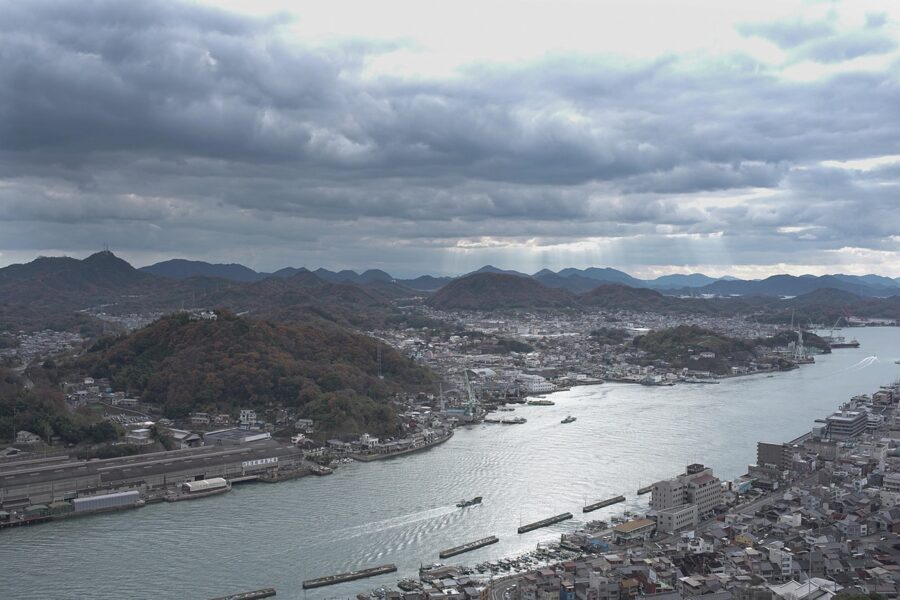
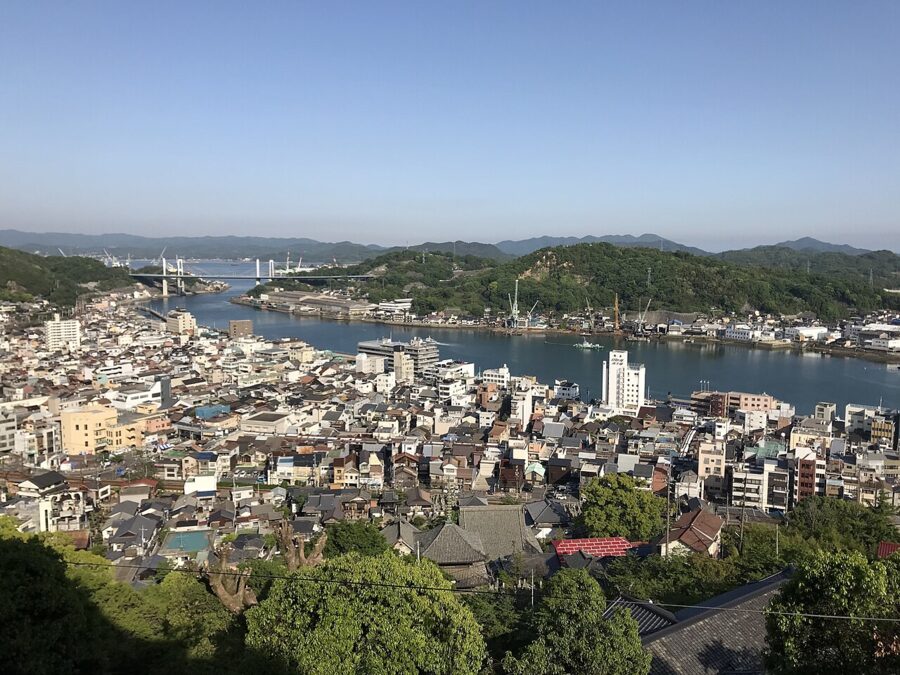
Onomichi is the Honshu end of the Shimanami Kaido, the chain of bridges and islands that runs about 70 km (43 miles) by cycle route to Imabari on Shikoku. The city’s own advice is that the full ride usually takes one to two days, and fit riders on road bikes do it in half a day. The town itself is a long, thin strip on the mainland shore, squeezed between Senkoji-yama (144.2 m) and the Onomichi Channel, with Mukaishima on the other side of the water.
The channel is the reason the town exists. In the Heian period it was the port where tax rice from the Bingo region was loaded for the capital, and in the Edo period it was a regular stop for the Kitamae-bune trading ships that ran from Hokkaido round to Osaka. Merchant money paid for the temples on the hill, and the shipyards on Mukaishima are still working across the water.
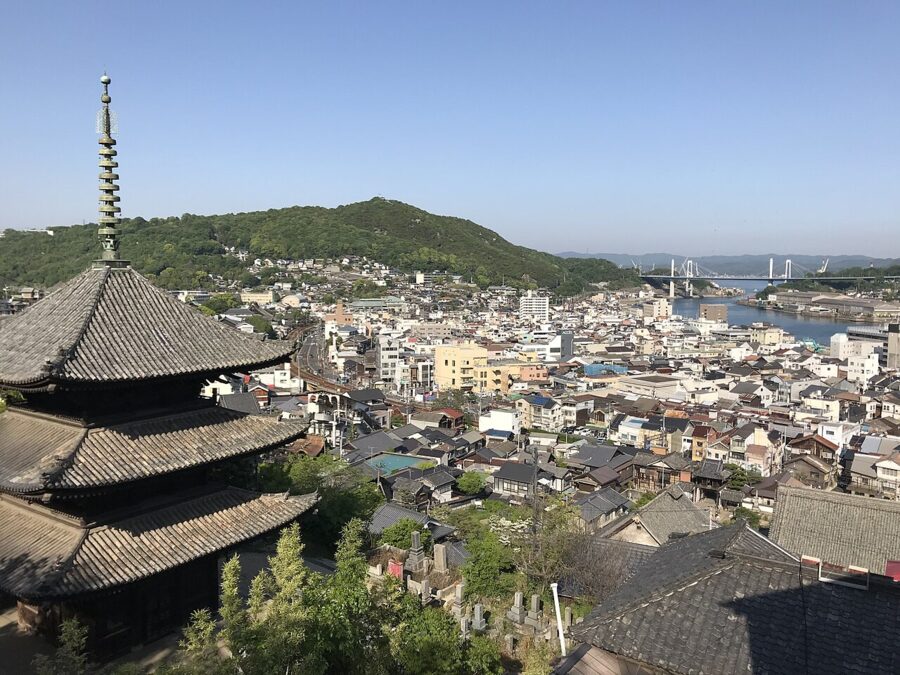
In 2015 Onomichi was among the first places listed as Japan Heritage, as “a miniature garden city woven by the Onomichi Channel since medieval times”. It is a fair description: almost everything worth seeing is walkable, and visible from the top of the hill.
Arriving, and why you should not ride the bridge
JR Onomichi Station is on the Sanyo Line, and the shinkansen station, Shin-Onomichi, is north of the town centre. From Shin-Onomichi the city’s advice is the bus to Onomichi Station, about 15 minutes for ¥190 (about US$1.20), or a taxi for around ¥1,000 (about US$7). Fukuyama, Hiroshima and the highway buses are the other ways of getting to the Shimanami Kaido.
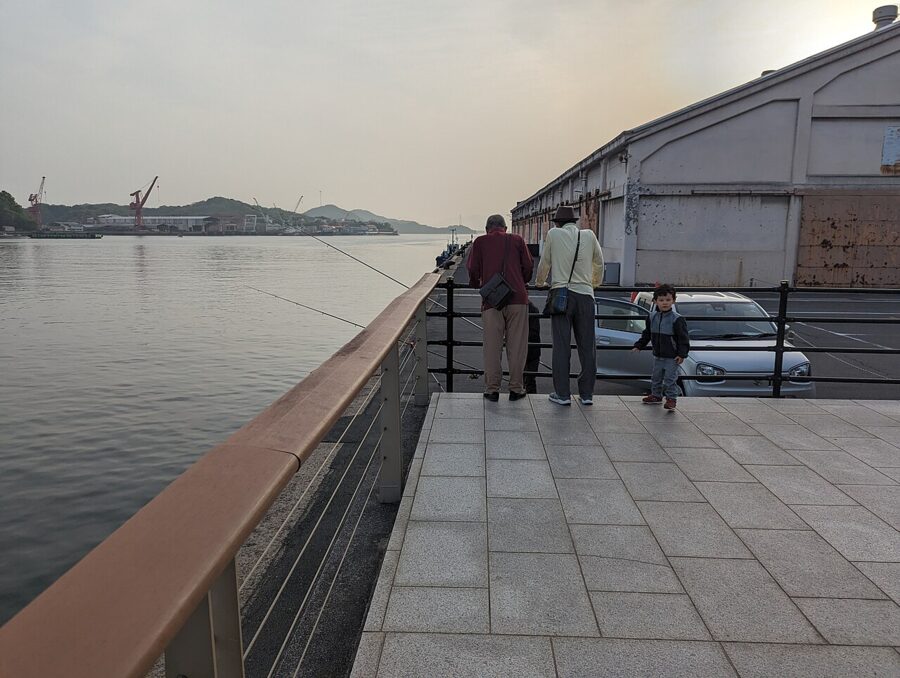
Everything a rider needs is within five minutes of the station’s south exit: the Shimanami Japan rental terminal, the ferry pier, the port terminal for the Setoda boats, and ONOMICHI U2 along the quay to the west. The ropeway’s base station is about 15 minutes’ walk east, or a few minutes on an eastbound bus to the Nagaeguchi stop.
One piece of local advice matters more than any other. The old Onomichi Bridge to Mukaishima is narrow and carries heavy traffic, and the city asks riders to cross to Mukaishima by ferry instead. The newer Shin-Onomichi Bridge beside it is the expressway and has no cycle path, so the ferry is the start of the route in practice.
Up Senkoji-yama: the ropeway, PEAK and the park
Do the hill first, and in this order: ropeway up, view, then walk down through the park, the temple and the back lanes. On foot it is about half an hour up from the ropeway station; it is under a kilometre, but steps and steep paving all the way.
The Senkojiyama Ropeway
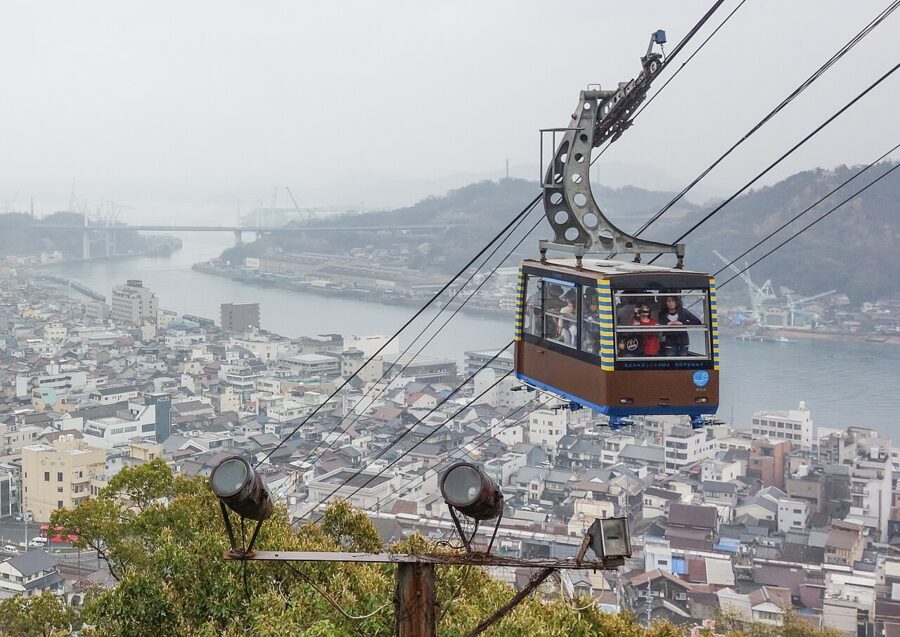
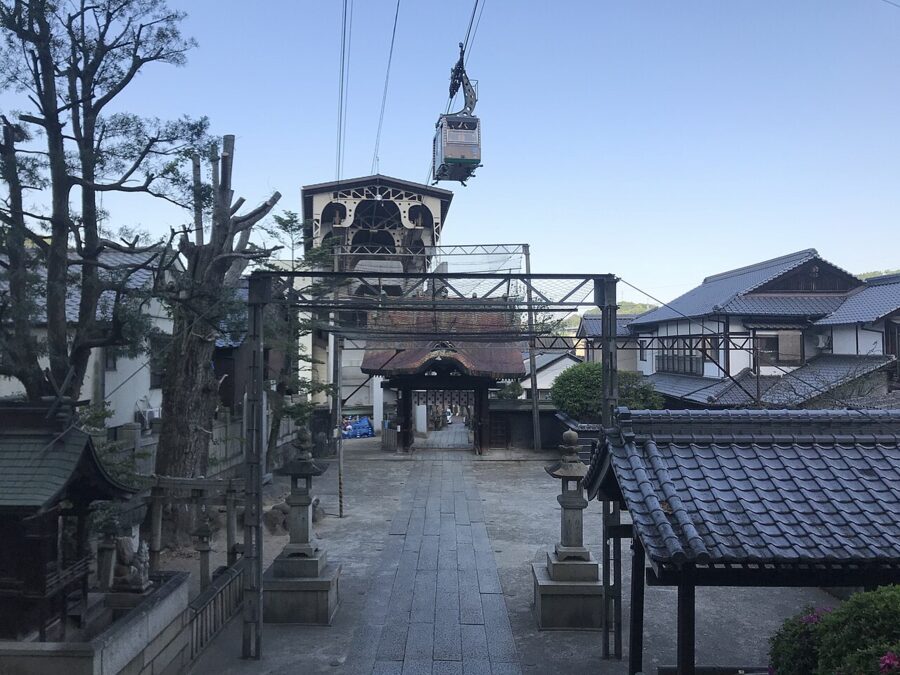
The ropeway leaves from Nagaeguchi, beside the gate of Ushitora Shrine, and climbs 115 m over a 365 m line in about three minutes. It opened in March 1957; the city owns it and Onomichi Bus runs it, with cars every 15 minutes and extra runs when one fills.
| Senkojiyama Ropeway (as of 2026) | Adult (junior high and over) | Child (primary school and under) |
|---|---|---|
| One way | ¥500 (about US$3) | ¥250 (about US$1.60) |
| Return | ¥700 (about US$5) | ¥350 (about US$2.30) |
| Hours | 09:00 to 17:15, every 15 minutes; longer at cherry-blossom time and on fireworks night | |
| Annual closure | Every December for inspection; in 2026 from 7 to 25 December | |
Buy the one-way ticket up and walk down. The ropeway’s fare page lists a small discount for JR-WEST RAIL PASS holders. If you are also using the town buses, the Onomichi Free Pass (¥1,000, about US$7) covers a day of Onomichi Bus routes plus a ropeway return; it is sold at the station bus centre and several hotels, not at the ropeway.
PEAK and the top of the park
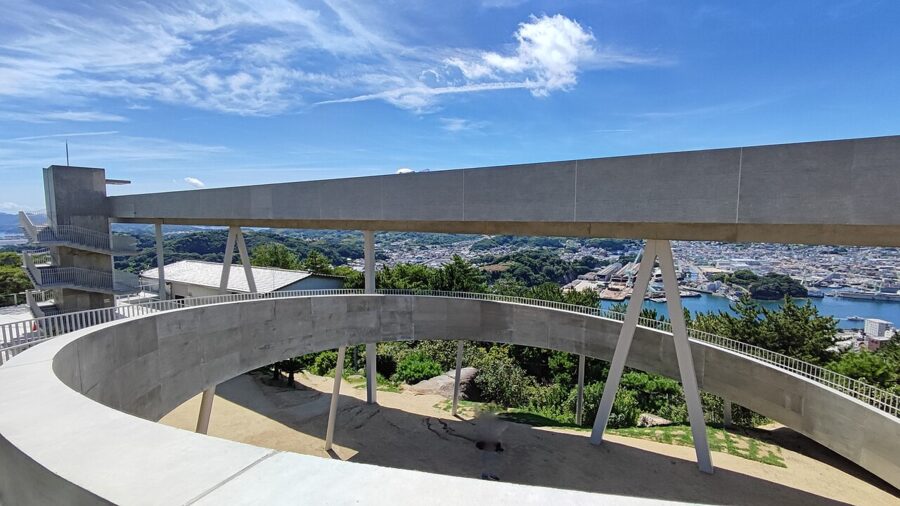
The top station opens onto Senkoji Park, which spreads from the summit down the upper slopes and is open 24 hours, every day. The observation deck called PEAK reopened in its current form in March 2022: a long concrete walkway that runs out level from the hilltop, with a lift that works from 09:00 to 17:15. From the end you look straight down the channel, over Mukaishima and out to the islands; on a clear day the city says you can see the mountains of Shikoku.
The park is one of Japan’s “100 best” cherry-blossom spots. In 2026 the city closed the roads around it on the two peak weekends (the last of March and the first of April) from 10:00 to 17:00, so at blossom time assume you will be walking up.
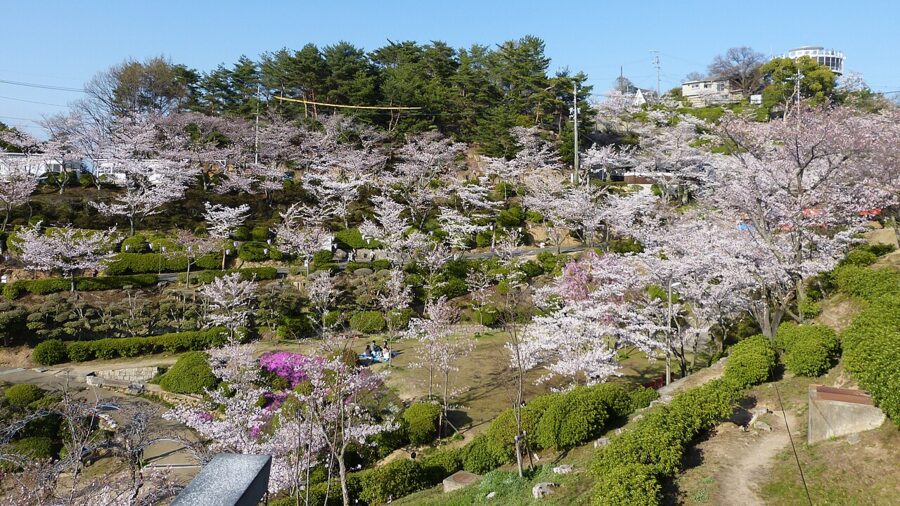
The Path of Literature
From the top, the Path of Literature (文学のこみち) winds down through the boulders to Senkoji, with lines by writers who loved Onomichi cut into the granite. The temple puts it at about ten minutes from the top station.
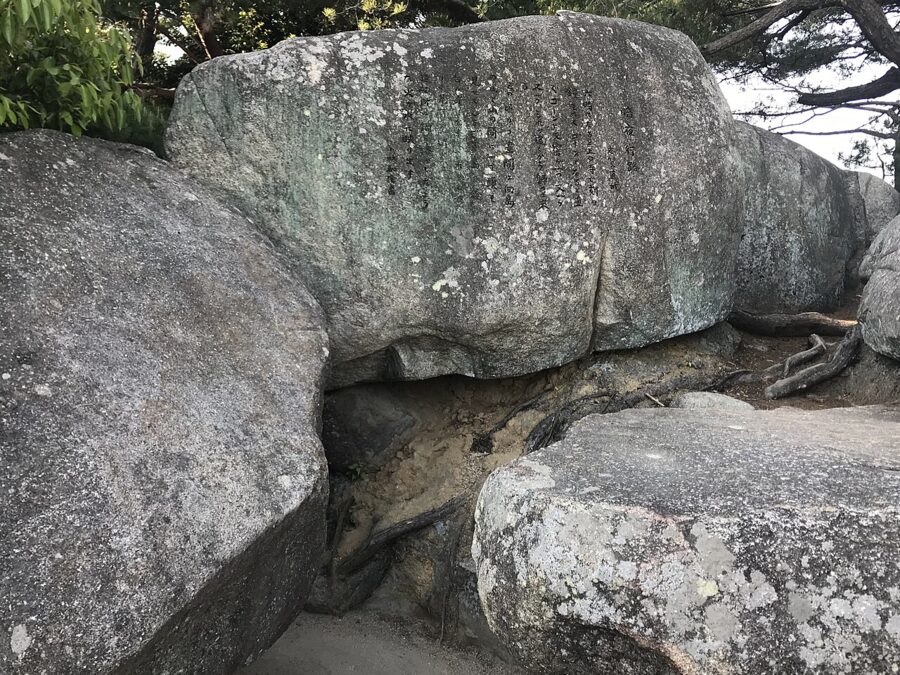
The best known is Shiga Naoya, whose novel A Dark Night’s Passing describes this hillside and the Senkoji bell.
Onomichi City Museum of Art
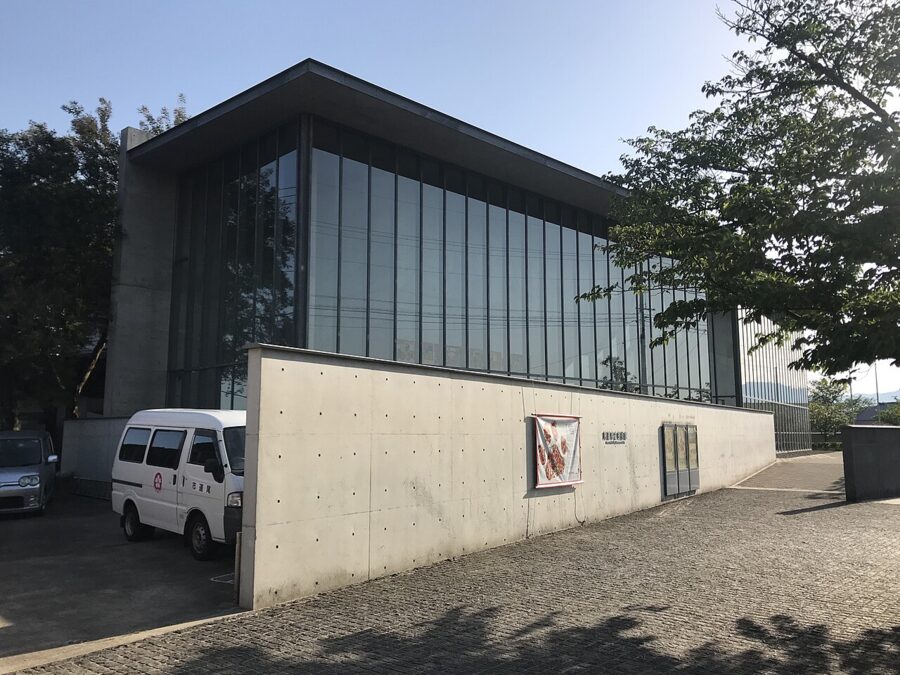
Just below the summit, the city art museum, founded in 1980 after a local campaign, was renovated to a design by Tadao Ando and reopened in January 2003 in glass and bare concrete. It has no permanent display and opens only while an exhibition is on, so check what is showing before you plan around it. Hours are 09:00 to 17:00 (last entry 16:30); it closes on Mondays (Tuesday when Monday is a holiday), between exhibitions and from 29 December to 3 January. A collection exhibition runs from 28 November 2026 to 11 January 2027.
Senkoji (千光寺)
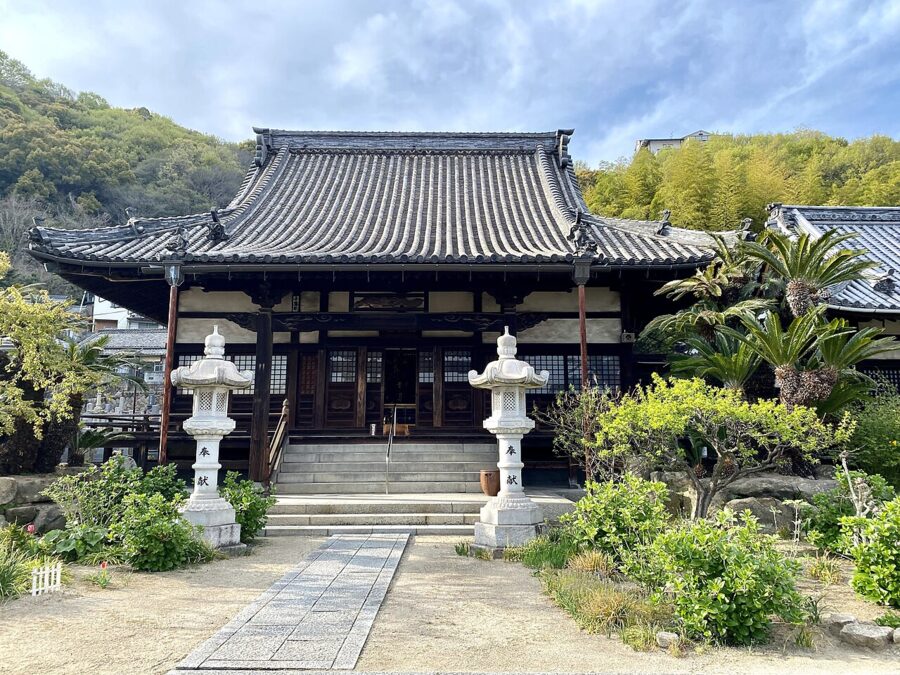
Senkoji is the temple the hill is named after, and the one in every photograph of Onomichi. It was founded in 806, according to the temple, and the main hall was built in 1686 on a timber stage cantilevered out over the cliff, painted red so that locals call it the Akado (red hall). Inside is a Thousand-armed Kannon shown to the public only once every 33 years, known for generations as the Kannon that turns away fire.
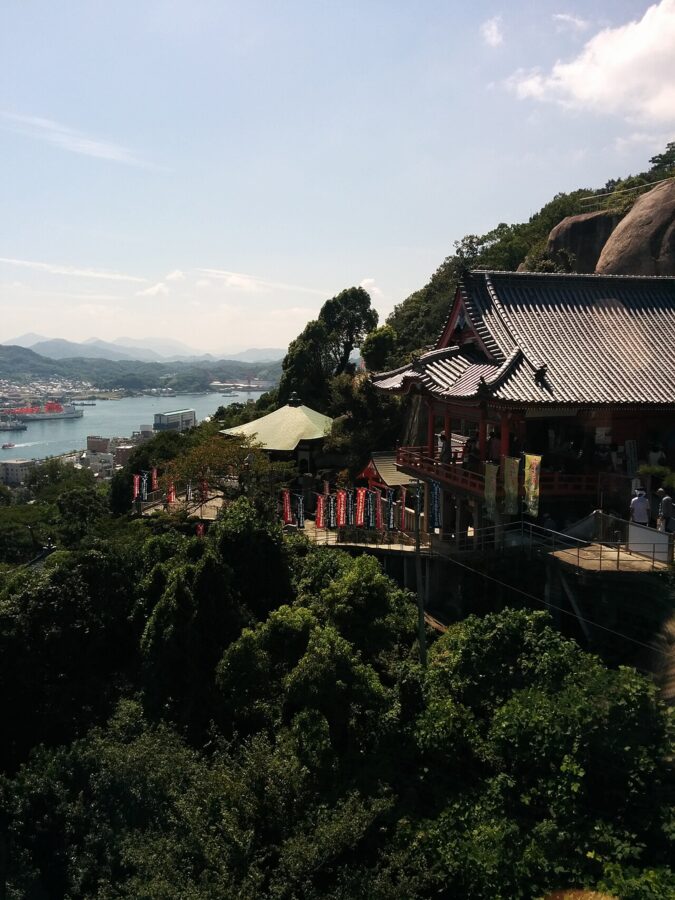
The temple grounds are open from 09:00 to 17:00. There are no toilets inside the precinct, so use the ones at the summit or the car park first. A temple stamp (goshuin) costs ¥500 from April 2026.
Tama no Iwa and the jewel legend
The great rock in the middle of the precinct is Tama no Iwa, about 15 m high and 50 m round. The story is that a jewel on its summit once shone out over the sea at night. A foreigner came and offered gold for the rock; the monk, who knew nothing of the jewel, would not sell, and the man climbed up in secret and stole it. The hole where it sat is still on top, 14 cm across, and the names of the hill (Daihozan), the temple and the old harbour (Tama no Ura) are said to come from the legend.
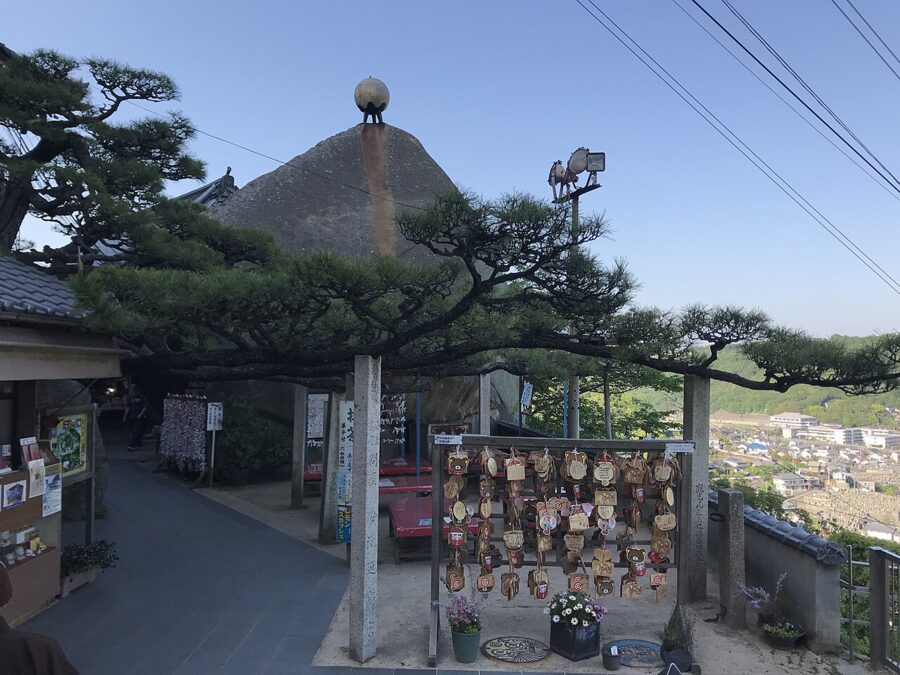
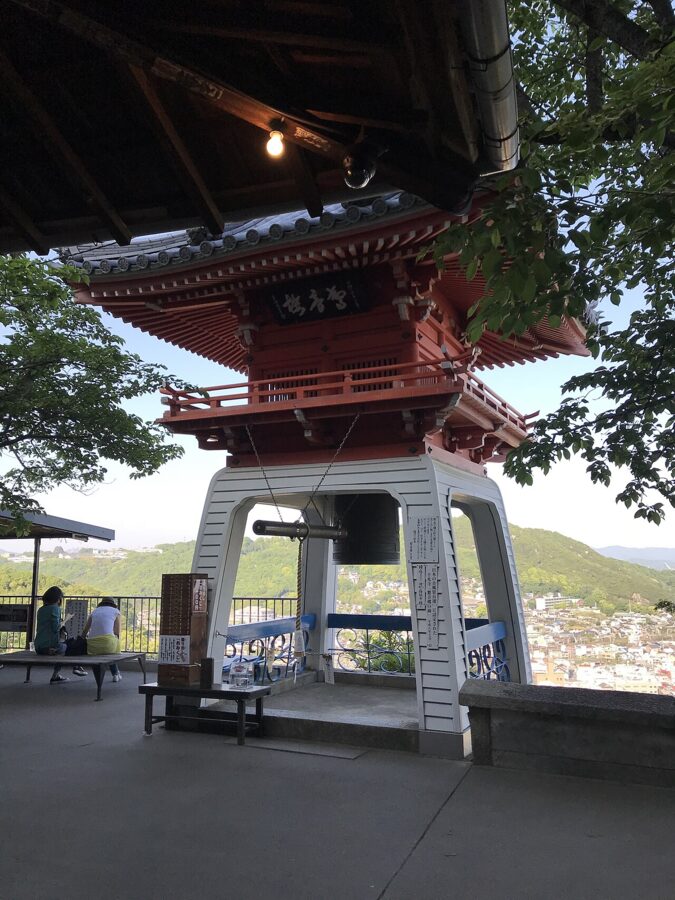
The bell, the chains and the drum rock
The red bell tower stands at the cliff edge. Its bell has rung the hours for the town and the sea since the late 17th century, and it has none of the usual rows of bumps; instead it is cast with Sanskrit mantras. The Environment Agency listed it among the 100 Soundscapes of Japan in 1996, and it is still rung to see out the old year on New Year’s Eve.
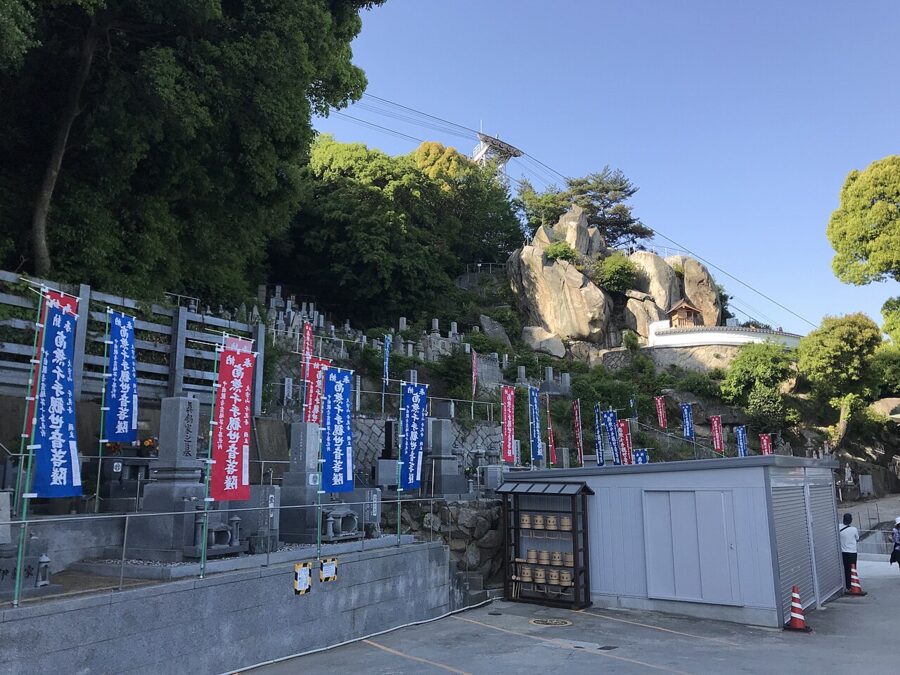
Above the main hall, Kusari-yama is a rock you climb on fixed chains to a small shrine. The chains went to the war effort with the bell in 1943, and the climb reopened in 2005. It is short but steep; skip it in cycling cleats.
Nearby is Tsuzumi-iwa, the drum rock: tap it with a small stone and it answers with a hollow “pon-pon”. The scars on its side are said to be chisel marks from when it was being split for the walls of Osaka Castle. In May 2026 the Acoustical Society of Japan added it to its list of acoustic heritage, which is a good excuse to try it.
From the main hall, the stone steps take about ten minutes down to the foot of the hill, and the cat alley is five minutes below.
The temple walk down the hill
The city’s temple walk links 25 temples along the hillside and takes about three hours from the station. You do not need all of them. A shorter circuit, the Onomichi Seven Buddhas (尾道七佛めぐり), links seven of them: Jikouji, Tenneiji, Senkoji, Taisanji, Saikokuji, Jodoji and Kairyuji, each with its own blessing and stamp. The Seven Buddhas site has the map and a special stamp board if you want to collect all seven.
With half a day, do Senkoji, Tenneiji and the lanes between them. With a full day, add Saikokuji and Jodoji to the east, the two I would not miss.
Tenneiji and its pagoda
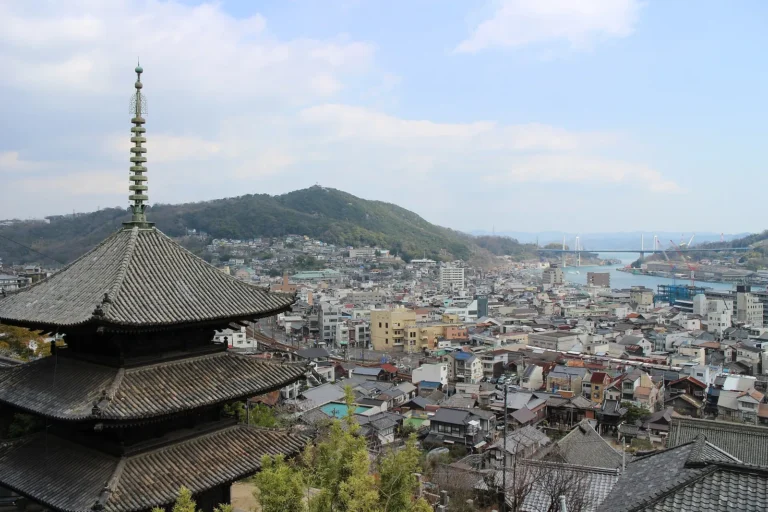
Tenneiji was founded in 1367 with money from the shogun Ashikaga Yoshiakira, and its three-storey pagoda, the Kaiunto, is a national Important Cultural Property. It was built as a five-storey tower in 1388 and cut down to three storeys in 1692.
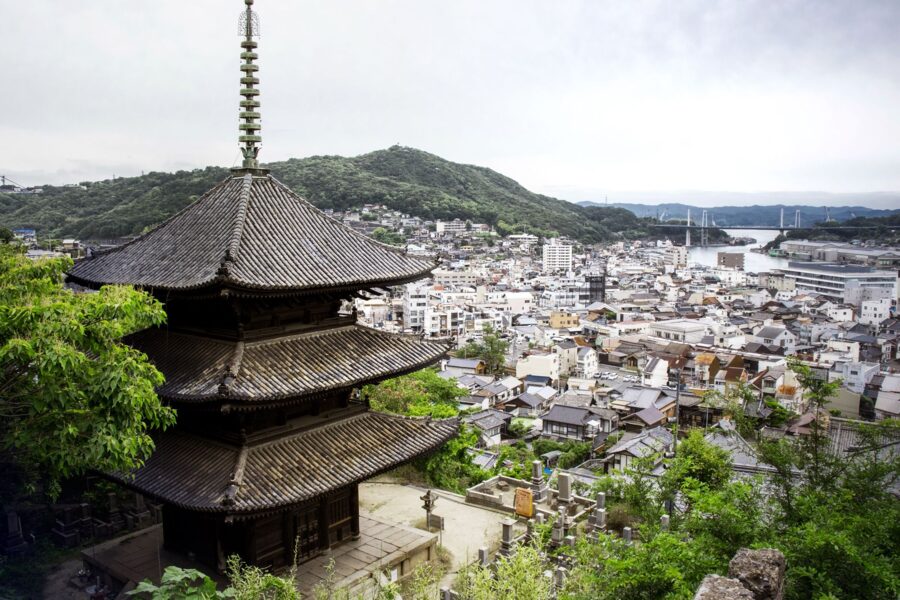
The main temple has a hall of 500 rakan figures and holds zazen on Sunday mornings from 07:00 to 09:00 (book by phone).
Ushitora Shrine
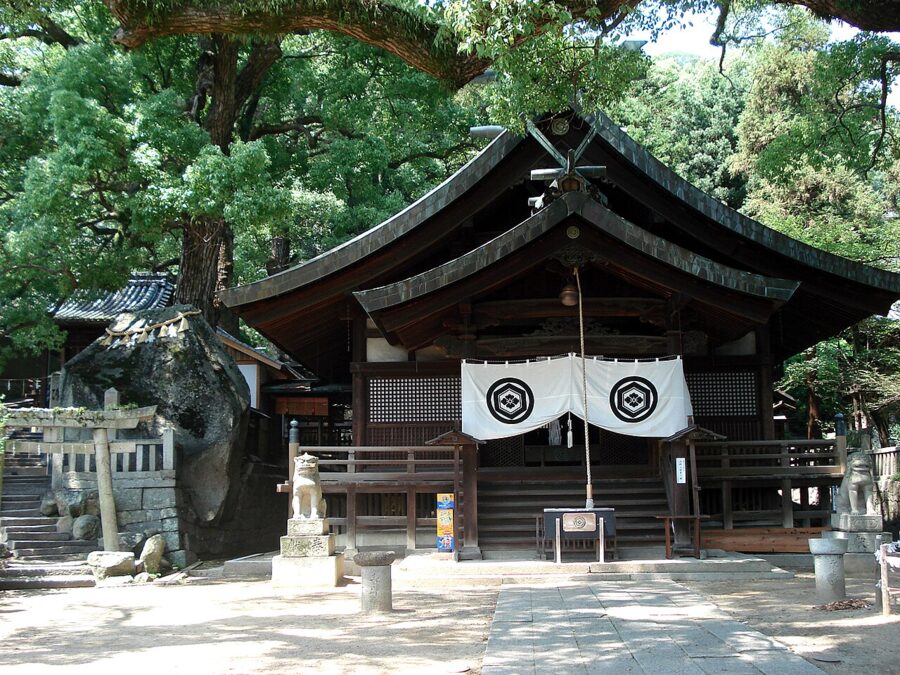
Ushitora Shrine at the foot of the ropeway is said to be the oldest shrine in town, and its giant camphor trees are a prefectural natural monument. The ropeway cable passes directly over the precinct. It also appears in Obayashi Nobuhiko’s Onomichi films.
East: Saikokuji and Jodoji
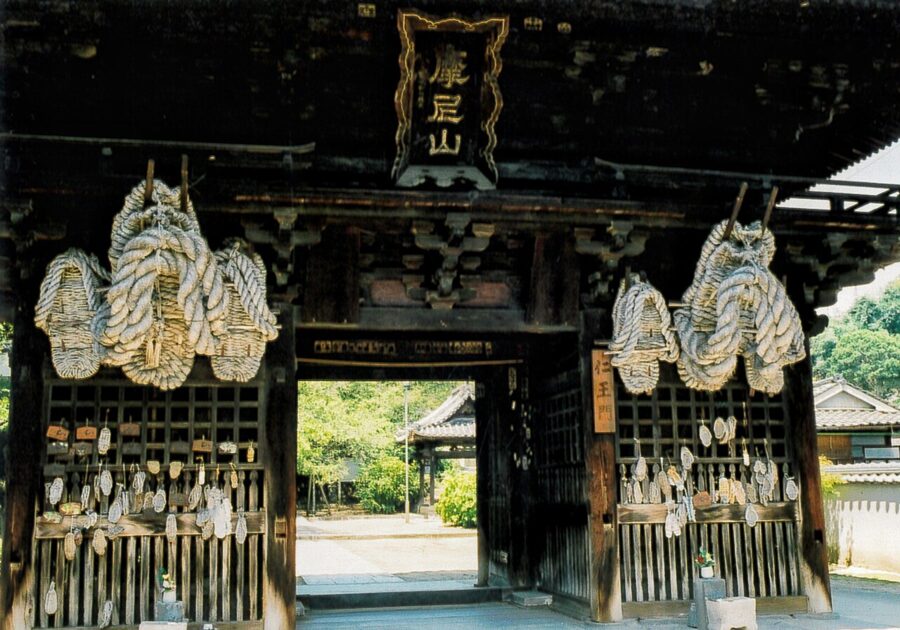
Saikokuji, further east along the hillside, is known for the gate everyone photographs: its Niomon is hung with giant straw sandals, offered by people praying for strong legs in a town built on steps. The temple dates its founding to the Tempyo era (729 to 749).
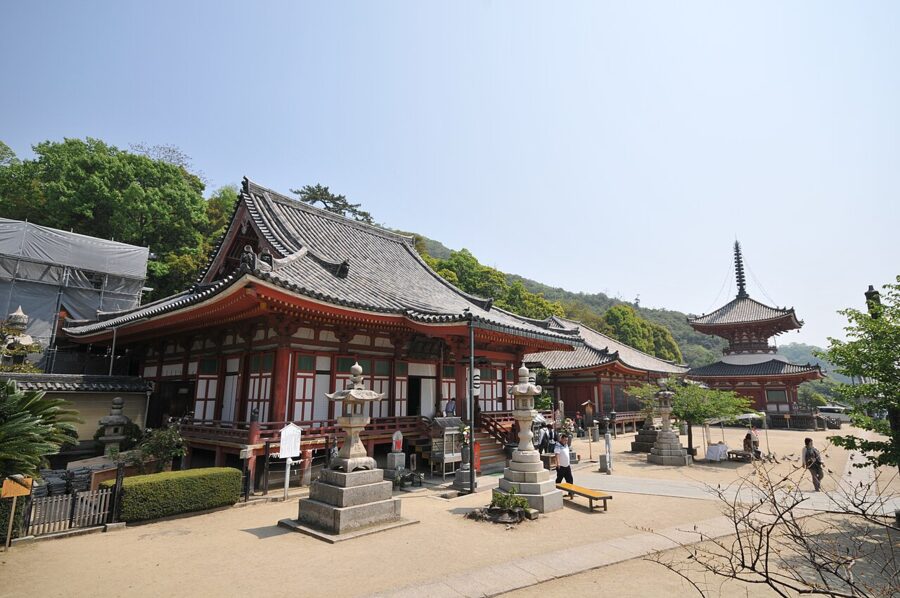
Jodoji, further east again, is the most important temple in the town on paper. Its main hall and its two-storey Tahoto pagoda are both National Treasures, and the gate and Amida Hall are Important Cultural Properties. The temple traces its founding to Prince Shotoku in 616, and Ashikaga Takauji prayed here for victory before the battle of Minatogawa.
West: Jikouji
Back towards the station, Jikouji has a gate built from 36 blocks of granite cut from the hill behind it. It is also where you can make a nigiri-botoke, a small Buddha you shape by squeezing a lump of clay in your hand; it costs ¥1,500 (about US$10) as of 2026.
The cat alley and the back lanes
Neko no Hosomichi (猫の細道), the cat alley, is the lane that runs from the left side of Ushitora Shrine (as you face it) up to the Tenneiji pagoda, a couple of hundred metres of steps, walls and overhanging gardens. From Senkoji it is about five minutes down the steps below the main hall.
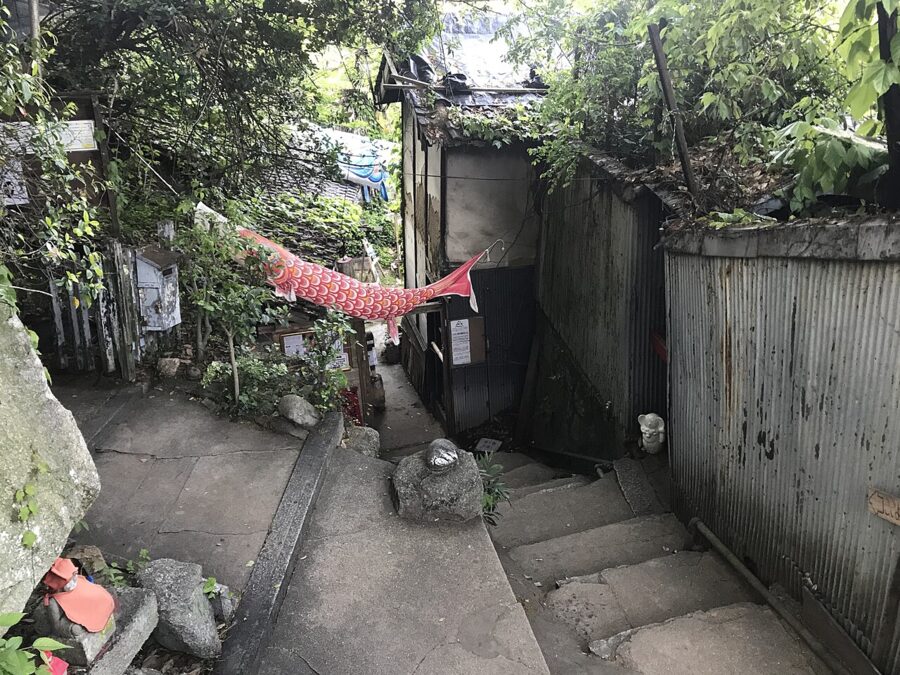
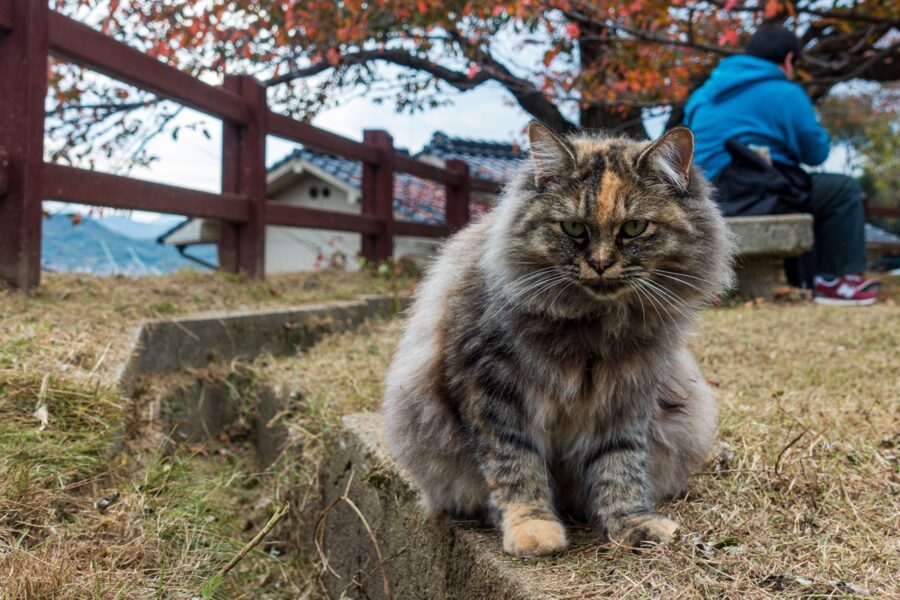
What makes it are the fukuishi neko, round stones painted as sleeping cats and tucked into walls and corners all the way along. Look down rather than ahead. Real cats are around too, mostly asleep in the sun.
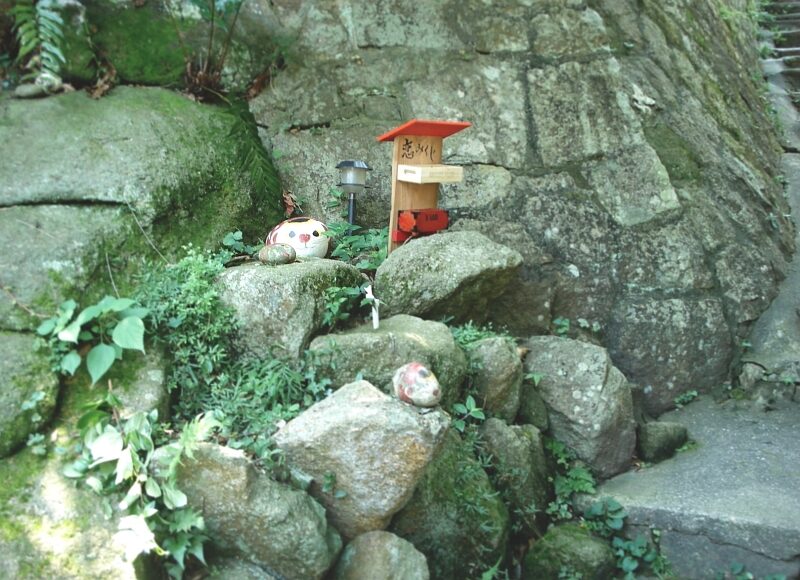
The lanes on either side are as good as the alley, and quieter, with old villas and small cafes in converted houses. Many of those houses stood empty a generation ago; the NPO Onomichi Akiya Saisei Project has spent years restoring them.
Down to the arcade: Hondori
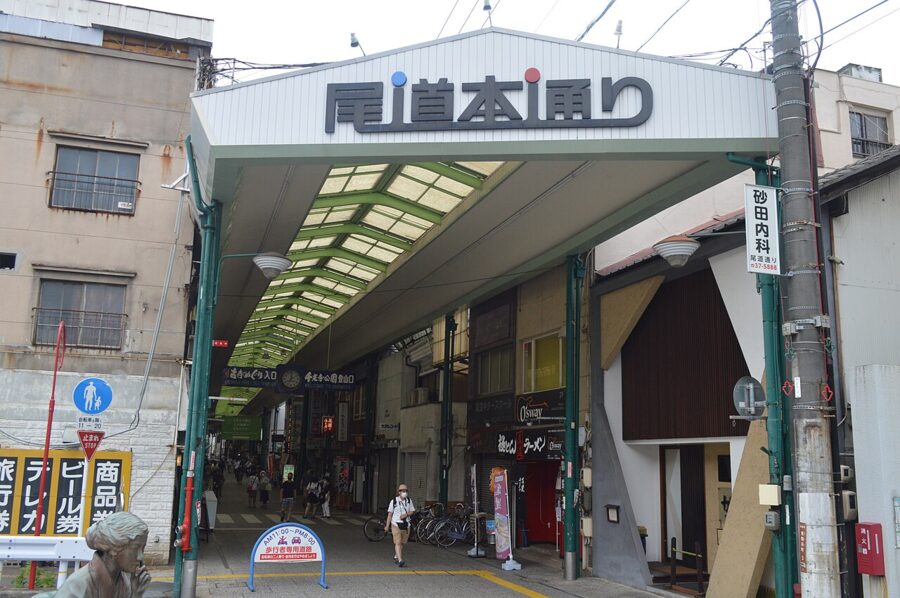
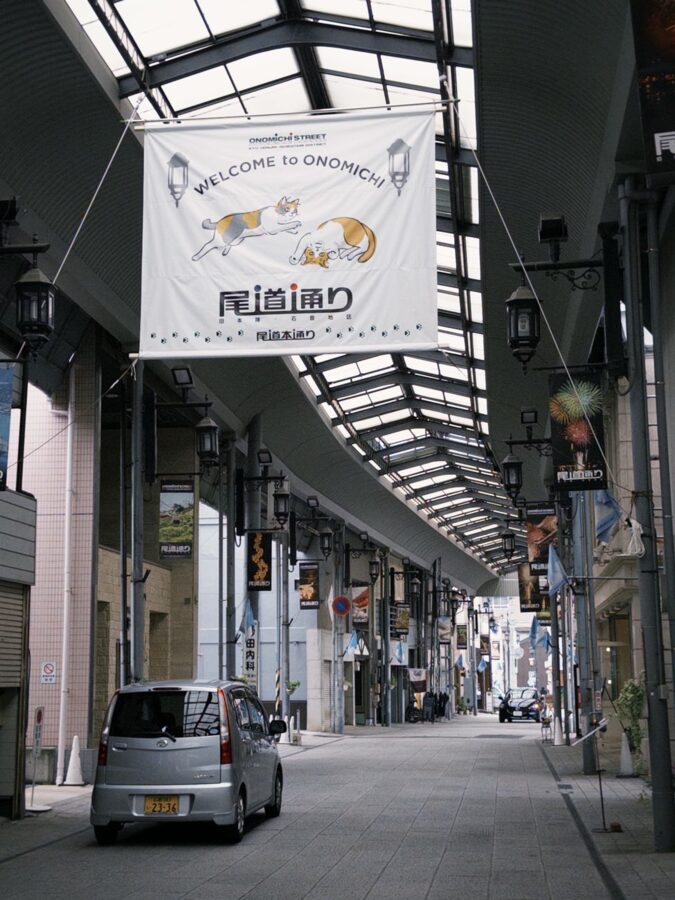
The Onomichi Hondori shopping arcade starts close to the station and runs east, parallel to the water, for more than a kilometre under a series of covered roofs. It is mostly small independent shops, with cafes, ramen counters and guesthouses now taking over some of the long, narrow townhouses that line it.
Look down at the pavements and walls along the way. Bizen-ware casts of the footprints of famous visitors, from the film director Obayashi Nobuhiko to actors and manga artists, are set at points around town, including near Tsuzumi-iwa, at the ropeway’s top station and on the pavement at Nagaeguchi.
The best way to understand the arcade buildings is to walk into one. Anago no Nedoko, a guesthouse and cafe run by the Akiya Saisei Project, takes its name from the long, eel-like plan of the townhouses: the way in is a narrow passage beside its cafe, Akubi Cafe, running back through the house to a yard and further buildings behind. The cafe is closed on Thursdays and opens from 11:00 (closing at 18:00 on weekdays and 17:00 at weekends).
Onomichi ramen, and what else to eat
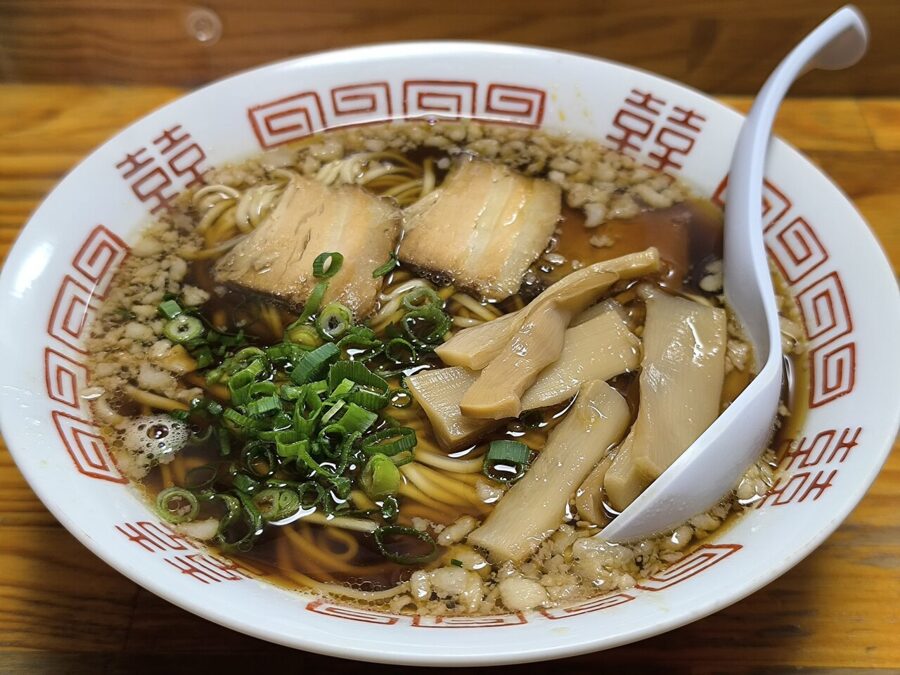
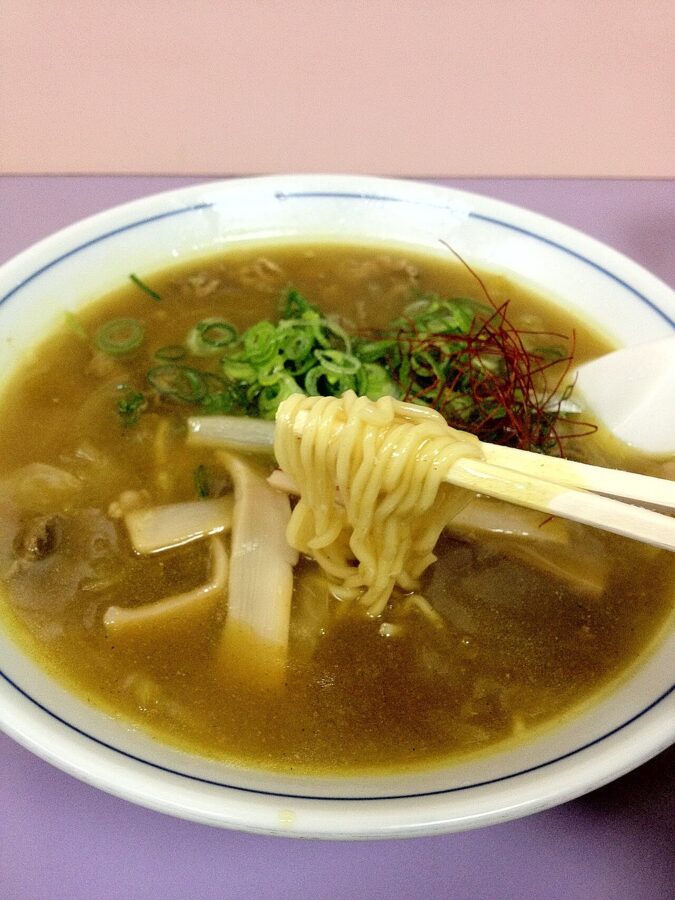
Onomichi ramen is a soy-sauce broth, usually made with chicken and pork and small fish from the Inland Sea, with chunks of pork back fat floating on top and flat, fairly thin noodles. It is lighter than it looks. The shop that made it famous, Shukaen, closed in 2019; in 2020 members of the founder’s family opened Chuka Soba Shu (中華そば 朱) a minute’s walk from the old site, and there is often a queue at weekends.
These are the shops I would send you to:
- Chuka Soba Shu (中華そば 朱), east of the arcade near the city hall: the Shukaen line. The wonton noodles are the order.
- Onomichi Ramen Maruboshi (丸ぼし), Tsuchido, about 12 minutes’ walk: a bigger shop with its own car park, useful for groups.
- Onomichi Ramen Ichibankan (壱番館), Tsuchido: a classic back-fat bowl, with braised pork belly as the popular extra.
- Men-dokoro Miyachi (めん処 みやち), Tsuchido: no back fat, a cloudier fish-based broth, and the tempura chuka, with a piece of tempura softening in the soup.
Opening hours at these shops are short and change; most open around 11:00, and several close by late afternoon or when the soup runs out, and each has its own closing day. Go early, and have a second choice.
For breakfast and coffee, ONOMICHI U2 is the easy answer if you are starting a ride: Butti Bakery and Yard Cafe both open from 09:30 to 18:30, and the cafe fills cyclists’ water bottles at its counter on the quay.
ONOMICHI U2 and the bike-friendly side of town
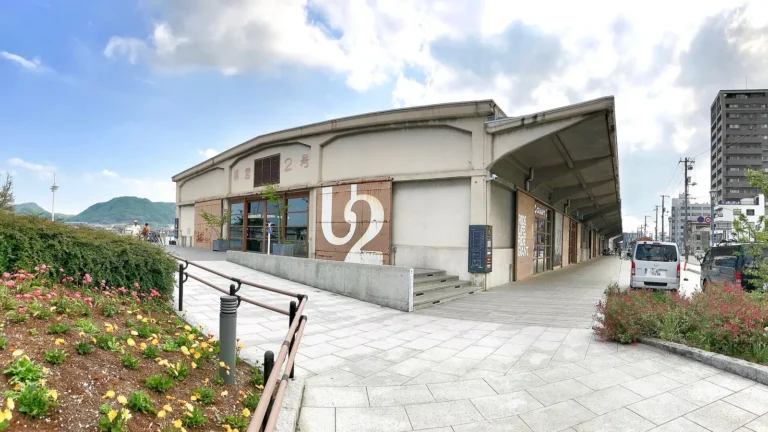
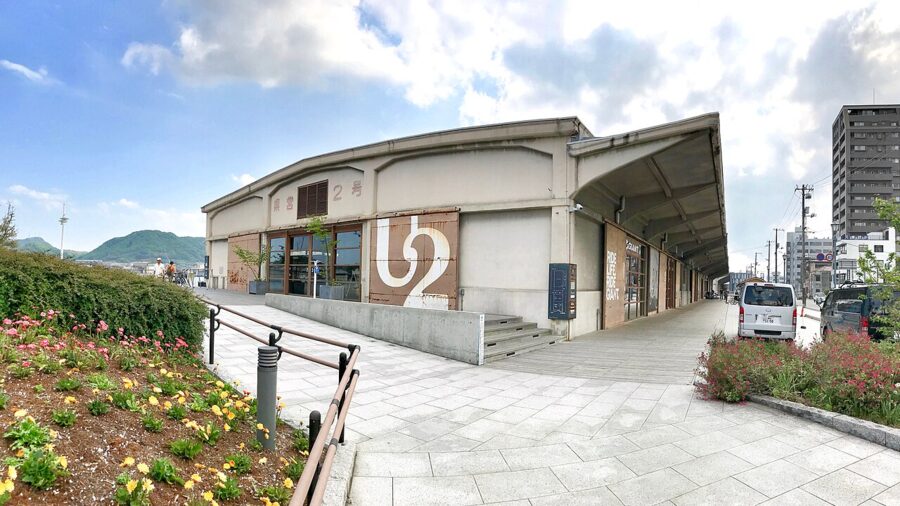
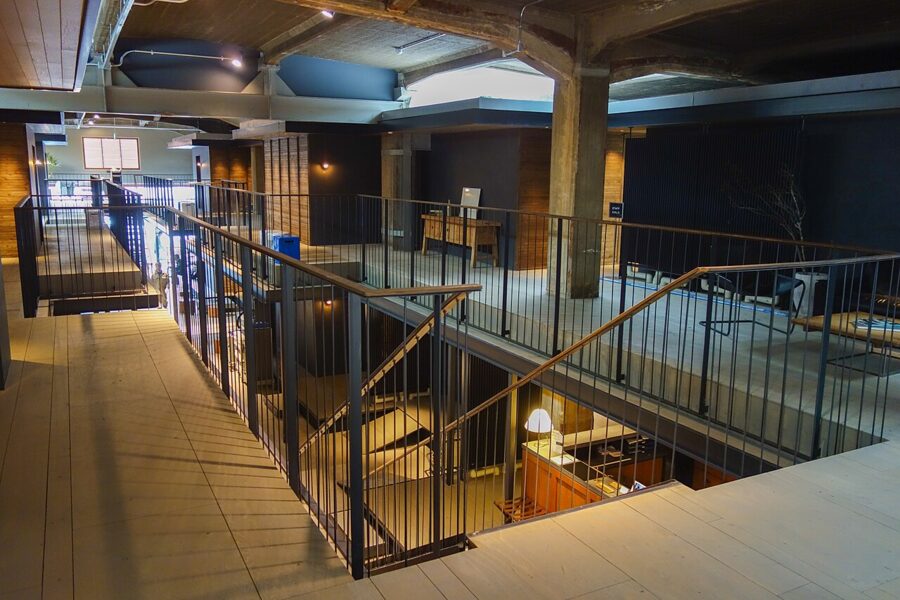
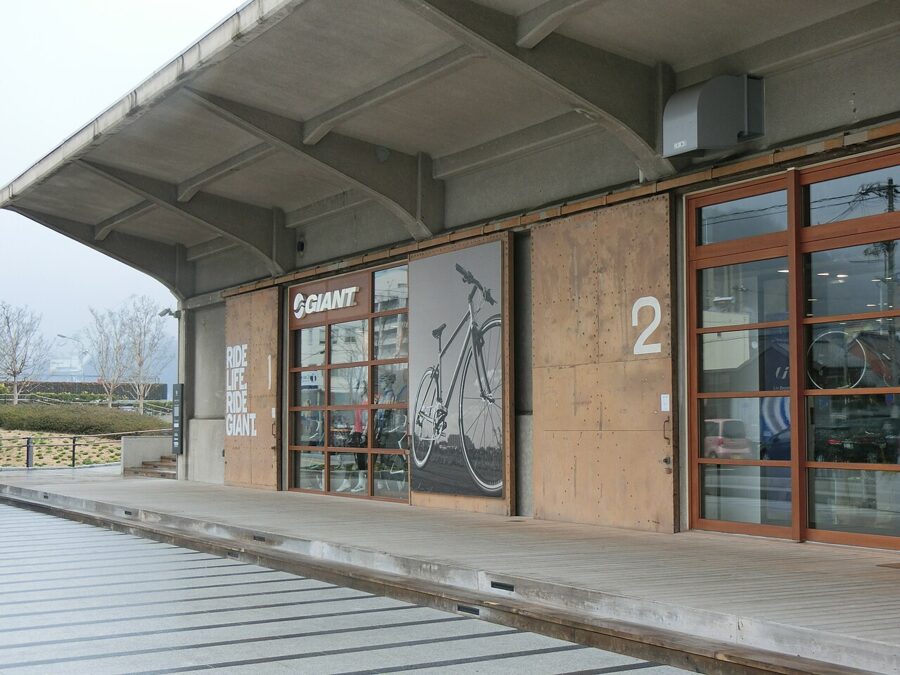
ONOMICHI U2 is a harbour warehouse built in 1943 as the prefecture’s Shed No. 2 (県営上屋2号倉庫), hence the name, converted and opened in March 2014. The architect Makoto Tanijiri laid out its 2,000 square metres as a small town, with a street of shops and cafes running to the hotel. It is five minutes’ walk west of the station.
HOTEL CYCLE was built around riders: you check in with your bike, it goes up to the room, most rooms have a wall hanger, and there is a repair space with tools. It will receive a bike shipped from home and forward luggage while you ride. A standard twin starts at ¥19,800 (about US$130) for two (as of 2026); check-in is from 15:00 and check-out 11:00, and it sets aside rental cross bikes and road bikes for guests.
Giant Store Onomichi, the bike maker’s own shop, sits at the station end of the building. It is open 09:00 to 18:00, closed on Tuesdays, and rents fitted sports bikes. Its one-way service lets you hand a road bike in at Giant Store Imabari for ¥3,300 (about US$21), booked in advance; cross bikes, e-bikes and the premium carbon bikes cannot be taken one way, and there are no one-way rentals from Onomichi to Imabari on Tuesdays.
The public option is the Shimanami Japan rental network, whose Onomichi terminal is right by the station and opens from 08:00 to 19:00 between March and November and 08:00 to 18:00 from December to February. As of 2026 a cross bike or city bike is ¥3,000 (about US$20) a day and an electric-assist bike ¥4,000 (about US$26), both returnable at any of the network’s terminals; the e-bikes, ¥8,000 (about US$52) and only available at the Onomichi and Imabari terminals, must go back the same day. Helmets come free with the bike. Private shops, drop-off rules and stock are the rest of Shimanami Kaido bike rental.
For the town itself, the Onomichi community cycle keeps ten electric-assist bikes beside the Shimanami Koryukan, a minute or two from the station’s south exit, for ¥330 (about US$2) an hour through an app, returned to the same rack.
The ferries across to Mukaishima
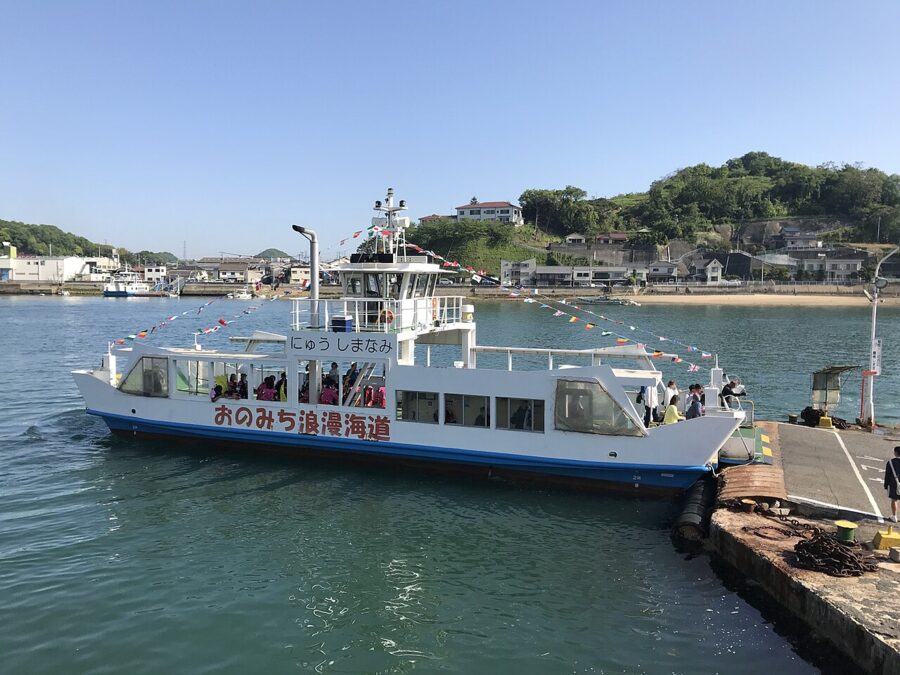
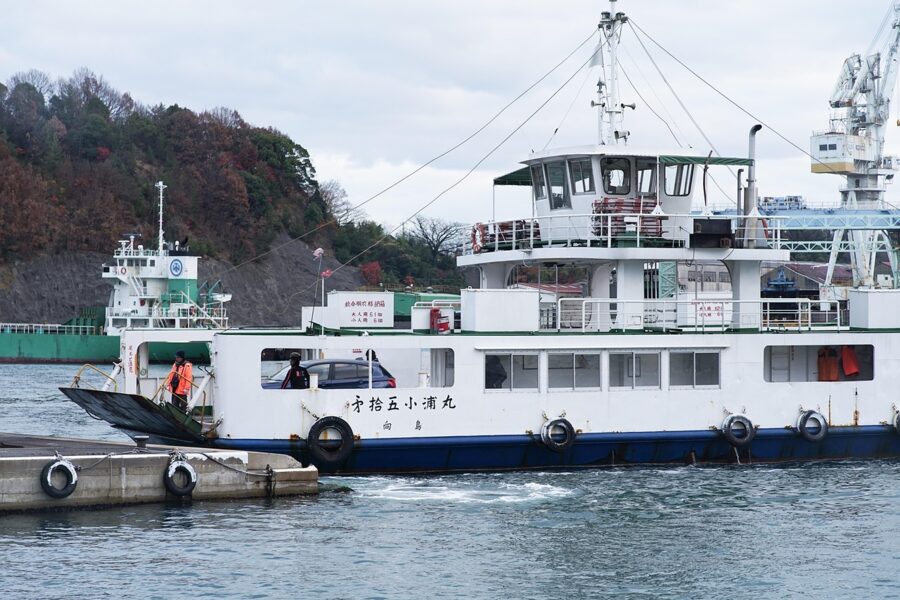
Two small ferry routes cross the Onomichi Channel to Mukaishima, and both take bicycles. The crossing takes about five minutes, there is no timetable to speak of beyond the first and last boats, and you pay the crew in cash once you are under way. A third route, the Fukumoto ferry, closed on 31 March 2025 after 135 years, so older maps and guides showing three crossings are out of date.
| Route (as of 2026) | Onomichi pier | Mukaishima pier | Adult / with bicycle | First and last from Onomichi |
|---|---|---|---|---|
| Ekimae ferry | Station front (駅前) | Tomihama (富浜) | ¥100 (about US$0.65) / ¥110 | 06:06 / 22:10 |
| Kaneyoshi ferry | Tsuchido (土堂) | Kaneyoshi (兼吉) | ¥100 / ¥110 | 06:05 / 22:00 |
The station-front boat is the one most riders take, because it leaves from beside the rental terminal and lands near the start of the Blue Line on Mukaishima. It carries foot passengers, bicycles and small motorbikes only. The Kaneyoshi ferry leaves from the Tsuchido pier about a kilometre (0.6 miles) east of the station, near the arcade, and also carries cars; take it if you are staying at that end of town. The city publishes the routes and fare tables, including fares for cars and motorbikes.
The Setoda boat
From the station-front port terminal, Setouchi Cruising runs boats along the channel and through the islands to Setoda on Ikuchijima, calling at Shinhama, Shigei-higashi on Innoshima, and Sunoue on Sagishima. On the timetable in force since April 2025 there are six boats a day each way: from Onomichi at 07:10, 09:15, 10:45, 12:40, 14:10 and 16:00, taking about 45 minutes to Setoda, and back from Setoda at 07:50, 10:00, 11:25, 13:25, 15:00 and 17:00. The fare to Setoda is ¥1,500 (about US$10), plus ¥500 (about US$3) for a bicycle.
That boat makes a short ride possible: ride to Setoda over two bridges and come back on the 17:00 boat, or go out by sea and ride back. The operator’s timetable notes that there are no boats on 1 January and that sailings at New Year vary; check it before you rely on the last boat.
On Mukaishima
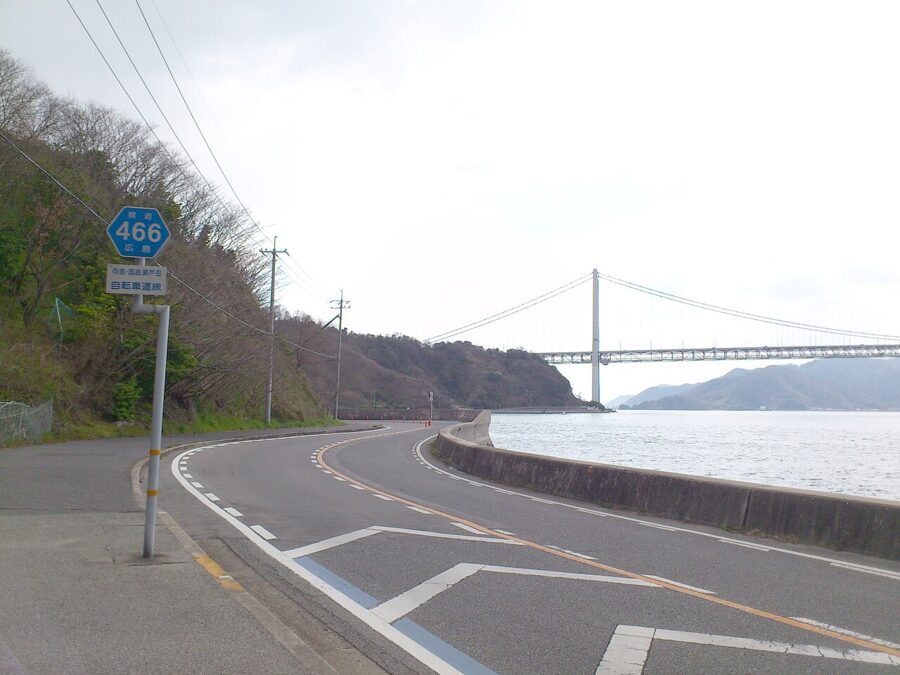
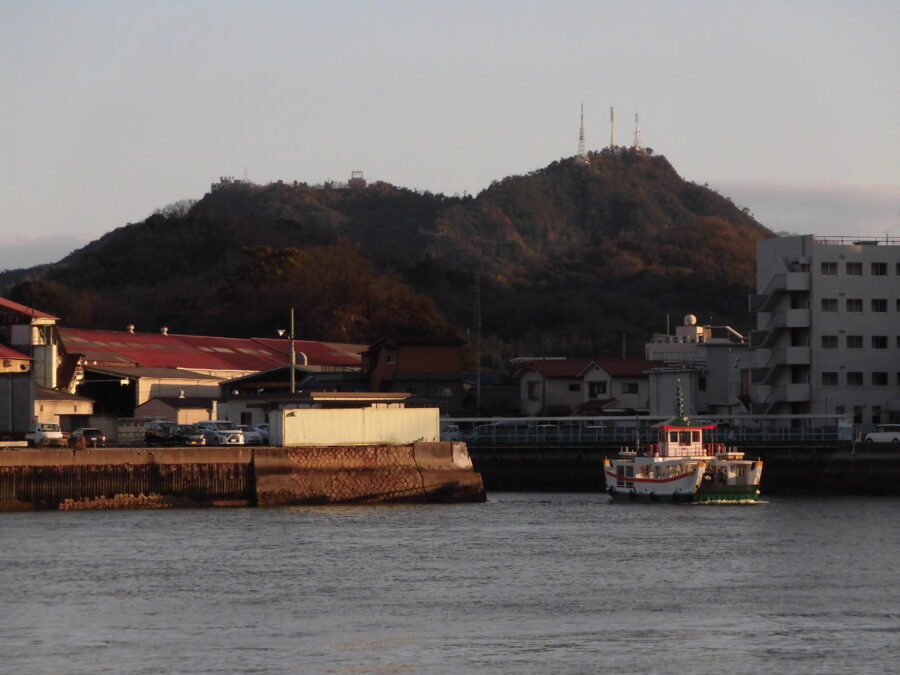
Off the station ferry, the blue line painted on the road leads you through the streets and across the north of Mukaishima for about 9 km (5.5 miles) before turning south to the Tachibana coast and the climb onto the 1,270 m Innoshima Bridge. From there the Shimanami Kaido cycling route runs island by island to Imabari. With only an afternoon, Mukaishima is worth it on its own: Takamiyama (283 m) has a lookout over the islands, and the torii of the Itsukushima Shrine on little Iwashijima, across a bridge to the west, stands in the sea at high tide.
Where to stay in Onomichi
Stay in Onomichi if you are arriving late, starting early, or giving the town its own day. If your plan is to ride the whole route over two days, a night on the islands at Setoda or on Omishima usually makes a better halfway point; that is the usual shape of a two-day Shimanami Kaido itinerary.
For riders: HOTEL CYCLE at ONOMICHI U2, with the bike in the room and the ferry five minutes away. It is also the most expensive option here.
By the station: Several ordinary city hotels sit within a short walk of the station and the ferry, among them Green Hill Hotel Onomichi on the waterfront by the station, Onomichi Kokusai Hotel in Shinhama, Onomichi Royal Hotel in Tsuchido and Onomichi Daiichi Hotel in Nishigosho-cho. They suit an early ferry and a late train.
On a budget: Anago no Nedoko, in a restored townhouse on the arcade, has dormitory beds from about ¥3,300 (about US$21) a night with seasonal changes, a women-only dorm, and private rooms for families and groups. Payment is cash only on arrival, check-in is from 16:00 to 22:00, and it does not take children under school age. It has a bike store at the back, and riders can use its showers and laundry even if they are not staying.
Since 1 April 2026 Hiroshima Prefecture charges an accommodation tax of ¥200 (about US$1.30) per person per night on stays of ¥6,000 (about US$39) or more (before consumption tax), collected by the hotel. It applies on the Hiroshima side of the route too, including Innoshima and Setoda.
A half day and a full day
Half a day (about four hours). Ride the ropeway up as close to 09:00 as you can and walk out along PEAK. Go down the Path of Literature to Senkoji, then the steps to the Tenneiji pagoda and the cat alley. Come out by Ushitora Shrine and walk the arcade back to the station for an early ramen lunch, before the queues build and in time for an afternoon boat or ride.
A full day. Do the morning as above, with the art museum if an exhibition is on, then go east after lunch to Saikokuji and Jodoji. In the evening, take the five-minute ferry to Mukaishima and back for the lit town across the water. PEAK never closes.
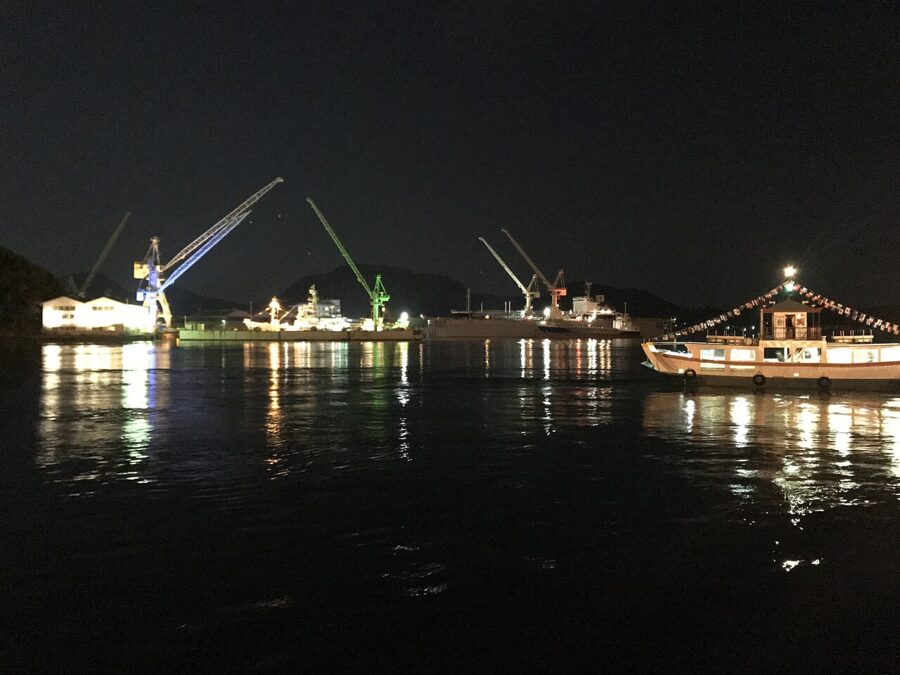
The calendar can change the plan. The Sumiyoshi fireworks over the channel (25 July in 2026) are the busiest night of summer, the Akari Matsuri lantern festival lights the lanes in October (17 October in 2026), and the cherry weekends are the most crowded of the year. Remember the ropeway’s December closure and the museum’s Mondays.
When you are ready to leave, the ride starts where you arrived. Wheel the bike down to the station-front pier, have ¥110 ready in coins, and look back at the hill from the middle of the channel: you will be able to pick out Senkoji, the pagoda and the lane you walked down that morning.