The bag counter at the Onomichi Station rental terminal takes suitcases for Imabari between 08:00 and 09:00, and at 09:01 the answer is no. That one hour decides more about a one-way ride on the Shimanami Kaido than the weather does. Miss it and you are either riding 70 km (43 miles) with a suitcase strapped to a rental bike, which nobody should do, or looking for another way to get the bag across six bridges without you.
The second question arrives in the evening. You are in Imabari, on Shikoku, with tired legs, and the room, the car or the train you need is back in Onomichi, on Honshu. There are good ways back, but almost all of them run on fixed times that are easy to miss by twenty minutes.
So this is about two problems: where the bag goes while you ride, and how you, and sometimes the bike, get back. Hours and fares are the operators’ own, as of November 2026.
Two questions to answer before you rent the bike
Ask where the bag sleeps tonight, and where you sleep. If both answers are the town you started in, you only need storage and a way back. If not, the bag has to travel, and the services that move it all stop taking bags in the morning or at lunchtime.
The second answer decides the bike as well. Shimanami Japan’s rental bikes can be dropped at any of its ten terminals, so a one-way ride is normal, but the island terminals close at 17:00 and the company does not allow its bikes on trains, buses or in taxis. A rental bike can ride a ferry; it cannot ride a bus home. Models, prices and the one-way exceptions are all part of Shimanami Kaido bike rental.
My rule for a first visit: decide the drop-off terminal before breakfast, send the bag before 09:00, and know the last boat or bus from wherever you might stop. The rest can be improvised.
Sending the bag ahead
Four services move luggage along the route. They differ in how early you give up the bag, what it costs and whether you must be a hotel guest.
Sagawa’s hands-free cycling service
Sagawa Express runs the simplest system, Shimanami Kaido Tebura Cycling (手ぶらサイクリング). You hand a bag to a partner facility at the start, fill in a slip and pay, and collect it from a partner at the end of the day. A suitcase, holdall or rucksack all count. The price is a flat ¥2,200 per item as of 2026, up to 160 cm in length, width and depth combined and 30 kg.
The catch is the clock. On the Hiroshima side, which means Onomichi, Innoshima and Ikuchijima, partner hotels take bags until 09:00. On the Ehime side, Hakatajima, Omishima, Oshima (大島, Imabari) and Imabari itself, the cut-off is 10:00. Bags reach island and Onomichi partners after 18:00, and Imabari city partners after 16:00, so pack a change of clothes in a daypack.
Most partners serve only their own guests. These counters take anyone:
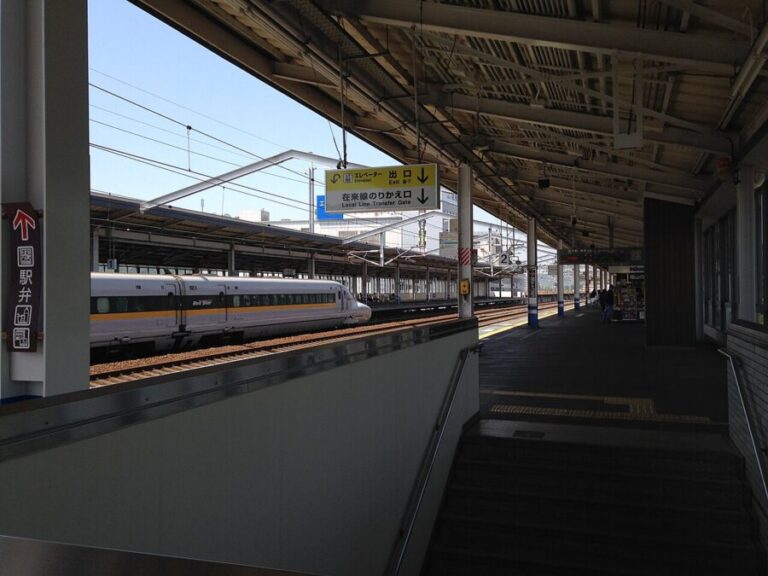
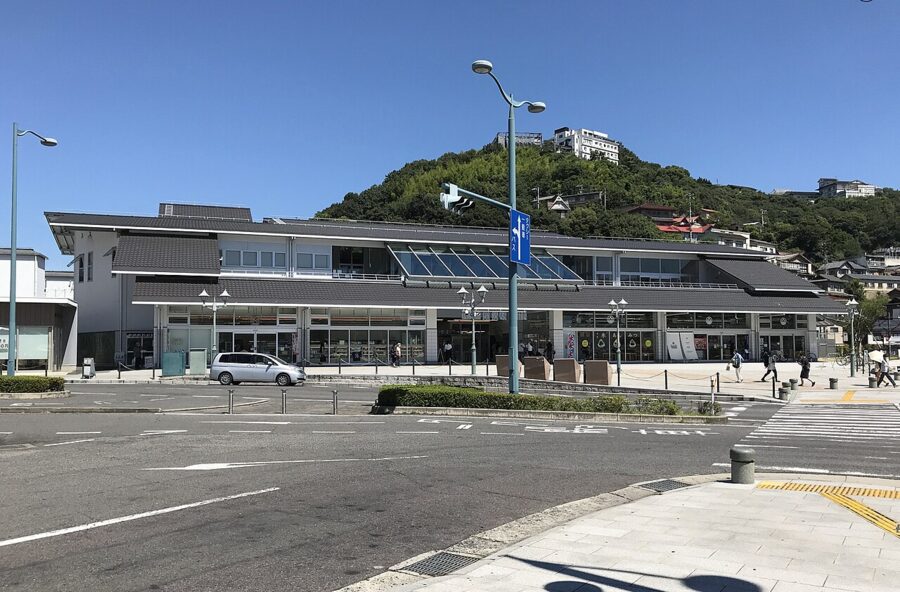
- Shimanami Japan’s Onomichi Station rental terminal: bags in 08:00 to 09:00; collection 17:00 to 19:00 (March to November) or 17:00 to 18:00 (December to February).
- Onomichi Royal Hotel: non-guests may drop bags 08:00 to 09:00 and collect 18:00 to 19:00.
- WAKKA on Omishima: non-guests may drop bags 09:00 to 10:00 and collect 18:00 to 19:00.
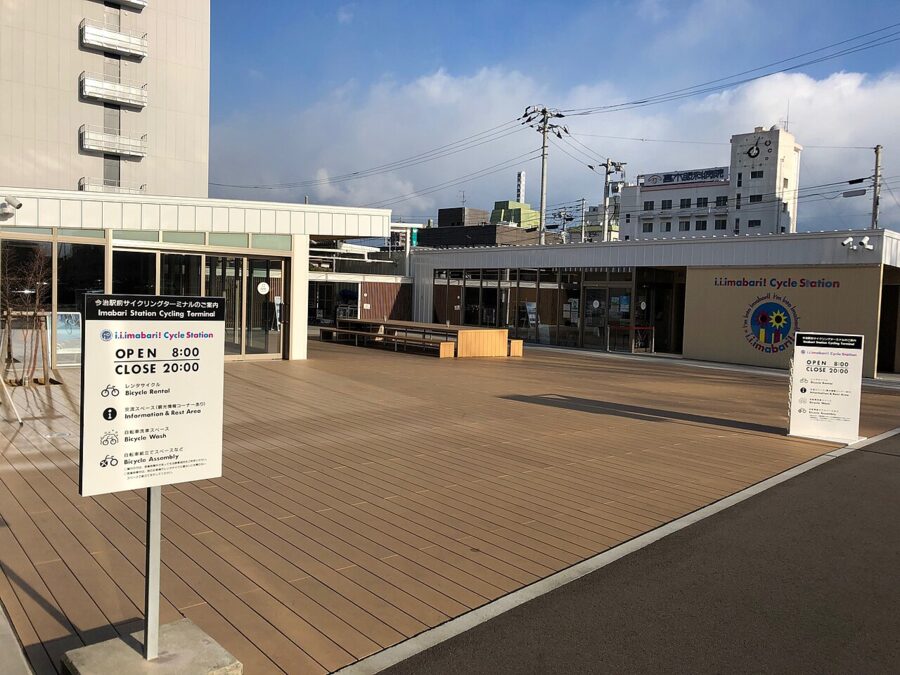
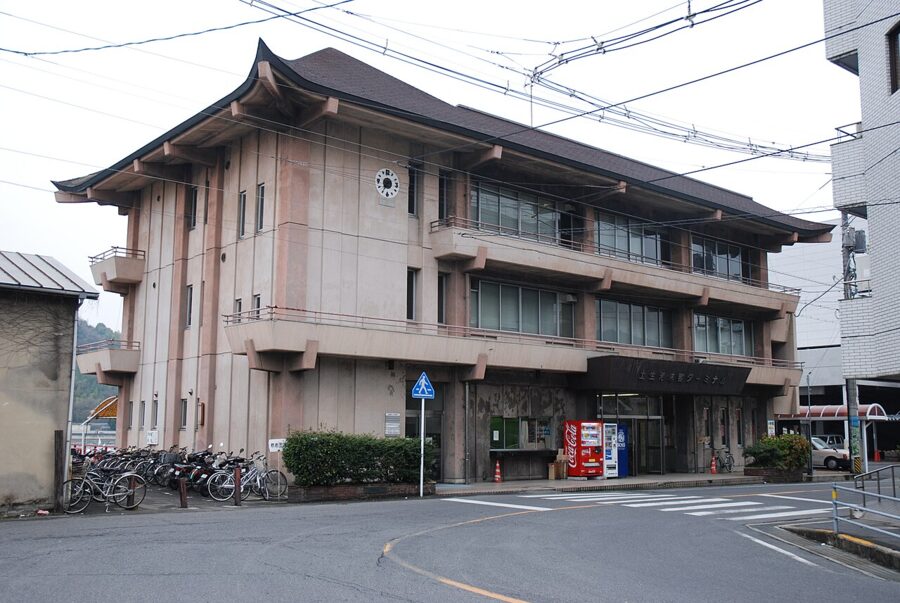
- Imabari Station Cycling Terminal: bags in 08:00 to 10:00; collection 16:00 to 19:00 (March to November) or 16:00 to 18:00 (December to February).
- Sagawa’s own Imabari depot, out at the Tomita Shinko port area rather than by the station: bags in 08:00 to 10:00, collection 16:00 to 20:00.
- Shimanami Onsen Kisuke no Yu, the hot spring near Imabari Station: collection 16:00 to 22:00 for anyone using the baths, a civilised end to the ride.
The full partner list is on Sagawa’s hands-free cycling page, and it changes more often than the price. Individuals just turn up; groups book with the depot. Valuables, cash and fragile items are refused, and a badly packed bag can be refused at the ferry it rides on part of the way. Traffic and weather can push delivery to the next day.
Two extras are worth knowing. The Imabari terminal sends bags to the Onomichi terminal overnight: hand over between 08:00 and 12:00 and collect the next day. And Sagawa ships bicycles in a bike box, sold for ¥6,600 and reserved a week ahead, up to 260 cm packed, paid on delivery. Not every partner handles bikes.
pikuraku PORTER: lockers that send themselves
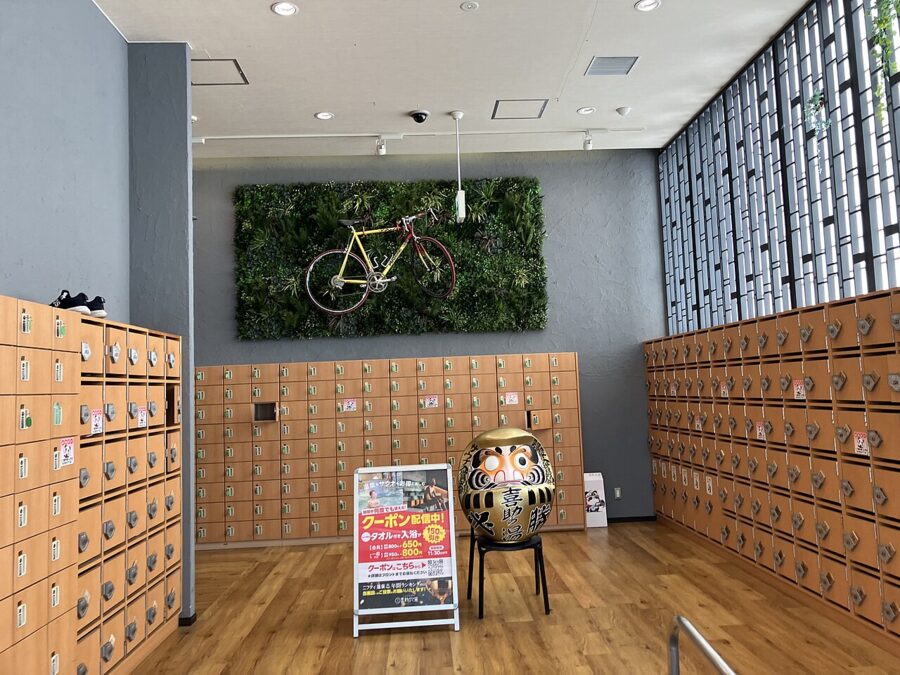
The newer option suits late risers. SPACER’s pikuraku PORTER service turns four sets of cashless lockers into a delivery point: in JR Onomichi Station, inside the Onomichi Station rental terminal, at Setoda Port on Ikuchijima and at JR Imabari Station. Put the bag in a locker, choose “send to hotel” on the touch panel, pay by card, and it reaches that night’s hotel by about 20:00. Orders close at 14:00, five hours later than Sagawa on the Onomichi side.
The price is per locker door, not per bag, so two bags in one large locker cost the same as one. As of November 2026, from the Onomichi lockers a small, medium or large door costs ¥2,000, ¥2,500 or ¥3,000 to a hotel on Ikuchijima, and ¥4,000, ¥4,500 or ¥5,000 to one in Imabari. Imabari Station to an Onomichi hotel costs the same ¥4,000 to ¥5,000.
Delivery goes only to the roughly sixty hotels and inns on the pikuraku PORTER list, and only to the one you sleep in that night, and it cannot be booked ahead. The large locker, 33 by 64.5 cm and about 81 cm tall, takes a big suitcase standing up. If your hotel is on the list and 09:00 feels early, this is the better service.
Local operators: Onomichi Base and WAKKA
Onomichi Base, a rental shop near Onomichi Station, runs Shimanami Tebura-bin, which carries bags between its shop and hotels along the route the same day. Book online by 16:00 the day before and hand the bag over by 12:00. The limit is 160 cm and 15 kg per bag, and in Imabari it delivers only within 2 km of the station. The price is per bag by distance; its booking page has a table, but I would treat the quote in the confirmation email as the price.
WAKKA, a cycling hotel at Inokuchi on Omishima, prices by the truck: ¥4,500 between Omishima and Ikuchijima and ¥13,000 between Onomichi and Imabari, for up to about ten bikes or twenty small suitcases. For a group, or for a bike you do not want to box, that adds up. WAKKA’s same-day delivery is first come, first served, and the office closes on Tuesdays.
| Service | Hand over | Arrives | Price (as of 2026) |
|---|---|---|---|
| Sagawa Tebura Cycling | By 09:00 (Hiroshima side) or 10:00 (Ehime side), at a partner | After 18:00, or 16:00 in Imabari city | ¥2,200 per bag |
| pikuraku PORTER | Locker order by 14:00 | About 20:00, partner hotel only | ¥1,000 to ¥6,000 per locker door |
| Onomichi Base Tebura-bin | Booked the day before; bag by 12:00 | Same day | Per bag, by distance |
| WAKKA same-day | By arrangement | Same day | ¥4,500 to ¥13,000 per truck |
Leaving the bag at either end
If you come back to where you started, storage is easier and cheaper. The lockers that matter are SPACER’s cashless ones, paid by card, and in most of them the first hour is free.
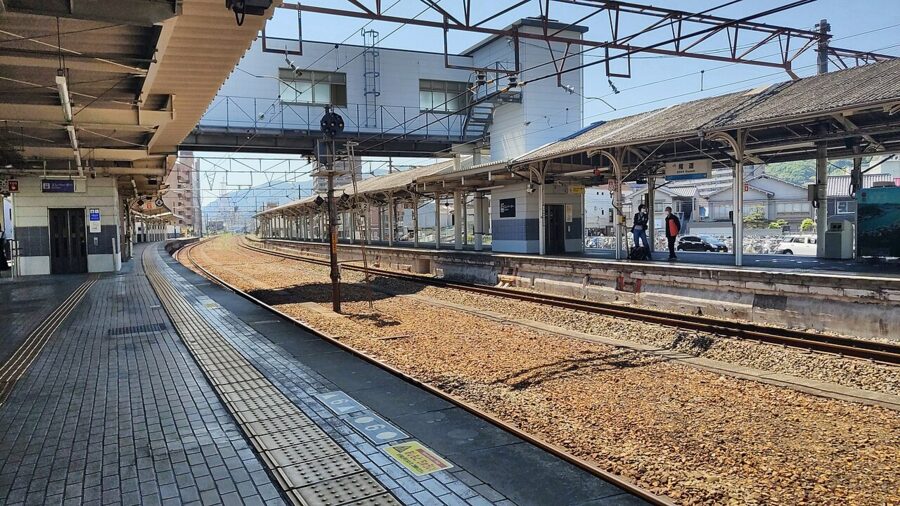
- JR Onomichi Station, outside the gates to the right: 04:00 to 23:59. Small ¥300, medium ¥400 and large ¥600 per three hours, capped at ¥900, ¥1,200 and ¥1,500 for 24 hours.
- Inside the Onomichi Station rental terminal: a flat ¥600 to ¥1,500 for 24 hours, but only during terminal hours, 08:00 to 19:00 in season. Come back after closing and the bag stays in until morning.
- Setoda Port on Ikuchijima, inside the Setoda Port Service waiting room: 07:00 to 20:30. Small ¥200, medium ¥300 and large ¥400 per two hours, capped at ¥600, ¥900 and ¥1,200.
- JR Imabari Station, outside the gates to the left, in the passage by the east exit: open 24 hours. The same caps as Onomichi, with the large size at ¥500 per three hours.
Shimanami Japan’s Imabari terminal also holds bags for its rental customers, for a fee. For a day ride to Setoda and back by boat, the Onomichi Station lockers are the obvious choice: the pier is a short walk away and they stay open long after the last boat.
The ferries that take bikes
The bridges ended most island ferries, but the survivors are the most useful tools a rider has. All of these carry bicycles; what differs is how often they run.
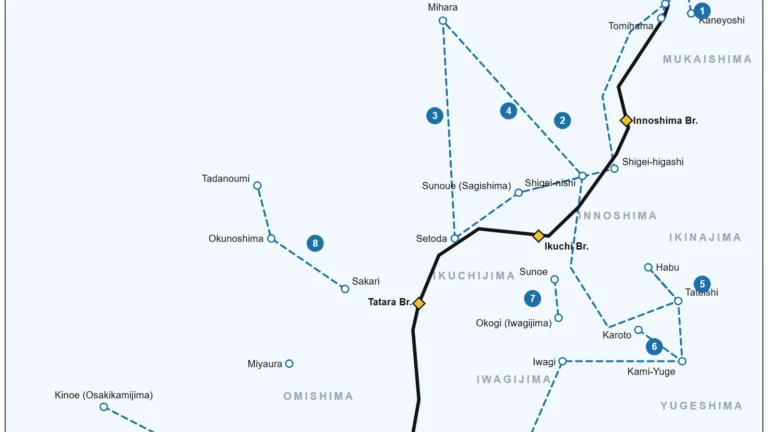
Onomichi to Mukaishima: the five-minute crossings
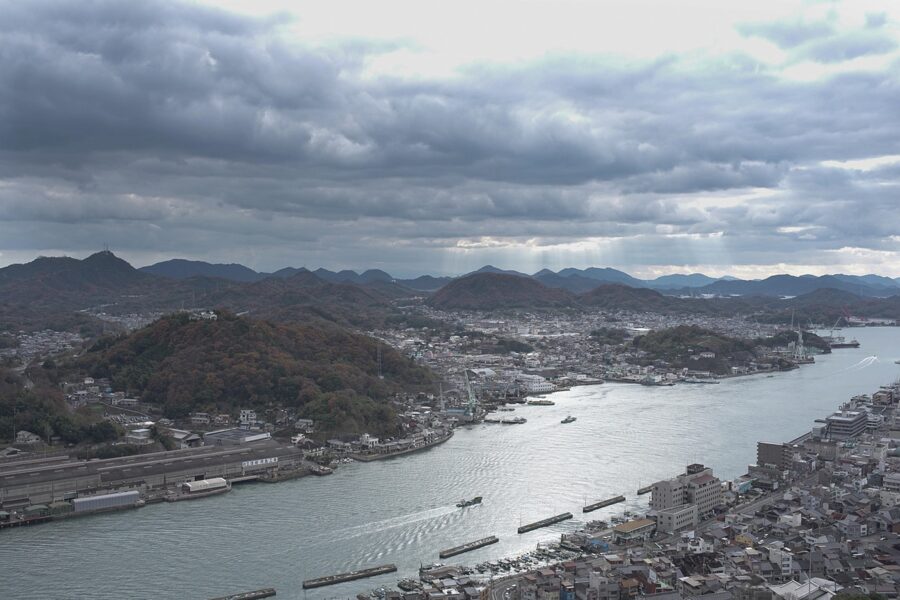
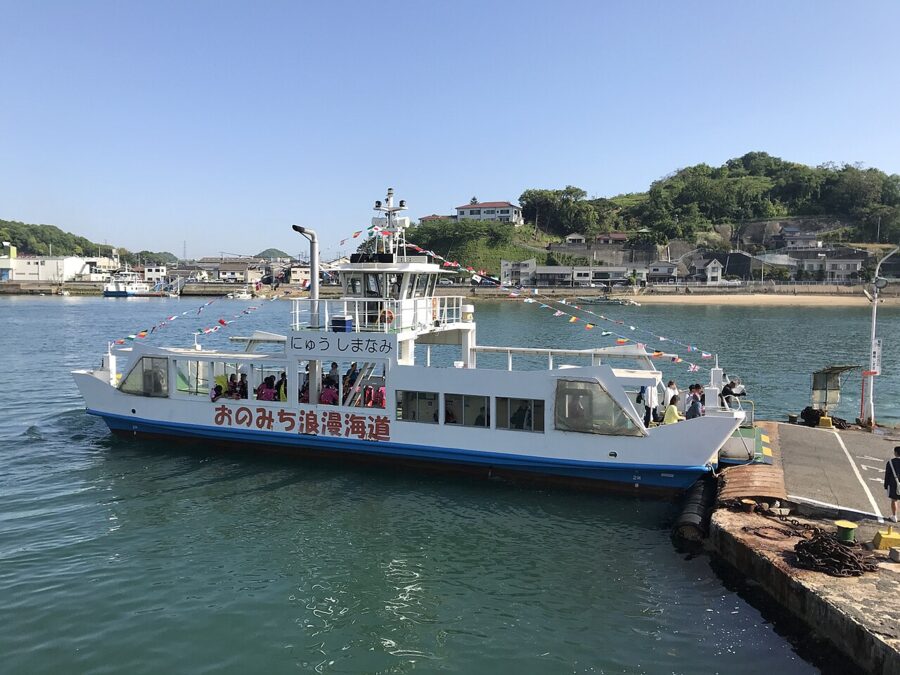
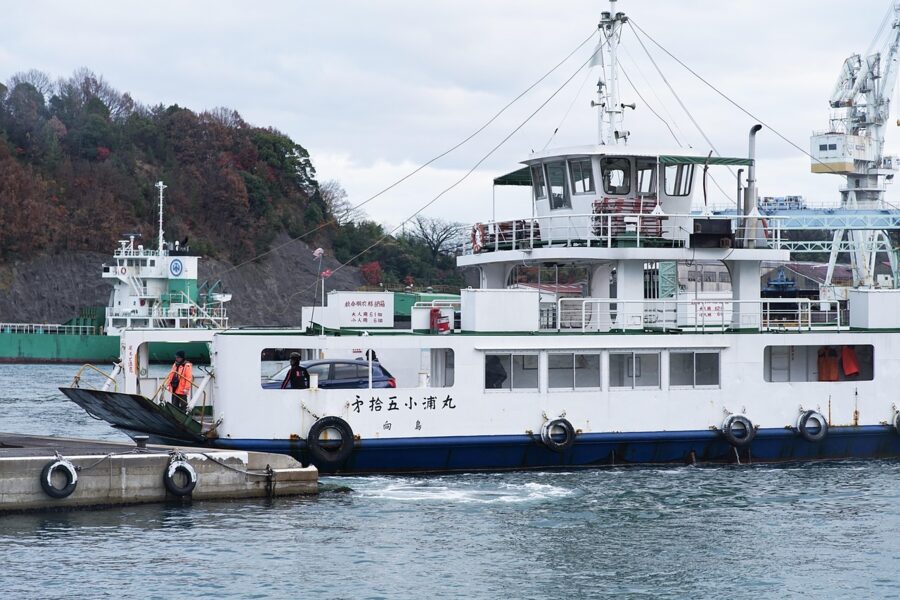
The usual start of the ride is a boat, not a bridge. Two small ferries shuttle across the channel to Mukaishima. The Ekimae ferry leaves from the pier in front of Onomichi Station for Tomihama; the Onomichi Ferry leaves from Tsuchido, a few hundred metres east along the waterfront, for Kaneyoshi. A third, the Fukumoto ferry, stopped running in 2025, so ignore older maps that show it.
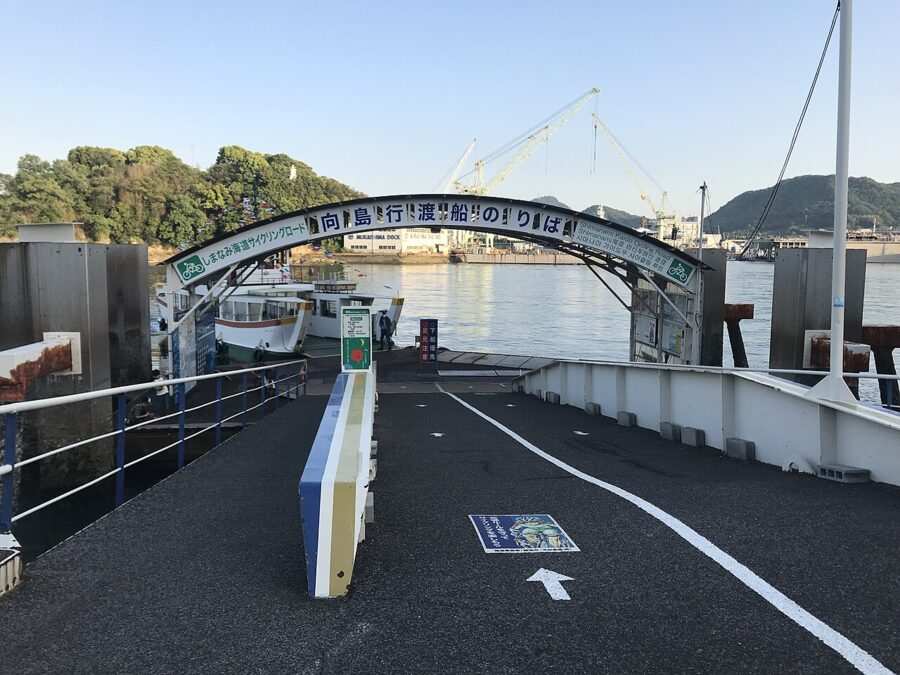
Both are operated by Onomichi Watashibune and cost the same, according to the city’s 2025 fare table: ¥100 for an adult on foot, ¥110 with a bicycle, ¥50 for a child. They shuttle back and forth all day, so the city lists only the first and last sailings. The first boats leave Onomichi just after 06:00 and the last around 22:00; Onomichi City’s port page lists both routes.
Onomichi to Setoda: the boat that saves the day ride
The most useful boat on the whole route is Setouchi Cruising’s regular service between the Onomichi Ekimae Sanbashi pier, beside the station, and Setoda Port on Ikuchijima. It turns Setoda into a comfortable day: ride out over the Innoshima and Ikuchi bridges, eat in Setoda, and sail home. Every boat takes bicycles as they are, and individuals need not book.
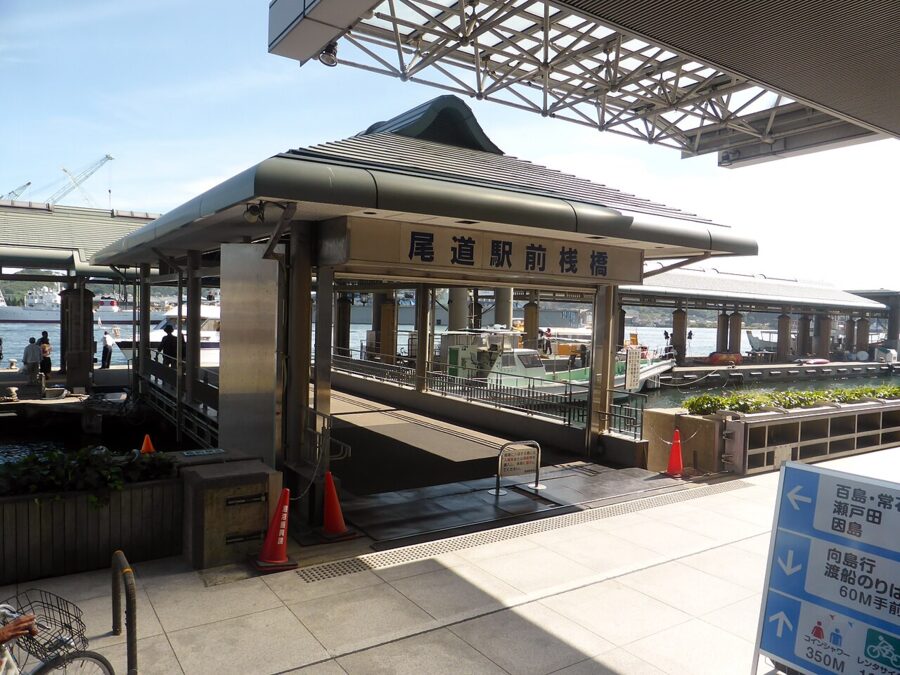
On the current timetable, revised on 26 April 2025, there are six boats each way, every day. From Onomichi they leave at 07:10, 09:15, 10:45, 12:40, 14:10 and 16:00. From Setoda they leave at 07:50, 10:00, 11:25, 13:25, 15:00 and 17:00, and the last one reaches Onomichi at 17:45. The trip takes about 45 minutes, calling at Onomichi Shinhama, Shigei-higashi on Innoshima and Sunoue on Sagishima, and sometimes Sawa.
The fare is ¥1,500 one way, plus ¥500 for a bicycle or an e-bike, as of 2026. Machines at Onomichi and Setoda take cash, cards and IC cards; at smaller stops you pay on board. Check the Setouchi Cruising timetable on the morning: weather warnings, typhoons, fog and strong wind all cancel sailings.
Setoda to Mihara: the late escape
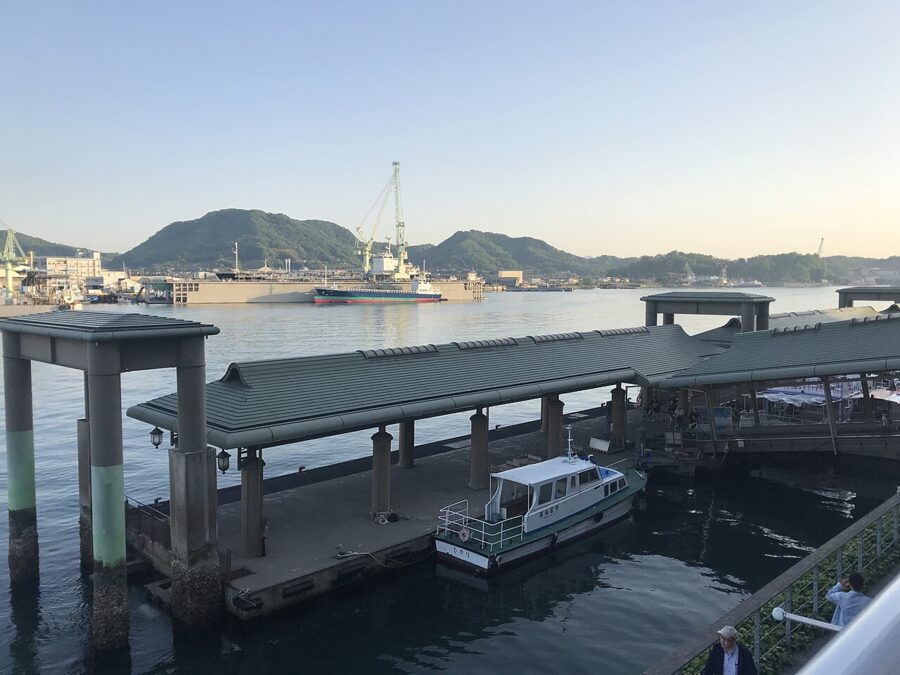
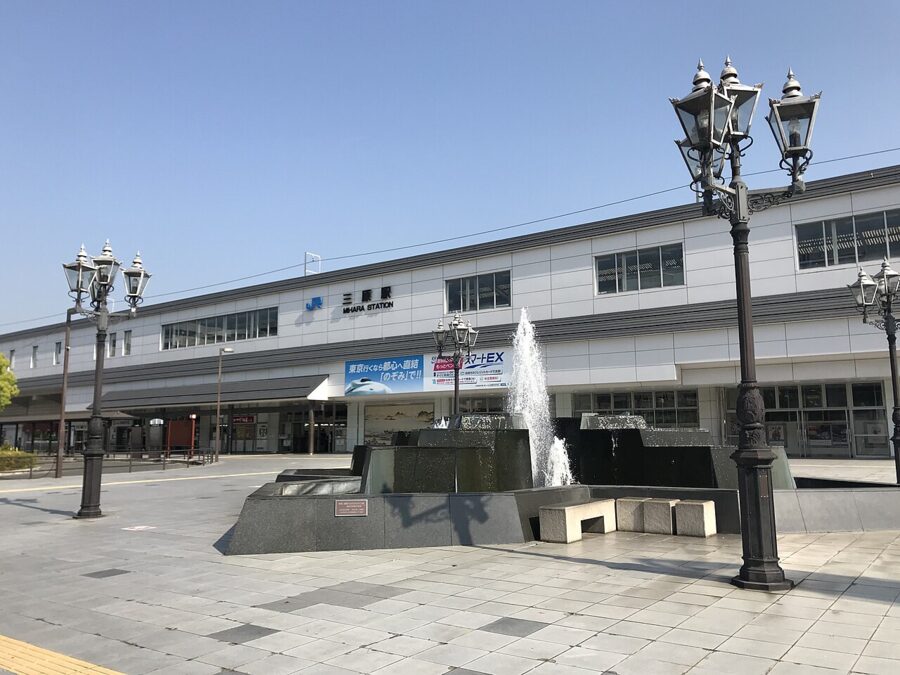
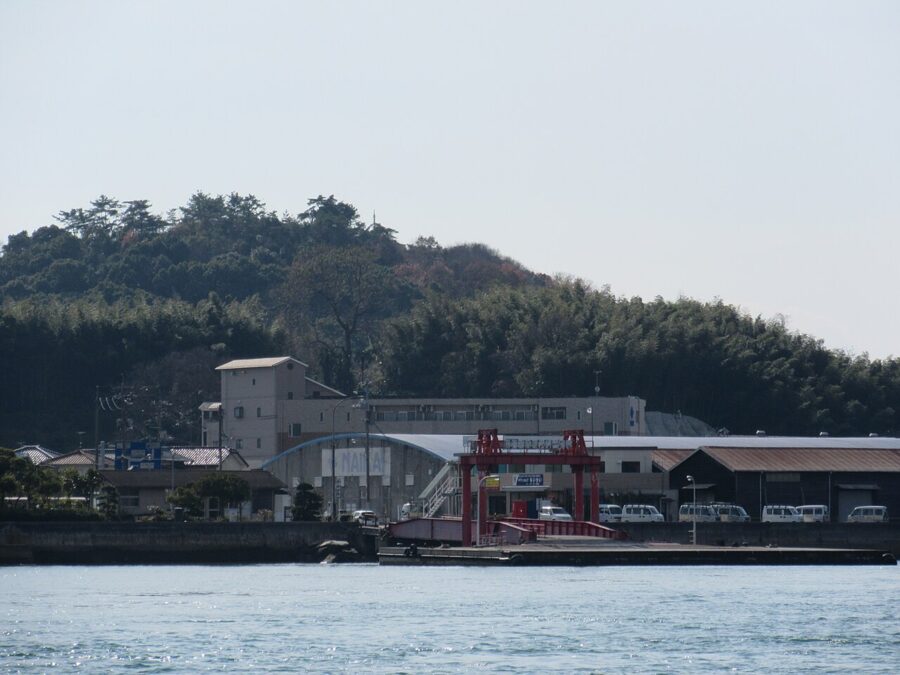
Setoda has a second way off the island that runs much later. Yuba Kisen’s passenger boat links Setoda Port and Sawa with Mihara twelve times a day, taking about half an hour, and the last boat leaves Setoda at 20:10. The fare is ¥920, with ¥120 for a bicycle. Mihara Port is a five-minute walk from JR Mihara Station, which has Shinkansen trains and the local Sanyo Line east to Onomichi, two stops away.
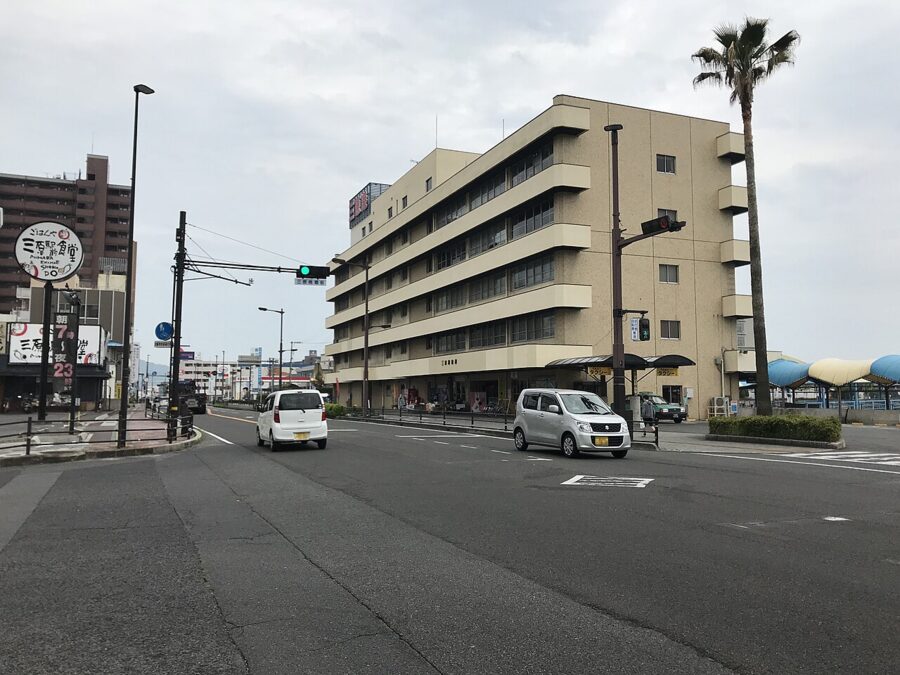
This is for your own bike, or for after you have returned a rental, since no Shimanami Japan terminal is in Mihara. The Setoda to Mihara timetable is published by the Habu Shosen group, which also runs high-speed boats from Habu on Innoshima to Mihara.
From Imabari Port: the island boats
Imabari Port has two boats that matter to riders. Geiyo Kisen’s fast passenger boat runs from Imabari to Tomoura on Oshima, Kinoura on Hakatajima, then through the Kamijima islands to Habu on Innoshima. It sails four times a day each way, and the full run to Habu takes about 80 minutes.
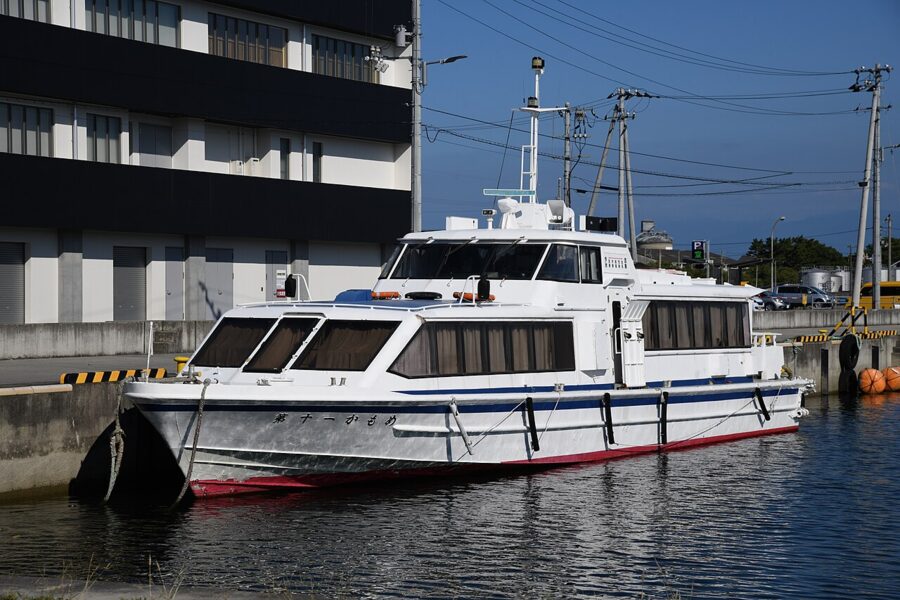
From Imabari, weekday departures are 06:00, 08:00, 14:30 and 17:20; at weekends and on holidays they are 06:20, 09:15, 14:30 and 17:20. From Habu, departures are 12:20, 16:00 and 18:40 every day, plus 07:45 at weekends and 06:22 on weekdays; the 18:40 reaches Imabari at 19:55. As of the Geiyo Kisen timetable, adult fares from Imabari are ¥670 to Tomoura, ¥1,050 to Kinoura and ¥1,780 to Habu.
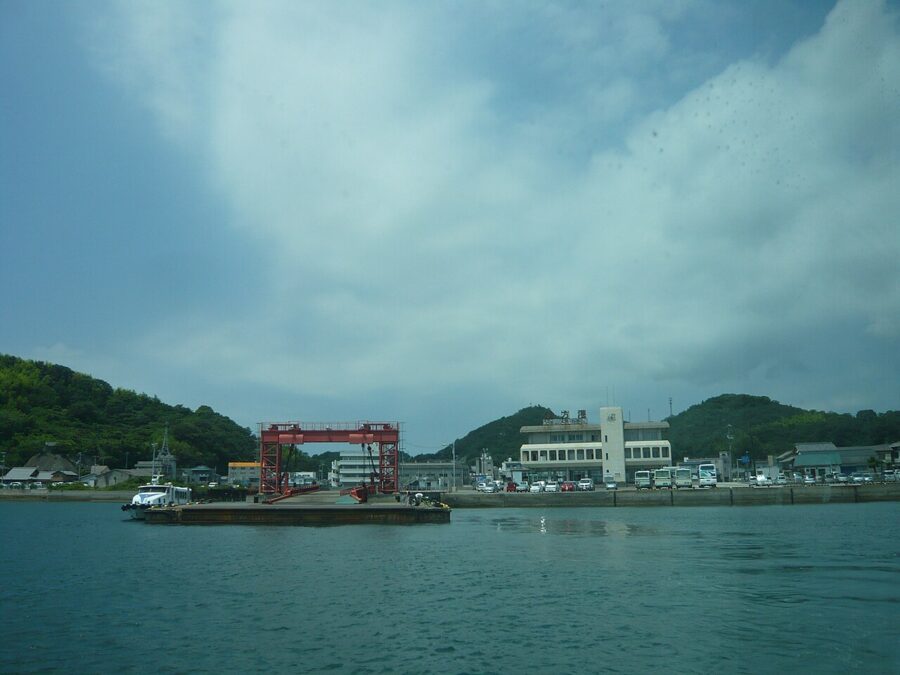
The bike rules are in the small print. The weekday 06:00 from Imabari and 06:22 from Habu use a contracted boat between Iwagi and Habu, with a change at Iwagi, and that boat carries no bikes or luggage at all. The 12:20 from Habu limits the number of bikes. The timetable does not list a bicycle fare, so ask at the window.
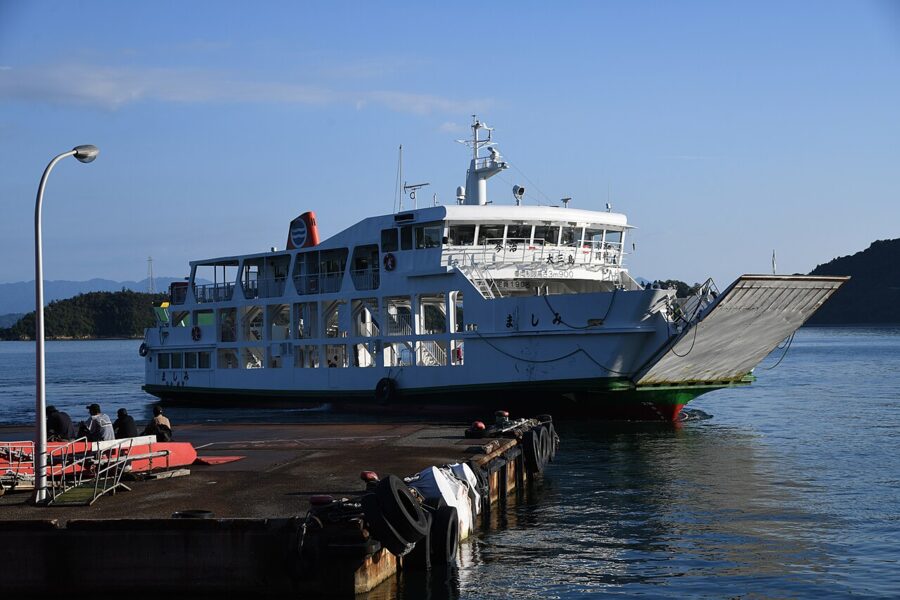
The second boat is the Omishima Blue Line car ferry from Munakata, on Omishima‘s west coast, to Imabari. It is slow and infrequent, but it is the way off Omishima that avoids the last three bridges. The crossing takes 55 minutes; boats leave Munakata for Imabari at 11:05 and 19:00, and Imabari for Munakata at 06:30 and 13:05. The Omishima Blue Line fare is ¥760, plus ¥250 for a bicycle.
The autumn Cycle Ship
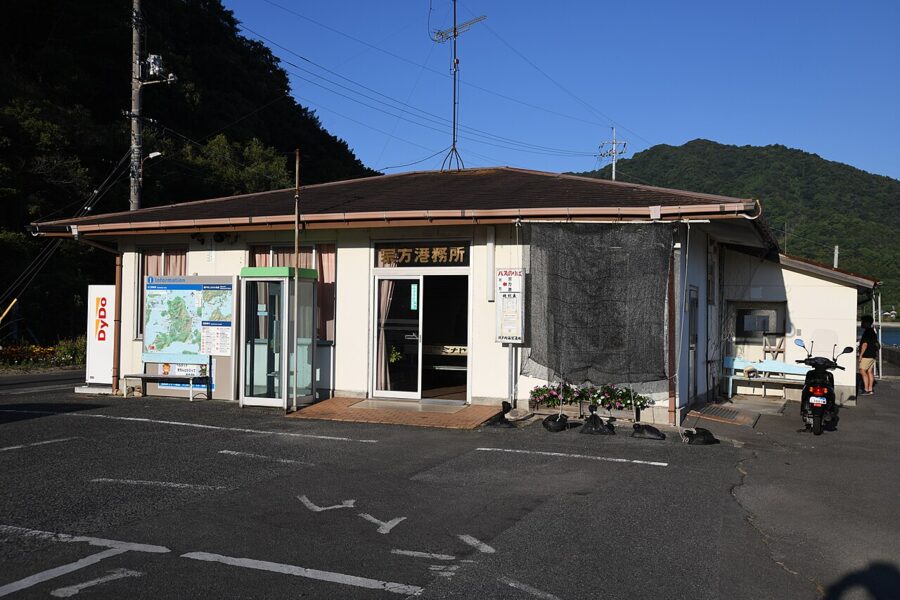
For the second year running, JR West organised a trial service linking Onomichi and Imabari by sea, the first through route since the bridges opened. In 2026 it ran on sixteen Saturdays and Sundays in October and November, with three boats relaying between Onomichi and Imabari via Setoda, Inokuchi on Omishima, Edagoe on Hakatajima and Shitadami on Oshima. A one-day Shimanami Cruising Pass cost ¥5,500 including the bike, single-section tickets were sold at the piers, and bikes from partner rental shops travelled free south of Setoda.
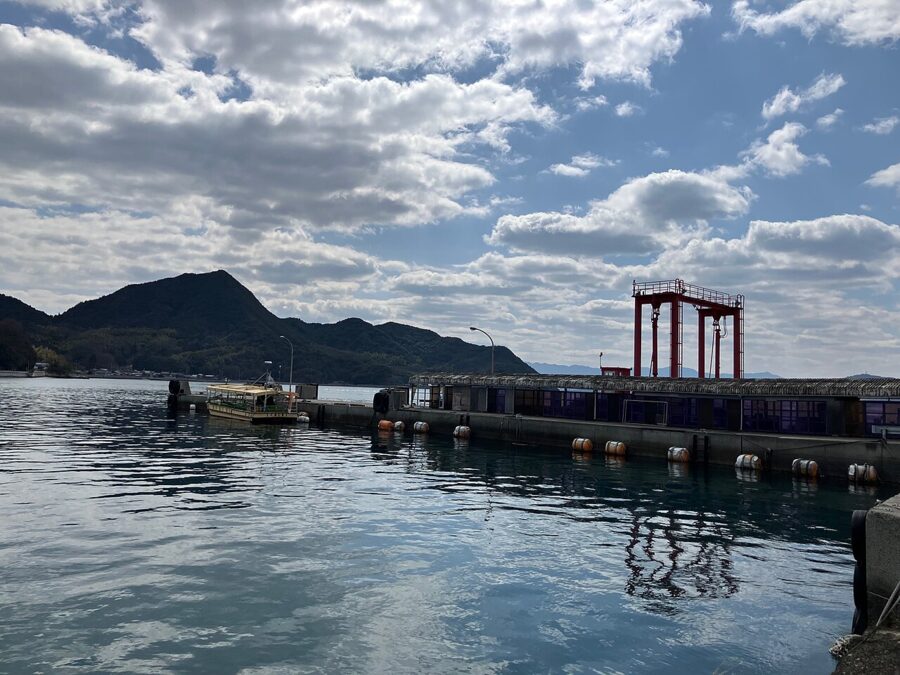
No 2027 season had been announced by late November 2026. If it returns, it is the best answer yet to the one-way problem: ride half the route, sail the rest. Watch Shimanami Japan’s Cycle Ship page.
Buses along the route
Buses are how most people get back, with one rule riders forget: no rental bikes. The highway buses carry a folding or dismantled bike in a bike bag in the hold, if there is room, and that is all.
The Shimanami Liner to Fukuyama
The Shimanami Liner highway bus runs between JR Imabari Station and JR Fukuyama Station along the expressway, stopping at the islands on the way. Since 1 October 2026 every seat can be reserved online or by phone, though you can still board without a booking if there are seats. The same timetable change ended the stop at Imabari Port, so board at the station.
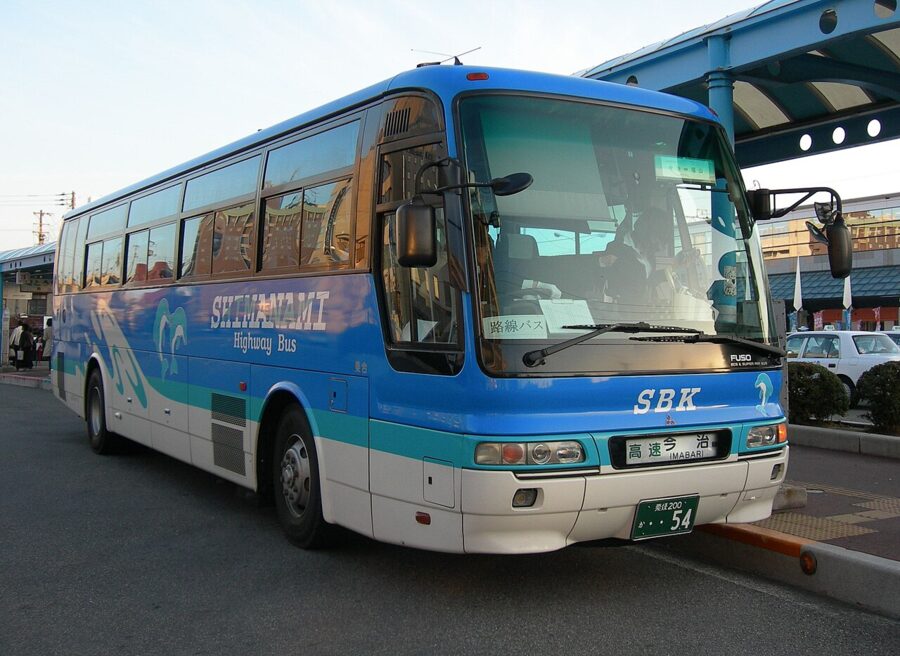
There are sixteen departures from Imabari Station, from 06:20 to 19:30 every day, plus a 05:50 non-stop on weekends and holidays that reaches Fukuyama at 07:10. A stopping bus takes about 1 hour 35 minutes. As of the October 2026 fares, Imabari Station to Fukuyama costs ¥3,300, or ¥2,970 if you book and pay online, and Imabari Station to the Mukaishima stop costs ¥2,000.
The stops, in order from Imabari, are Mashima, Oshima, Hakatajima, Kamiura, Omishima, Setoda PA and Setoda on Ikuchijima, Innoshima Shigei, Innoshima Ohashi, Mukaishima, Kotoh and Fukuyama. Going north, you can only board between Imabari and Omishima, and you can only get off from Innoshima Shigei onwards, so the bus is no use for hopping between the Ehime islands. Setouchi Bus’s Shimanami Liner page has the full timetable and the boarding rules.
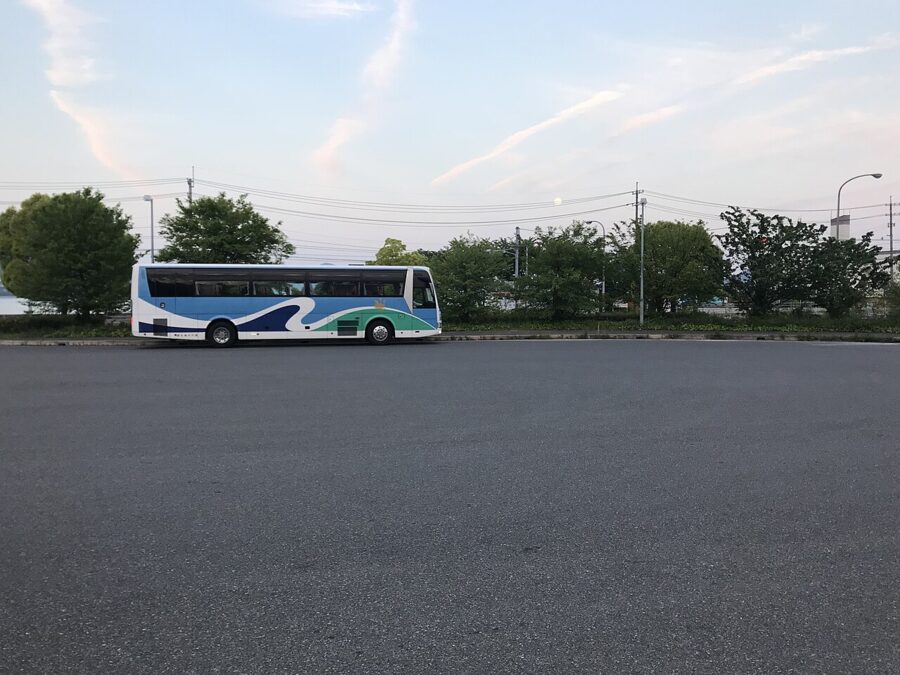
A second Shimanami Liner runs from Imabari to Hiroshima via the same islands, all seats reserved, in about 2 hours 50 minutes: the better bus if you are going straight on to Hiroshima.
The island buses
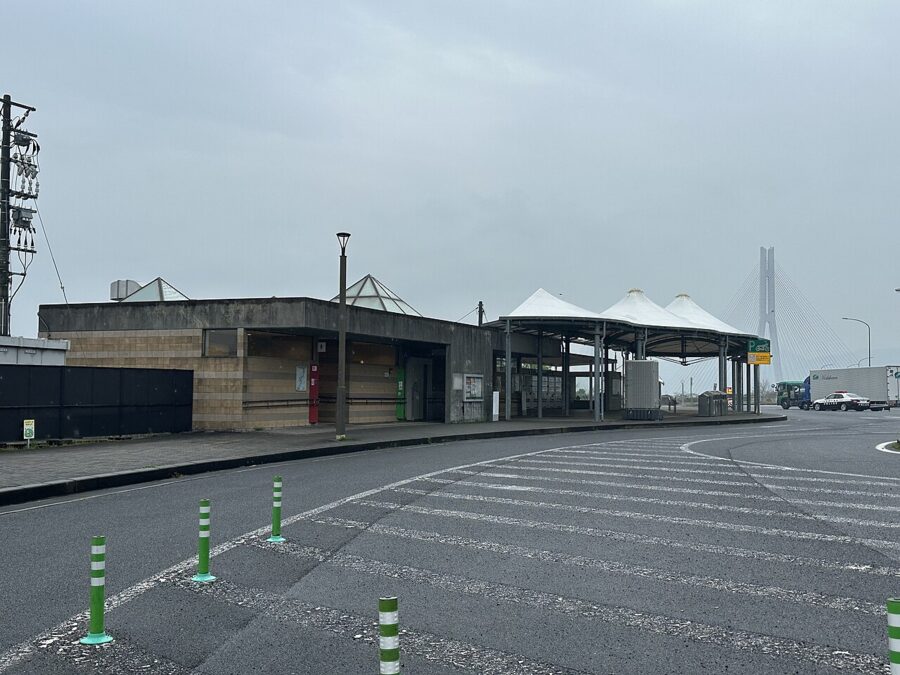
On the Hiroshima side, Onomichi Bus runs two routes that matter. The Innoshima line goes from Onomichi Station to Habu Port on Innoshima in about 48 minutes, with buses every 30 to 60 minutes from 06:20 to 21:25 on weekdays and Saturdays. On the way it stops at Innoshima Ohashi, by the Innoshima Bridge, which is also a Shimanami Liner stop.
The Setoda line is sparse. On weekdays buses leave Onomichi Station for Setoda Port at 07:05, 11:33, 14:38 and 16:50, and Setoda Port for Onomichi at 06:45, 08:37, 13:15, 16:20 and 18:10. At weekends there are three each way, the last leaving Setoda at 16:05.
Seats are first come, first served, and a full bus takes no standing passengers. Onomichi Bus’s route timetables were revised on 1 April 2026.
On the Ehime side, Setouchi Bus and Setonaikai Kotsu run buses from Imabari across Oshima and Hakatajima to Omishima, ending at Miyaura Port, a few stops past Oyamazumi Shrine. The trip from Imabari Station to the shrine takes about 65 minutes, and the last bus back from Miyaura Port leaves at 19:00 on weekdays and 18:00 at weekends and on holidays. Rental bikes cannot ride them either.
Getting back to Onomichi or Imabari
Shimanami Japan says it plainly: there is no direct public transport between Onomichi and Imabari. Every way back is a combination.
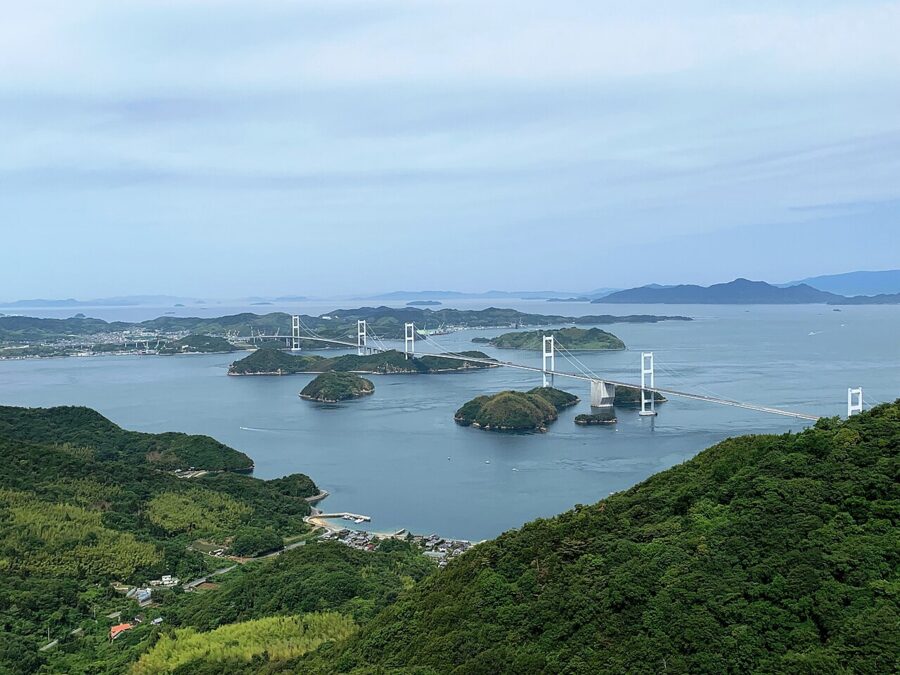
From Imabari to Onomichi
The standard answer is the Shimanami Liner to Fukuyama, then a local train back west to Onomichi, about 20 minutes on the Sanyo Line. It is simple, but it overshoots Onomichi. The quicker way into central Onomichi is to get off the Shimanami Liner at Innoshima Ohashi, which costs ¥1,800 from Imabari Station, and change to the Onomichi Bus Innoshima line. From that stop the bus reaches Onomichi Station in about half an hour.
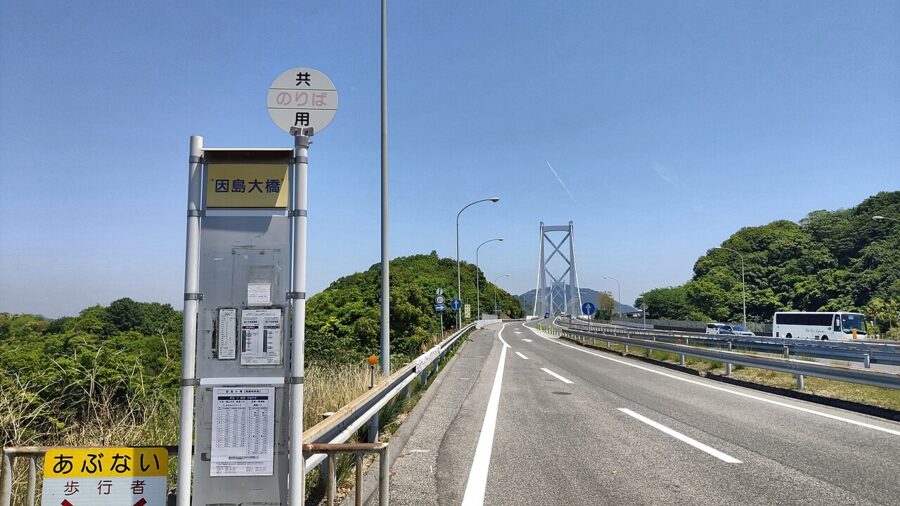
Shimanami Japan suggests this transfer to its own customers. To sail part of the way instead, the 14:30 Geiyo Kisen boat from Imabari reaches Habu at 15:50, and the Onomichi bus leaves from Habu Port.
| Where you finish | Back to Onomichi | Last useful departure (as of November 2026) |
|---|---|---|
| Imabari Station | Shimanami Liner to Fukuyama, then train; or Liner to Innoshima Ohashi, then Onomichi bus | Liner 19:30 from Imabari Station (to Fukuyama) |
| Imabari Port | Geiyo Kisen to Habu, then Onomichi bus | 17:20 boat, arriving Habu 18:35 |
| Omishima | Shimanami Liner from Omishima stop | About 20:00 northbound |
| Setoda, Ikuchijima | Setouchi Cruising boat to Onomichi; or Yuba Kisen boat to Mihara, then train | 17:00 to Onomichi; 20:10 to Mihara |
| Habu, Innoshima | Onomichi Bus Innoshima line | 20:35 from Habu Port (weekdays and Saturdays) |
From the middle islands
If your legs give out halfway, Setoda and Habu have the latest boats and buses on the route. From Omishima, the Shimanami Liner leaves for Fukuyama about every hour until after 20:00, and the island bus runs back to Imabari until 19:00 on weekdays (18:00 at weekends and on holidays).
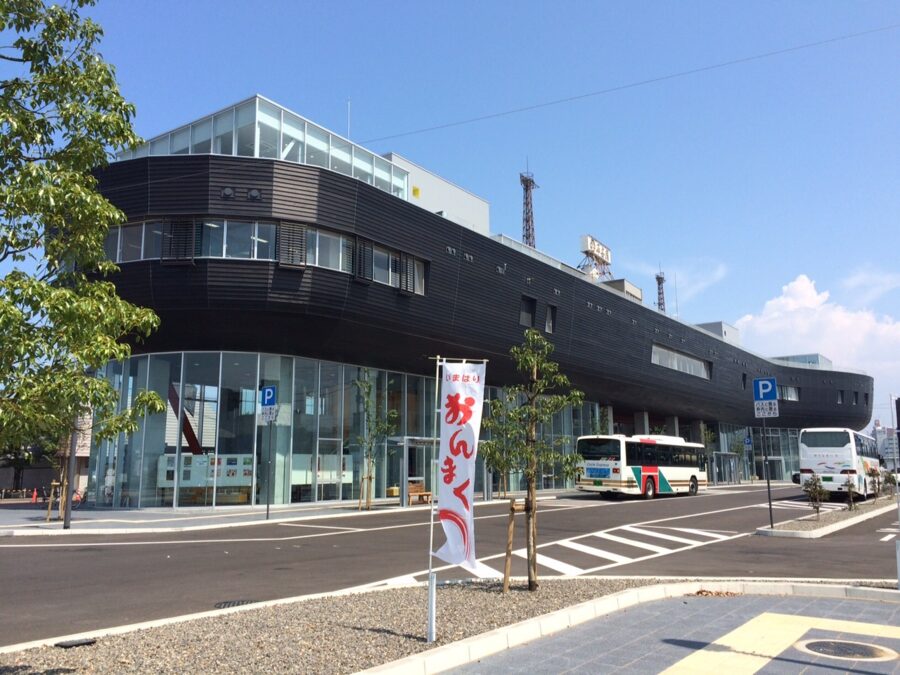
The rental bike is the real constraint. The island terminals, at Mukaishima, Habu, the two in Setoda, Tatara Shimanami Park on Omishima, Hakata S.C. Park and Yoshiumi on Oshima, close at 17:00. Onomichi and Imabari stay open until 19:00 in season and 18:00 in winter, and late returns cost extra.
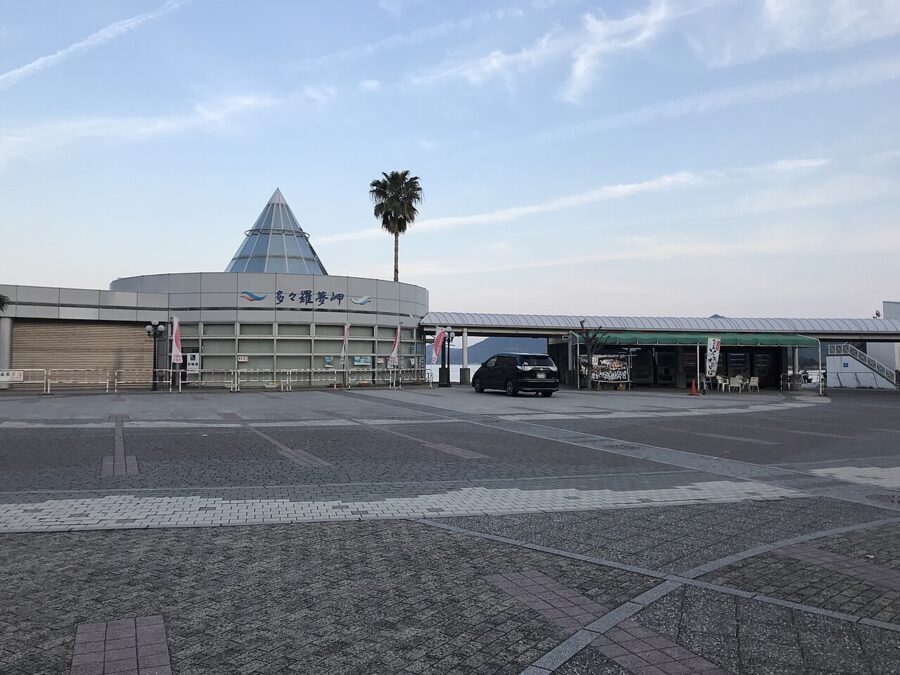
The top-of-the-range e-bikes must go back the same day. The terminal list gives each terminal’s nearest bus stop and port, the most useful detail for planning a way home.
A one-way day that works
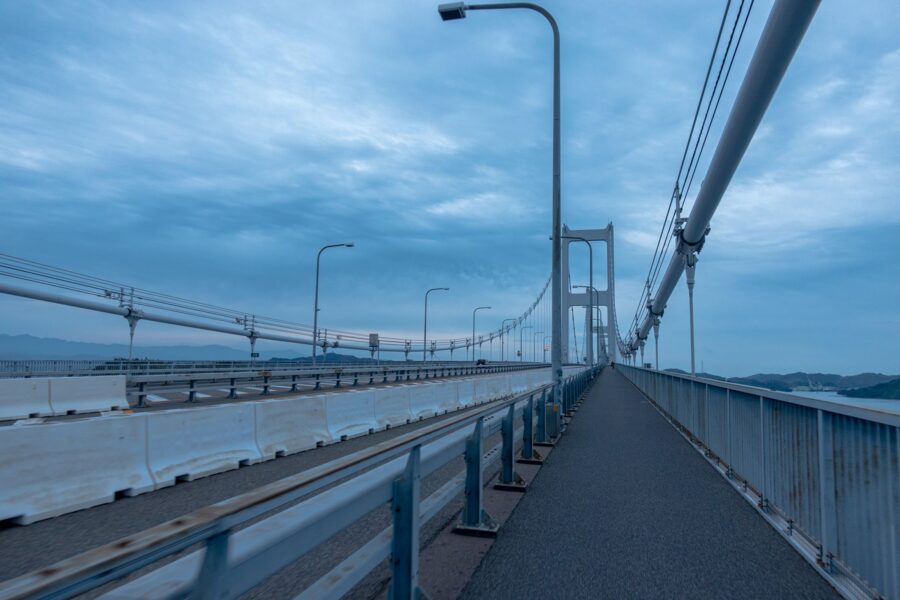
Put together, a first one-way ride looks like this. Leave the bag with Sagawa at the Onomichi Station terminal between 08:00 and 09:00, or in a pikuraku PORTER locker by 14:00 if your Imabari hotel is on its list. Take the Ekimae ferry, ride the 70 km at the bridges’ pace, and hand the bike in at Imabari Station before 19:00. The bag will be waiting.
For a round trip, leave the bag in the Onomichi Station lockers, ride to Setoda on the cycling route, and catch the 17:00 boat home. A longer Shimanami Kaido itinerary runs on the same boats and buses, with a night at one of the places on where to stay on the Shimanami Kaido and the trains and buses of getting to the Shimanami Kaido at either end.
Either way, the day is settled at the counter before 09:00: the bag goes to Imabari or stays at the station, and the last boat from Setoda leaves at 17:00.