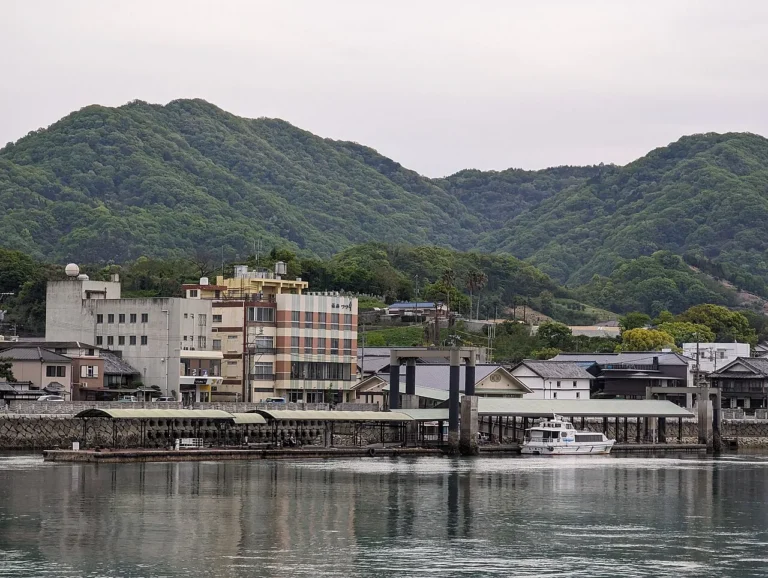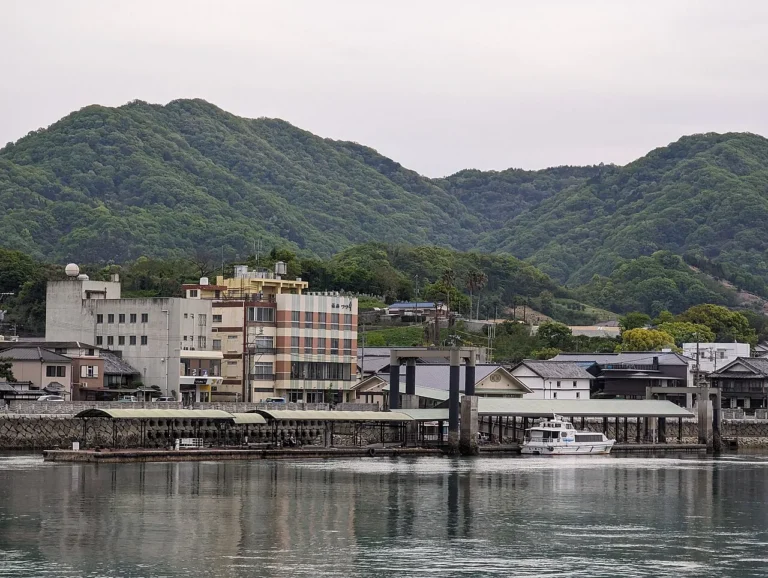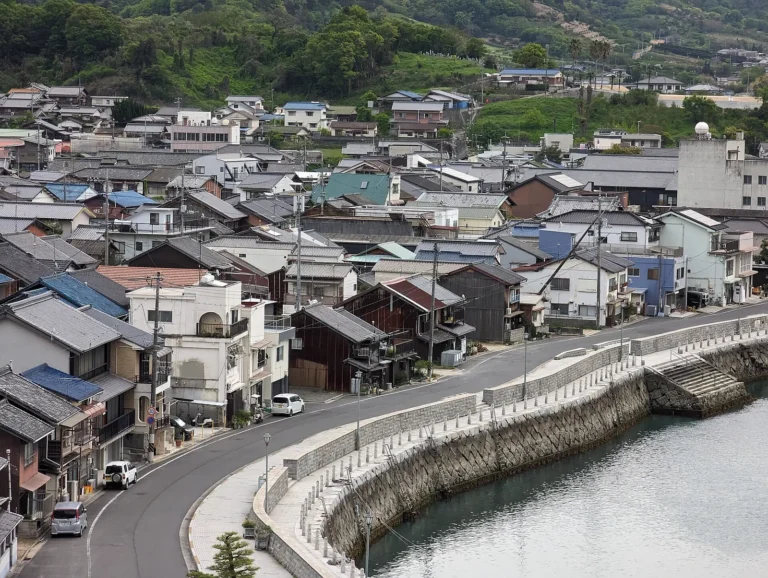
The last boat from Setoda to Onomichi leaves at 17:00, and the two bike rental terminals on Ikuchijima close at the same hour. Everything else on the island, from the white marble terraces above Kosanji to the sand on the west coast, has to fit inside that day, or you stay the night. Plenty of people who stop here for lunch wish they had chosen the second.
Ikuchijima (生口島) is the third island from the Onomichi end of the Shimanami Kaido, and its port town, Setoda (瀬戸田), sits roughly halfway along the 70 km (43 mile) route. It is a lemon island, a temple town and a beach, with the Ikuchi Bridge at its eastern tip and the Tatara Bridge at its south-western corner. In between is the easiest riding of the crossing: a coast road, no real climb until the ramp to the Tatara Bridge, and a town whose sights lie within a kilometre of the pier.
The decision that shapes the visit is made before you arrive. Either you ride through and give Setoda two hours, or you hand the bike back here and take the boat. I would do the second at least once: the boat to Onomichi takes about 45 minutes and turns the route into a half-day ride with Kosanji in the middle.
In this guide12
- Where Ikuchijima sits on the route
- Over the Ikuchi Bridge and round the island
- Setoda: Shiomachi street and the old port
- Kosanji and the Hill of Hope
- The Hirayama Ikuo Museum of Art
- Lemons and the rest of the citrus
- Sunset Beach and the west coast
- Lemon Valley and the Tatara Bridge
- Ferries from Setoda
- Bikes on Ikuchijima
- Where to stay
- Making the day work
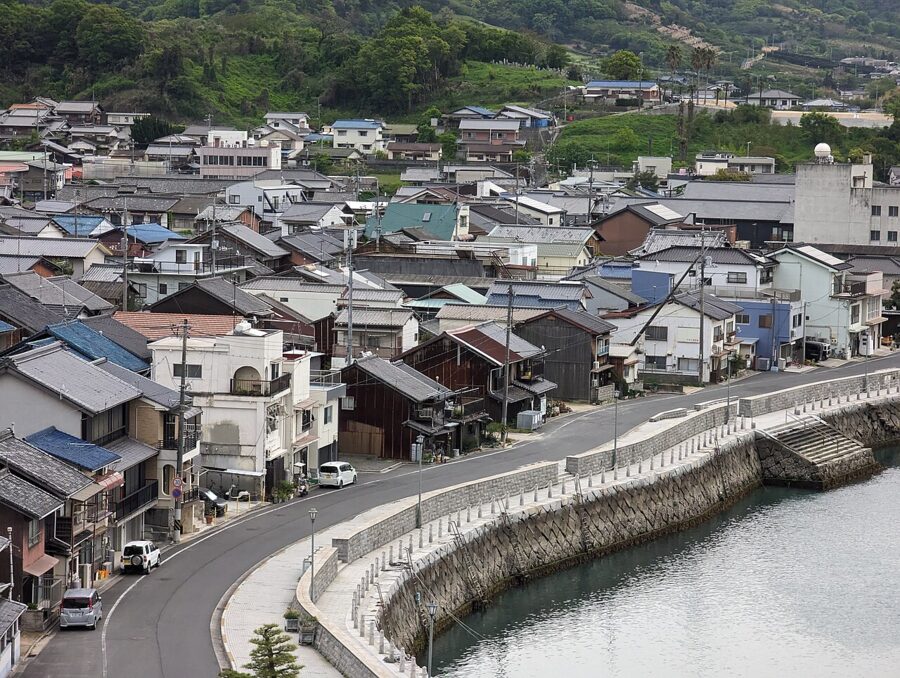
Setoda grew rich twice, first on salt and shipping and then on tourism. The salt merchants’ houses still stand near the waterfront, and the temple a steel-pipe industrialist built for his mother draws the coaches. The lemons came in between and stayed.
Where Ikuchijima sits on the route
Ikuchijima belongs to Onomichi City in Hiroshima Prefecture, between Innoshima to the east and Omishima, across the line in Ehime, to the south-west. A ridge runs down its length to Kannon-yama, 472 m high, the summit behind the Tatara Bridge in most photographs of it. The gentle northern and western shores carry the town, the beach and the cycling route; the steeper south-east is orchards and small harbours.
Distances depend on whose map you read. The rental company’s own Onomichi to Setoda course is about 30 km (19 miles) and three to four hours; following the blue line painted on the road, it comes out nearer 35 km (22 miles). Setoda to Imabari is about 40 km (25 miles) more.
| From Setoda port | Distance | Notes |
|---|---|---|
| Kosanji and the Hirayama Ikuo Museum | Under 1 km | Walk up Shiomachi street |
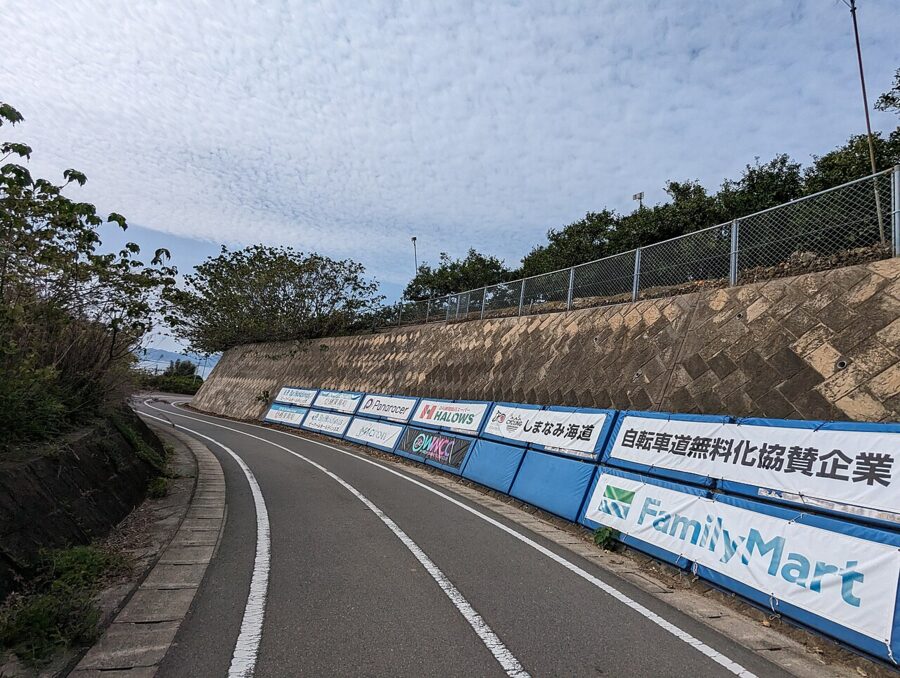
| Setoda Sunset Beach | About 3.5 km (2.2 miles) | Cycle lane along the west coast |
| Tatara Shimanami Park, Omishima | About 8.5 km (5.3 miles) | Includes the ramp and the Tatara Bridge |
| Onomichi | About 30–35 km by bike | Or about 40 minutes by boat |
| Imabari | About 40 km by bike | Four more bridges |
Riding the whole route in a day, Ikuchijima is where you eat and check the clock. Splitting it, Setoda is the obvious overnight stop, with the island’s best rooms, a public bath and a beach facing the sunset; most versions of a Shimanami Kaido itinerary pass through here.
Over the Ikuchi Bridge and round the island
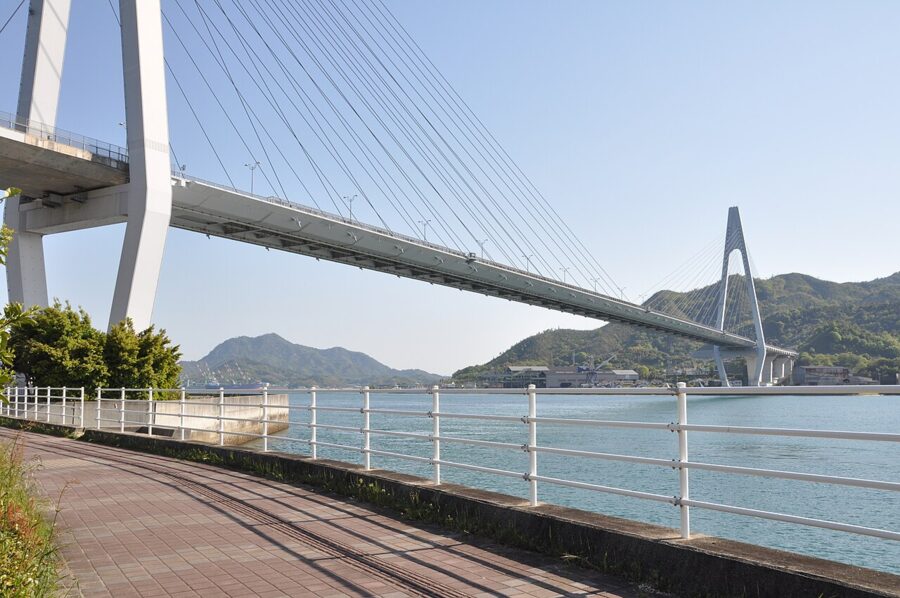
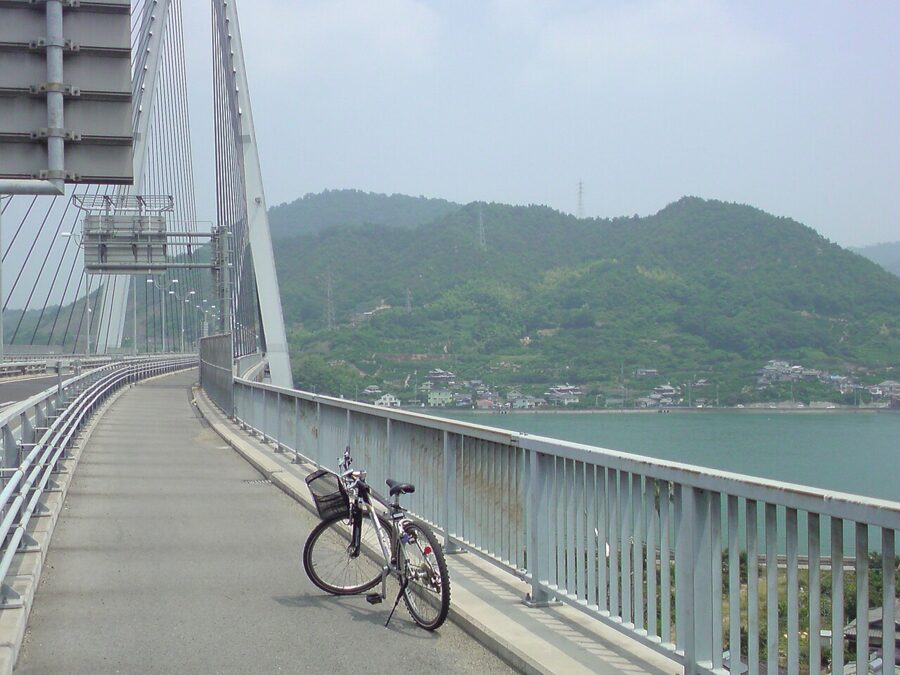
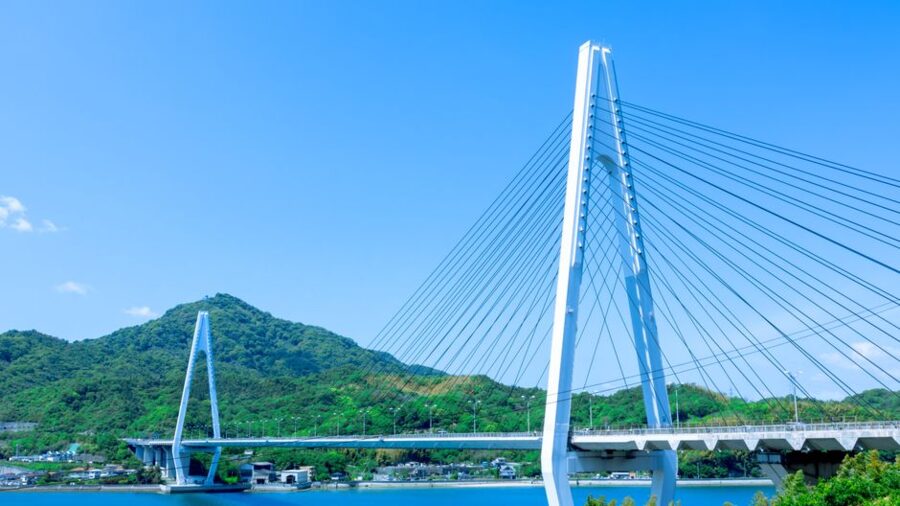
The Ikuchi Bridge opened in December 1991 and is 790 m long, with a main span of 490 m between towers 127 m high. When finished it was among the longest cable-stayed bridges in the world, and the techniques tried out on it went into the Tatara Bridge eight years later. Both bridges are free for bicycles until 31 March 2028, under a toll waiver renewed in 2026.
On both bridges the bike and pedestrian path runs on the Imabari-bound side of the expressway, with mopeds in their own lane on the other side. Walkers share your path and have priority. The operator also warns that tandems over 2.5 m long cannot turn on these bridges and that wind on the straits can close the paths; its cycle and moped path page posts closures as they happen.
North side or south side
The ramp brings you down at the eastern tip, near Sunoe, a corner of Ikuchijima that belonged to Innoshima City until the 2006 merger. The blue line turns along the north shore to Setoda, then down the west coast to the Tatara Bridge. The south side, past the old temple village of Mitera, is quieter and reaches the Tatara approach in about the same distance, but skips Setoda.
Take the north side. The south road suits a second visit, or a luggage-free loop of the whole island from a bed in Setoda; on a first crossing it trades the town, the temple and the beach for orchards and the odd fishing harbour.
The sculptures by the road
Along the north shore you pass the first outdoor works of the Island-wide Museum (島ごと美術館), seventeen pieces across Ikuchijima and Koneshima. They began as a sculpture biennale tied to a regional expo in 1989 and are free to see. Some have weathered; treat them as a reason to stop for the view.
Setoda: Shiomachi street and the old port
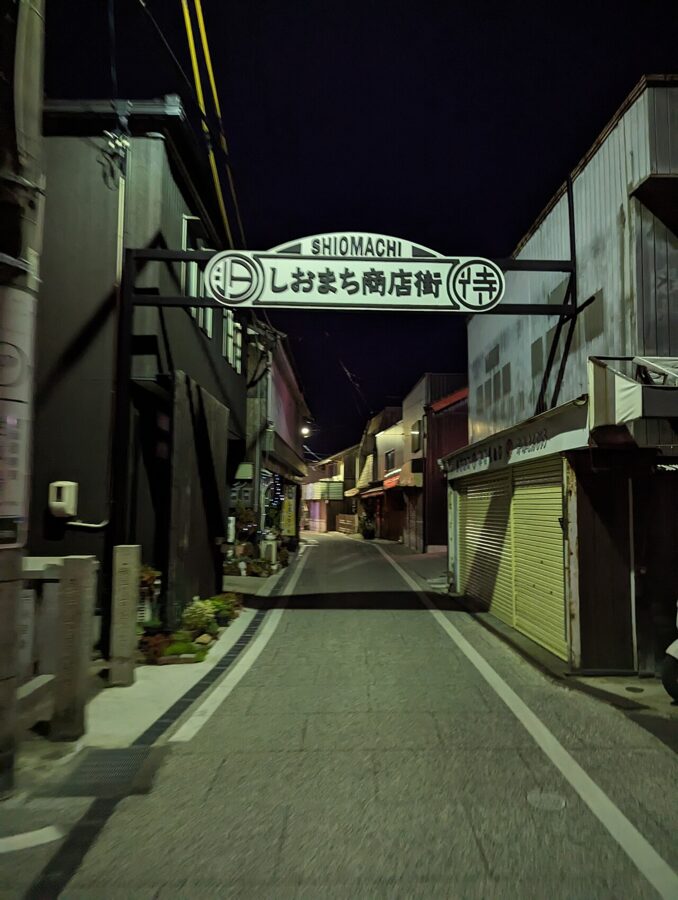
Setoda was a port of call for coastal shipping in the Edo period and a salt town whose evaporation pans covered the flat land behind the shore. Stand on the pier with your back to the sea and the town lays itself out in a T: the waterfront runs left and right, and Shiomachi shopping street (しおまち商店街) runs straight ahead to Kosanji.
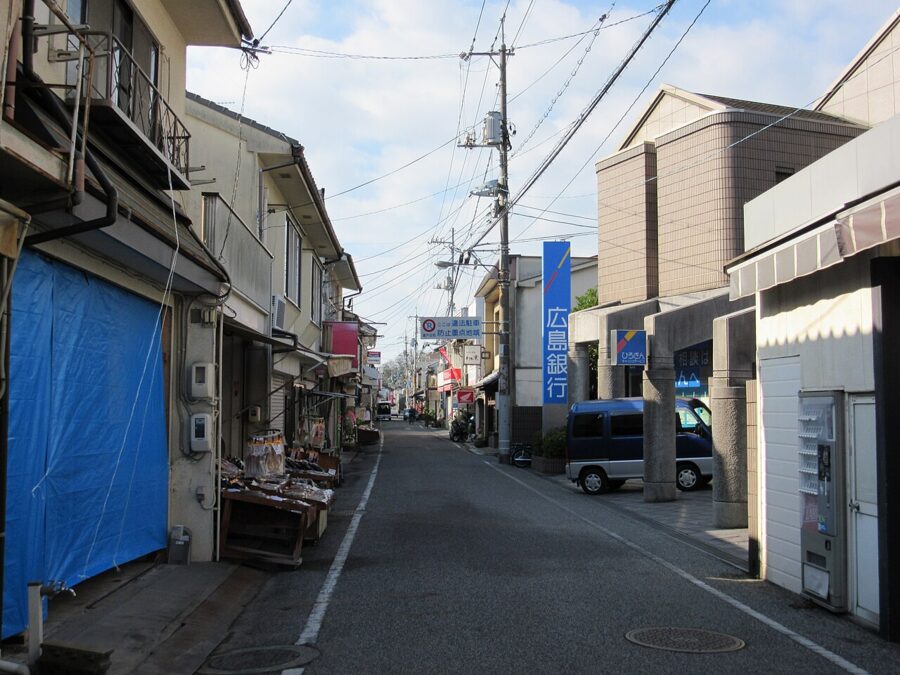
The street is short, with Kosanji at its far end, so you will walk it at least twice. Hours below are as the shops give them in November 2026; island hours shift with the season.
- Kameido (亀井堂), halfway along: Setoda lemons and citrus by the bag or shipped home, lemon somen noodles and the local lemon soft drink. 08:30–18:00, closed on irregular days.
- Koeido (向栄堂): an old town sweet shop with lemon cake and a popular rolled castella. 07:00–18:00, closed Thursdays.
- Baigetsudo (梅月堂), opposite the Kosanji main gate: founded in 1950, known for its “sour lemon cake”. 08:30–18:00, closed Thursdays except public holidays.
- Shimagokoro (島ごころ), the big lemon-yellow building near the Hirayama Ikuo Museum: lemon cake, cream puffs filled to order, citrus jams. 10:00–17:00, closed only on 1 January.
- Chidori (ちどり), in front of Kosanji: octopus rice (tako-meshi) and lemon hotpot, the island’s two specialities. Lunch 11:00–15:00, dinner 18:00–21:00, closed Tuesdays.
- Lemon & Cafe Shiomachitei (汐待亭): a small cafe on the street. 11:00–16:00, closed Mondays.
The port end: SOIL and the bathhouse
By the pier, SOIL Setoda has a coffee roaster in a Meiji-era storehouse and MINATOYA, a wood-fired restaurant facing the water. MINATOYA serves breakfast from 07:30, cafe food through the day and dinner until 21:00; it is the place to eat before an early boat.
On Shiomachi, yubune is a public bath with a sauna and cold plunge, its walls covered in pictures of the islands. Day bathing costs ¥900 (about US$6) for adults on weekdays and ¥1,200 (about US$8) at weekends and holidays, more in Golden Week, August and the New Year. Day visitors can bathe 10:00–20:00 (last entry 19:30), Tuesdays 17:00–20:00 only. Before an evening boat to Mihara, it is worth every yen.
Kojoji and its pagoda
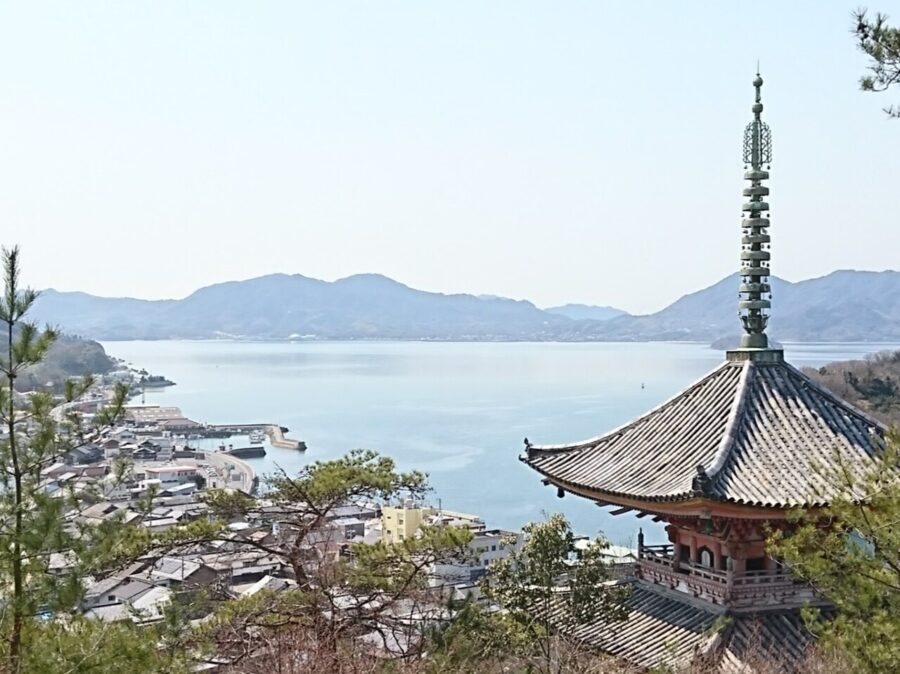
On the hillside behind the street, Kojoji (向上寺) is Setoda’s real antique. It was founded in 1403 with the backing of the Ikuchi family, the local branch of the Kobayakawa clan who controlled the port, and its three-storey pagoda went up in 1432. The pagoda is a National Treasure, and its building date is known exactly, which is rarer than you might think for a Zen pagoda of that age.
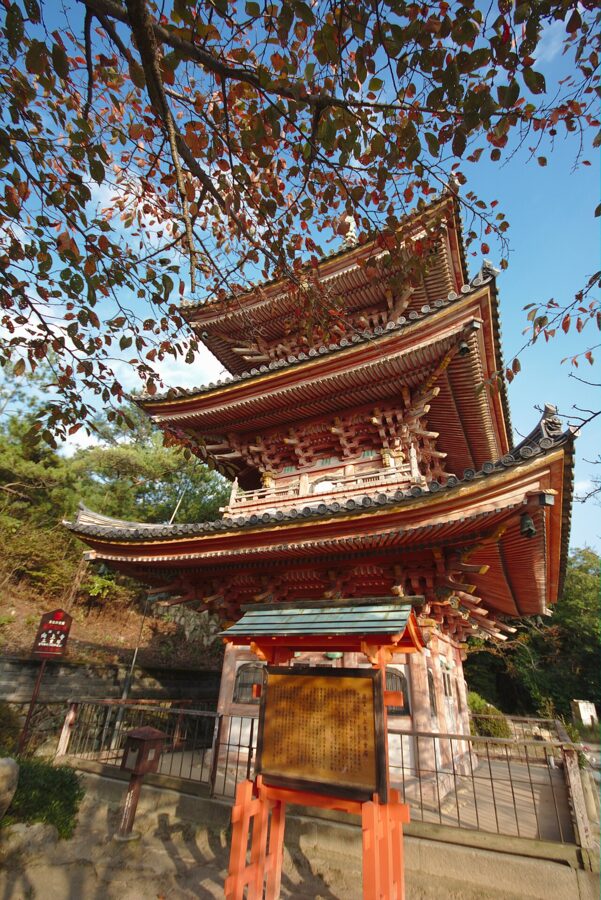
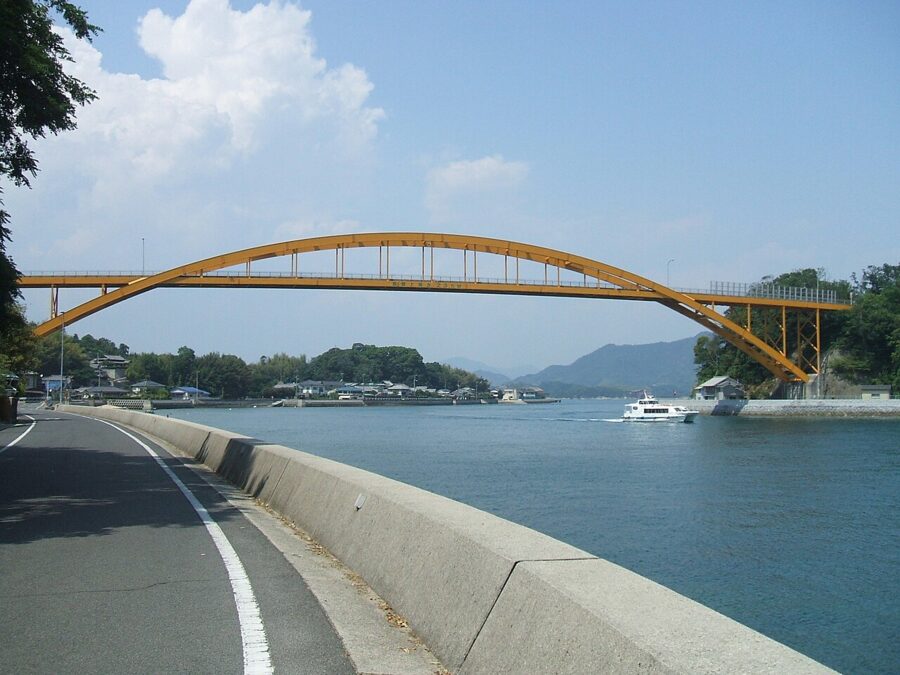
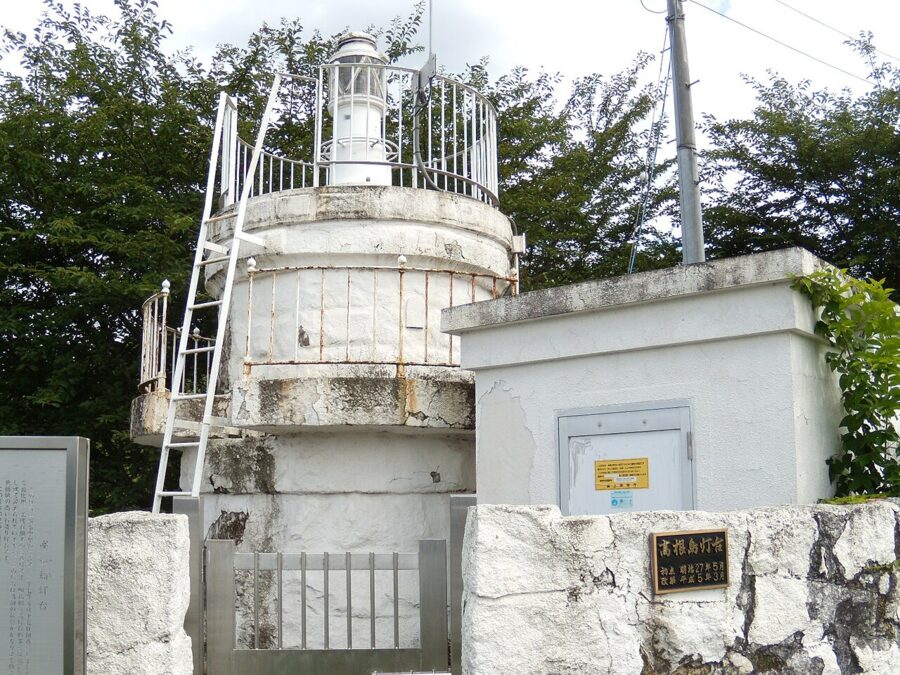
It is a short walk up from Shiomachi, and the reward is the view across the channel to Koneshima (高根島), a citrus island about 10 km round, joined to Setoda by an orange arch bridge. With an hour and legs left, it is the quietest ride near town.
Kosanji and the Hill of Hope
Kosanji (耕三寺) is the reason the coaches come, and it is like nothing else in Japan. Kosanji Kozo, an Osaka engineer who made his fortune welding large-diameter steel pipe, took holy orders in 1935, the year after his mother died, and spent the rest of his life raising a Jodo Shinshu temple in her memory. It is still called “the mother’s temple”.
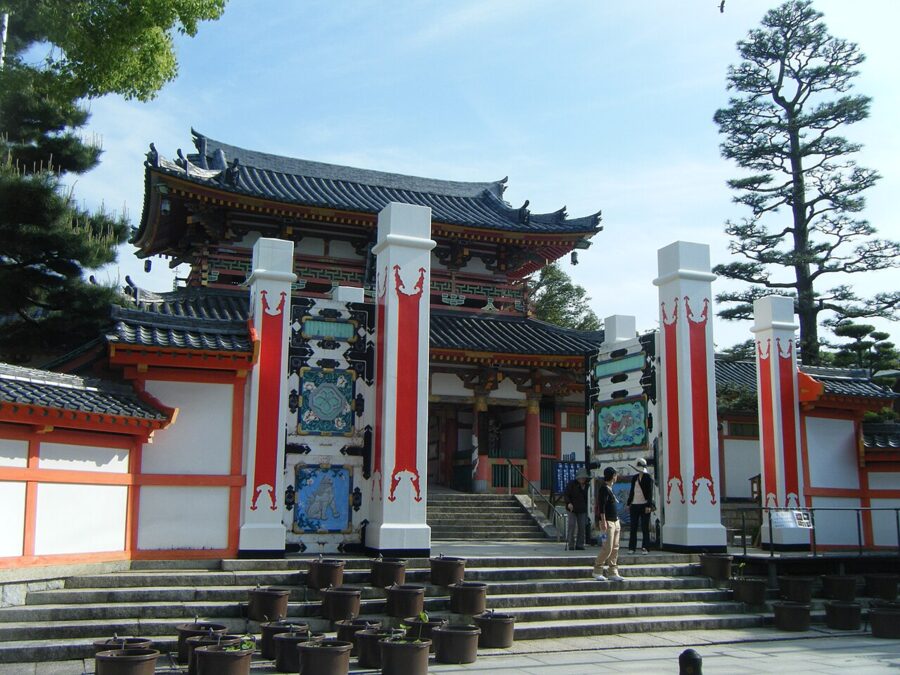
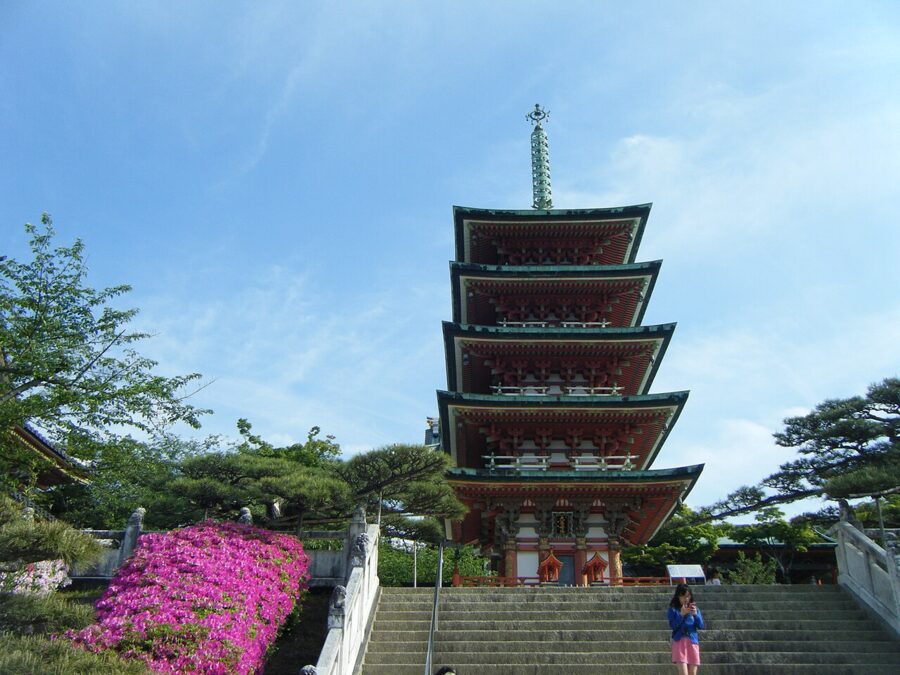
He built it out of copies. The temple’s guide to its buildings lists the models: the main hall after the Phoenix Hall at Byodoin, the five-storey pagoda after Muroji, and the Koyomon gate after the Yomeimon at Nikko, built from that gate’s measured drawings so every proportion matches. Fifteen buildings were registered as tangible cultural properties in 2003, young as they are.
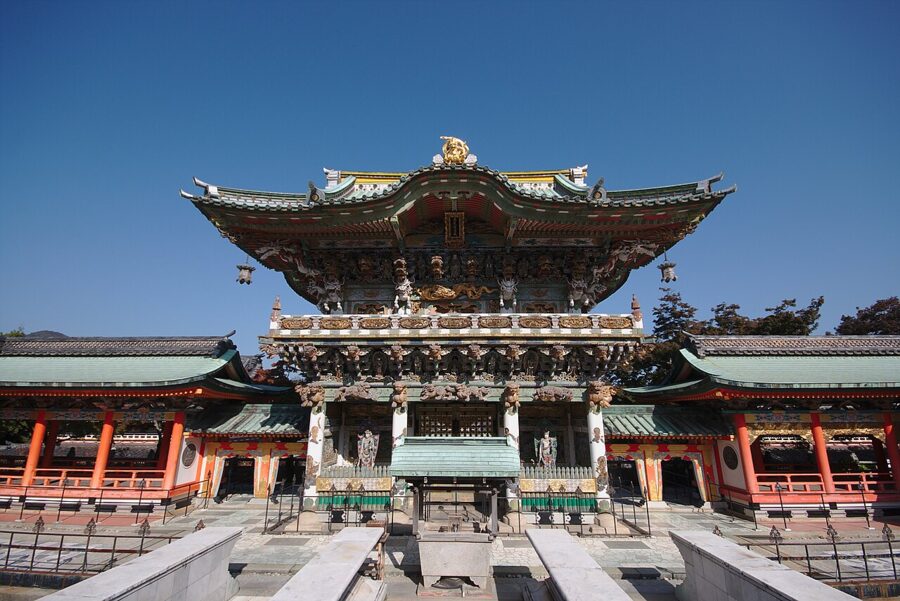
The engineering shows if you look. The main gate is mostly steel under its paint, and the pagoda’s central pillar is a steel pipe. Beneath the grounds runs the Senbutsudo, a tunnel about 350 m long and some 15 m underground, built between 1955 and 1964, holding a thousand stone Buddhas, a waterfall and dozens of paintings of hell and paradise. It is slightly mad in the best way.
The Hill of Hope
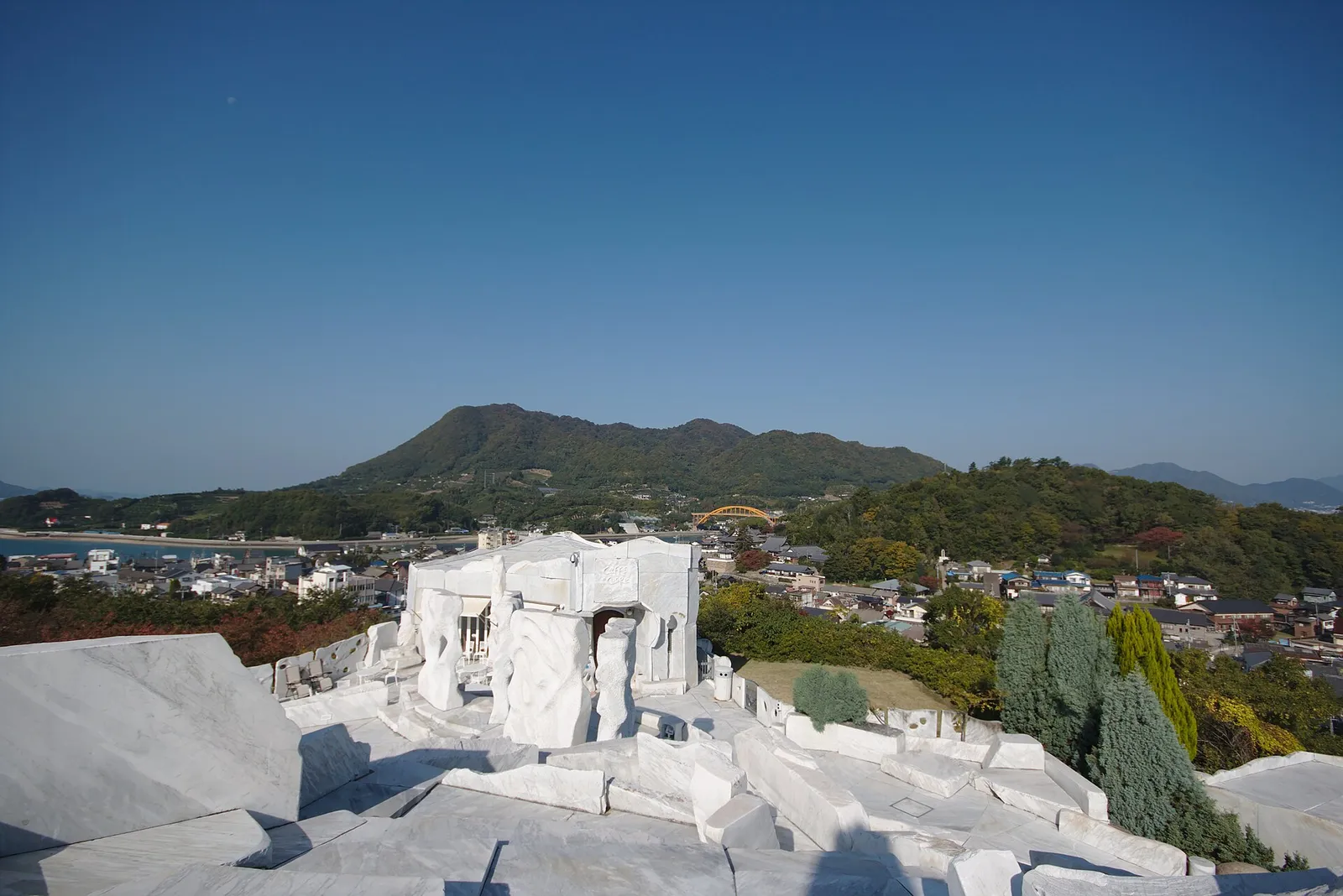
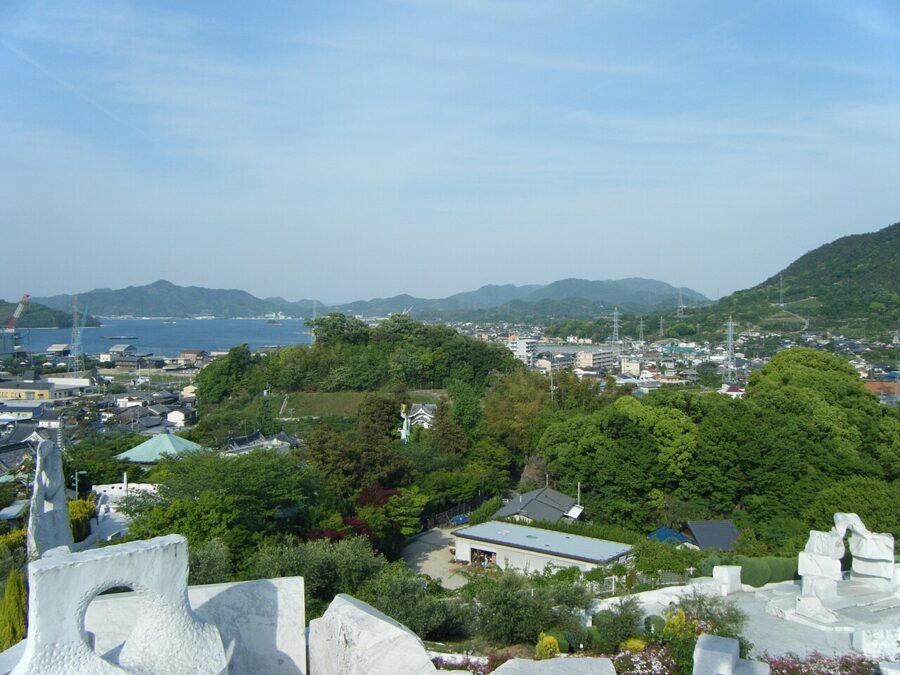
At the top of the grounds, the Hill of Hope (未来心の丘, Miraishin no Oka) is about 5,000 square metres of white marble, all of it quarried at Carrara in Italy and shipped over by container. The sculptor Kuetani Itto, born in 1942 in Sera, inland from here, began it in 1988, and the first stage opened in 2000. You can touch it, sit on it and climb it, which is the point.
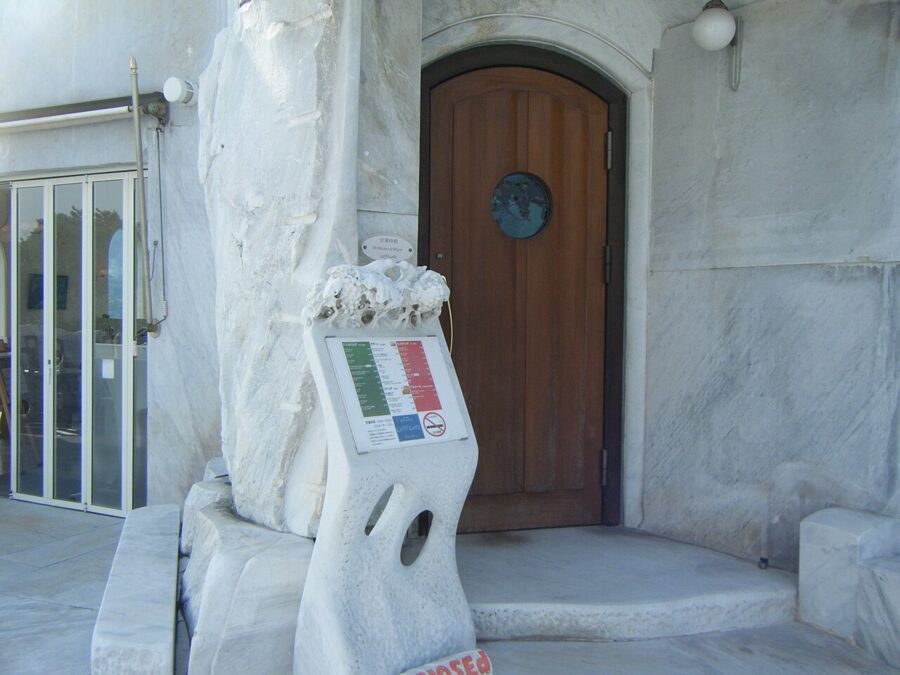
Cafe Cuore, designed by Kuetani down to the chairs, serves coffee and soft drinks 10:00–16:30 (last order 16:00). Ramps reach most of the grounds and the temple lends wheelchairs, but the hall interiors, the tunnel, Choseikaku and the Kongokan gallery are up steps. From the top of the marble you get Setoda’s roofs, the channel and the islands, framed in white.
Hours, prices and how long
Kosanji raised its admission on 1 April 2026, the first rise since 2015, so older guides quoting ¥1,400 are out of date. The ticket covers the grounds, the Hill of Hope and the Kongokan gallery. As of November 2026:
| Kosanji Temple Museum | Details |
|---|---|
| Hours | 09:00–17:00, last entry 16:30; open every day of the year |
| Adults | ¥1,800 (about US$12); groups of 20 or more ¥1,600 |
| University and high school students | ¥1,200 (about US$8), with student ID |
| Junior high school age and under | Free |
| Onomichi residents | ¥1,000, with proof of address |
| Choseikaku (the mother’s villa) | 10:00–16:00; ¥500 extra, paid there |
| Payment | Cash, cards and e-money at the ticket desk, shop and cafe |
Visitors with a disability certificate and one companion go in free, and two free car parks hold about 80 cars. Give it an hour and a half, two if you go through the tunnel and into the galleries.
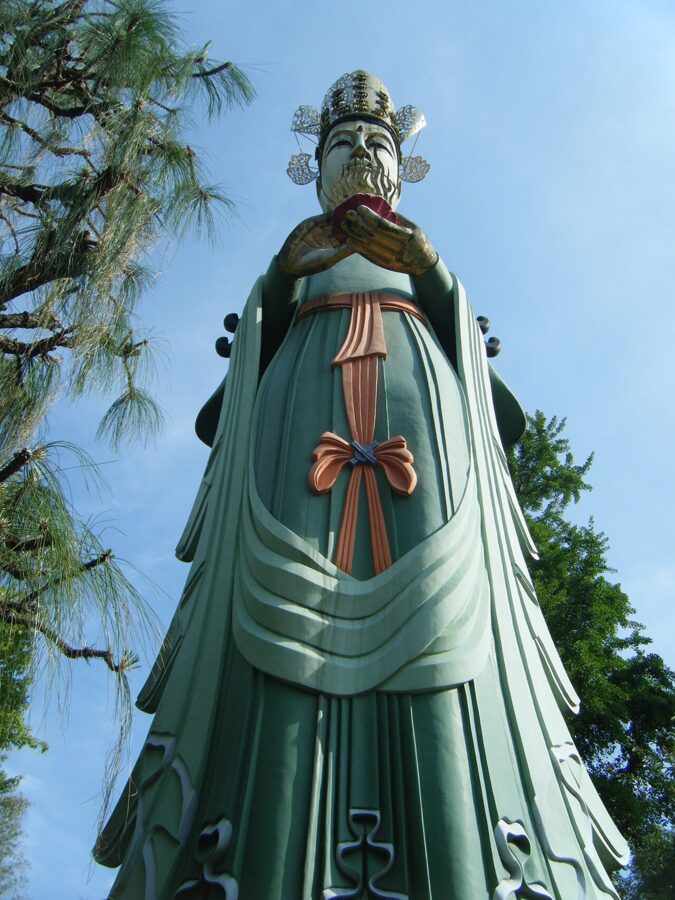
Is it worth ¥1,800? If you have time for only one paid sight on Ikuchijima, make it this one. If temples bore you, the Hill of Hope alone justifies the ticket.
The Hirayama Ikuo Museum of Art
Next door, the Hirayama Ikuo Museum of Art (平山郁夫美術館) honours the painter born in Setoda on 15 June 1930. At fifteen he was a mobilised student at an army depot in Hiroshima when the atomic bomb fell on 6 August 1945, and survived. He became famous for paintings of the transmission of Buddhism and the Silk Road, made more than 160 journeys to its cities and Buddhist sites, and died in 2009.
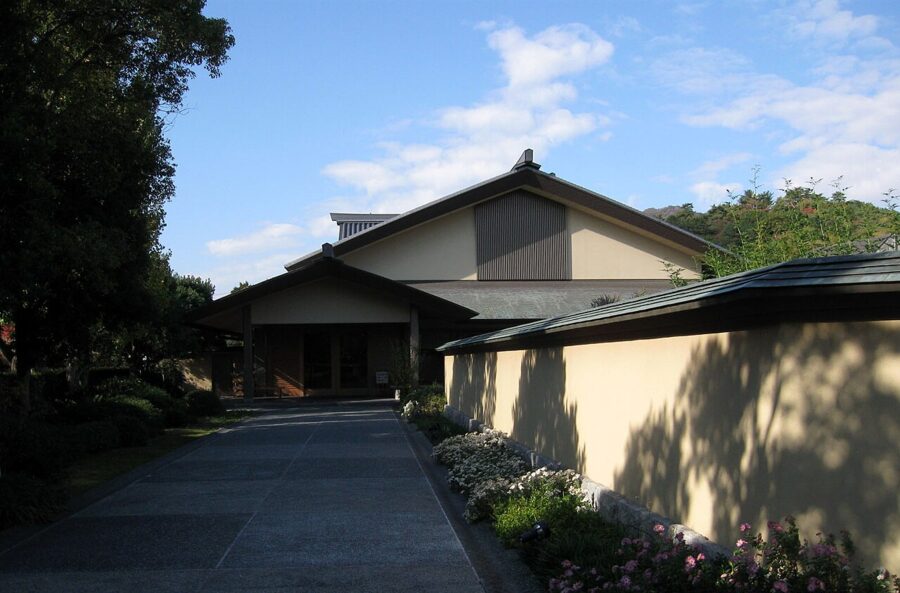
The local work is what makes it worth an hour on a cycling trip. When the Shimanami Kaido opened, Hirayama painted sixty watercolours of the route, the Shimanami Kaido 53 Stations series. From 9 December 2026 to 17 March 2027 the exhibition “Hirayama Ikuo, painting Shimanami” shows that series, his painting of the bridges, Tenkakeru shiroi hashi, and his boyhood work from Setoda.
The museum’s visitor information gives hours of 09:00–17:00 (last entry 16:30), open daily as a rule, but closed on 8 December 2026 and on 18 and 19 March 2027 to change exhibitions. Adults normally pay ¥1,200, or ¥1,000 during the Shimanami exhibition; students pay ¥500 and children ¥300. Show this museum’s ticket at Kosanji and you pay the group rate there.
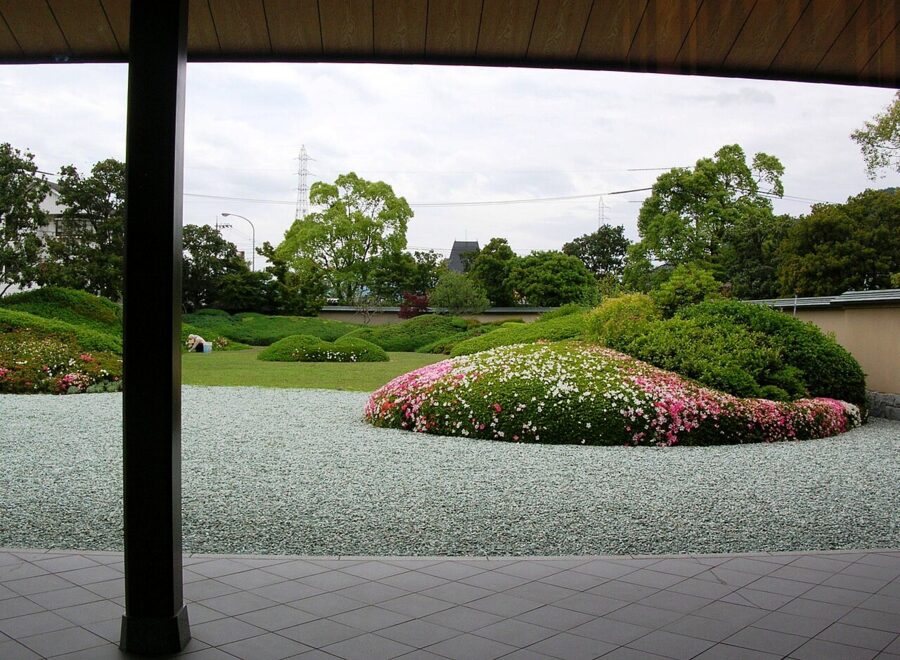
Kosanji or the museum, if you only have time for one? Kosanji for spectacle, the museum if you like quiet rooms and drawing.
Lemons and the rest of the citrus
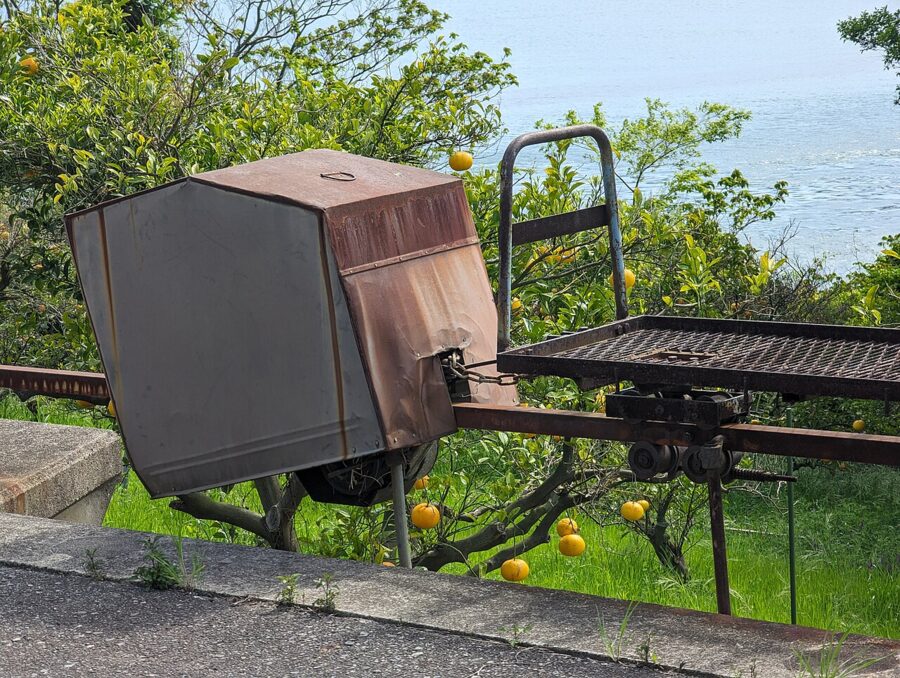
Hiroshima grows more lemons than any other prefecture in Japan, and the Setoda lemon from Ikuchijima and Koneshima is the name the country knows. Lemons have grown on the island’s sunny, dry slopes since the 1920s, and in the 1970s, when fungicides on imported fruit became a worry, home-grown lemons became Setoda’s selling point. You will find the fruit on signs, shop shutters and almost every cake in town.
When the lemons are in
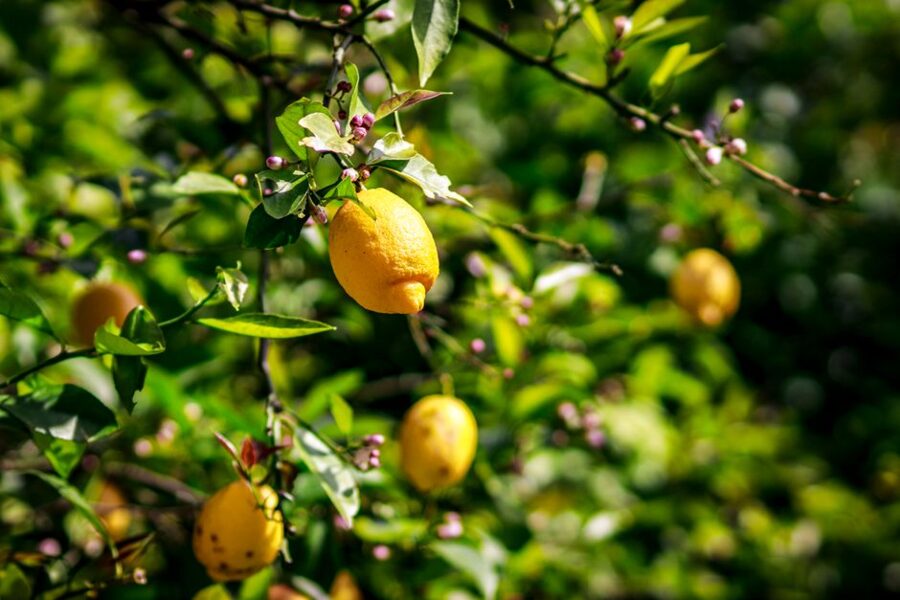
The harvest runs from about October into the following spring. The first fruit is picked green, when it is most fragrant; colour is a matter of timing, not variety, and the lemons yellow on the tree through the winter. The white blossom comes out around the middle of May, when Lemon Valley at Tarumi smells better than any shop on the island.
Ikuchijima also grows navel oranges, mikan and hassaku, a bitter-sweet citrus first found on Innoshima next door. The Shiomachi shops sell whatever is in season, and a mixed bag of island citrus beats another box of cake.
What to buy
Lemon cake is the default souvenir, and at least three shops in town make their own; try Baigetsudo’s sour one against Shimagokoro’s. For whole fruit, Kameido sells by the bag and ships across Japan, which saves carrying it on the bike. Lemon somen noodles keep for months and weigh almost nothing.
Lemon drinks and liqueurs count as liquids in hand luggage if you are flying, and soft cakes do not like a hot pannier in August. If you are riding on, buy at the end of the day or have it sent.
Sunset Beach and the west coast
South of town the cycling route runs down the west coast on its own lane, past palms and orchards, to Setoda Sunset Beach (瀬戸田サンセットビーチ), about 3.5 km from the pier. It is a made beach, laid out on the Tarumi shore in the late 1980s, with pale sand, a restaurant, showers and changing rooms. Offshore sits Hyotanjima, an uninhabited islet on the prefectural border.
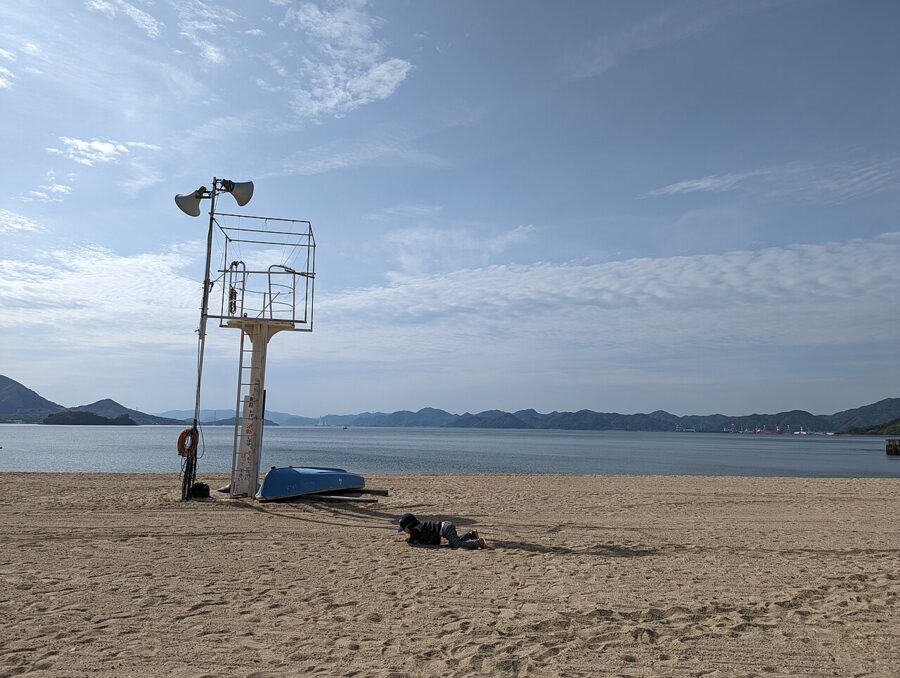
The beach is open 09:00–17:00 and closes from 29 December to 3 January. The swimming season runs from early July to late August; in 2026 lifeguards were on duty from 18 July to 30 August, and the 2027 dates are set in early summer. Parking is free, with about 100 spaces and 300 more in the swimming season.
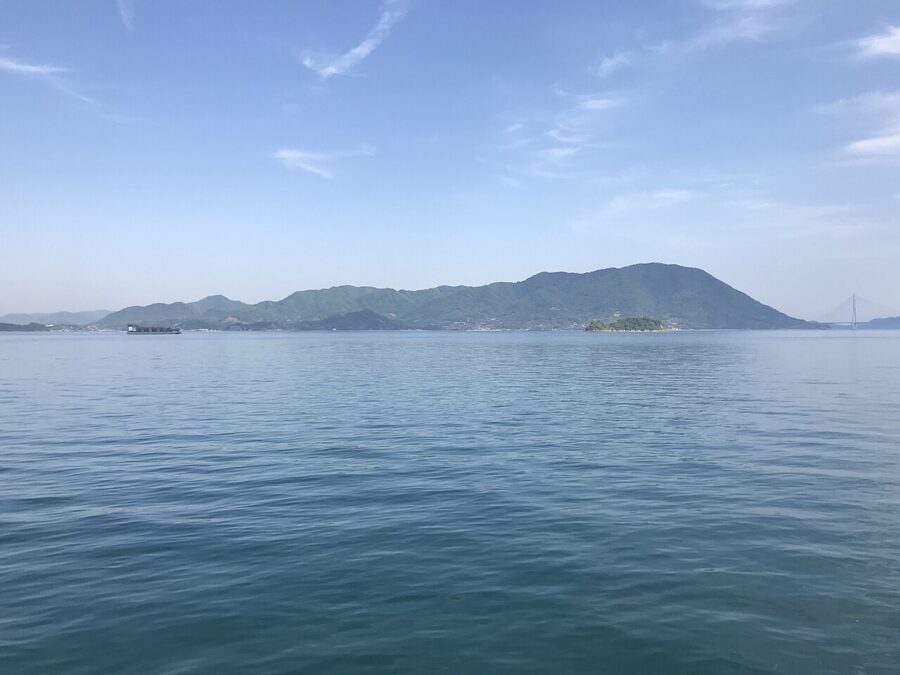
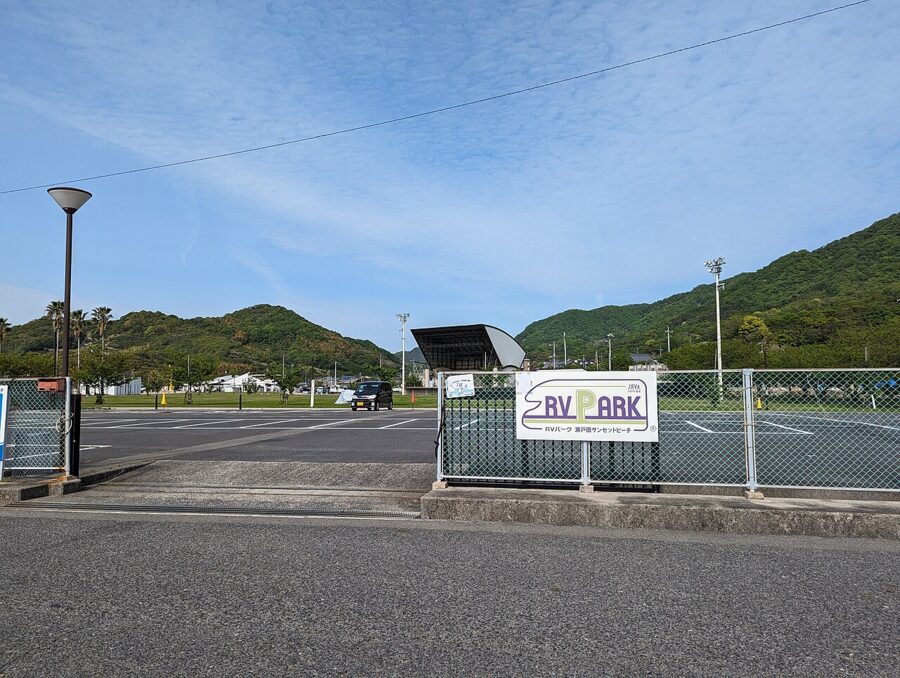
The beach is also a Shimanami Japan rental terminal, open 09:00–17:00 and closed from 29 December to 3 January. It stocks electric-assist bikes and tandems and swaps flat batteries, a useful halfway point on an assisted bike. Beside it, the Sunset Beach Camping and RV Park takes tents and camper vans.
The sunset problem
The name is accurate, and that is the problem. For most of the year the sun sets after the last boat to Onomichi has gone at 17:00 and both rental terminals have closed. If the sunset matters, stay the night, or bring your own bike and take a late boat to Mihara; they run until 20:10.
Lemon Valley and the Tatara Bridge
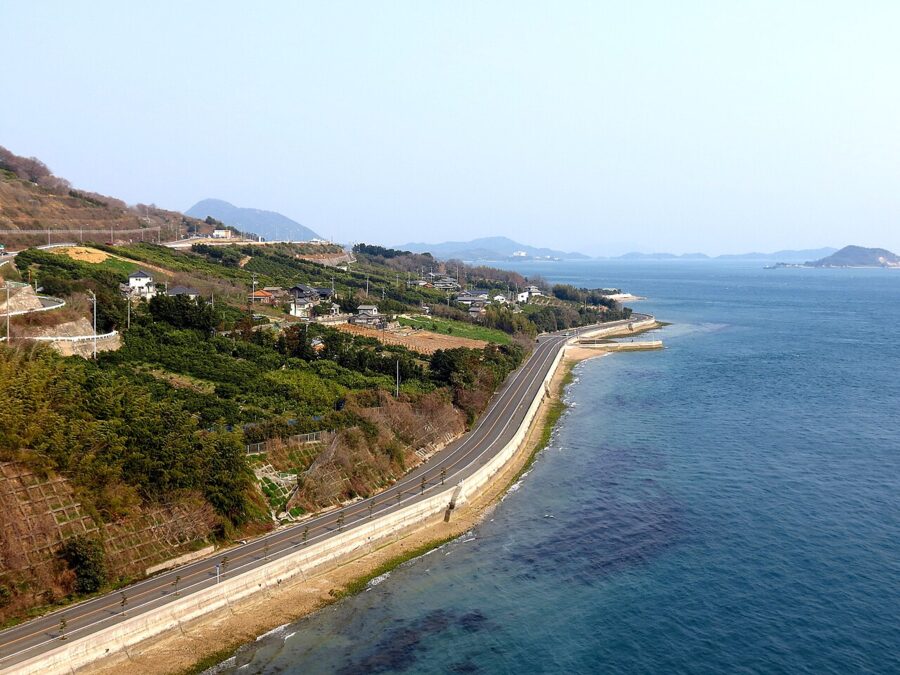
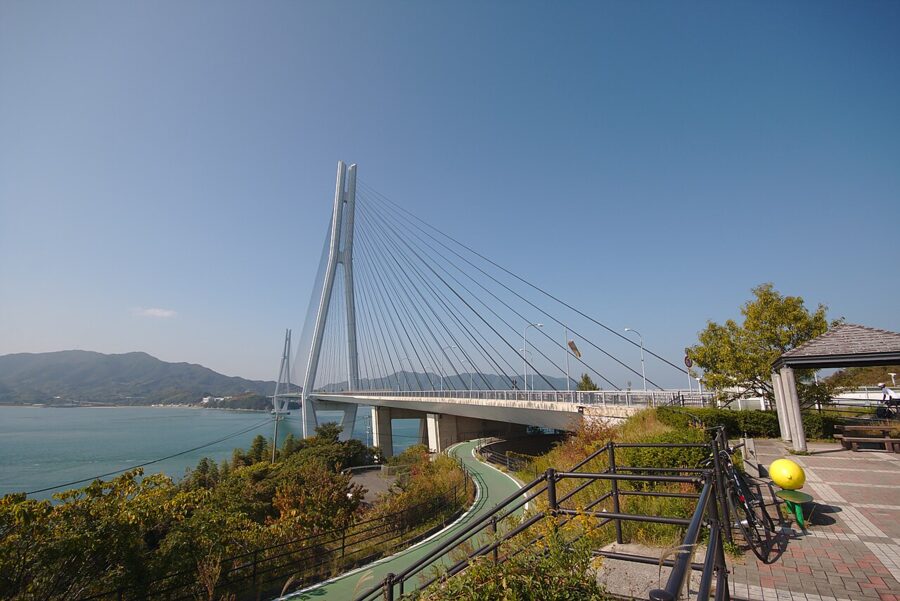
Past the beach the route runs through Tarumi, where the slopes of Lemon Valley come down to the road, then turns uphill. The ramp to the Tatara Bridge is the only real climb on Ikuchijima, a series of long, steady bends up to deck height. On a standard bike it is a few minutes in a low gear; on an assisted one you barely notice it.
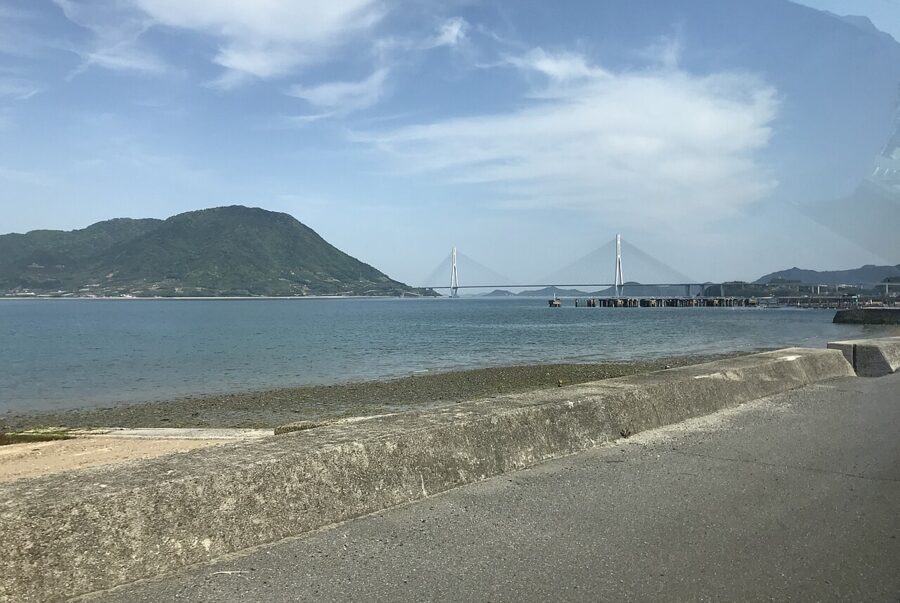
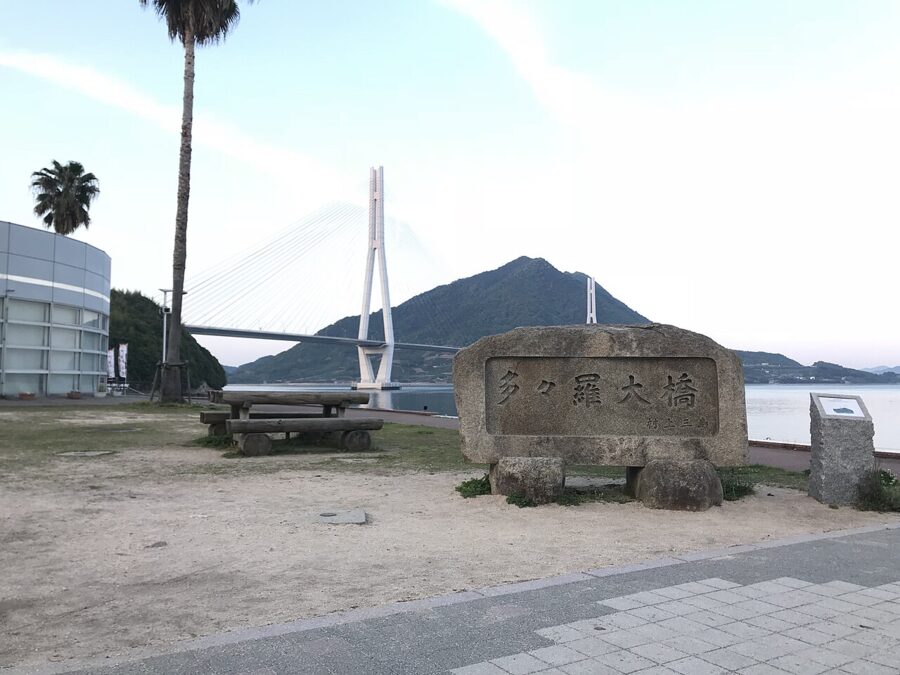
The Tatara Bridge opened in May 1999 and is 1,480 m long, with a main span of 890 m and towers 226 m tall. It was the longest cable-stayed bridge in the world when it opened, built on what the Ikuchi Bridge had taught its engineers. Somewhere over the strait you leave Hiroshima for Ehime.
On the far side the ramp drops you at Tatara Shimanami Park, the roadside station on Omishima, about 8.5 km from Setoda port, with a rental terminal, food and the cyclists’ monument everyone photographs. From there the route crosses Omishima towards Hakatajima, with a detour to the shrine town of Miyaura.
Ferries from Setoda
Setoda has the best boat connections of any island on the route, which makes it a good place to end a ride. Two passenger services leave the main pier for Honshu; a car ferry and a short island hop leave from smaller ports. As of November 2026:
| Route | Operator | Sailings | Time | Adult fare | Bicycle |
|---|---|---|---|---|---|
| Setoda to Onomichi (calling at Innoshima and Sagishima) | Setouchi Cruising | 6 a day each way | About 40–45 min | ¥1,500 (about US$10) | ¥500 |
| Setoda to Mihara (calling at Sawa) | Yuba Kisen | 12 a day each way | About 30 min | ¥920 (about US$6) | ¥120 |
| Sawa (Ikuchijima) to Sunami (Mihara), car ferry | Yuba Kisen | 10 a day | About 30 min | Ask the operator | |
| Sunoe (Ikuchijima) to Okogi (Iwagijima) | Sanko Kisen | Ask the operator | A short crossing | Ask the operator | Free for visiting cyclists until 31 March 2027 |
To Onomichi
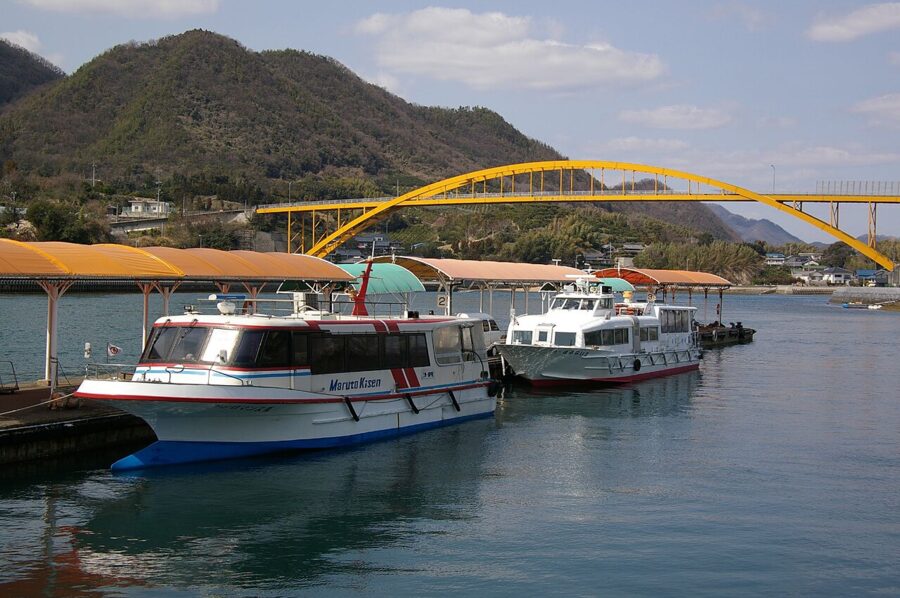
The Onomichi boat leaves Setoda at 07:50, 10:00, 11:25, 13:25, 15:00 and 17:00, reaching the pier by Onomichi Station 40–45 minutes later. From Onomichi it leaves at 07:10, 09:15, 10:45, 12:40, 14:10 and 16:00. That timetable has run since April 2025 and was still current in November 2026; there are no sailings on 1 January, and for 31 December and 2–3 January the operator asks you to check.
On certain days of the week the service runs as the Cycle Ship Lazuli, with stands that hold bikes without scratching them; otherwise it is the yellow Citrus. Miss the 17:00 and it is a long ride back or a night in Setoda. The same pier is one of the ways of getting to the Shimanami Kaido from Onomichi Station.
To Mihara and the Shinkansen
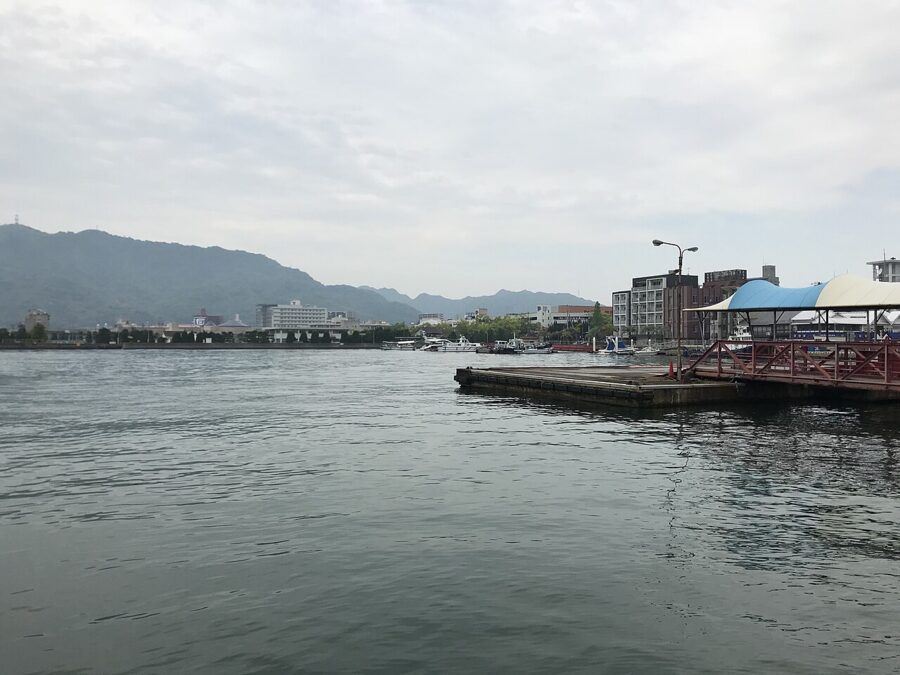
The Mihara boat is the one people forget, and often the better choice. It runs twelve times a day, takes about half an hour, and Mihara’s port is a five-minute walk from Mihara Station, a Shinkansen stop. The last sailing leaves Setoda at 20:10, three hours after the last Onomichi boat, so you can have the sunset and still sleep on Honshu.
To Iwagijima and the Yumeshima Kaido
From Sunoe, by the Ikuchi Bridge, a short ferry crosses to Okogi on Iwagijima, the nearest island of the Yumeshima Kaido, a quieter chain of bridges in Kamijima Town. Kamijima’s Cycle Free scheme waives the bicycle fare on its island ferries for visiting cyclists until 31 March 2027: fill in the coupon and hand it to the crew. Not every sailing takes bikes, so check first.
By bus and car
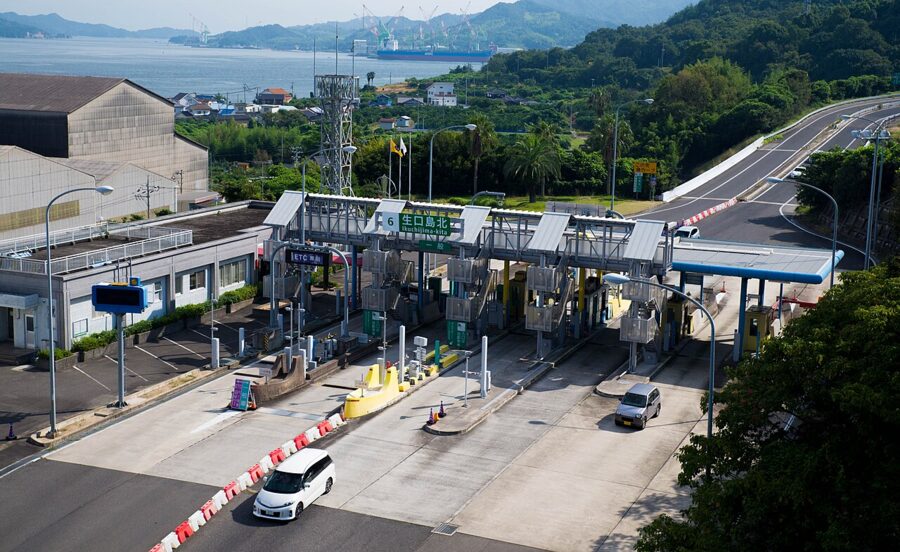
The Shimanami Liner between Fukuyama and Imabari and the Kirara Express to Matsuyama stop at Setoda bus stop and Setoda Parking Area on the expressway, not in town. Since 1 October 2026 every Shimanami Liner seat can be reserved, and you board without a booking only if there is room. Drivers use the Ikuchijima Kita or Ikuchijima Minami junctions; both are half junctions, so check which way each faces.
Bikes on Ikuchijima
Shimanami Japan’s rental network has two terminals on the island: the Setoda tourist information office (瀬戸田町観光案内所), by the Kosanji bus stop and about ten minutes’ walk from the pier, and Sunset Beach. Both open 09:00–17:00; the tourist office closes from 29 to 31 December and the beach from 29 December to 3 January.
The rental price list gives ¥3,000 (about US$20) a day for a cross or city bike and ¥4,000 (about US$27) for an electric-assist bike, and both Setoda terminals stock the assisted ones. Either kind can be returned at any terminal on the route, and riding rental bikes after dark is not allowed. Assisted bikes run out first, even on weekdays, so book them through Shimanami Kaido bike rental.
Where to stay
Setoda has more good beds than any stop in the middle of the route. All of these were open in 2026, and most have only a handful of rooms, so book ahead for weekends and holidays.
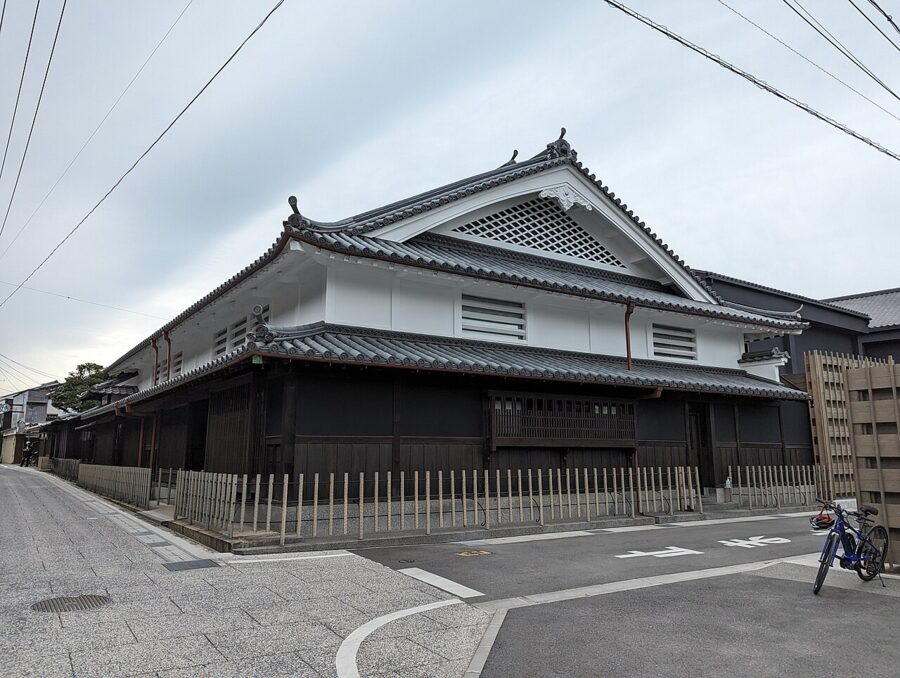
- Azumi Setoda: a ryokan in the restored Horiuchi merchant house by the port, with cypress baths and cooking built on Inland Sea fish and island citrus. The grandest night on the island.
- yubune: fourteen rooms around the public bath on Shiomachi, some with an earth-floored entrance you can wheel a bike into. No restaurant, on purpose, so you eat in town; the bath is free for guests.
- SOIL Setoda: small, simple rooms by the water, most with shared showers, plus four-bunk rooms and several studios with their own bathrooms. Cheaper than Azumi up the street.
- Guesthouse panipani: an inexpensive guesthouse in a renovated forty-year-old house.
- Miharaya Setoda: a whole house to rent, with no reception, opened in autumn 2025.
- Grand Village Setouchi Shimanami: glamping on Koneshima, over the Kone Bridge.
- Sunset Beach Camping and RV Park: tents and camper vans beside the beach, with the sunset from your door.
Making the day work
The simplest good day starts in Onomichi on an assisted bike, crosses Mukaishima and Innoshima in the morning, and reaches Setoda for lunch on Shiomachi. Kosanji and the Hill of Hope take the early afternoon, with time for Kojoji’s pagoda or the Hirayama museum before the bike goes back.
Carrying on to Imabari, see Setoda in the morning and be on the Tatara Bridge by early afternoon: Imabari is still about 40 km away, and rental bikes may not be ridden after dark. Beyond Omishima the Shimanami Kaido cycling route crosses three more bridges.
Either way, the clock on the pier decides it. Hand the bike in at the Setoda tourist office by 16:30, walk down Shiomachi with a bag of lemons, and take the 17:00 boat to Onomichi.