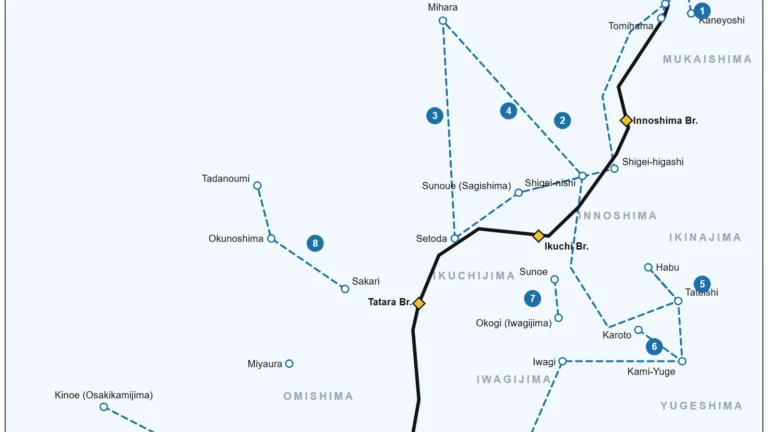
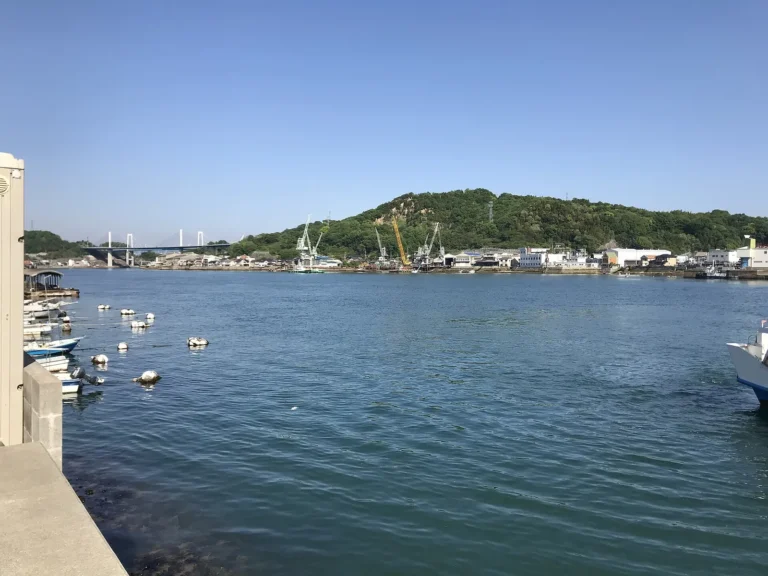
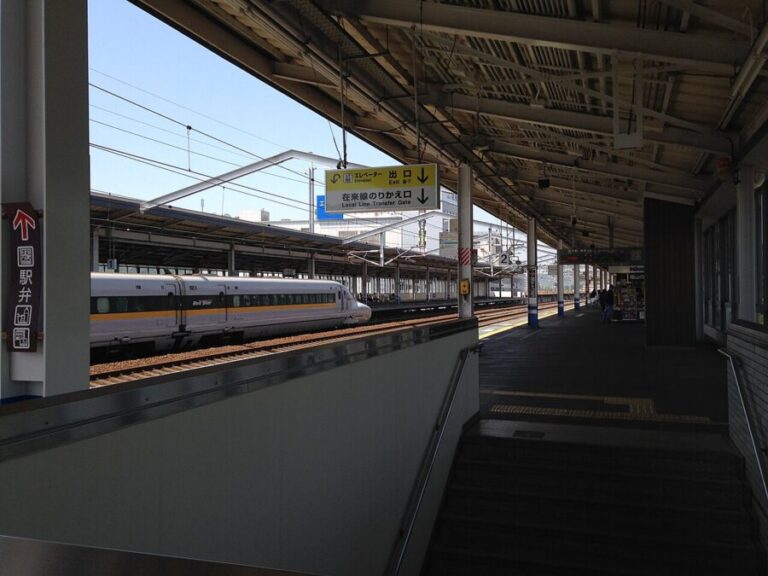
Walk into the rental terminal at Onomichi Station at eleven o’clock on the third of May and you may find the racks empty. Shimanami Japan, which runs the public rental bikes along the Shimanami Kaido, says that during long holidays its fleet of about 2,000 bikes can be gone by around 10:00, and that the electric-assist bikes run out early even on ordinary weekdays. The calendar decides more of your day here than the weather does.
The weather is the smaller gamble. The islands sit in the rain shadow between the Chugoku and Shikoku mountains, and the Japan Meteorological Agency station on Ikuchijima records about 1,138 mm of rain in an average year, much of it in two blocks: the June and July rainy season and the September typhoons. Outside those weeks, a ride that gets washed out is unusual.
If you can pick any dates, I would pick the second half of October or the first half of November, or the weeks of May after Golden Week ends on the 5th. Both give you average highs between 17 and 24°C, low rainfall, settled wind and bikes still on the racks at nine. The other months have their reasons too.
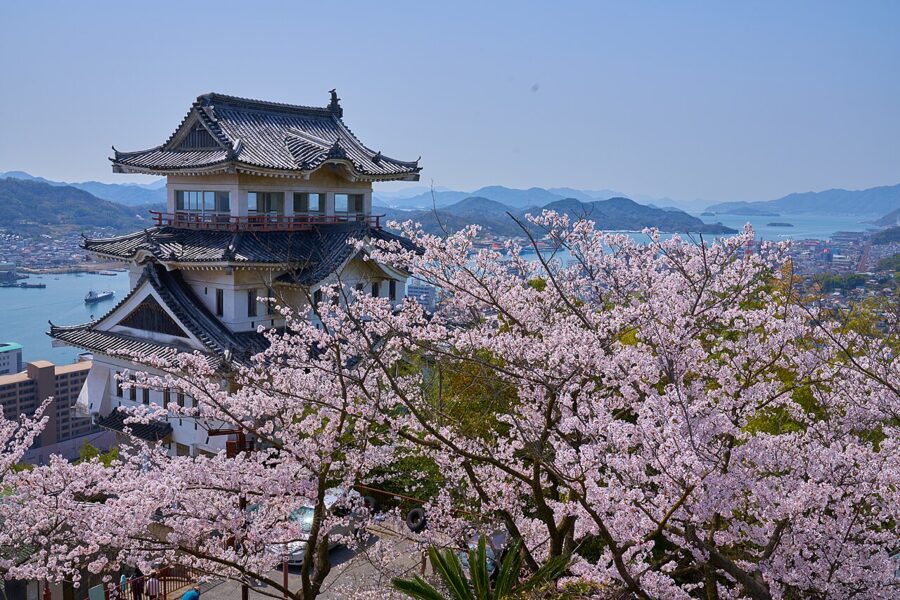
Spring and autumn are not the same ride. Spring brings the blossom, but also lingering westerlies and the two busiest holiday weeks of the year. Autumn, once the typhoons have passed, is steadier and quieter.
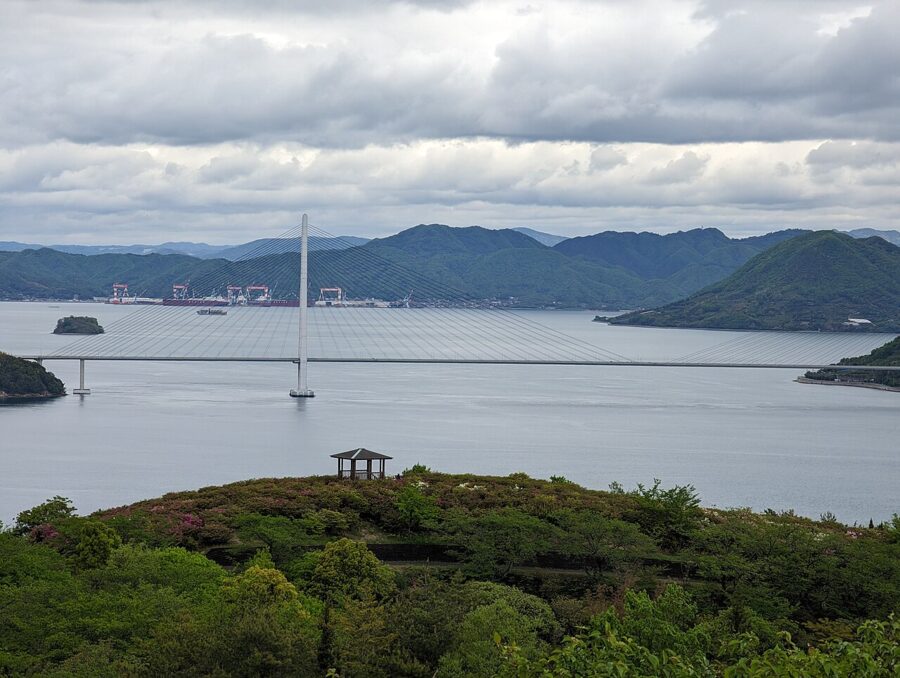
Winter, which most people write off, is the driest season of all, and the windiest, so it suits riders who start early and dress for the bridges.
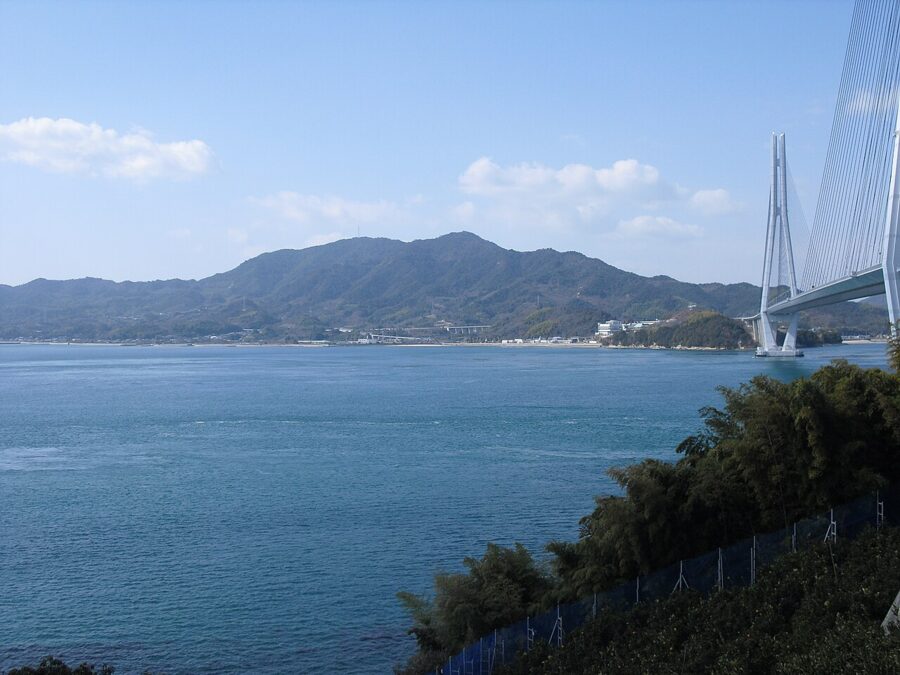
The short answer
Here is how I would rank the months for a first ride of the whole route, about 70 km (43 miles) from Onomichi to Imabari:
- Best: mid-October to mid-November, and 6 to 31 May. Mild, mostly dry, light winds, no holiday rush outside the long weekends.
- Very good, with a catch: late March and April (cherry blossom, but school holidays, Golden Week from 29 April and spring westerlies), and early October (typhoons are still possible).
- Fine if you prepare: December to February (dry and empty, but cold wind on the bridges and sunset around 17:00), and the first half of September (hot, with the year’s peak of typhoon risk).
- Hardest: June to mid-July for rain, and late July and August for heat, made worse in mid-August by the Obon holiday crowds.
Cycling across the bridges costs nothing in any month: the bike tolls are waived under JB Honshi’s Shimanami Cycling Free scheme until 31 March 2028. The bike itself is the part to book early; Shimanami Kaido bike rental runs short long before the inns do.
The year month by month
The figures below are the JMA’s 1991–2020 averages for its station at Imabari, at the southern end of the route, with rainfall from the station on Ikuchijima (Setoda, in Onomichi City) for the Hiroshima half. There is no JMA station in Onomichi town itself.
| Month | Average high / low (Imabari) | Rain, Imabari / Ikuchijima | Sunshine (Imabari) | What else is happening |
|---|---|---|---|---|
| January | 9.8 / 1.8°C | 50 / 40 mm | 140 h | Driest month on the route; strongest winds; hassaku harvest |
| February | 10.3 / 1.7°C | 60 / 50 mm | 146 h | Early kawazu cherry at Kosanji; still windy |
| March | 13.6 / 4.3°C | 97 / 84 mm | 185 h | Cherry blossom opens late in the month; spring school holidays |
| April | 18.8 / 8.8°C | 97 / 89 mm | 199 h | Full bloom early in the month; azaleas late; Golden Week from the 29th |
| May | 23.6 / 13.7°C | 112 / 108 mm | 215 h | Golden Week to the 5th, then quiet; citrus blossom; roses on Oshima |
| June | 26.4 / 18.4°C | 196 / 172 mm | 163 h | Rainy season from early June; few visitors |
| July | 30.7 / 22.7°C | 192 / 178 mm | 202 h | Rainy season ends mid-month; heat builds |
| August | 32.2 / 23.9°C | 94 / 90 mm | 230 h | Hottest and sunniest; Obon crowds; summer festivals |
| September | 28.2 / 20.4°C | 165 / 127 mm | 162 h | Peak typhoon month; heat lingers |
| October | 22.9 / 14.6°C | 122 / 96 mm | 165 h | Green lemons; shrine festivals; Cycling Shimanami in event years |
| November | 17.3 / 8.9°C | 70 / 59 mm | 137 h | Betcha Festival 1–3 November; autumn colour late in the month |
| December | 12.2 / 4.1°C | 59 / 46 mm | 130 h | Yellow lemons begin; shortest days; Onomichi and Imabari terminals close at 18:00 |
Spring: March to May
March starts cold, with lows around 4°C, and ends with blossom. The JMA’s average flowering date is 25 March at Hiroshima and 24 March at Matsuyama, with full bloom on 3 April at both; in 2026 Hiroshima’s trees opened on 19 March, so a mild year brings everything forward. April is the prettiest month and the busiest, and the westerlies of winter still blow on some days, which favours riding from Imabari.
May is the gentlest month for most riders: highs of 23.6°C, more sunshine than any month outside midsummer, and from the second half of the month, as Shimanami Japan puts it, the islands smell of citrus blossom.
Summer: June to August
June and July carry close to 200 mm of rain each at Imabari, nearly four times January’s total, in heavy, humid air. The empty roads and easy bookings still make June a fair choice for anyone with a spare day. August is the hottest and sunniest month, with an average high of 32.2°C (90°F): start as the terminals open, stop through the middle of the day and carry more water than you think you need, because there is no shade on a bridge deck.
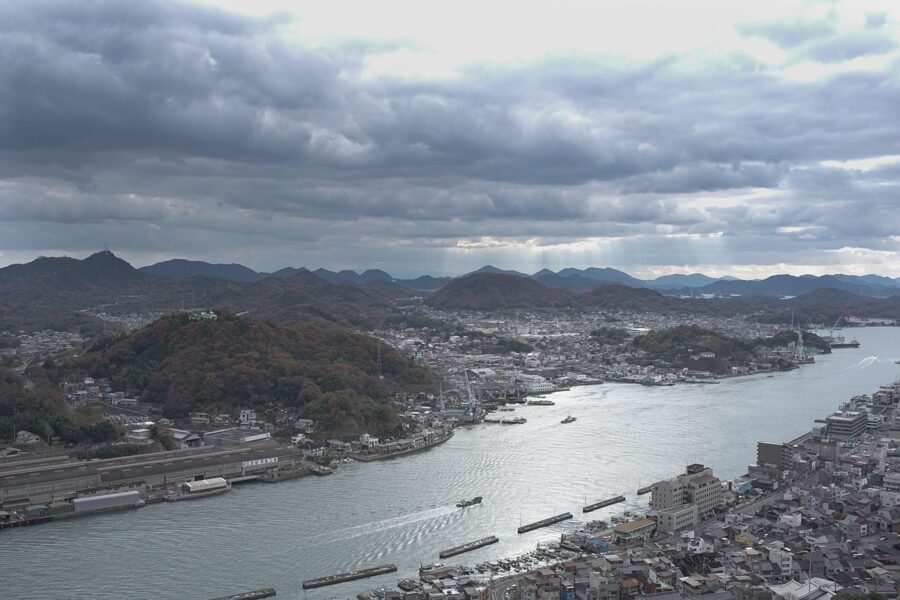
Autumn: September to November
September stays hot, with average highs of 28.2°C, and is the heart of the typhoon season; I would only ride it with a spare day in hand. October is when the route settles, with highs of 22.9°C, clear air and green lemons in Setoda. November is cooler, with highs of 17.3°C, the lowest rainfall outside winter and the maple colour arriving at the end of the month.
Winter: December to February
Winter is dry: January brings just 40 mm of rain on Ikuchijima, the lowest of any month at any station on the route, and snow that settles is rare. Highs sit around 10°C (50°F). The price is wind: the JMA station on the west side of Omishima, near Oyamazumi Shrine, averages 3.0 m/s in January against 1.6 m/s in June. Ride from Imabari, so the north-westerlies of the season push you rather than stop you.
Weather: what the numbers mean on a bike
Imabari and Ikuchijima both average about 16°C across the year, within half a degree of each other in every month. In spring and autumn the morning can be ten degrees cooler than mid-afternoon, so carry a packable jacket for the start and for the descents off the bridge ramps.
Rain and the rainy season
Japan’s rainy season, tsuyu (梅雨), reaches the route in early June and leaves in the middle of July. The JMA’s average dates are 5 June to 17 July for Shikoku, which covers the Imabari side, and 6 June to 19 July for Chugoku, which covers Onomichi. Real years wander a long way from that. In 2025 the season began around 16 May (Chugoku) and 17 May (Shikoku) and ended around 27 June; in 2026 it ran from around 2 June (Shikoku) and 4 June (Chugoku) to around 12 July (Shikoku) and 8 July (Chugoku).
If your dates fall in June, keep one day loose. I would not ride the bridges in heavy rain and poor visibility; that is the day for the museums further down.
Typhoons
Typhoons are the bigger risk, because they close things. According to the JMA’s 1991–2020 averages, about 3.3 typhoons a year come within 300 km of Shikoku, and 3.0 of the Chugoku region. For Shikoku the monthly figures are 0.7 in July, 0.9 in August, 1.0 in September and 0.4 in October; for Chugoku, September is the peak at 1.1.
In other words, a typhoon reaching the area is likely in most years, but a typhoon on your particular day is not. Forecasts give several days’ warning. If one is coming, move your ride rather than your luck: ferries can be suspended, and the bridge decks are the most exposed place on the route.
Wind on the bridges
The JMA measures wind near the ground, and the bridge decks sit tens of metres above the sea with nothing to break a gust. JB Honshi, which runs the bridges, notes on its two-wheeler closures page that wind can shut its expressways to motorbikes while cars keep running. Cyclists use separate decks, but the same gusts reach them.
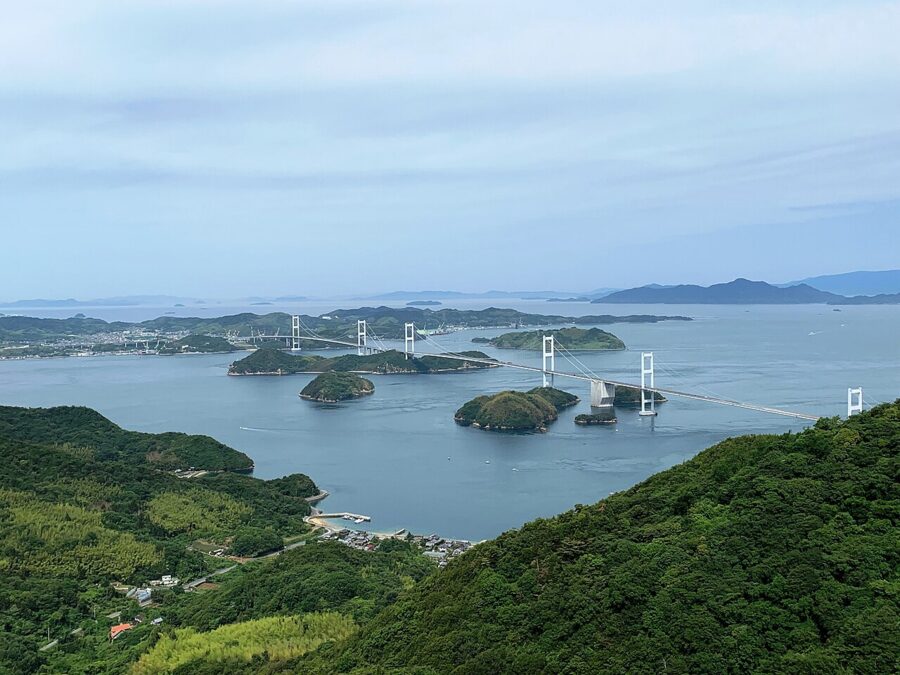
The Omishima station averages 3.0 m/s in January, 2.8 in December and 2.6 in February, and 1.6 to 1.8 m/s from May to September. The longest exposure is the Kurushima-Kaikyo Bridge, about 4 km of deck between Oshima and Imabari, the longest of all the Shimanami Kaido bridges.
Daylight and closing times
In winter, daylight limits a ride more than the cold does. In Hiroshima the sun sets at 19:24 in mid-June and 17:00 on 1 December, according to the National Astronomical Observatory’s tables, and the islands, a little further east, lose the light a few minutes earlier. Night riding is not allowed on the public rental bikes.
As of 2026, Shimanami Japan’s terminals at Onomichi Station, Imabari Itoyama and Imabari Station open 08:00 to 19:00 from March to November and 08:00 to 18:00 from December to February. The island terminals on Mukaishima, Innoshima, Ikuchijima (two), Omishima, Hakatajima and Oshima open 09:00 to 17:00 all year, and bikes must be back within opening hours.
The citrus year
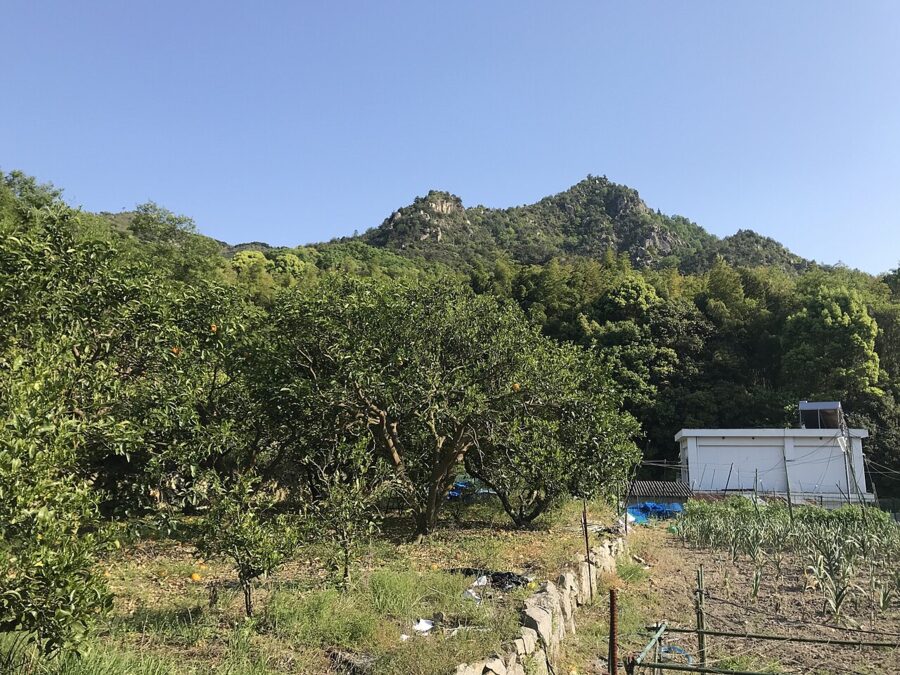
The islands grow citrus on almost every sunny slope, and the fruit in the farm stalls and roadside stations changes with the months. Much of the best Shimanami Kaido food follows the same calendar.
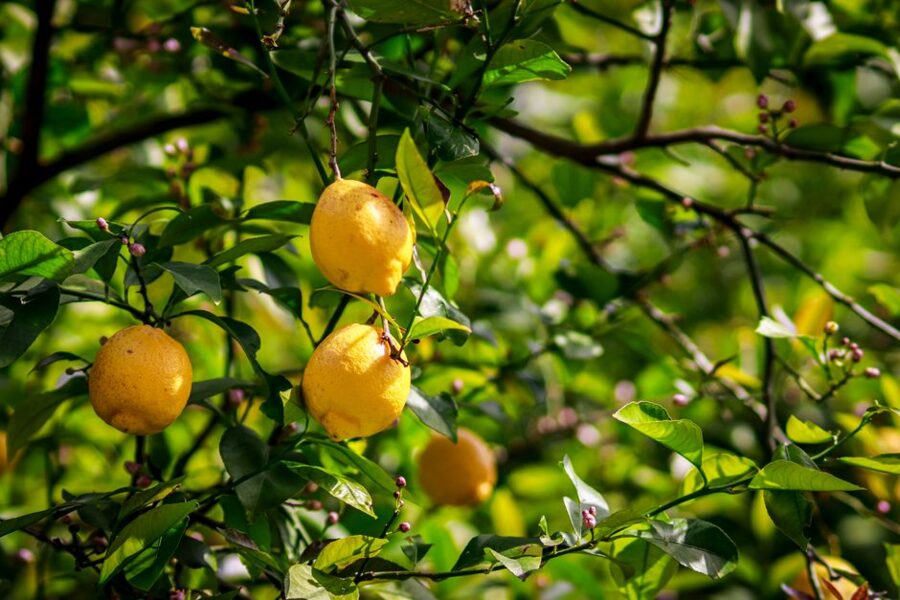
Lemons
Hiroshima Prefecture grows about half of Japan’s lemons (51 per cent of the 2021 crop), mostly on its islands, and Setoda (瀬戸田) on Ikuchijima is where the trade took off after the war. The prefecture’s own Hiroshima lemon calendar runs like this: greenhouse lemons from July, bright green lemons in October and November, the familiar yellow lemons from around the end of the year to May, and stored, individually wrapped fruit from June to August.
So there is no month without a Setoda lemon, but the fruit straight off the tree is green in October and November and yellow through winter and spring.
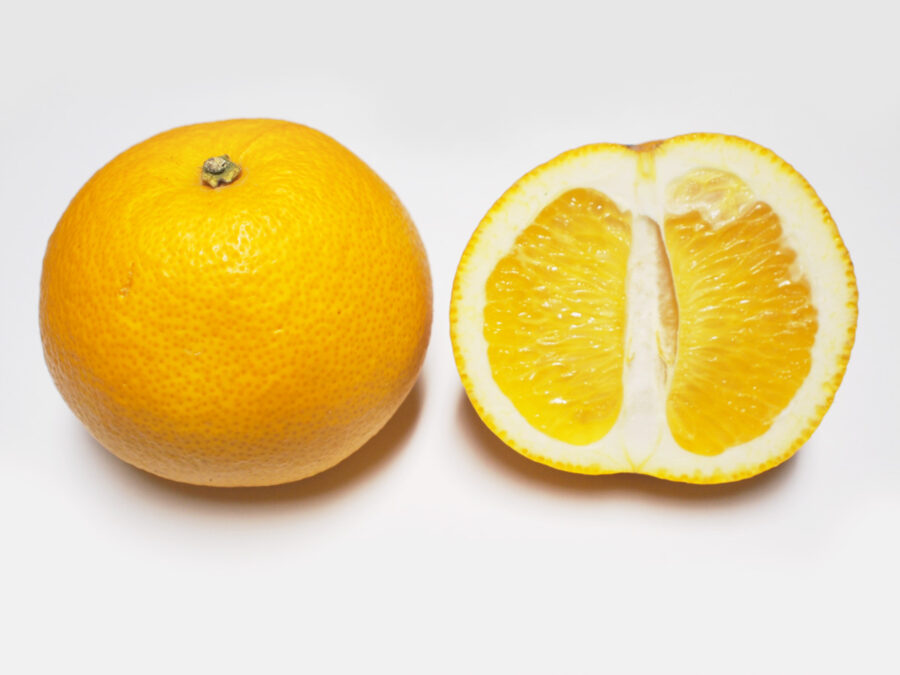
Hassaku
Hassaku (八朔), a large, firm, slightly bitter citrus, started on Innoshima. The original seedling was found around 1860 at Jodoji temple in the Taguma district, and the fruit was named in 1886. It is picked from December to February and then stored for a month or two so the acidity softens, which puts the best of it in the shops from late winter into spring.
Mikan, strawberries and winter food
Mikan, the small easy-peel mandarins, fill the stalls from autumn into winter, which is the citrus season proper: the most fruit and the fewest visitors.
Two more reasons to ride in winter, both on the Ehime side. Inoue Ichigoen on Omishima runs strawberry picking from 25 December 2026 to 6 June 2027, 40 minutes of eating for ¥2,500 (about US$16) for anyone of junior-high age and over. And the roadside station Yoshiumi Ikiikikan on Oshima starts its winter oyster menu on 1 December 2026.
Blossom, azaleas, roses and autumn colour
Cherry blossom
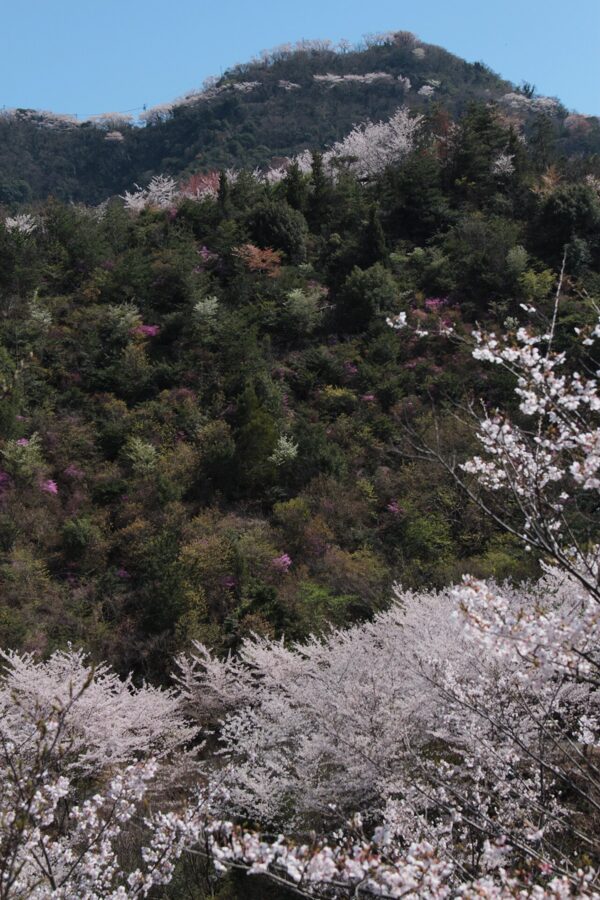
Senkoji Park (千光寺公園) on the hill above Onomichi is the best-known cherry spot on the route, with about 1,500 trees and a place on Japan’s list of 100 top cherry blossom sites. On the islands, the blossom is more scattered and, I think, better for it: whole hillsides of wild cherry, school grounds, and roadside trees planted decades ago.
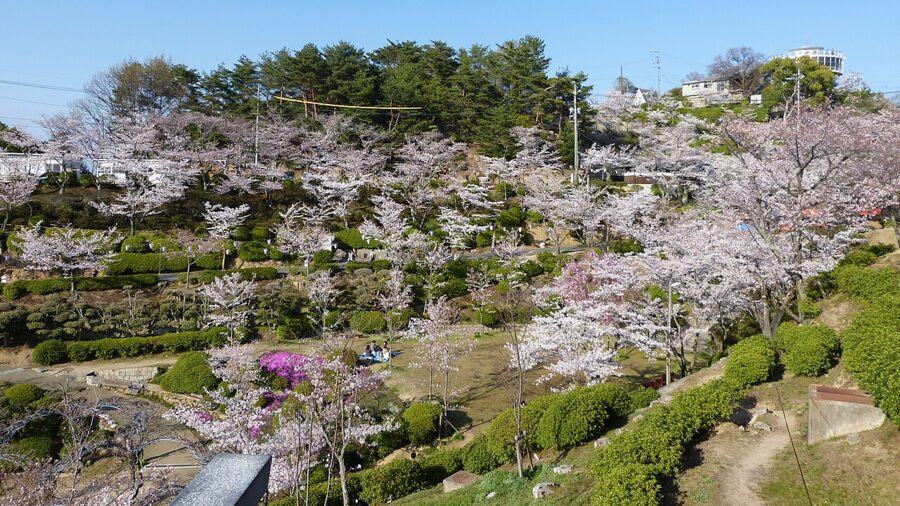
Shimanami Japan’s list of cherry spots is easy to ride. Below the Innoshima end of the Innoshima Bridge, a lane runs through a tunnel of cherry trees with the bridge overhead. On Omishima, the trees along the cycle ramp at the Omishima end of the Omishima Bridge form a canopy you ride straight through. And the earliest blossom of all, the deep pink kawazu-zakura, opens about a month before the main season at Kosanji temple in Setoda and on the seawall by the Onomichi Chamber of Commerce.
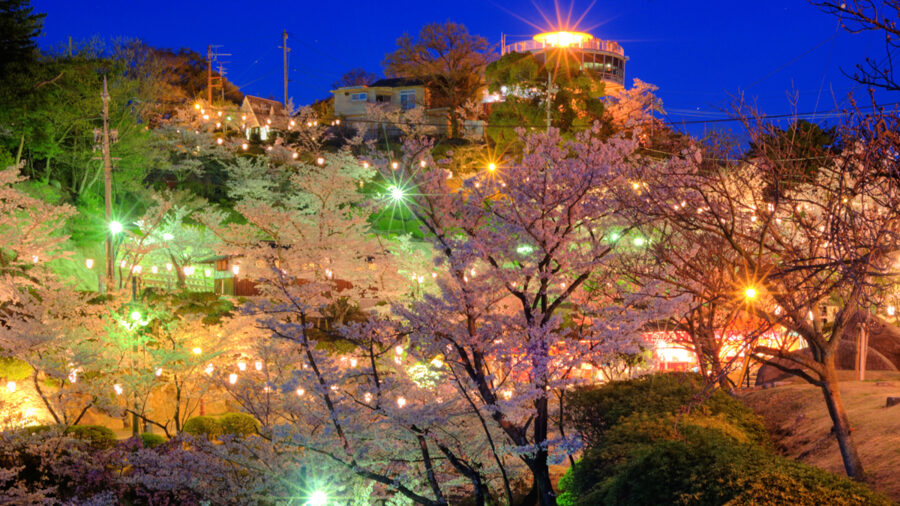
The biggest show on the islands is Hirakiyama Park (開山公園) on Hakatajima, where about 1,000 cherry trees cover the hilltop and the lookout takes in three bridges at once: the Hakata-Oshima, Omishima and Tatara bridges. Imabari City says lanterns go up for evening viewing and oden stalls open in the blossom season. The lookout is 149 m above the sea, so it is a real climb from the cycling route, and worth it.
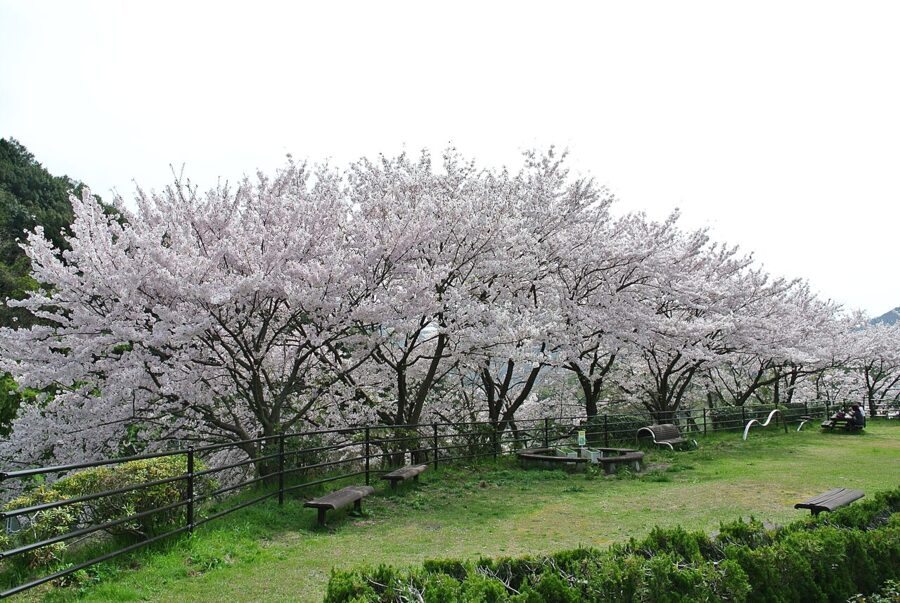
Off the main route, Mount Sekizen on Iwagijima in Kamijima Town has more than 3,000 cherry trees on a 370 m peak; it is a separate day out.
Azaleas and roses
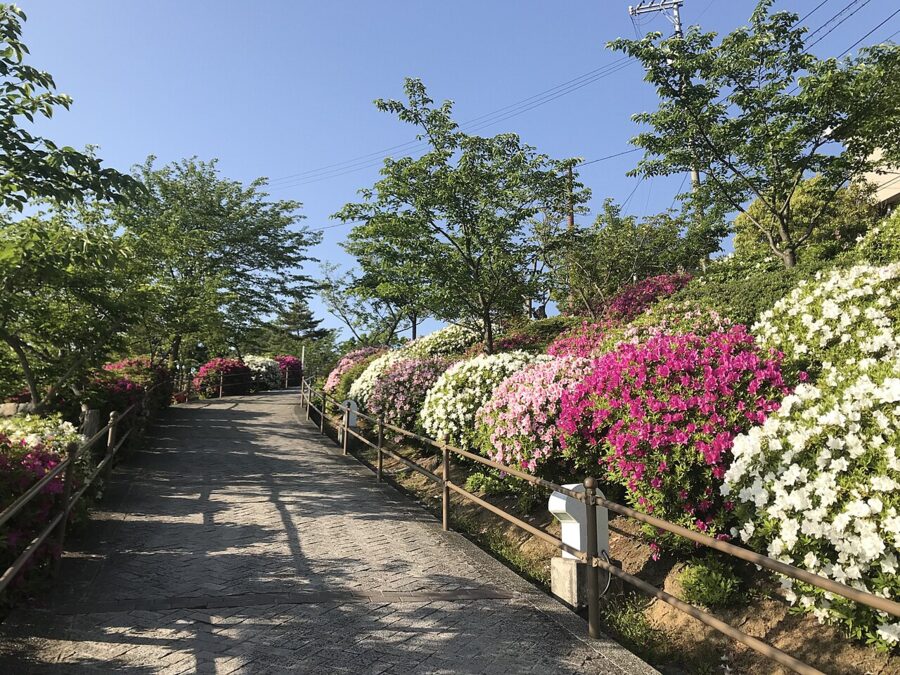
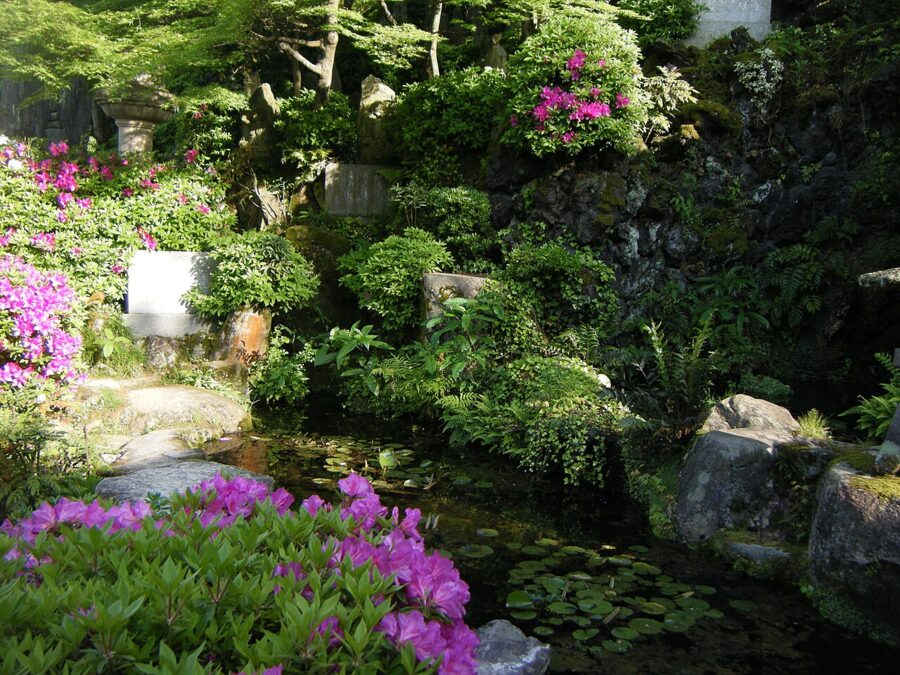
The azaleas follow the cherries. At Senkoji Park they line the paths near the summit by the end of April, and Hirakiyama Park has azaleas as well as its cherries. In early May the gardens of Ikuchijima‘s Kosanji are full of them.
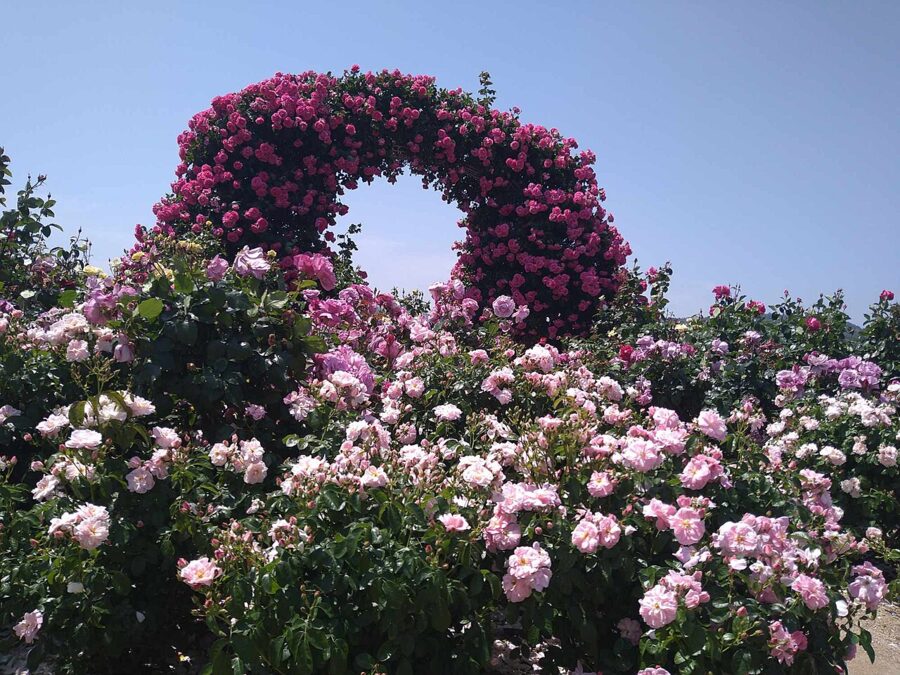
Then come the roses. Yoshiumi Rose Park on Oshima, beside the roadside station Yoshiumi Ikiikikan, has about 3,500 plants of 400 varieties, which flower from mid-May to the end of December. The park holds a rose festival when the first flush peaks in spring.
Autumn colour
Autumn colour comes late here. The JMA’s maple observations put the average date of the leaves turning at 22 November in Hiroshima and 5 December in Matsuyama; in 2026 Hiroshima’s maple turned on 24 November. Shimanami Japan points to Kosanji in Setoda and the slopes of Mount Washigatou above Oyamazumi Shrine on Omishima as the places to see it on the route.
Do not expect whole hillsides of red: much of the island woodland stays green, and the colour comes in patches. The clear air is the bigger reward.
Crowds: holidays, weekends and the days the bikes run out
Four stretches of the calendar fill the route, the rental racks and the small island inns:
- Spring school holidays and cherry blossom, roughly the last ten days of March to the first week of April.
- Golden Week, 29 April to 5 May, the busiest week of the year.
- Obon, the middle of August.
- The autumn holidays: the long weekends of Respect for the Aged Day (third Monday of September) and Sports Day (second Monday of October), and Culture Day on 3 November.
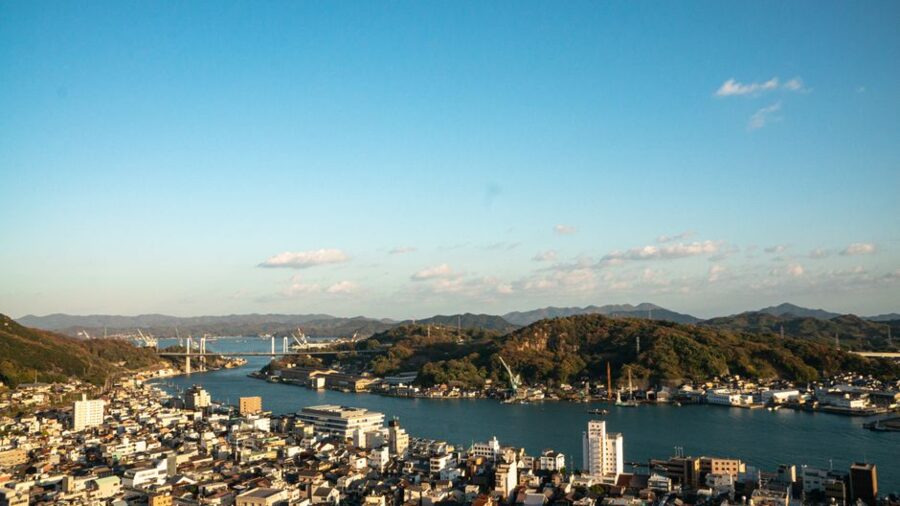
Shimanami Japan’s answer on bookings is plain: in Golden Week and Obon all of its roughly 2,000 rental bikes go out, and on some days it takes no reservations. If your dates touch any of those periods, book the bike and the bed first, because the small inns in where to stay on the Shimanami Kaido fill just as fast.
As of 2026, a standard cross bike or city bike from Shimanami Japan costs ¥3,000 (about US$20) a day, an electric-assist bike ¥4,000 (about US$27) and an e-bike ¥8,000 (about US$53), according to its rental price list. The e-bikes are kept only at Onomichi Station and the two Imabari terminals and must come back the same day.
Outside those periods, weekdays are quiet and Saturdays less so. If you have a choice, I would ride from Tuesday to Thursday and avoid the Saturday of any long weekend.
Cycling Shimanami and the island festivals
Cycling Shimanami
Once every two years, on a Sunday in late October, the motorway is handed to bicycles. Cycling Shimanami is a ride, not a race, on eight courses from about 30 km to 140 km, each including a stretch of the Nishiseto Expressway that is normally closed to bikes. The 2026 edition ran on 25 October with a limit of 7,000 riders; the organisers say about 5,800 took part, from all 47 prefectures and 42 countries and regions.
On the day, the expressway is closed to cars in both directions. In 2026 the closures ran 06:00 to 10:00 between the Onomichi Bridge exit and Innoshima-kita IC, and 06:00 to 12:40 between Imabari IC and Innoshima-kita IC. The ordinary cycle paths stayed open, so you can still ride the route that day, in a great deal of company.
Past editions ran in 2014, 2016, 2018, 2022 and 2024 (the 2020 event was cancelled), which points to 2028 for the next one; no date has been announced. Entries for 2026 opened in mid-April and closed on 18 May, about five months ahead.
Festivals worth planning around
Oyamazumi Shrine (大山祇神社) on Omishima holds about 120 ceremonies a year. Its rice-planting festival, Otaue-sai, falls on the fifth day of the fifth lunar month, in late May or June, and includes Hitori-zumo, a sumo bout between a wrestler and the invisible spirit of the rice that foretells the harvest. The bout returns at the harvest festival, Nukiho-sai, on the ninth day of the ninth lunar month, in October; both start at 12:30.
The shrine’s autumn festival, Ubusuna Taisai, falls on the Sunday nearest the 22nd day of the eighth lunar month and the day before, when three portable shrines are carried about 4 km.
On Innoshima, the Innoshima Suigun Matsuri remembers the Murakami seafarers who held these waters. In 2026 it came in two parts: the sea festival with its kobaya rowing-boat races on 30 August, and the fire festival on 20 September. The 2027 dates have not been published.
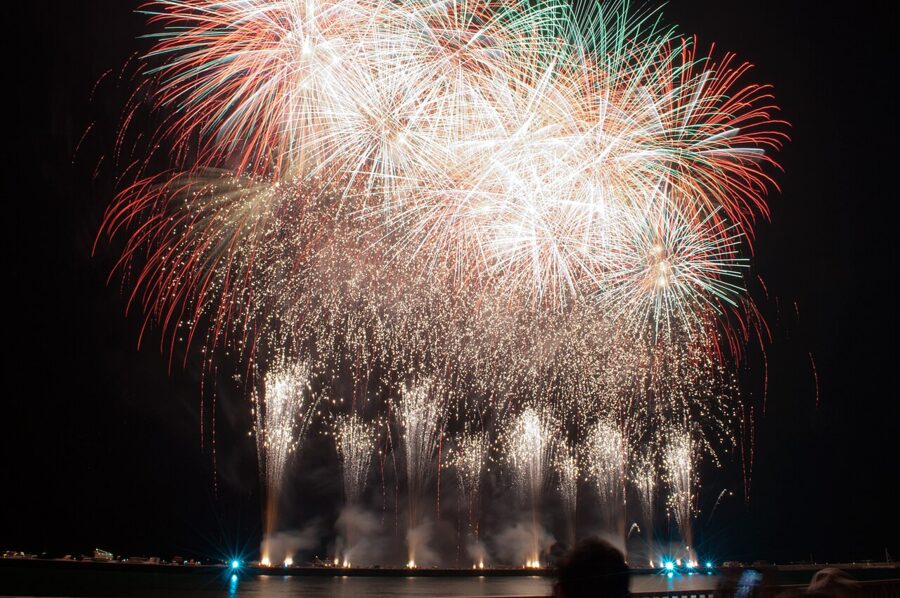
In Imabari, the Onmaku summer festival, with its dancing and a fireworks show over the port, was held on 8 and 9 August in 2026. From its 30th edition the organisers are moving it to autumn: in 2027 it is planned as a single day on Saturday 2 October, with the possibility of related events on the Sunday.
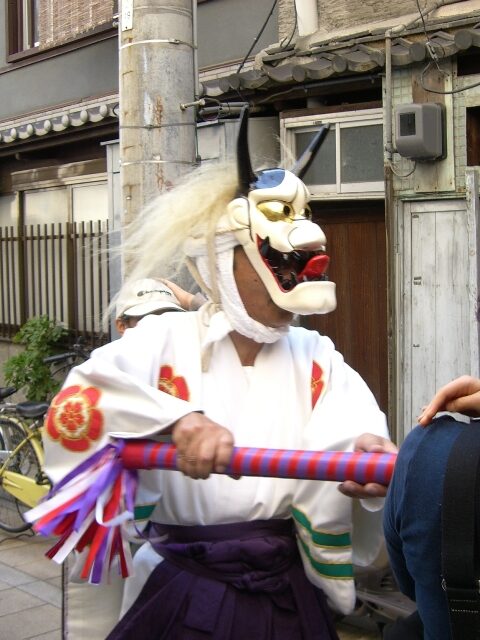
In Onomichi, the Betcha Festival runs every year from 1 to 3 November at Kibitsuhiko Shrine. On the 3rd, three masked demons, Beta, Soba and Shoki, lead the portable shrine through the town centre, chasing children and tapping heads with a bamboo whisk or prodding with a stick. A tap is said to make you clever and keep you well for the year. The festival goes back to an epidemic in 1807.
And one for winter: on 7 January at 19:00, Oyamazumi Shrine holds its Fukugi ritual (福木神事), when small cylinders of sakaki wood are thrown into the inner courtyard and the crowd scrambles for them. Whoever catches one is said to have luck for the year.
When it rains or blows
Rainy-day stops
A wet day is not a lost day near Setoda or Miyakubo:
- Kosanji, Setoda, Ikuchijima. Open daily, 09:00 to 17:00. Admission ¥1,800 (about US$12) for adults as of 2026, which covers the temple, the white marble Hill of Hope above it and the Kongokan gallery.
- Hirayama Ikuo Museum of Art, Setoda. A short walk from Kosanji. Open 09:00 to 17:00, last entry 16:30, in principle every day; closed 8 December 2026 for a change of exhibition.
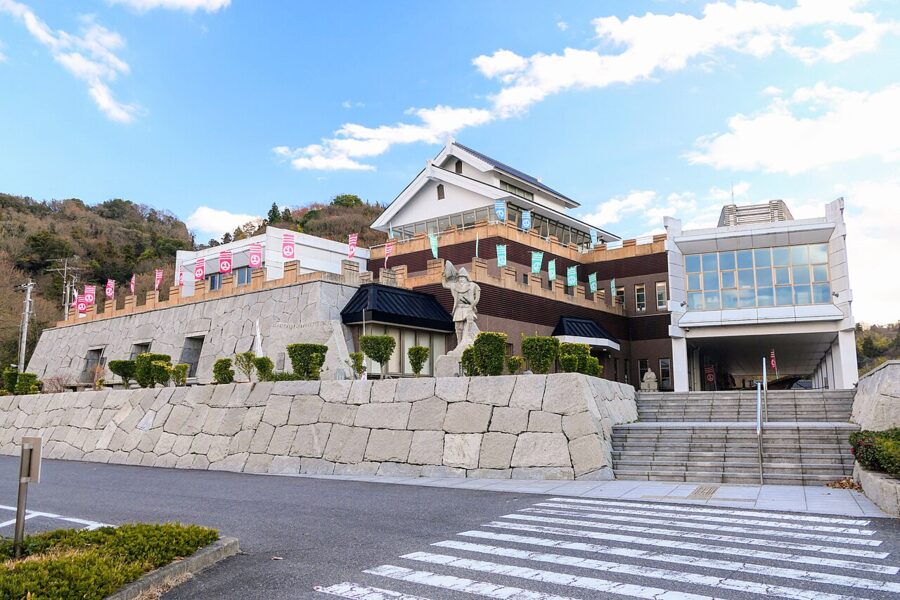
- Murakami Kaizoku Museum, Miyakubo, Oshima. Open 09:00 to 17:00, ¥310 (about US$2) for adults. Closed on Mondays (on the following day if Monday is a holiday) and from 29 December to 3 January.
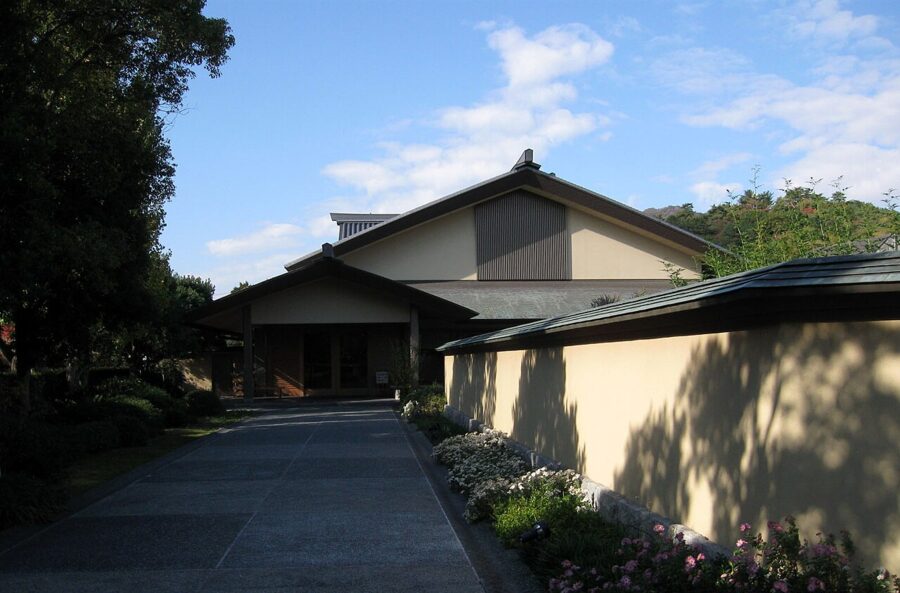
On Omishima, the treasure hall at Oyamazumi Shrine holds about 80 per cent of the arms and armour in Japan designated a National Treasure or Important Cultural Property, according to the shrine. Check the shrine’s current hours before you go. And if the rain sets in for the day near the southern end, Imabari’s towel shops are an indoor fallback, and Imabari towels are light enough to carry home on a bike.
How closures are announced, and what to do
JB Honshi’s traffic pages show live closures on the Nishiseto Expressway, updated through the day, and ferries post suspensions on their own sites and at the piers. In a typhoon the boats can stop for the day, so plan your way off the islands early; when the boats stop, the bus becomes the fallback in any plan for luggage and ferries.
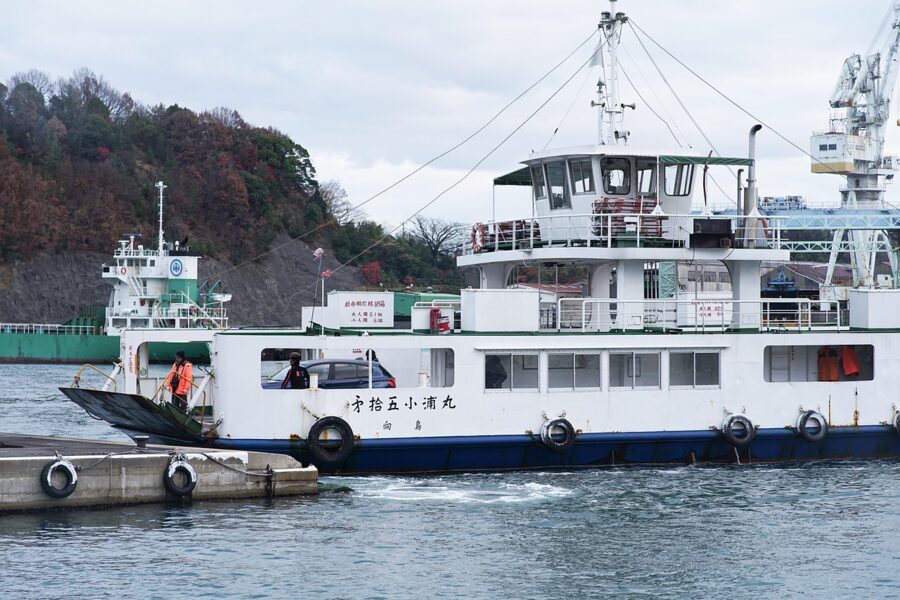
If the weather turns on a Shimanami Japan bike, the operator lets you change the terminal where you hand it back, and its breakdown service brings a replacement bike out along the route from 09:00 to 17:00. The island terminals close at 17:00, so decide by mid-afternoon. The buses used for getting to the Shimanami Kaido are the way home, and on the Shimanami Kaido cycling route Setoda and Omishima are the natural places to stop short.
In the typhoon months, check the JMA forecast and wind for Imabari and Onomichi the evening before, look again at 07:00, and keep a shorter day ready, ending at Setoda or on Omishima. A Shimanami Kaido itinerary over two days gives you that slack.
For the rest of the year, take the hint from the rental racks at Onomichi. Go when the bikes are still there at nine: a Tuesday in late October, a Wednesday in mid-May, or any clear winter morning with the wind behind you from Imabari. The bridges, the lemons and the islands of the Shimanami Kaido will be there in every season; what you are really choosing is how many people you share them with, and how long the light lasts.