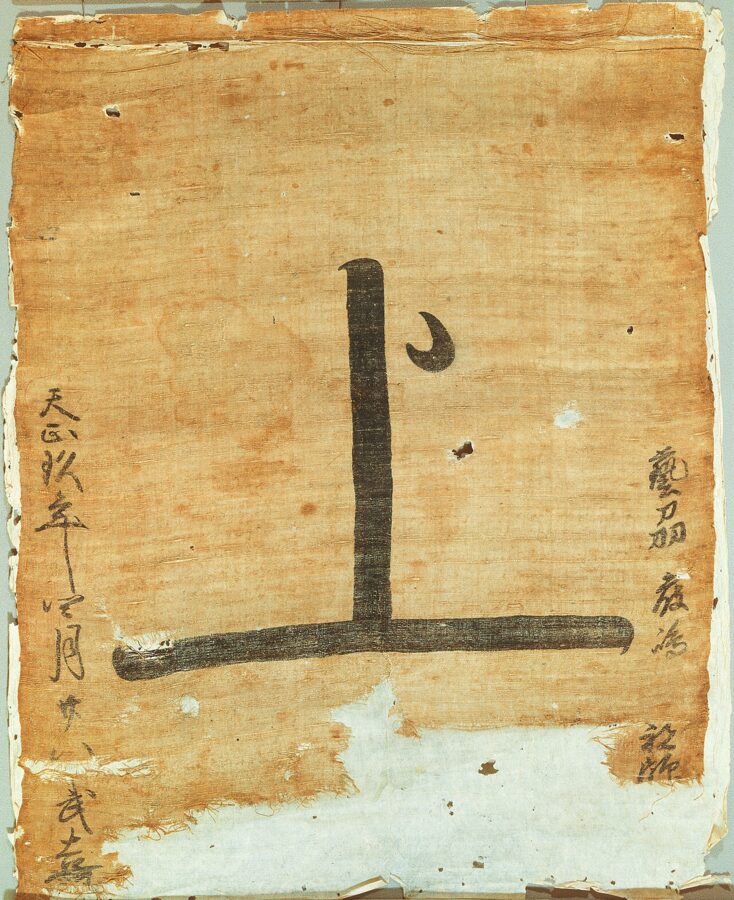
In 1586 a party of Jesuits sailing up the Inland Sea towards Osaka, Luis Frois among them, asked the lords of these islands for safe passage. What came back was a silk flag with a crest and a signature, and one instruction: show it if you meet a suspicious boat. Frois called the family that issued it the greatest pirates in Japan.
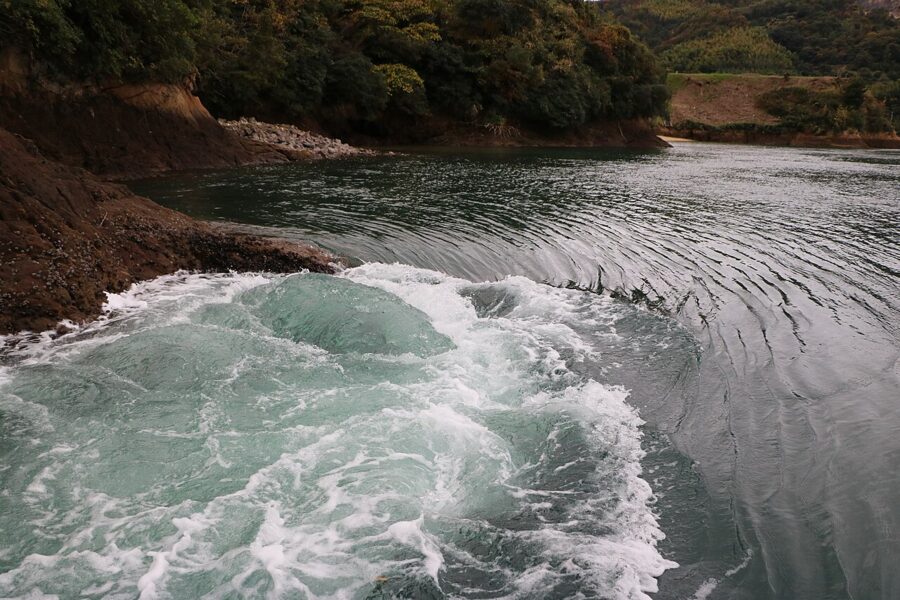
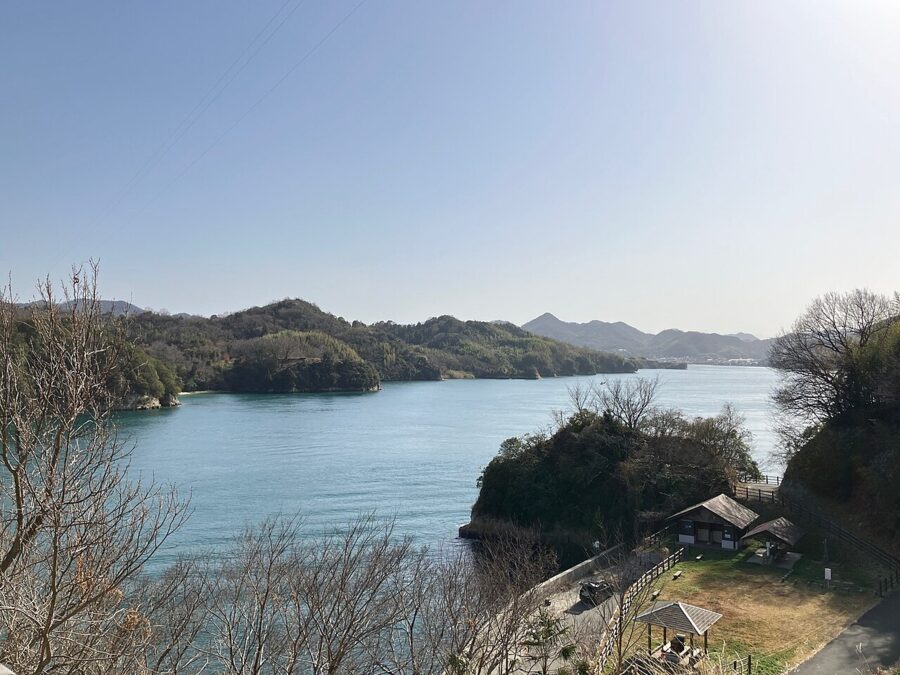
The flag worked because of the water. Between Oshima and Hakatajima the tide pours through the Miyakubo strait at up to 10 knots, about 18 km an hour, and every channel in these islands has a current of its own. A ship that knew the channels, or flew the right flag, got through. One that refused to pay could expect to be attacked.
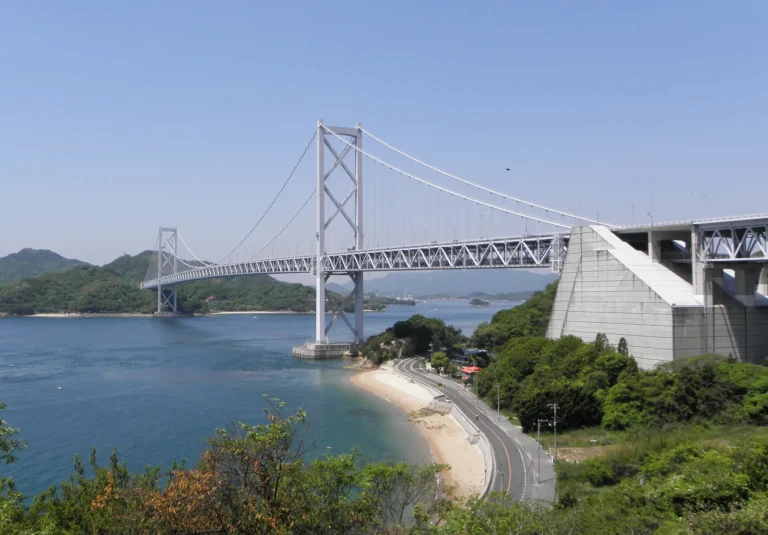
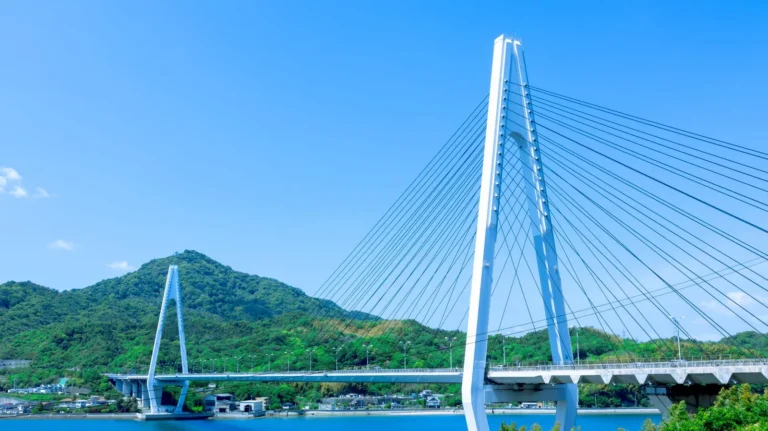
The same water still runs past the museum deck at Miyakubo, and most riders on the Shimanami Kaido cross all three of the pirates’ home straits without knowing it. So the real question is how much of your ride to give them: an hour at one museum, or a route that strings together the sea castles, the family graves and the shrine where the captains prayed.
Three houses, one name
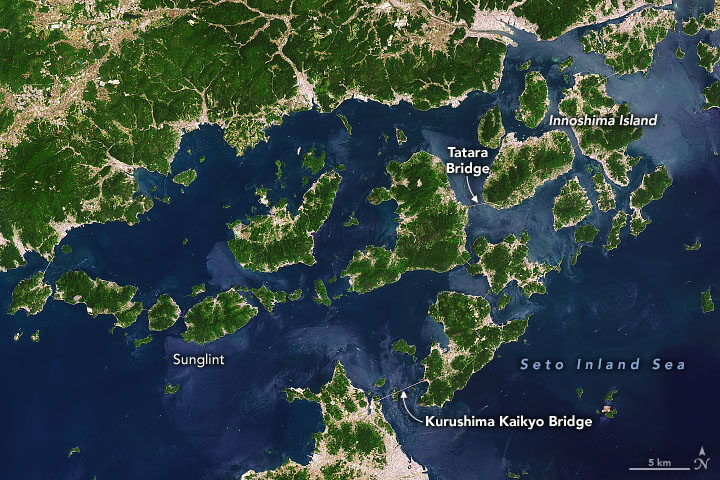
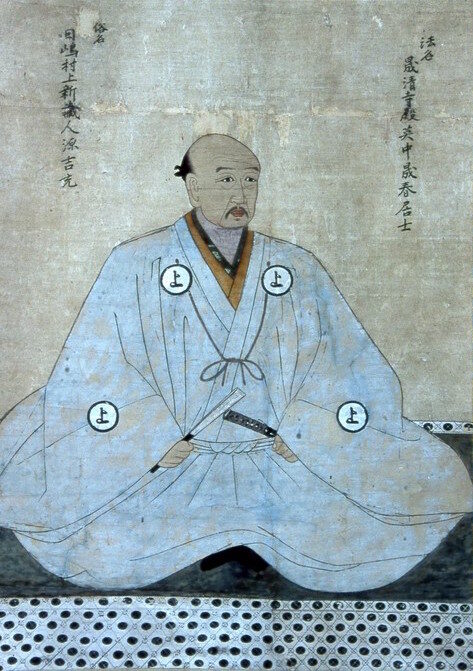
The Murakami pirates (村上海賊, Murakami kaizoku) were three related houses, each named after the island it held: Noshima (能島) and Kurushima (来島), now part of Imabari in Ehime, and Innoshima (因島), now part of Onomichi in Hiroshima. Asked which prefecture the pirates belong to, the islands answer both, which is why Onomichi and Imabari share the story. Later writers called them the Mishima Murakami, the Murakami of the three islands.
Each house watched a different lane. The Japan Heritage account of the Murakami puts it neatly: Innoshima held the route along the Honshu shore, Noshima the shortest route through the middle, and Kurushima the route along the Shikoku side.
Where they came from is not settled. The Noshima and Innoshima family trees claim descent from the aristocratic Murakami Genji, and another tradition links them to the Murakami of Shinano; neither can be proved. The documents show when each house appears: Noshima in 1349, escorting the envoys of Kyoto’s Toji temple to its estate on Yugeshima; Kurushima in 1404, running the same estate; Innoshima in 1427, in a letter of thanks from the shogun Ashikaga Yoshimochi.
The three were kin, not a single command. They allied, quarrelled, intermarried and at least once besieged each other. Kurushima served the Kono, the governors of Iyo; Innoshima served the Ouchi and then the Mori and their Kobayakawa branch. Noshima, the museum at Miyakubo says, was the most independent, keeping on terms with whichever lord suited it.
Kaizoku or suigun?
You will see both words on signs along the route. Suigun (水軍) means a navy and is the later word: the museum explains that it came into use in the Edo period and stuck from Meiji to early Showa, when historians liked to see the clan as a forerunner of the modern navy. Kaizoku (海賊), pirates, is the word in the documents of their own day, and the islands have gone back to it.
The museum at Miyakubo changed its name from Murakami Suigun Museum to Murakami Kaizoku Museum on 1 April 2020. The Innoshima tourism association draws the line well: “suigun” fits the times when the family fought as part of a lord’s forces, “kaizoku” everything else they were, from toll collectors to traders and fishermen.
Tolls, flags and pilots
The pirates’ income was the sea lane itself. Passing ships paid a toll, recorded as hobetsu-sen (帆別銭, a charge by the sail), and in return the family guaranteed them against other pirates and the currents. Noshima also set up toll ports in other lords’ territory and charged merchant ships there, while the lords’ own ships passed free. Picking a side in a war could cost it the ports in the other side’s waters, one reason it kept its independence.
A paying ship got a pilot who knew when each channel ran slack, and a flag pass, later called a kasho senki (過所船旗), to fly as proof of payment. A flag issued by Murakami Takeyoshi in 1581 to a man named Mukai of the Saika league in Kii became an Important Cultural Property in 2015.
Tolls were only part of the business. Excavations at Mijikajima, the islet under the Hakata-Oshima Bridge that served as Noshima’s supply base, turned up imported ceramics that the Japan Heritage team compares to a daimyo’s residence. In quiet times they fished, and on Noshima itself digs have found masses of shards from the unglazed cups they drank sake from.
They were also cultivated. The captains held renga sessions, linked verse composed in turn, and offered the poems to Oyamazumi Shrine on Omishima, where Murakami commanders appear among the poets. They burned incense and took tea. The Japan Heritage story is built on that mix: a family that, as the listing puts it, protected more than it plundered.
Small fast boats and fire pots
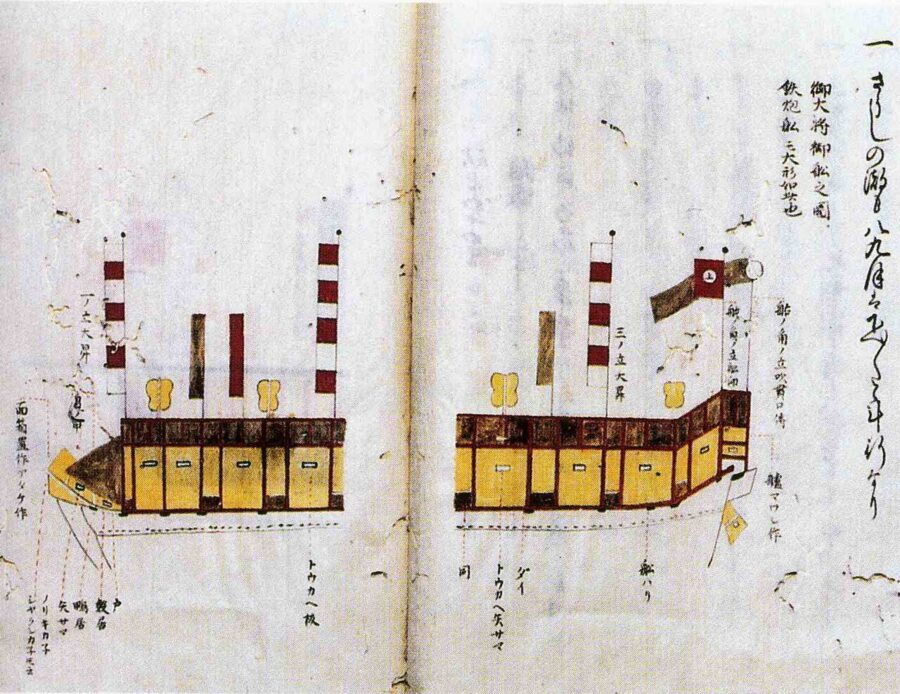
In a fight the Murakami relied on speed. Their workhorse was the kobaya (小早), a small oared boat. The replica at the Miyakubo museum, built in 1990 by Miyakubo town under Professor Osada Tetsuo of the University of Tokyo, is 8.4 metres long and 2 metres wide, with five 6.6-metre oars. Larger sekibune and heavy, walled atakebune made up the rest of a fleet.
Their signature weapon was the horoku-hiya (ほうろく火矢), a clay pot of gunpowder lit and thrown onto an enemy deck. They set ships alight with fire pots and fire arrows, then closed in and boarded. The pot lives on in the kitchen: horoku-yaki, seafood baked on hot pebbles in an unglazed dish, is named after it, and tradition says the crews ate it to celebrate a victory.
The wars: Itsukushima, Kizugawaguchi and a fleet of iron
Every Murakami story mentions Itsukushima in 1555, when Mori Motonari defeated Sue Harukata on Miyajima. The Innoshima house fought there for the Mori, sending a fleet under its retainer Suenaga Kagemichi, and a letter of Motonari’s confirms that Kurushima’s Murakami Michiyasu came too.
Noshima is the puzzle. Edo-period chronicles have Takeyoshi’s fleet fighting for the Mori, but no document of the time puts the Noshima house at Itsukushima, and a letter of 1554 places Noshima envoys in Sue’s camp. Historians now think the story grew later, once the Noshima family were proud Mori retainers and the Kurushima house, which had actually been there, had gone over to Hideyoshi.
Murakami Takeyoshi (村上武吉) is the man the museum is really about. Born in 1533 or 1536 (the sources disagree), he is said to have spent part of his youth in exile in Higo, in Kyushu, before winning a succession fight for the Noshima headship. In his time the family controlled shipping from northern Kyushu to the Shiwaku islands, with relatives placed at Kasaoka, Kojima and Kaminoseki. In 1571 he broke with the Mori, and Kobayakawa Takakage blockaded Noshima into 1572 with Kurushima and Innoshima help.
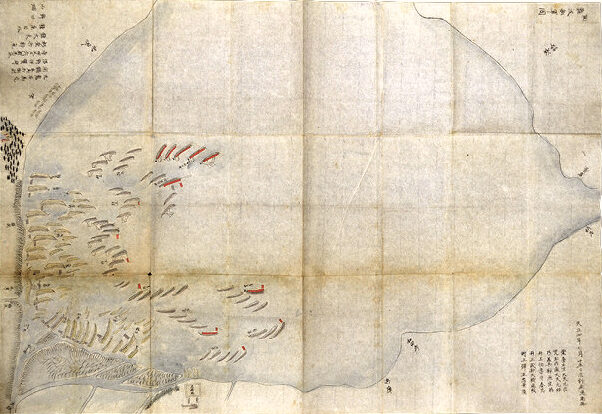
Reconciled with the Mori, the Murakami fought their most famous action in Osaka Bay. In 1576 Oda Nobunaga had the Ishiyama Honganji temple cut off by a fleet at the mouth of the Kizu River. The Mori fleet sent to break the blockade was led by Takeyoshi’s son Motoyoshi, with Innoshima’s Yoshimitsu alongside, and in the First Battle of Kizugawaguchi they burned Nobunaga’s big ships and got the rice through.
Nobunaga’s answer came two years later. His admiral Kuki Yoshitaka built six large ships, said to be armoured with iron and carrying cannon, and in the Second Battle of Kizugawaguchi in late 1578 they beat back the Mori fleet. Historians argue over how decisive it was, but the islands’ quick boats had met an enemy that would not easily burn.
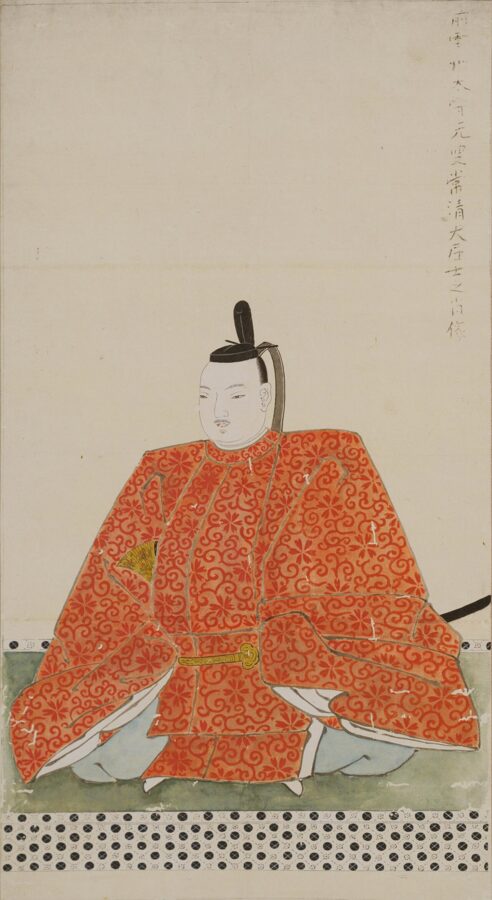
Then the alliance cracked. In 1582 Kurushima Michifusa, aged about twenty-one, accepted Hideyoshi’s offer and changed sides. The Mori and Noshima drove him off his island, but once Hideyoshi made peace with the Mori he was restored, and in the conquest of Shikoku in 1585 he led the vanguard against the Kono and was given a fief of 14,000 koku. Takeyoshi, who refused to hand Kurushima back or join the campaign, was forced off Noshima to Takehara on the Hiroshima coast.
Hideyoshi’s ban, and what became of the families
In 1588, alongside his sword hunt, Hideyoshi issued the kaizoku teishirei (海賊停止令), the ban on piracy. It outlawed the toll-for-protection business and left the sea lords three choices: become a daimyo, become a daimyo’s retainer, or lay down arms and farm. The Noshima house was soon accused of breaking it, and Motoyoshi went to Kyoto to answer.
The three houses took the three paths. Kurushima was already a daimyo. Michifusa was killed in Hideyoshi’s invasion of Korea, at the Battle of Myeongnyang in 1597. His son chose the losing side at Sekigahara in 1600 and was moved inland to Mori in Bungo, today’s Oita, where the family later spelt its name 久留島 and ruled until Meiji.
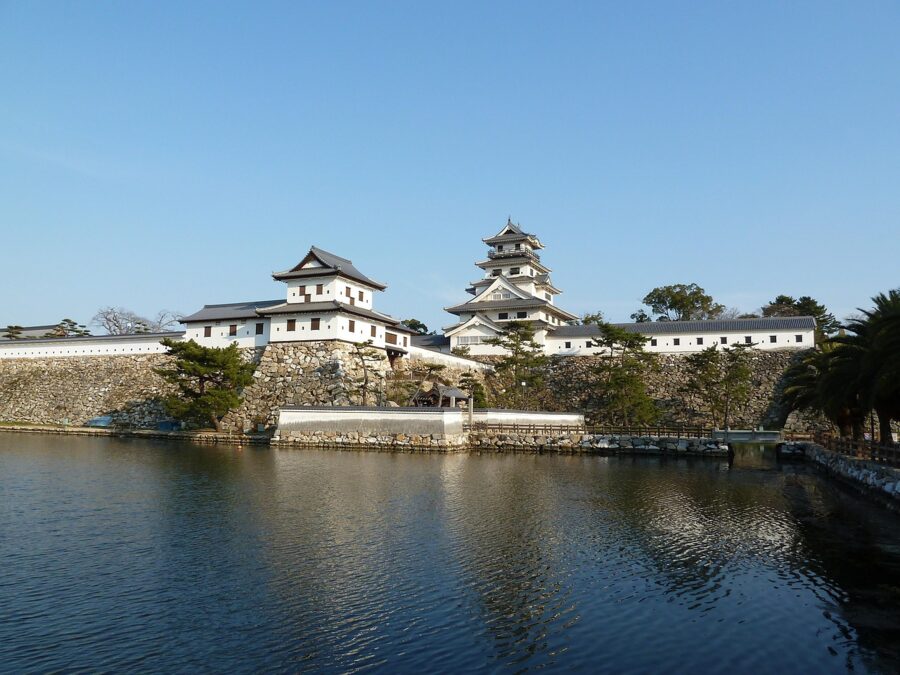
On the mainland facing the islands, Todo Takatora replaced the hill fort at Kokubuyama, said to have been built by the Noshima house, with Imabari Castle. Noshima and Innoshima followed the Mori west. Both became officers of the Hagi (Choshu) domain’s fleet at Mitajiri, crewing the lord’s barge and towing the ships of Korean embassies, and the Noshima family led the corps for some 250 years. Motoyoshi did not see it; he was killed in a night attack at Mitsuhama, near Matsuyama, in 1600.
Takeyoshi moved to Yashiro, now Suo-Oshima, in 1601 and died there in 1604; his grave is at Genshoji in Suo-Oshima, Yamaguchi, well off the Shimanami Kaido. Yoshimitsu of Innoshima, unhappy with the small stipend the Mori gave his family, went home to Innoshima and died there. The Murakami name stayed common on the islands, and families who trace themselves to the pirates still live on both sides of the route.
Japan Heritage: the story the islands tell now
In April 2016 the Agency for Cultural Affairs added the Murakami to its Japan Heritage list as “The home base of Japan’s greatest pirates, the Geiyo islands: reviving the memory of the Murakami kaizoku”. It is not a single site but 42 places and objects across Imabari, Onomichi and the islands between, from castle ruins and temples to a dance and two dishes. Its two cores are the family collections: the Noshima heirlooms at the Miyakubo museum and the Innoshima heirlooms at Innoshima Suigun Castle.
It also explains a bookshop success. Wada Ryo’s novel Murakami Kaizoku no Musume (The Pirate’s Daughter), about Takeyoshi’s daughter Kyo (景) at the First Battle of Kizugawaguchi, won Japan’s Booksellers Award in 2014. Kyo is mostly invention: a Hagi domain genealogy lists an unnamed daughter of Takeyoshi, and that line is all the history there is.
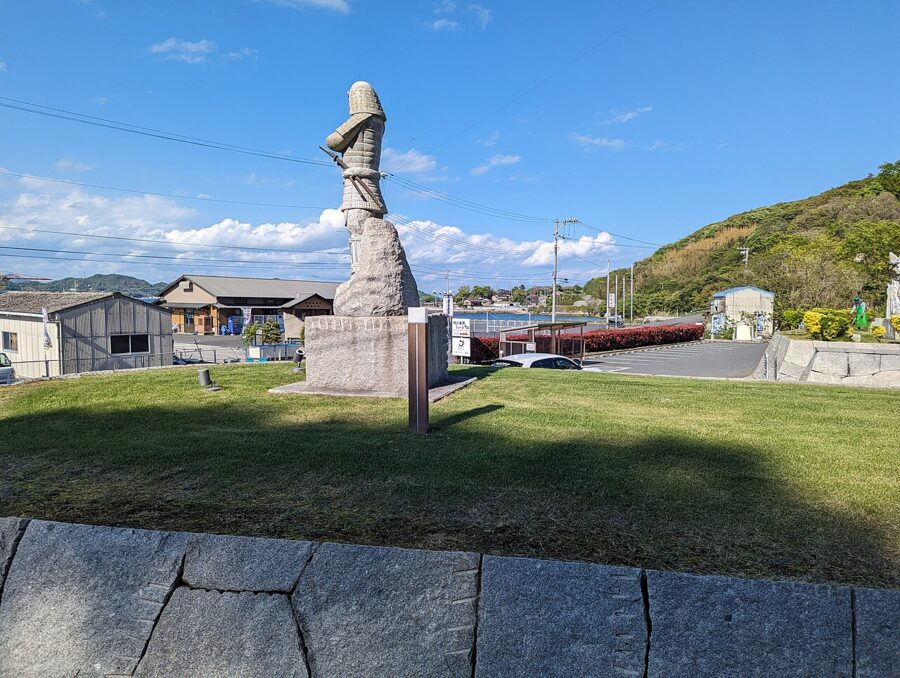
Where to see the pirates’ world today
In route order from Onomichi the pirate sites fall on Innoshima, Ikuchijima, Omishima, Hakatajima and Oshima, with Kurushima at the Imabari end; the bridges join all but Kurushima, so most of the Shimanami Kaido islands make a pirate stop. The two places that hold the actual objects are the museum on Oshima and the castle on Innoshima. The rest are ruins, graves and views.
The Murakami Kaizoku Museum, Miyakubo, Oshima
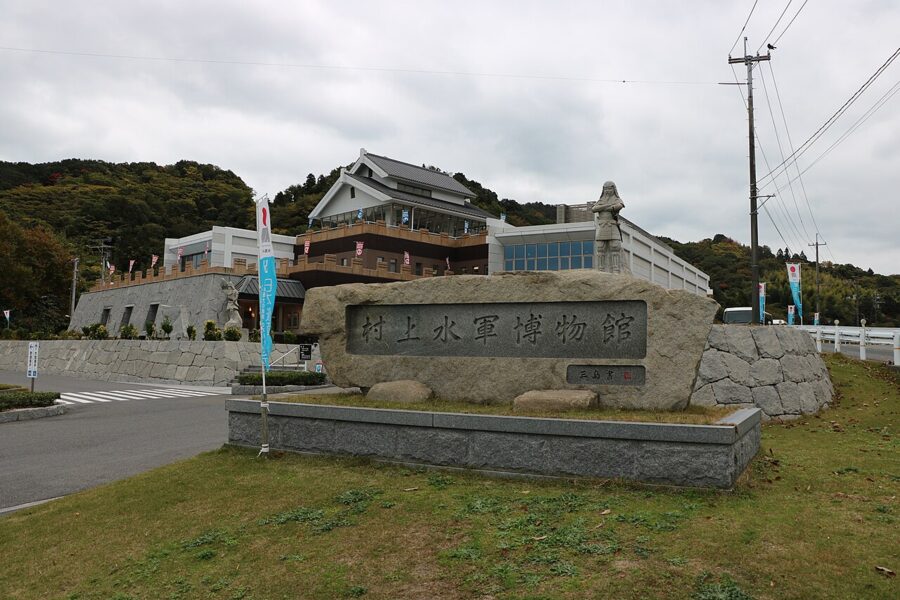
If you stop once, stop here. The Murakami Kaizoku Museum (村上海賊ミュージアム) stands on the shore at Miyakubo on the north-east side of Oshima, looking straight out at Noshima, about 3 km (2 miles) from the foot of the Hakata-Oshima Bridge. Imabari City opened it in October 2004.
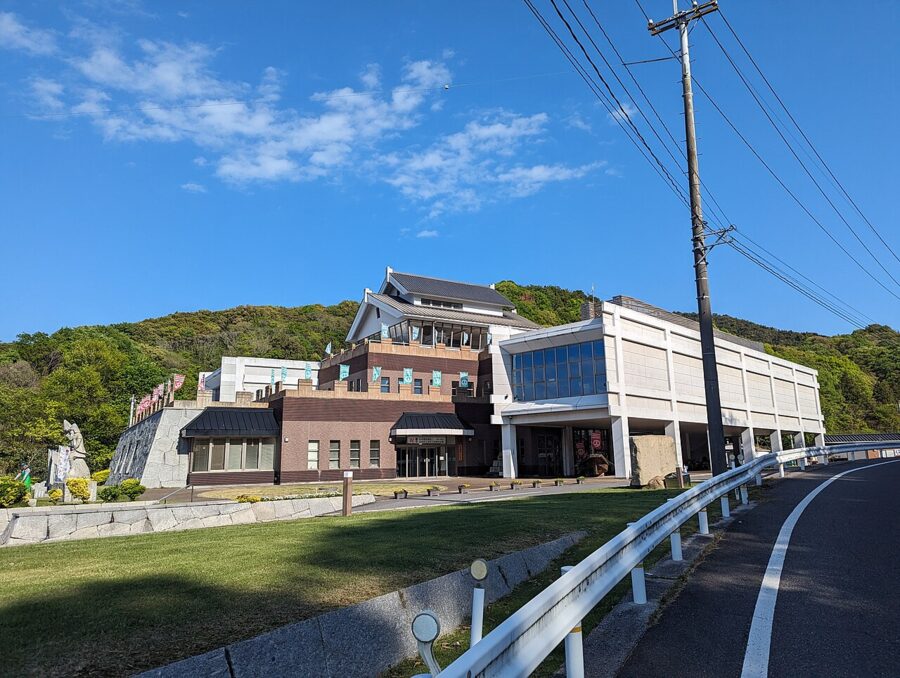
The galleries move from the current to the family’s campaigns, finds from Noshima and Mijikajima, a short film and, last, the room that matters. Room 5 shows documents and objects kept for four centuries by the descendants of the Noshima house, including restored medieval armour and the jinbaori surcoats said to have been worn by Takeyoshi and his son Kagechika.
Outside, look for a granite block raised from the sea off Todai, Miyakubo, in 1983, drilled with a hole 25 to 30 cm across that probably held a mooring post. The third-floor deck shows Noshima with the tide running, which explains the castle better than any panel. A six-minute VR tour costs ¥500 (about US$3) for ages 13 and over; trying on armour is free.
| Murakami Kaizoku Museum | As of November 2026 |
|---|---|
| Hours | 09:00–17:00, last entry 16:30 |
| Closed | Mondays (the next weekday if Monday is a holiday); 29 December–3 January |
| Entry | ¥310 (about US$2) adults, ¥250 over-65s, ¥160 students; free under 18 |
| Where | Miyakubo, Oshima (Imabari); about 3 km from Oshima-kita interchange |
The museum’s visitor information lists special exhibitions. Drivers should know that Oshima-kita and Oshima-minami are half interchanges: from Honshu you cannot leave at Oshima-minami, and from Imabari you cannot leave at Oshima-kita. Castle collectors can get the Continued Top 100 Japanese Castles stamp for Noshima here.
Noshima and the tide boats
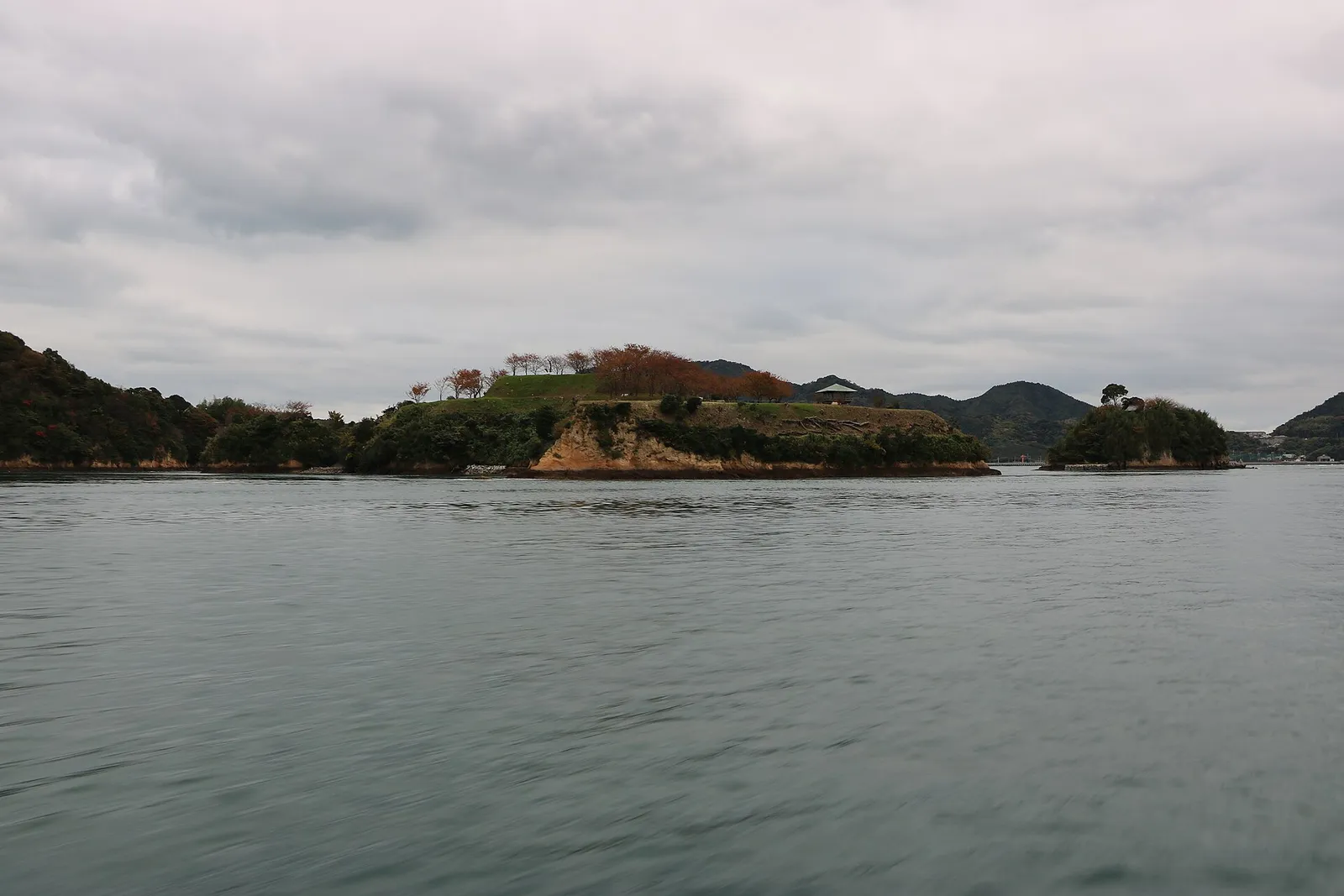
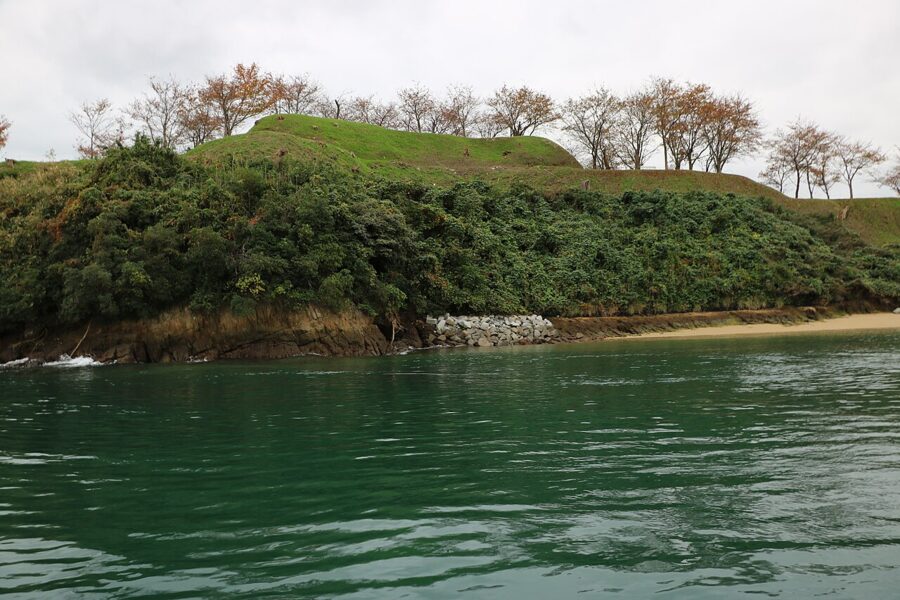
Noshima is about 1.5 hectares and some 850 metres round, by the city’s count, with the islet of Taizakijima at its south end. The family laid out a main enclosure, second and third enclosures and outworks, and with the current on every side it hardly needed walls. With no water on the island, supplies came from Ushima and from Kinoura on Hakatajima. It became a national historic site in 1953, the only sea castle in Japan with that status, the museum says.
What survives is earthwork and rock: terraces on top, and rows of post holes cut into the shore rock where the piers stood and boats were moored. The cherry trees planted from about 1930, which made Noshima a spring outing, turned out to be breaking up the remains with their roots, and clearing them is part of the city’s plan for the site.
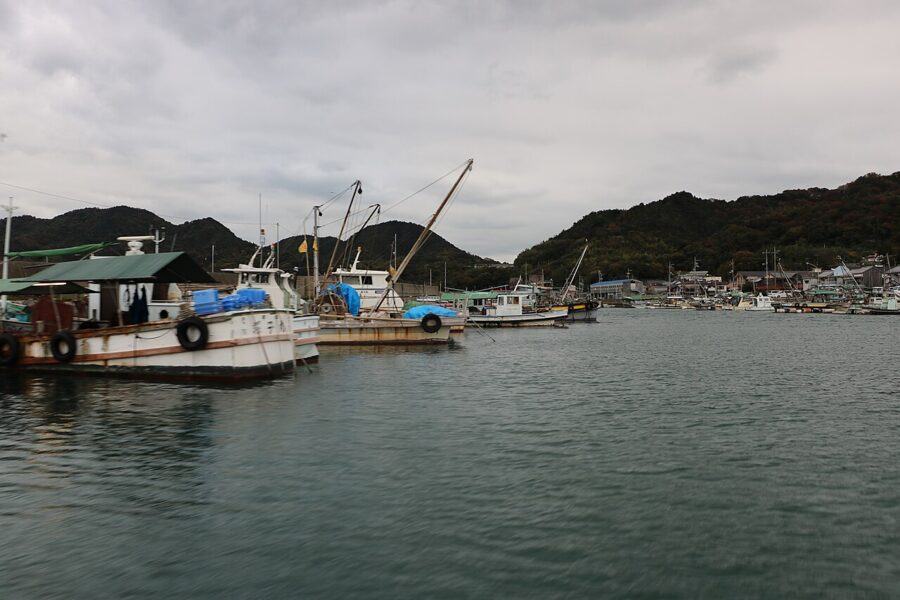
Most people see Noshima from the water. The tide boat run by Noshima Suigun, the fishing co-op’s restaurant and boat office in front of the museum, leaves on the hour from 09:00 to 15:00 and circles Noshima towards the Hakata-Oshima Bridge. It costs ¥1,800 (about US$12) for adults and ¥1,000 for primary school children, as of 2026. The office closes on Mondays and Tuesdays, and posts a weekly chart of the current so you can pick an hour when the water is running hard.
Landing is harder. The city’s Noshima page says the only way onto the island is a guided tour booked in advance with Setouchi Shimanami Leading. It is listed for weekends and holidays and runs only when at least ten people sign up, so plan a landing weeks ahead.
Three more Noshima places are close. Mijikajima, the supply base, has a ramp down from the Hakata-Oshima Bridge. Kareiyama, the hill park on Oshima’s northern tip, looks down on Noshima, the bridge and the Funaori Seto narrows together. And at Koryuji (高龍寺) in Yoshiumi, the temple of Murakami Yoshihiro, the legendary fourteenth-century Noshima commander, the stone pagoda said to be his grave stands not in the temple but halfway up Kirosan.
Innoshima Suigun Castle and the Innoshima graves
The Innoshima Suigun Castle (因島水軍城) is not a castle the Murakami built. It is a museum in castle form, put up in 1983 on a low hill in Nakanosho in the middle of Innoshima, under the historian Naramoto Tatsuya. It stands in the grounds of Konrenji, the family temple of the Innoshima Murakami.
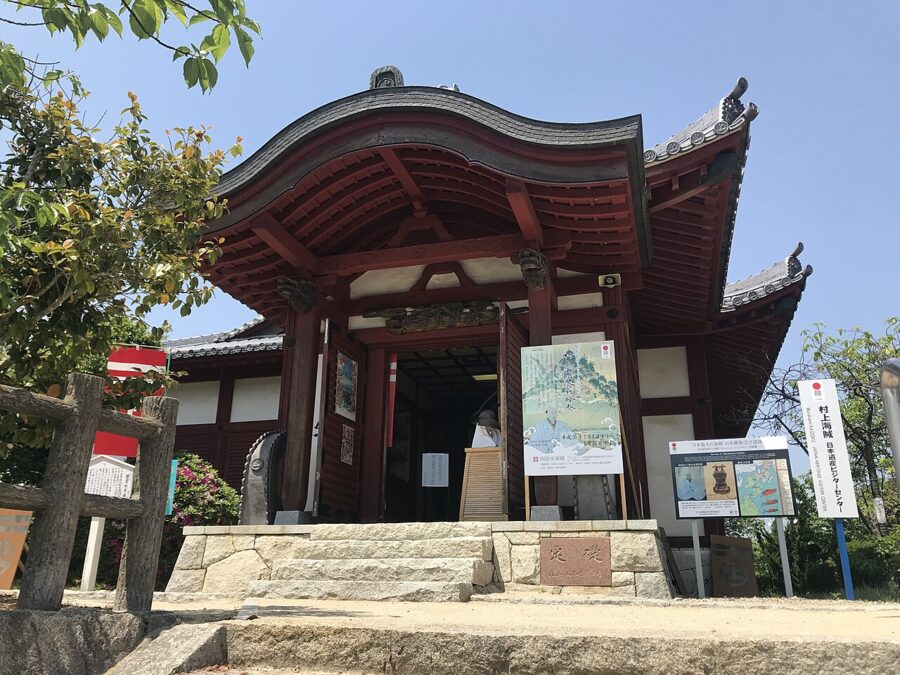
The prize piece is a haramaki armour laced in white, purple and scarlet, given to Yoshimitsu by Kobayakawa Takakage. The armour, three scrolls of 51 family documents and four Konrenji roof tiles inscribed in 1450 are all Hiroshima Prefecture important cultural properties. There is also an order of 1333 from Prince Moriyoshi, son of the emperor Go-Daigo, addressed to the Murakami.
The Innoshima tourism association’s castle page and the city agree on the basics. It opens 09:30–17:00 and closes on Thursdays (unless a holiday) and from 29 December to 1 January. Adults pay ¥330 (about US$2) and school-age children ¥160, rising to ¥500 for adults during special exhibitions, as through 25 November 2026. It is about 2 km (1 mile) from Innoshima-kita interchange.
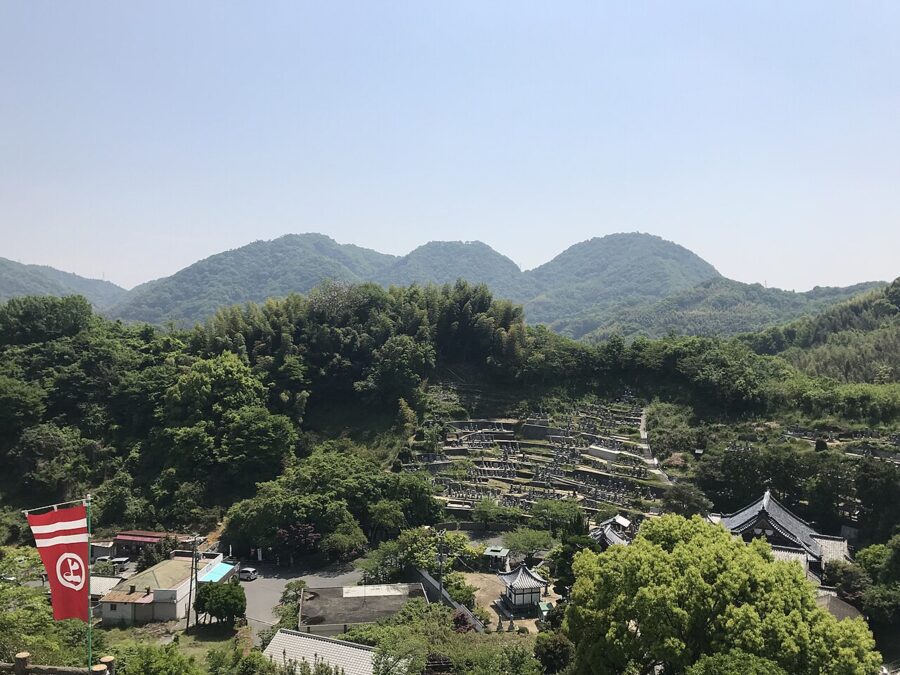
Walk up behind Konrenji before you leave. The Murakami family cemetery there, a city historic site, gathers 18 hokyointo pagodas and many gorinto stones that once stood scattered over the island. It is the closest you will get to the family on Innoshima.
The rest of the Innoshima house is hilltops and capes. Aoki Castle above Shigei East port was their base after they moved from Mukaishima, and Aokage Castle became the main seat. Nagasaki Castle, on the south-west shore, was their first stronghold and still has post holes in the rock. Mikasaki on the south-east cape was a sea checkpoint with a hidden boat inlet, and on Shiratakiyama, Yoshimitsu is said to have built a Kannon hall as a lookout.
Kurushima and the strait
Kurushima (来島) gave the strait, the bridge and the Kurushima house their name. It is about 850 metres round, and the whole island was a fortress, its enclosures in a line about 220 metres long with the main enclosure at the north end. The house held it for about 160 years, though in peacetime its lords lived across the water at Namikata.
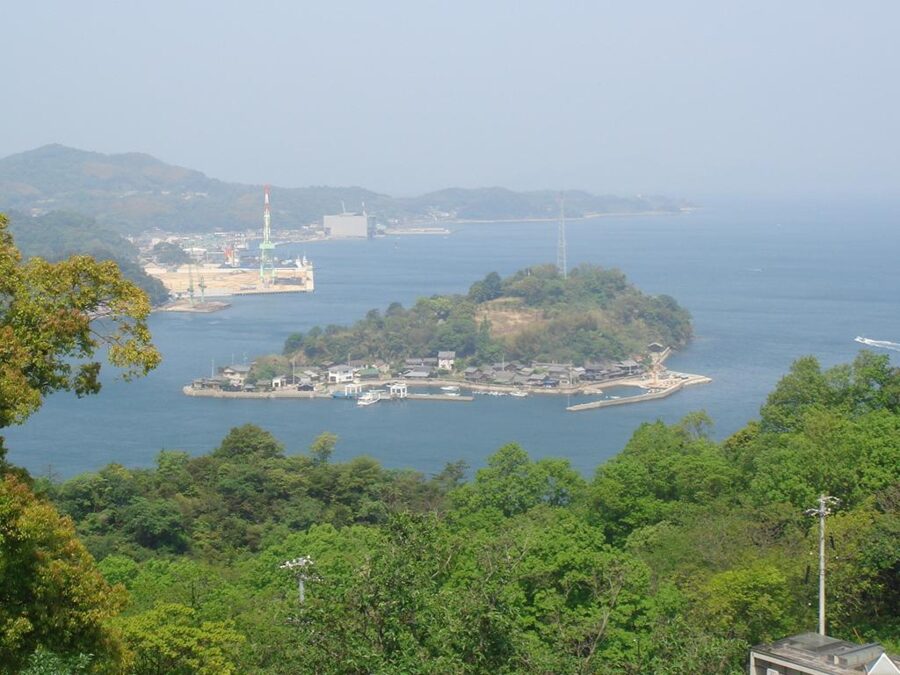
Unlike Noshima, you can land. The Kurushima-maru from Hashihama in Imabari takes five minutes; on the timetable revised on 1 October 2025 the single fare is ¥160 (about US$1), plus ¥90 for a bicycle, and the last boat back leaves Kurushima at 17:05. On the island are stone footings, arrow bamboo, an old well and, on the reefs, a great many post holes. You cannot climb to the main enclosure: the city’s Kurushima page says the path has collapsed and is closed.
Noshima held two forts in this strait too, on Takeshijima and Nakatoshima, surrendered in 1585 when Hideyoshi took Shikoku. Neither is open, but the Kurushima Strait cruise from Shitadami on Oshima passes both and then Kurushima. It sails from beside the Yoshiumi Ikiikikan roadside station and costs ¥2,000 (about US$13) for adults, as of 2026.
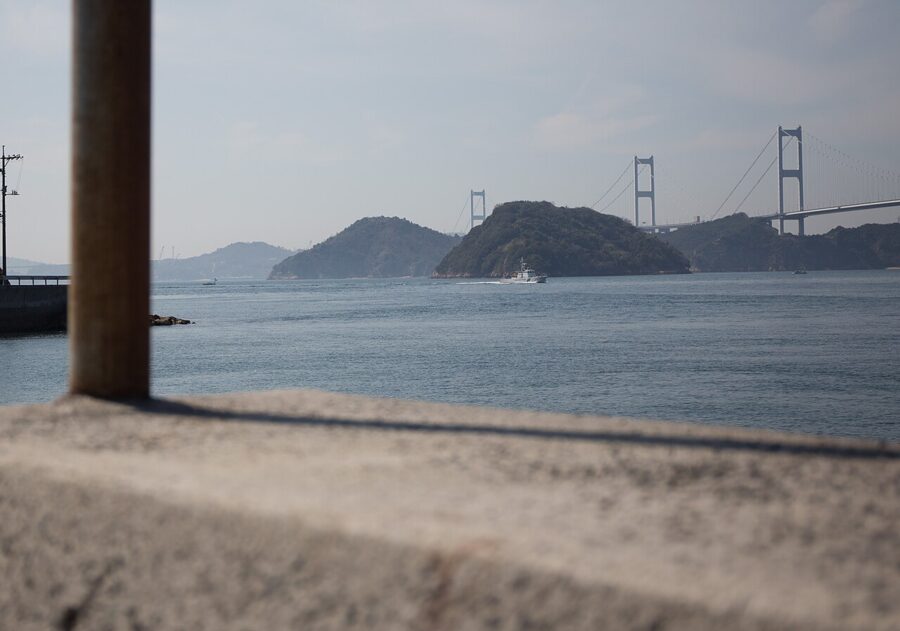
Back on the Imabari shore, the Kurushima Kaikyo Observatory in Itoyama Park, a short walk up from the rental terminal, has a free room on the Murakami. A shrine plaque of 1524 in Imabari’s Ohama district names a Murakami “of Kurushima castle”, proof the family lived there by then. Later additions to the Japan Heritage list stand on this shore as well: Konominato Castle facing the strait, and Jokeiji temple inside its grounds.
Amazaki and the sea castles of Omishima
Ride down off the Tatara Bridge onto Omishima and follow the coast road south from Tatara Shimanami Park. About a kilometre on, at Amazaki in Kamiura, a small island sits some 160 metres offshore: Amazaki Castle (甘崎城), a prefectural historic site and one of the oldest sea castles in the islands.
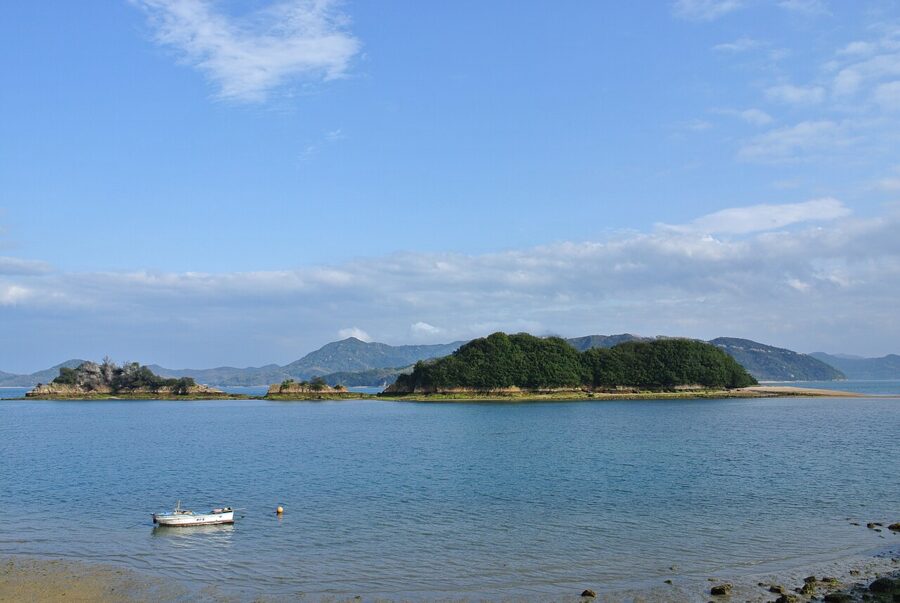
In the sixteenth century it belonged to the Kurushima house, first to Murakami Michiyasu and then to his retainer Murakami Yoshitsugu. After Hideyoshi it passed to Todo Takatora, and the Japan Heritage team calls it the only medieval sea castle later rebuilt as an early modern one. It was abandoned in 1608.
Its walls were built to stand in the sea. In 1691 the German doctor Engelbert Kaempfer, sailing past on his way to Edo, wrote of a fortification rising out of the water. Most of the stone was carried off later, so today only the base courses show, and only at the lowest tides. Myokoji temple on the Omishima shore opposite keeps Yoshitsugu’s grave.
Oyamazumi Shrine: where the captains prayed
The pirates’ patron shrine was Oyamazumi Shrine at Miyaura on the far side of Omishima, about 7 km over the island from the cycle route. Its god is a mountain god who, the shrine explains, is also a god of the sea and of crossings, and the Murakami treated it as their own guardian. The shrine’s crest, a tray holding a wavy character three, is a design the Murakami used too.
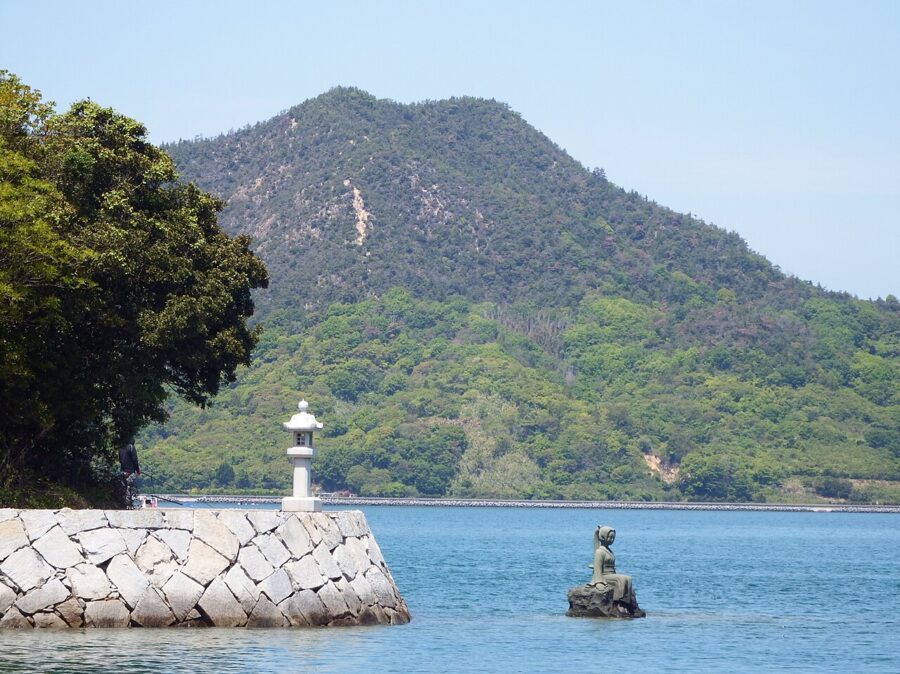
The shrine’s treasure hall holds, by its own count, about eight in ten of Japan’s armour and weapons listed as National Treasures or Important Cultural Properties. Two pieces belong to the pirates’ world. One is the armour of Kono Michiari, who fought the Mongols, whose family the Kurushima house served. The other is a dark-blue-laced do-maru, unusually narrow at the waist, that shrine tradition says Tsuruhime, daughter of the chief priest Ohori Yasumochi, wore in 1541, when Murakami Michiyasu, with Noshima’s help, drove an Ouchi fleet off Omishima.
Give the treasure hall an hour, and do not pair it with the Miyakubo museum on the same afternoon unless you are on an e-bike.
Temples, graves and a pagoda along the way
On Hakatajima, Zenkoji in Kinoura is held to be the temple of Murakami Masafusa, Takeyoshi’s great-grandfather, whose grave and his wife’s are said to have stood at the foot of its big camphor. On Mukaishima, the cape of Yosaki was the Innoshima house’s sea castle after Itsukushima, with boat shelters still visible; it is closed, so look from across the water. On Momoshima, about halfway between Onomichi and Tomonoura, the same house built a summit castle on Chausuyama.
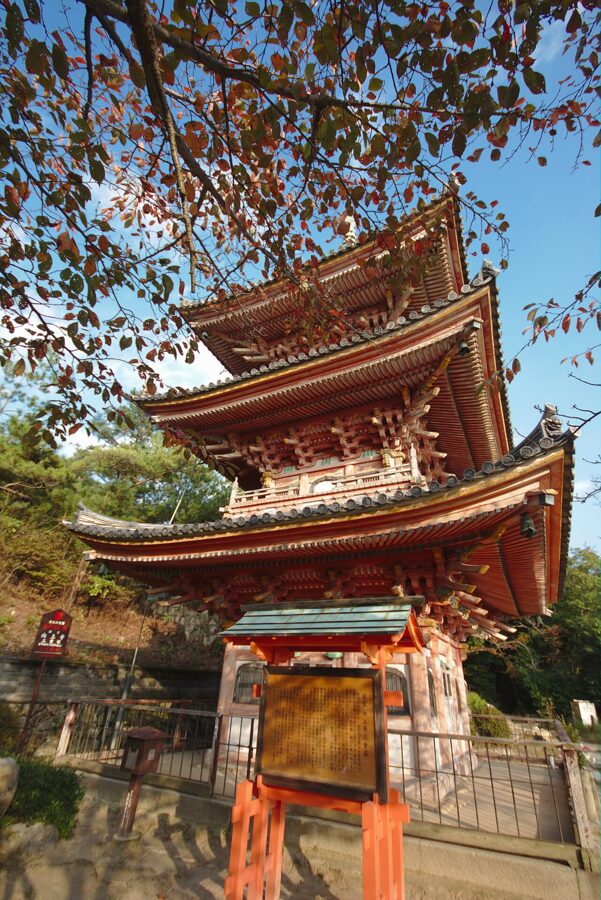
On Ikuchijima, Setoda belonged to the Ikuchi, a smaller sea family who fought for the Mori alongside the three Murakami houses. Their temple, Kojoji, has the three-storey pagoda on the hill behind the town, the same hillside as Kosanji. In Onomichi, Komyoji at the foot of the hill below Senkoji keeps a Kannon given by the Murakami commander Shimai Sukenaga, known as the wave-parting Kannon for its power against shipwreck.
A pirate route by bike, and the festivals
The Shimanami Kaido runs about 70 km (43 miles) between Onomichi and Imabari, and you could pass every pirate site in a long day. I would not. The detours that matter add hours, and three of them close on different days: as of November 2026 the Innoshima castle shuts on Thursdays, the museum on Mondays and the tide boat office on Mondays and Tuesdays. Ride on a Wednesday, Friday or weekend and you get all of it.
Here is the two-day version from Onomichi, on the signed cycling route with a bike from Shimanami Kaido bike rental. Take an e-bike if you want the shrine as well.
- Day one. Turn off on Innoshima near Innoshima-kita interchange for the castle and the Konrenji graves (allow an hour). Cross the Ikuchi Bridge to Setoda for Kojoji’s pagoda, then the Tatara Bridge, and stop at Amazaki on the coast road. Sleep on Omishima, the island’s place in where to stay on the Shimanami Kaido, crossing to Oyamazumi Shrine first if the light holds.
- Day two. Cross to Hakatajima, with a detour to the Funaori Seto platform if the tide is running, then take the Hakata-Oshima Bridge, dropping to Mijikajima if you like. Follow the coast road to Miyakubo for the museum at opening time and a tide boat. After lunch cross Oshima to the Kurushima-Kaikyo Bridge and, if you are early, take the Hashihama boat to Kurushima before the last sailing back at 17:05.
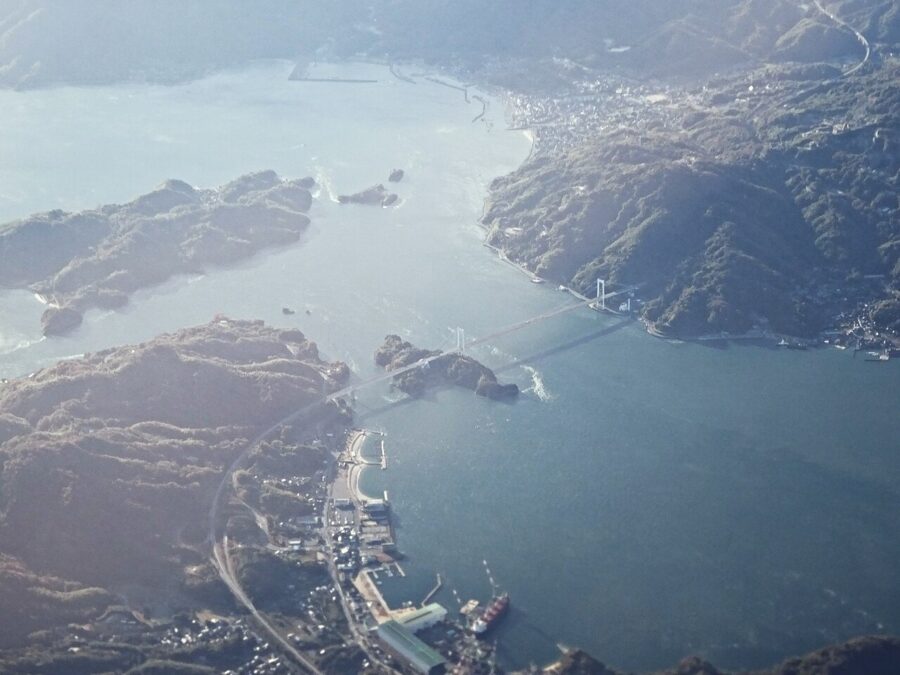
With one day, pick an island. From Onomichi, Innoshima’s castle fits a morning. From Imabari, choose Oshima: the museum, the boat and Noshima are all at Miyakubo, and Kurushima is on your way home. On a set Shimanami Kaido itinerary, the second night is the natural place for the pirates.
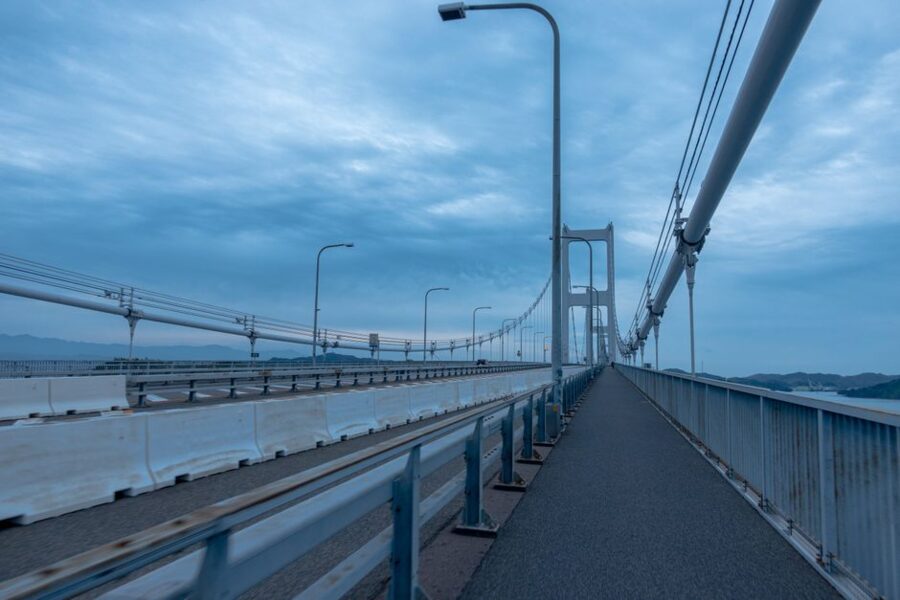
Festivals
The pirates come back each summer. The suigun race in front of the Miyakubo museum is held in late July (the 31st was set for 26 July 2026): crews of twelve, rowing standing up, race replica kobaya in a knock-out between teams from Ehime and beyond, and watching is free.
The Innoshima Suigun Matsuri ran in two parts in 2026. The sea festival, with kobaya races, was on 30 August; the island and fire festival, with the entry of the Murakami camp, a leaping dance, giant torches, war drums and cannon fireworks, was on 20 September.
At Mukuura on Innoshima, the horaku odori is danced in warrior dress and is said to come from the pirates’ dances for victory and for their dead. On Oshima, the Miyakubo Yume Hanabi fireworks were held on 22 November 2026. For food, look for horoku-yaki and suigun-nabe, a seafood hotpot said to come from the crews’ meals on board; the rest of Shimanami Kaido food is gentler.
Whichever way you ride, finish at the water. Stand on the deck at Miyakubo when the tide is running hard past Noshima, and you will see why a silk flag was worth paying for.